Chengdu's Logistics Boom Built the Infrastructure. The Talent to Run It Has Not Followed.
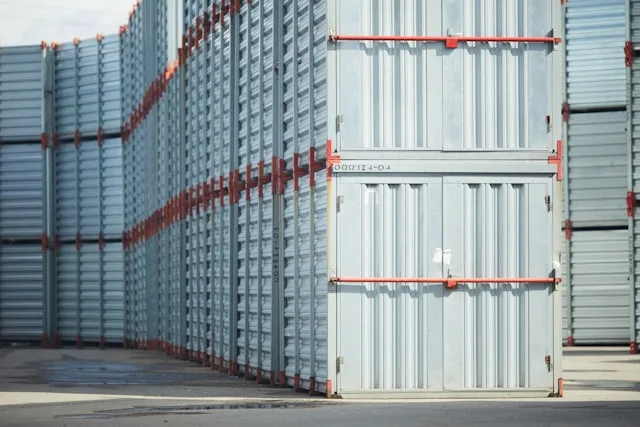
Chengdu's dual-airport system now handles approximately 850,000 tonnes of cargo annually. Tianfu International Airport's Phase 2 cargo terminal opened in late 2024, adding 500,000 square metres of dedicated handling facilities. Cainiao Network is building another 200,000 square metres of smart warehousing for a 2026 launch. RMB 45 billion in logistics infrastructure investment is planned across 2025 and 2026. The physical capacity to become western China's dominant air cargo gateway is arriving on schedule.
The talent to operate that capacity is not. Senior aviation cargo load control searches stalled for three months or longer through the second half of 2024. Cold chain compliance managers sit unfilled for 95 to 120 days. Cross-border e-commerce logistics directors now trigger compensation premiums of 35 to 50 per cent above standard bands just to secure a lateral move. The vacancy-to-qualified-applicant ratio for technical logistics roles stands at 3.2:1. For senior management positions, it reaches 5.1:1.
This is the central paradox of Chengdu's logistics market in 2026: capital has moved faster than human capital can follow, and the automation intended to reduce workforce dependency has instead created demand for a new category of hybrid specialist that barely exists yet. What follows is a detailed analysis of where the gaps are deepest, what is driving them, why conventional hiring methods cannot close them, and what organisations operating in this market need to understand before they commit to their next senior search.
The Dual-Airport System: Built for Growth, Understaffed for Operations
Chengdu is one of a handful of cities globally operating two major commercial airports simultaneously. Tianfu International Airport, operational since June 2021, reached 245,000 tonnes of cargo throughput in 2023, growing 78.5 per cent year on year. Shuangliu Airport handled approximately 529,000 tonnes the same year, maintaining its position in domestic express cargo and regional Asian routes. By early 2025, the combined system was managing roughly 850,000 tonnes annually, with Tianfu capturing 35 per cent and growing at a projected annual rate of 25 to 30 per cent.
The trajectory is clear. By late 2026, Tianfu alone is projected to reach 450,000 to 500,000 tonnes, with dedicated all-cargo routes to Los Angeles, Vancouver, Frankfurt, and Amsterdam either launched or in development. Shuangliu will stabilise at 400,000 to 450,000 tonnes, transitioning primarily to domestic express cargo and business aviation support.
Capacity Without the Crews to Use It
The infrastructure investment is impressive. The talent pipeline behind it is not. Tianfu's Phase 2 terminal was built to handle volumes that require aviation cargo operations specialists, load planners, dangerous goods handlers, and cold chain compliance officers in numbers that Chengdu's logistics and supply chain sector cannot currently produce. The sector posted 78,000 new job openings in 2024, a 22 per cent increase over 2023. But posting a job and filling it are different problems entirely.
The documented pattern from Q3 and Q4 2024 tells the story plainly. Senior aviation cargo load control managers, the weight and balance specialists without whom an aircraft cannot legally depart, could not be sourced locally. According to reporting patterns documented in 51job.com's Executive Recruitment White Paper 2024, employers were forced to relocate talent from Shanghai Pudong or Beijing Capital airports, offering full relocation packages and 40 per cent cost-of-living adjustments. These are not graduate-level roles being backfilled. They are specialists whose absence directly constrains operational throughput.
The airspace coordination between the two airports compounds the problem. Traffic management between Tianfu and Shuangliu limits all-cargo flight slot availability during peak hours between 2200 and 0200, increasing operational costs by 12 to 15 per cent for night-freight operators compared to unconstrained airports like Zhengzhou. Every unfilled specialist role in this environment carries a multiplied cost, because the operational window is already narrow.
The Automation Paradox: Why Smart Logistics Needs Smarter People
Chengdu's municipal policy documents frame warehouse automation, AI-driven sorting, and robotics as the answer to logistics labour costs. JD Logistics's fully automated "Asia No.1" fulfilment centre in Jianyang processes 150,000 pieces per hour across 300,000 square metres. The planned investments for 2025 and 2026 include hydrogen-powered ground support equipment fleets and blockchain-enabled customs clearance platforms. The direction is unmistakable: more machines, fewer manual operators.
The hiring data tells a different story.
The acute shortages are not in manual sorting or basic warehousing supervision. Those remain active candidate markets, with 60 to 70 per cent of job seekers actively applying. The shortages are concentrated in mid-level and senior operations managers who possess both traditional aviation cargo expertise and digital literacy. The talent gap ratio for these hybrid profiles is 5.1:1 at the senior management level. Automation has not substituted for skilled operations management. It has shifted demand toward a scarcer hybrid skill set without eliminating the underlying constraint.
This is the original synthesis that the data demands but does not explicitly state: Chengdu's automation investment has not reduced its workforce problem. It has replaced one kind of worker with another that does not yet exist in sufficient numbers. The city built AI-enabled warehouses and automated cargo systems faster than universities and employers could produce the people qualified to manage them. A Chief Logistics Technology Officer commanding RMB 1.5 to 2.5 million annually reflects the premium for this hybrid competency. But the premium alone does not create supply. It merely redistributes a fixed pool at higher cost.
The implication for hiring leaders is direct: the candidate you need for your next automation-era logistics role is not sitting in a talent pool waiting to be found through a job advertisement. That candidate is currently employed, solving exactly the kind of integration problem you need solved, and unaware your role exists.
Cold Chain and Pharmaceutical Logistics: The Compliance Bottleneck
Sichuan's cold chain logistics market reached RMB 180 billion in 2024. Chengdu concentrates 60 per cent of the province's pharmaceutical cold storage capacity. SF Express operates a 15,000-square-metre GDP-certified pharmaceutical cold chain centre in Shuangliu. JD Logistics maintains a vaccine storage facility in Tianfu New Area. Tianfu Airport's Phase 2 terminal includes temperature-controlled pharmaceutical storage compliant with IATA CEIV standards.
The infrastructure exists. The people certified to run it, in the regulatory sense, do not exist in adequate numbers.
Why Cold Chain Roles Stay Open for 120 Days
Senior Cold Chain Quality Assurance Managers require dual competencies: pharmaceutical GDP certification and aviation cargo handling regulation expertise. According to Michael Page's Greater China Logistics and Supply Chain Practice Market Update from Q4 2024, these roles typically remain unfilled for 95 to 120 days at major third-party logistics providers in the Tianfu Airport Economic Zone. The general logistics management average is 45 days. The cold chain compliance role takes more than twice as long.
The candidate profile explains the duration. Cold Chain Logistics Directors with pharmaceutical regulatory knowledge represent a pool where 80 per cent are passively employed with average tenure of 6.2 years. They are not reading job boards. They are not updating CVs. They are embedded in organisations that understand their scarcity and work actively to retain them. Reaching them requires direct executive search approaches that go well beyond posting a vacancy and waiting.
Sichuan Province's electricity pricing volatility adds another layer of operational complexity. Summer peak demand periods between July and September can produce 15 to 20 per cent energy cost spikes, creating budget uncertainty for cold storage operators. A senior cold chain operations leader must understand not just pharmaceutical compliance but energy cost management, infrastructure resilience planning, and the intersection of both with aviation cargo schedules. This is not a role you fill by accident.
Cross-Border E-Commerce: Where Compensation Has Become Unsustainable
Chengdu processed RMB 120 billion in cross-border e-commerce trade volume in 2024, an 18 per cent year-on-year increase. The Tianfu International Airport Cross-Border E-Commerce Industrial Park now hosts 147 registered enterprises handling import and export consolidation, bonded warehousing, and international express sorting. The Chengdu International Railway Port in Qingbaijiang integrates air cargo with the China-Europe Railway Express, targeting 30 per cent intermodal utilisation by 2026, up from 18 per cent in 2024.
This growth has created a specific and escalating hiring problem.
The Salary Spiral Between SF Express and JD Logistics
Cross-border e-commerce logistics directors with track records in customs bond management and international express network optimisation are, according to Hays Greater China's 2024 Salary Guide, subject to aggressive lateral poaching between SF Express and JD Logistics. The compensation premiums required to secure a move run 35 to 50 per cent above standard salary bands. This has created a salary inflation spiral in the RMB 800,000 to 1.2 million bracket for this specific profile.
The pool of candidates qualified for these roles is constrained by a technical factor that outsiders often overlook. China's cross-border e-commerce customs supervision operates under specific regulatory codes: 9610, 9710, and 9810. Specialists who understand these codes, and who can optimise customs clearance automation protocols around them, are 85 per cent passive candidates. Many are retained through non-compete agreements and equity stakes in successful export logistics firms.
Regulatory uncertainty compounds the problem. The Ministry of Commerce and General Administration of Customs are piloting revised cross-border e-commerce tax and data regulations under the 2025 draft supervision policy. Implementation risks could reduce throughput volumes by 8 to 12 per cent in the short term. This means the very leaders organisations need to hire are also the leaders most likely to be cautious about moving, because the regulatory environment they would be joining is in flux.
For organisations trying to fill these roles through conventional channels, the arithmetic is unfavourable. The candidates are passive, contractually constrained, and wary of regulatory disruption. A search strategy that relies on visible, active candidates will reach at most 15 to 25 per cent of the qualified market. The other 75 to 85 per cent must be identified and approached directly.
The Coastal Drain: Why Chengdu Keeps Losing Its Best Mid-Career Talent
Chengdu's cost-of-living advantage over Shanghai and Shenzhen is real. Shanghai's cost of living runs approximately 40 per cent higher. Shenzhen's technology sector compensation premiums of 30 to 40 per cent are partially offset by equivalent living cost increases. On paper, Chengdu should be able to retain talent effectively.
In practice, annual attrition rates of 18 to 22 per cent for high-potential managers with 8 to 12 years of experience tell a different story. According to Deloitte's China Logistics Industry Human Capital Trends 2024 report, these professionals relocate to coastal headquarters for career progression opportunities that Chengdu's regional offices cannot match.
Shanghai maintains a 45 to 60 per cent compensation premium over Chengdu for VP-level logistics executives. It also offers international schooling, expatriate infrastructure, and proximity to global carrier headquarters. Shenzhen draws technical logistics talent with stock options and technology headquarters concentration unavailable inland. Even Chongqing, a direct regional competitor, frequently matches or exceeds Chengdu salaries by 10 to 15 per cent for aviation cargo operations roles. Zhengzhou offers faster promotion trajectories and equity participation in logistics technology startups.
The dynamic creates a specific vulnerability. Chengdu produces competent mid-level logistics managers through its university system and its operational density. It then loses a meaningful fraction of them to coastal markets at exactly the career stage where they become most valuable. The city is effectively subsidising the talent development of its competitors.
The executive talent that does remain, or that can be attracted, commands a bilingual premium. Professionals with Mandarin-English fluency and experience managing international carrier relationships earn 20 to 30 per cent above domestic-market-only peers. As Tianfu Airport adds intercontinental cargo routes to Los Angeles, Vancouver, Frankfurt, and Amsterdam, this bilingual premium will only increase.
For hiring executives, the retention challenge and the recruitment challenge are the same problem viewed from different angles. Solving one without addressing the other produces a revolving door. Understanding the real cost of replacing a senior logistics leader is the first step toward calculating whether a retention counteroffer or a market-rate compensation adjustment is the better investment.
What This Market Demands From a Search Strategy
The data from Chengdu's logistics sector points to a market where conventional hiring methods are structurally mismatched to the candidate reality. The majority of the talent organisations need is passive. The specialist roles take two to three times longer to fill than general management positions. The compensation environment is inflationary at the senior level. And the regulatory and operational complexity of the roles means that screening for technical competency, not just seniority, is essential.
A talent mapping exercise in this market would reveal a finite number of qualified individuals for any given specialist role. Cold chain pharmaceutical logistics directors with GDP certification and aviation cargo handling experience represent a pool measured in dozens across all of western China, not hundreds. Cross-border e-commerce customs specialists with 9610/9710 regulatory code expertise and director-level seniority represent a similarly constrained universe.
This is why searches in this market fail when they rely on job boards and inbound applications. The 15 to 25 per cent of candidates who are actively looking tend to be actively looking for a reason. The strongest performers are locked into roles where their scarcity is understood and their retention is prioritised.
What works is direct identification and approach. A search partner with AI-powered candidate mapping, deep sector knowledge, and the ability to present a compelling proposition to a passive candidate in a first conversation. Not a job description. A proposition: why this role, at this organisation, at this moment, represents something worth leaving a secure position for.
KiTalent delivers interview-ready executive candidates within 7 to 10 days through exactly this methodology. In markets like Chengdu's logistics sector, where passive candidate ratios exceed 80 per cent for the most critical roles, speed and precision of approach determine whether a search produces a shortlist or a stalemate. The pay-per-interview model means organisations commit resources only when they are meeting qualified candidates, eliminating the upfront retainer risk that makes conventional retained search poorly suited to markets with high candidate scarcity and long fill times.
For organisations building or expanding logistics and supply chain leadership teams in Chengdu, the question is not whether the talent exists. It does, in small numbers, at premium compensation, behind non-compete clauses and inside organisations that know what they have. The question is whether your search method can reach it. With a 96 per cent one-year retention rate across 1,450 executive placements globally, KiTalent's approach is built for precisely this kind of constrained, specialist market.
If you are competing for aviation cargo operations leadership, cold chain compliance directors, or cross-border e-commerce executives in Chengdu's logistics sector, start a conversation with our executive search team about how we identify and approach the candidates no job board will surface.
Frequently Asked Questions
What are the hardest logistics roles to fill in Chengdu in 2026?
The three most difficult categories are senior aviation cargo load control managers (weight and balance specialists), cold chain quality assurance managers with pharmaceutical GDP certification, and cross-border e-commerce logistics directors with customs bond management expertise. Cold chain compliance roles average 95 to 120 days to fill, more than double the 45-day market average for general logistics management. The vacancy-to-qualified-applicant ratio reaches 5.1:1 for senior management positions across the sector.
How does Chengdu logistics compensation compare to Shanghai and Shenzhen?
Shanghai maintains a 45 to 60 per cent compensation premium over Chengdu for VP-level logistics executives. Shenzhen offers 30 to 40 per cent premiums for technical logistics talent, often supplemented by stock options unavailable in Chengdu. However, Shanghai's cost of living runs approximately 40 per cent higher, partially offsetting the salary gap. Bilingual executives with international carrier management experience earn a 20 to 30 per cent premium over domestic-market-only peers in the Chengdu market.
Why is executive search necessary for logistics hiring in Chengdu?
Between 75 and 85 per cent of qualified candidates for senior logistics roles in Chengdu are passively employed and not responding to job advertisements. Average tenure among cold chain logistics directors is 6.2 years. Many cross-border e-commerce specialists are retained through non-compete agreements. Traditional recruitment reaches only the 15 to 25 per cent of the market that is actively looking. KiTalent's direct headhunting methodology identifies and approaches the passive majority through AI-powered talent mapping.
What impact does Chengdu's dual-airport system have on logistics talent demand?
The simultaneous operation of Tianfu International Airport and Shuangliu Airport creates demand for specialists who understand dual-hub coordination, airspace slot management, and cargo routing optimisation. Tianfu's expansion to an estimated 450,000 to 500,000 tonnes of annual cargo throughput by late 2026, combined with Shuangliu's stabilisation at 400,000 to 450,000 tonnes, requires aviation cargo operations teams that the local talent pool cannot currently supply in sufficient numbers.
What is the outlook for Chengdu's cross-border e-commerce logistics sector in 2026?
Chengdu processed RMB 120 billion in cross-border e-commerce trade volume in 2024, growing 18 per cent year on year. The Tianfu Airport Cross-Border E-Commerce Industrial Park hosts 147 registered enterprises. Intermodal integration with the China-Europe Railway Express targets 30 per cent utilisation by 2026. However, regulatory uncertainty around revised customs supervision policies and persistent talent shortages at the director level create headwinds that physical infrastructure investment alone cannot resolve.
How can organisations retain senior logistics talent in Chengdu against coastal competition?
Annual attrition of 18 to 22 per cent among high-potential managers with 8 to 12 years of experience is driven primarily by career progression limitations at regional offices compared to coastal headquarters. Competitive compensation is necessary but insufficient. Organisations that retain senior talent in Chengdu typically offer expanded scope of responsibility, international exposure through Tianfu's growing intercontinental route network, and equity or long-term incentive structures that match or offset the coastal compensation premium.