Da Nang's Industrial Zones Are 95% Full. Its Talent Pipeline Is Running Emptier.
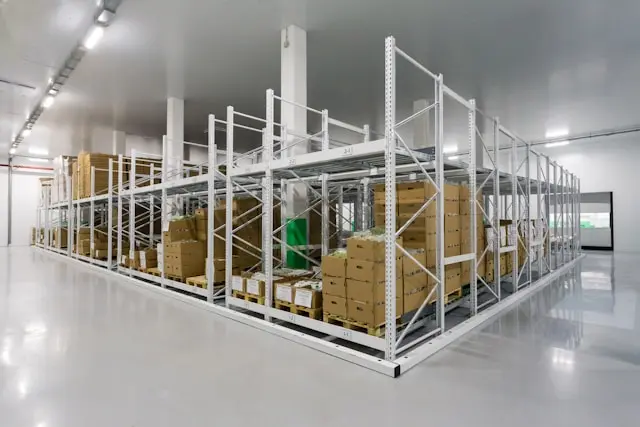
Da Nang's six industrial zones passed 89% average occupancy in 2024. Hoa Khanh Industrial Zone exceeded 95%. The city's electronics exporters account for 42% of industrial zone export value, anchored by Jabil Circuit, Flex Ltd, and Terumo BCT. On paper, this is a manufacturing cluster operating at full capacity in one of Southeast Asia's fastest-growing economies.
The problem is not production capacity. It is the widening gap between what these facilities need to produce and the people available to run them. Hiring demand for logistics and manufacturing talent in Da Nang grew 28% year-over-year through 2024, outpacing the national average of 19%. Yet searches for Production Managers with surface mount technology experience routinely exceed 90 days. Medical device Quality Assurance Manager searches stall past 120 days. For the senior terminal operations roles required by the Lien Chieu Deep Water Port commissioning in 2026, the local supply is functionally zero.
What follows is a ground-level analysis of the forces reshaping Da Nang's industrial talent market: the infrastructure bottlenecks that constrain growth, the compensation dynamics that pull experienced managers toward Ho Chi Minh City, the specific roles employers cannot fill, and what organisations operating in Central Vietnam's manufacturing corridor need to understand before they make their next senior hire.
A City That Produces Engineers but Cannot Fill Engineering Roles
The University of Da Nang graduates 3,500 engineers annually. Relative to the city's population, this output exceeds Ho Chi Minh City's per-capita rate. By raw numbers, Da Nang should have no shortage of technical talent entering its industrial workforce.
The reality contradicts the arithmetic. Only 12% of those graduates possess practical skills in automation, robotics, or supply chain software systems like SAP S/4HANA and Oracle SCM, according to the University of Da Nang's own graduate employment survey. The remaining 88% emerge with theoretical foundations in civil and mechanical engineering that do not map onto the requirements of a Jabil production line, a Terumo BCT cleanroom, or a Gemadept container terminal.
This is the central paradox of Da Nang's talent market. Graduate unemployment in the city runs at 18%, six percentage points above the national average. Simultaneously, manufacturers report longer time-to-fill for automation engineers and supply chain analysts in Da Nang than in HCMC. The shortage is not one of people. It is one of alignment. The university system and the industrial base have grown in parallel directions, and the gap between them is widening fastest at exactly the skill level where employer demand is most acute.
The consequences cascade upward. When entry-level automation engineers are scarce, mid-career Production Managers and Quality Assurance Managers become scarcer still, because the pipeline that should produce them in five to seven years is thinner than the current demand requires. Employers filling senior manufacturing roles in Da Nang today are not drawing from a healthy internal talent pipeline. They are competing for the same small pool of experienced professionals who already hold equivalent positions at rival facilities across the street.
Infrastructure Under Pressure: What Opens, What Bottlenecks, and What It Means for Talent
The Lien Chieu Bet
The most consequential infrastructure event in Da Nang's near-term future is the commissioning of Lien Chieu Deep Water Port Phase 1, now scheduled for the second quarter of 2026. Originally slated for 2024 completion, the project's VND 3.4 trillion (approximately $140 million) first phase will deliver two berths capable of handling 100,000 DWT vessels and an initial throughput of 220,000 TEUs annually. Full build-out targets 3.5 to 5 million TEUs by 2030.
This matters for talent in two direct ways. First, it creates immediate demand for senior port operations professionals who do not currently exist in Da Nang's labour market. Terminal Operations Managers with Navis N4 terminal operating system experience, Customs Clearance Supervisors with deep-water container terminal backgrounds, and Head of Port Operations candidates with PMP certifications must all be sourced from Ho Chi Minh City, Hai Phong, Singapore, or Colombo. According to the Navigos Group's salary data for 2024, terminal operators preparing for Lien Chieu are already offering relocation packages that include monthly housing allowances of VND 20 to 30 million, two months' salary as a relocation bonus, and quarterly return flights.
Second, the port's commissioning will intensify competition for the logistics talent already in short supply. Da Nang Port currently operates at 85 to 90% capacity utilisation during peak seasons. The Tien Sa terminal handles vessels up to 50,000 DWT, meaning exporters shipping to Europe and the Americas must truck containers 850 kilometres to Cai Mep at an additional cost of $400 to $600 per TEU. Lien Chieu's opening will relieve that bottleneck but simultaneously create dozens of senior roles that the existing local workforce cannot fill.
The Airport Constraint No One Discusses
Da Nang International Airport served 13.4 million passengers in 2023. It processed 25,000 tonnes of cargo, representing just 1.2% of Vietnam's total air freight volume. For comparison, Noi Bai handled 1.7 million tonnes and Tan Son Nhat 1.9 million tonnes in the same year. Eighty-five percent of Da Nang's air cargo moves through belly-hold capacity on passenger flights, according to DHL's logistics analysis.
For electronics exporters requiring dedicated freighter services, this constraint is material. It limits the type of manufacturing that can operate profitably from Da Nang. High-value, time-sensitive products that would benefit from air freight must be trucked to HCMC. The talent implication: the logistics managers most experienced in integrated air-sea freight networks tend to cluster in cities where that infrastructure exists. Da Nang's air cargo limitation narrows the pool of supply chain directors with the multimodal expertise that regional logistics operations increasingly require.
The Compensation Equation That Pulls Talent South
Da Nang's total cash compensation operates at a 25 to 30% discount to Ho Chi Minh City for equivalent manufacturing and logistics roles. The gap is not new. What has changed is the seniority at which it becomes decisive.
At entry and mid-career levels, Da Nang can compete. A Logistics Operations Manager with five to eight years of experience earns VND 28 to 42 million monthly ($1,120 to $1,680). A Supply Chain Manager at a mid-sized firm commands VND 35 to 50 million ($1,400 to $2,000). These figures are competitive within Central Vietnam and close enough to HCMC rates that quality-of-life advantages (lower cost of living, coastal environment, reduced commute times) can offset the difference.
The equation breaks at senior level. A Plant Director overseeing 1,000 or more employees in Da Nang earns VND 100 to 150 million monthly ($4,000 to $6,000). A VP of Manufacturing Operations reaches VND 120 to 180 million ($4,800 to $7,200). These are meaningful figures in Vietnam's compensation context. They are also 40 to 50% below what the same professional could earn in a regional headquarters role in HCMC.
For professionals with eight or more years of experience, the salary gap compounds with career progression concerns. HCMC offers regional and global headquarters functions, exposure to Fortune 500 audit processes, and proximity to Vietnam's deepest professional networks. Da Nang offers a facility management role, not a career trajectory. The result, visible in the General Statistics Office's migration and employment data, is a steady outflow of experienced manufacturing managers toward the south. Da Nang employers who successfully retain senior talent typically do so through housing subsidies, long-term incentive plans, and the explicit quality-of-life proposition. Not every candidate values that proposition enough to accept a compensation differential of this magnitude.
What Medical Device Compensation Reveals
The medical device sub-sector in the Da Nang Hi-Tech Park illustrates the sharpest edge of the compensation challenge. Quality Assurance Managers with both ISO 13485 medical device experience and FDA 21 CFR Part 820 knowledge command VND 40 to 60 million monthly ($1,600 to $2,400) in Da Nang. When searches for these profiles stall past 120 days, which they routinely do, manufacturers resort to engaging expatriate consultants from the Philippines or Malaysia at rates of $8,000 to $12,000 monthly. The cost of failing to hire a $2,000-per-month QA Manager is paying six times that amount for a temporary bridge. The economics of a slow executive search in this market are punishing.
Five Roles That Define Da Nang's Talent Crisis
Not every role in Da Nang is hard to fill. Entry-level logistics coordinators and warehouse supervisors attract 85% active candidates with average search durations of three to four weeks. The crisis concentrates in a narrow band of senior, specialised positions where passive candidate ratios exceed 70% and local supply is structurally insufficient.
Production Managers with SMT and Japanese Language Capability
The surface mount technology production line is the core operational unit of Da Nang's electronics assembly sector. Managers with seven or more years of SMT experience who also hold Japanese language proficiency at N2 level or above are the single most competed-for profile in the city. Market data indicates that employers routinely offer 25 to 35% salary premiums and signing bonuses equivalent to three months' salary to attract these candidates. Sixty-five percent of hires come from direct competitor facilities within Da Nang rather than external markets. Average time-to-fill exceeds 90 days.
This is not a hiring problem that compensation alone can solve. The pool is approximately fixed in the short term. Every hire is someone else's loss.
Head of Port Operations for Lien Chieu
Deep-water container terminal management requires a profile that simply does not exist locally: PMP certification, Navis N4 terminal operating system fluency, and experience managing facilities that handle 100,000 DWT vessels. The research data shows 90% passive characteristics for specialised maritime logistics talent. Recruitment depends on international maritime networks rather than local job boards. For organisations preparing for Lien Chieu's commissioning, direct headhunting through specialist networks is not a preference. It is the only viable method.
VP of Operations and Plant Directors
Overseeing facilities with 2,000 or more employees, requiring bilingual English and Vietnamese capabilities and audit experience with Fortune 500 OEMs, this profile has a total national talent pool estimated at 40 to 50 qualified individuals. Average tenure in role exceeds 4.5 years, and only 15 to 20% are actively seeking new positions at any given time. Moving one of these candidates requires a proposition that goes well beyond salary.
Medical Device Quality Assurance Managers
The dual-qualification requirement (ISO 13485 and FDA 21 CFR Part 820) eliminates the majority of Vietnam's QA manager population. The 120-day average search duration and the fallback to expatriate consultants at six times the cost of a permanent hire tell the full story of this market's depth.
Automation and Industry 4.0 Engineers
Employers need engineers fluent in automated guided vehicle programming (Siemens and Schneider Electric systems), warehouse automation, and Lean Six Sigma Black Belt methodologies for electronics assembly yield optimisation. The 12% practical-skills rate among University of Da Nang graduates means the local pipeline produces perhaps 420 candidates annually with relevant practical capabilities, serving an industrial base that needed them yesterday.
The Hollowing Effect: Why Da Nang's Neighbours Complicate Every Search
Da Nang does not exist in isolation. Its talent market is shaped, and in some cases distorted, by the industrial zones developing to its south.
Chu Lai Open Economic Zone sits 45 minutes from Da Nang in Quang Nam province. Dung Quat Economic Zone is 90 minutes further south in Quang Ngai. Both offer industrial land at $60 to $80 per square metre annually, compared to Da Nang's $100 to $120 and rising. The cost differential is drawing textile and furniture manufacturers out of Da Nang and into these lower-cost provinces.
The talent consequence is a hollowing effect. Mid-skill roles (line supervisors, maintenance technicians) migrate with the factories. Da Nang retains R&D, high-value assembly, and corporate functions. But the hollowing creates a secondary problem: the career ladder that once ran from technician to supervisor to production manager to plant director within a single Da Nang industrial zone now has rungs missing in the middle. A talent pipeline that should feed senior roles over five to seven years is fragmenting across multiple provinces.
Meanwhile, northern manufacturing hubs compete at the senior end. Hai Phong and Bac Ninh, home to the Samsung and Foxconn clusters, offer 35 to 45% higher salaries for Korean-speaking engineers and supply chain specialists. Da Nang cannot compete on compensation for these profiles. It targets lifestyle migrants, professionals seeking to exit the high-pressure northern manufacturing environment. This is a viable strategy but a narrow one. It depends on a subset of candidates who actively prioritise quality of life over compensation, and who are at a career stage where that trade-off is acceptable.
The result: Da Nang's senior manufacturing talent market is squeezed from both directions. Lower-cost provinces pull the mid-career pipeline south. Higher-paying northern hubs and HCMC pull the experienced executives north and south. What remains is a thin band of locally committed professionals who become more valuable, and more expensive, with every passing quarter.
Land, Environment, and the Policy Tension Hiring Leaders Must Understand
The data reveals a tension that will shape Da Nang's industrial trajectory for the next decade. The city's municipal government promotes Da Nang as a "smart tourism city" and a "liveable city." This branding drives real estate development, attracts foreign tourists, and supports a thriving hospitality sector. It also competes directly with industrial expansion for Da Nang's most constrained resource: land.
Da Nang is bounded by the Truong Son mountains to the west and the East Sea to the east. There is no hinterland to expand into without administrative boundary changes or land reclamation. Industrial land inventory is projected to reach 100% occupancy by 2027 without intervention, according to the Da Nang Master Plan 2021 to 2030 adjustment report. The Lien Chieu IZ expansion and Hoa Nhon IZ Phase 2 will add approximately 400 hectares by 2026, but 60% of that land is pre-committed to existing tenant expansions.
Factory space rental rates are climbing 8 to 12% annually, reaching $120 to $140 per square metre per year. These rates now approach HCMC peripheral zone pricing, according to Savills Vietnam's industrial market outlook. Industrial rents are rising at more than double the rate of commercial office rents: 12% versus 5% annually. The market is signalling that industrial demand is outpacing supply faster than any other property category.
Simultaneously, Da Nang maintains stricter environmental standards than neighbouring provinces. The 2024 to 2025 Environmental Action Plan mandates a 30% reduction in industrial emissions by 2026. Category 3 (polluting) industries are prohibited. Manufacturers must invest in wastewater treatment and renewable energy, increasing operational costs 8 to 12% relative to Quang Ngai or Nghe An.
For hiring leaders, the policy tension has a direct talent implication. Environmental compliance roles are becoming essential in Da Nang when they remain optional elsewhere in Central Vietnam. Sustainability managers, environmental engineers, and compliance officers with Vietnamese regulatory expertise are a new demand category that did not exist in Da Nang five years ago. The talent mapping required to identify these professionals must look beyond traditional manufacturing networks.
What Hiring Leaders in Da Nang's Industrial Sector Need to Do Differently
The conventional approach to filling manufacturing leadership roles in Vietnam follows a predictable sequence: post on VietnamWorks and TopCV, screen applications, interview the strongest respondents, make an offer. In Da Nang's industrial sector, this method reaches at most the 30% of candidates who are actively looking. For Plant Directors, the active ratio drops to 15 to 20%. For port operations leaders, it drops below 10%.
The professionals who can run a 3,200-person Jabil facility, manage Lien Chieu's first container terminal, or lead quality assurance for a Terumo BCT cleanroom are not on job boards. They are employed, compensated well enough to not be searching, and embedded in roles where their institutional knowledge makes them difficult to replace. The proposition required to move them must be specific, compelling, and delivered through a channel they trust. A job posting is not that channel.
Three adjustments separate organisations that fill these roles from those that do not.
First, geography must expand. Seventy percent of senior candidates for Lien Chieu port roles are being sourced from HCMC and Hai Phong. For medical device QA managers, the search must extend to the Philippines and Malaysia. For plant directors, the national pool is 40 to 50 individuals. A Da Nang-only search is a failed search before it begins. International executive search capability is not a premium service in this market. It is a baseline requirement.
Second, speed matters more than in larger markets. When 65% of production manager hires come from competitor facilities within the same city, every week of delay is a week in which a competitor is having the same conversation with the same candidate. The 90-day average time-to-fill for SMT production managers means three months of production risk. The 120-day average for medical device QA managers means four months of regulatory exposure. Organisations using traditional search methods consistently find that the strongest candidates have accepted other offers before a shortlist is even assembled.
Third, the compensation conversation must happen earlier. In a market where signing bonuses of three months' salary are standard for production managers, and where relocation packages for port operations candidates include housing allowances and quarterly flights, the total value proposition cannot be an afterthought presented at the offer stage. It must be part of the initial approach. Candidates in this market know their worth. They know what the competitor across the industrial park is offering. Understanding current market benchmarks before initiating a search is the difference between a credible approach and a wasted one.
KiTalent works with manufacturing and logistics organisations across Southeast Asia to identify and deliver interview-ready leadership candidates within 7 to 10 days. In a market like Da Nang, where 80% of the most qualified candidates must be found through direct identification rather than job advertising, and where the cost of a prolonged vacancy is measured in production downtime and regulatory exposure, the pay-per-interview model ensures organisations only invest when they are meeting candidates who match the brief. With a 96% one-year retention rate across 1,450 executive placements, the methodology is built for markets where the margin for error in senior hiring is narrow.
For organisations competing for operations leadership, port management, or quality assurance talent in Da Nang's constrained industrial market, speak with our executive search team about how we approach this specific sector and geography.
Frequently Asked Questions
What are the hardest manufacturing roles to fill in Da Nang in 2026?
The most acute shortages are in Production Managers with surface mount technology experience and Japanese N2 proficiency (90-day average time-to-fill), Quality Assurance Managers with ISO 13485 and FDA 21 CFR Part 820 qualifications (120-day average), and Plant Directors overseeing 2,000-plus employee facilities (national talent pool of 40 to 50 individuals). Port Terminal Managers for the incoming Lien Chieu Deep Water Port must be recruited from outside Da Nang entirely, with 90% of qualified candidates classified as passive. These roles require specialist headhunting approaches rather than job board advertising.
What does a Plant Director earn in Da Nang?
A Plant Director overseeing 1,000 or more employees in Da Nang's electronics manufacturing sector earns VND 100 to 150 million per month ($4,000 to $6,000), typically supplemented by long-term incentive plans. VP of Manufacturing Operations roles reach VND 120 to 180 million ($4,800 to $7,200). These figures operate at a 25 to 30% discount to equivalent roles in Ho Chi Minh City, which is the primary reason experienced managers migrate south. Employers retaining senior talent in Da Nang typically offer housing subsidies and lifestyle-related benefits to offset the gap.
How does Da Nang's logistics infrastructure affect hiring?
Da Nang Port operates at 85 to 90% capacity utilisation during peak seasons, and the airport processes only 25,000 tonnes of cargo annually, just 1.2% of Vietnam's air freight volume. These constraints force exporters to truck containers to Cai Mep at an additional $400 to $600 per TEU. The Lien Chieu Deep Water Port, commissioning in 2026, will ease maritime bottlenecks but simultaneously create demand for senior port operations talent that does not exist locally, requiring recruitment from HCMC, Singapore, or Colombo.
Why do Da Nang manufacturers struggle to hire despite high graduate output?
The University of Da Nang graduates 3,500 engineers annually, but only 12% possess practical skills in automation, robotics, or enterprise supply chain software. Graduate unemployment in Da Nang runs at 18% compared to 12% nationally, while manufacturers report acute shortages in precisely the technical disciplines these graduates lack. The problem is qualitative alignment, not quantitative supply. University curricula emphasise theoretical civil and mechanical engineering rather than the practical automation and bilingual project management skills that employers in electronics and medical device manufacturing actually require.
How does Da Nang compare to other Vietnamese manufacturing hubs for talent availability?
Da Nang accounts for 6.4% of Vietnam's logistics job postings and 4.1% of manufacturing postings, making it materially smaller than the northern Samsung and Foxconn clusters in Hai Phong and Bac Ninh. Northern hubs pay 35 to 45% more for Korean-speaking engineers. HCMC pays 40 to 50% more for equivalent senior roles. Da Nang competes primarily on quality of life, targeting professionals willing to trade compensation for a lower-cost, less pressured environment. Industrial land occupancy above 95% in key zones constrains expansion, while neighbouring Chu Lai and Dung Quat draw mid-skill manufacturing roles to lower-cost provinces.
What is the best approach to executive hiring in Da Nang's manufacturing sector?
Job board advertising reaches at most 30% of candidates at mid-career level, falling to 15 to 20% for Plant Directors and below 10% for specialised port operations roles. Effective senior hiring in this market requires direct candidate identification across multiple Vietnamese cities and, for certain profiles, international sourcing from Singapore, the Philippines, and Malaysia. Speed is critical: in a market where 65% of production manager hires come from direct competitor facilities, delays of even two weeks can mean losing the strongest candidate to a rival. KiTalent's AI-enhanced talent mapping and direct search methodology delivers interview-ready candidates within 7 to 10 days, reaching the passive majority that conventional methods miss.