Daegu's Textile Sector Is Winning on Exports and Losing on Talent: What Hiring Leaders Need to Understand in 2026
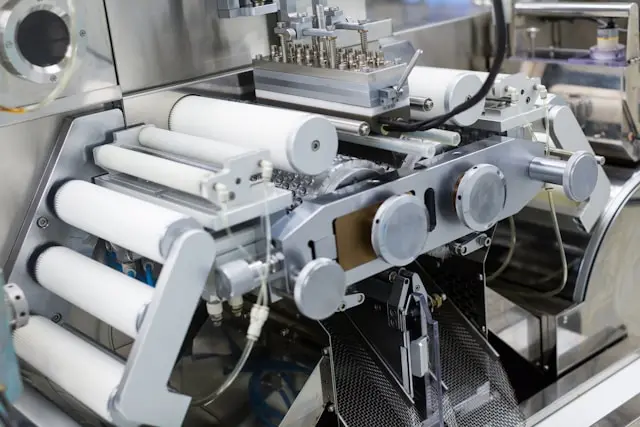
Daegu's technical textile exports hit $1.8 billion in 2024. Aramid fibres, carbon fibre precursors, and automotive interior fabrics now account for 64% of that value, up from 48% in 2019. The numbers look like a sector on the rise. They mask a sector that is running out of the people who make the products.
The textile workforce in the Daegu metropolitan area has contracted from over 100,000 to approximately 28,000 to 32,000 direct manufacturing jobs over two decades. Thirty-eight percent of the remaining workers are over 55. Only 9% are under 30. The pipeline to replace retiring specialists does not exist at anything close to the scale required. Between retirement attrition and the failure of vocational programmes to produce enough entrants, the sector faces a net loss of 4,000 to 5,000 workers by 2026 with only 1,200 new entrants projected. The maths is straightforward. The consequences are not.
What follows is a structured analysis of how Daegu evolved from a volume garment producer into a materials science cluster, why that evolution has created a talent market that conventional hiring methods cannot reach, and what senior leaders responsible for filling critical roles in this sector need to understand before they commit to a search strategy. The data covers compensation benchmarks, passive candidate dynamics, the competitive pull from Seoul and overseas markets, and the specific roles where vacancies now threaten operational continuity.
A Sector That Changed Faster Than Its Workforce
The Daegu Textile Complex and its surrounding districts still host the highest concentration of textile enterprises in South Korea. But the word "textile" no longer describes what it described in 2005. The mass-production sewing lines and basic fabric weaving that once defined the cluster migrated to Vietnam, Indonesia, and Bangladesh over the past fifteen years. What remained, and what now drives the export figures, is a fundamentally different operation: technical textiles, chemical fibres, R&D, sampling, and small-batch premium production.
This pivot has been commercially successful. Daegu's remaining manufacturers are producing materials for automotive interiors, medical devices, defence applications, and smart wearables. The biannual Preview in Daegu trade show generated $142 million in contracted deals in 2024, primarily for functional fabrics. Kolon Industries operates aramid fibre and industrial textile production through its Gumi plant adjacent to Daegu, employing roughly 1,200 in technical textile R&D across the Gyeongbuk region. Hyosung TNC maintains spandex and textile yarn production in the Gumi-Daegu corridor with an estimated 2,400 regional employees and heavy investment in bio-based spandex.
The problem is that the workforce inherited from volume manufacturing bears almost no resemblance to the workforce required for materials science. A traditional loom operator or quality inspector does not become a smart textile engineer through a retraining course. The average age of textile workers in Daegu exceeds 52 years, and digital transformation in the sector lags behind Seoul's apparel industry by an estimated three to five years, according to the Korea Institute of Industrial Technology's 2024 Regional Innovation Report. Capital investment moved faster than human capital could follow, and the gap is now wide enough to constrain the sector's next phase of growth.
The Dual Structure That Defines the Talent Market
Daegu's textile sector operates as two overlapping economies that share geography but almost nothing else. Understanding this split is essential for any hiring leader entering this market.
The Conglomerate Corridor
The first economy is a small cohort of large chemical fibre producers. Kolon Industries, Hyosung TNC, and Taekwang Industrial collectively employ thousands across the Gumi-Daegu corridor. These firms operate at global scale, sell into automotive and defence supply chains, and compete for PhD-level materials scientists with Chinese tech hubs in Shenzhen and Shanghai. According to the China Textile Industry Federation's International Talent Flow Report, Chinese employers offer salaries 40 to 60% above Korean levels for PhD-level materials scientists in conductive fibre and wearable technology. Daegu's conglomerates cannot match these figures for top-tier researchers.
Competition between the conglomerates themselves is equally aggressive. According to Fiber News Korea in March 2025, industry sources indicated that Kolon Industries recruited a senior aramid fibre research fellow from Hyosung's Gumi facility in 2024 with a compensation package estimated at 40% above standard grade. This pattern reflects the zero-sum competition for approximately 180 qualified aramid and carbon fibre specialists in the entire Gyeongbuk region. When one firm gains, another loses the same person.
The SME Fabric
The second economy is a dense network of small and medium enterprises. Ninety-two percent of textile firms in Daegu employ fewer than 50 workers. They specialise in dyeing, finishing, and functional fabric development. The Daegu Textile Complex hosts over 850 registered SMEs with an average headcount of 18 workers per firm. These businesses face a different but equally severe version of the talent problem. They cannot afford the compensation packages that attract digital transformation specialists, yet they face mandatory technology upgrades under Korea's Green New Deal and increasing pressure from global buyers to demonstrate supply chain traceability.
The Daegu Employment Information Center documented that "Smart Factory Manager" roles combining textile chemistry knowledge and PLC programming remain unfilled for an average of 147 days. Traditional production manager roles fill in 34 days. The gap between those two numbers tells the entire story of this market's transition pain.
One documented case, reported by the Maeil Business Newspaper in December 2024 based on an interview with the DTIA Secretary-General, involved a DTC-based functional fabric manufacturer offering ₩55 million annually for a digital process engineer. The position remained open for six months before the firm relocated the function to its Seoul satellite office to access talent. The role did not become less necessary. It simply could not be filled in Daegu.
The Original Synthesis: Why Daegu Is Succeeding as a Materials Science Hub While Failing as a Talent Market
Here is the analytical claim that the data supports but that no single data point states directly: Daegu's commercial success in technical textiles is actively making its talent crisis worse, not better.
The conventional assumption is that a sector producing record exports and attracting government investment should be able to attract workers. The opposite is happening, and the mechanism is specific. The pivot to technical textiles replaced a labour-intensive manufacturing model (which could absorb workers with limited formal qualifications) with a knowledge-intensive R&D model (which requires materials science PhDs, embedded systems engineers, and AI-trained designers). The old model generated thousands of jobs per dollar of output. The new model generates higher value per worker but needs far fewer, far more specialised workers. The worker profile the sector now requires does not exist in Daegu in sufficient numbers and never will through organic local supply.
Meanwhile, the same export success that generates the impressive $1.8 billion headline makes every qualified specialist more valuable and harder to move. A smart textile engineer currently employed at Kolon's Gumi facility is working on globally significant aramid fibre research. The proposition required to move that person is not a salary increase. It is a research programme, a team, a publication trajectory. Traditional recruitment cannot construct that offer. Traditional job advertising cannot even reach that person.
The investment created a market where the demand is real, the supply is insufficient, and the methods most employers use to connect the two are structurally inadequate for the candidate profiles involved.
Where the Specific Shortages Sit
Four categories of talent are in critical shortage in Daegu's textile sector. Each has distinct characteristics that dictate how a search must be conducted.
Smart Textile and Materials Engineers
These candidates hold PhDs or master's degrees in materials science with textile applications. They work on conductive polymers, sensor embedding, and washability testing for wearable technology. According to HR Review Korea's 2024 analysis of deep tech talent markets, approximately 85% of qualified professionals in this category are employed and not actively seeking new roles. They sit at Kolon, Hyosung, or have crossed into Samsung and LG's wearable device divisions. Active job seekers represent roughly 15% of the available pool. For a firm attempting to identify and approach passive candidates at this seniority, a posted vacancy reaches almost no one who matters.
Base compensation for a smart textile engineer or manager with 10 to 15 years of experience ranges from ₩55 to 75 million ($41,000 to $56,000) annually in Daegu. This represents an 8 to 12% discount compared to Seoul equivalents. The gap widens further when Chinese employers enter the equation.
AI-Integrated Fashion Designers
Professionals combining traditional textile design skills with machine learning capabilities are concentrated in Seoul's tech-fashion startups and at Naver's and Zepeto's digital fashion divisions. Active application rates for Daegu-based roles are estimated at 20%, with 80% requiring direct recruitment approaches. Proficiency in CLO 3D and Browzwear is the baseline. Candidates with experience applying machine learning to trend forecasting platforms like Heuritech command additional premiums.
Digital design managers specialising in CLO 3D earn ₩48 to 65 million ($36,000 to $48,000), with premiums of 15 to 20% for those with automotive interior design experience. The automotive premium reflects Daegu's pivot toward technical rather than fashion applications.
Global Brand Directors with Technical Textile Knowledge
This is perhaps the thinnest candidate pool of all. Professionals with a decade or more of experience managing international apparel brands who also understand fabric technical specifications are almost exclusively passive. They work in Seoul at LF Corp or Samsung C&T's fashion division, or at multinational corporations such as Lululemon and Patagonia's regional offices. Annual turnover rates in this group fall below 8%.
The Korea Fashion Association's 2024 Executive Survey described a case where a prominent DTC-based exporter to Japan abandoned its CMO search after eight months. The firm cited insufficient candidate pools in Daegu and an unwillingness among Seoul-based executives to relocate. The subsequent workaround involved a split structure with a Seoul marketing director and Daegu operations manager, increasing overhead by an estimated 18%.
Total compensation for a Global Brand Director ranges from ₩140 to 220 million ($104,000 to $163,000) for candidates with multinational brand experience. Daegu-based firms pay 20 to 25% below Seoul competitors, often necessitating remote-work arrangements or Seoul office allowances to close the gap.
Chemical Process Engineers for Sustainable Dyeing
The Ministry of Environment's "Clean Factory 2.0" standards, effective in 2026, mandate a 30% reduction in wastewater heavy metals and full carbon footprint disclosure for EU export eligibility. Compliance costs for DTC SMEs are estimated at ₩200 to 400 million ($148,000 to $296,000) per firm. Thirty-five percent of surveyed SMEs reported they cannot access this capital, according to the Korea Federation of Small and Medium Business. The engineers who understand both sustainable chemistry (GOTS certification management, waterless dyeing processes, bio-material sourcing) and the practical constraints of SME operations are in demand from every dyeing firm in the complex simultaneously.
Seoul, [Busan](/busan-south-korea-executive-search), and Overseas: The Talent Drain That Never Stops
Daegu's talent crisis cannot be understood without understanding the gravitational pull of competing markets. The competition is not abstract. It operates through specific mechanisms that raise the cost of every executive hire and narrow the effective candidate pool for Daegu-based roles.
Seoul acts as the primary competitor for executive and creative talent. Fashion brand management, digital marketing, and high-end design roles pay 25 to 35% premiums in the capital. The Gangnam cluster in Seongsu-dong attracts Daegu-trained designers with global brand exposure and startup equity. For AI and fashion-tech hybrid roles, Seoul's Sangam Digital Media City offers 5G testing laboratories and venture capital access that Daegu cannot replicate. Kyungpook National University's Department of Textile Engineering is ranked in the top three nationally and produces approximately 120 graduates annually. But only 35% enter local textile manufacturing. The remainder leave for Seoul or pivot to adjacent industries.
Busan competes for mid-level supply chain and export operations talent. Similar compensation to Daegu but superior logistics infrastructure through Korea's largest container port gives Busan a structural advantage for operations executives managing international shipping.
The overseas pull is equally damaging. Korean textile firms operating in Vietnam offer hardship allowances of 30 to 50% above base salary plus housing, making Ho Chi Minh City financially attractive for mid-career production managers. This drains Daegu's pool of managers who combine technical textile knowledge with Vietnamese language skills. For senior leaders considering international moves, the calculation is straightforward: higher pay, lower cost of living, and a management scope that Daegu SMEs cannot match.
The net effect is a talent market where Daegu's best-trained specialists are systematically pulled outward by better compensation, better infrastructure, and broader career trajectories. Inbound movement requires a specific, compelling proposition that most Daegu employers have not yet learned to construct.
Government Investment and the Question It Does Not Answer
Daegu Metropolitan City has committed heavily to a textile future. The "Fashion City" initiative and smart textile infrastructure have received ₩180 billion ($133 million) through 2026, a 40% increase in public textile investment year-over-year. The "Daegu Textile Renaissance" project targets $2.3 billion in textile exports. The city plans to convert 30% of DTC floor space from traditional warehousing to Open Innovation Labs supporting startups and university spin-offs. A ₩12 billion ($8.9 million) "Silver-Tech" programme aims to retrain workers over 50 in digital equipment operation.
The investment is real. The question it does not answer is who will work in the facilities it builds.
Private sector employment in the DTC declined 12% between 2022 and 2024. The number of operating textile firms continues to contract by 5 to 7% annually. DTC vacancy rates have risen to 22% in peripheral sections, though core zones housing technical textile firms maintain 94% occupancy. The divergence between public confidence and private contraction is the defining tension of this market. The infrastructure is being built for a high-tech textile future. But the executive talent required to lead that transition is not materialising through conventional channels.
The vocational pipeline illustrates the disconnect most clearly. Daegu's three textile-focused high schools graduated 312 students in 2024. Sixty-eight percent entered non-manufacturing sectors or continued to higher education rather than taking immediate employment in the industry. Of the remaining 32%, the vast majority entered traditional production roles rather than the digital, R&D, or leadership positions where the shortages are most acute. The pipeline is producing replacements for a workforce model that the sector is actively dismantling.
Meanwhile, only 18% of DTC-based manufacturers had implemented 3D virtual sampling technology by early 2025, up from 7% in 2022. Just 6% of SMEs have deployed IoT-enabled production management systems. The technology adoption that would justify the government's investment requires specialists who do not yet exist in Daegu in sufficient numbers. The Open Innovation Labs need occupants. The occupants need skills that the local education system does not yet teach at scale.
What This Means for Hiring Leaders in 2026
The practical implications for any organisation hiring into Daegu's textile and fashion manufacturing sector are specific and unavoidable.
First, the most critical roles in this market are filled by passive candidates who will not respond to job postings. Smart textile engineers, AI-integrated designers, and global brand directors are 70 to 85% passive. A search strategy built around job boards and inbound applications will reach, at most, 15 to 30% of the qualified market. The other 70 to 85% must be found through direct identification and approach.
Second, compensation alone will not close the gap. Daegu's pay levels sit 8 to 25% below Seoul across every critical role category. For PhD-level materials scientists, the discount relative to Chinese employers is 40 to 60%. Employers competing for this talent must construct offers that include research scope, team quality, negotiation of total package elements beyond base salary, and quality-of-life propositions that offset the compensation differential.
Third, the cost of a failed or prolonged search in this market is higher than in sectors with liquid talent pools. A CDO vacancy at a mid-sized textile manufacturer is not just an unfilled seat. It is a delayed smart factory transition, a missed compliance deadline, and a widening gap with competitors who filled the same role six months earlier. When aggregate data shows 147-day average vacancies for digital transformation roles, firms that move slowly are not just inconvenienced. They are structurally disadvantaged.
Fourth, the relocation barrier is real and must be addressed in the search design, not treated as a problem for the candidate to solve. Seoul-based executives consistently decline Daegu-based roles. Firms that have solved this problem have done so through split structures, remote work allowances, or Seoul satellite offices. A search that does not account for the relocation friction from the outset will stall at the offer stage.
For organisations competing for leadership talent in industrial manufacturing sectors where the candidate pool is small, highly specialised, and overwhelmingly passive, KiTalent's AI-enhanced direct search methodology is designed for exactly this problem. Our talent mapping capability identifies the specific individuals qualified for a role before a search begins, rather than waiting for the market to self-select through applications. With a 96% one-year retention rate across 1,450 completed executive placements and interview-ready candidates delivered within 7 to 10 days, the model is built for markets where speed and precision determine the outcome.
For hiring leaders responsible for filling CDO, R&D head, global brand director, or sustainability leadership roles in Daegu's textile sector, where the qualified pool numbers in the dozens rather than the hundreds and the cost of a six-month vacancy compounds weekly, start a conversation with our executive search team about how we approach this market.
Frequently Asked Questions
What is the average time to fill a digital transformation role in Daegu's textile sector?
Aggregate data from the Daegu Employment Information Center's Q4 2024 analysis shows that "Smart Factory Manager" roles combining textile chemistry knowledge and PLC programming remain unfilled for an average of 147 days. This compares to 34 days for traditional production management roles. The gap reflects the scarcity of candidates who bridge both technical textile expertise and digital systems knowledge. For firms unable to fill these roles locally, the common workaround is relocating the function to a Seoul satellite office, which adds overhead but accesses a broader talent pool.
What do senior textile executives earn in Daegu compared to Seoul?
Daegu-based compensation runs 8 to 25% below Seoul equivalents across critical roles. A CDO in textile manufacturing earns ₩120 to 180 million ($89,000 to $133,000) in total compensation, with conglomerates like Kolon and Hyosung at the upper end and SMEs compensating through equity or profit-sharing. Global Brand Directors earn ₩140 to 220 million ($104,000 to $163,000). The discount to Seoul is most pronounced in creative and branding roles and narrows in technical R&D positions where Daegu's materials science infrastructure provides non-monetary value. Market benchmarking data is essential for calibrating offers that compete without overpaying.
Why is it so difficult to hire smart textile engineers in Daegu?
Approximately 85% of qualified smart textile and materials engineers are passive candidates employed at Kolon Industries, Hyosung TNC, or Samsung and LG's wearable device divisions. The total pool of qualified aramid and carbon fibre specialists in the Gyeongbuk region numbers approximately 180 individuals. Chinese employers in Shenzhen and Shanghai offer 40 to 60% salary premiums for PhD-level materials scientists. This combination of a tiny pool, high passivity, and international competition means that job postings reach almost none of the candidates a firm actually needs. Direct headhunting through specialist executive search is the only reliable method.
What environmental regulations are affecting Daegu textile manufacturers in 2026?
The Ministry of Environment's "Clean Factory 2.0" standards, effective in 2026, require a 30% reduction in wastewater heavy metals and full carbon footprint disclosure for firms exporting to the EU. Compliance costs for DTC SMEs range from ₩200 to 400 million ($148,000 to $296,000) per firm for effluent treatment upgrades. Approximately 40% of dyeing and finishing SMEs must upgrade or face operational restrictions. This regulatory pressure has created acute demand for chemical process engineers specialising in sustainable dyeing technologies and compliance professionals who understand both Korean and EU environmental frameworks.
How does KiTalent approach executive search in niche manufacturing sectors?
KiTalent uses AI-enhanced talent mapping to identify the specific individuals qualified for highly specialised roles before a search formally begins. In markets like Daegu's technical textiles sector, where the qualified candidate pool may number fewer than 200 for a given specialism, this approach reaches the 70 to 85% of candidates who are passive and invisible to job boards. The pay-per-interview model means clients only pay when they meet qualified candidates, and interview-ready shortlists are typically delivered within 7 to 10 days. With over 200 organisations partnered globally and an average client relationship exceeding eight years, the methodology is designed for exactly the kind of constrained, specialist talent market that Daegu's textile transformation has created.
Is relocating executives to Daegu from Seoul feasible?
Relocation remains the primary barrier in executive searches for Daegu-based textile roles. The Korea Fashion Association's 2024 survey documented cases where Seoul-based executives consistently declined Daegu opportunities despite competitive compensation. Firms that have solved this challenge typically offer split structures with Seoul-based working days, remote work allowances, or Seoul office space. Any executive search strategy for this market must design the relocation proposition into the role specification from the outset, rather than treating it as a negotiation point after candidate identification. The most successful placements address geography before compensation.