Davao Agribusiness Hiring in 2026: The Durian Boom Built a Market No Job Board Can Reach

Davao Region produced 42,000 metric tons of exported durian in 2024. That figure represented a 340% surge over the prior year. It also represented a talent problem that the region's employers had never encountered at this scale: the specialists required to grow, process, certify, and ship that volume do not exist in sufficient numbers, and the ones who do exist are not looking for work.
The story of Davao's agribusiness cluster in 2026 is not a simple growth narrative. It is a market splitting in two. On one side, banana plantation employment contracted 8% year-on-year through 2024 as Fusarium TR4 forced the abandonment of over 4,200 hectares in Davao del Norte alone. On the other, durian cultivation, processed fruit exports, and cold chain infrastructure investment are generating thousands of new roles that require qualifications most displaced field workers do not hold. The sector is simultaneously shedding jobs and unable to fill them.
What follows is a ground-level analysis of how Davao's agribusiness talent market arrived at this bifurcation, where the most acute hiring gaps sit, what they cost, and what organisations operating in this cluster need to understand before they attempt their next senior search.
The Two Markets Inside One Region
Davao Region's agribusiness cluster directly employed approximately 425,000 workers as of late 2024. That headline figure masks a structural divide that has deepened through 2025 and into 2026.
The banana segment, historically the region's dominant employer with 180,000 workers, has been contracting. TR4 infestations affected roughly 16,000 hectares of Cavendish plantations across Mindanao, according to the Pilipino Banana Growers and Exporters Association. In Davao del Norte, the heart of export banana production, 4,200 hectares were abandoned or converted. The Department of Agriculture projects an 8-10% recovery in Cavendish export volume through large-scale replanting with TR4-tolerant cultivars, but full productivity will not resume until 2027. Every hectare abandoned eliminates field labour positions. Every hectare replanted with resistant varieties requires a different kind of worker to manage the transition.
Durian's Explosive Trajectory
Meanwhile, durian has become the region's fastest-growing export commodity. Davao City and its adjacent provinces account for approximately 60% of national production and nearly 100% of durian exports, a position consolidated after the Philippines-China export protocol took effect. The 340% surge in 2024 export volumes is not a one-year anomaly. Four thousand hectares of new orchards planted between 2021 and 2022 are reaching commercial bearing in 2026, and the Department of Agriculture projects a further 25% production increase this year.
Processing Capacity Catching Up
The processing layer has expanded accordingly. FDA-registered fruit and vegetable processing facilities in Region XI grew from 41 in 2022 to 51 by early 2025. Capital investment has flowed into blast freezing and IQF lines to meet Chinese demand for frozen durian arils. Processed fruit exports generated USD 287 million in foreign exchange through the first three quarters of 2024, a 15% increase over the same period the prior year.
The net employment forecast for 2026 reflects this split precisely: 12,000 new skilled positions in processing and logistics, offset by a 5,000-job contraction in field labour. The region is not experiencing a shortage in the conventional sense. It is experiencing a mismatch so deep that the workers losing jobs and the roles going unfilled exist in entirely separate qualification universes.
The Specialists Davao Cannot Find
The roles with the longest vacancy periods in Davao's agribusiness cluster are not entry-level positions. They are mid-senior technical and compliance roles where the required expertise is narrow, the qualified population is small, and the candidate behaviour is overwhelmingly passive.
Senior plant pathologists with specific TR4 field management experience face typical vacancy periods of seven to nine months. PBGEA member companies collectively reported 34 unfilled senior agronomist positions specialising in disease resistance as of August 2024. Sixty-eight percent of those vacancies had been open for over six months despite active recruitment. By comparison, the national average vacancy period for general agricultural officers runs three to four months. The TR4 specialisation adds five months to a search, and Davao is the only region where the disease pressure makes that specialisation essential at scale.
Cold chain operations managers present a different pattern. The durian export boom has drawn new entrants into the cold chain logistics market, including Chinese operators establishing joint ventures in Davao's agribusiness and food processing sector. These firms compete for the same pool of managers with pharmaceutical or high-value perishable experience. Aggregate recruitment data indicates that senior cold chain managers in Davao receive counter-offers averaging 22-25% above their current salary when approached by competing firms. In general logistics, the equivalent premium runs 12-15%. The gap reflects scarcity, not generosity.
Phytosanitary compliance officers with China GACC registration audit experience represent perhaps the most structurally constrained talent pool. These specialists are actively recruited away from Davao by Manila-based trading companies and Chinese importers establishing Philippine offices. The draw is compelling: remote-work flexibility and Manila-equivalent salaries. Davao-based exporters report 45-day average delays in securing replacement compliance officers when one departs. Every day of that delay is a day when export consignments may not clear certification.
The pattern across all three roles is consistent. These are not candidates who respond to job advertisements. The hidden majority of qualified professionals in these categories are employed, satisfied enough not to be searching, and aware that their scarcity gives them leverage.
Why Displaced Field Workers Cannot Fill the Gap
Here is the analytical claim that the aggregate data supports but that no single source states directly: Davao's agribusiness labour market is not experiencing a shortage. It is experiencing a structural fracture between two tiers of employment with no viable bridge between them.
The 5,000 field labourers projected to lose positions through banana plantation mechanisation and consolidation cannot transition into the 12,000 skilled roles opening in processing and logistics. A field worker with experience in Cavendish harvesting does not hold the food technology certification required for an IQF processing line. A plantation labourer displaced by TR4 quarantine protocols does not possess the refrigeration engineering knowledge needed to manage ethylene control in a cold chain facility. The educational institutions that could build this bridge are producing graduates, but at a pace and volume that does not match the demand curve.
Davao del Norte State College serves as the primary supplier of agricultural technicians and food technologists to the cluster. The University of the Philippines Mindanao contributes research capacity for TR4-resistant cultivar development. Neither institution is producing plant pathologists with TR4 specialisation in numbers that approach the 34 unfilled positions reported by PBGEA alone.
This fracture has a compounding effect. When a senior agronomist role sits vacant for seven months, the work does not stop. It gets distributed across existing staff, increasing burnout and attrition risk. When a compliance officer departs for a Manila-based firm, the 45-day replacement cycle creates a window during which export certification slows, and revenue is affected. The organisations that cannot fill these roles do not simply have vacancies. They have operational constraints that compound over time.
The Compensation Arithmetic of a Split Market
The salary data for Davao's agribusiness cluster tells a story of two markets occupying the same geography.
At the senior specialist and manager level, cold chain logistics managers command PHP 65,000 to 90,000 monthly, carrying a 15-20% premium above general logistics managers in the region. Senior agronomists with disease resistance expertise earn PHP 55,000 to 75,000 in base salary, with total compensation reaching PHP 85,000 to 95,000 when plantation housing and production incentives are included. Food safety and quality assurance managers with HACCP and GFSI credentials earn PHP 50,000 to 70,000, with those holding China GACC facility audit experience commanding the upper range.
At VP and executive level, the numbers escalate materially. VP Operations roles covering integrated plantation and packing operations carry base salaries of PHP 180,000 to 280,000 monthly. Total packages at major exporters, including performance bonuses and equity participation, reach PHP 350,000 to 450,000. Chief Agronomist and Director of Agricultural Operations roles sit at PHP 150,000 to 220,000, with dual expertise in biotechnology and large-scale monoculture commanding upper quartile. Export and Trade Compliance Directors earn PHP 140,000 to 200,000, with material variation based on China market expertise and existing GACC relationships.
The Manila and Gulf Premium
These figures become more complex when placed against the compensation available in competing geographies. Manila-based multinational headquarters offer 25-35% premiums above Davao rates for equivalent VP-level roles. Dole Asia Holdings in Taguig and Del Monte Pacific in Makati draw senior talent toward corporate functions with superior international connectivity and career trajectory.
The Gulf states present an even more aggressive proposition. The UAE and Saudi Arabia actively recruit Filipino agricultural engineers and plantation managers for food security initiatives. Tax-free salaries of PHP 200,000 to 350,000 monthly for Davao-experienced plantation managers create a permanent drain of 5-8% of experienced technical talent annually, according to Philippine Overseas Employment Administration deployment data.
The result is a compensation environment where Davao-based employers are competing on three fronts simultaneously: against each other for the same small pool, against Manila for corporate talent, and against the Gulf for field-experienced technical leaders. Understanding how to structure an offer that moves a passive candidate in this environment requires knowing which of these three fronts the candidate is actually weighing. The answer varies by role, and getting it wrong means losing the hire to a counteroffer or an overseas opportunity that the employer never knew was on the table.
Infrastructure Investment Has Not Solved the Logistics Constraint
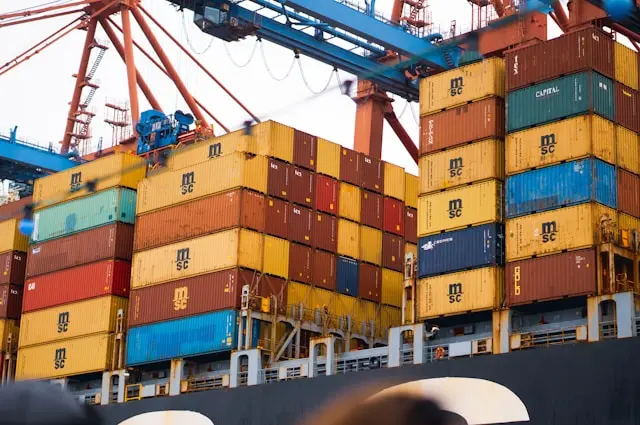
The capital flowing into Davao's cold chain and processing infrastructure is real and material. An additional 18,000 metric tons of cold storage capacity is expected online by mid-2026 through new joint ventures and facility expansions at Sasa Port. The Davao City Bypass Road, with its partial opening, is projected to reduce farm-to-port transit times by 30% for producers in Toril and Calinan.
But capital investment in facilities creates demand for the operators, engineers, and compliance professionals who run those facilities. It does not create the professionals themselves.
Davao Region's logistics cost runs 18-22% of production value, according to the Philippine Institute for Development Studies. That compares to 8-12% in Thailand and Vietnam. Port congestion at Sasa Wharf produces an average reefer dwell time of 4.2 days. Regional best practice is two days. Only 12% of the regional truck fleet is refrigerated, compared to 35% in Central Luzon. These are systemic constraints that no single firm's investment can resolve alone.
The tension is clear. Each new blast-freezing facility and IQF line generates roles for food technologists, refrigeration engineers, and HACCP auditors. The region's educational pipeline and existing talent pool cannot fill those roles at the rate they are being created. The cost of hiring the wrong candidate for a cold chain facility, where a single temperature excursion can destroy an entire export consignment, makes the urgency of finding the right specialist an operational risk, not merely an HR inconvenience.
The Regulatory Layer That Multiplies Every Hiring Challenge
Phytosanitary compliance is not a background requirement in Davao's agribusiness cluster. It is the mechanism that determines whether product reaches its destination market at all.
China maintains registration requirements for 56 specific durian varieties. Mandatory vapor heat treatment for fruit fly mitigation requires capital investment of PHP 8 to 12 million per facility for VHT chambers. The Bureau of Plant Industry's Davao Regional Office processed approximately 14,200 phytosanitary certificates monthly in 2024 for consignments to China, Japan, South Korea, and the Middle East. Each certificate requires qualified professionals to conduct inspections, verify compliance, and manage documentation.
The EU Complication
The European Union's increased pesticide maximum residue limit surveillance has added a second compliance front. Three temporary import suspensions for Philippine banana exporters occurred across 2023 and 2024, as reported through the European Commission's RASFF system. Each suspension creates market volatility and raises the compliance threshold for re-entry.
The professionals who manage this regulatory environment sit at the intersection of trade law, agricultural science, and market-specific protocol knowledge. A compliance officer who understands EU MRL requirements may not hold the GACC audit credentials needed for the China market. The specialisation is narrow and the certification pathways are distinct. This is why the 45-day average replacement cycle for departing compliance officers is not simply a recruitment speed problem. It is a knowledge scarcity problem. You cannot recruit expertise that does not yet exist in the numbers the market requires.
For organisations navigating these layered compliance requirements while competing for leadership talent in food, beverage, and FMCG sectors, the search methodology matters as much as the compensation package.
What Senior Hiring Leaders in This Market Need to Do Differently
The conventional hiring approach in Davao's agribusiness cluster follows a pattern that worked when the talent market was simpler: advertise through local networks, rely on cooperative and industry association referrals, and wait for applications. That approach reaches the 12% of qualified plant pathologists who are actively looking and the fraction of cold chain managers not already fielding multiple recruiter enquiries.
At VP level and above, 85% of placements occur through retained executive search or direct headhunting rather than advertised vacancies or internal promotions. This is a fully passive market. The candidates who can run a 12,000-hectare plantation operation through a TR4 transition, or build a GACC-compliant cold chain from facility registration to export clearance, are employed. They are performing. They are not scanning job boards.
The search cycle for senior plant pathologists and agronomists runs 90 to 120 days even with direct approach methods. Cold chain specialists carry an average of 3.2 concurrent recruiter enquiries when their profiles become visible. The window to engage a candidate before a competing offer lands is measured in days, not weeks.
This is the environment where understanding why executive searches fail becomes operationally critical. A search that relies on visible candidates will miss the vast majority of the qualified pool. A search that moves slowly will lose candidates to counter-offers or Gulf recruitment. A search that does not understand the compensation arithmetic across Davao, Manila, and international markets will pitch offers that do not land.
KiTalent's approach to executive search in agribusiness and industrial sectors is built for markets that look exactly like this: high specialism, deep passivity, and competitive pressure from multiple geographies simultaneously. Using AI-enhanced talent mapping to identify qualified candidates across the Philippines and the diaspora, the process delivers interview-ready shortlists within 7 to 10 days. The pay-per-interview model means organisations pay only when they meet qualified candidates, removing the upfront retainer risk that makes traditional retained search difficult to justify for roles where the search timeline is uncertain.
With a 96% one-year retention rate across 1,450 executive placements, the methodology is designed for markets where the cost of a mis-hire or an abandoned search is not measured in recruitment fees. It is measured in lost export consignments, regulatory delays, and the operational capacity that walks out the door when the wrong candidate is placed or the right one is never found.
For Davao-based agribusiness firms competing for plant pathologists, cold chain leaders, and compliance directors in a market where the qualified pool is small, passive, and being pulled toward Manila and the Gulf, start a conversation with our executive search team about how we approach this specific challenge.
Frequently Asked Questions
What are the hardest agribusiness roles to fill in Davao Region in 2026?
The three most constrained roles are senior plant pathologists with TR4 specialisation (7-9 month average vacancy), cold chain operations managers with perishable logistics experience (22-25% counter-offer premiums reflecting acute scarcity), and phytosanitary compliance officers with China GACC audit credentials (45-day average replacement cycles). All three roles sit in predominantly passive candidate markets where fewer than 15% of qualified professionals are actively searching at any given time. Direct headhunting approaches are required to reach the remaining 85%.
How much do agribusiness executives earn in Davao compared to Manila?
VP Operations roles in Davao carry base salaries of PHP 180,000 to 280,000 monthly, with total packages reaching PHP 350,000 to 450,000 at major exporters. Manila-based multinational headquarters offer 25-35% premiums above Davao rates for equivalent positions. Gulf state employers offer tax-free packages of PHP 200,000 to 350,000 for experienced plantation managers, creating additional competitive pressure on Davao compensation structures.
Why is Fusarium TR4 affecting agribusiness hiring in Davao?
TR4 has infested approximately 16,000 hectares of Cavendish plantations in Mindanao, forcing abandonment of 4,200 hectares in Davao del Norte. This simultaneously displaces field workers and creates urgent demand for plant pathologists, biocontrol specialists, and transition agronomists who can manage replanting with resistant cultivars. The displaced workers lack the qualifications for the specialist roles being created, producing a labour market fracture rather than a simple shortage.
What is driving durian export growth from Davao?
The Philippines-China export protocol unlocked direct access to the Chinese market, producing a 340% surge in durian export volumes in 2024. Davao Region accounts for approximately 60% of national durian production and nearly 100% of exports. Four thousand hectares of new orchards planted in 2021-2022 are reaching commercial bearing in 2026, with the Department of Agriculture projecting a further 25% production increase. This growth is driving demand for cold chain specialists, food processing technologists, and GACC compliance professionals.
How does KiTalent approach executive search in Davao's agribusiness sector?
KiTalent uses AI-enhanced talent mapping to identify qualified candidates across the Philippines and the international Filipino diaspora, reaching the passive specialists who do not appear on job boards or recruitment platforms. The methodology delivers interview-ready shortlists within 7 to 10 days and operates on a pay-per-interview model with no upfront retainer. With a 96% one-year retention rate, the approach is designed for markets like Davao where specialist knowledge is scarce and the cost of a failed search compounds through lost operational capacity.
What infrastructure changes are affecting Davao's agribusiness talent needs?
An additional 18,000 metric tons of cold storage capacity is expected online by mid-2026 through joint ventures and port facility expansions. Each new facility generates demand for refrigeration engineers, food safety auditors, and logistics managers. The Davao City Bypass Road is projected to reduce farm-to-port transit times by 30%. However, systemic constraints remain: logistics costs run 18-22% of production value versus 8-12% in Thailand and Vietnam, and only 12% of the regional truck fleet is refrigerated.