Davao Port Is Expanding Fast. The Talent to Run It Is Not Keeping Pace.
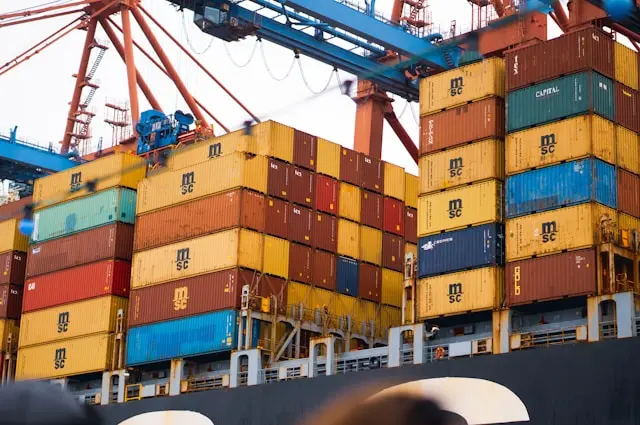
Davao Port Complex handled 1.85 million TEUs in 2024 and is approaching the operational ceiling of its ICTSI-operated terminal at 2.1 million TEUs. A USD 45 million Phase 2 expansion, targeted for completion by the end of 2026, will add 1.2 million TEUs of annual capacity and 150 new reefer plug connections. The physical infrastructure is arriving. The people who know how to operate it are not.
This is the central tension shaping Davao's maritime and logistics sector in 2026. Capital investment is outpacing the formation of human capital in the very specialisms the investment demands. Controlled atmosphere reefer management, terminal operating system implementation, China customs pre-clearance for perishable exports: these are not skills that can be taught in a six-week onboarding programme. They take years to develop, and the pool of qualified professionals in Mindanao is measured in dozens, not hundreds. Average time-to-fill for specialised logistics roles in Davao extended from 45 days in 2022 to 78 days in 2024. That trajectory has not reversed in 2026.
What follows is a structured analysis of the forces reshaping Davao's port, maritime, and logistics sector, the employers driving that change, and what senior leaders need to understand before they make their next hiring or retention decision. The article examines where the real constraints sit, why they are intensifying, and what a viable talent strategy for this market requires.
A Single Terminal, a Single Vulnerability
Davao's international container operations run through one operator. ICTSI subsidiary Davao Integrated Port and Stevedoring Services Corp. (DIPSSCOR) has held exclusive authority for international container handling at Sasa Port since the 2018 privatisation agreement. No secondary international terminal operator competes at Davao Port Complex. This distinguishes Davao from Manila's multi-operator environment in a way that matters for both logistics pricing and talent dynamics.
The operational consequences are measurable. Container handling charges at Davao run 12-15% higher than at Batangas Port, operated by Asian Terminals Inc., according to a Philippine Competition Authority port pricing study. For Mindanao exporters shipping bananas, coconut oil, and sardines, that premium compounds across millions of metric tons of annual throughput. Bulk cargo through Davao totalled 12.4 million metric tons in 2024, with agricultural exports comprising 68% of non-containerised volume.
The talent consequence is less obvious but equally binding. When a single operator controls all international container handling, every qualified port terminal operations manager in the region either works for DIPSSCOR or does not work in international port operations in Davao at all. There is no lateral move. There is no competitor offering a different role at similar seniority. The result is a talent market where port operations managers are estimated to be 85-90% passive, with average tenure at ICTSI-DIPSSCOR or Asian Terminals exceeding seven years and internal promotion preferred over external hiring.
This single-operator structure creates a paradox that senior hiring leaders must understand. The expansion will require dozens of new technical specialists. But the only organisation that can offer them relevant experience in Davao is the same organisation trying to hire them. The talent pipeline does not exist locally because the market structure never created one.
The Cold Chain Deficit Is Driving Talent Out of Davao
Davao Region requires an estimated 15,000 to 20,000 pallet positions of cold storage to service its agricultural export volumes optimally. As of late 2025, operational capacity stood at approximately 8,500 pallet positions. That 42% coverage rate forces 30-35% of high-value produce to transit through Manila cold facilities, adding PHP 12,000 to 18,000 per container in logistics costs.
Recent investments have begun to close the gap. Vifel Ice Plant and Cold Storage completed a 2024 expansion, adding 1,200 pallet positions to reach 3,500 total capacity. Therma Solid Technologies brought 800 pallet positions online at a blast freezing facility in Panabo City in June 2024. Francisco Bangoy International Airport is constructing a dedicated perishable cargo centre, a PHP 890 million investment scheduled for partial operation by mid-2026, adding 15,000 square metres of temperature-controlled handling space.
Where Cold Storage Investment Creates Hiring Pressure
Every new facility needs operators. Reefer container management, specifically controlled atmosphere technology for banana and durian preservation including ethylene management and remote monitoring systems, is a technical specialism with a national talent pool estimated at 400 to 500 qualified professionals. Non-compete agreements at major agribusiness firms keep roughly 80% of those professionals passive.
The practical effect is visible in documented hiring patterns. According to Supply Chain Asia Philippines Quarterly, a senior cold chain operations manager position at a major Mindanao agribusiness exporter remained vacant for seven months in 2024 before being filled with an expatriate transfer from Thailand operations at a reported 40% premium above the original compensation budget. The role required specific expertise in controlled atmosphere container management for banana exports to China. That skill set was absent in the local Davao market.
The Regulatory Squeeze on Smaller Operators
The Food and Drug Administration's cold chain certification requirements, effective from 2025, require PHP 2 to 5 million in investment per facility for compliance. For smaller Davao cold storage operators, this is not an upgrade. It is a viability test. The likely outcome is consolidation: fewer operators, each handling larger volumes, each requiring more sophisticated management talent than the businesses they absorb. Volume growth and employment growth are decoupling. Throughput rises. Headcount may not.
This is the dynamic that makes Davao's cold chain sector fundamentally different from what headline growth numbers suggest. The sector is expanding in revenue and volume terms. But the expansion is concentrating into fewer, more technically demanding organisations. The talent they need is scarcer, more expensive, and harder to find than the talent the industry employed five years ago.
Durian, Digital Manifests, and the Compliance Talent Squeeze
Davao's durian exports to China grew 45% year-over-year through 2024. Francisco Bangoy International Airport processed 48,300 metric tons of cargo in 2024, up 11% from the prior year, driven largely by durian and mangosteen shipments to China and the Middle East. Peak season utilisation at the cargo terminal reached 94%, triggering temporary overflow to General Santos City.
This export growth is colliding with the most demanding regulatory environment in the sector's history.
The Bureau of Customs now mandates advance manifest submission 48 hours before departure under CAO 01-2024. MARINA's Maritime Industry Development Plan 2028 requires digital submission of cargo manifests and customs pre-clearance by 2026. The Department of Agriculture has introduced cold chain IoT monitoring requirements for compliance with international phytosanitary standards. Each of these regulations requires specific technical knowledge. Together, they require professionals who can operate across customs compliance, digital systems, and agricultural export protocols simultaneously.
The market for these professionals barely exists. According to the Mindanao Business Council Logistics White Paper 2024, a major European logistics provider reportedly abandoned a search for a Davao-based Customs and Trade Compliance Manager after four months. The role required both Davao-specific port relationships and ASEAN-wide trade agreement expertise. Unable to identify candidates combining both, the firm split the function between Manila headquarters and a contracted local customs broker. The Robert Walters Philippines Salary Survey 2024 confirmed this pattern as typical for the market.
Senior customs brokers with Davao Port-specific relationships and China or ASEAN expertise are estimated to be 75% passive. Junior customs brokers turn over frequently, creating an active candidate market at entry level. But the hidden 80% of passive talent at senior level is precisely the segment that matters most for compliance-critical roles.
Compensation Realities: What Davao Logistics Talent Actually Earns
Compensation in Davao's logistics sector varies sharply between multinational and local employers, between port operations and agribusiness logistics, and between Davao and its competitor markets for the same talent.
Port terminal operations roles carry a 15-20% premium above general logistics positions, reflecting ICTSI-specific technical requirements. A senior specialist or manager in port terminal operations earns PHP 1.8 million to 2.4 million annually (approximately USD 32,000 to 43,000). At the executive or VP level, that range rises to PHP 4.5 million to 6.5 million (USD 80,000 to 116,000).
Cold chain and perishables logistics roles sit slightly below port operations at the specialist level, PHP 1.5 million to 2.0 million, but with high variability based on HACCP certification level. Executive-level cold chain roles command PHP 3.8 million to 5.2 million (USD 68,000 to 93,000).
The Manila Premium and Why It Matters
Metro Manila offers 35-50% compensation premiums for equivalent logistics roles compared to Davao. However, housing costs in Manila run 140% higher than Davao, partially offsetting the wage gap. The net effect is that Davao can retain mid-level talent on cost-of-living grounds, but struggles to retain senior professionals once they receive Manila offers that include international headquarters exposure unavailable in Davao.
Multinational 3PLs operating in Davao, notably Kuehne+Nagel and DHL Global Forwarding, pay 20-30% premiums above agribusiness local employers for equivalent roles. This creates a two-tier market within Davao itself. A supply chain manager at a multinational 3PL earns materially more than the same role at a local agribusiness firm. But the multinational offers less job security given project-based contracts. Candidates negotiating compensation in this market face a trade-off between premium pay and employment stability that does not exist in more mature logistics centres.
The International Drain
The compensation gap is most acute at the entry level, and its effects ripple upward for years. Singapore and Dubai actively recruit Filipino maritime graduates from Davao's academies, offering starting salaries four to five times Philippine rates according to POEA deployment statistics. The University of Southeastern Philippines graduates 340 licensed mariners annually. Mindanao International Maritime Academy produces another 180. A material share of those graduates leave the country within two years of qualification.
This is not merely a salary gap. It is a pipeline failure. Davao educates talent that it then exports. The mid-career professionals who would normally fill Davao's senior roles in five to ten years are instead building their careers in Singapore and the Gulf. The consequence is a missing generation of experienced port and maritime professionals in Mindanao, and no mechanism currently in place to replace them.
The Supercargo Problem: Sixty People Serving All of Mindanao
The most revealing data point in Davao's talent market is not about a shortage in a broad category. It is about a specific role that barely exists at scale.
The "supercargo" in Davao's context is a hybrid professional combining maritime operations knowledge with agricultural supply chain expertise. These individuals understand both the vessel-side logistics and the plantation-to-port chain for perishable exports. They can manage controlled atmosphere container loading, coordinate with vessel masters on reefer monitoring, and troubleshoot phytosanitary compliance at the point of departure.
According to the Philippine Ship Agents' Association, an estimated 60 to 80 qualified individuals serve the entire Mindanao export sector in this capacity.
This is the talent category that commands the highest premiums in Davao. It is also the category where conventional search methods fail most consistently. Job boards do not reach these professionals. They are not looking. Many do not maintain updated online profiles. Their value is embedded in relationships with specific port authorities, specific shipping lines, and specific agricultural exporters. Moving one of them requires understanding not just their compensation but their entire operating context.
Several Davao-based agribusiness exporters have responded by creating Chief Cold Chain Officer roles or elevating VP Cold Chain positions to board level. This recognition that logistics failures now present greater revenue risk than production shortfalls is a strategic shift. But creating the title does not create the candidate pool.
My original analytical claim is this: ICTSI's USD 45 million terminal expansion and the parallel cold chain investments are not creating a larger talent market. They are creating a more technically demanding one that the existing talent pool cannot serve. Capital investment has moved faster than human capital formation, and the gap is widening at the exact seniority level where hiring failures have the greatest operational cost. The firms that will operate this infrastructure in 2027 and 2028 need to begin their senior searches now, because the candidates they need are already employed, already passive, and already being courted by Manila and international competitors offering substantially more.
What This Means for Hiring Leaders in Davao's Logistics Sector
The challenge facing organisations hiring in Davao's port and logistics market in 2026 is not a generic talent shortage. It is a mismatch between the speed of infrastructure investment and the pace at which specialised professionals can be identified, attracted, and retained. The capacity expansion at Sasa Port, the new perishable cargo centre at FBIA, and the tightening regulatory environment are all converging on the same constraint: a small, passive, geographically dispersed talent pool that traditional job advertising cannot reach.
Time-to-fill for specialised roles has extended to 78 days and continues to lengthen. The professionals with terminal operating system experience, reefer management certifications, and China customs pre-clearance knowledge are not posting CVs on JobStreet. They are employed, retained through non-compete agreements, and in many cases already fielding approaches from Manila-based or international employers offering compensation packages that Davao-based firms struggle to match.
The search methodology that works in this market looks fundamentally different from a standard recruitment process. It requires proactive talent mapping across the Philippines and the ASEAN region, because the candidate you need may be working in Batangas, Cebu, Bangkok, or Singapore. It requires understanding not just what a candidate earns but what keeps them in their current role, and what would need to change for them to consider Davao. It requires speed, because at 78 days to fill, the commercial cost of a vacant cold chain operations manager or port automation specialist accumulates in vessel waiting times, temperature excursions, and missed export windows.
KiTalent's approach to executive hiring in industrial and logistics sectors is designed for exactly this kind of market. AI-enhanced talent mapping identifies the passive specialists who do not appear on any job board. Interview-ready candidates are delivered within 7 to 10 days. Clients pay per interview, not through an upfront retainer, which means the risk sits with the search firm rather than with the hiring organisation. Across 1,450 executive placements globally, KiTalent maintains a 96% one-year retention rate, a metric that matters acutely in a market where replacement searches cost more than the original.
For organisations competing for cold chain leadership, port automation specialists, or compliance talent in Mindanao's logistics sector, where the candidates you need are not visible on any job board and the cost of a slow search is measured in export disruptions and regulatory exposure, speak with our executive search team about how we approach this market.
Frequently Asked Questions
What are the biggest logistics hiring challenges in Davao in 2026?
The primary challenge is a systemic mismatch between infrastructure investment and available specialised talent. ICTSI's USD 45 million port expansion, new cold chain facilities, and tightening digital customs mandates all require professionals with reefer container management, terminal operating system, and China customs pre-clearance expertise. The national pool for these roles is measured in hundreds, and 80-90% of qualified professionals are passive. Average time-to-fill for specialised logistics roles in Davao reached 78 days in 2024 and has continued to lengthen. Direct headhunting methodology is essential for reaching candidates who are employed and not responding to job postings.
What does a cold chain operations manager earn in Davao?
A senior cold chain operations manager in Davao earns PHP 1.5 million to 2.0 million annually at the specialist level (approximately USD 27,000 to 36,000), with significant variation based on HACCP certification level. Executive-level cold chain roles command PHP 3.8 million to 5.2 million annually (USD 68,000 to 93,000). Multinational 3PLs such as Kuehne+Nagel and DHL pay 20-30% premiums above local agribusiness employers for equivalent roles. Expatriate transfers into Davao for hard-to-fill cold chain positions have been documented at 40% above original position budgets.
Why is maritime talent leaving Davao and the Philippines?
Singapore and Dubai recruit Filipino maritime graduates directly from Davao's academies, offering starting salaries four to five times Philippine domestic rates. The University of Southeastern Philippines and Mindanao International Maritime Academy graduate over 500 licensed mariners annually, but a material share leave the country within two years. This creates a missing generation of experienced mid-career professionals in Mindanao, hollowing out the pipeline for senior port and maritime roles that take years of domestic experience to fill.
How does Davao's logistics compensation compare to Manila?
Metro Manila offers 35-50% compensation premiums for equivalent logistics roles. However, Manila housing costs run 140% higher than Davao, partially offsetting the wage gap at mid-level positions. The gap is most consequential at senior level, where Manila offers international headquarters exposure and career progression opportunities unavailable in Davao. Port terminal operations executives in Manila can earn materially more than their Davao counterparts, with the differential widening at VP level and above.
What specialist logistics roles are hardest to fill in Davao?
Three categories are most acute. First, reefer container management specialists with controlled atmosphere technology expertise for banana and durian exports. Second, port terminal automation specialists experienced with Navis N4 or equivalent terminal operating systems. Third, customs and trade compliance managers with both Davao port-specific relationships and ASEAN-wide regulatory knowledge. The "supercargo" hybrid role, combining maritime operations and agricultural supply chain expertise, has an estimated national talent pool of only 60-80 qualified professionals for all of Mindanao.
How can companies hire logistics executives in Davao more effectively?
Traditional job advertising reaches only the active fraction of the candidate market, which in Davao's specialised logistics roles represents 10-20% of qualified professionals. Effective hiring in this market requires proactive talent pipeline development across the Philippines and the ASEAN region, combined with deep understanding of what motivates passive candidates in specific technical roles. KiTalent delivers interview-ready executive candidates within 7 to 10 days using AI-enhanced talent mapping, with a pay-per-interview model that eliminates upfront retainer risk for hiring organisations.