Delhi's Wholesale Trade Is Booming at 8.5% Growth. Its Talent Pipeline Has Not Kept Up.
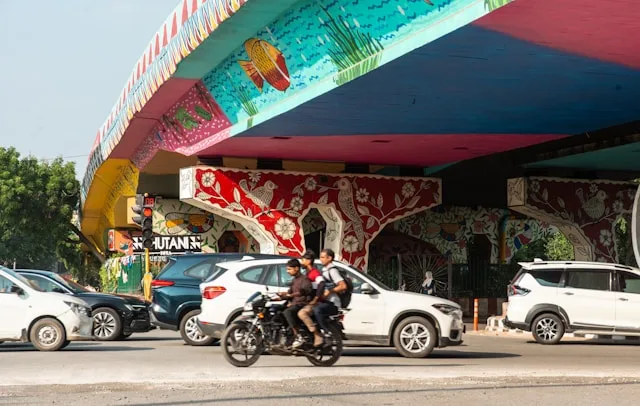
Delhi's wholesale sector processed more volume in 2025 than at any point in the city's trading history. Khari Baoli still handles roughly 70% of India's spice wholesale trade by volume, with supply chains stretching into the Middle East and North America. Sadar Bazaar's non-branded general trade alone recorded an estimated annual turnover of ₹45,000 crore, feeding retail networks across hundreds of Tier-II and Tier-III cities. Chandni Chowk's electronics corridor continued to account for 35% of North India's B2B electronics distribution. By every revenue measure, Delhi's wholesale markets are thriving.
Yet the market's ability to staff the roles that keep this system running has deteriorated sharply. Job postings for supply chain and logistics roles in Delhi NCR rose 34% year-on-year through Q3 2024, outpacing both Bangalore at 28% and Mumbai at 22%. Cold chain operations managers carry a vacancy rate of 48%. Last-mile distribution heads overseeing fleets of 500 or more vehicles take an average of 112 days to fill. A leading quick-commerce company abandoned a nine-month search for a Head of Dark Store Operations entirely, relocating the role to Bangalore and managing Delhi's wholesale and distribution operations remotely. The city that dominates India's wholesale trade cannot hire the people it needs to run that trade.
What follows is a ground-level analysis of where Delhi's wholesale hiring gaps are most severe, what is driving them, and why the forces shaping this market in 2026 make conventional hiring methods inadequate for the roles that matter most.
The Bifurcated Economy Behind the Numbers
Delhi's wholesale infrastructure is not a single market. It is two markets operating under the same geographic label, and they compete for talent on fundamentally different terms.
The first is the traditional mandi system: Khari Baoli, Sadar Bazaar, Ghazipur, Chandni Chowk. These markets are anchored by centuries-old trading relationships, informal credit cycles of 45 to 60 days, and a workforce model built around commission agents, packers, and warehouse labour. The Federation of Sadar Bazaar Traders alone encompasses 40,000 business units with an estimated workforce of 200,000, including informal labour. The Khari Baoli Spices Merchants Association represents over 450 registered trading houses employing 12,000 warehouse workers.
The second is the organised distribution cluster: Patparganj for FMCG, Naraina for automotive parts, Okhla for pharmaceuticals, and the emerging warehousing zones of Alipur, Bawana, and Narela designated under Delhi's Master Plan 2041. Corporate employers here include Reliance Retail with 4,200 supply chain staff across Delhi NCR, Aditya Birla Fashion and Retail with 1,800 at its Patparganj distribution centre, Dabur with 2,100 supply chain and field sales employees at its Sahibabad hub, and Mother Dairy with over 1,500 logistics personnel in Patparganj and Narela.
Where Traditional and Modern Collide
The talent crisis sits precisely at the intersection of these two systems. The candidates most in demand are those who can operate across both: executives who understand mandi-style commission agent relationships and can simultaneously run tech-enabled inventory management. According to Korn Ferry's India Consumer & Retail Talent Trends 2024, such executives are "extraordinarily rare." The scarcity is not simply a volume problem. It is a knowledge problem. The expertise required to manage Delhi's wholesale operations does not exist in textbook form. It is accumulated through years of operating within a system that has no equivalent anywhere else in India.
This is the analytical claim that underpins every hiring challenge described in this article: Delhi's wholesale talent gap is not a shortage of supply chain professionals. India produces those in adequate numbers. It is a shortage of professionals who can operate across the boundary between informal trading infrastructure and modern logistics technology, in a city where regulatory constraints make that boundary harder to cross than anywhere else in the country.
Regulatory Friction Is Making Every Role Harder to Fill
No analysis of Delhi's wholesale trade talent market can ignore the regulatory environment that defines it. Delhi does not merely have logistics challenges. It has a regulatory regime that creates an entirely separate category of operational expertise, one that does not transfer from any other Indian city.
Pollution Controls and Night Operations
The Graded Response Action Plan Stage IV restrictions prohibited entry of heavy goods vehicles not destined for Delhi between November 2024 and February 2025, creating a 22 to 25% surge in last-mile logistics costs for Chandni Chowk-based distributors. Delhi's standing prohibition of heavy commercial vehicles on Ring Road and Outer Ring Road between 07:00 and 23:00 forces night-only freight movement. This reduces truck utilisation rates to 65%, compared to 82% in Mumbai's flexible zoning districts, according to the Indian Foundation of Transport Research and Training.
The Commission for Air Quality Management has proposed a 24/7 ban on diesel trucks entering Delhi by 2026. If enacted, this would require wholesale distributors to transition their entire fleet to CNG or electric vehicles at an estimated capital expenditure of ₹2.4 lakh per vehicle. According to CRISIL's SME Credit Outlook, 40% of Delhi's unorganised wholesale transport operators face potential insolvency under this requirement.
The Fleet Replacement Cliff
The Supreme Court-mandated ban on petrol vehicles older than 15 years and diesel vehicles older than 10 years compounds this pressure. According to the Society of Indian Automobile Manufacturers, 35% of Delhi's wholesale delivery fleet requires replacement by end of 2026. This is not a gradual transition. It is a cliff.
For hiring leaders, the implication is direct. Every senior logistics role in Delhi now carries a compliance dimension that equivalent roles in Mumbai, Hyderabad, or Bangalore do not. A VP of Supply Chain hired from Chennai must learn an entirely new operational rhythm: night-shift fleet management, GRAP compliance protocols, pollution-control KPIs that affect variable pay. The pool of candidates who already possess this expertise is small, passive, and increasingly expensive. The 25 to 30% higher variable pay that Delhi's top-quartile supply chain VPs earn over their Mumbai counterparts is not a market distortion. It is the price of regulatory expertise that cannot be acquired quickly.
The Compensation Puzzle: Paying More and Still Losing
Delhi's wholesale sector pays well by Indian standards, particularly at the senior end. VP-level supply chain roles command ₹80 lakh to ₹1.6 crore per annum. Senior supply chain managers earn ₹18 to 28 lakh, carrying an 18 to 22% premium over equivalent roles in Ahmedabad or Chennai. Cold chain-certified warehouse managers command a 35% premium over their non-certified counterparts, pushing compensation to ₹16 to 27 lakh.
Yet the market is losing talent to three competing geographies, each pulling a different segment of the workforce.
Mumbai draws senior leadership with 12 to 15% higher VP-level compensation and superior port-access infrastructure. Hyderabad attracts cold chain specialists with 20 to 25% lower cost of living and integrated pharmaceutical parks like Genome Valley and Medchal that offer flexible hybrid working arrangements unavailable in Delhi's operationally intensive environment. Bangalore dominates demand for supply chain data scientists and automation engineers, offering equity-heavy packages with 30 to 35% higher variable compensation tied to technology implementation KPIs.
The Gurgaon Drain
Perhaps the most damaging competitor is not another city at all. It is Gurgaon, sitting inside Delhi NCR itself. Corporate headquarters for Flipkart, Amazon, and Delhivery are based in Gurgaon and draw talent away from Delhi's traditional wholesale markets with corporate campus amenities and day-shift operations. The contrast with Delhi proper, where senior logistics roles often require night-fleet oversight and hands-on mandi engagement, is stark. A qualified distribution head choosing between a Gurgaon-based e-commerce headquarters and a Chandni Chowk-based wholesaler is choosing between two fundamentally different working lives. The compensation differential matters less than the lifestyle differential.
This multi-directional outmigration explains why the hidden 80% of passive talent matters so acutely in this market. VP-level supply chain leaders in Delhi average 6.8 years of tenure in their current roles. Active application rates for advertised senior vacancies sit below 5%. Cold chain specialists are entirely passive: only 340 certified cold chain managers are available in Delhi NCR against 620 open positions, according to the Cold Chain Federation of India. Customs brokers with Delhi-specific expertise at Tughlakabad ICD and Delhi Air Cargo show an active job seeker rate below 8%. No amount of job advertising reaches these candidates.
Three Searches That Reveal the Market's True Condition
Aggregate statistics describe a pattern. Individual cases reveal its texture.
A leading Delhi-based FMCG distributor with annual turnover of ₹800 crore, serving the Sadar Bazaar ecosystem, created an entirely new C-suite role in October 2024: Chief of Freight Operations, reporting directly to the CEO and bypassing the traditional logistics manager hierarchy. The restructuring was designed to retain a single candidate who had received competing offers from two e-commerce majors. The distributor offered 0.5% ESOPs, highly unusual for a mid-market traditional trade company. It had spent seven months searching for a second qualified candidate with expertise in GRAP compliance and night-fleet management without success. This pattern is not isolated. According to a CII-Deloitte Wholesale Trade Survey from November 2024, 78% of Delhi wholesale distributors reported modifying organisational structures to accommodate supply chain leadership demands.
According to Business Standard reporting in October 2024, a major pharmaceutical wholesaler based in Okhla Industrial Area recruited a VP of Cold Chain Operations from a rival Mumbai-based 3PL provider, paying a 45% compensation premium. Total cost-to-company reached ₹1.8 crore against a market median of ₹1.24 crore. The premium was the price of securing expertise in temperature-controlled vaccine distribution.
According to the Economic Times, a leading quick-commerce company abandoned its search for a Head of Dark Store Operations for its Delhi North cluster in Q3 2024 after nine months, citing a "complete absence of candidates with both traditional wholesale sourcing relationships and tech-enabled inventory management experience." The firm relocated the role to Bangalore.
Each of these cases illustrates the same underlying dynamic. Traditional executive recruiting methods fail when the required expertise sits at the intersection of informal market knowledge and modern operational technology, and when the candidate pool is measured in dozens rather than hundreds.
The Automation Paradox: Investing to Replace Roles That Cannot Be Filled
Here is the tension that should concern every hiring leader in Delhi's wholesale sector. The market is simultaneously paying extreme premiums for human regulatory expertise while investing heavily to eliminate human touchpoints.
According to sector data, 65% of Delhi wholesale distributors are investing in warehouse automation. The Unified Logistics Interface Platform integration becomes mandatory for all Delhi warehousing units above 50,000 square feet in 2026, requiring workforce upskilling in technology-enabled logistics. Godrej Agrovet and Dabur have announced ₹340 crore in investment for temperature-controlled warehousing in Bawana and Alipur.
The capital is moving toward automation. But the capital requires people to direct it.
Only 12% of eligible talent in Delhi NCR possesses both traditional warehouse management and automated robotics oversight experience. The leaders needed to design, implement, and operate these automated systems are the same leaders the market already cannot find enough of. Automation has not reduced the need for senior talent. It has replaced one kind of senior talent with another that does not yet exist in sufficient numbers.
This creates a compounding problem. The firms investing most aggressively in automation are the firms most urgently in need of the hybrid-expertise leaders who can bridge manual and automated operations. These leaders command the highest premiums and have the lowest active job-seeker rates. The investment cycle accelerates the very talent scarcity it was meant to resolve.
The Dedicated Freight Corridor connection to Tughlakabad ICD, expected to reduce container transit costs by 15% for export-oriented wholesalers by mid-2026, will further increase demand for leaders who understand both traditional freight operations and modern intermodal logistics. Every infrastructure improvement adds another layer of expertise to already complex role requirements.
What a Winning Search Looks Like in This Market
Delhi's wholesale talent market has three characteristics that make conventional search methodology inadequate.
First, the senior candidate pool is overwhelmingly passive. Below the VP level, active candidates exist in moderate numbers for route planning and mid-level warehouse roles. Above it, particularly for supply chain VPs, cold chain specialists, and customs experts with Delhi-specific knowledge, the market is almost entirely closed to job advertising. Active application rates below 5% at the VP level mean that posting a role and waiting for applications will surface, at best, one in twenty viable candidates.
Second, the expertise is not transferable across cities without substantial ramp-up time. A supply chain VP from Hyderabad or Mumbai does not arrive in Delhi ready to manage night-only freight operations, GRAP compliance, and mandi commission agent relationships. The onboarding period for cross-city hires is measured in quarters, not weeks. This means the most immediately productive hires are already working in Delhi, already embedded in the regulatory environment, and already employed by a competitor.
Third, the compensation required to move a qualified passive candidate in this market has risen well beyond the traditional 15 to 20% premium over current package. The 45% premium paid by the Okhla pharmaceutical wholesaler is directionally representative of what it costs to secure cold chain expertise. Organisations still budgeting on the assumption that a 20% increase will move a senior candidate are losing searches before they begin.
What This Means for Search Strategy
The organisations succeeding in this market share three practices. They identify candidates through direct headhunting and talent mapping rather than job advertising. They move fast: in a market where the best cold chain managers are fielding multiple approaches, a 112-day search is not a measurement of difficulty but a guarantee of failure. They offer structurally differentiated packages, including equity participation, reporting line elevation, and role scope expansion, not merely higher base compensation.
For hiring leaders who recognise that the traditional sequence of post, wait, shortlist, interview, and offer reaches fewer than one in twenty viable candidates in Delhi's wholesale market, the question is not whether to adopt a different method. It is whether to adopt it before or after losing another nine-month search.
The 2026 Outlook: More Volume, Fewer People, Higher Stakes
Delhi's wholesale trade volume continues to grow at approximately 8.5% CAGR, according to ICRA's Sectoral Outlook. Warehousing vacancy in Delhi proper sits at 2.1%, compared to 8.3% in Bangalore and 6.7% in Hyderabad. Warehousing rent averages ₹22 to 26 per square foot per month, compressing distributor margins to 3.2% against a 5.8% national average. The market is expanding into space that does not exist at prices that squeeze margins thin.
The Delhi Warehousing and Logistics Policy 2024 mandates conversion of 25% of industrial area land use to logistics parks by 2027. Implementation lags due to land litigation. The proposed relocation of wholesale markets from Shahdara, Khari Baoli, and Sadar Bazaar to peripheral integrated freight complexes in Narela and Ghogha threatens ₹35,000 crore in existing supply chain infrastructure investments, according to the PHD Chamber of Commerce. Trader associations have opposed the plan, citing ₹12,000 crore in sunk real estate costs.
This regulatory uncertainty creates what the sector data describes as capital expenditure paralysis. Market demand signals favour immediate infrastructure investment, while the regulatory trajectory suggests asset stranding. Traditional traders are choosing to wait. The talent implications of this paralysis are severe: organisations that defer investment also defer the leadership hires needed to execute that investment. When the investment decisions finally arrive, they will arrive simultaneously across the market, compressing an already thin candidate pool even further.
Meanwhile, the TReDS (Trade Receivables Discounting System) penetration in Delhi's traditional markets remains at 12%, compared to 34% in Mumbai's organised wholesale. Working capital constraints limit what traditional wholesalers can offer in compensation packages. The credit infrastructure gap becomes a talent infrastructure gap.
For organisations building leadership pipelines in Delhi's wholesale and distribution sector, the window to secure critical hires before market-wide investment resumes is measured in quarters. Once the regulatory picture clarifies, every major distributor will enter the market for the same small pool of hybrid-expertise leaders simultaneously.
Reaching the Candidates This Market Needs
Delhi's wholesale talent market in 2026 is defined by a single structural reality: the roles with the highest strategic value are filled by candidates who are not looking, cannot be reached through conventional channels, and require a proposition that extends well beyond base salary.
KiTalent's executive search methodology is designed for exactly this market condition. Through AI-powered talent mapping, KiTalent identifies and engages the passive candidates who represent the vast majority of viable hires for cold chain leadership, supply chain VP, and regulatory-specialist roles. Interview-ready candidates are delivered within 7 to 10 days. Clients pay per interview, not through upfront retainers, eliminating the financial risk of a prolonged search in a market where search duration is the primary failure mode. A 96% one-year retention rate across over 1,450 executive placements reflects a process built to match candidates to roles they will stay in.
The cost of a nine-month search that ends in relocation to another city is not measured in recruiter fees. It is measured in operational disruption, missed seasonal windows, and regulatory exposure. For organisations hiring senior supply chain and distribution leadership in Delhi's wholesale market, where 48% of cold chain roles sit vacant and the best candidates have an active job-seeking rate below 5%, start a conversation with our executive search team about how to reach the candidates your competitors cannot.
Frequently Asked Questions
Why is Delhi's wholesale trade sector experiencing a talent shortage in 2026?
Delhi's wholesale sector grows at 8.5% CAGR while facing regulatory constraints unique to the city: night-only freight movement, GRAP pollution restrictions, and a Supreme Court vehicle age ban requiring 35% fleet replacement by end of 2026. These constraints create demand for leaders with Delhi-specific regulatory expertise that cannot be acquired quickly. Cold chain manager vacancy rates sit at 48%, and VP-level supply chain leaders show active application rates below 5%. The shortage is concentrated in senior roles requiring both traditional mandi market knowledge and modern logistics technology experience, a combination found almost nowhere else in India.
What do senior supply chain roles pay in Delhi's wholesale market?
VP-level supply chain and chief logistics officer roles in Delhi NCR command ₹80 lakh to ₹1.6 crore per annum including long-term incentives. Top-quartile earners receive 25 to 30% higher variable pay than Mumbai counterparts due to night-operations and pollution-compliance KPIs. Senior supply chain managers at the 10 to 15 year experience level earn ₹18 to 28 lakh, carrying an 18 to 22% premium over equivalent roles in Ahmedabad or Chennai. Cold chain-certified warehouse managers command a 35% premium over non-certified peers, reaching ₹16 to 27 lakh. Market benchmarking for distribution roles is essential for competitive offers.
How long does it take to fill senior logistics roles in Delhi?
Last-mile distribution heads managing fleets exceeding 500 vehicles take an average of 112 days to fill. Cold chain operations managers with HACCP certification and pharmaceutical experience face a 48% vacancy rate, indicating prolonged or failed searches across the market. One leading quick-commerce company abandoned its Delhi search after nine months. The primary cause is a passive candidate market: VP-level candidates average 6.8 years in their current roles, and fewer than 5% actively apply for advertised vacancies. Speed of engagement through direct headhunting determines whether a search succeeds or stalls.
Which cities compete with Delhi for wholesale and logistics talent?
Mumbai draws senior leadership with 12 to 15% higher VP compensation and port infrastructure. Hyderabad attracts cold chain specialists with 20 to 25% lower living costs and integrated pharmaceutical parks. Bangalore dominates tech-enabled logistics roles, offering 30 to 35% higher variable pay tied to automation KPIs. Within NCR, Gurgaon draws candidates from Delhi proper with corporate campus environments and day-shift operations. KiTalent's international executive search capability helps organisations compete across these geographies to reach the right candidates regardless of current location.
How can companies hire passive supply chain leaders in Delhi?
With active application rates below 5% at the VP level and cold chain talent entirely passive, organisations must engage candidates through direct identification rather than job advertising. This requires mapping competitor workforces, understanding individual career motivations, and presenting structurally differentiated offers that include equity, reporting line elevation, and scope expansion. KiTalent delivers interview-ready executive candidates within 7 to 10 days using AI-powered talent mapping, with a pay-per-interview model that removes retainer risk. Understanding why executive recruiting fails in passive markets is the first step toward a method that works.
What impact will Delhi's environmental regulations have on wholesale hiring?
The proposed 24/7 diesel truck ban, fleet age restrictions, and GRAP compliance requirements are reshaping every senior logistics role in the city. Compliance expertise now carries measurable compensation weight: Delhi's supply chain VPs earn 25 to 30% more in variable pay than Mumbai counterparts specifically for pollution-control and night-operations KPIs. With 35% of the delivery fleet requiring replacement by end of 2026 and 40% of unorganised transport operators facing potential insolvency, the demand for leaders who can manage fleet transitions while maintaining distribution continuity will intensify through 2026 and beyond.