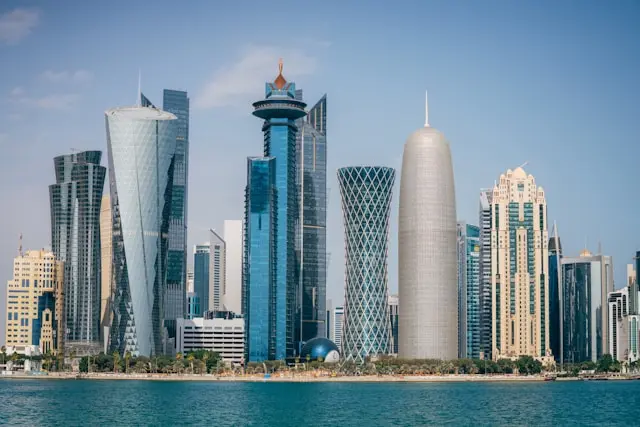
Doha's LNG Expansion Is Outpacing the Talent Pipeline That Runs It
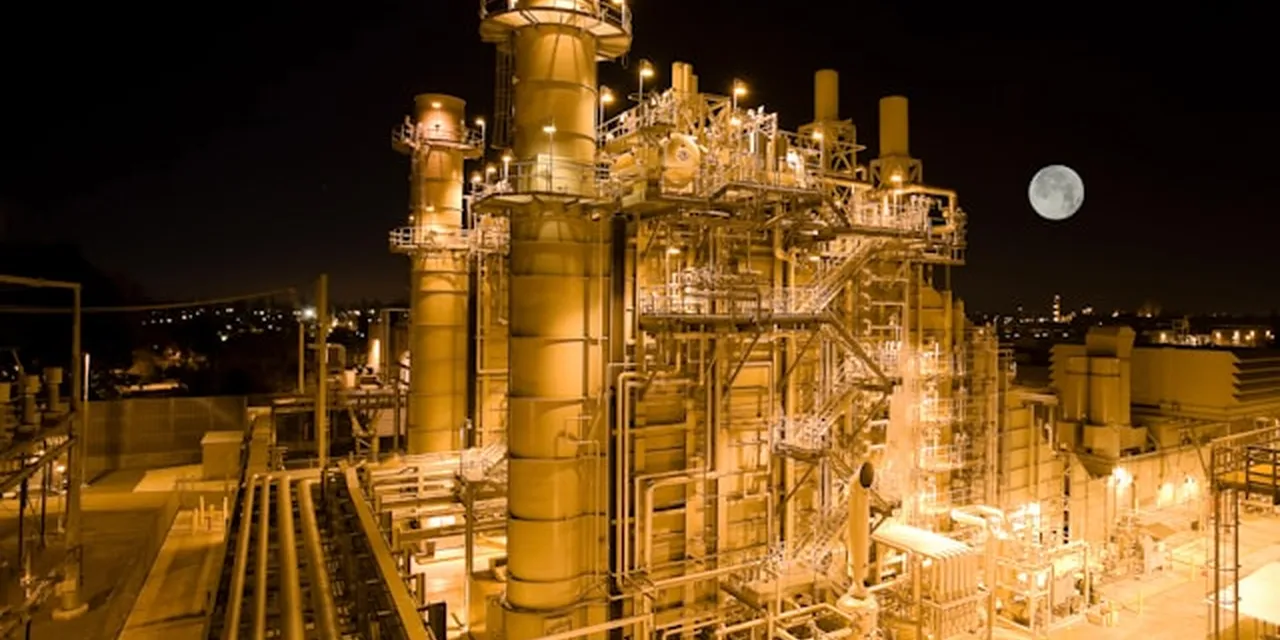
Qatar is building the largest LNG capacity expansion in history from a city that cannot house, school, or retain enough of the specialists it needs to deliver it. The North Field East project reached 85% completion by the end of 2024, with first production scheduled for late 2025, and the North Field South project is now accelerating into its peak engineering and procurement phase. Together, these two programmes will lift Qatar's LNG production from 77 million tonnes per annum to approximately 126 MTPA. The capital deployed exceeds $50 billion. The question is no longer whether the infrastructure will be built. It is whether the people required to commission, operate, trade, and optimise it can be found and kept in Doha.
The tension is specific and measurable. Senior LNG trader searches in Doha's West Bay district are running six to nine months. Subsea engineers with 15 years of experience are being recruited away to Saudi Arabia at 25-30% salary premiums before their current contracts expire. Project controls managers for North Field South are withdrawing from search processes after 120 days, accepting counter-offers or moving to ADNOC projects in Abu Dhabi. This is not a general complaint about talent scarcity. It is a named, quantified pattern affecting the three categories of professional that the entire expansion depends on: LNG trading specialists, deepwater and subsea engineers, and mega-project programme managers.
What follows is a ground-level analysis of Doha's energy sector, the forces tightening its executive talent market, the compensation structures required to compete, and what organisations hiring in this market need to do differently to reach the candidates that job boards and conventional recruitment cannot access.
The North Field Expansion and What It Demands of Doha
The scale of the North Field programme is difficult to overstate in human capital terms. NFE alone requires four new mega-trains, each among the largest ever constructed. NFS adds two more. The engineering, procurement, and construction phase has already absorbed 14,000 workers deployed from Doha-based contractors, with fabrication and rigging utilisation rates exceeding 90% through 2024.
But construction is only the first labour demand wave. The transition from construction to commissioning, now underway for NFE trains 1 through 4 across 2026, creates an entirely different talent requirement. Commissioning engineers, process safety specialists, and quality assurance professionals are needed in volume precisely as NFS engineering and procurement activities peak. McDermott Middle East's market outlook projects a 25% increase in Doha-based project management office staff for NFS alone.
Commissioning and Construction Overlap
The overlap is the critical dynamic. In most LNG expansion cycles, the construction workforce demobilises as the commissioning workforce arrives. Qatar's timeline compresses both into the same period. NFS procurement is accelerating while NFE commissioning is beginning. This means Doha needs two full project teams simultaneously, drawing from the same regional talent pool that Saudi Arabia's Jafurah unconventional gas development and Safaniyah offshore projects are also targeting.
The Trading Floor Expansion
Parallel to the infrastructure build, QatarEnergy Trading is scaling its commercial operation at pace. The trading desk executed a record 350 spot LNG cargoes in 2024, up from 280 the prior year. Headcount grew from 45 traders in 2022 to approximately 75 by the end of 2024. The next phase is more ambitious: a dedicated 24-hour trading operations centre in Doha, planned for the first half of 2026, covering Asian market hours and requiring an additional 30-40 traders and operations staff.
This is not a gradual ramp. It is a step-change in a market where 85-90% of qualified senior traders are passive candidates employed by Shell, TotalEnergies, Trafigura, or Gunvor, with average tenure of 4.5 years and low voluntary turnover. The pool of professionals who can trade LNG cargoes at this level, maintain Asian buyer relationships, and are willing to relocate to Doha is measured in the low hundreds globally.
Why Doha's Talent Market Is Harder Than It Appears
From the outside, Qatar's proposition looks compelling. Tax-free compensation. A state-backed employer with virtually unlimited capital. The world's largest LNG production base. Yet the market data tells a different story about what it actually takes to move senior professionals to Doha.
The friction starts with infrastructure that most hiring leaders do not consider until a preferred candidate declines. Residential vacancy rates in West Bay and The Pearl, the areas where senior expatriate executives typically live, fell below 5% in 2024. Rents rose 12% year-on-year. International schools operating Western curricula have waiting lists of 12 to 18 months. A VP-level engineer with school-age children cannot accept a Doha offer unless accommodation and schooling are resolved before arrival. Many searches that fail at the offer stage fail for these reasons, not compensation.
The Ras Laffan commute compounds the problem. The 80km distance between Doha and the industrial city where physical operations take place requires two to three hours of daily round-trip transport, or camp-based accommodation on 28/28 rotation schedules. Senior professionals accustomed to urban family living resist both options. The result is that technical authority roles requiring regular Ras Laffan presence are materially harder to fill than equivalent-seniority commercial roles that can be performed entirely from West Bay.
This is the analytical point that the headline numbers obscure: Qatar's investment in LNG capacity has not been matched by equivalent investment in the urban infrastructure that makes Doha competitive for the expatriate professionals the expansion requires. Capital for trains, ships, and pipelines moved faster than capital for housing, schools, and transport. The hiring gap is a direct consequence of that mismatch.
The Regional Competition Pulling Talent Away
Doha does not recruit in isolation. It recruits against four competing hubs, each with distinct advantages that Qatar's talent strategy must specifically address.
Saudi Arabia: The Primary Threat
Saudi Aramco's Jafurah gas development, a $100-billion-plus unconventional programme, and the broader Vision 2030 project portfolio represent the single largest competing demand source. According to MEED's workforce mobility reporting, EPC contractors supporting the North Field expansion report a pattern of senior subsea engineers being recruited by Saudi Aramco at 25-30% salary premiums. Saudi Arabia has added a structural incentive that Doha cannot currently match: a Premium Residency pathway offering skilled expatriates long-term settlement rights. For a 45-year-old subsea engineer weighing a three-year Doha contract against permanent residency in Saudi Arabia, the calculation increasingly favours Riyadh or Dhahran.
Industry data suggests this pattern has already forced Doha-based contractors to implement retention bonuses equivalent to six months' salary for critical subsea personnel. That is a reactive measure, not a sustainable strategy.
Dubai and Abu Dhabi: Lifestyle and Licensing Advantages
Dubai's Multi Commodities Centre offers faster business licensing, 100% foreign ownership without local sponsorship, and a substantially larger expatriate social infrastructure. For LNG trading professionals weighing Doha against Dubai, the lifestyle gap often outweighs the proximity-to-production advantage. Abu Dhabi's ADNOC expansion, particularly the Ruwais programme, offers comparable compensation to Doha with better international school availability and housing stock.
The 40% withdrawal rate for project controls manager candidates in North Field South searches, with candidates accepting alternative offers from ADNOC, illustrates how directly Abu Dhabi competes for the same professionals.
Singapore and the Western Hubs
For LNG trading talent specifically, Singapore represents a formidable competitor. It offers a mature Asian trading ecosystem, competitive tax-free packages, and international schooling infrastructure that Doha's 12-18 month waiting lists cannot match. Geneva and London offer market depth and established liquidity, though taxation reduces net compensation. Houston competes for deep technical specialists with higher absolute salaries, though US taxation narrows the net advantage.
The combined effect of these five competing markets is that Doha must offer more than competitive pay. It must resolve the housing, schooling, and lifestyle friction points that are causing candidates to choose elsewhere at the offer stage.
Compensation in Doha's LNG Sector: What Roles Actually Pay
Understanding Doha's compensation architecture is essential for any organisation hiring in this market. The tax-free structure inflates headline numbers, but the total proposition must account for housing allowances, education support, and relocation costs that vary considerably by employer.
LNG Trading
Senior traders and origination managers at the individual contributor level command base salaries of QAR 1.2-1.8 million ($330,000-$495,000), with annual bonus potential of 50-100% of base. Total compensation typically falls between $500,000 and $900,000. At VP and Head of Desk level, base salaries reach QAR 2-3 million ($550,000-$825,000), with total packages of $800,000 to $1.4 million before housing and education allowances.
These figures are competitive with Singapore and exceed net compensation in London and Geneva after tax. However, the scarcity of qualified candidates means that the negotiation dynamic in this market sits firmly with the candidate. Employers offering packages at the lower end of these ranges are consistently losing candidates to higher bidders.
Engineering and Technical Leadership
Senior subsea and flow assurance engineers at manager level earn total packages of QAR 800,000-1.2 million ($220,000-$330,000) including base, housing, and transport allowances. VP Engineering and Technical Authority roles in EPC firms command QAR 1.8-2.8 million ($495,000-$770,000) plus performance incentives.
The 25-30% premium that Saudi Aramco is reportedly offering above these levels explains the retention pressure. A senior subsea engineer earning $280,000 in Doha faces a $350,000-$365,000 offer from Dhahran with permanent residency attached. The rational economic decision is clear.
Project Management
Senior project managers on mega-projects above $1 billion earn day rates of QAR 4,000-6,000 ($1,100-$1,650) or annualised packages of QAR 1.4-2 million ($385,000-$550,000). VP Project Directors at portfolio level earn QAR 2.5-4 million ($685,000-$1.1 million). Day rates for contract project directors are projected to increase 12-15% through 2026 as NFS procurement accelerates, according to NES Fircroft's energy outlook.
For hiring leaders benchmarking their offers against this data, the critical insight is that compensation alone does not close these candidates. The counter-offer rate in this market is exceptionally high. Forty percent of shortlisted project controls candidates are withdrawing after receiving counter-offers. Any search strategy that does not account for counter-offer risk at the outset will fail at the final stage.
Qatarization: The Structural Constraint That Shapes Every Search
The Qatarization mandate is the single most consequential regulatory factor in Doha's energy hiring market. The policy requires 50% Qatari national employment in the oil and gas sector overall, with specific categories targeting 70-100% Qatari participation in administrative and supervisory roles. Current performance stands at 42%, eight points below target.
Qatar's citizen population is approximately 300,000. The simultaneous demands of NFE commissioning, NFS construction, the trading floor expansion, and CCUS research at Qatar Science and Technology Park cannot be staffed from a domestic talent pool of this size, particularly for deep technical specialisms like subsea tieback engineering, LNG cargo optimisation, or earned value management on multi-billion-dollar programmes. These skills require 15-20 years of accumulated project experience that no training programme can compress.
The result is a bifurcated hiring environment. Administrative, supervisory, and government-interface roles must prioritise Qatari candidates, with the Director of Qatarization and Human Capital role itself requiring bilingual Arabic/English fluency and government relations expertise. Technical and specialist engineering roles remain overwhelmingly expatriate-filled, but each expatriate hire creates a corresponding obligation to develop or recruit a Qatari national for a parallel track.
This bifurcation affects search strategy directly. An executive search for a VP Projects (North Field) must assess not only the candidate's technical delivery capability but also their ability to operate within a nationalisation framework, mentor Qatari engineers, and maintain productive relationships with QatarEnergy's internal stakeholders who are measured on Qatarization KPIs. The search brief is not just technical. It is cultural and political.
The Skills That Define the Next Phase
The transition from construction to commissioning and operations shifts the skills profile that Doha's market demands. Construction-phase talent, which dominated hiring through 2024, gives way to a set of specialisms that are globally scarce.
LNG Cargo Optimisation and Boil-Off Management
As NFE trains come online, the commercial value of each cargo depends on specialists who can maximise delivery volumes and manage LNG shipping economics. This expertise sits at the intersection of trading, engineering, and logistics, and the global population of professionals with hands-on boil-off management experience numbers in the low thousands.
Carbon Capture and Sequestration
QatarEnergy's Ras Laffan CCUS project, with 1.5 MTPA capacity, requires process engineers with operational CCUS experience. This is a skillset that barely existed five years ago at commercial scale. The research facilities at Qatar Science and Technology Park employ 200 specialised engineers and researchers, but the operational phase will require considerably more.
Digital Twins and Predictive Maintenance
Nakilat's digital transformation strategy calls for AI-driven predictive maintenance across its fleet of 69 LNG vessels and the associated shore-based monitoring infrastructure. The professionals who can implement digital twin systems for LNG carriers are typically drawn from the aerospace or advanced manufacturing sectors, not from traditional oil and gas. Recruiting them to Doha requires explaining a proposition they may not have previously considered.
Integrated Project Controls
The NFS programme demands earned value management specialists capable of running integrated cost and schedule control across multi-billion-dollar LNG train construction. According to the PMI Qatar Chapter's workforce survey, this segment shows 60% passive candidate rates, higher mobility than trading but still requiring direct headhunting approaches to reach the strongest candidates.
What This Means for Organisations Hiring in Doha
The convergence of these dynamics creates a hiring environment where conventional approaches consistently fail. Posting a role and waiting for applications reaches, at best, 10-15% of the qualified candidate pool for LNG trading positions and 20% for engineering roles. The professionals who can deliver the North Field expansion are employed, compensated well, and not looking. They will not see a job advertisement. They will not respond to a generic recruiter message. They will respond to a specific, credible, confidential approach that addresses their particular calculation about Doha versus the alternatives.
That calculation is different for every candidate segment. A senior trader in Singapore weighs Asian market access and schooling infrastructure. A subsea engineer in Aberdeen weighs tax-free compensation against career progression at Saudi Aramco. A project director in Houston weighs net compensation after tax against the scale of the North Field programme. Each conversation requires market intelligence that most internal talent teams and generalist recruitment firms do not possess.
The cost of getting this wrong is not abstract. A VP Projects search that runs 120 days and ends with the top candidate accepting a counter-offer delays a multi-billion-dollar programme. A trading desk expansion that takes nine months instead of three leaves cargo optimisation value on the table during the highest-volume period in QatarEnergy Trading's history. The financial exposure of a failed executive search in this market is measured in programme delays, not recruitment fees.
KiTalent works with energy sector organisations facing precisely this profile of hiring challenge. With interview-ready executive candidates delivered within 7-10 days and a pay-per-interview model that eliminates upfront retainer risk, the approach is built for markets where speed, discretion, and passive candidate access determine the outcome. A 96% one-year retention rate across 1,450+ executive placements reflects a methodology calibrated for candidates who need to be found, not candidates who are already looking.
For organisations competing for LNG trading, subsea engineering, and project leadership talent in Doha's energy market, where the candidates who can deliver the North Field expansion are not visible on any job board and the cost of delay is measured in programme timelines, speak with our energy sector executive search team about how we approach this market.
Frequently Asked Questions
What is the average salary for an LNG trader in Doha in 2026?
Senior LNG traders in Doha earn base salaries of QAR 1.2-1.8 million ($330,000-$495,000) with annual bonuses of 50-100% of base, bringing total tax-free compensation to $500,000-$900,000. VP and Head of Desk roles reach $800,000-$1.4 million before housing and education allowances. These figures are competitive with Singapore and exceed London and Geneva net of tax. However, the scarcity of qualified candidates with Asian buyer relationships means that employers offering at the lower end of these ranges consistently lose candidates to higher bidders in competing hubs.
Why is it so hard to hire subsea engineers in Qatar?
Qatar's subsea engineering shortage stems from direct competition with Saudi Aramco's Jafurah and Safaniyah programmes, which are offering 25-30% salary premiums and permanent residency pathways that Doha cannot currently match. The qualified population of subsea engineers with 15+ years of LNG-specific experience is globally limited. Most are on long-term rotations with low voluntary turnover. Reaching them requires direct, confidential headhunting rather than advertised vacancies, as approximately 80% are passive candidates who will not respond to job postings.
How does Qatarization affect executive hiring in Qatar's oil and gas sector?
Qatarization mandates 50% Qatari national employment in oil and gas, with administrative and supervisory roles targeting 70-100%. Qatar's citizen population of approximately 300,000 cannot supply sufficient specialists for simultaneous mega-projects. This creates a bifurcated market: administrative and government-interface roles prioritise nationals, while deep technical roles remain expatriate-filled. Every executive search must assess candidates' ability to operate within this framework and mentor national employees, adding a cultural and political dimension beyond technical competence.
What are the biggest challenges of relocating to Doha for energy professionals?
Three infrastructure constraints deter senior candidates. Residential vacancy rates in preferred areas like West Bay and The Pearl are below 5%, with rents rising 12% annually. Western-curriculum international schools have waiting lists of 12-18 months. The 80km Ras Laffan commute requires 2-3 hours daily or camp-based rotation schedules. Employers that resolve housing and schooling before extending offers close candidates at materially higher rates than those that treat relocation logistics as post-offer administration.
How does KiTalent approach executive search in Qatar's energy sector?
KiTalent uses AI-enhanced talent mapping to identify passive candidates across global energy hubs including Doha, Singapore, Houston, and London. The pay-per-interview model means clients only pay when they meet qualified candidates, eliminating upfront retainer risk. Interview-ready shortlists are delivered within 7-10 days. For Qatar's energy market specifically, this approach addresses the 85-90% passive candidate ratio in LNG trading and 80% in subsea engineering, reaching professionals that conventional job advertising and generalist recruiters cannot access.
What executive roles are hardest to fill in Doha's oil and gas sector?
Three categories face the most acute shortages: LNG trading professionals with Asian buyer relationships (6-9 month average vacancy duration), subsea and flow assurance engineers with 15+ years of experience (subject to active poaching by Saudi competitors), and mega-project programme managers with earned value management expertise (40% candidate withdrawal rate due to counter-offers). Each requires a specialised search methodology that accounts for counter-offer risk, relocation friction, and competitive dynamics with four or five other hiring markets targeting the same professionals.