Dudelange Logistics Hiring: Why Zero Warehouse Space and a Shrinking Talent Pool Are Forcing a New Operating Model
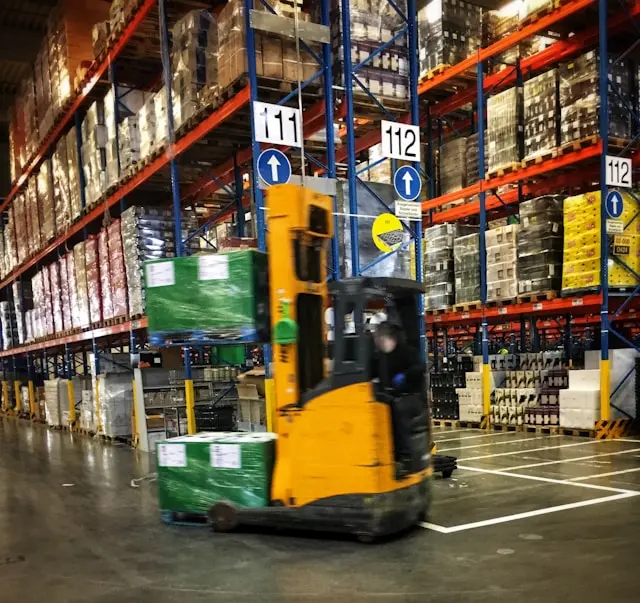
Dudelange's Zone Industrielle is running at 98% warehouse utilisation with no Class A logistics space available. Average rents for modern logistics facilities climbed 12% year on year through late 2024, reaching €9.80 per square metre per month. The physical ceiling has arrived: operators in this small southern Luxembourg municipality cannot build outward, and the talent they need to build upward through automation is not available in sufficient numbers.
This is not a conventional hiring challenge. The constraint is systemic. Dudelange's logistics cluster depends on roughly 1,200 daily car crossings by French cross-border workers who face potential tax changes that could cut their net income by €400 to €600 per month. The automated systems technicians who could reduce that dependency barely exist in the Greater Region talent pool. And the brownfield sites that look like expansion opportunities on a map carry contamination liabilities that make them unusable for modern specifications. Every apparent solution introduces a new constraint.
What follows is an analysis of the forces reshaping Dudelange's logistics sector, the employers driving that change, and what senior leaders need to understand before they make their next hiring or operational decision in this market. The picture that emerges is of a cluster being forced into a fundamentally different operating model, not by strategy but by physics, regulation, and demographics acting simultaneously.
The Physical Reality Behind Dudelange's Logistics Squeeze
The national headline figure for Luxembourg industrial vacancy is 1.2% as of Q3 2024, already among the tightest in Western Europe. In the southern region encompassing Dudelange, the effective vacancy for modern logistics facilities above 5,000 square metres is zero. According to JLL's Luxembourg Industrial Market Report, utilisation rates in Dudelange's existing warehouse stock exceed 98%.
But the constraint is more nuanced than a simple shortage of space. Dudelange's Zone Industrielle contains former ARBED steel processing buildings of 2,000 to 5,000 square metres that have sat vacant for over 18 months. They remain empty not because demand is absent but because they are functionally obsolete: low ceiling heights, inadequate loading bays, and contamination liabilities from decades of heavy industrial use. Luxembourg's Environment Agency has mapped these sites, and the remediation costs make speculative redevelopment uneconomic at current rents.
This means the real constraint is not land scarcity in absolute terms. It is a mismatch between legacy industrial stock and what modern logistics operations actually require. An operator looking for 10,000 square metres of clear-height warehousing with automated storage capacity will find nothing in Dudelange's industrial corridor that meets specification. The buildings that exist were designed for steel, not for e-commerce fulfilment or temperature-controlled pharmaceutical distribution.
Regulatory pressure compounds the problem. Luxembourg's amended Commercial Lease Law, which took effect in January 2025, increased tenant protections for logistics operators. The unintended consequence has been to freeze speculative development: landlords are now hesitant to commit to long-term leases when the regulatory framework favours tenants on exit. New supply is not coming.
For operators already in Dudelange, the only remaining option is to intensify throughput within fixed footprints. That means automation, and automation means a completely different workforce.
Automation Investment Is Outpacing the Technicians Required to Maintain It
FEDIL projects 3.2% capital expenditure growth in logistics equipment automation for Luxembourg's southern region through 2026. Dudelange operators are investing specifically in automated storage and retrieval systems, robotic palletising, and conveyor integration to compensate for the inability to expand horizontally. The logic is sound: if you cannot add square metres, you add vertical capacity and speed.
The Skills Gap Inside the Automation Push
The workforce required to install, maintain, and optimise these systems barely overlaps with the workforce that currently runs Dudelange's warehouses. PLC programming for Siemens and Rockwell platforms, WMS integration with SAP EWM or Manhattan Associates, and robotic system maintenance are specialist competencies. ADEM, Luxembourg's employment agency, forecasts a 15% increase in demand for logistics and transport technicians in the canton of Esch-sur-Alzette during 2026. The projected growth in the candidate pool is 4%.
That is a gap ratio of nearly four to one between demand growth and supply growth. Senior automation engineers in this market command €75,000 to €95,000 base salary. At the VP level, overseeing automation strategy across multiple logistics sites, compensation reaches €130,000 to €160,000 with occasional equity participation in pharma-logistics hybrids.
Why Signing Bonuses Are Not Closing the Gap
Employers in the Dudelange-Bettembourg logistics corridor are already offering €3,000 to €5,000 signing bonuses for automated systems technicians with three or more years of experience. Aggregate wage inflation for technical logistics roles reached 8.4% in 2024, nearly triple the 3.1% national average. Yet the bonuses are not producing results proportionate to their cost, because the underlying supply of qualified technicians in the Greater Region is structurally insufficient.
The House of Logistics Skills Gap Report for 2024 found that 70% of automation and technical specialists in the Greater Region are passive candidates. They move through professional networks rather than job boards. Standard postings yield minimal response for positions above €100,000 base compensation. For organisations seeking to fill these roles, identifying passive candidates through direct search is not a preference. It is the only viable method.
The capital has moved faster than the human capital could follow. Operators are purchasing systems they cannot fully staff, creating a new kind of bottleneck: not space, but maintenance capacity.
The Cross-Border Labour Model Under Threat
Dudelange's logistics sector relies on French cross-border workers for approximately 68% of its operational roles. Warehouse operatives, forklift drivers, and inventory clerks commute daily from the Moselle department: Thionville, Hayange, and Fameck, crossing via the A31 motorway. This model has functioned for decades. It is now vulnerable on three fronts simultaneously.
The French Tax Reform Risk
The French Senate has been reviewing changes to the tax treatment of cross-border workers. If the proposed removal of tax exemptions proceeds, net compensation for French residents working in Luxembourg could fall by 8 to 12%. For an average Dudelange logistics worker, that translates to €400 to €600 less per month. The question is not whether some workers would reconsider their commute. The question is how many, and how quickly.
French logistics employers in the Grand Est region, including operations run by Geodis and XPO, have already begun increasing retention bonuses specifically to prevent staff from crossing the border. According to Les Échos, a talent war in cross-border logistics is actively underway. The flow that Dudelange has relied upon is being contested from the French side for the first time in years.
Infrastructure Congestion
The A31 motorway at the Dudelange-Zoufftgen border crossing experiences average delays of 25 minutes during peak hours. This congestion adds an estimated 8 to 12% to last-mile delivery costs. For shift workers, the commute reliability issue is more personal: a 25-minute delay on top of an existing 40-minute drive erodes the compensation premium that makes the cross-border arrangement worthwhile.
The Sustainability Paradox
Dudelange's municipal development plan emphasises reduced car dependency and local employment. Yet the logistics sector's daily operation depends on approximately 1,200 private vehicle crossings by French commuters. Public transport connections are insufficient for shift work schedules. This creates a policy contradiction where the sector's economic necessity directly conflicts with the municipality's carbon reduction targets.
Neither constraint is resolvable without relocating operations outside the municipality. Land scarcity prevents that relocation from happening within Luxembourg. The result is paralysis: the current model is unsustainable by the municipality's own standards, but no alternative model is physically available.
For hiring leaders, the implication is direct. The pool of cross-border workers that fills 68% of operational roles is simultaneously being taxed, congested, and policy-pressured out of viability. Organisations that build proactive talent pipelines before this contraction accelerates will have options. Those that wait will be competing for a shrinking pool with higher salary expectations and a French employer base that is no longer passive.
Who Runs Dudelange's Logistics Cluster
The anchor institution in Dudelange's logistics sector is CFL Multimodal, which operates the rail-road terminal handling approximately 35,000 TEU annually. This terminal serves as the consolidation point for retail distribution into French Lorraine, employing an estimated 150 to 200 staff at the Dudelange site. The terminal's function is strategic: it is the infrastructure that makes Dudelange a multimodal hub rather than a simple warehousing location.
Groupe CAT maintains vehicle logistics operations serving automotive distribution, with approximately 80 employees. Luxlog, a regional third-party logistics provider, specialises in chemical and pharmaceutical logistics with temperature-controlled storage in the Zone Industrielle. At the lighter end of the manufacturing spectrum, Sopal SA produces industrial packaging with roughly 45 staff.
The more interesting development is Technoport Schlassgoart. While primarily a business incubator for digital and tech startups, Technoport now hosts a nascent cluster of logistics technology SMEs developing warehouse automation software and AI-driven supply chain tools. This is creating a secondary talent demand: not just for the people who run warehouses, but for the people who build the software that will increasingly run them.
The structural vulnerability in this employer base is concentration risk. CFL Multimodal's rail infrastructure underpins 40% of Zone Industrielle throughput. A disruption to rail connections, whether through accident, strike, or maintenance, would halt nearly half the zone's operations within 24 hours. There is no alternative heavy rail capacity. For a cluster already operating at 98% utilisation, a 40% throughput interruption would cascade into contractual failures within days.
This concentration shapes hiring strategy. Operators in Dudelange are not just competing for talent. They are competing for talent willing to work in a cluster with a single point of infrastructure failure. Senior candidates conducting due diligence will identify this risk. The organisations that address it transparently in their recruitment process will outperform those that hope candidates will not notice.
Compensation in Context: What Dudelange Pays and Why It Is Not Enough
At the senior specialist and manager level, logistics operations roles in Dudelange command €85,000 to €110,000 base salary for professionals with ten or more years of experience managing teams of fifty or above. Bonuses run 10 to 15% with a company car standard. At the executive tier, directors of operations, supply chain VPs, and managing directors of 3PL entities earn €140,000 to €180,000 base with 20 to 30% bonuses and long-term incentives. Total compensation packages at this level reach €175,000 to €240,000.
Supply chain directors with end-to-end responsibility and strategic sourcing oversight sit at €120,000 to €150,000 base, with total compensation of €150,000 to €190,000.
The Regional Compensation Equation
These figures look competitive until placed in regional context. Brussels and Antwerp offer supply chain directors €160,000 to €200,000 base, a 10 to 15% premium over Luxembourg. More importantly, they offer larger corporate headquarters density, international career mobility, and English-speaking working environments that senior executives with families often prefer.
In the other direction, Metz and Thionville pay logistics managers 25 to 35% less in gross terms. But the net differential narrows to 15 to 20% once French cost-of-living adjustments and tax structures are factored in. French logistics parks are expanding near the border, and reverse commuting by Luxembourg residents working in France is increasing. This was not a competitive dynamic five years ago. It is now.
Saarbrücken offers a middle ground: compensation between French and Luxembourg levels, with stronger social protections and stricter working time regulations that German-speaking engineers and technical specialists actively value. For executives weighing international career moves, the calculation is more complex than a simple salary comparison.
The original synthesis that emerges from this data: Dudelange's compensation premium over its French neighbours is real but fragile. It is maintained primarily by Luxembourg's tax treatment of cross-border workers, not by the operational attractiveness of the roles themselves. If the French tax reform proceeds, the premium collapses for operational staff. If Brussels continues to outpay for executive roles, the premium fails at the top as well. Dudelange's logistics employers are caught in a compensation structure that is vulnerable at both ends simultaneously.
Organisations that rely on compensation alone to attract and retain leadership talent risk losing candidates to counteroffers from markets offering not just higher pay but more compelling career trajectories.
The Regulatory Layer: CBAM, Green Deal, and Roles That Do Not Yet Exist
The European Union's Carbon Border Adjustment Mechanism enters enforcement in 2026. For Dudelange's light manufacturers in metals and packaging, this means documenting embedded carbon in every import. The compliance capability required to do this does not yet exist in the local labour market.
Separately, the Green Deal's logistics requirements will necessitate fleet electrification. Dudelange's Zone Industrielle has limited electrical grid capacity, a constraint identified in the municipality's own infrastructure audits. This may force operators to outsource final-mile delivery to the larger Bettembourg-based hubs, reducing Dudelange's attractiveness for new distribution contracts.
Luxembourg's labour law adds another layer. The Code du Travail mandates stricter rest periods for HGV drivers than French regulations. Cross-border fleets operating from Dudelange face compliance complexity that requires specialists who understand both jurisdictions. Customs compliance specialists, already in acute shortage following post-Brexit regulatory complexity, are one of the three hardest roles to fill in the cluster.
The CBAM requirement is particularly consequential because it creates demand for a role category that scarcely existed two years ago. CBAM compliance officers need to understand carbon accounting, import documentation, EU regulatory frameworks, and supply chain data systems simultaneously. The candidates who possess this combination are not sitting on job boards. They are being created in real time as organisations build internal capability.
For executive search in industrial and manufacturing sectors, this kind of regulatory demand shock is familiar: a new compliance requirement generates urgent hiring need for skills that the education system has not yet produced. The organisations that move earliest to identify and engage the small number of professionals who are building this expertise will secure them. Everyone else will be left building the capability from scratch, at a higher cost and a slower pace.
Mapping these emerging skill requirements before they become widely posted vacancies is precisely the kind of challenge where proactive talent mapping delivers its greatest value.
What Dudelange's Logistics Hiring Market Requires in 2026
The aggregate picture is clear. ADEM data for the canton of Esch-sur-Alzette shows 487 open logistics positions against 312 registered job seekers with relevant qualifications. That is a vacancy-to-seeker ratio of 1.56 to 1 at the operational level. At the senior and executive level, the ratio is far worse: Morgan Philips estimates that 85% of supply chain director and VP operations placements in Luxembourg involve candidates who were not actively looking.
The market is bifurcated. For warehouse operatives and inventory clerks, where annualised turnover runs 18 to 22% and 80% of candidates are active, conventional recruitment still functions. For every role above that tier, the market is overwhelmingly passive. Average tenure in senior roles exceeds 4.5 years. These professionals are not browsing job boards. They are solving problems at their current employers that make them highly valuable and highly visible only to those who know where to look.
The three acute shortage categories in Dudelange right now are bilingual warehouse operations managers (French, English, and ideally German), automated systems technicians capable of maintaining AS/RS and conveyor systems, and customs compliance specialists dealing with post-Brexit complexity. Each of these categories combines technical specificity with geographic constraint. The candidate must have the skills, speak the languages, and be willing to work in a cluster with the physical and infrastructure limitations described above.
At least one major automotive logistics operator has already responded by relocating its customs documentation team from Dudelange to Thionville, maintaining only physical warehousing in Luxembourg. According to the House of Logistics sector analysis, this pattern is emerging among SMEs across the Greater Region. Functions are separating from facilities. The talent goes where it can be found. The warehousing stays where the infrastructure sits. This is not a temporary adaptation. It is a permanent restructuring of how logistics operations in this corridor are staffed.
For organisations that cannot or will not split functions across borders, the cost of a failed executive hire compounds quickly. A supply chain director search that stalls for six months in a market operating at 98% capacity does not just delay strategy. It freezes operational improvements in a facility that has no room to absorb inefficiency.
KiTalent works with logistics and industrial organisations across Europe facing exactly this profile of constraint: compressed candidate pools, passive senior talent, and regulatory complexity that narrows the field further. With interview-ready candidates delivered within 7 to 10 days and a pay-per-interview model that removes retainer risk, the approach is designed for markets where speed and precision are not optional.
For organisations competing for supply chain leadership, automation specialists, or compliance talent in Dudelange's constrained logistics market, where the candidates are passive, the space is full, and the regulatory requirements are multiplying, speak with our executive search team about how we source and deliver in markets like this.
Frequently Asked Questions
What is the current state of logistics hiring in Dudelange, Luxembourg?
As of 2026, Dudelange's logistics sector faces a vacancy-to-seeker ratio of 1.56 to 1 at the operational level, with far tighter conditions for senior roles. ADEM forecasts a 15% increase in demand for logistics and transport technicians against only 4% candidate pool growth. Warehouse utilisation exceeds 98%, forcing investment in automation that requires specialists the local market cannot supply. The three hardest roles to fill are bilingual warehouse operations managers, automated systems technicians, and customs compliance specialists. Senior placements overwhelmingly involve passive candidates identified through direct headhunting methods rather than job advertising.
How much do logistics executives earn in Dudelange?
Logistics operations managers with ten or more years of experience earn €85,000 to €110,000 base in Dudelange, with 10 to 15% bonuses and a company car. Directors of operations and supply chain VPs earn €140,000 to €180,000 base, with total packages reaching €175,000 to €240,000. Supply chain directors sit at €120,000 to €150,000 base. These figures are competitive regionally but trail Brussels and Antwerp by 10 to 15% at the VP level, which influences candidate decisions for senior hires. KiTalent provides market benchmarking data to help organisations calibrate offers accurately.
Why is cross-border recruitment important for Dudelange logistics employers?
French cross-border workers fill approximately 68% of operational logistics roles in Dudelange, commuting from the Moselle department via the A31 motorway. This dependency is under pressure from potential French tax reforms that could reduce net income by €400 to €600 monthly, daily commute congestion averaging 25 minutes at the border, and competitive retention bonuses from French logistics employers. Organisations reliant on this labour flow need contingency strategies including automation investment and expanded geographic sourcing.
What automation skills are in demand in Luxembourg's logistics sector?
High-demand technical skills include PLC programming for Siemens and Rockwell platforms, robotic palletising operation, warehouse management system expertise in SAP EWM and Manhattan Associates, and automated storage and retrieval system maintenance. Senior automation engineers command €75,000 to €95,000 base salary. VP-level technical operations roles reach €130,000 to €160,000. The candidate pool for these skills is overwhelmingly passive, with 70% of placements requiring direct search rather than job board advertising.
How does Dudelange compare to other Greater Region logistics markets for talent?
Dudelange offers a gross compensation premium of 25 to 35% over Metz and Thionville, though the net differential narrows to 15 to 20% after cost-of-living adjustments. Brussels and Antwerp pay 10 to 15% more at the VP level and offer greater international career mobility. Saarbrücken appeals to German-speaking technical specialists valuing stronger social protections. Each competing market draws from a different segment of the talent pool, making the Greater Region's executive hiring environment one of the most complex multi-jurisdictional talent markets in Europe.
What regulatory changes are affecting logistics hiring in Luxembourg in 2026?
Three regulatory developments are creating new hiring demand. The EU's Carbon Border Adjustment Mechanism requires Dudelange manufacturers to document embedded carbon in imports, generating demand for CBAM compliance specialists. Green Deal fleet electrification requirements are straining the Zone Industrielle's limited grid capacity. And divergent Luxembourg and French HGV driver rest period regulations create compliance complexity for cross-border fleets. Each regulation requires specialists who combine regulatory knowledge with operational logistics experience.