Esbjerg Port's Green Transition Has a €67 Million Problem: The Workforce to Run It Does Not Exist Yet

Esbjerg Havn has committed more than DKK 500 million to ammonia bunkering infrastructure, hydrogen handling capacity, and expanded laydown areas for offshore wind marshalling. By 2026, the physical infrastructure will be operational. The specialists required to run it will not be.
This is the core tension facing every hiring leader in Esbjerg's port and logistics cluster. Capital has moved faster than human capital can follow. The port is building facilities for ammonia operations, cryogenic safety, and next-generation offshore wind logistics in a market where zero Danish ports currently operate at-scale ammonia terminals. The talent pool for these functions is effectively non-existent locally. According to a competency analysis by the Energy Innovation Cluster, the expertise required must be imported from Rotterdam or Singapore at 30 to 40% salary premiums, contradicting the political narrative that green transition investments create immediate, accessible local employment.
What follows is an analysis of the forces reshaping Esbjerg's port sector, the specific talent dynamics those forces have created, and what organisations competing for logistics leadership in this market need to understand before their next critical hire.
The Port in Transition: What Esbjerg's Cluster Looks Like in 2026
Esbjerg has always been a mixed-use port, but the mix has shifted dramatically. In 2023, offshore wind-related logistics accounted for 62% of total tonnage handled: 2.8 million tonnes of 4.5 million total. That figure was 48% in 2019. The port now services 80% of all offshore wind capacity installed in the Danish North Sea sector, a concentration that defines the local economy.
Direct and indirect port cluster employment stands at approximately 14,500 FTEs in Esbjerg municipality, representing 18% of local private-sector employment. This is not a diversified economy with a port attached. The port is the economy.
Offshore Wind: The Dominant Growth Engine
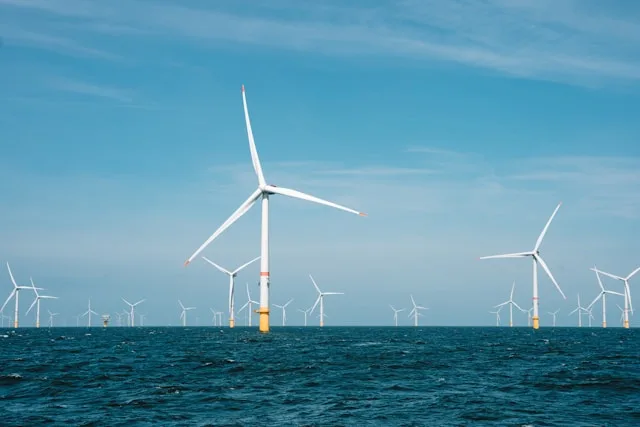
The 2026 outlook for offshore wind is strong. Volume growth of 15 to 20% is expected as Dogger Bank phases and Danish North Sea expansion enter marshalling. The port has allocated 400,000 square metres of additional laydown area for turbine components. The Tyra gas field redevelopment, coordinated by TotalEnergies EP Denmark, drove peak heavy-lift activity through early 2025 with historic highs in project cargo volumes for offshore topsides and jackets.
But this growth carries a structural vulnerability. Offshore wind construction is cyclical. The completion of Dogger Bank C in the 2025 to 2026 window may create a temporary demand trough before next-generation projects such as Bornholm Energy Island ramp up. Employers who hire aggressively during the peak face retention risk during the trough. Those who wait face the opposite problem: when the next cycle begins, the specialists they need will have already moved to Hamburg or Rotterdam.
Ro-Ro and Fishing: The Contracting Pillars
Roll-on, roll-off freight handled approximately 285,000 freight units in 2023, a decline of 8% from the prior year. The decline has stabilised somewhat, but the trajectory is clear. UK industrial production fell 2.1% in 2023, directly compressing the Esbjerg-Immingham route that DFDS operates. Projections for 2026 show flat growth of 0 to 2%, contingent on a UK manufacturing recovery that has not yet materialised.
The fish processing cluster tells a similar story. Employment stood at approximately 1,200 persons in 2023, down from 1,800 in 2015. Quota reductions and automation have driven the decline, and there is no indication of reversal. For a port cluster historically balanced across four pillars, two of them are now contracting in absolute terms, concentrating risk and opportunity on offshore wind and the emerging green fuels segment.
The Infrastructure Paradox: Building for the Wrong Future
Here is the analytical claim that the aggregate data supports but that no single data point states directly: Esbjerg's infrastructure planning has been misaligned with its actual growth drivers, and this misalignment has created a physical capacity crisis in the segment that is growing while leaving newly built capacity underutilised in the segment that is shrinking.
The port completed a DKK 120 million expansion of ro-ro terminal capacity in Q3 2023, adding 35 hectares of paved storage. The investment was predicated on anticipated Brexit-related trade diversion. That diversion did not materialise. Actual ro-ro throughput declined 8% in 2023 and remained flat through 2024. The new ro-ro infrastructure operates at roughly 60% utilisation.
Simultaneously, offshore wind project cargo surged 22%, overwhelming general cargo berths not originally designed for heavy-lift operations. The port now faces physical capacity shortages in its legacy heavy-lift areas. The paradox is visible from the quayside: one section of the port sits partially empty while another cannot accommodate the demand.
For hiring leaders, this misalignment matters because it shapes which operational roles face the most acute pressure. Heavy-lift berth congestion means crane operators, lashers, and terminal handlers face compressed timelines and overtime-dependent schedules. The skills required to manage this congestion efficiently are not the same as those required for standard ro-ro operations, and they cannot be transferred laterally. An organisation that assumes general logistics talent can be redeployed into heavy-lift offshore marshalling will discover the gap quickly and expensively.
Where the Talent Gaps Are Most Acute
DI Transport's 2024 sector survey found that 73% of logistics firms in the Region of Southern Denmark report "significant" or "critical" recruitment difficulties. That figure was 58% in 2022. The escalation is not abstract. It manifests in three specific verticals that define Esbjerg's hiring challenge.
Heavy-Lift Crane Operators: 120 to 150 Days to Fill
Certified mobile harbour crane operators holding H3-H4 certificates for loads exceeding 300 tonnes are the scarcest operational talent in the port. Local stevedore and heavy-lift operators consistently face 120 to 150 day time-to-fill for these roles. The typical resolution involves poaching from competitors within a 150-kilometre radius, covering Hvide Sande, Fredericia, and even Hamburg, with salary premiums of 12 to 18%.
One confirmed instance documented in DI Transport's 2024 case study compendium involved a major project logistics firm relocating a crane operator from Aarhus Harbour to Esbjerg with a DKK 150,000 signing bonus and guaranteed overtime premiums. The relocation was necessary to secure Tyra project timelines. When a single crane operator commands a six-figure signing bonus to move 300 kilometres, the market has moved beyond competitive. It has become a test of which employer can afford to outbid its neighbours.
Offshore Wind Logistics Managers: 65% First-Attempt Failure Rate
Positions requiring combined competencies in marine cargo surveying and offshore wind project management with five or more years of experience exhibit a 65% failure rate on first recruitment attempts in the Esbjerg market. The typical pattern, according to ShippingWatch recruitment analytics, sees roles advertised for six to nine months before employers either engage executive search firms or promote internally from an insufficient bench.
Blue Water Shipping's public job board listed a "Senior Project Manager, Offshore Renewables" vacancy for seven months between March and October 2024 before it was removed. Market-wide data indicates an average of 8.2 months to fill senior offshore logistics roles in Esbjerg versus 4.5 months in Copenhagen. The difference is not merely a function of pool size. Copenhagen offers a different proposition entirely: international exposure, dual-career employment for partners, and a broader professional network. Esbjerg's advantage is operational proximity to the North Sea. That advantage is genuine but narrow, and it is not enough on its own to attract candidates who are not actively looking.
Ammonia and Green Fuel Specialists: A Talent Category That Barely Exists
The most consequential gap is also the newest. The Port of Esbjerg's ammonia bunkering terminal, a joint venture with Yara Clean Ammonia, was scheduled for operational readiness in Q4 2025. The 2026 ramp-up requires safety certifications under ISGOTT ammonia amendments, cryogenic handling competencies, and toxicity response training. According to the Energy Innovation Cluster's competency analysis, these skills are "effectively non-existent" in the local Danish market.
This is not a shortage. It is an absence. There is no domestic talent pool to recruit from, no pipeline of graduates with relevant certifications, and no adjacent skillset that transfers cleanly. The closest operational expertise sits in Rotterdam and Singapore, and the salary premiums required to attract it range from 30 to 40% above Danish market rates.
For organisations planning executive and specialist hiring in industrial and manufacturing sectors, this creates a decision point that most have not yet confronted: build the competency internally over two to three years, or import it immediately at a cost that may not be sustainable once project volumes normalise.
Geographic Competition: Why Esbjerg Keeps Losing Mid-Career Talent
Esbjerg does not compete in isolation. Its talent pool overlaps with Hamburg, Rotterdam, Aarhus, and Copenhagen, and each competitor offers a different proposition to different career stages.
Hamburg presents the most direct threat for mid-career professionals aged 30 to 40. Base salary premiums of 15 to 25% for heavy-lift engineers and project cargo managers are partially offset by higher German taxation and cost of living, according to comparative Hays salary data. But Hamburg's real advantage is career trajectory. A mid-career logistics manager can access global headquarters of major shipping lines, forwarding groups, and energy companies. Esbjerg offers operational depth. Hamburg offers a step on the ladder. For ambitious professionals in their thirties, the ladder wins.
Rotterdam competes aggressively for offshore wind logistics talent. Dutch salary packages for comparable roles are roughly equivalent to Danish levels, which removes compensation as a differentiator. Rotterdam's advantage, according to a 2023 talent mobility study by the Netherlands Foreign Investment Agency, is the dual-career factor. Partners of senior logistics professionals can find employment in Rotterdam's diversified economy far more easily than in Esbjerg, a city of 72,000 where professional employment options outside the port cluster are limited. This factor is often invisible in traditional recruitment processes that focus exclusively on the candidate. It becomes decisive at the offer stage.
Aarhus, Denmark's largest port, competes for general logistics and freight forwarding talent with comparable salaries and lower housing costs than Copenhagen. Aarhus occasionally diverts talent from Esbjerg for land-based logistics roles, though Esbjerg retains a clear advantage in offshore-specialised niches. The risk is not that Aarhus steals offshore talent. The risk is that Aarhus absorbs the generalist logistics professionals who might otherwise develop offshore competencies in Esbjerg over time, thinning the developmental pipeline.
The cumulative effect is a funnel problem. Esbjerg's operational environment is world-class for offshore wind logistics. Its ability to attract and retain the professionals who run those operations is constrained by everything surrounding the work: city size, partner employment, career progression, and international connectivity. These are not problems that a salary increase alone can solve.
The 83% Passive Market and What It Means for Search Strategy
LinkedIn Talent Insights data for Region of Southern Denmark in Q4 2024 reveals an 83% passive candidate rate among professionals with combined "Offshore Wind" and "Logistics" skill profiles. Eighty-three percent are not applying to job postings. They are employed, typically content, and reachable only through direct approach.
For certified crane operators, the dynamic inverts. The market is active but shallow. Any qualified operator who enters the active market is employed almost immediately, meaning the standing inventory of available candidates at any given moment is close to zero. Hiring a senior operator requires approaching one who is currently employed elsewhere and constructing a proposition that justifies disruption.
This bifurcation creates a strategic problem for employers who rely on job advertising as their primary sourcing method. Advertising reaches the active pool, which for senior offshore logistics managers is 17% of the available market. It reaches crane operators who are already employed elsewhere, which is to say it does not reach them at all. The 80% of viable candidates who are not visible on any job board represent the actual talent market. The visible candidates represent a sliver.
The 65% first-attempt failure rate for offshore wind logistics manager searches is not a coincidence. It is the predictable outcome of search methods designed for active candidate markets being applied to a passive one. An organisation that posts a role, waits three months, interviews the applicants who responded, and finds none suitable has not experienced bad luck. It has applied the wrong method to the wrong market.
Compensation Reality: What the Market Actually Pays
The compensation architecture in Esbjerg's port cluster reflects both the scarcity of specialised talent and the cyclical pressures of project-driven revenue.
At the senior specialist and manager level, offshore wind project managers with five to eight years of experience command DKK 850,000 to 1,100,000 in base salary plus 10 to 15% bonus. Terminal operations managers overseeing heavy-lift crane fleets earn DKK 700,000 to 900,000 plus shift premiums under the 3F/Transport collective agreement. Key account managers in project logistics sit at DKK 650,000 to 850,000 plus commission structures that can add 20 to 30% in strong project years.
At the executive level, the numbers escalate sharply. A Head of Offshore Logistics or Commercial Director with profit-and-loss responsibility for the offshore vertical earns DKK 1,800,000 to 2,500,000 plus long-term incentive plans. Directors of Stevedoring and Terminal Operations with multi-site responsibility command DKK 1,500,000 to 2,000,000. A Chief Commercial Officer in project forwarding can reach DKK 2,000,000 to 3,000,000 with performance equity.
These figures are competitive within Denmark. They are not competitive with Hamburg at the mid-career level, where gross premiums of 15 to 25% apply, even if the net advantage narrows after taxation. They are roughly equivalent to Rotterdam, where compensation parity removes salary as a differentiator and forces the conversation toward career proposition, location quality, and the broader factors that determine whether a counteroffer or competing offer wins.
For the emerging ammonia and green fuel roles, there are no established Danish benchmarks. Employers importing expertise from Rotterdam or Singapore should expect to pay 30 to 40% above comparable Danish logistics roles, plus relocation packages. These premiums will compress over time as domestic competency develops. In 2026, they are the cost of being first.
Regulatory Headwinds and the Cost of Compliance
Two regulatory frameworks are reshaping cost structures across the port cluster and creating new talent requirements simultaneously.
EU ETS and FuelEU Maritime
The inclusion of maritime transport in the EU Emissions Trading System and the FuelEU Maritime regulation mandating green fuel quotas from 2025 impose compliance costs estimated at €2 to €4 per freight unit for ro-ro operators, according to a Danish Maritime Authority impact assessment. DFDS and its competitors on the Esbjerg-Immingham route must absorb or pass through these costs in a market where ro-ro volumes are already flat. If not mitigated, the cost increase risks diverting short-sea traffic to non-EU routes entirely. This is not a hypothetical. It is a calculation that every ro-ro logistics director in Esbjerg is running now, and the professionals who can model it accurately, combining maritime compliance, emissions accounting, and route economics, are in high demand across every European port.
Ammonia Safety Regulation
The transition to ammonia bunkering requires new port state control regimes under Danish Maritime Authority guidelines expected in 2025. Uncertainty around liability frameworks and insurance premiums for ammonia handling has created investment hesitation among local stevedores. The talent implication is direct: safety officers, port state control inspectors, and bunkering supervisors with ammonia-specific certifications will be required before the terminal reaches full operational status. These roles sit at the intersection of maritime safety, chemical handling, and emerging technology operations, a combination that virtually no candidate in the Danish market currently holds.
The regulatory environment does not merely add cost. It adds complexity. And complexity requires people who understand it. The organisations that treat regulatory compliance as an administrative afterthought will find themselves unable to operate when the rules take effect.
What This Market Requires From Hiring Leaders
The organisations that will secure the talent Esbjerg's port transition demands share three characteristics. They search proactively rather than reactively. They build propositions that address the candidate's full decision, not just salary. And they move fast enough to close before Hamburg or Rotterdam enter the conversation.
In a market where 83% of the senior talent pool is passive and the average time to fill a senior offshore logistics role is 8.2 months through conventional methods, speed is not a preference. It is a competitive requirement. The firms that post roles and wait are the firms that experience 65% first-attempt failure rates. The firms that identify, approach, and assess candidates directly, before those candidates appear on any job board, are the ones filling roles in weeks rather than quarters.
KiTalent delivers interview-ready executive candidates within 7 to 10 days through AI-enhanced talent mapping that identifies the professionals conventional search cannot reach. With a 96% one-year retention rate across 1,450 executive placements, the approach is designed for exactly the kind of specialised, passive-candidate market that Esbjerg's port cluster represents. The pay-per-interview model means organisations invest only when they meet qualified candidates, eliminating the retainer risk that compounds the cost of already-difficult searches.
For organisations competing for offshore wind logistics leadership, heavy-lift operations directors, or the emerging green fuel specialists that Esbjerg's infrastructure investment demands, start a conversation with our executive search team about how we approach this market before the next project cycle compresses your timeline further.
Frequently Asked Questions
Why is it so hard to hire offshore wind logistics managers in Esbjerg?
The difficulty stems from a combination of extreme specialisation and a predominantly passive candidate market. Roles requiring both marine warranty surveying experience and offshore wind project management with five or more years attract a 65% first-attempt failure rate. According to ShippingWatch recruitment analytics, senior offshore logistics roles in Esbjerg take an average of 8.2 months to fill versus 4.5 months in Copenhagen. With 83% of qualified professionals not actively seeking new roles, conventional job advertising reaches less than a fifth of the viable candidate pool, making direct headhunting the only reliable sourcing method.
What do heavy-lift crane operators earn in Esbjerg?
Certified mobile harbour crane operators holding H3-H4 certificates for loads exceeding 300 tonnes command salaries under the 3F/Transport collective agreement ranging from DKK 700,000 to 900,000 including shift premiums at the terminal operations manager level. However, the true market cost often exceeds base compensation. DI Transport case studies document signing bonuses of DKK 150,000 and guaranteed overtime premiums being offered to relocate operators from competing Danish ports. The total cost to acquire a senior crane operator in the current market frequently exceeds DKK 1 million when relocation and incentive packages are included.
How does Esbjerg compete with Hamburg and Rotterdam for logistics talent?
Esbjerg's primary advantage is operational proximity to the North Sea and deep specialisation in offshore wind marshalling. Hamburg offers 15 to 25% gross salary premiums and stronger international career trajectories, attracting mid-career professionals in their thirties. Rotterdam competes on dual-career employment opportunities for partners, a factor that proves decisive at the senior level. Esbjerg retains its edge in offshore-specific niches but must construct broader lifestyle and career propositions to retain talent that Hamburg and Rotterdam actively court.
What skills are needed for ammonia bunkering operations at Esbjerg port?
Ammonia bunkering requires competencies in cryogenic safety, toxicity response, and specialised bunkering operations under ISGOTT ammonia amendments. According to a competency analysis by Energy Innovation Cluster, these skills are effectively non-existent in the Danish market as of 2024. No Danish port currently operates an at-scale ammonia terminal. Employers building operational teams for the 2026 ramp-up must either import expertise from Rotterdam or Singapore at 30 to 40% salary premiums or invest in multi-year internal development programmes. KiTalent's international executive search capability enables cross-border identification of these rare specialists.
What is the employment outlook for Esbjerg's port cluster in 2026?
The outlook is bifurcated by segment. Offshore wind logistics expects 15 to 20% volume growth as Dogger Bank and Danish North Sea expansion enter marshalling phases. Green fuel operations will ramp up with the ammonia bunkering terminal reaching operational status. However, ro-ro freight faces flat growth of 0 to 2%, and fish processing continues its long-term employment decline. The net effect is continued strong demand for specialised logistics, project cargo, and safety professionals, but with cyclical risk if the gap between the Dogger Bank completion and Bornholm Energy Island creates a temporary demand trough.
How long does it take to fill senior logistics roles in Esbjerg?
For senior offshore logistics managers, the market average is 8.2 months through conventional recruitment methods. For certified heavy-lift crane operators, time-to-fill runs 120 to 150 days. These timelines reflect both the depth of specialisation required and the passive nature of the candidate market. Organisations using proactive talent pipeline strategies rather than reactive job advertising consistently reduce these timelines by engaging candidates before roles are formally posted, reaching the professionals who are employed, not searching, and open to the right conversation.