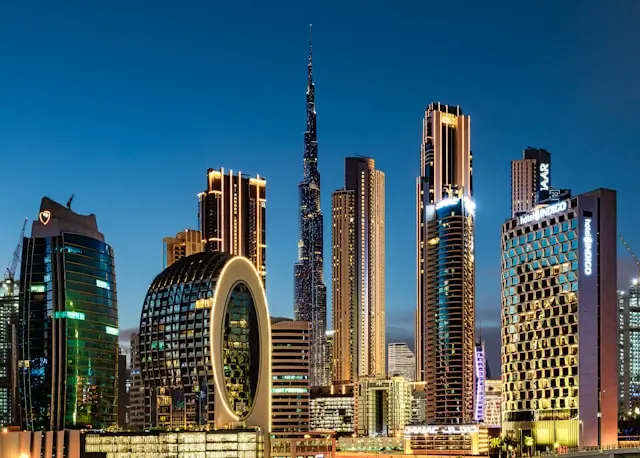
Dubai's $34.8 Billion Aviation Bet Has a Problem: The People to Run It
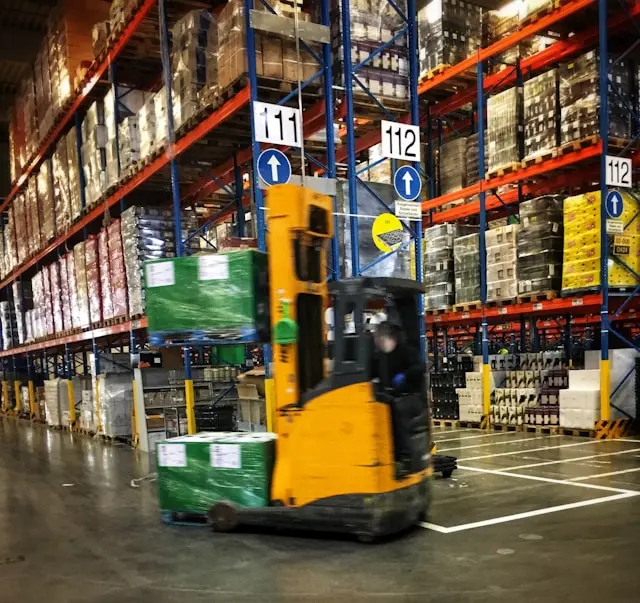
Dubai's aviation system carried 91.9 million passengers through DXB in 2024, surpassing its pre-pandemic peak by nearly three million. Emirates Group posted a record half-year profit of AED 10.1 billion. DP World's Jebel Ali Port ran at 85% utilisation across 14.4 million TEU of capacity. By every infrastructure and revenue metric, Dubai's position as the world's premier transit hub strengthened through 2025 and into 2026. The numbers suggest a system operating at full confidence.
The confidence is warranted on the capital side. It is misplaced on the human capital side. Dubai Airports has committed AED 128 billion to expanding Al Maktoum International Airport to 120 million passenger capacity by 2030. DP World has invested AED 4 billion in Jebel Ali's Terminal 4 automation and southern expansion. Emirates holds orders for 305 new aircraft. Yet the UAE's aviation sector faces a 70% annual shortfall in qualified aircraft maintenance engineers alone. Senior port automation engineers take twice as long to hire as general logistics managers. Flight operations directors are 95% passive, meaning they are employed, performing, and not looking. The capital is moving. The talent is not following at the same pace.
This is the core tension this article examines: the growing gap between Dubai's infrastructure ambition and its ability to staff that ambition with qualified leaders and specialists. What follows is a ground-level analysis of where the hiring gaps are most acute across aviation, logistics, and maritime operations, what is driving them, why conventional recruitment methods fail in this specific market, and what organisations competing for executive talent in Dubai's aviation and logistics sector must do differently in 2026.
The Infrastructure Surge That Outran Its Own Workforce
Dubai's aviation and logistics expansion is not a single project. It is a convergence of simultaneous capital deployments, each generating its own talent demand at the same time.
The centrepiece is the DWC expansion. Civil works commenced in Q2 2025 for Phase 1 of the AED 128 billion programme, targeting 120 million passenger capacity by 2030. That figure represents a 300% increase over DWC's current 2.5 million annual throughput. DXB, meanwhile, operates at near-maximum sustainable capacity of 100 million passengers annually on a dual-runway configuration that cannot be expanded geographically. The city is surrounded by development on every side. This is not a capacity constraint that better scheduling can solve. It is a physical ceiling.
Simultaneously, DP World's Jebel Ali South automated terminal will commence partial operations in Q4 2026, creating immediate demand for over 500 port automation engineers and logistics technology specialists. Emirates will take delivery of 12 A350-900 aircraft in 2026 as part of its fleet renewal, requiring recruitment of 600 or more pilots and 2,000 or more cabin crew annually. Dubai South's EZDubai e-commerce zone saw 35% volume growth in 2024 and continues to expand.
Each of these programmes is individually manageable from a talent perspective. Collectively, they are not. The GCAA and industry training bodies project a 70% shortfall in locally qualified aviation engineers and air traffic controllers necessary to support the expanded capacity, according to the GCAA's Strategic Workforce Forecast. This is the analytical heart of the matter: Dubai may possess world-class airport and port facilities by 2028 with suboptimal utilisation because it cannot staff them. Capital moved faster than human capital could follow. This dynamic is not unique to Dubai, but the scale of the mismatch here is unlike anything in comparable transit hubs.
For hiring leaders, the implication is direct. Every infrastructure milestone announced over the next 24 months will intensify competition for the same finite pool of qualified professionals already working in Dubai's aviation market.
Where the Shortages Are Most Acute
Licensed Aircraft Maintenance Engineers
The most severe deficit sits in a role most passengers never think about. The UAE requires approximately 4,000 new licensed aircraft maintenance engineers annually through 2030. Local training institutions produce 1,200 qualified graduates per year. The Emirates Flight Training Academy produces 120 commercial pilots annually, which is critical but insufficient even for Emirates' own requirements.
Emirates Engineering, the largest MRO operation in the Middle East, conducted global recruitment roadshows across the UK, Australia, and Eastern Europe throughout 2024 to fill over 400 technical positions. The relocation packages and housing allowances included in these offers are themselves evidence of local scarcity. When an employer of Emirates' scale and brand recognition cannot fill maintenance engineering roles from the local market, the market is telling you something specific about supply.
The shortage is compounded by fleet transition. Emirates' 305 aircraft on order include A350-900s and 777X models. Each new type requires engineers with specific type ratings. An engineer rated on A380 and B777 does not automatically qualify to work on A350 airframes. The fleet renewal that improves fuel efficiency and passenger experience simultaneously narrows the pool of engineers qualified to maintain the new aircraft.
Between 85% and 90% of qualified LAMEs in the UAE are employed and not seeking new roles, according to LinkedIn Talent Insights data from Q4 2024. Recruitment relies entirely on direct headhunting of passive candidates rather than job advertising.
Port Automation and Digital Supply Chain Specialists
DP World's automation of Jebel Ali Terminal 4 and the new South Terminal generated demand for over 300 automation engineers and IoT systems architects in 2024 and 2025. The typical time-to-fill for a Senior Port Automation Engineer role exceeded 120 days, compared with 60 days for general logistics management positions. That gap is not explained by interview complexity or reference checking. It is a supply problem.
Employers have resorted to recruiting from European port operators in Rotterdam, Hamburg, and Singapore, offering 25% to 30% compensation premiums over standard UAE packages. A senior port automation specialist in Dubai now commands $110,000 to $150,000 in total annual cash compensation, tax-free. The premium reflects not just the shortage but the specificity: these professionals need PLC programming expertise, automated stacking crane systems knowledge, and Terminal Operating System implementation experience. The intersection of all three is a narrow population globally.
With 80% of port automation and logistics technology directors passive and locked into long-term implementation contracts with three to five year vesting periods, conventional talent acquisition approaches that rely on candidates applying through job boards reach a fraction of the viable market.
Executive Aviation Leadership
The competitive pressure at the top is different in kind. It is not a supply deficit. It is an extraction campaign.
Saudi Arabia's Riyadh Air, scheduled to begin operations, and the King Salman International Airport development targeting 120 million passengers by 2030 have systematically targeted senior executives at Emirates and Dubai Airports. According to Aviation Business News, these Saudi programmes offer total compensation packages 30% to 40% above Dubai market rates to secure VP-level Operations and Network Planning talent. The draw is not only compensation. It is greenfield project scope and the career acceleration that comes from building something from nothing rather than optimising something mature.
This poaching pattern has forced Dubai-based carriers to introduce retention bonuses reportedly equivalent to 18 to 24 months' salary for critical senior captains and engineering directors, based on industry patterns reported in Gulf Business. When an organisation introduces retention bonuses of that magnitude, it has already lost people it could not afford to lose. The cost is defensive, not strategic.
Flight operations directors and VP-level network planning leaders sit in a 95%-plus passive market, with average tenure at major carriers exceeding eight years. Movement is triggered by external offers, not active job seeking. For organisations trying to fill these roles, the question is not where to advertise. It is how to reach and engage people who are not looking.
The Geopolitical Paradox Complicating Workforce Planning
Dubai's logistics sector is experiencing a paradox that makes long-term hiring strategy unusually difficult. The same geopolitical crisis that drives revenue growth undermines the operational stability required for workforce planning.
The Red Sea maritime crisis, expected to persist through 2026 according to IATA's Cargo Outlook, has diverted 8% to 12% of Asia-Europe maritime volumes to air-sea combinations via Dubai. DXB cargo volumes rose 15% year-on-year in 2024 to 2.3 million tonnes. Emirates SkyCargo yields increased 22%. Jafza reported 24% growth in new company registrations from Asian markets seeking regional redistribution hubs.
This is good for revenue. It is problematic for hiring.
The crisis creates irregular demand patterns that complicate workforce planning for logistics employers. Insurance and operational costs for Jebel Ali's maritime feeder services have risen 15% to 20%, according to Lloyd's List Intelligence. Demand surges driven by geopolitical disruption are inherently unpredictable. An employer cannot commit to hiring 50 additional cargo specialists on a permanent basis if the demand driver is a crisis that might resolve within months. But the crisis has now persisted long enough that temporary staffing is no longer viable for roles requiring deep operational knowledge.
The result is a hiring environment where logistics employers need to grow headcount but cannot confidently project whether current demand levels are the new baseline or a temporary elevation. This uncertainty disproportionately affects senior roles. A VP of Supply Chain hired to manage crisis-level volumes faces a different brief than one hired to manage steady-state operations. Organisations that get this decision wrong face either the cost of a bad executive hire or the cost of a role left unfilled during a revenue opportunity.
Regional tensions with Iran compound the picture by creating airspace restriction risks for Emirates' eastern routes. The operational complexity of managing alternative routings adds to demand for experienced flight operations leadership at exactly the moment when that leadership is being recruited away by Saudi competitors.
Emiratisation and the Regulatory Friction in Technical Hiring
The GCAA mandates that 20% of managerial positions in aviation companies be held by UAE nationals by 2025, rising to 30% by 2026 for certain categories. This policy reflects a legitimate national workforce development priority. It also creates real friction in a market where the technical talent pipeline cannot yet match the mandate's timeline.
The challenge is not resistance to localisation. The Emirates Group, employing 112,406 staff globally with approximately 75% based in Dubai, has invested in the Emirates Flight Training Academy and various engineering scholarship programmes. The challenge is mathematics. Producing a licensed aircraft maintenance engineer with the type ratings and experience required for A350 or 777X maintenance takes six to eight years from initial training. Producing a VP of Flight Operations with the judgement to manage 262 aircraft across 148 destinations takes 20 years of progressive experience.
The mandate applies today. The pipeline delivers tomorrow.
For hiring executives, this means every senior technical role now carries a dual requirement: fill the position with the best available candidate globally while simultaneously developing a credible Emiratisation pathway for the function. Organisations that treat talent pipeline development as separate from immediate hiring are building a compliance problem they will face in two to three years. Those that integrate both into a single workforce strategy gain regulatory advantage alongside operational capability.
The 90% expatriate composition of Dubai's private sector creates a separate vulnerability. Dubai's technical workforce depends heavily on professionals from India, the Philippines, Pakistan, and increasingly Eastern Europe. Currency fluctuations, geopolitical shifts in labour-exporting countries, or changes to visa policies in any of these source markets could disrupt supply chains of human capital in the same way the Red Sea crisis disrupted supply chains of goods. The lack of permanent residency pathways for mid-level technical staff increases turnover in critical engineering roles and makes retention more expensive than it needs to be.
Compensation: Tax-Free but Not Unchallenged
Dubai's tax-free compensation environment remains a material advantage in global talent competition. A senior captain at Emirates earns $200,000 to $280,000 in base, flight pay, and housing allowance. A VP of Flight Operations at a major carrier commands $350,000 to $500,000 plus performance bonuses. A VP of Supply Chain at a multinational based in Dubai South earns $220,000 to $320,000 plus equity. All tax-free.
These figures are competitive. They are not dominant.
According to the Mercer Total Remuneration Survey UAE 2024, senior aviation executives in Dubai command salaries 15% to 20% below equivalent roles in Singapore. Singapore offers comparable tax efficiency at the corporate level and higher absolute compensation, offset by considerably higher cost of living. The net purchasing power comparison is closer than the headline salary gap suggests, but the perception gap matters when a passive candidate in Singapore evaluates a Dubai opportunity.
The Riyadh Premium
The more immediate competitive threat comes from Riyadh, not Singapore. Saudi Arabia now offers 20% to 35% compensation premiums for aviation operations executives, with tax-free packages and subsidised housing comparable to Dubai but at a lower cost of living. For a senior executive considering their next move, the financial calculus has shifted. Dubai's advantage over Riyadh is no longer compensation. It is operational maturity, network density, lifestyle infrastructure, and institutional reputation.
This is important for hiring strategy. An organisation in Dubai that leads its executive offer with compensation alone will lose to Riyadh on that dimension. The offer negotiation must lead with what Dubai offers that Riyadh cannot: a 148-destination network, a functioning hub rather than a greenfield promise, a city where spouses work and children attend established schools, and a professional ecosystem that has operated at global scale for two decades.
The compensation data also reveals an internal market bifurcation. Specialist technical roles such as port automation engineers have seen compensation rise sharply due to scarcity, with 25% to 30% premiums over standard UAE packages. General logistics management has not seen the same inflation. The premium is flowing to specificity, not to seniority alone. Market benchmarking that relies on broad sector averages will systematically underprice the roles that are hardest to fill.
Why Conventional Search Methods Fail in This Market
The passive candidate ratios in Dubai's aviation and logistics sector are among the highest of any market globally. Flight operations directors: 95% passive. Licensed aircraft maintenance engineers: 85% to 90% passive. Port automation directors: 80% passive. Air cargo revenue management specialists: 75% passive.
These are not people browsing job boards on Sunday evenings. They are people whose phones ring with unsolicited offers multiple times per year. They are locked into roles with retention bonuses, long-term implementation contracts, and vesting periods specifically designed to keep them in place. A job advertisement posted on a careers portal reaches, at best, the 5% to 15% of qualified professionals who happen to be in an active search window.
The structural barriers go deeper. Non-compete and restrictive covenant clauses in senior aviation contracts are typically more enforceable in the UAE than in many Western jurisdictions. A VP leaving Emirates for a competitor may face a six to twelve month gardening leave period. This does not prevent movement, but it means the hiring timeline for a senior role includes not just the search and interview period but a subsequent waiting period before the candidate can start. Organisations that do not account for this in their planning consistently find themselves with a signed offer and a six-month gap before day one.
For any organisation hiring at the director level or above in Dubai's aviation and logistics market, the method of search determines the outcome more than the compensation on offer. A search that reaches only active candidates is a search that misses the vast majority of viable leaders. The firms that understand why executive searches fail in markets like this are the ones that design their approach around passive candidate engagement from the start.
What This Means for Hiring Leaders in 2026
The market dynamics described above create a specific set of conditions that any organisation hiring senior talent in Dubai's aviation, logistics, or maritime sector must factor into its approach.
First, speed matters more here than in most markets. With passive candidate ratios above 80% in every critical function, a slow search does not just delay hiring. It loses candidates. A qualified port automation engineer who receives three to four inbound approaches per year will not wait through a 90-day shortlisting process. The search must reach candidates quickly, qualify them thoroughly, and present them before a competitor does.
Second, the proposition must be precisely calibrated. Dubai competes for the same talent as Riyadh, Singapore, Doha, and Istanbul. Each of these markets has a distinct value proposition. Riyadh offers compensation premiums and greenfield scope. Singapore offers regulatory stability and higher absolute pay. Dubai's advantage is operational maturity, lifestyle, and network scale. The offer must articulate all three, not just the salary line. Organisations that rely on how a role is positioned rather than what it pays consistently outperform those that lead with money in this market.
Third, the Emiratisation mandate requires integrated planning. Every senior hire is both a performance decision and a localisation decision. Organisations that treat these as separate workstreams create friction between their HR compliance function and their operational leadership. The most effective approach is to build a talent pipeline that addresses both immediate capability needs and medium-term nationalisation targets within the same framework.
KiTalent works with organisations across the Gulf's aviation, logistics, and industrial sectors to fill senior roles where conventional methods consistently fall short. Using AI-enhanced talent mapping to identify and engage the passive specialists and leaders who do not appear on any job board, KiTalent delivers interview-ready executive candidates within 7 to 10 days. The pay-per-interview model means organisations only invest when they meet qualified candidates. With a 96% one-year retention rate across 1,450 or more executive placements, the approach is designed for exactly the kind of market Dubai's aviation sector presents: high-value roles, low candidate visibility, and zero tolerance for a slow process.
For organisations competing to fill senior aviation, logistics, and port operations leadership in Dubai, where 85% or more of the candidates you need are employed and not looking and the cost of a vacant seat is measured in operational capacity left unused, speak with our executive search team about how we approach this market.
Frequently Asked Questions
What is the current Dubai aviation talent shortage in 2026?
The UAE aviation sector requires approximately 4,000 new licensed aircraft maintenance engineers annually through 2030, while local institutions produce only 1,200 qualified graduates per year. This creates a 70% supply deficit in the most critical technical function. The shortage extends to port automation engineers, where time-to-fill exceeds 120 days, and executive aviation leadership, where Saudi competitors offer 30% to 40% compensation premiums to extract senior talent from Dubai-based carriers. Across all senior aviation and logistics functions, passive candidate ratios exceed 80%, meaning the majority of qualified professionals are not actively seeking new roles.
How much do aviation executives earn in Dubai?
Senior captains at major carriers earn $200,000 to $280,000 annually in tax-free total cash compensation. VP Flight Operations roles command $350,000 to $500,000 plus performance bonuses. Licensed aircraft maintenance engineers at senior level earn $75,000 to $110,000. VP Supply Chain roles at multinationals based in Dubai South pay $220,000 to $320,000 plus equity. Port automation engineers, reflecting acute scarcity, earn $110,000 to $150,000 with 25% to 30% premiums over standard UAE packages. Compensation benchmarking in this sector must account for specialist premiums that general salary surveys often miss.
Why is Riyadh competing with Dubai for aviation talent?
Saudi Vision 2030 projects including Riyadh Air, King Salman International Airport, and NEOM Logistics Hub are creating greenfield aviation operations that require experienced leadership. These projects offer 20% to 35% compensation premiums over Dubai market rates, subsidised housing, and the career appeal of building new systems from scratch. Dubai's advantages remain its operational maturity, Emirates' 148-destination network, established lifestyle infrastructure, and two decades of institutional knowledge in global hub management. The competition is unlikely to diminish before 2030.
How does KiTalent approach executive search in Dubai's aviation sector?
KiTalent uses AI-enhanced talent mapping to identify and engage passive candidates who represent 85% or more of the qualified talent pool in Dubai's aviation and logistics market. The direct headhunting methodology reaches professionals who are not visible on job boards or responding to advertisements. Interview-ready candidates are delivered within 7 to 10 days under a pay-per-interview model with no upfront retainer. This approach is specifically designed for markets where candidate scarcity and high passive ratios make conventional recruitment methods ineffective.
What is the impact of Emiratisation on aviation hiring in Dubai?
The GCAA mandates that 20% of managerial positions in aviation companies be held by UAE nationals, rising to 30% by 2026 for certain categories. This requires organisations to balance immediate operational hiring needs with medium-term localisation targets. The pipeline challenge is acute: producing a qualified aircraft maintenance engineer takes six to eight years, and producing VP-level flight operations leadership takes 20 years of progressive experience. Effective hiring strategies integrate Emiratisation planning into every senior search rather than treating compliance as a separate function.
What roles are hardest to fill in Dubai's logistics sector?
Port automation engineers with PLC programming, automated stacking crane systems, and Terminal Operating System implementation experience represent the most difficult logistics hires. Time-to-fill exceeds 120 days, double the rate for general logistics management. Directors of supply chain digitalisation and air cargo revenue management specialists also present acute challenges, with 75% to 80% passive candidate ratios. Employers routinely recruit from European port operators and Singapore, indicating that the local and regional candidate pool cannot meet demand at current growth rates.