Dubai's Hospitality Boom Is Adding 12,000 Hotel Keys in 2026. Saudi Arabia Is Taking the Leaders Who Would Run Them.
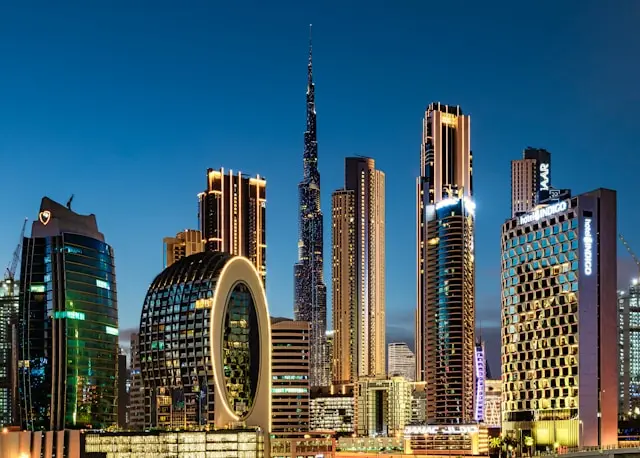
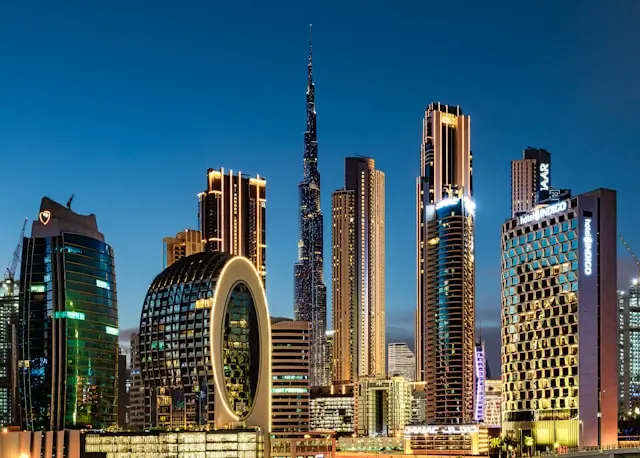
Dubai welcomed 18.72 million international overnight visitors in 2024, exceeding pre-pandemic levels by 14%. The hotel inventory reached 154,000 keys across 832 establishments by the end of that year, with occupancy running at 78.2% and an average daily rate of AED 536. The MICE sector alone contributed AED 44.6 billion to GDP, representing 4.8% of the emirate's total economic output. By every volume measure, Dubai's tourism sector has never been larger.
Yet the most consequential dynamic in this market is not happening inside Dubai. It is happening across the border. Saudi Arabia's giga-projects, from the Red Sea Global development to NEOM and Diriyah Gate, are offering senior hospitality executives 40 to 60% compensation premia over Dubai equivalent roles. An estimated 15 to 20% of senior hospitality leadership moves in 2024 were Dubai-to-Saudi transitions. The emirate is not simply competing for new talent. It is haemorrhaging the experienced operators it already has, at the exact moment 12,000 new hotel keys need leaders to open them.
What follows is a ground-level analysis of the forces reshaping Dubai's hospitality and MICE talent market in 2026: where the gaps are most acute, why conventional hiring methods fail in this specific environment, and what organisations competing for leadership talent in this sector must do differently before the supply pipeline narrows further.
The Volume Trap: Record Visitors, Shrinking Margins
The headline numbers mask a structural tension that every hiring executive in Dubai's hospitality sector needs to understand. Dubai's 18.72 million visitors in 2024 represented a 9% increase over 2023. The Department of Economy and Tourism is targeting 20 million by 2026, supported by Dubai International Airport's Concourse 4 expansion, which will lift capacity to 120 million passengers annually. Three megaresorts on The World islands are scheduled for debut.
But volume growth and value growth have decoupled. Hotel operating margins contracted by 200 to 300 basis points year-on-year through 2024, according to STR Global, as aggressive discounting maintained occupancy against rising supply. The 32,000 keys under construction, with 12,000 scheduled for 2026 delivery, are overwhelmingly concentrated in the luxury and upper-upscale segments. This is a market adding premium supply into softening premium margins.
The implication for talent is direct. Properties under margin pressure do not invest in retention. They freeze salaries, defer bonuses, and lose their strongest operators to competitors who will. When Saudi Arabia's greenfield projects arrive with compensation packages 40 to 60% above market rate, the hidden cost of losing a senior executive is not just the replacement search. It is the twelve months of institutional knowledge that walks out with them, at the worst possible time.
Where the Talent Gaps Are Deepest
The shortages in Dubai's hospitality market are not uniform. They cluster in four categories, each with a distinct driver and a distinct cost structure for employers who move too slowly.
General Managers for Luxury and Ultra-Luxury Properties
The most acute shortage sits at the top. Senior hospitality roles at director level and above averaged 4.8 months to fill in 2024, compared with 2.9 months in 2019. For luxury hotel general managers specifically, the market is close to zero-sum. According to the Hays UAE Hospitality Market Report 2024, 60% of luxury hotel GMs appointed in Dubai during 2024 were recruited directly from competitor properties within the emirate rather than from international markets.
The passive candidate ratio tells the rest of the story. Among GMs with three or more years of experience at Forbes 5-star or equivalent properties, 90% are passive. They are not applying. They are not browsing job boards. They transition through executive search mandates and personal networks. A job advertisement for a role at this level reaches, at best, the least qualified 10% of the viable candidate pool.
New openings compound the pressure. Jumeirah Marsa Al Arab, with 386 keys, and multiple Address-branded properties are approaching launch. Each requires a GM with pre-opening experience in the luxury segment. Candidates with that specific combination command a 20 to 25% premium over operational management-only profiles. The pool of such candidates in the GCC is small, and Saudi Arabia is fishing in precisely the same waters.
Revenue Management Directors
This role sits at the intersection of commercial strategy and technical expertise. It requires fluency in yield management systems like IDeaS and Duetto, combined with the market intelligence to price dynamically across a portfolio that may include convention-attached properties, beachfront resorts, and urban lifestyle hotels simultaneously.
The average time to fill a Revenue Management Director position in Dubai reached 5.5 months in 2024, compared with 3.2 months for other director-level roles. Industry sources confirm that international chains expanding into the market have offered 25 to 30% premia over prevailing rates to recruit from established Emaar and Marriott properties in Downtown Dubai. The bidding dynamic has compressed margins for talent acquisition across the segment.
The 60% passive candidate ratio means that the majority of qualified Revenue Management Directors are embedded in active portfolio optimisation projects. Approaching them requires more than an attractive compensation package. It requires a proposition that advances their career in a way their current role does not. Understanding what makes a senior candidate consider a move is the difference between a successful approach and a declined conversation.
Executive Chefs in High-Volume F&B
Dubai's culinary talent market has bifurcated. At the high end, the expansion of food halls like Time Out Market Dubai and Depachika, alongside luxury hotel F&B outlets, has created aggressive competition for chefs with Michelin-starred backgrounds. Sign-on bonuses for these candidates now reach AED 300,000 to 500,000, according to Caterer Middle East's November 2024 reporting.
The supply constraint is compounded by visa processing realities. Enhanced security screening for certain nationalities, historically a key talent pool for culinary roles, increased employment visa processing times by 30% in 2024, according to Fragomen's immigration update. This forces employers to recruit from Europe and East Asia at structurally higher cost bases, adding both time and expense to every search.
Meanwhile, Dubai is experiencing a two-directional flow with European markets. Junior culinary talent leaves for European training programmes that offer stronger creative development. Mid-career European chefs arrive in Dubai through lifestyle migration offers that emphasise tax-free earnings and year-round operating seasons. The net effect is a hollowed-out middle: plenty of junior staff, some senior stars, and a persistent gap in the experienced sous chef and head chef tier that keeps a 200-cover operation running.
Sustainability and ESG Directors
This is the newest shortage, and in some ways the most dangerous for employers. Dubai Municipality's sustainability regulations, effective from January 2025, require all hotels above 100 keys to submit carbon footprint audits and eliminate single-use plastics in F&B operations. Compliance costs run AED 2 to 4 million per legacy property for retrofitting alone.
But the real bottleneck is human. The regulations created immediate demand for over 200 senior sustainability roles across the hotel sector. The local market contains fewer than 50 qualified candidates with GCC hospitality experience, according to LinkedIn Talent Insights. Job postings for Sustainability Manager positions in Dubai hospitality increased 34% year-on-year through Q4 2024. Director of Sustainability compensation has risen 35% since 2022 in direct response to regulatory demand.
Non-compliant entities face financial penalties of AED 7,000 to 10,000 per missing national per month under the broader Emiratisation framework, and the sustainability compliance gap creates a separate layer of regulatory exposure for smaller operators who cannot attract qualified candidates at any price.
The Saudi Drain: Dubai's Most Expensive Competitor Is Not Singapore
Here is the analytical claim that the aggregate data points toward but that none of the individual data sources states directly: the investment flowing into Saudi Arabia's hospitality giga-projects has not created a new talent market. It has redirected an existing one. The professionals being recruited to NEOM, Red Sea Global, and Diriyah Gate are not graduates entering the industry. They are Dubai's most experienced operators, leaving mid-project, and the replacement pipeline does not exist in sufficient depth to absorb the loss.
This is not a normal competitive cycle where one market gains and another adjusts. The 40 to 60% compensation premia Saudi projects are offering, according to the EY MENA Hospitality Report 2024, are coupled with housing and education packages that effectively double the gap for candidates with families. The "adventure premium" of greenfield development, the chance to open a property that does not yet exist in a destination that has never hosted guests, is uniquely attractive to exactly the profile Dubai needs most: GMs and VPs of Operations with pre-opening experience.
Dubai-to-Saudi transitions represented an estimated 15 to 20% of senior hospitality leadership moves in 2024, according to Gulf Business reporting. That percentage understates the impact. The moves are concentrated at the VP and GM level, where replacement cycles run five to six months. A hotel group losing three senior leaders to Saudi projects in a single quarter is not facing a recruitment inconvenience. It is facing an operational gap.
Singapore presents a different challenge. It competes for MICE event directors and sustainability specialists with comparable compensation, stronger regulatory frameworks for ESG career development, and something the UAE fundamentally cannot offer: a permanent residency pathway. For candidates evaluating long-term stability, Singapore's proposition is structurally superior. For employers trying to retain talent against international competition, the counteroffer calculation must account for benefits that no salary increase can replicate.
Emiratisation: The Policy That Data Contradicts
The UAE government's Nafis programme requires hospitality establishments with 50 or more employees to achieve 8% Emirati representation in skilled roles by the end of 2025. The policy intention is clear. The implementation reality is not matching it.
As of 2024, Emirati representation in the hospitality workforce stood at 1.2%. That figure actually decreased from 1.4% in 2023. The sector needs to recruit approximately 4,200 UAE nationals into skilled hospitality roles to reach compliance, against a cultural context where public sector employment remains the dominant preference for Emirati professionals.
For hiring leaders, this creates a dual burden. The penalties for non-compliance are material: AED 7,000 to 10,000 per missing national per month, which can add AED 3 to 5 million in annual costs for large hotel groups. But the candidates required to close the gap are not available in the volumes the policy demands, and the training pipeline to develop them operates on a multi-year timeline that does not align with a year-end deadline.
The practical consequence is that hotel groups are competing for a tiny pool of Emiratis willing to work in hospitality, while simultaneously competing for expatriate talent against Saudi premia. Every Emiratisation hire that a competitor makes is one fewer candidate available to you. The organisations that built proactive talent pipelines before the deadline are in a structurally different position from those scrambling to comply.
What the Compensation Data Actually Tells Hiring Leaders
Dubai's tax-free environment makes headline compensation figures misleading for anyone comparing packages across geographies. A base salary of AED 75,000 per month for a VP of Operations, when combined with housing allowance, bonus, and zero income tax, delivers net purchasing power that exceeds nominally higher packages in London or Singapore.
But within the GCC, the comparison has shifted. At the VP and Regional GM level, total annual compensation in Dubai runs AED 1.2 million to 1.8 million. Saudi giga-projects are offering packages that start where Dubai's ceiling sits. The gap is widest at exactly the seniority level where the most consequential hiring decisions are made.
The compensation data across key roles reveals a market in rapid motion. Revenue Management Directors command AED 600,000 to 950,000 annually, with revenue-linked bonuses creating high variance. Chief Commercial Officers at group level reach AED 1.5 million to 2.2 million. The fastest-appreciating category is sustainability leadership, where Director of Sustainability compensation has climbed 35% since 2022 and shows no sign of stabilising.
For organisations building compensation benchmarks for hospitality leadership roles, the critical insight is not the absolute numbers. It is the velocity of change. A package that was competitive twelve months ago may now sit 15 to 20% below the offer a passive candidate receives from a competitor. The market is repricing senior talent faster than annual compensation review cycles can track.
Housing adds a layer that salary data alone does not capture. Accommodation costs for hospitality workers have risen 40% since 2022, while salary growth for non-executive roles remained at 3 to 5% annually. Mid-level managers are relocating to Sharjah and Ajman to manage living costs, reducing their operational availability for properties in Dubai Marina or Downtown. The housing squeeze is not a separate problem from the talent shortage. It is accelerating it.
Reaching Candidates This Market Cannot See
The core challenge in Dubai's hospitality talent market is visibility. At the General Manager level, 90% of qualified candidates are passive. At CTO and VP Digital Transformation level, the figure is 82%. Executive pastry chefs at Michelin-tier operate through agent networks and international competition circuits rather than any channel a standard job posting would reach.
A hotel group posting a General Manager vacancy on a job board is advertising to the 10% of the market least likely to be the right hire. The candidates who have successfully opened a luxury property, managed a portfolio of 3,000 keys, or built a revenue management function across multiple brands are currently employed, performing well, and not looking. Reaching them requires direct identification and a compelling first approach. It requires knowing their current contract terms, their family situation, their career trajectory, and what would actually make them consider a conversation.
This is where the distinction between job advertising and direct headhunting methodology becomes material. In a market where the top candidates are passive, dispersed across multiple geographies, and actively being courted by Saudi competitors, the search firm's ability to map, identify, and approach specific individuals determines whether the search produces interview-ready candidates or an empty pipeline.
The velocity matters as much as the method. With average vacancy durations of 4.8 months for senior roles and 5.5 months for Revenue Management Directors, every week of delay compounds the cost. Properties approaching opening dates without a GM in place face cascading operational risks. MICE venues without a qualified events VP lose bids to competitors who can guarantee delivery capability.
KiTalent's model addresses both the access and the speed problem simultaneously. AI-enhanced talent mapping identifies the specific candidates who match the role's requirements across Dubai, the wider GCC, and international markets. The pay-per-interview structure means clients meet qualified, interview-ready candidates within 7 to 10 days, without the upfront retainer that traditional retained search demands. In a market where 96% of placed candidates remain in role after one year, the model delivers not just speed but durability.
For organisations competing for hospitality leadership in a market where the candidates you need are not visible on any job board, where Saudi Arabia is offering 40 to 60% premia for the same profiles, and where regulatory compliance deadlines create urgency that no slow search can accommodate, speak with our executive search team about how we approach this market and deliver the shortlists that conventional methods cannot produce.
Frequently Asked Questions
What is the average salary for a hotel General Manager in Dubai in 2026?
A Vice President of Operations or Regional General Manager overseeing multiple properties in Dubai earns total annual compensation of AED 1.2 million to 1.8 million (approximately $326,000 to $490,000), inclusive of base salary, housing allowance, and performance bonuses. All compensation in the UAE is tax-free. Candidates with pre-opening experience at luxury properties command a 20 to 25% premium above these ranges. Compensation has been rising as Saudi Arabia's giga-projects offer 40 to 60% premia to attract experienced Dubai-based GMs to greenfield developments.
Why is it so hard to hire senior hospitality executives in Dubai?
Three factors converge. First, 85 to 90% of qualified candidates at director level and above are passive and not visible on job boards. Second, Saudi Arabia's giga-projects are actively recruiting Dubai-based leaders with compensation packages that start where Dubai's ceiling sits. Third, regulatory mandates around Emiratisation and sustainability compliance have created new role categories where qualified candidates simply do not exist in sufficient numbers locally. The result is vacancy durations averaging 4.8 months for senior roles, compared with 2.9 months in 2019. Firms relying on traditional recruitment methods often encounter structural limitations in this environment.
How does Saudi Arabia's hospitality expansion affect Dubai's talent market?
Saudi projects including NEOM, Red Sea Global, and Diriyah Gate offer senior hospitality executives 40 to 60% compensation premia over Dubai equivalent roles, plus housing and education packages. An estimated 15 to 20% of senior hospitality leadership moves in 2024 were Dubai-to-Saudi transitions. The impact is concentrated at the VP and General Manager level, where replacement cycles run five to six months, creating operational gaps for Dubai hotel groups during a period of aggressive supply expansion.
What are the Emiratisation requirements for Dubai hotels in 2026?
Hospitality establishments with 50 or more employees must achieve 8% Emirati representation in skilled roles. Non-compliant entities face penalties of AED 7,000 to 10,000 per missing national per month, potentially adding AED 3 to 5 million in annual costs for large hotel groups. As of 2024, Emirati representation in hospitality stood at just 1.2%, meaning the sector needs approximately 4,200 additional UAE nationals in skilled roles to reach compliance targets.
What sustainability regulations affect Dubai hotels?
Dubai Municipality's regulations effective January 2025 require all hotels above 100 keys to submit carbon footprint audits and eliminate single-use plastics in F&B operations. Compliance costs are estimated at AED 2 to 4 million per legacy property. The regulations created demand for over 200 senior sustainability roles, but the local market contains fewer than 50 qualified candidates with GCC hospitality experience. Director of Sustainability compensation has risen 35% since 2022 in response.
How can KiTalent help with hospitality executive hiring in Dubai?
KiTalent uses AI-enhanced direct search methodology to identify and approach the passive candidates who represent 85 to 90% of the qualified talent pool for senior hospitality roles. The pay-per-interview model delivers interview-ready candidates within 7 to 10 days, with no upfront retainer. With a 96% one-year retention rate across 1,450 completed executive placements and partnerships with over 200 organisations globally, the approach is designed for markets where speed and candidate quality must work together.