Eugene's Wood Products Sector Invested $45 Million in Automation. Now It Cannot Find the Workers to Run It.

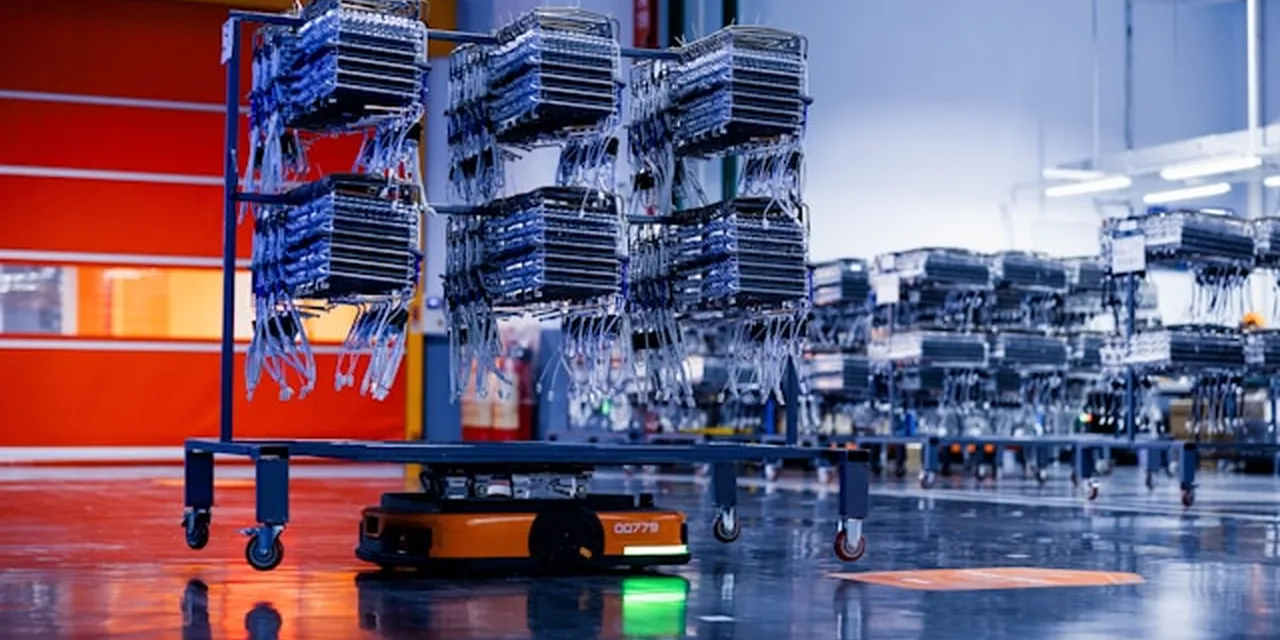
Lane County's advanced wood products cluster entered 2026 with a paradox that no amount of capital expenditure can resolve on its own. Across Eugene, Coburg, Veneta, and Lyons, manufacturers poured an estimated $45 million into automation between 2024 and 2025. Robotic edging systems, PLC-driven trimming lines, automated guided vehicles, and CNC tooling fabrication cells now occupy mill floors that five years ago ran on manual labour and institutional knowledge. The machinery arrived. The technicians to maintain it did not.
This is not a conventional talent shortage story. The sector's total headcount in Lane County sits at roughly 3,200 workers, and aggregate employment growth has been modest at 1.2% annualised through 2025. At a surface level, the labour market looks stable. But that aggregate figure masks a deep split. Traditional sawmill operator roles are contracting as automation displaces entry-level positions at a rate of approximately 8% per year. Simultaneously, the demand for mechatronics maintenance technicians, PLC programmers, and industrial automation engineers is growing at 8 to 9% annually within the engineered timber and automation-intensive sub-sectors. The unemployment rate for industrial machinery mechanics in the Eugene metropolitan area is 1.2%. The market is, for practical purposes, empty.
What follows is an analysis of the forces driving this mismatch, the specific roles and compensation dynamics that define it, and what organisations competing for technical and leadership talent in Eugene's advanced manufacturing market need to understand before their next search.
A Sector Splitting in Two
Eugene's wood products industry is often discussed as a single cluster. That framing is now dangerously misleading for anyone making workforce decisions. Two distinct sub-economies operate under the same NAICS code, and they are moving in opposite directions.
The first is traditional dimensional lumber. Seneca Sawmill Company, the sector's anchor employer with 400 to 450 workers across three Lane County mills, processes approximately 450 million board feet annually. Random Lengths reported the Framing Lumber Composite price averaging $380 per thousand board feet in Q4 2024, down 12% year on year. Margin compression is real. Seneca's response has been capital investment: $12 million in automated optimised edging and trimming systems over 18 months, reducing headcount per million board feet by 15%.
The second sub-economy is engineered wood products. Freres Lumber Co., operating from Lyons 22 miles northeast of Eugene, manufactures Mass Ply panels using proprietary veneer-based mass timber technology. The facility employed 180 workers as of late 2024, with plans to expand to 240 by mid-2026. Mass timber demand across the Western U.S. construction market has been projected to grow at 15% annually through 2027, according to Forest Economic Advisors. Margin premiums of 30 to 40% over commodity lumber make this the sector's growth engine.
Where the Jobs Are Disappearing
In the traditional mill, every automation cycle removes entry-level positions. Lumber handlers and manual graders are the first to go. The turnover rate for traditional sawmill operators and lumber handlers runs at 22% annually, and the unemployment rate for these roles sits at 4.8%. This is an active, liquid labour market where job postings attract applicants.
Where the Jobs Are Impossible to Fill
In the automated mill and the engineered timber facility, the picture inverts completely. CNC programmer positions at secondary wood product manufacturers typically remain unfilled for 90 to 120 days. Maintenance technicians with Allen-Bradley PLC certification receive competing offers within 72 hours of a job posting going live, according to the Lane Workforce Partnership's In-Demand Occupations List. The Oregon Employment Department's Job Vacancy Survey for Lane County reported 42 open positions in wood product manufacturing in autumn 2024, with technical specialist positions averaging 67 days to fill compared to 28 days for production roles.
The sector's capital has moved faster than its human capital can follow. That gap is widening, not closing.
The Automation Mismatch Nobody Planned For
The ratio tells the story more precisely than any headline. For every three entry-level mill positions eliminated by automation across Lane County, one high-skill technician position is created. That one-to-three replacement ratio sounds efficient until you realise the displaced workers cannot fill the new roles. The digital literacy and electrical troubleshooting skills required to maintain PLC-driven systems, calibrate CNC tooling, and diagnose robotic material handling faults bear almost no resemblance to the manual skills that ran these mills a decade ago.
This is the original analytical claim that the aggregate data obscures: Eugene's wood products sector has not reduced its workforce through automation. It has replaced one kind of worker with another kind that does not yet exist in sufficient numbers within the region. The investment in automation was a bet on a labour market that had not yet developed the supply to support it.
Lane Community College's Advanced Manufacturing programme projected a 25% increase in CNC machining and industrial automation enrolment for autumn 2025. That sounds responsive. But the programme has capacity for 200 students annually in wood-product-relevant courses. Against a sector losing entry-level positions at 8% per year while creating technical roles at 8 to 9% growth, 200 students per year is a trickle against a structural current. The supply response is real but remains insufficient for the specialised automation and technology roles this sector now requires.
The result is a market where the most critical hires are overwhelmingly passive. According to LinkedIn Talent Solutions' Global Talent Trends report, 78% of placements in automation engineering and PLC technician roles nationally occur through direct sourcing rather than job board applications. In Eugene, qualified candidates maintain five to seven year tenures at current employers. They are not looking. They are not on job boards. And at a 1.2% unemployment rate for industrial machinery mechanics in the Eugene MSA, the pool of anyone who might respond to a posting is vanishingly small.
Compensation: The Gap That Eugene's Cost of Living Cannot Close
Eugene's 14% cost-of-living advantage over Portland and 42% advantage over Seattle, measured by the Council for Community and Economic Research's index, is the number most often cited when arguing that the region can attract and retain manufacturing talent. The argument holds for production workers and mid-level supervisors. It collapses for senior technical specialists and executive leadership.
Technical Specialist Pay
An Automation or Electrical Maintenance Supervisor in Eugene commands $78,000 to $98,000 at senior level. The equivalent role in Portland pays $92,000 to $115,000, according to the Bureau of Labor Statistics' Occupational Employment and Wage Statistics. At Director of Maintenance level overseeing multiple facilities, Eugene offers $130,000 to $155,000. Relocating a qualified candidate from a Midwest timber market to Eugene requires a 25 to 30% compensation premium over their current package, according to the Forest Resources Association's compensation survey data.
A Manufacturing Engineering Manager with ten or more years of experience earns $95,000 to $125,000 in Eugene-Springfield. That is 15 to 20% below the Portland-Vancouver-Hillsboro equivalent. The gap is not a rounding error. It is enough to make a candidate pause.
Executive Pay and the Retention Problem
At VP of Operations or Manufacturing level overseeing multiple sites, base salary in Eugene ranges from $165,000 to $210,000 with 20 to 30% bonus potential. Total compensation packages rarely exceed $250,000. This creates a specific retention vulnerability: Portland-based manufacturing firms and Boise-based engineered wood companies can offer materially more.
VP of Sustainability roles, rare in mid-market firms and typically held at SVP level at organisations like Seneca or Freres, command $145,000 to $185,000. These leaders are frequently recruited from Portland or Seattle environmental consulting firms, where they earned comparable or higher compensation with greater career optionality. The cost of losing a senior leader at this level extends well beyond the replacement salary. It disrupts certification timelines, client relationships, and regulatory compliance continuity.
For anyone benchmarking executive compensation in this market, the headline is clear. Eugene's cost advantage offsets a portion of the pay differential for candidates already living in the region. It does not offset the career trajectory and total compensation expectations of the senior leaders this sector most urgently needs to attract from outside it.
Three Competitors Are Pulling Talent Away
Eugene does not exist in isolation. Three metropolitan markets are actively drawing from the same candidate pools, and each one exploits a different structural advantage.
Portland's Industrial Wage Premium
Portland offers 18 to 25% wage premiums for equivalent roles in industrial automation and manufacturing engineering. Its advanced manufacturing sector, anchored by semiconductors and precision metalworking, carries lower exposure to commodity lumber price volatility. That creates a perception of career stability that Eugene's cyclical wood products sector cannot easily match. Intel's Ronler Acres campus in Hillsboro specifically attracts electromechanical technicians from Lane County wood mills with starting wages $8 to $12 per hour higher, according to Oregon Employment Department disclosures.
Boise's Tax Advantage
Idaho charges no state income tax. Oregon's top marginal rate is 9.9%. For a mid-career automation engineer earning $95,000, that difference creates an effective compensation premium of 6 to 8% before the employer offers a single additional dollar. Boise's own engineered wood products sector, including Boise Cascade and Idaho Pacific, recruits directly from Oregon State University and University of Idaho graduates who might otherwise settle in the Willamette Valley.
Seattle's Executive Draw
For leadership talent, Seattle operates at a different altitude entirely. Total compensation premiums of 35 to 45% for equivalent roles come with a 40% higher cost of living, but Seattle's mass timber construction market, with meaningful CLT adoption in commercial real estate, creates demand for experienced wood product executives. The career path in Seattle is broader, the compensation materially higher, and the professional network denser. Eugene's executive pipeline drains upward as a result.
Understanding these competitive dynamics is essential for any firm running a senior search in this market. A search strategy that assumes candidates will choose Eugene on lifestyle grounds alone is a search strategy that will return a short, weak shortlist.
Regulation, Supply, and the Risks Ahead
The forces shaping Eugene's wood products sector in 2026 extend beyond labour market mechanics. Three structural risks threaten to compound the hiring challenge already described.
Federal Timber Supply and the Harvest Question
Roughly 47% of Lane County's 2.4 million acres of commercial forestland is federally managed by the Bureau of Land Management and the U.S. Forest Service. The 2024 Northwest Forest Plan amendments proposed reduced harvest levels on federal lands, with the potential to restrict log supply to Eugene mills by 12 to 18% by 2026. For manufacturers whose operations depend on consistent fibre supply, reduced harvests do not just compress margins. They create uncertainty that makes it harder to justify the long-term investments, including leadership hires, that the automation transition demands.
Environmental Compliance Costs
Oregon's Department of Environmental Quality is implementing the Climate Protection Programme alongside updated air quality standards for wood products facilities. Each facility faces capital expenditures of $2 to $5 million for emissions control upgrades by 2027. Smaller secondary manufacturers with fewer than 50 employees bear disproportionate compliance costs. The likely outcome is consolidation: smaller operators absorbed by larger firms with the capital to invest. For the talent market, consolidation concentrates employer power among fewer firms while eliminating the mid-size employers that historically trained technicians and managers.
Housing Market Exposure
Eugene's wood products output correlates at 0.8 with U.S. housing starts, according to Forest Economic Advisors. The National Association of Home Builders projects 2026 housing starts in a range of 1.25 to 1.45 million units, creating revenue volatility margins of plus or minus 15% for commodity lumber producers. That volatility makes it harder to offer the kind of stable, multi-year career commitment that passive candidates require before they consider leaving a secure position.
Trade policy adds another variable. U.S. duties on Canadian softwood lumber currently average 14.4% for most producers, providing price protection for domestic mills. But retaliatory measures from Canada risk reducing export markets for Oregon's value-added wood products. Sustainability certification, particularly FSC chain-of-custody compliance, matters most for exports to California and European markets. If those markets contract, the business case for the certification managers and sustainability leaders the sector is already struggling to hire becomes harder to make.
What This Market Demands From a Search Strategy
The conventional approach to filling manufacturing leadership roles, posting on job boards, waiting for applications, screening inbound candidates, systematically fails in a market with these characteristics. At 1.2% unemployment for the most critical technical roles, the candidates who would transform a mill's automation programme are not applying anywhere. They are employed, productive, and invisible to any passive recruitment method.
Three features of this market make it particularly difficult for traditional hiring approaches.
First, the candidate pool is geographically dispersed. The specific combination of timber processing knowledge and automation expertise does not cluster in any single metro area. A qualified Director of Maintenance might currently work in a sawmill in northern Wisconsin, a plywood operation in Georgia, or an engineered wood facility in British Columbia. Reaching them requires a mapped view of where the talent actually sits, not a hope that they will see a posting on Indeed.
Second, compensation negotiation in this market involves a multi-variable calculation. A candidate in Portland weighs the 15 to 20% pay cut against housing cost savings and commute elimination. A candidate in Boise weighs the state income tax difference. A candidate in Seattle weighs career trajectory against lifestyle. Each conversation is different, and the human dimension of the negotiation matters more than the spreadsheet. Getting the offer structure wrong does not just lose one candidate. In a market this small, it damages the employer's reputation with the next three candidates as well.
Third, the risk of a failed senior hire is amplified in a sector where each facility may have only one VP of Operations or one Director of Maintenance. There is no bench. A wrong appointment does not simply underperform. It halts an automation programme, delays a certification renewal, or costs a facility weeks of downtime while the role is re-filled.
KiTalent works with manufacturing and industrial organisations facing exactly this profile: passive candidate markets, specialised technical requirements, and compensation dynamics that demand precision. Through AI-enhanced talent mapping and direct headhunting, KiTalent delivers interview-ready candidates within 7 to 10 days, accessing the qualified leaders who never appear on a job board. With a 96% one-year retention rate across 1,450 completed executive placements, the approach is built for markets where the margin for error is zero.
For organisations hiring automation leadership, manufacturing engineering management, or sustainability executives in Eugene's wood products sector, where the qualified candidate pool is measured in dozens rather than hundreds, start a conversation with our industrial manufacturing search team about what a targeted search in this market looks like.
Frequently Asked Questions
What is the average salary for a manufacturing engineer in Eugene, Oregon?
A Manufacturing Engineering Manager with ten or more years of experience earns $95,000 to $125,000 in the Eugene-Springfield metropolitan area, according to Bureau of Labor Statistics data. This range sits 15 to 20% below equivalent roles in the Portland-Vancouver-Hillsboro area. VP of Operations roles overseeing multiple facilities command $165,000 to $210,000 base salary with 20 to 30% bonus potential, though total compensation rarely exceeds $250,000. For organisations benchmarking offers, these figures reflect the structural pay gap that complicates executive recruitment in Lane County's advanced manufacturing sector.
Why is it so hard to hire PLC technicians in Eugene's wood products sector?
The unemployment rate for industrial machinery mechanics in the Eugene MSA is 1.2%, indicating near-full employment. Qualified PLC technicians maintain five to seven year tenures at their current employers, and 78% of placements in these roles nationally occur through direct sourcing rather than job board applications. Allen-Bradley PLC certified technicians receive competing offers within 72 hours of a position being posted. The market is overwhelmingly passive, meaning firms relying on job advertising alone are reaching less than a quarter of the viable candidate pool.
How is automation changing employment in Oregon's wood products manufacturing?
For every three entry-level mill positions eliminated by automation, one high-skill technician role is created. Lane County manufacturers invested an estimated $45 million in automation systems between 2024 and 2025, reducing demand for manual operators by approximately 8% annually while generating 8 to 9% annual growth in demand for mechatronics maintenance technicians, CNC programmers, and industrial automation engineers. The displaced workers largely lack the digital literacy and electrical troubleshooting skills to transition into the new roles.
What are the main competitors for manufacturing talent in Eugene, Oregon?
Eugene competes primarily against three markets. Portland offers 18 to 25% wage premiums and greater perceived career stability through its semiconductor and precision manufacturing sectors. Boise provides an effective 6 to 8% compensation advantage through Idaho's zero state income tax. Seattle draws executive and sustainability leadership talent with 35 to 45% total compensation premiums and a growing mass timber construction market. Each competitor exploits a different structural advantage, requiring tailored retention and recruitment strategies.
What is driving demand for mass timber specialists in the Pacific Northwest?
Oregon's adoption of Tier 1 and Tier 2 seismic building codes favouring mass timber commercial construction has created capacity constraints among engineered wood product manufacturers. Mass timber demand is projected to grow 15% annually through 2027 in the Western U.S. construction market. Products including cross-laminated timber, glue-laminated timber, and mass plywood panels command 30 to 40% margin premiums over commodity lumber. This growth trajectory is creating urgent demand for industrial engineers, sustainability certification managers, and manufacturing leaders with engineered timber expertise.
How can companies find passive manufacturing candidates in a tight labour market?
In markets where unemployment for critical roles sits below 2%, traditional job advertising reaches a fraction of qualified candidates. Effective search in Eugene's wood products sector requires direct identification and outreach to employed professionals across geographically dispersed timber markets. KiTalent's AI-enhanced direct headhunting methodology maps qualified candidates nationally, delivers interview-ready shortlists within 7 to 10 days, and operates on a pay-per-interview model with no upfront retainer, ensuring organisations meet candidates before committing fees.