Fort Worth Rail Logistics Hiring: Why the Nation's Third-Largest Inland Port Still Imports Its Senior Talent
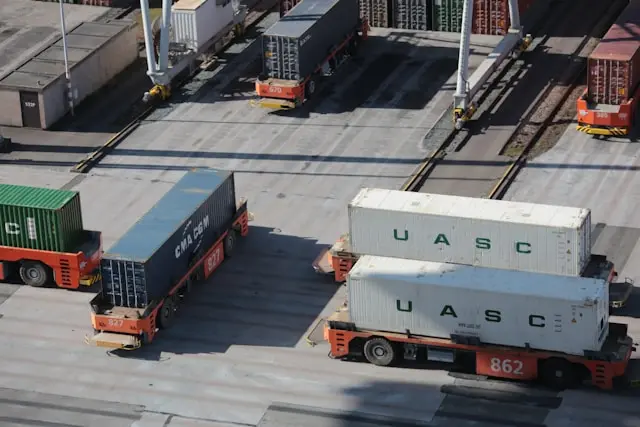
Fort Worth processes more than 635,000 intermodal lifts a year through the BNSF Alliance facility alone. It hosts BNSF Railway's corporate headquarters, anchors the 27,000-acre AllianceTexas logistics hub, and sits at the intersection of the two busiest Class I railroad networks in the American West. By every measure of infrastructure investment, freight volume, and corporate presence, Fort Worth should be the deepest executive talent pool in American rail logistics outside Chicago.
It is not. Data from 2024 shows that BNSF sources roughly 40% of its Fort Worth-based VP-level operations hires from external markets: Chicago, Jacksonville, Omaha. Conductor turnover in Fort Worth crew districts hit 34% across 2023 and 2024. A senior intermodal operations search at the Alliance corridor, according to Transport Topics, ran seven months before the employer gave up on local candidates entirely and relocated a manager from Memphis. The infrastructure is here. The capital is here. The people who run it, increasingly, are not.
What follows is a structured analysis of why Fort Worth's rail and intermodal talent market operates this way, where the deepest gaps sit, what they cost, and what organisations competing for leadership in this corridor need to understand before their next executive search.
The Paradox of a Headquarters City With a Shallow Talent Pool
Corporate headquarters are supposed to generate deep local talent ecosystems. The theory is well established in urban economics: a major employer anchors a sector, suppliers and competitors cluster around it, and a specialised labour market forms through decades of internal promotion, lateral moves, and knowledge spillover. BNSF Railway has maintained its headquarters in Fort Worth since 1988. That is nearly four decades of continuous corporate presence.
Yet the local pipeline for senior rail operations roles remains thin enough that BNSF must recruit almost half of its Fort Worth VP-level operations leadership from other cities. This pattern contradicts the agglomeration effect that has created deep, self-sustaining talent pools in markets like Chicago for commodities trading, Houston for upstream energy, and Boston for biotechnology.
The explanation lies in how the railroad industry structures its operations workforce. Fort Worth is BNSF's corporate and strategic planning centre, not its primary operations command hub. Corporate staff grew to 2,100 by late 2024, with an 8% increase in strategic planning and intermodal development roles. But operations leadership at the VP level requires decades of field experience running terminals, crew districts, and mechanical divisions across the BNSF system. That experience accumulates in the field, not at headquarters. A VP of intermodal operations may have spent fifteen years rotating through facilities in Chicago, Kansas City, and Los Angeles before the Fort Worth role becomes available. The headquarters location creates demand for these leaders. It does not create the leaders themselves.
This is the core analytical tension that defines Fort Worth's rail talent market in 2026: the city has invested billions in physical infrastructure and attracted the corporate centre of the largest freight railroad in North America, but the human capital required to lead that infrastructure at the operational level must still be imported from elsewhere. Capital moved faster than the local talent ecosystem could follow.
AllianceTexas at Scale: What the Numbers Actually Mean for Hiring
Volume Growth and the Facility Pipeline
AllianceTexas is not a logistics park in the conventional sense. It is a 27,000-acre master-planned development generating $9.2 billion in annual regional economic impact, operating within Foreign Trade Zone #196, and processing the third-highest inland container throughput in the United States behind Chicago and Memphis. The 635,000 intermodal lifts recorded at the BNSF Alliance Intermodal Facility in 2024 represented a 4.2% year-over-year increase, driven by e-commerce fulfilment and imports from Mexican manufacturing. The Association of American Railroads tracks these volumes as a bellwether for national freight health.
The expansion pipeline makes the hiring challenge more acute, not less. Hillwood announced 2.8 million square feet of new speculative industrial development breaking ground in early 2025, with rail-served sites prioritised for automotive and renewable energy logistics. Amazon Air expanded its Fort Worth Alliance Airport presence with a 200,000-square-foot sorting facility. Industrial occupancy across the park sat at 94% through late 2024, with FedEx Ground, Amazon, and General Motors parts distribution anchoring the tenant base.
What Growth at 94% Occupancy Means for Talent
When a logistics park runs at 94% occupancy while simultaneously adding 2.8 million square feet, every new tenant competes for the same local operations managers, terminal supervisors, and logistics coordinators that existing tenants are already struggling to retain. The Fort Worth rail-intermodal sector posted 4,200 unique job openings in Q3 2024. That figure represented a 23% increase from the same quarter the previous year. Average time-to-fill reached 47 days, compared to 32 days for all industries in the MSA.
The implication for hiring leaders is straightforward. In a market where physical capacity expands faster than the local workforce, every search above the coordinator level becomes a relocation conversation or a direct headhunting exercise targeting passive candidates at competing facilities. The talent is not sitting on job boards waiting.
The Three Roles Hiring Leaders Cannot Fill Locally
Intermodal Terminal Operations Managers
The 140-plus openings across AllianceTexas tenants for intermodal operations managers represent the highest-volume pain point in the corridor. These roles require fluency in yard management systems like Navis SPARCS N4 or BNSF's proprietary Lynx platform, combined with experience coordinating rail, truck, and air handoffs across a multi-tenant facility. The skill set is narrow. The demand is not.
According to Transport Topics, XPO Logistics extended its search for a Senior Manager of Intermodal Operations at its Alliance facility for seven months between March and October 2024. The search ended only when the company relocated a manager from its Memphis hub with a 22% relocation premium and a signing bonus. That outcome is not an anomaly. It is the default in a market where traditional recruiting approaches fail to reach the candidates who are qualified and employed.
Fort Worth competes directly with Memphis and Dallas for this talent. Memphis offers a lower cost of living but salaries run approximately 8% below Fort Worth levels. Dallas-based third-party logistics firms, including C.H. Robinson and Expeditors, regularly recruit AllianceTexas operations managers by offering shorter commutes from the eastern suburbs of the metroplex. The result is a talent pool caught in a three-way tug.
FRA-Certified Signal Engineers and PTC Specialists
Only 340 qualified professionals in Texas hold current Federal Railroad Administration signal maintainer certifications. Of those, 94% are employed full-time. The passive candidate rate in this category runs between 85% and 90%. Typical search timelines span 90 to 120 days.
The demand driver is Positive Train Control. PTC is the federally mandated collision avoidance system that now operates on every Class I mainline in the United States. Maintaining it requires proficiency in Wabtec or Alstom signalling systems. These are not transferable skills from adjacent industries. An automotive electronics engineer cannot step into a PTC role without years of railroad-specific training. BNSF's Fort Worth mechanical training centre trains over 400 apprentices annually, but the apprenticeship pipeline produces journeyman-level technicians, not the senior engineers and superintendents the market most desperately needs.
Cross-Border Trade Compliance Directors
Fort Worth's position on BNSF's Southern Transcon, the primary Los Angeles-to-Chicago corridor, means that 45% of AllianceTexas freight volume either originates from or terminates in Mexico. That cross-border exposure creates intense demand for leaders who combine USMCA customs compliance expertise with rail logistics operational knowledge. The qualified candidate pool for this combination in the American Southwest totals approximately 200 professionals. Most of them work in Laredo or El Paso. Recruiting them to Fort Worth requires relocation packages and a compensation proposition that accounts for their scarcity.
The bilingual premium compounds the challenge. English-Spanish fluency commands an 8% to 12% salary premium for logistics executives in Fort Worth, reflecting the operational necessity of managing cross-border freight in both languages. This is not a diversity initiative. It is a functional requirement that narrows the candidate pool further.
Compensation: The Gap Between Growth and Pay
Fort Worth's rail logistics compensation data reveals a second paradox that hiring leaders must confront. Intermodal volume grew 4.2% in 2024. Facility expansion continues aggressively. Yet Texas Workforce Commission data shows that logistics management compensation in the Fort Worth MSA grew only 2.1% annually, materially below the 3.8% national average for logistics roles and well below the 5.2% growth in Houston.
At the senior specialist and manager level, intermodal operations managers in Fort Worth earn between $98,000 and $125,000 base salary with 10% to 15% annual bonus potential. Railroad mechanical superintendents command $115,000 to $142,000 base, plus railroad retirement benefits. These figures are competitive within the local market but not competitive enough to attract candidates from Chicago, where comparable roles pay 15% to 25% more at the VP level.
The VP-Level Equation
A Vice President of Intermodal Operations based in Fort Worth earns between $285,000 and $380,000 base salary with a 40% to 60% bonus target and long-term incentive compensation. In Chicago, the equivalent band runs $350,000 to $450,000 base. The cost of living differential is real: the Council for Community and Economic Research places Chicago's index 22% above Fort Worth's. But senior executives making location decisions weigh more than cost of living. They weigh career density, the number of alternative employers within commuting distance if the role does not work out.
Chicago offers BNSF, Union Pacific, and a constellation of intermodal logistics providers within a single metro area. Fort Worth offers BNSF headquarters and AllianceTexas tenants. If a VP-level hire at BNSF Fort Worth does not work out, the lateral options within the city are limited. That career risk premium is real, and it explains why the hidden cost of a failed executive placement runs higher in concentrated markets. The compensation package must account for it or the search will stall.
Chief Logistics Officer roles at Fort Worth-based industrial and third-party logistics firms command $320,000 to $450,000 base, with equity participation for publicly traded entities or portfolio company upside for private equity-backed operators. FRA-certified safety officers with Confidential Close Call Reporting System expertise receive premiums of 15% to 20% above market, reflecting the liability reduction they provide.
The aggregate wage data hides these role-specific premiums. A market growing at 4.2% volume while averaging only 2.1% compensation growth is not a market in equilibrium. It is a market where automation and temporary labour are substituting for permanent hires in the lower tiers, while the upper tiers are locked in a scarcity-driven premium that the averages do not capture.
The Automation Divide: How BNSF's Investment Is Splitting the Labour Market
BNSF invested $3.8 billion system-wide in 2024, with approximately $240 million allocated to Texas facilities. That capital went to automated gate systems at Alliance, Positive Train Control maintenance infrastructure, and the piloting of a battery-electric switcher programme at the Fort Worth locomotive shop. Three yard locomotives are being converted to electric traction. EPA Tier 4 emissions standards for new switch locomotives took effect in 2026, requiring an estimated $50 million to $75 million in retrofitting or replacement costs for BNSF's Fort Worth yard operations alone.
This investment is not reducing the workforce. It is replacing one kind of worker with another that does not yet exist in sufficient numbers.
Precision Scheduled Railroading methodologies continue to reduce demand for traditional transportation operating crews. Fewer conductors per train, more predictable scheduling, less human discretion in yard movements. At the same time, demand surges for the technicians who maintain automated systems, the engineers who certify signal equipment, and the superintendents who manage the transition from diesel to electric traction. The organisations building AI and automation capability across their operations face this pattern in every sector. In rail logistics, the transition is particularly acute because the regulatory certification requirements for the new roles are as stringent as those for the roles they replace.
The BNSF mechanical training centre in Fort Worth trains 400-plus apprentices annually. That pipeline feeds the journeyman tier. It does not produce the mechanical superintendents who oversee the electric switcher conversion or the signal engineers who maintain PTC networks. Those leaders take a decade or more to develop. The investment timeline for automation runs in quarters. The development timeline for the people who manage it runs in years.
The Surface Transportation Board has held oversight hearings on the labour market effects of PSR implementation. The findings confirm the bifurcation: shrinking demand at the entry and mid-levels, expanding demand at the specialist and leadership levels, and almost no mechanism to accelerate the transition from one to the other.
Regulatory Headwinds That Compound the Hiring Challenge
Crew Size Mandates and Their Cost
The Federal Railroad Administration's reinstated minimum two-person train crew rule affects every labour model BNSF runs in Fort Worth. The Surface Transportation Board's regulatory impact analysis estimates a 12% to 15% cost increase for local switching operations. That cost falls on exactly the crew district that already faces 34% conductor turnover. The mandate preserves jobs at the operating crew level but does nothing to produce the signal engineers, mechanical superintendents, and intermodal strategy leaders the market needs most.
Environmental Compliance as a Talent Multiplier
Fort Worth sits within the Dallas-Fort Worth ozone non-attainment area as designated by the Texas Commission on Environmental Quality. Diesel locomotive idling regulations and yard operations restrictions require an estimated $20 million in infrastructure upgrades at Alliance Yard by the end of 2026. Each upgrade project requires project managers, environmental compliance officers, and mechanical engineers with rail-specific certifications. These are not permanent headcount additions. They are project-duration roles that pull from the same limited pool of FRA-certified professionals.
The Railroad Retirement Board's actuarial projections add a longer-term shadow. The dual-tax railroad retirement system faces projected insolvency by 2034. Potential increases in employer contributions or benefit reductions could affect recruitment incentives. For a candidate weighing a counteroffer against a new role, the security of railroad retirement benefits has historically tipped the decision toward staying. If that benefit becomes uncertain, the calculus shifts.
Union contract negotiations between Class I railroads and the Brotherhood of Locomotive Engineers and Trainmen (BLET) and SMART Transportation Division may produce scheduling rule changes affecting crew availability in Fort Worth crew districts. Any constraint on crew flexibility constrains terminal capacity. Any constraint on terminal capacity constrains the throughput growth that justifies expansion hiring.
Every regulatory pressure point in this list makes the same demand on the talent market: more specialised professionals, not fewer.
What Hiring Leaders in This Market Must Do Differently
Fort Worth's rail-intermodal talent market is not a market where posting a role and waiting produces results. The passive candidate rate for VP-level rail operations and intermodal strategy leaders exceeds 95%. For FRA-certified signal engineers, it runs between 85% and 90%. Average tenure at current employer for senior operations leaders is 8.4 years. These professionals are retained through non-compete agreements, long-term incentive vesting schedules, and stay bonuses that BNSF and Union Pacific deploy specifically to prevent movement.
Reaching them requires a fundamentally different method. The gap between direct application and executive headhunting is nowhere wider than in a market where the qualified candidate pool numbers in the hundreds nationally and the majority are contractually bound to their current employers.
A search strategy built for this market needs three capabilities. First, talent mapping that identifies where the qualified candidates actually sit across BNSF's system, Union Pacific's network, and the third-party logistics operators in Chicago, Memphis, Houston, and Omaha. Second, a compensation benchmarking capability grounded in the actual premiums these roles command, not the aggregate Fort Worth logistics average that understates the senior tier by 30% or more. Third, speed. A seven-month search like the one XPO reportedly endured at Alliance is not just expensive. It is a capacity constraint that limits throughput during the months the role sits empty.
KiTalent delivers interview-ready executive candidates within 7 to 10 days through AI-powered talent mapping and direct headhunting across industrial and logistics markets. With a 96% one-year retention rate across 1,450-plus executive placements, the model is built for markets where the candidates you need are not visible, not looking, and not reachable through any job board. The pay-per-interview structure means organisations pay only when they meet qualified candidates, eliminating the retainer risk that makes slow searches doubly expensive.
For organisations competing for rail operations, intermodal strategy, and cross-border compliance leadership in the Fort Worth corridor, where a qualified VP candidate pool numbers in the dozens nationally and the average search runs three to four months, speak with our executive search team about how KiTalent approaches this market.
Frequently Asked Questions
What is the average salary for an intermodal operations manager in Fort Worth?
Intermodal operations managers in the Fort Worth MSA with seven to ten years of experience earn between $98,000 and $125,000 in base salary, with 10% to 15% annual bonus potential. At the VP level, base compensation ranges from $285,000 to $380,000 with a 40% to 60% bonus target and long-term incentive awards. Bilingual English-Spanish executives command an additional 8% to 12% premium. Chief Logistics Officer roles at Fort Worth-based firms reach $320,000 to $450,000 base. These figures reflect 2024 market data from compensation benchmarking for supply chain and logistics roles.
Why is Fort Worth experiencing a rail logistics talent shortage despite BNSF's headquarters being located there?
BNSF has maintained its corporate headquarters in Fort Worth since 1988, but the city functions as the railroad's strategic planning centre, not its primary operations development hub. Senior operations leaders build their careers rotating through field terminals across the BNSF system. The headquarters creates demand for VP-level operations talent but does not produce it locally. Data shows BNSF sources approximately 40% of its Fort Worth-based VP-level operations hires from Chicago, Jacksonville, and Omaha rather than from the local market.
How long does it take to fill a senior rail logistics role in Fort Worth?
The average time-to-fill for rail-intermodal roles in Fort Worth reached 47 days in Q3 2024, compared to 32 days for all industries in the MSA. Specialised roles take considerably longer. FRA-certified signal engineer searches typically run 90 to 120 days. Senior intermodal operations manager searches have extended to seven months in documented cases. VP-level rail operations searches, where 95% of candidates are passive and retained through non-competes, require executive search methodology designed for passive candidate identification rather than job advertising.
What roles are hardest to fill in Fort Worth's rail and intermodal sector?
Three categories present the most acute scarcity. VP-level rail operations and intermodal strategy leaders, where the passive candidate rate exceeds 95% and average tenure at current employer is 8.4 years. FRA-certified signal engineers and PTC specialists, where only 340 qualified professionals hold current certifications in the entire state of Texas. Cross-border trade compliance directors combining USMCA customs expertise with rail logistics operations, where the national candidate pool totals approximately 200 professionals.
How does Fort Worth compare to Chicago for rail logistics executive compensation?
Chicago offers 15% to 25% higher base compensation for VP-level rail operations roles, with a typical band of $350,000 to $450,000 compared to Fort Worth's $285,000 to $380,000. Chicago's cost of living runs approximately 22% higher, partially offsetting the gap. The more material difference is career density. Chicago houses significant operations centres for both BNSF and Union Pacific plus dozens of intermodal providers, giving senior executives more lateral options. Fort Worth offers lower living costs but limited alternative employers at the executive tier.
What impact does automation have on rail logistics hiring in Fort Worth?
BNSF's $240 million Texas capital allocation in 2024 funded automated gate systems, PTC maintenance infrastructure, and battery-electric switcher conversions. Precision Scheduled Railroading reduces demand for traditional operating crews. Simultaneously, demand surges for automation technicians, electric traction specialists, and mechanical superintendents managing the diesel-to-electric transition. KiTalent's approach to executive hiring in technology-driven industrial sectors is designed for markets where capital investment outpaces the development of the leadership talent required to manage it.