Fresno Logistics Hiring in 2026: The Automation Investment That Created a Talent Problem Nobody Budgeted For
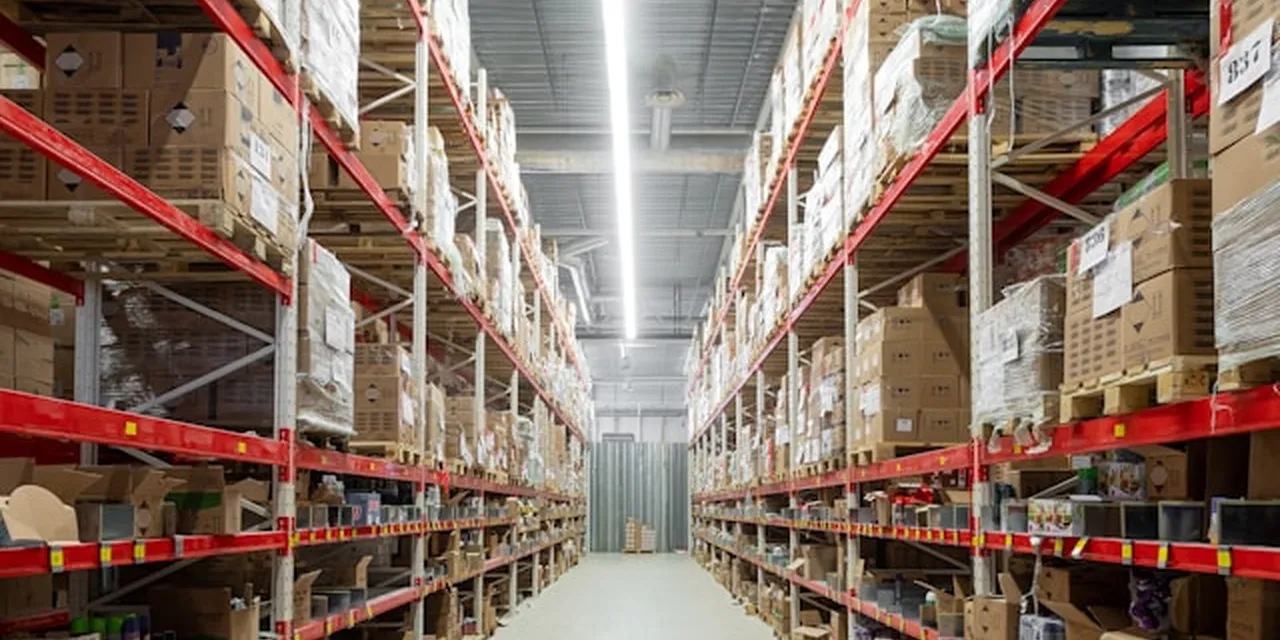
Fresno's logistics sector added 2.1 million square feet of industrial capacity to its development pipeline in 2024. Robotic palletizing systems, automated storage and retrieval, and electrified fleet infrastructure went into facilities across the Central Valley corridor. The investment thesis was straightforward: automate the warehouse floor, reduce dependence on a labour pool that was already running dry, and future-proof operations against California's tightening emissions mandates.
The thesis had a gap. Every automated system requires technicians who can programme PLCs, troubleshoot robotic cells, and maintain cold-chain compliance systems that now run on software rather than clipboards. Those technicians do not exist in sufficient numbers in the Fresno market. They barely exist in sufficient numbers anywhere. The result is a sector that has spent heavily on machines it cannot fully staff, in a metro area where the candidates capable of bridging the gap are overwhelmingly passive and increasingly expensive relative to the hierarchies they sit within.
What follows is an analysis of the structural shift underway in Fresno's logistics and distribution sector, who it is affecting, and what it means for the leaders and specialists who run the Central Valley's supply chain infrastructure. The market data covers compensation, vacancy, regulatory pressure, and competitive dynamics against the Inland Empire, Sacramento, and Los Angeles. The core question is specific: what happens when capital investment in automation outpaces the human capital required to operate it?
The Central Valley's Logistics Economy Is Not the One National Headlines Describe
National media coverage of logistics in 2023 and 2024 focused on headcount reductions. Amazon restructured. Target pulled back on fulfilment expansion in several markets. The narrative suggested a cooling sector where hiring pressure was easing.
Fresno's logistics economy did not follow that script. Industrial vacancy in the Fresno-Clovis metro area registered 3.8% in Q3 2024, well below the national average of 5.4%. Class A distribution space showed negative availability. Average asking rents for logistics space reached $0.78 per square foot per month on a triple-net basis by late 2024, a 22% increase from 2022 levels.
The Transportation, Warehousing, and Utilities sector employs 47,300 workers in the Fresno MSA. That figure represents 11.2% of total nonfarm employment, nearly double the national average of 5.8%. This is not a market where logistics is one sector among many. It is the economic backbone. When hiring in this sector stalls, the effects ripple across the entire metro economy.
The apparent contradiction between national logistics retrenchment and Fresno's continued tightness resolves when you separate the types of work. The coastal tech-adjacent logistics functions, the optimisation analysts, the corporate supply chain planners, those contracted. Fresno's asset-heavy, goods-movement economy, built on agriculture, cold storage, and last-mile delivery, operates on a fundamentally different cycle. Physical constraints like truck capacity and cooler space do not respond to the same forces that drive white-collar hiring freezes.
What Fresno's Logistics Sector Actually Looks Like in 2026
The infrastructure anchoring this market runs deeper than any single employer, though a handful of names dominate.
The Fulfilment and Distribution Core
Amazon operates multiple last-mile delivery stations and a large fulfilment centre, FAT1, in East Central Fresno. The combined footprint exceeds 1.2 million square feet. Estimated headcount sits between 1,500 and 2,000 workers. Target runs a 1.1-million-square-foot regional food distribution centre in southwest Fresno, serving stores across California, Nevada, and Arizona with roughly 750 employees. Walmart's regional distribution centre in nearby Tulare County draws approximately 600 employees from the Fresno labour shed.
The Cold-Chain Network
The cold-storage segment is anchored by Lineage Logistics, whose Central Valley footprint exceeds 500,000 square feet across multiple facilities, and Americold Realty Trust. These operators serve the agricultural export sector, a dense network of packers, third-party logistics providers, and cold-storage facilities concentrated along Highway 99 between Fresno and Bakersfield. That corridor processes over $8 billion in agricultural exports annually, according to the California Department of Food and Agriculture's 2023 export data.
Fresno Yosemite International Airport handled 85,000 metric tons of cargo in 2023, functioning as a hub for agricultural exports and e-commerce air freight. The intermodal access provided by the BNSF Railway Southern Transcon line connects this infrastructure directly to the Ports of Los Angeles, Long Beach, and Oakland.
The scale is considerable. The question for hiring leaders is not whether this market matters. It is whether the people required to run it can be found.
The Automation Inflection and the Workforce It Demands
Here is the analytical claim that sits at the centre of this market's hiring challenge: the investment in warehouse automation has not reduced the workforce. It has replaced one category of worker with another that does not yet exist in sufficient numbers. Capital moved faster than human capital could follow.
Major employers across the Fresno logistics sector are deploying robotic palletizing, automated storage and retrieval systems, and advanced warehouse management platforms at an accelerating pace. The stated objective is to offset labour scarcity at the warehouse floor level. The McKinsey assessment of logistics automation published in 2024 projects that this bifurcation will intensify: demand for low-skill manual roles will decline, while demand for high-skill maintenance technician roles will accelerate.
The problem is that the technicians who can programme PLCs, maintain robotic systems, and troubleshoot cold-chain automation are not sitting in Fresno waiting to be hired. The skills required, industrial automation troubleshooting, WMS administration across platforms like SAP EWM, Blue Yonder, and Manhattan, and HACCP and FSMA cold-chain compliance, are precisely the kind of specialised capabilities that traditional job board advertising fails to surface.
What makes this particularly acute in Fresno is the compensation compression it creates. A mid-level automation technician with PLC programming experience now commands salary levels approaching those of a traditional Senior Operations Manager. The aggregate wage data showed moderation in 2024 at 3.2% growth, down from 6.1% in 2022. But that average masks the acceleration in premiums for bilingual operations managers and automation technicians. Hierarchical compensation structures are under pressure from below, and many employers have not yet adjusted their bands to reflect the new reality.
What Fresno Logistics Roles Pay: The Full Picture
Compensation in Fresno's logistics sector carries a built-in discount relative to coastal California. That discount is the market's core attraction for employers and its core liability for talent retention.
A VP of Supply Chain or Logistics Director at the regional level earns between $145,000 and $185,000 in base salary, with total cash compensation reaching $200,000 to $240,000 including bonus. At the manager or senior individual contributor level, the same function pays $95,000 to $115,000 in base. These figures, drawn from BLS occupational employment data for the Fresno MSA and Randstad executive search data, represent a 15 to 20% discount to equivalent roles in the Los Angeles-Long Beach metro.
Senior Warehouse Operations Managers running large facilities of 500,000 square feet or more earn $78,000 to $95,000 at the specialist-manager level. Multi-site directors reach $120,000 to $150,000 in base salary.
Class A CDL drivers with five or more years of experience earn $65,000 to $78,000 in base compensation, with total packages reaching $75,000 to $90,000 once mileage bonuses are included. Signing bonuses of $5,000 to $10,000 are standard competitive tools among carriers competing for drivers with hazmat endorsements.
The discount to Los Angeles is partly offset by Fresno's lower cost of living. But the Inland Empire comparison is more revealing for anyone trying to benchmark compensation. Senior Operations Managers in San Bernardino and Riverside earn $110,000 to $130,000, a 12 to 18% premium over Fresno for equivalent roles. The Inland Empire's cost of living, driven primarily by housing, runs approximately 35% higher than Fresno. On paper, Fresno's lower cost of living should neutralise part of the wage gap. In practice, candidates weigh the career ladder density and headquarters proximity that the Inland Empire offers. Fresno's operationally focused, asset-heavy environment rarely provides stock equity or the breadth of advancement paths available in a market with Fortune 500 regional hubs.
For executive-level VP Supply Chain roles, the competitive dynamic shifts further. Los Angeles and Orange County offer 25 to 30% compensation premiums and equity participation that Fresno employers almost never match. The result is a persistent pattern of senior talent attrition toward coastal metros that has deepened rather than stabilised through 2025.
The Regulatory Squeeze That Compounds Every Hiring Decision
Fresno's logistics operators face a regulatory environment that is simultaneously raising capital costs and creating demand for an entirely new category of specialist.
Fleet Electrification and the CARB Mandates
The California Air Resources Board's Advanced Clean Trucks regulation and the pending Warehouse Indirect Source Rule impose capital requirements that ripple directly into talent strategy. Compliance requires fleet electrification and zero-emission vehicle procurement. Estimated implementation costs run $1.2 to $1.8 million per facility for medium-sized warehouses, according to CARB's own regulatory impact assessment.
These are not abstract policy developments. They require fleet managers who understand electric vehicle maintenance, facilities engineers who can manage charging infrastructure, and compliance officers who can document conformance with evolving emissions standards. None of these roles existed in Fresno's logistics sector five years ago. All of them are now critical.
Infrastructure and Grid Fragility
Highway 99, the primary artery for goods movement in the Central Valley, maintains a Facility Condition Index rating of "poor" across more than 60% of its Fresno County segments. Transit times and trucking costs are materially higher than they would be on better-maintained corridors.
PG&E's Public Safety Power Shutoff events and broader grid instability pose an existential risk for cold-storage operators. Backup generation investments of $200,000 to $500,000 per facility are now standard. Water scarcity under the Sustainable Groundwater Management Act restrictions threatens the agricultural commodity volumes that feed the entire cold-chain system. A 10% reduction in agricultural output could reduce cold-storage demand by 5 to 7%, directly impacting revenue for the 3PLs that employ thousands across the corridor.
Every one of these risks demands leadership talent that can operate across regulatory compliance, capital planning, and operational execution simultaneously. The pool of candidates who combine supply chain operations experience with California regulatory fluency is small. In the Central Valley, it is vanishingly small.
Why Conventional Search Methods Fail in This Market
The passive candidate ratios in Fresno's logistics sector explain why traditional hiring approaches produce thin shortlists and extended vacancy periods.
At the executive and senior management level, an estimated 80 to 85% of qualified candidates are not actively applying to posted roles. These professionals typically hold tenures of four to six years at their current employers. With sector unemployment at 3.1% as of late 2024, the arithmetic is simple: full employment conditions mean that almost every candidate worth hiring is already working.
Senior Operations Manager roles requiring seven or more years of cold-chain management experience typically remain unfilled for 90 to 120 days in the Fresno market. The equivalent search in the Inland Empire runs 45 to 60 days. The gap is not explained by compensation alone. It reflects the shallower candidate pool in the Central Valley and the reluctance of experienced managers to relocate from coastal markets to an inland metro that offers fewer advancement options.
CDL drivers with hazmat endorsements are similarly passive. Qualified drivers are already employed and move only for signing bonuses or meaningfully better working conditions. Turnover rates exceeding 50% annually at regional 3PLs are not a sign that candidates are available. They are a sign that the same candidates are circulating between a small number of employers, each poaching from the other at considerable cost.
The one tier where active candidates are abundant is the warehouse associate and forklift operator level, where annualised turnover rates at major e-commerce fulfilment centres run between 60% and 75%. This is the segment where job boards and staffing agencies function effectively. It is also the segment that automation is designed to reduce.
The implication is uncomfortable for employers who have built their talent acquisition processes around active candidate channels. The roles where conventional methods work are the roles that automation is eliminating. The roles where the need is accelerating are the roles where only direct headhunting reaches the viable candidate pool.
What This Market Requires from Hiring Leaders
The Fresno logistics talent market in 2026 rewards organisations that have made three specific adjustments to how they search for leadership and specialist talent.
First, compensation structures must reflect the compression reality. When a bilingual automation technician commands pay approaching that of a Senior Operations Manager, the traditional hierarchy no longer holds. Employers who have not benchmarked their bands against the actual market for scarce technical skills are losing candidates to competitors who have. The discount to coastal California that once made Fresno attractive to employers now works against retention when the Inland Empire offers 12 to 18% premiums for the same skills.
Second, search methodology must match candidate behaviour. An 80 to 85% passive rate at the senior level means that a job posting, regardless of how well-written, reaches fewer than one in five viable candidates. The executive searches that succeed in this market are the ones that begin with direct identification and outreach to named individuals in competitor facilities, adjacent sectors, and agricultural cold-chain operations.
Third, the proposition must address the career ceiling that drives attrition to coastal metros. Candidates at the VP level weigh not just immediate compensation but the trajectory available in a given market. Fresno's operationally focused environment lacks the headquarters density that creates natural next-step roles. Employers who can articulate a clear advancement path, or who can offer leadership scope that a candidate cannot find elsewhere, hold a material advantage over those who lead with salary alone.
KiTalent's work across logistics, industrial, and manufacturing executive search consistently shows that markets like Fresno, where physical infrastructure investment is outpacing the human infrastructure required to operate it, are precisely where AI-powered talent mapping produces the greatest advantage. Identifying the 15 to 20 candidates in a market who can actually fill a role, before they appear on any job board, compresses a 90-to-120-day search into a timeline that matches the operational urgency.
KiTalent delivers interview-ready executive candidates within 7 to 10 days, using direct headhunting supported by AI-driven talent identification. The pay-per-interview model means organisations only pay when they meet qualified candidates. With a 96% one-year retention rate across 1,450 completed executive placements, the approach is built for markets where the cost of a failed or prolonged search is measured in operational disruption rather than mere recruitment fees.
For logistics and supply chain leaders hiring into the Central Valley, where every week of vacancy translates into unfilled shifts, missed compliance deadlines, and automation systems running below capacity, start a conversation with our executive search team about how we approach this specific market.
Frequently Asked Questions
What is the average salary for a logistics director in Fresno in 2026?
A VP of Supply Chain or Logistics Director at the regional level in the Fresno-Clovis MSA earns between $145,000 and $185,000 in base salary, with total cash compensation reaching $200,000 to $240,000 including performance bonuses. These figures represent a 15 to 20% discount relative to equivalent roles in the Los Angeles-Long Beach metro, partially offset by Fresno's lower cost of living. At the senior manager or individual contributor level, base salaries range from $95,000 to $115,000. Organisations benchmarking offers against the Inland Empire should expect to compete with packages 12 to 18% higher for comparable operations management roles.
Why is it so hard to hire warehouse operations managers in Fresno?
Fresno's logistics sector operates at near-full employment, with sector unemployment at 3.1% as of late 2024. An estimated 80 to 85% of qualified senior candidates are not actively seeking new roles. Senior Operations Manager positions requiring cold-chain management experience typically remain open for 90 to 120 days, roughly double the fill time in the Inland Empire. The limited career ladder density in Fresno compared to coastal metros compounds the challenge, as experienced candidates often prefer markets offering headquarters proximity and broader advancement paths.
How does warehouse automation affect hiring in Fresno's logistics sector?
Automation is bifurcating the workforce. Demand for manual warehouse roles is declining as robotic palletizing and automated storage systems are deployed. Simultaneously, demand for high-skill maintenance technicians, PLC programmers, and WMS administrators is accelerating sharply. The candidates who can maintain these systems are overwhelmingly passive and in short supply nationally. KiTalent's AI-powered talent identification approach is designed specifically to reach these specialists through direct outreach rather than job advertising, which typically fails to surface passive technical candidates.
What regulations are affecting logistics employers in the Fresno area?
California Air Resources Board mandates, including the Advanced Clean Trucks regulation and the Warehouse Indirect Source Rule, require fleet electrification and zero-emission vehicle procurement. Implementation costs run $1.2 to $1.8 million per medium-sized facility. The Sustainable Groundwater Management Act restricts water use in ways that may reduce agricultural output and downstream cold-storage demand. PG&E grid instability requires backup generation investments of $200,000 to $500,000 per cold-storage site. Each of these regulations creates demand for new specialist roles that did not exist in Fresno's logistics sector five years ago.
How does Fresno compete with the Inland Empire for logistics talent?
The Inland Empire offers 12 to 18% higher base salaries for equivalent logistics roles and greater career ladder density due to its concentration of headquarters and regional hubs. Fresno's advantage lies in its materially lower cost of living, with housing roughly 35% cheaper than San Bernardino and Riverside. However, Fresno employers must offer compelling role scope and clear advancement paths to offset the Inland Empire's brand recognition and compensation premiums. For executive roles, the competition extends to Los Angeles, where 25 to 30% pay premiums and equity participation draw senior talent away from the Central Valley.
What is the best way to recruit senior logistics executives in Fresno?
Given that 80 to 85% of qualified logistics executives in the Fresno market are passive candidates, direct headhunting consistently outperforms job board advertising. The most effective approach combines talent mapping of competitor organisations with direct outreach to named individuals, supported by real-time compensation benchmarking. KiTalent's methodology delivers interview-ready candidates within 7 to 10 days using AI-enhanced identification of passive executives, reaching the professionals who never appear on job boards but who are the strongest fit for operationally critical leadership roles.