Galway Is Building Hotels It Cannot Staff: The Hospitality Hiring Crisis Behind the Construction Boom
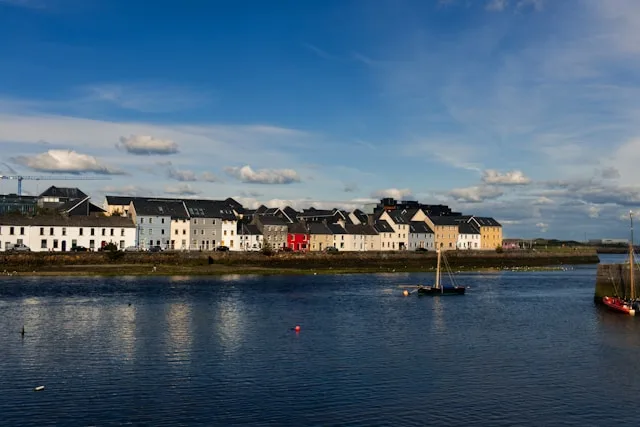
Galway City recorded €127 million in hotel construction activity through 2024. Four new hotels are due to open between late 2025 and mid-2026, adding approximately 420 bedrooms to a market that welcomed 1.8 million overseas visitors last year alone. From the outside, the numbers describe a city investing confidently in its tourism future.
From the inside, the picture is different. The Irish Hotels Federation projects a net staffing deficit of 18 to 22 per cent across Galway hospitality businesses by summer 2026 if current conditions persist. Vacancy rates in the city already run at 9.4 per cent, well above the 6.2 per cent national average. Executive Chef positions at four-star properties sit open for five to seven months. Hotel General Managers are being recruited through signing bonuses and accommodation guarantees because the pool of qualified candidates in the West of Ireland numbers between 12 and 15 people. The city is adding rooms to a market that cannot staff the rooms it already has.
What follows is a ground-level analysis of how Galway's hospitality sector arrived at this point, why the constraints are deeper than a conventional talent shortage, and what organisations operating in or entering this market need to understand before they commit capital or hire their next senior leader.
A Market Adding Inventory It Cannot Operate
The gap between Galway's capital investment trajectory and its operational capacity is the defining feature of this market in 2026. It is not simply that demand for staff is high. It is that the market is physically expanding while the workforce available to operate that expansion is contracting.
Through 2024, hotel occupancy in Galway peaked at 82 per cent during July and August before falling to 48 per cent in January and February. That 34-percentage-point swing is not just a tourism pattern. It is an employment pattern. An estimated 35 to 40 per cent of hospitality roles in the city operate on fixed-term contracts of six to nine months, according to Galway City Council's Local Economic and Community Plan. The workforce is designed around seasonality, not permanence.
Now layer 420 new bedrooms onto that base. Each bedroom requires staffing across housekeeping, front desk, food and beverage, maintenance, and management. The traditional assumption is that supply expansion creates proportional employment demand. In Galway, the evidence suggests the opposite may occur. The city may be heading toward a period where service standard degradation or accelerated automation replaces employment growth, because the workers required to operate these new properties do not exist in sufficient numbers locally and cannot afford to relocate to fill them.
This is the original tension at the heart of Galway's hospitality economy: capital has moved faster than human capital can follow. Investment decisions were made on the basis of visitor demand projections. Staffing projections were treated as a downstream problem to be solved after construction commenced. The result is a market where the physical infrastructure for growth is arriving on schedule and the workforce to operate it is not.
Where the Shortages Are Most Acute
Executive Chefs and the Role That Keeps Splitting in Two
The most visible shortage in Galway's hospitality market sits in the kitchen. Forty-two per cent of Galway hospitality businesses report chef vacancies as their primary operational constraint, according to the IHF Galway Branch Survey 2024. The problem is sharpest at the Executive Chef level, where four-star city-centre properties experience typical vacancy durations of five to seven months. The national average for the same role is three to four months.
The market response reveals how deep the problem runs. When properties cannot fill an Executive Chef role through multiple recruitment cycles, they restructure. The role splits into a Head Chef responsible for kitchen operations and a Food and Beverage Manager responsible for the P&L. This is not an efficiency innovation. It is a concession. It means two people doing what one should do, at combined cost, with divided accountability. Properties that restructure this way are managing around a hiring failure rather than solving it.
Executive Chefs in this market are overwhelmingly passive candidates. An estimated 80 per cent of qualified professionals are employed and not actively applying to posted vacancies. Movement occurs through personal networks or direct approaches from competing properties. Job boards reach the remaining 20 per cent, which in a market this small means a handful of candidates at best.
Revenue Managers and the Technical Specialism the Market Cannot Produce
Revenue management carries a 28 per cent vacancy rate across Galway hotels. This is a technical role requiring yield optimisation expertise for perishable inventory, and the candidate pool is thin for a specific reason: international hotel groups recruit these specialists through LinkedIn InMail campaigns before local vacancies are ever advertised. Galway properties are competing for revenue managers against global brands with deeper pockets and broader career pathways.
Compensation for Revenue Managers in Galway sits between €50,000 and €62,000. Dublin offers a 22 to 28 per cent premium for equivalent roles. The gap alone does not explain the shortage. What explains it is that revenue management is a specialism with limited training pathways in the West of Ireland. The candidates who develop these skills tend to do so in Dublin or internationally, and the gravitational pull of those larger markets is difficult for Galway to overcome without a proposition that goes beyond salary.
Event Sales Managers and the Collapse of Applicant Volume
The third acute shortage category is event sales managers, where Galway properties receive an average of 3.2 applicants per role compared to 12.4 nationally. This ratio, documented in the ITIC Skills Audit 2024, describes a market where the conventional recruitment process has effectively broken down. Posting a role and waiting for applications will not fill this position in Galway. The applicant pool is simply too small.
The reason connects to festival economics. Galway's events calendar generates enormous temporary demand. The Galway International Arts Festival alone draws 270,000 attendees and creates demand for 800 to 1,200 additional seasonal workers. The Galway Races attract 141,000 visitors over seven days. These events need event sales professionals who understand both hospitality operations and festival logistics. That combination of skills is rare, and the professionals who possess it know their value.
The Housing Constraint That No Salary Increase Can Fix
The staffing deficit in Galway hospitality is not primarily a wage problem. It is a housing problem wearing a wage problem's clothes.
Galway City had 63 properties available to rent on 1 February 2025. On the same date in 2019, there were 312. Average monthly rent for a one-bedroom apartment in the city centre reached €1,882 in Q4 2024, according to the Daft.ie Rental Report. A hospitality worker earning the sector average of €32,500 faces a rent-to-income ratio between 72 and 80 per cent. City-centre living is mathematically impossible without subsidy or shared accommodation arrangements.
This constraint operates differently at different seniority levels. For entry-level and mid-level staff, it means they cannot take jobs in Galway City regardless of wage levels. Workers priced out of the city relocate to Tuam, Athenry, and Gort, where rural hotels can offer comparable wages with lower living costs. The city-centre labour pool shrinks as a direct consequence.
For senior leaders, the dynamic is subtler but equally damaging. A Hotel General Manager earning €78,000 to €95,000 can afford Galway rents, but a passive candidate being recruited from another market must calculate whether the move makes financial sense. Dublin rents are higher in absolute terms, but Dublin salaries carry a 22 to 28 per cent premium. The net calculation often favours staying put. When properties offer signing bonuses of €10,000 to €15,000 and accommodation assistance to recruit General Managers, they are not being generous. They are compensating for a structural deficit that makes the standard offer uncompetitive.
Fáilte Ireland's new registration system for short-term tourist accommodation, which came into effect in September 2024, adds a further complication. The regulation aims to return Airbnb-style properties to the long-term rental market. In principle, this should help. In practice, it may reduce the flexible accommodation stock that seasonal festival workers rely on during peak periods, tightening the very labour supply the sector needs most during its highest-demand weeks.
The housing crisis is not a temporary market condition. It is the foundational constraint shaping every hiring decision in Galway hospitality. Until rental supply increases materially, every other intervention is working around the problem rather than addressing it.
The Competitive Drain: Dublin, [Cork](/cork-ireland-executive-search), and Points Further Abroad
Galway does not compete for hospitality talent in isolation. It competes against Dublin, Cork, London, Dubai, and Sydney. Each competitor offers something Galway structurally cannot match.
Dublin and the Career Trajectory Gap
Dublin's 22 to 28 per cent salary premium for equivalent hospitality management roles is partially offset by its higher cost of living. Galway city rents average €1,850 per month compared to Dublin city centre at €2,450. On a net-of-housing basis, the gap narrows. But compensation is not the primary reason Dublin pulls senior talent from the West.
The critical differentiator is career trajectory. Dublin offers pathways to international brand management and regional leadership roles that Galway's smaller market cannot support. A Hotel General Manager in Dublin can progress to a Regional VP overseeing multiple properties. In Galway, the ceiling arrives sooner. For a senior professional weighing their next five years, this trajectory difference outweighs a few hundred euro per month in rent savings.
International Markets and the Structural Pipeline Break
The international drain operates at both ends of the seniority spectrum. At the senior end, Dubai and the UAE target Irish hospitality managers, particularly for Food and Beverage Director roles, with tax-free packages offering 40 to 50 per cent above Galway equivalents in net terms. At the junior end, Australia's Working Holiday Maker programme continues to pull Galway's 20 to 30 age cohort out of the market entirely.
The junior drain has a lagged consequence that is often underestimated. When supervisory-level professionals in their mid-twenties leave for Australia, they do not just create a vacancy at that level. They remove themselves from the pipeline that would have produced Galway's next generation of managers and directors. The city is not merely losing today's staff. It is losing tomorrow's leaders.
Post-Brexit visa dynamics have added a further channel. UK Skilled Worker visas and the Youth Mobility Scheme have absorbed an estimated 8,000 Irish hospitality workers annually, with London and Manchester specifically targeting Irish-trained chefs and hotel managers. The UK's proximity makes this drain particularly difficult to counter. A chef in Galway can be working in London within a week of deciding to move.
Cork, meanwhile, operates as a direct regional competitor, offering 5 to 8 per cent salary premiums with a similar cost-of-living profile. The projected opening of the Cork Events Centre in 2026 is expected to intensify competition for the event management and technical production talent that Galway's festival economy depends on. For professionals weighing Galway against Cork, the new venue shifts the balance.
Regulation and Structural Barriers to Filling the Gap
Even where willing candidates exist outside the domestic market, the regulatory framework creates delays that the seasonal hiring window cannot absorb.
Critical Skills Employment Permits for Chefs, reinstated on the Critical Skills List in 2023, face processing delays of 12 to 16 weeks. A Galway hotel that identifies a qualified non-EEA chef in February for the summer season may not receive the permit until May or June. The peak period begins in late June. The maths does not work.
General Employment Permits for non-EEA hospitality staff carry a €1,000 fee and a salary threshold requirement of €34,000. The average hospitality sector wage in Galway is €32,500. For entry-level and junior roles, the threshold creates a systemic impossibility. You cannot legally hire a non-EEA commis chef in Galway at a wage the permit system will accept.
These are not temporary bureaucratic delays. They are embedded features of a regulatory system designed for a labour market that no longer exists. The permit framework assumes that domestic and EEA labour supply is broadly sufficient, with permits reserved for exceptional cases. In Galway hospitality, the exceptional case has become the standard condition.
On the cost side, public liability insurance premiums for Galway hospitality businesses increased 18 per cent year-on-year through 2024. Energy costs, while down from 2022 peaks, remain 34 per cent above 2019 levels. These cost pressures squeeze the margins available for wage increases, creating a circular trap: businesses need to pay more to attract staff, but their operating costs leave less room to do so. The businesses best positioned to break this cycle are those with the strongest commercial leadership, which returns the problem to the senior hiring challenge that started it.
UK visitor numbers to Galway remain 12 to 14 per cent below 2019 levels due to sterling weakness and passport friction. This specifically undermines shoulder-season revenue, the March to May and September to October periods where policy documents call for season extension. Without the British visitor base that historically filled Galway's shoulder months, the economic case for year-round staffing weakens further.
What Galway's Senior Hospitality Hiring Actually Requires
The market dynamics described above converge on a single operational reality for any organisation trying to fill a senior hospitality role in Galway. Conventional recruitment methods reach a fraction of the viable candidate pool and operate too slowly for the window available.
Hotel General Managers in this market are 85 per cent passive, with average tenure of 4.2 years. Executive Chefs are 80 per cent passive. Revenue Management Directors are 75 per cent passive and actively targeted by international groups before local vacancies are posted. Event Sales Managers attract 3.2 applicants per posted role. These are not conditions where a job advertisement on a recruitment portal produces a competitive shortlist.
The compensation required to move candidates in this market reflects the constraints. A General Manager at a four-star property of 100 to 150 rooms commands €78,000 to €95,000 base, with total compensation reaching €95,000 to €115,000 including bonus. Luxury properties at the five-star level pay €110,000 to €135,000. Regional Operations Directors overseeing three or more properties command €120,000 to €150,000 plus car allowance and bonus. Festival and Events Directors at major institutions earn €75,000 to €95,000, benchmarked against Arts Council salary guidelines.
These figures are not obstacles in themselves. They are market rates. The obstacle is that the candidates commanding them are not looking. They are embedded in roles, performing well, and unlikely to respond to a posted vacancy. Reaching them requires a different method: direct identification, confidential approach, and a proposition that addresses not just salary but housing, career trajectory, and the specific quality-of-life case that Galway can make. The counteroffer risk in a market this small is acute. When only 12 to 15 candidates in the West of Ireland possess the right P&L and brand-standard experience for a 100-plus bedroom operation, losing one to a counteroffer means restarting a search that was already months long.
Multilingual capability adds a further premium. German, French, and Spanish language skills command 8 to 12 per cent salary premiums in guest-facing senior roles. In a market competing for European visitors, this is not a luxury skill. It is a revenue driver. The candidates who combine hospitality leadership experience with language fluency represent the thinnest segment of an already thin pool.
How KiTalent Approaches Markets Like Galway
The pattern Galway presents is familiar to any executive search practice operating in hospitality and leisure markets: a geographically constrained candidate pool, extreme passive-candidate ratios, seasonal urgency, and a regulatory environment that limits international sourcing. These are precisely the conditions where conventional recruitment delivers the worst results and direct headhunting methodology delivers the best.
KiTalent's approach to markets with these characteristics begins with talent mapping: a systematic identification of every qualified candidate for a given role, whether they are actively looking or not. In a market where 85 per cent of Hotel General Managers are passive, this is not an optional step. It is the only way to see the full candidate field before beginning outreach.
The speed imperative in Galway is particularly acute. With seasonal peaks arriving on fixed dates and visa processing consuming 12 to 16 weeks, a search that begins late cannot recover. KiTalent delivers interview-ready candidates within 7 to 10 days, on a pay-per-interview model that eliminates the upfront retainer risk that smaller hospitality operators cannot absorb. The 96 per cent one-year retention rate matters especially in a market where replacing a failed hire means re-entering a candidate pool of 12 to 15 people.
For organisations competing for General Managers, Executive Chefs, Revenue Directors, or Festival Directors in Galway's hospitality market, where the candidates you need are not visible on any job board and the seasonal window leaves no room for a slow search, speak with our executive search team about how we approach this specific market.
Frequently Asked Questions
What is the average salary for a Hotel General Manager in Galway in 2026?
A Hotel General Manager at a four-star property with 100 to 150 rooms in Galway City earns €78,000 to €95,000 in base salary, with total compensation including bonus reaching €95,000 to €115,000. Five-star and luxury properties command €110,000 to €135,000. These figures reflect the IHF Salary Survey 2024 and have remained under upward pressure through 2025 as competition for the limited pool of qualified candidates in the West of Ireland has intensified.
Why is it so hard to hire hospitality staff in Galway?
The shortage is driven by three converging constraints: a housing crisis that makes city-centre living unaffordable for most hospitality workers, a visa processing system too slow for seasonal hiring windows, and competitive drain toward Dublin, the UK, and international markets that offer higher net compensation. Senior roles compound the problem because 75 to 85 per cent of qualified candidates are not actively seeking new positions, requiring direct identification rather than job advertising.
How many new hotel rooms are opening in Galway in 2026?
Four new hotels scheduled between late 2025 and mid-2026 will add approximately 420 bedrooms to Galway's hotel stock. This expansion arrives against a projected staffing deficit of 18 to 22 per cent across the sector, creating a situation where the city is adding inventory faster than it can recruit the people to operate it.
What executive search methods work best for hospitality hiring in Galway?
In a market where passive candidate ratios exceed 80 per cent for senior roles and the total qualified candidate pool for specific positions numbers 12 to 15 people regionally, direct executive search outperforms job advertising by a wide margin. Effective search in this market requires talent mapping to identify every qualified candidate, confidential direct approach, and a proposition addressing compensation, housing assistance, and career trajectory in a single package.
How does Galway hospitality compensation compare to Dublin?
Dublin offers 22 to 28 per cent salary premiums for equivalent hospitality management roles. However, Galway's lower cost of living partially offsets this gap. Average rents in Galway City sit at approximately €1,850 per month compared to €2,450 in Dublin city centre. The more material difference is career trajectory: Dublin offers progression to international brand management and multi-property regional leadership that Galway's smaller market cannot match.
What impact does Galway's festival calendar have on hospitality hiring?
The Galway International Arts Festival and Galway Races together generated over €110 million in economic impact in 2024 and created acute demand for 800 to 1,200 additional seasonal workers. These events require event sales managers, technical production staff, and senior hospitality operators who can manage extreme demand spikes. The festival calendar compresses hiring urgency into narrow windows where the cost of an unfilled role is measured in lost revenue during the highest-yield weeks of the year.