Galway's Marine Cluster Has the Research. It Cannot Hire the People to Use It.
Galway is home to Ireland's densest concentration of marine research capability. The Marine Institute, the MaREI centre at University of Galway, and a cluster of deep-tech firms in subsea robotics and marine imaging together represent more than 300 researchers and R&D engineers working within a fifteen-kilometre radius. No other city on the island matches this density. No other city on the Atlantic seaboard of Europe matches it at this scale relative to population.
Yet the same city cannot fill a Chief Engineer role on a research vessel for eight months. Its largest aquaculture employer recruits production managers from Scotland because the domestic pipeline is empty. Offshore wind developers with projects planned for waters visible from the Galway coast route their supply chain contracts through Cork and Belfast because Galway Harbour physically cannot accommodate the vessels. The city produces the knowledge. It then watches the operational jobs leave.
This is the central tension defining Galway's marine sector in 2026: a research cluster with globally competitive intellectual output, embedded in a port city whose infrastructure, licensing, and compensation structures systematically prevent that research from becoming local employment at scale. What follows is a structured analysis of the forces pulling this market apart, the employers caught between them, and what senior hiring leaders need to understand before they compete for talent in a market far smaller and more constrained than national policy ambitions suggest.
Ireland's Atlantic Research Powerhouse Meets a 6.8-Metre Draft Limit
The marine technology cluster between Oranmore and the Galway City Innovation District employs approximately 180 to 220 direct FTEs in high-value R&D roles. Cathx Ocean builds subsea imaging systems. PlanBlue develops AI-driven seabed monitoring. Exceedence produces renewable energy project software. Twelve additional marine-tech start-ups operate out of the PorterShed, including Sediment Flux and OceanTrack. The Marine Institute itself employs approximately 230 staff, operates two research vessels, and runs an annual budget of €35 million.
This is a genuine cluster. The firms share supply chains, recruit from the same university programmes, and collaborate on EU-funded research projects. For marine technology, Galway functions.
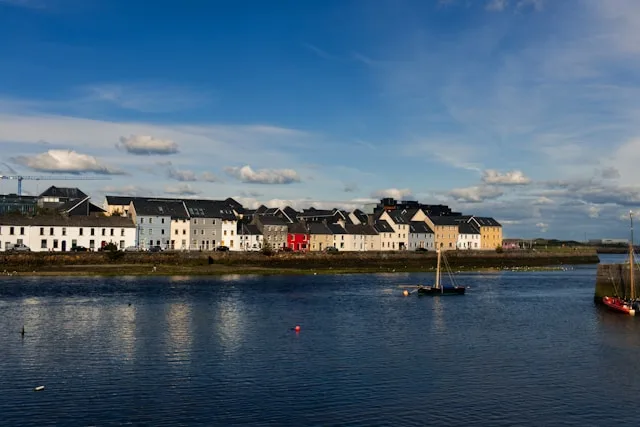
The problem begins at the waterline. Galway Harbour's existing piers offer a maximum draft of 6.8 metres and a vessel length limit of 120 metres. Offshore wind installation vessels require 10 to 15 metres of draft and 150-plus metres of quayside. Jack-up vessels, heavy-lift operations, and component marshalling are physically impossible at the port as it stands. The €150 million Inner Harbour redevelopment now underway will improve capacity for crew transfer vessels and small-scale maintenance, but it will not resolve the draft constraint. Heavy component marshalling remains unlikely before 2028 to 2030, and even that timeline depends on outer harbour expansion feasibility and state capital investment exceeding €200 million, according to the Galway Port Company Masterplan 2021-2041.
The consequence is stark. The Western Star Offshore Wind project, a 1.3GW development led by SSE Renewables and Corio Generation, is expected to establish a Galway-based project office. Supply chain servicing contracts, however, are expected to locate in Cork or international ports. The Port of Cork at Ringaskiddy offers 12-metre draft capacity and has been designated as the marshalling port for the Celtic Sea and Atlantic offshore wind pipeline. Belfast Harbour offers similar depth.
Galway gets the project offices. Cork and Belfast get the operational jobs. The talent implications of this infrastructure divide ripple through every hiring decision in the region.
The Leaky Pipeline: Where Galway's Trained Talent Goes
The most analytically important dynamic in this market is not the shortage itself. It is the direction of flow.
Galway trains marine engineers, environmental scientists, and renewable energy specialists through University of Galway's programmes and the MaREI centre's research staff of 85. The Marine Institute provides test-bed capabilities that give early-career professionals hands-on exposure to vessel operations, survey design, and marine data systems. This pipeline is productive. The problem is that the people it produces leave.
Cork and Aberdeen Pull Operational Talent West
When a marine engineer completes three years at the Marine Institute and seeks an operational role in offshore wind installation, there is no employer in Galway that can offer it. The vessels do not dock here. The construction projects stage elsewhere. That engineer moves to Cork, where Simply Blue Energy, ESB, and international developers including Corio and Iberdrola concentrate their operational teams. Or that engineer moves to Aberdeen, where Kincardine and Hywind have established Europe's floating wind expertise base.
Aberdeen offers GBP-denominated salaries that translate to 20 to 25 per cent premiums over Irish equivalents for Project Director roles. Cork offers 10 to 15 per cent higher executive compensation in offshore wind than Galway, according to the Morgan McKinley Ireland Salary Guide 2024, driven by the sheer volume of projects routing through its port.
[Dublin](/dublin-ireland-executive-search) Draws the Deep-Tech Engineers
For marine robotics and subsea imaging, the competitor is Dublin. The Docklands and Sandyford corridors deployed €340 million in marine-tech relevant venture capital in 2023. Galway's equivalent figure was €22 million, according to the Irish Venture Capital Association Annual Report. Dublin-based firms reportedly poach senior robotics engineers from Galway's cluster with total compensation packages 18 to 22 per cent higher. The mechanism is equity participation. A Galway start-up with revenue-stage funding cannot match a Dublin competitor backed by Series B capital offering meaningful option pools.
This is not a problem that better job advertisements solve. The talent exists. It is trained locally. It leaves for structural reasons: infrastructure, compensation, and career trajectory. A hiring strategy that does not account for these outflows is not a strategy. It is a posting.
Aquaculture's Quiet Workforce Crisis
The aquaculture sector in Galway County employs approximately 350 direct FTEs year-round, with seasonal peaks reaching 600 during harvest windows. MOWI Ireland dominates, operating salmon hatcheries at Carna and Recess with around 220 permanent staff. Smaller producers in Galway Bay's oyster and mussel sectors account for the remainder, many operating through Údarás na Gaeltachta-supported SMEs in Connemara.
The sector's hiring challenge is less visible than offshore wind's but equally acute.
Production Management Roles That Cannot Be Filled Domestically
MOWI's hatchery operations at Cong and Carna maintained continuous recruitment campaigns for Freshwater Production Managers throughout 2024. These roles require five-plus years of experience in salmonid husbandry and Recirculating Aquaculture Systems technology. According to reporting in The Fish Site, an industry publication, positions remained open for six to nine months before the company recruited two managers from Scottish operations at Loch Duart and Scottish Sea Farms, offering relocation packages and 15 per cent salary premiums above standard Irish aquaculture scales.
The domestic pipeline for these roles is nearly empty. Ireland's aquaculture sector is small enough that the pool of professionals with the required RAS experience numbers in the low dozens nationally. BIM projects a 12 per cent increase in licensed aquaculture production units in Galway Bay by 2026, contingent on resolving the backlog in Aquaculture Foreshore Licence applications. That licensing backlog currently averages 3.8 years for new sites. If the licences clear, demand for production managers will intensify further against the same inadequate supply.
The Compensation Gap That Compounds the Problem
An Aquaculture Production Director in Galway commands €85,000 to €110,000 in base salary, with limited bonus potential tied to sector margins. An equivalent operations management role in Galway's medical device cluster pays 15 to 20 per cent more. For a professional with transferable skills in facility management, biosecurity, and regulatory compliance, the rational choice is to leave aquaculture for pharma or med-tech.
This is not a sector that can compete on compensation against Galway's largest employment base. The margins do not allow it. Brexit-related trade friction has compressed those margins further, with aquaculture exporters in Galway reporting 12 to 15 per cent increased logistics costs for UK market access due to SPS border checks, according to Bord Bia's Export Performance Report. The capital available for salary premiums or technology investment has shrunk at exactly the moment it needs to grow.
The Roles No Job Board Can Fill
Three categories of talent in Galway's marine cluster are functionally invisible to conventional recruitment methods. Understanding why requires a closer look at each.
STCW-Certified Marine Engineers
The Marine Institute testified to the Oireachtas Public Accounts Committee in November 2023 that Chief Engineer and Second Engineer positions aboard the RV Celtic Explorer and RV Tom Crean had remained unfilled for periods exceeding eight months. The Institute relied on short-term contract officers at premium day rates of €450 to €600 against standard salary scales of €75,000 to €95,000 base.
The unemployment rate among STCW A-III/2 certified marine engineers is below 2 per cent. Ninety per cent or more of qualified candidates are passive. They are employed, not looking, and not responding to postings. Recruitment in this category occurs through maritime professional networks, not advertising. Commercial offshore wind vessels offer 35 to 40 per cent salary premiums over public-sector scales, according to the Faststream Recruitment Offshore Marine Salary Survey. The Marine Institute's Principal Officer salary band caps at approximately €98,000. A commercial vessel operator in the North Sea pays €110,000 to €140,000.
The public sector cannot match the market. And the market is global.
Floating Offshore Wind Project Directors
Approximately 85 per cent of qualified candidates for Senior Project Manager and above in floating offshore wind are currently employed and not active on job boards, according to the Hays Ireland Energy Market Report. Search firms report four to six-month cycles for these roles in Ireland. Simply Blue Energy and SSE Renewables reportedly failed to fill Senior Project Developer roles for West Coast floating wind projects through domestic recruitment in 2024. Industry sources indicate both firms eventually recruited from the Netherlands and Denmark, offering packages of €180,000 to €220,000 base salary plus relocation, a 25 to 30 per cent premium over equivalent onshore renewable energy roles.
The total compensation envelope for a VP-level Offshore Wind Project Director reaches €220,000 to €300,000 including bonus and long-term incentive plans. That figure includes a 20 to 25 per cent floating-specific premium that reflects the scarcity of professionals with tension-leg and semi-submersible platform experience relevant to Atlantic conditions. The candidate pool is not just small. It is global, passive, and receiving multiple unsolicited approaches monthly.
Subsea Robotics Software Architects
Marine robotics software architects in Galway receive three to five unsolicited approaches per month from US Gulf Coast, North Sea, and Rotterdam-based employers. Dutch firms offer 30 per cent-plus salary premiums with established floating wind project experience. The global demand for autonomous navigation and imaging AI means a senior engineer in Oranmore is perpetually courted.
For hiring leaders in any of these three categories, the conventional search model of posting a role and waiting for applications reaches perhaps 10 to 15 per cent of the viable candidate pool. The remaining 85 per cent must be found through direct headhunting and systematic talent mapping of employed professionals who have no reason to be looking.
National Ambition Collides with Local Reality
Ireland's national offshore wind targets are extraordinary in scale. The government has committed to 5GW by 2030 and a trajectory exceeding 37GW by 2050. These figures imply massive demand for Atlantic coast servicing infrastructure. Galway's research base and proximity to the Atlantic resource make it a logical strategic hub.
Logic, however, meets planning consent reality. An Bord Pleanála and local stakeholder opposition from fishing industry groups and coastal community organisations have consistently delayed or rejected marine infrastructure developments in Galway Bay. The abandoned Ocean Energy test site expansion is one example. EirGrid's connection queue for the Galway region shows 847 MW of renewable generation projects in pre-connection stages with timeline delays of four to seven years.
The Marine Area Consent applications under the Maritime Area Planning Act 2021 face additional 18 to 24-month timelines. Combined with the 3.8-year average for aquaculture foreshore licences, the regulatory environment creates a situation where supply chain firms cannot secure predictable revenue streams. Without revenue predictability, they cannot commit to the permanent workforce that would anchor a talent pipeline in the region.
This is the observation that the data compels but no single data point states directly: Galway's marine sector is not experiencing a talent shortage in the conventional sense. It is experiencing a capital allocation failure disguised as a talent shortage. The talent exists. It is trained in Galway. But it migrates to locations where infrastructure investment has already occurred, because those locations offer the operational roles, career progression, and compensation that Galway's constrained infrastructure cannot support. Every unfilled role in this market is ultimately a consequence of the gap between where Ireland invests in marine research and where it invests in marine infrastructure. The money went to knowledge. It did not go to quaysides.
Until Galway resolves that infrastructure deficit, its hiring challenges are symptoms, not root causes. And the organisations hiring in this market need search strategies calibrated to that reality.
What This Means for Organisations Hiring in Galway's Marine Sector
The practical implications for senior hiring leaders break down along three lines.
First, every executive and senior specialist search in this market is a passive candidate search. The numbers leave no ambiguity. Eighty-five per cent of floating wind project developers, ninety per cent of STCW-certified marine engineers, and effectively all senior subsea robotics architects are employed and not looking. A search that relies on job postings reaches the fraction of the market that happens to be in transition. In a talent pool this small, that fraction may be zero qualified candidates. Understanding why traditional executive recruiting methods fail in niche technical markets is not optional. It is the starting point.
Second, compensation must be benchmarked against the actual competitor set, not against local norms. An aquaculture production director in Galway competes for talent against Galway's medical device cluster. A marine operations director in the public sector competes against commercial offshore wind operators paying 40 per cent more. A robotics engineer competes against Rotterdam and the US Gulf Coast. Firms that benchmark against the wrong comparator will lose every search before it begins.
Third, the candidate you hire in Galway's marine cluster will almost certainly receive a counteroffer or a competing approach during your process. Marine robotics engineers receive three to five unsolicited approaches monthly. STCW engineers operate in a market with below 2 per cent unemployment. Any search process that runs longer than necessary creates windows for competitors to intervene. The counteroffer risk is not theoretical. It is the default outcome of a slow process.
For organisations competing for marine engineering, aquaculture leadership, or offshore wind development talent in Ireland's Atlantic markets, where candidate pools number in the dozens rather than hundreds and the strongest professionals are invisible to job boards, KiTalent delivers interview-ready executive candidates within 7 to 10 days through AI-enhanced talent mapping across industrial and energy sectors. With a pay-per-interview model that eliminates upfront retainer risk and a 96 per cent one-year retention rate across 1,450-plus placements, the approach is built for exactly the kind of small, passive, globally contested market that Galway's marine cluster represents.
Start a conversation with our executive search team about how we identify and move the candidates this market requires.
Frequently Asked Questions
What are the main marine sector employers in Galway?
The largest employers are the Marine Institute in Oranmore with approximately 230 staff, MOWI Ireland with around 220 permanent FTEs across hatchery and support operations, and Cathx Ocean with roughly 45 staff in subsea imaging technology. The University of Galway's MaREI centre adds 85 research staff focused on marine and renewable energy. Smaller but notable employers include PlanBlue, Exceedence, and a cluster of twelve marine-tech start-ups at the PorterShed in the Galway City Innovation District. Total direct employment across the sector stands at approximately 750 to 850 year-round FTEs, with seasonal aquaculture employment adding up to 250 additional workers.
Why is it so difficult to hire marine engineers in Ireland?
The unemployment rate among STCW A-III/2 certified marine engineers is below 2 per cent nationally, making over 90 per cent of qualified candidates passive. Commercial offshore wind vessels pay 35 to 40 per cent more than public-sector research vessel roles, drawing engineers away from institutions like the Marine Institute. The global demand from North Sea, US Gulf Coast, and floating wind projects in Scotland creates constant international competition. Identifying and engaging these passive professionals requires direct search methods rather than job advertising.
What does a floating offshore wind Project Director earn in Ireland?
A VP-level Offshore Wind Project Director in Ireland commands €175,000 to €225,000 in base salary, with total compensation reaching €220,000 to €300,000 including bonus and long-term incentive plans. This includes a 20 to 25 per cent premium over onshore wind equivalents, reflecting the scarcity of professionals with floating-specific experience in tension-leg and semi-submersible platform design. Most recent hires for West Coast projects were recruited internationally from the Netherlands and Denmark with relocation packages included.
Can Galway Harbour support offshore wind operations?
Not at current capacity. The harbour's 6.8-metre draft limitation and 120-metre vessel length constraint exclude it from accommodating jack-up vessels and offshore wind installation vessels. The ongoing €150 million Inner Harbour redevelopment will support crew transfer vessels and small-scale maintenance, but heavy component marshalling is not feasible before 2028 to 2030 at the earliest, pending outer harbour expansion and state investment exceeding €200 million. Supply chain servicing for Atlantic wind projects currently routes through the Port of Cork at Ringaskiddy and Belfast Harbour.
What is the aquaculture hiring outlook for Galway in 2026?
BIM projects a 12 per cent increase in licensed aquaculture production units in Galway Bay by 2026, though this depends on clearing a licensing backlog that currently averages 3.8 years per application. The sector is projected to add 280 to 320 direct FTEs across marine tech and aquaculture combined by late 2026. The critical bottleneck remains experienced Freshwater Production Managers with RAS technology expertise, a role that MOWI Ireland took six to nine months to fill in 2024 before recruiting from Scottish operations.
How can executive search firms help in a market this small?
In a market where total candidate pools for senior roles number in the low dozens rather than hundreds, the conventional post-and-wait approach fails. KiTalent uses AI-powered talent mapping to identify the passive professionals who represent 85 to 90 per cent of viable candidates in marine engineering and offshore energy leadership. The firm delivers interview-ready candidates within 7 to 10 days and operates on a pay-per-interview basis, meaning clients invest only when qualified candidates are presented, not before.