Ghent's Biotech Cluster Is Booming. Its Talent Pipeline Is Not Keeping Up.
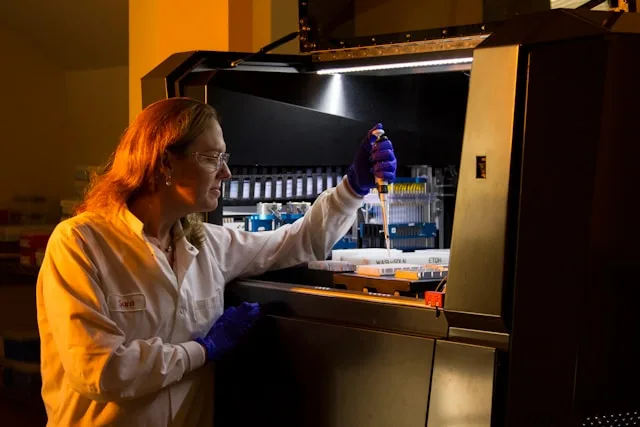
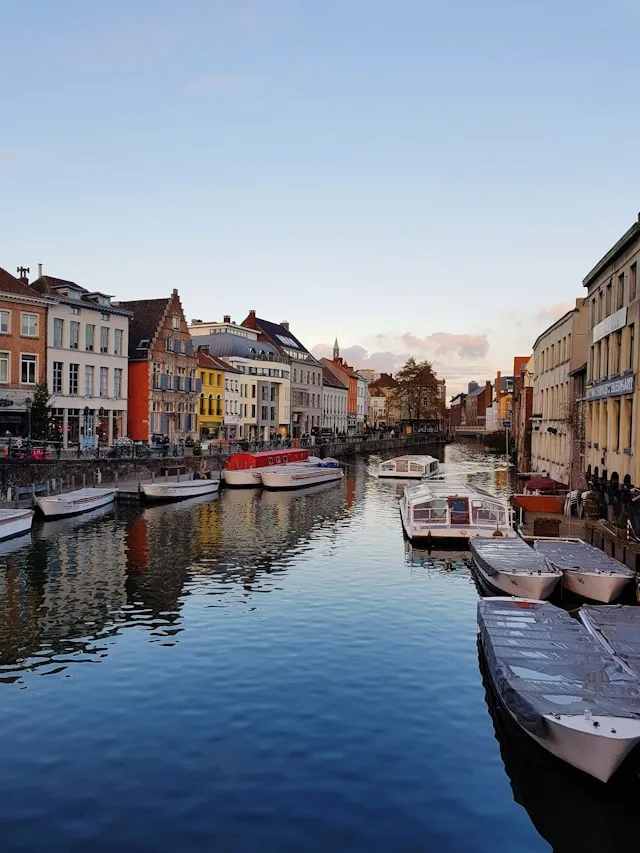
Ghent's Zwijnaarde Science Park now hosts one of Europe's most productive translational biotech ecosystems. Argenx, the nanobody pioneer that grew out of UGent and VIB research, is scaling toward 1,400 employees at its Ghent headquarters. Sanofi maintains a 400-person nanobody excellence centre on the same campus it acquired through the €3.9 billion Ablynx deal. VIB continues to produce four to six new spin-offs annually. On paper, this is a cluster that works.
Below the surface, a different picture is forming. The market for senior technical leaders in advanced therapy medicinal products, CMC operations, and translational immunology has tightened to the point where a single VP-level manufacturing search can run nearly a year. Lab space vacancy in Zwijnaarde sits below 3%. Series B and C capital remains scarce enough that promising companies relocate their executive functions to Massachusetts or Delaware before they have a commercial product. The cluster's production of science is world-class. Its ability to retain and attract the leaders who turn that science into commercial operations is under serious strain.
What follows is a structured analysis of the forces reshaping Ghent's biotech talent market in 2026: where the hiring gaps are sharpest, what is driving compensation and retention dynamics, why the traditional search playbook fails in this specific market, and what organisations competing for leadership talent in Flanders need to understand before they launch their next search.
The Architecture of the Ghent Cluster
Ghent's biotech ecosystem operates on a model distinct from most European life sciences hubs. It is not a pharmaceutical headquarters city like Basel. It is not a venture-funded startup cluster like Cambridge, Massachusetts. It is a translational engine: academic discovery at VIB and UGent feeds into spin-off companies that are designed to move scientific breakthroughs from proof-of-concept through IND-enabling studies and into clinical development.
The VIB-UGent Center for Medical Biotechnology and the Inflammation Research Center together employ approximately 300 researchers and generate three to five new companies each year. These spin-offs receive initial equity from VIB and early-stage capital from the VIB Start-up Fund and PMV, the Flemish government's investment arm. Ghent University's Faculty of Pharmaceutical Sciences ranks in the QS global top 100 for pharmacy. The institution produced over 180 biotech patents between 2019 and 2024.
The physical centre of this activity is Zwijnaarde Science Park, a 250-plus hectare campus south of Ghent hosting more than 150 companies. The Greenbridge incubator, operated jointly by VIB and UGent, provides 3,500 square metres of shared lab infrastructure. Fourteen of its sixteen resident companies in 2023 were developing cell-and-gene therapies or advanced therapy medicinal products requiring BSL-2 or higher containment.
Argenx as the Cluster's Centre of Gravity
Argenx occupies a unique position. Founded in 2008 by UGent/VIB immunologist Hans de Haard, the company remained independent through its IPO and subsequent commercial success with Vyvgart (efgartigimod). As of late 2024, it employed approximately 1,100 full-time equivalents in Ghent alone, with global headcount at roughly 1,600. Its plans call for 1,400 Ghent-based employees by the end of 2026. No other company in the cluster comes close to this scale.
The contrast with Ablynx is instructive. Ablynx, the other marquee VIB spin-off, peaked at around 400 employees before its 2018 acquisition by Sanofi. That acquisition generated €3.9 billion in returns and created a generation of angel investors and serial entrepreneurs. But it also removed a standalone anchor from the ecosystem. Sanofi's Ghent site retains roughly 400 to 450 employees focused on nanobody platform R&D, yet strategic decisions now flow through Paris. Argenx's continued independence has produced more sustainable local employment growth than Ablynx's celebrated exit ever did.
This is the tension that defines the cluster in 2026. The Ghent model is excellent at creating science and launching companies. Whether it can retain those companies and their leaders through the scale-up phase is the question every hiring executive in this market needs to answer.
Where the Talent Gaps Are Sharpest
The shortages in Ghent's biotech sector are not evenly distributed. Discovery-stage research scientists remain relatively accessible, with StepStone Belgium data showing a 45% active candidate rate for discovery biology roles. The crisis sits in three specific categories that are critical to converting research into commercial products.
CMC Leadership for Advanced Therapies
Directors and Vice Presidents of Chemistry, Manufacturing, and Controls with cell therapy or viral vector manufacturing experience represent the most constrained talent pool in the market. Demand has exceeded supply by a ratio of four to one since 2023, according to Hays Belgium's 2024 Life Sciences Salary Guide. The reasons are systemic. ATMP manufacturing requires highly specialised process development expertise, including viral vector production, cell line engineering, and closed-system manufacturing. The number of professionals globally who have led these processes at commercial scale is small. The number willing to relocate to Ghent is smaller still.
According to De Tijd, Argenx's search for a Vice President of Manufacturing Operations at its Ghent site remained open for 11 months between August 2023 and July 2024. The role was eventually filled by relocating a former Novartis executive from Basel. The reported package included a €75,000 relocation payment and a 40% base salary premium above standard Belgian VP compensation ranges. This was not a routine placement. It was a market-resetting event that illustrated just how thin the local candidate pool is for senior manufacturing leadership.
Clinical Development and ATMP Regulatory Affairs
The second acute gap sits in clinical development physicians and regulatory affairs specialists with specific expertise in EMA and FDA advanced therapy regulations. Average time-to-fill for clinical research physicians in Ghent runs at 7.4 months, compared to 4.2 months for equivalent small-molecule roles. The difference is not about compensation. It is about the rarity of professionals who have direct experience interacting with the EMA's Committee for Advanced Therapies and who understand the regulatory pathway for products that do not fit traditional pharmaceutical frameworks.
Translational Biologists
The third category is less visible but equally constrained: translational biologists who bridge academic discovery and IND-enabling studies. These roles require fluency in both academic science and commercial drug development. They sit at the exact junction where VIB's research output becomes a viable clinical candidate. Professionals with this dual fluency are in demand at every translational hub in Europe, and Ghent's compensation structure does not always win the bidding war.
Every one of these shortages traces back to the same root cause. The skills required to operate at the frontier of advanced therapy development are newer than the companies trying to hire for them. You cannot recruit experience that does not yet exist in sufficient quantity. The talent pipeline is not lagging behind the market. It is lagging behind the science.
The Compensation Equation That Works Against Ghent
Ghent's position in European biotech compensation is defined by a specific paradox. The city offers a cost of living roughly 20% lower than Amsterdam or Basel. It offers proximity to one of Europe's most productive translational research ecosystems. It offers quality of life that consistently ranks among the highest in Belgium. None of this is enough to close the compensation gap at the executive level.
VP-level CMC and technical operations roles in Ghent command base salaries of €180,000 to €240,000, with bonuses of 30 to 50% and long-term incentive plans, according to the Agoria Executive Compensation Survey 2024 and Argenx proxy filings. Clinical development VPs earn €160,000 to €220,000 base plus equity. Regulatory affairs executives with ATMP specialisation sit at €170,000 to €200,000.
These figures are competitive within Belgium. They are not competitive across borders. Equivalent VP CMC roles in Basel offer CHF 250,000 to 350,000 in base salary alone, representing a 40 to 60% premium, with lower effective tax rates. Leiden offers 10 to 15% higher base salaries combined with the Netherlands' 30% ruling, which provides substantial tax advantages for skilled migrants. Even after adjusting for Ghent's lower living costs, the net compensation gap at the executive level is material.
Belgium's payroll structure compounds the problem. Employer social contributions run at approximately 45% on top of gross salary, according to PwC's Belgian Tax Reform analysis. The partial tax exemption for foreign executives was removed in 2024, eliminating one of the few fiscal tools available to make relocation packages competitive. A hiring leader in Ghent assembling an offer for a Basel-based CMC director is not just competing on salary. They are competing against an entire fiscal framework designed to attract exactly the talent they need.
The compensation gap is not narrowing. It is widening at precisely the seniority level where the most critical roles sit. Senior specialists and managers in Ghent earn €85,000 to €115,000 depending on function. The gap to Basel and Leiden at this level is manageable. At VP level, the gap becomes a chasm that cost-of-living arguments cannot bridge. This is the level where executive search methodology and proposition design matter most, because the candidates you need will not move for money alone. They will move for a role, a mission, and an equity story that their current employer cannot match.
Lab Space, Scale-Up Chokepoints, and the Bifurcated Market
Ghent's physical infrastructure tells a story that mirrors its talent market: capacity is adequate for established players and fundamentally insufficient for the companies trying to grow into the next Argenx.
CBRE's Belgium Life Sciences MarketView for Q3 2024 placed Grade A lab space vacancy in Zwijnaarde below 3%. In practical terms, this means zero available space for any company not already in negotiation with a landlord. Greenbridge maintains a 12-month waiting list for its modular lab suites. No speculative lab development is underway anywhere in the corridor. Every square metre of new supply is pre-leased before construction begins.
The Flemish government's €45 million NextGenVIB initiative includes a 12,000 square metre translational research building at Technologiepark Zwijnaarde. It will not deliver until 2027 or 2028. Until then, the constraint intensifies.
How Incumbents Absorb What Little Supply Exists
The apparent contradiction between near-zero vacancy and continued expansion announcements by Argenx and Sanofi resolves when you examine how space is being allocated. Argenx absorbed 15,000 square metres of speculative conversion at Technologiepark and is expanding into an additional 8,000 square metres by mid-2025. Sanofi retains its legacy site. These are pre-leasing arrangements secured months or years in advance, not available market supply.
The result is a bifurcated market. Established companies with balance sheet strength and forward planning capacity continue to grow. Early-stage companies, including the VIB spin-offs that are supposed to be the next generation of the cluster, face 12 to 18 month lead times for lab fit-out. Companies report losing financing rounds and partnership opportunities because they cannot secure BSL-2 lab space within six months. The Ghent municipality's planning restrictions on greenfield development in the Zwijnaarde agricultural periphery limit expansion further.
This infrastructure squeeze has a direct talent implication. A company that cannot secure lab space cannot hire scientists to fill it. A scientist evaluating an offer from a Ghent scale-up asks a practical question: will this company have the physical infrastructure to execute its plan? When the answer is uncertain, the hidden cost of delayed hiring compounds. The best candidates choose employers whose expansion plans rest on concrete rather than planning applications.
The Hollow Middle: Why Ghent's Best Companies Leave Before They Scale
The most consequential dynamic in Ghent's biotech market is not a talent shortage. It is a structural pattern that removes companies from the ecosystem before they reach the scale at which they would generate sustained executive employment.
VIB produces four to six Ghent spin-offs annually. Seed and Series A capital is available through VIB Start-up Funds and PMV. But Series B and C capital in Flanders remains scarce. Flemish biotech venture financing totalled €580 million in 2023, down 34% from the 2021 peak, and Ghent-based companies captured roughly 20% of that deployment, primarily through Argenx's public market activity rather than private venture rounds. Only two Ghent companies, Precirix and ExeVir, raised Series B rounds above €30 million in 2023 and 2024.
The consequence is predictable and already visible. In 2023, three Ghent-based VIB spin-offs established US headquarters in Delaware or Massachusetts while retaining Ghent R&D operations. The science stays. The executive and commercial functions migrate. This creates what might be called the hollow middle: companies that are nominally Ghent-based but whose CEOs, CFOs, and commercial leaders sit in Cambridge or San Francisco. The research staff remain, but the leadership roles that would deepen the local talent market and attract further senior talent relocate across the Atlantic.
This pattern is self-reinforcing. When senior commercial and operational leaders are based elsewhere, the next generation of Ghent-trained scientists sees fewer local role models at the executive level. The aspiration shifts from building a career in Ghent to building a career that starts in Ghent and finishes somewhere with deeper capital markets. The cluster retains its scientific excellence. It struggles to retain the people who run the business side of that science.
Greenbridge's own operational model contributes to this dynamic. As a pre-incubator, it requires companies to exit within 36 months or achieve financial independence. Companies that have not secured scale-up space and growth capital by that deadline face forced relocation. Given the lab space constraints described above, "relocation" often means relocation out of Ghent entirely. The incubator is feeding a pipeline whose downstream infrastructure does not exist locally.
What This Means for Hiring Leaders in 2026
The practical implications for any organisation hiring senior biotech leadership in or around Ghent are specific and immediate.
First, the passive candidate ratio in the most critical functions is extreme. StepStone Belgium's 2024 analysis found that 78% of qualified CMC Directors in the Benelux region are employed and not actively seeking roles. Only 12% of hires in these functions during 2023 and 2024 originated from active applications. The remaining 88% came through executive search or direct headhunting. Posting a role on a job board in this market is not an inefficient strategy. It is functionally a non-strategy.
Second, compensation alone will not move the candidates you need. The L'Echo reported in June 2024 that Precirix recruited a principal scientist in radiochemistry from competitor SCK CEN, offering a 25% salary premium and equity participation. The candidate ultimately accepted a third offer from a Leiden-based radiopharmaceutical firm. The bidding war did not produce a winner in Ghent. It produced a winner in the Netherlands, where the fiscal framework and career trajectory offered a more compelling total proposition. Cross-border competition is not a theoretical risk. It is the default condition.
Third, retention is as urgent as recruitment. According to Agoria sector reporting and Sanofi Belgium HR communications, Sanofi's Ghent site implemented an unusual "hybrid innovation sabbatical" arrangement following the departure of three senior nanobody engineers to Argenx in early 2024. The programme allocates 20% of time to collaborative projects with UGent. This is a structural adaptation driven by the counteroffer dynamic that defines small talent markets where employers know each other's staff by name.
Building a Search Strategy That Works Here
The search methodology required for this market differs from what works in larger, more liquid talent hubs. A London or Boston financial services search can rely on a broad funnel. A Ghent biotech search at the VP level is closer to a diplomatic exercise. The number of qualified candidates in Europe who meet the technical requirements, are open to relocation, and can be attracted at Belgian compensation levels may be in the single digits for certain ATMP-focused roles.
This is why talent mapping before launching a formal search is not a luxury. It is a prerequisite. Understanding which candidates exist, where they sit, what holds them in place, and what proposition might move them is the work that determines whether a search takes four months or fourteen.
Organisations that approach this market with a traditional search process, assembling a job description, posting it, and waiting for inbound interest, are reaching at most 22% of the viable candidate population. The other 78% must be identified, approached, and persuaded through direct engagement. Speed matters because the candidates who are persuadable today may not be persuadable in three months. A competitor's offer, a promotion, or a retention package can close the window permanently.
For organisations competing for CMC, ATMP, and translational science leadership in Ghent's biotech market, where the candidate pool is measured in dozens rather than hundreds and every search is a cross-border negotiation, speak with our executive search team about how KiTalent approaches this specific market. KiTalent delivers interview-ready executive candidates within 7 to 10 days through AI-powered passive candidate identification, with a 96% one-year retention rate across more than 1,450 placements. In a market where traditional executive recruiting methods consistently underperform, the difference between a search that succeeds and one that stalls is the method used to find candidates who are not looking.
Frequently Asked Questions
Why is it so difficult to hire senior biotech leaders in Ghent?
Ghent's biotech cluster is concentrated in advanced therapy medicinal products, nanobody engineering, and translational immunology. These are specialisms where global supply of experienced leaders is inherently small. At the VP level for CMC and manufacturing operations, 78% of qualified candidates in the Benelux are not actively seeking new roles. Compensation in Ghent, while competitive within Belgium, sits 40 to 60% below Basel and 10 to 15% below Leiden at executive level. The combination of a passive-dominant market and a cross-border compensation disadvantage makes direct executive search for life sciences leadership essential rather than optional.
What salary does a VP of CMC earn in Ghent's biotech sector?
As of 2024 to 2025, VP-level CMC and technical operations roles in Ghent command base salaries of €180,000 to €240,000, with bonuses of 30 to 50% and long-term incentive plans. Senior specialist and manager-level CMC roles sit at €95,000 to €115,000 base with 10 to 15% bonus. These figures are drawn from Hays Belgium and Agoria compensation surveys. Equivalent roles in Basel command CHF 250,000 to 350,000 base, and Leiden offers 10 to 15% higher base salaries with the 30% ruling tax advantage for expatriates.
What is driving Ghent's biotech growth in 2026?
Argenx's commercial expansion around Vyvgart is the primary growth driver, with the company planning to increase Ghent headcount to 1,400 by the end of 2026. VIB continues to generate four to six new Ghent-based spin-offs annually, predominantly in cell therapy and microbiome therapeutics. The Flemish government's €45 million NextGenVIB initiative will add 12,000 square metres of translational research space, though this will not deliver until 2027 or 2028. Sanofi's Ghent site is projected to hold steady at approximately 400 employees through 2027.
How does Ghent's biotech talent market compare to Leiden and Basel?
Leiden offers the Netherlands' 30% ruling tax advantage for skilled migrants, higher base salaries at senior levels, and a concentration of cell therapy and vaccine employers including Janssen and Galapagos. Basel offers 50 to 70% compensation premiums for CMC and clinical roles alongside lower effective tax rates. Ghent competes on cost of living, which is roughly 20% lower than Amsterdam or Basel, and on proximity to VIB's translational research engine. At mid-career levels, these advantages hold. At VP level, the compensation gap becomes the dominant factor in candidate decisions.
What types of biotech roles are hardest to fill in Ghent?
Three categories face the most acute shortages. CMC Directors and VPs with ATMP manufacturing experience, where demand exceeds supply by four to one. Clinical development physicians and regulatory affairs specialists with EMA Committee for Advanced Therapies interaction experience, where time-to-fill averages 7.4 months. And translational biologists who bridge academic discovery and IND-enabling studies, a role category where the required dual fluency in academic science and commercial development is inherently rare.
How can KiTalent help with biotech executive hiring in Ghent?
KiTalent uses AI-enhanced direct headhunting to reach the 78% of qualified biotech leaders who are not actively on the market. In Ghent's ATMP and nanobody talent market, where candidate pools are measured in dozens rather than hundreds, KiTalent delivers interview-ready candidates within 7 to 10 days through systematic talent mapping and cross-border candidate identification. The pay-per-interview model means organisations only pay when they meet qualified candidates. With a 96% one-year retention rate and experience across more than 1,450 executive placements, KiTalent provides the speed and method this market demands.