Ghent's Port Industry Is Spending €2.5 Billion on a Green Transition. The Workforce It Needs Does Not Exist Yet
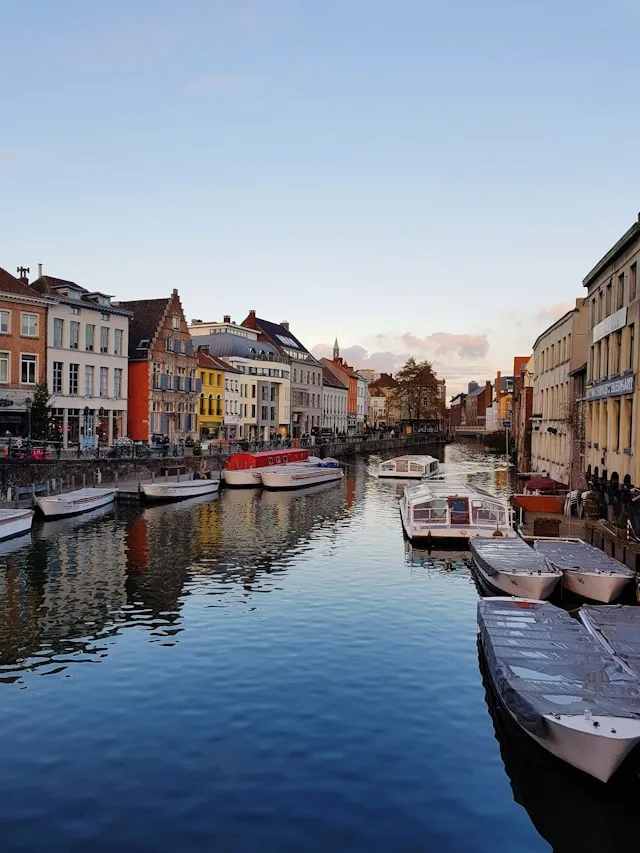
Ghent's North Sea Port canal zone handled 71.4 million tonnes of cargo in 2023. ArcelorMittal operates Belgium's sole flat carbon steel plant there, employing 4,700 people. Volvo Cars Gent, the largest private employer in East Flanders with 6,500 staff, completed its full electrification transition in early 2025. The physical infrastructure of this corridor is enormous, well capitalised, and deeply embedded in European supply chains.
None of that changes the central problem facing every major employer along the Ghent–Terneuzen canal in 2026. Capital has moved faster than human capital can follow. A €2.5 billion pipeline of green hydrogen, circular chemistry, and battery production investments is now arriving at a workforce that was built for blast furnaces, coke ovens, and internal combustion engine logistics. The roles being created by this transition, from hydrogen process engineers to battery supply chain managers, draw on skills that fewer than a few hundred professionals in Belgium currently possess. The roles being eliminated are held by workers whose expertise is tacit, accumulated over decades, and largely untransferable.
What follows is an analysis of the forces reshaping Ghent's industrial corridor, the specific hiring gaps those forces have opened, and what senior leaders in heavy industry, chemicals, and automotive manufacturing need to understand before they plan their next critical search. The data covers compensation dynamics, regulatory constraints, infrastructure bottlenecks, and the competitive geography that determines where Ghent's scarce specialists actually end up.
A Canal Zone in Transition: What €2.5 Billion Buys and What It Does Not
The North Sea Port authority announced €2.5 billion in green hydrogen and circular chemistry investments running through 2026. This pipeline includes the HyOffGas hydrogen production facility at ArcelorMittal and VoltH2's 25MW electrolyser. These are not speculative commitments. ArcelorMittal alone has committed €1.1 billion to transition its Ghent plant from blast furnace steelmaking to hydrogen-based direct reduced iron by 2030.
The investment thesis is sound. The plant accounts for 8% of Belgian industrial CO₂ emissions. The Flemish Climate Plan mandates a 55% CO₂ reduction by 2030 versus 2005 levels. ArcelorMittal's continued operation at Ghent is contingent on securing 150,000 tonnes of green hydrogen annually by 2028. According to the Belgian Federal Climate Service's 2024 Progress Report, failure to secure supply contracts by 2026 risks production curtailment or carbon leakage to non-EU producers.
The money is committed. The technology roadmaps exist. What does not exist in sufficient numbers is the workforce required to execute them. Fewer than 150 technicians in Belgium hold hydrogen safety and high-pressure systems certification, according to the WaterstofNet Training Registry. ArcelorMittal's transition alone will require a substantial share of that pool. Across the broader canal zone, the anticipated net reduction of 300 to 400 traditional steel production roles (blast furnace operators, coke plant workers) will be offset by the creation of only 220 to 280 green hydrogen, carbon capture utilisation and storage, and electrical maintenance positions.
The arithmetic is revealing. Even in the best case, this transition eliminates more roles than it creates. The roles it creates require skills that the eliminated workers do not possess. And the external talent market for those skills is nearly empty.
This is the core paradox of Ghent's industrial corridor in 2026. Capital investment has accelerated. Workforce development has not kept pace. The gap between the two is widening fastest in exactly the specialisms where the most critical roles sit.
The Retirement Cliff Behind the Skills Gap
The green transition is not the only force depleting Ghent's industrial talent base. A demographic wave is compounding the problem from the other direction. Twenty-eight percent of chemical sector employees in the Ghent region are aged 55 or older. This is not a gradual attrition pattern. It is a retirement cliff for roles where knowledge is tacit, accumulated through decades of hands-on experience in Seveso-classified environments.
Tacit Knowledge Cannot Be Recruited
A senior Seveso safety manager with 20 years of operational experience at a Ghent canal zone facility holds knowledge that no certification programme can replicate. They know which pressure relief valves have historically underperformed. They know which shift patterns correlate with incident reports. They understand the specific microclimate conditions that affect chemical storage in the canal zone's geography. When these professionals retire, the knowledge leaves with them.
The replacement pipeline is not ready. According to Essenscia Flanders' Skills Forecast, 340 process safety engineer vacancies exist across Flemish chemical ports, with 45% concentrated in the Ghent-Antwerp corridor. The average time-to-fill for these roles is 94 days. That figure understates the difficulty, because it measures only the roles that are eventually filled. It does not capture the roles that remain open, are downgraded, or are restructured to work around the absence.
The Compounding Effect Across Joint Committees
Vacancy rates in Joint Committee 111 (Metal) and Joint Committee 124 (Chemical) for East Flanders stand at 4.8% and 5.2% respectively as of Q4 2024. Both figures sit well above the Flemish average of 3.1%. Industrial maintenance technicians with high voltage certification and ATEX (explosive atmosphere) competence show a 28% vacancy rate. These are not entry-level positions. They require years of supervised practice in hazardous environments before a technician can operate independently.
The retirement cliff and the green transition are not separate problems. They are converging. The experienced workers leaving are the same workers who would ordinarily train the next generation in the practical application of safety systems. Their departure accelerates the knowledge gap that the green transition has already created.
Volvo's Battery Plant and the 180-Specialist Problem
Volvo Cars Gent's trajectory tells a parallel story. The plant manufactured 192,000 vehicles in 2024, down from 246,000 in 2019. The reduction reflects model transition efficiency gains as the factory completed its shift to producing the XC40 and C40 Recharge exclusively. The plant is now fully electric.
The next phase is more ambitious. Volvo's V4 battery assembly plant, co-located with the Gent car factory, is scheduled for operational launch in Q2 2026. It will add 450 logistics and quality engineering roles. According to reporting in De Standaard citing Volvo Cars Gent union communications, internal transition will fill roughly 60% of these positions. The remaining 180 specialists must be recruited externally.
The 180-specialist figure may sound manageable. It is not. The role profile for a battery supply chain manager requires a combination of automotive production knowledge and maritime logistics expertise. Fewer than 200 qualified candidates with both competencies exist regionally, according to the Talent Peaks Automotive Survey. Volvo is not the only employer competing for them. Every European automotive OEM with a battery strategy is hiring from the same pool.
This is where Ghent's geographic position becomes both an asset and a liability. The canal zone provides the multimodal logistics infrastructure that battery production requires. But the city competes for talent in automotive and advanced manufacturing against markets with stronger brand recognition for high-tech careers.
Eindhoven's Brainport cluster, 120 kilometres east, competes directly for automotive electronics and battery engineering talent. It offers stronger high-tech ecosystems built around ASML and NXP, university research partnerships with TU Eindhoven, approximately 10% higher compensation for electronics engineers, and superior remote-work flexibility. Ghent's traditional manufacturing image works against it in this competition.
The Three-City Talent Drain: Where Ghent's Specialists Actually Go
Ghent does not lose talent to a single competitor. It loses talent in three directions simultaneously, each pulling a different category of specialist. Understanding this geography is essential for any executive search in heavy industry or manufacturing targeting the Belgian canal zone.
Antwerp: The Salary Premium Corridor
Antwerp's chemical cluster sits 45 kilometres east and offers 15 to 20% salary premiums for chemical process engineers and Seveso safety managers. The differential is not just compensation. Antwerp's larger cluster, anchored by BASF, Bayer, and Evonik, provides clearer vertical career progression. Mid-career professionals in Ghent's flatter SME structures can see a defined path upward in Antwerp. They can also see an international school (Antwerp International School) that makes relocation feasible for expatriate families. According to the Hays Belgium Salary Guide 2024, these combined factors make Antwerp the primary destination for Ghent's chemical process talent at the five-to-ten year experience mark.
Rotterdam: The Hydrogen Economy Magnet
Rotterdam, 140 kilometres north, dominates hydrogen economy recruitment in northwestern Europe. The Netherlands' 30% ruling provides a meaningful tax benefit for international hires, effectively reducing the tax rate for highly skilled migrants. Rotterdam's port authority has built English-speaking professional environments designed to attract global talent. Senior project managers and ESG directors considering hydrogen import terminal development roles consistently find Rotterdam's proposition more compelling, according to the Netherlands Foreign Investment Agency's Talent Report.
Eindhoven: The High-Tech Alternative
The Brainport cluster draws battery and electronics engineers who might otherwise stay in Ghent's automotive supply chain. The proposition is straightforward: higher compensation, stronger research partnerships, and a professional ecosystem where advanced manufacturing is the core identity rather than one function among many.
The result is a three-directional talent drain that Ghent cannot counter with any single policy intervention. Each competing market offers a different package of advantages tailored to a different career stage and specialism. A senior hiring leader planning a critical search in Ghent's canal zone must understand not only what the local market offers but what each of these three competitors is offering to the same candidates.
Regulatory and Infrastructure Constraints That Slow Every Search
The hiring challenge in Ghent's canal zone is not purely a supply-and-demand problem. Structural constraints specific to this corridor add friction to every recruitment cycle.
Seveso III: Safety Distances and Expansion Limits
All 15 Upper Tier Seveso establishments within a 5-kilometre radius of the canal completed their 2024 safety report updates. The year 2025 served as the compliance verification period before 2026's full enforcement deadline under the revised Seveso III Directive. Safety distance requirements restrict residential and commercial development within 1.5 kilometres of Upper Tier sites. According to the European Court of Auditors' Report on Seveso Implementation, these contours effectively cap the canal zone's expansion capacity and create permitting delays of 18 to 24 months for new chemical investments.
For hiring, the implication is concrete. New facilities that would create roles cannot be built quickly. Existing facilities that need to expand their workforce cannot easily build housing or amenities nearby. The safety perimeter that protects the community also constrains the labour market's ability to grow around the industry it serves.
Canal Depth and Rail Capacity
The Ghent–Terneuzen canal requires dredging to 14.5 metres to accommodate Post-Panamax vessels. Siltation and Natura 2000 environmental permits currently limit draft depth to 13.5 metres. This gap increases logistics costs by an estimated 8 to 12% versus Rotterdam for equivalent routes, undermining Ghent's competitiveness for hydrogen and LNG imports.
Rail Line 59 (Ghent-Terneuzen) operates at 85% capacity during peak hours. Single-track sections limit freight frequency to 12 trains per day versus the 20 required for projected hydrogen import volumes. These bottlenecks do not directly prevent hiring. But they reduce the economic case for new investment, which reduces the number and quality of roles the corridor can create, which in turn reduces its ability to attract the talent that would solve the problem.
The Shift Work Cost Premium
Belgium's tax on shift work and night labour regulations create a 15% labour cost premium compared to the Netherlands. For a 24/7 port operation, this premium is not marginal. It is a systemic disincentive that makes every hire more expensive than the equivalent hire across the Dutch border. A canal zone employer competing with Rotterdam for a hydrogen process engineer is competing at a structural cost disadvantage before compensation negotiations even begin.
Where Passive Candidate Markets Meet Impossible Timelines
The most consequential data point in Ghent's hiring picture is not the vacancy rate. It is the passive candidate ratio.
Eighty-five percent of qualified Seveso safety managers in the Ghent-Antwerp region are currently employed. Their average tenure is 7.2 years. They are not browsing job boards. They are not responding to LinkedIn InMail from agencies they do not recognise. According to Michael Page's Chemicals Salary Survey, sourcing in this category relies on direct headhunting through professional networks rather than conventional advertising.
Senior port logistics directors (multimodal) show an active-to-passive candidate ratio of approximately 1:9. Publicly posted vacancies for these roles generate high volumes of unqualified applications and negligible volumes of viable candidates. Robert Walters' Supply Chain and Logistics Report confirms that these positions are filled through retained search or internal promotion. Posting the role publicly is, in most cases, a compliance exercise rather than a sourcing strategy.
Hydrogen process engineers represent the extreme case. Fewer than 50 qualified professionals exist in Belgium. Ninety-five percent are employed. Movement requires 25 to 35% compensation premiums or equity participation in hydrogen startups. This is not a candidate market that conventional recruitment can reach. The hidden 80% of senior professionals who never appear on job boards is a well-documented phenomenon. In Ghent's industrial corridor, the figure is closer to 90%.
The ArcelorMittal example illustrates the cost of underestimating this dynamic. The Principal Engineer, Carbon Capture and Hydrogen Injection role remained open for 11 months as of March 2025, with three failed search cycles. The position requires expertise in direct air capture integration with blast furnace operations and high-pressure hydrogen injection systems. Three agency searches produced no viable candidate. The role demands a combination of skills that sits at the intersection of two emerging disciplines, neither of which has produced enough practitioners to meet demand.
This pattern is not unique to ArcelorMittal. It is the defining characteristic of executive recruiting in markets where the skills being sought are newer than the career paths that produce them. You cannot recruit experience that does not yet exist in sufficient quantity. The investment in green hydrogen and carbon capture has created roles faster than the professional development system can create the people to fill them. Capital moved. Human capital could not follow at the same speed.
What Ghent's Industrial Corridor Requires From Executive Search
The conventional approach to filling senior industrial roles in Ghent's canal zone has demonstrably failed. Three failed search cycles for a single critical role at Belgium's sole flat steel producer is not an anecdote. It is a signal that the method itself is mismatched to the market.
The reasons are specific to this corridor. The candidate pool is tiny: fewer than 150 hydrogen safety technicians in Belgium, fewer than 50 hydrogen process engineers, fewer than 200 battery supply chain managers with the right dual competency. The passive candidate ratio exceeds 85% in every critical category. Three competing markets (Antwerp, Rotterdam, Eindhoven) are pulling from the same pool with stronger compensation packages, better tax structures, or more attractive career progression.
A search strategy for this market must start with talent mapping that identifies every viable candidate before the search begins, not after a job posting fails to generate interest. It must reach across borders, because the Dutch 30% ruling and Rotterdam's hydrogen cluster mean that the best candidates for a Ghent role may currently sit in the Netherlands. It must move quickly, because a 94-day average time-to-fill in a market where your competitor's offer arrives in week three means that the cost of a slow process is not measured in time but in permanently lost candidates.
KiTalent's approach to executive search in industrial and manufacturing markets is built for exactly this kind of constrained, passive-heavy talent environment. AI-powered candidate identification maps the full pool of qualified professionals, including those not visible on any job board or recruiter database. The pay-per-interview model means clients only invest when they meet candidates who match the brief. Interview-ready shortlists are delivered within 7 to 10 days. In a market where the traditional recruitment agency model has produced three consecutive failed searches for a single role, the difference between a 94-day process and a 10-day process is the difference between filling the role and losing the candidate to Rotterdam.
For organisations hiring senior operations, safety, sustainability, or supply chain leadership along the Ghent–Terneuzen canal zone, where the candidate pool is measured in dozens rather than hundreds and the passive ratio exceeds 85%, start a conversation with our industrial executive search team about how we approach this market.
Frequently Asked Questions
What are the hardest industrial roles to fill in Ghent's port zone in 2026?
Process safety engineers with Seveso III certification, hydrogen process engineers, and battery supply chain managers with dual automotive and maritime logistics expertise represent the most acute shortages. Vacancy rates in metal and chemical joint committees for East Flanders exceed the Flemish average by more than 50%. Hydrogen safety technicians are particularly scarce, with fewer than 150 certified professionals in Belgium. The average time-to-fill for process safety engineering roles across Flemish chemical ports is 94 days, and many searches extend well beyond that figure when the required specialism is narrow.
Why is Ghent losing industrial talent to Antwerp and Rotterdam?
Antwerp offers 15 to 20% salary premiums for chemical process engineers and Seveso safety managers, plus clearer vertical career progression in a larger chemical cluster. Rotterdam provides the Dutch 30% ruling tax benefit for international hires and dominates hydrogen economy recruitment with English-speaking professional environments. Eindhoven competes for battery and electronics engineers with higher compensation and stronger high-tech ecosystems. Each market pulls a different specialism, creating a three-directional drain that no single retention strategy can address.
How does Seveso III regulation affect hiring in Ghent's canal zone?
Seveso III safety distance requirements restrict development within 1.5 kilometres of Upper Tier sites, limiting facility expansion and creating 18 to 24-month permitting delays for new chemical investments. The 2026 full enforcement deadline requires all 15 Upper Tier establishments in the canal zone to maintain continuous safety management systems. This creates sustained demand for qualified safety professionals while simultaneously constraining the physical growth that might attract more talent to the area. Process safety and compliance leadership searches in regulated environments require specialist sourcing methods.
What salary premium is needed to attract hydrogen engineers to Ghent?
Movement of hydrogen process engineers in Belgium requires 25 to 35% compensation premiums or equity participation in hydrogen ventures. With fewer than 50 qualified professionals in the country and 95% currently employed, the market is almost entirely passive. Standard recruitment channels reach a negligible fraction of viable candidates. Effective sourcing requires direct identification through executive headhunting and talent mapping rather than advertised vacancies.
How does KiTalent approach executive search in Ghent's heavy industry sector?
KiTalent uses AI-enhanced candidate identification to map the full pool of qualified professionals in constrained markets where passive candidate ratios exceed 85%. For Ghent's canal zone, this means identifying hydrogen safety specialists, Seveso compliance leaders, and multimodal supply chain directors who are currently employed and not visible through conventional channels. Interview-ready shortlists are delivered within 7 to 10 days. The pay-per-interview model ensures clients invest only when they meet candidates who match the brief. With a 96% one-year retention rate across 1,450+ executive placements, the methodology is designed for markets where the margin for error in senior hiring is zero.
What is the outlook for industrial employment along the Ghent–Terneuzen canal?
The corridor faces a net reduction of 300 to 400 traditional steel production roles offset by 220 to 280 new positions in green hydrogen, carbon capture, and electrical maintenance. Volvo's V4 battery assembly plant will add 450 roles, of which 180 require external recruitment. The investment pipeline is strong at €2.5 billion through 2026. The constraint is human capital, not financial capital. Organisations that begin building their senior talent pipeline before roles open will hold a decisive advantage over those waiting until vacancies become urgent.