Grand Rapids Is Buying Robots Faster Than It Can Hire the People to Run Them
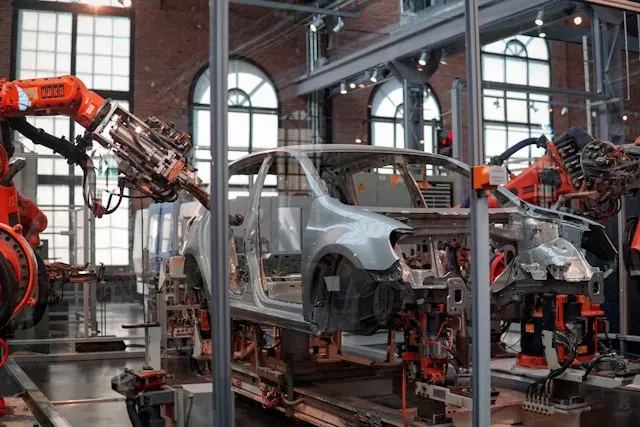
The Grand Rapids metropolitan area will deploy roughly 1,200 new industrial robots across its manufacturing base through the current cycle. That investment represents a 25% increase in robot density per 10,000 workers, concentrated in CNC tending and quality inspection. It is the kind of capital commitment that, in any other context, signals a workforce shrinking by design.
The opposite is happening. The region posted approximately 3,800 open manufacturing positions monthly through Q3 2024. Average time-to-fill reached 47 days, eleven days longer than the national manufacturing average. Manufacturing-specific unemployment sat at 2.1% by Q4 2024, a figure that represents full employment by any practical definition. The robots are arriving because the people are not. And the people needed to install, programme, and maintain those robots are the scarcest of all.
This is the paradox at the centre of Grand Rapids manufacturing in 2026: automation deployed to solve a human capital shortage has created a second, deeper human capital shortage. What follows is an analysis of how that paradox is reshaping hiring at every level in West Michigan's automotive components and advanced manufacturing sector, what it means for compensation, retention, and search strategy, and why the firms that understand this dynamic will outcompete those that do not.
The Market in 2026: Investment Outpacing Workforce Capacity
Grand Rapids-Kentwood-Wyoming sits at 1.1 million people, with approximately 42,000 manufacturing jobs representing 18.4% of total employment. That is nearly double the national average of 9.8%. Automotive components and advanced manufacturing account for roughly 60% of that industrial base. The remainder is split between furniture, medical devices, and food processing. This is not a diversified economy that happens to include manufacturing. Manufacturing is the economy.
Capital investment hit $380 million in the metro during 2024, driven by automation upgrades and EV transition tooling. That figure does not include the broader regional spend: the $1.6 billion Gotion battery plant in Big Rapids (60 miles north) and the LG Energy Solution/GM plant in Lansing are pulling supply chain investment toward West Michigan at a rate that would have been difficult to imagine five years ago.
The sector operates at approximately 94% capacity utilisation. In a market where demand is this close to the ceiling, the binding constraint is not orders or capital. It is people. Every unfilled automation engineer role, every CNC programmer vacancy that stretches past 90 days, represents throughput that the region's manufacturers have already sold but cannot deliver.
The EV transition is accelerating the pressure. By 2026, approximately 35% of automotive component revenue in the region derives from EV-specific platforms, up from 22% in 2023, according to the Center for Automotive Research's 2024 Supply Chain Outlook. Companies like Lacks Enterprises have pivoted from traditional chrome plating toward EV battery tray production and lightweight composite components. GHSP leads in e-mobility mechatronics. The work itself has changed. The people who can do it have not appeared in matching numbers.
The Employers Driving This Pressure
Understanding Grand Rapids as an executive hiring market requires understanding who the major employers actually are and what they are becoming.
Gentex and the Diversification Effect
Gentex Corporation, headquartered in Zeeland within the metro area, employs approximately 3,200 locally. The company's core product remains automotive dimmable mirrors and digital vision systems, but its diversification into aerospace (dimmable windows for Boeing 787 and Airbus A350) and industrial automation IoT sensing systems has broadened the talent profile it requires. Gentex projected aerospace revenue of $150 million annually by 2026, up from $95 million in 2023, with industrial automation product lines growing 18% year-over-year. This is no longer a pure automotive employer. It is a multi-sector technology company that happens to be headquartered in a mid-sized Michigan metro. The engineers it needs look more like Silicon Valley candidates than Detroit assembly-line veterans.
Lacks Enterprises and the EV Pivot
Lacks Enterprises employs approximately 2,400 regionally. The company's pivot from decorative chrome plating to EV battery trays and composite materials represents one of the cleanest transitions from ICE-era manufacturing to electrification-era engineering in the Midwest. Securing contracts with Ford and General Motors EV platforms validates the pivot. But it also means Lacks now competes for battery thermal management engineers and advanced materials specialists against employers in every EV hub in the country.
The second tier tells the same story at a different scale. GHSP (1,800 local employees) builds shift systems, fluid pumps, and electronic controls for EVs. Shape Corp. (900 employees) runs advanced roll-forming and aluminium extrusion for structural components. Magna International operates multiple facilities with 1,200 employees across seating and mirror manufacturing. Trumpf brings 800 employees in industrial lasers and machine tools. NN Inc. runs precision machining serving both automotive and medical device applications.
None of these employers compete only with each other. They compete with Detroit, with Chicago, with Indianapolis, and increasingly with EV-specific employers in Tennessee, Georgia, and the Carolinas. The fact that they are clustered in West Michigan means the same 42,000-person workforce absorbs the hiring pressure from all of them simultaneously.
The Self-Reinforcing Automation Bottleneck
Here is the analytical observation that sits beneath every hiring challenge in this market: the investment in automation has not reduced the workforce. It has replaced one kind of worker with another that does not yet exist in sufficient numbers. Capital moved faster than human capital could follow.
The region's manufacturers are deploying robots to compensate for missing journeyman-level machinists and production operators. The intent is logical: if you cannot hire enough CNC operators, automate the CNC tending. If you cannot hire enough quality inspectors, install machine vision systems. The problem is that every robot deployed requires an automation technician or integration engineer to install, programme, and maintain it. And the ratio of active job seekers to openings for those roles is deeply unfavourable.
The data from the Association for Advancing Automation's 2024 Robot Report shows the 1,200-robot deployment across 2025-2026 will require installation, commissioning, and ongoing maintenance capacity that the existing workforce cannot absorb. Automation engineers with five or more years of experience are being targeted by Detroit-area firms offering $35,000 to $45,000 retention bonuses and remote-hybrid arrangements that plant-floor roles in Grand Rapids cannot match.
This creates a feedback loop. The shortage of machinists drives automation investment. Automation investment drives demand for automation engineers. Automation engineers are even scarcer than the machinists they were meant to replace. The firms that recognised this dynamic early and invested in building a pipeline of technical talent before the robots arrived are now 18 to 24 months ahead of those that treated automation as a substitute for hiring.
Four Roles at the Centre of the Shortage
The aggregate numbers (3,800 monthly openings, 47-day average time-to-fill) mask the concentration of pain. Four role categories account for a disproportionate share of the difficulty.
CNC Programmers and 5-Axis Machinists
Precision machining firms report CNC Programmer roles remaining open for 90 to 120 days. Over 60% of postings require requisition re-approval because market salary shifts during the search period render the original budget obsolete. One Tier 1 interior trim supplier in Walker maintained a Senior 5-Axis Programmer position unfilled for 143 days during the first half of 2024, ultimately filling the role only after relocating a candidate from Indiana with an $18,000 relocation package and a 22% salary premium above initial budget, according to West Michigan Works! employer survey data.
The ratio of active seekers to openings for CNC programming stands at 0.3:1. For every open role, there are fewer than one-third of a qualified, actively looking candidate. The remaining 70% of viable candidates are passive, employed, and not visible on any job board. Reaching these candidates requires an entirely different method than posting and waiting.
Automation and Robotics Engineers
Senior Automation Engineers command $98,000 to $128,000 in base salary, with EV battery line experience pushing candidates to top quartile. The scarcity is compounded by the poaching dynamic described above: Detroit firms are systematically recruiting Grand Rapids automation talent with retention bonuses and flexibility that local manufacturers cannot replicate.
A lighting manufacturer in Grand Rapids lost three senior automation engineers to a single Detroit Tier 1 supplier in Q3 2024, according to reporting at the West Michigan Policy Forum. That kind of loss is not a hiring problem. It is an operational crisis. Three automation engineers represent the capacity to commission and maintain an entire production line.
Tool and Die Makers
Journeyman tool and die makers with ten or more years of experience earn $34 to $46 per hour in Grand Rapids, with overtime frequently pushing total compensation past $110,000. Chicago-area union shops offer journeyman rates of $48 to $52 per hour, creating persistent out-migration pressure on five-to-ten-year experienced tradespeople.
The demographic dimension makes this worse. Twenty-eight percent of the region's manufacturing workforce is over 55, with concentrated retirement risk in tool and die and quality inspection. The pipeline from Grand Rapids Community College's C.W. Dickens Manufacturing Center trains approximately 400 CNC operators and welders annually, with a 78% placement rate and starting wages averaging $22 per hour. But the hidden cost of losing senior talent is not just the salary line. It is the institutional knowledge that walks out the door and takes a decade to rebuild.
Manufacturing Engineers
Senior Manufacturing Engineers with eight or more years of experience command $95,000 to $118,000 in base salary. Moving a passive candidate from Detroit typically requires a 15-20% premium, effectively wiping out the cost-of-living advantage that Grand Rapids nominally holds. Thirty-four percent of manufacturing engineers in the region receive regular recruitment outreach from Detroit firms, according to the American Society of Mechanical Engineers' 2024 Michigan section member survey. One-third of your engineering workforce is being actively courted. The question is not whether you lose people. It is which people you lose and how quickly you can replace them.
The Compensation Arithmetic That Does Not Add Up
Grand Rapids manufacturing compensation runs 12-18% below Detroit and 8-10% below Chicago. It sits 5-8% above Indianapolis and 15% above rural Michigan. On paper, this looks like a simple regional adjustment that should stabilise talent flows.
It does not. The reason is that compensation differentials are not experienced uniformly across seniority levels. At entry level, the gap is manageable. A CNC operator earning $22 per hour in Grand Rapids versus $25 in Detroit is making a reasonable trade when Kent County housing costs $285,000 median versus significantly more in Oakland County.
At senior and executive level, the arithmetic inverts. A VP of Manufacturing or Plant Manager with P&L responsibility for 200 or more employees commands $165,000 to $225,000 base in Grand Rapids, with 25-35% bonus potential bringing total cash compensation to $210,000 to $305,000. The equivalent role in Detroit or Chicago carries a premium that widens at exactly the point where institutional impact is highest.
A COO at a mid-market automotive components firm ($300 million to $800 million in revenue) earns $275,000 to $385,000 base in Grand Rapids, with long-term incentives bringing total compensation to $400,000 to $600,000. These figures are drawn from the Chief Executive Group's 2024 Middle Market Executive Compensation Report, adjusted for West Michigan cost of living. For organisations conducting executive searches at this level, the compensation package must be competitive not only with other Grand Rapids employers but with Detroit, Chicago, and an expanding universe of EV-sector employers offering equity-rich packages.
The counteroffer dynamic is particularly acute in this market. When a senior automation engineer receives an offer from a Detroit firm at a $40,000 premium, the Grand Rapids employer faces a binary choice: match a figure that distorts internal equity, or lose a person whose replacement search will take four months and cost more than the match would have.
The Quality-of-Life Paradox: Why Grand Rapids Retains Better Than It Should
Despite consistent lower compensation, Grand Rapids maintains lower voluntary turnover than Detroit: 8.2% annually versus 12.4% for comparable manufacturing engineering roles. The metro also records positive net migration of technical talent aged 35 to 50.
This is analytically interesting because it contradicts the expectation that skilled workers flow toward the highest-paying market. The explanation lies in what economists call non-pecuniary compensation: commute times (Grand Rapids average commute is 21 minutes versus 32 in Metro Detroit), housing stock, school quality, and the absence of the urban friction that accompanies larger metros. For a 40-year-old manufacturing engineer with school-age children, these factors are not soft preferences. They are hard constraints that weight the decision against relocation even when the salary differential is material.
This retention advantage is real but fragile. It holds when the competing offer is 15-20% higher in a city with 35% higher housing costs. It breaks when the competing offer adds remote-hybrid flexibility that eliminates the commute advantage entirely. Detroit firms now offering three-day-in-office arrangements for engineering roles that Grand Rapids manufacturers require on the plant floor five days a week have found the lever that nullifies Grand Rapids's quality-of-life position.
For hiring leaders, the implication is precise: every role you fill in Grand Rapids must be defended with intentional retention strategy, not just assumed to be sticky because the city is pleasant. The negotiation dynamics at senior level require understanding what actually holds your people, and knowing that the retention factors that worked in 2022 may already have been neutralised by competitors offering flexibility you cannot.
Structural Risks That Tighten an Already Tight Market
Three forces are compressing the talent market from the outside.
The tariff risk is immediate. Approximately 40% of Tier 2 suppliers in Ottawa and Kent counties source raw materials or sub-components from Mexico. Proposed tariff increases of 10-25% on Mexican imports would compress margins by 3-5 percentage points for firms lacking pricing power with Detroit Three customers, according to the Center for Automotive Research. Margin compression leads to hiring freezes at exactly the firms that most need to invest in workforce transition.
The EV retooling cost is substantial. Transitioning from ICE component production to EV components requires $5 million to $15 million in retooling per facility, according to the Federal Reserve Bank of Chicago's 2024 Automotive Insights. Smaller Tier 2 suppliers with fewer than 100 employees face credit constraints for this transition, risking consolidation or market exit. When a small supplier exits, its workforce does not simply transfer to the acquiring firm. Experienced machinists and engineers scatter, some leaving the region entirely.
The skills obsolescence curve is already visible. An estimated 1,200 workers in the region require reskilling from traditional powertrain machining into battery tray welding or electric motor assembly by 2026 to avoid displacement. Grand Valley State University's Padnos College of Engineering and Computing produces approximately 250 mechanical and electrical engineers annually. Grand Rapids Community College trains 400 CNC operators and welders per year. These numbers are insufficient for the scale of transition required. The pipeline is producing graduates at a steady rate into a market whose demand is accelerating.
Environmental compliance adds another layer. Kent County's ozone non-attainment status subjects chrome plating operations to stringent air quality permits and escalating costs for hexavalent chromium emissions. Emerging PFAS regulations at the state level threaten to require process changes for precision machining firms. The professionals who understand these regulatory requirements at the intersection of manufacturing and environmental compliance are a niche within a niche. Finding them requires talent mapping that goes well beyond a job posting.
What This Means for Hiring Leaders in 2026
The traditional executive search method, posting a role, collecting applications, building a shortlist from respondents, reaches at most 30% of qualified candidates in Grand Rapids manufacturing. The other 70% are passive. They are employed. They are not looking. And they are the ones whose experience in 5-axis programming, FANUC robotics, or EV battery thermal management makes them capable of filling the roles that matter most.
The time-to-fill data confirms the failure of conventional approaches. A 47-day average across all manufacturing roles is already elevated. For senior CNC programmers, the figure stretches past 120 days. For automation engineers targeted by Detroit competitors, the window between identifying a candidate and losing them to a counteroffer or competing search is measured in weeks, not months.
In a market where executive recruiting fails most often because it reaches only the visible fraction of the talent pool, the method must change before the strategy can. That means direct identification of passive candidates through AI-powered talent intelligence and headhunting, not waiting for applications that represent the least scarce segment of the market.
KiTalent delivers interview-ready executive and specialist candidates within 7 to 10 days through direct search methodology designed for exactly this kind of market. With a pay-per-interview model that eliminates upfront retainer risk, full pipeline transparency through weekly reporting, and a 96% one-year retention rate across 1,450 completed placements, the approach is built for hiring leaders who cannot afford a four-month vacancy in a role that directly affects production throughput.
For organisations hiring senior manufacturing, automation, or operations leadership across West Michigan's automotive and advanced manufacturing sector, where the candidates who can fill your most critical roles are employed, passive, and being actively recruited by your competitors, start a conversation with our executive search team about how we approach this market differently.
Frequently Asked Questions
Why is manufacturing hiring in Grand Rapids harder than the national average?
Grand Rapids manufacturing unemployment sits at 2.1%, effectively full employment for skilled trades. The ratio of active job seekers to openings in CNC programming is 0.3:1, meaning there are fewer than one-third of a qualified active candidate per role. Average time-to-fill for manufacturing positions is 47 days versus the 36-day national average, and specialist roles like 5-axis CNC programmers regularly exceed 120 days. The concentration of employers competing for the same skills compounds the difficulty, particularly as Detroit firms offer 15-25% salary premiums and remote flexibility that plant-floor roles cannot match.
What do senior manufacturing engineers earn in Grand Rapids?
Senior Manufacturing Engineers with eight or more years of experience earn $95,000 to $118,000 in base salary. Senior Automation Engineers command $98,000 to $128,000, with EV battery line experience pushing toward top quartile. VP of Manufacturing or Plant Manager roles with P&L responsibility reach $165,000 to $225,000 base, with total cash compensation of $210,000 to $305,000. COO-level roles at mid-market firms bring $275,000 to $385,000 base, with total compensation reaching $400,000 to $600,000. These figures run 12-18% below Detroit equivalents, offset partially by lower cost of living. For current salary benchmarking across manufacturing roles, KiTalent provides real-time market intelligence drawn from active search data.
How is the EV transition affecting Grand Rapids manufacturing jobs?
By 2026, approximately 35% of automotive component revenue in the region derives from EV-specific platforms, up from 22% in 2023. Companies like Lacks Enterprises have pivoted to EV battery trays and lightweight composites, while GHSP leads in e-mobility mechatronics. This transition requires retooling of $5 to $15 million per facility and reskilling of an estimated 1,200 workers from traditional powertrain machining to battery and electric motor production. The firms leading the transition are hiring aggressively for skills that did not exist in the region five years ago.
Why is it difficult to recruit automation engineers in West Michigan?
The region is deploying 1,200 additional industrial robots in the current cycle, but the automation technicians and integration engineers required to commission and maintain them are among the scarcest roles in the market. Detroit firms are targeting Grand Rapids automation engineers with retention bonuses of $35,000 to $45,000 and hybrid work arrangements unavailable in plant-floor roles. KiTalent's direct headhunting methodology is designed to identify and engage passive automation engineering talent who are not visible through conventional recruitment channels.
What role does KiTalent play in Grand Rapids manufacturing recruitment?
KiTalent operates as an AI-enhanced executive search partner delivering interview-ready candidates within 7 to 10 days. In a market where 70% of qualified manufacturing specialists are passive and employed, KiTalent's direct identification method reaches candidates that job postings and recruitment advertising miss entirely. The pay-per-interview model means clients invest only when they meet qualified candidates, with full pipeline transparency and a 96% one-year retention rate across more than 1,450 completed placements.
How does Grand Rapids retain manufacturing talent despite lower salaries?
Grand Rapids maintains lower voluntary turnover (8.2% versus 12.4% in Detroit) despite paying 12-18% less for equivalent roles. The retention advantage comes from non-pecuniary factors: average 21-minute commute times, housing stock at $285,000 median, strong school systems, and overall quality of life for the 35-50 age cohort. However, this advantage is increasingly fragile as competing employers offer remote-hybrid arrangements that neutralise the commute and lifestyle benefits. Proactive retention strategy, not assumption, is required to hold senior talent in this environment.