Green Bay Food Processing: Capital Moved Faster Than the Workforce Could Follow
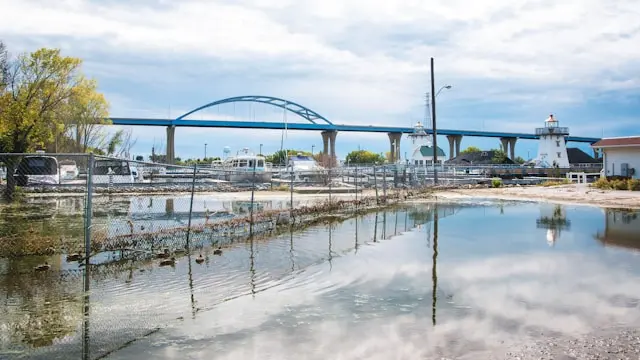
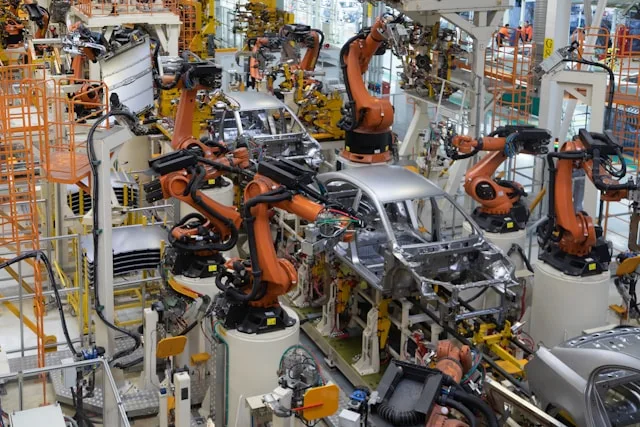
Green Bay's food processing sector invested heavily in automation through 2024 and 2025. Schreiber Foods completed a $35 million expansion of its yogurt and cream cheese lines. JBS upgraded its Green Bay Beef Plant with automated carcass splitting and hide removal systems. Cold-storage utilisation across Northeast Wisconsin averaged 94% through 2024, fuelled by dairy export demand routed through the Port of Green Bay. The capital arrived. The machines arrived. The technicians who can keep those machines running did not.
This is the core tension facing every hiring leader in Green Bay's food processing sector in 2026. The investment in automation has not reduced the workforce. It has replaced one category of worker with another that does not yet exist in sufficient numbers. Maintenance technician roles requiring PLC troubleshooting skills now sit open for more than 90 days in Brown County, double the 45-day regional average for all occupations. Automation controls engineers carry a passive candidate ratio of 85%. The sector is simultaneously displacing semi-skilled labour and desperately short of the skilled labour meant to replace it.
What follows is a ground-level analysis of how this paradox took shape, what it means for the specific roles that are hardest to fill, and what organisations operating in this market need to understand before they plan their next search. The data covers compensation, regulatory pressures, geographic competition, and the structural demographic constraints that make Green Bay unlike any other food processing market in the Upper Midwest.
The Automation Investment Outpaced the Talent Pipeline
The trajectory is clear in the numbers. The Wisconsin Department of Workforce Development projects 340 annual job openings in food processing for the Green Bay MSA through 2026. The majority of these replace retiring workers rather than representing net growth. Total headcount growth is forecast at a modest 2 to 3%. But within that flat total, the composition of the workforce is shifting sharply. Skilled maintenance and automation technician roles in food and industrial manufacturing are projected to grow 11%, according to Burning Glass Institute labour market analytics. Production labour is not.
This creates a skills valley. The workers being displaced by robotics and automated processing lines lack a clear pathway to the technical roles that are replacing their positions. According to McKinsey Global Institute research, an estimated 25% of production tasks in meat and dairy processing will be automated by 2027, threatening 400 to 600 semi-skilled meat cutting and packaging roles in the Green Bay MSA alone. At the same time, the technicians needed to install and maintain these systems are among the scarcest professionals in the entire region.
The result is not a shrinking workforce. It is a workforce that must transform in composition faster than the local talent pipeline can deliver. Northeast Wisconsin Technical College offers the only two-year Food Science Technologist programme in the region. Its maintenance mechanics programme feeds directly into the sector. But the output of these programmes is not scaling at the rate the sector requires. A food processing employer automating two lines in 2025 needs PLC-qualified maintenance technicians now, not in 2027 when the next cohort graduates.
This is why the hidden 80% of passive talent matters so acutely in this market. The technicians who can do this work are already employed. They are not searching.
Brown County's Demographic Wall and What It Means for Hiring
Brown County's working-age population between 18 and 64 declined 0.8% in 2024. Food processing demand for labour remained flat or positive over the same period. This is not a cyclical fluctuation. It is a systemic constraint that compounds every other hiring challenge in the market.
Food processing constitutes 14.2% of Brown County's manufacturing employment base, representing approximately 8,400 direct jobs as of late 2024. These jobs exist in a county where fewer working-age people live each year. The arithmetic does not require elaboration: when the denominator shrinks and the numerator holds steady, the competition for each available worker intensifies.
The Retirement Replacement Problem
The 340 annual openings projected through 2026 are driven primarily by retirement. This is not an expansion story. It is a replacement story. And replacement hiring in a specialist market is harder than expansion hiring, because the roles being vacated carry institutional knowledge that cannot be replicated through onboarding alone. A retiring FSQA manager with 20 years of USDA inspection experience leaves a gap that a technically qualified but inexperienced hire cannot fill on day one. The cost of getting that hire wrong extends well beyond the recruitment fee.
Why the Working-Age Decline Hits Food Processing Hardest
Manufacturing sectors that compete on amenities and remote flexibility can draw from a national talent pool. Food processing cannot. A plant operations manager must be present in the facility. A maintenance technician must be on the floor. A bilingual production supervisor must be standing next to the production line.
Every role in this sector is location-dependent. When the local working-age population shrinks, there is no remote-work workaround. The only options are relocation recruitment, which Green Bay struggles with for reasons explored below, or proactive talent pipeline development that identifies and engages candidates before the vacancy becomes urgent.
Three Roles That Define the Hiring Challenge
Not every role in Green Bay's food processing sector is equally hard to fill. Production line positions in meat cutting and packaging carry high turnover, with annualised rates of 45 to 60% in beef processing. But these are active-candidate markets with higher unemployment. The roles that stall searches and constrain operations are the ones where the candidate pool is overwhelmingly passive and the skill requirements are irreplaceable.
Electromechanical Maintenance Technicians
This is the most acute scarcity in the market. Candidates must hold proficiency in Allen-Bradley PLC programming, variable frequency drives, and increasingly, industrial robotics maintenance. The passive candidate ratio among automation controls engineers in this region sits at 85%, with average tenure of 4.2 years and unemployment below 1.5%.
A typical search for this role in Brown County runs more than 90 days. The 45-day average for all occupations in the region makes this a stark outlier. The reason is straightforward: the candidates qualified for this work are employed, satisfied, and not visible on any job board. Traditional recruitment advertising reaches perhaps 15% of the viable pool. The rest must be found through direct headhunting and candidate identification methods that go beyond posted vacancies.
Food Safety and Quality Assurance Managers
FSQA managers with USDA FSIS inspection experience, HACCP validation credentials, and SQF certification command signing bonuses of $10,000 to $15,000 in this market. Employers report paying 15 to 20% compensation premiums to move experienced FSQA managers from competitors within the Green Bay metro. An estimated 75 to 80% of qualified candidates in Northeast Wisconsin are passive, according to Food Safety Net Services recruitment practice data.
The challenge intensifies at the director level. Schreiber Foods reportedly established a remote-work hybrid arrangement for three senior food safety directors in 2024, allowing them to reside in Milwaukee while managing Green Bay operations. According to industry sources interviewed by the Wisconsin Dairy Products Association, this accommodation was necessary because the company was unable to secure local candidates with dual expertise in dairy microbiology and HACCP systems. When an ESOP-owned company with strong employer brand recognition and deep community roots cannot fill a role locally, the market signal is unmistakable.
Bilingual Production Supervisors
Bilingual English and Spanish production supervisors carry a 70% passive candidate ratio. High demand across logistics and manufacturing creates a continuous poaching environment for these professionals. Their scarcity is compounded by the fact that bilingual capability at supervisory level requires not just language proficiency but cultural fluency and operational authority. These are not roles that can be filled by promoting a translator or adding a language requirement to a generic supervisor posting.
The challenge of recruiting these profiles is not a volume problem. It is a method problem. The candidates exist in the market. They are simply not reachable through conventional channels.
Compensation in Context: What Green Bay Actually Pays
The compensation picture in Green Bay's food processing sector requires careful reading. The numbers look competitive on paper. In context, they reveal the specific pressures that make offers succeed or fail.
Plant Operations and Executive Leadership
Plant Operations Managers overseeing mid-to-large facilities earn $125,000 to $155,000 in base salary, with 15 to 20% bonus potential. At the VP of Operations level, multi-site responsibility commands $195,000 to $275,000 in base compensation with 30 to 40% bonus. Equity participation is rare in the private companies that dominate this market.
That last point matters more than it appears. Green Bay's major food processing employers are overwhelmingly private or cooperative in structure. Schreiber Foods operates as an Employee Stock Ownership Plan. JBS is a subsidiary of a Brazilian-listed parent. American Foods Group is privately held. The equity upside that technology firms and publicly traded food companies in Minneapolis or Chicago can offer simply does not exist here in the same form.
A VP of Operations candidate weighing a Green Bay offer against a comparable role at General Mills in Minneapolis is comparing $195,000 to $275,000 base with bonus against a package that may include RSUs, broader career trajectory, and a metropolitan area with deeper amenities. Understanding how to negotiate and structure these offers is essential for hiring leaders who need to compete without the same tools.
Food Safety Leadership
FSQA Managers earn $95,000 to $120,000 in base salary, adjusted for Green Bay's cost of living. Directors of Food Safety and Quality reach $145,000 to $185,000, with retention bonuses now common due to the liability exposure these roles carry. A food safety director who departs mid-audit or mid-recall creates a compliance gap that no interim arrangement fully addresses.
The retention bonuses signal something important. Employers in this market have already concluded that it is cheaper to pay a premium to keep an FSQA director than to conduct a search to replace one. When retention bonuses become standard practice, the market has moved past competitive hiring into defensive hiring. Firms are not just competing to attract. They are spending to prevent loss.
Maintenance and Engineering
Maintenance Managers earn $105,000 to $135,000. Directors of Engineering and Maintenance with multi-site responsibility command $160,000 to $210,000. These figures are competitive within the Green Bay metro. They are not competitive against Milwaukee, which offers an $8,000 to $12,000 premium for equivalent roles, or Chicago, which pays 20 to 30% more.
The cost-of-living offset is real. Green Bay runs 12% below the national average and 22% below Chicago. But market benchmarking alone does not close the gap. The question is not whether Green Bay is cheaper to live in. The question is whether the total proposition, including career trajectory, spousal employment, housing inventory, and professional community, is strong enough to move a passive candidate who is already comfortable where they are.
Why Green Bay's Cost Advantage Does Not Solve Its Talent Problem
This is the counter-intuitive finding in this market's data: Green Bay offers meaningfully lower living costs than every competing geography, and it is still losing talent to those geographies.
Migration data and employer reports consistently indicate that executive-level food safety and engineering talent rejects Green Bay relocations in favour of Madison, Milwaukee, or Minneapolis. The reasons cited are insufficient executive housing inventory and limited spousal employment opportunities in specialised fields.
The implication cuts against a common assumption in talent acquisition strategy. Compensation purchasing power alone does not overcome what economists call agglomeration economies. A professional earning $160,000 in Green Bay has more disposable income than the same professional earning $200,000 in Chicago. But the Chicago professional's spouse has access to a deeper job market. Their children have access to more school options. Their professional network is denser. Their next career move is more visible.
This is why direct search in this market must do more than match compensation. It must address the full relocation calculus. And it is why organisations that rely on job postings and inbound applications to fill senior roles in Green Bay are systematically reaching the wrong pool. The candidates willing to self-select into a Green Bay relocation without being actively recruited are a fraction of the qualified total.
For food safety executives specifically, the competitive pull from Madison is notable. The presence of specialised food technology startups offering equity upside creates an alternative career path unavailable in traditional processing. Minneapolis compounds the challenge: General Mills and Cargill headquarters offer broader career trajectory and greater remote-work flexibility. Every senior search in Green Bay's food processing sector is competing not just with local employers but with these alternative geographies and their fundamentally different value propositions.
Regulatory Pressure Is Adding Roles, Not Just Compliance Cost
The regulatory environment in Green Bay's food processing sector is tightening in ways that directly affect hiring demand.
OSHA and Workplace Safety
Green Bay's meat processing facilities face heightened scrutiny under the USDA-OSHA Alliance. According to OSHA inspection data, JBS Green Bay received three serious violations in 2024 related to lockout/tagout procedures, resulting in $145,000 in penalties. This enforcement pattern increases demand for safety-qualified supervisors and compliance specialists. Facilities that absorb penalties without upgrading their safety leadership tend to face escalating enforcement. The cost of the next violation is always higher.
Environmental Compliance and Wastewater Investment
The Wisconsin Department of Natural Resources imposed stricter phosphorus discharge limits for dairy processors in 2024. Schreiber Foods and other processors are now required to upgrade wastewater treatment systems at estimated costs of $8 to $12 million per facility. These upgrades require environmental engineers and compliance managers with specific expertise in industrial and manufacturing regulatory requirements. The capital investment creates a secondary hiring requirement that most workforce forecasts do not capture: the $8 million upgrade is not useful without the engineer who can commission and operate the system.
The compounding effect of OSHA enforcement, FDA Food Safety Modernisation Act compliance, USDA FSIS inspection requirements, allergen control management, and state-level environmental regulation means that Green Bay's food processors are adding compliance and safety roles even as they automate production roles. The net effect on total headcount may be modest. The effect on the skill composition of the workforce is profound.
This regulatory intensification creates a specific problem for executive search in food processing and manufacturing. The candidates who understand both the production environment and the regulatory framework are a smaller subset than either population alone. Finding a food safety director who can manage HACCP validation, SQF certification, allergen control, and state environmental compliance simultaneously narrows the search to a pool that is already 75 to 80% passive.
What This Market Requires from a Search Strategy
The evidence from Green Bay's food processing sector points to a market where conventional recruitment methods systematically underperform. The passive candidate ratios are the clearest signal: 85% for automation controls engineers, 75 to 80% for senior food safety directors, 70% for bilingual operations managers. In a market where the vast majority of qualified candidates are not looking, a search strategy built around advertising and inbound applications will fail before it begins.
The specific challenge is compounded by geography. Green Bay's food processing employers cannot offer remote work for operational roles. They cannot match the equity structures of publicly traded competitors in larger metros. They face a declining working-age population that shrinks the local talent pool year over year.
What they can offer is meaningful: the cost-of-living advantage is real, ESOP structures at firms like Schreiber Foods provide long-term wealth building, and the community integration of these employers gives senior leaders visibility and impact that would be diluted in a larger market. But these advantages must be communicated directly to the right candidates. They do not sell themselves through a job posting.
KiTalent's approach to this challenge draws on AI-enhanced talent mapping to identify the specific professionals who match both the technical and the personal criteria for a Green Bay food processing role. In a market where 85% of the best automation technicians are passive, the search must begin with identification, not advertisement. KiTalent delivers interview-ready candidates within 7 to 10 days, with a pay-per-interview model that eliminates upfront retainer risk.
The 96% one-year retention rate matters particularly in this market. A placed candidate who leaves after six months in Green Bay creates a compounding cost: the search restarts, the production line or compliance function carries a gap, and the employer's reputation as a relocation destination takes a hit. Retention is not an afterthought. It is the measure that determines whether the search actually succeeded.
For organisations competing for senior leadership in food and industrial processing in Green Bay, where the candidates who can run your automated lines, manage your regulatory exposure, and lead your bilingual workforce are not visible on any job board, speak with our executive search team about how we approach this market.
Frequently Asked Questions
What are the hardest food processing roles to fill in Green Bay, Wisconsin?
The three most acute scarcities are electromechanical maintenance technicians with PLC and automation skills, food safety and quality assurance managers with USDA inspection experience, and bilingual English/Spanish production supervisors. Maintenance technician roles regularly exceed 90 days open in Brown County, double the regional average. The passive candidate ratio for automation controls engineers is 85%, meaning conventional job advertising reaches only a fraction of the qualified pool. Direct headhunting methodology is the most effective route to these candidates.
What does a food safety director earn in Green Bay?
Directors of Food Safety and Quality in Green Bay earn $145,000 to $185,000 in base salary, with retention bonuses now standard due to the liability these roles carry. FSQA managers at the tier below earn $95,000 to $120,000. Signing bonuses of $10,000 to $15,000 are common for candidates with USDA FSIS inspection experience. These figures reflect Green Bay's cost of living, which is 12% below the national average and 22% below Chicago.
Why is Green Bay struggling to attract food processing talent despite lower living costs?
Green Bay offers meaningful cost-of-living advantages over competing markets like Chicago, Milwaukee, and Minneapolis. However, executive-level candidates consistently cite limited executive housing inventory and restricted spousal employment opportunities as barriers to relocation. Compensation purchasing power alone does not overcome the broader career and lifestyle advantages of larger metropolitan areas. Successful recruitment in this market requires addressing the full relocation calculus, not just the salary figure.
How is automation changing food processing employment in Green Bay?
Automation is not reducing total employment but transforming its composition. An estimated 25% of production tasks will be automated by 2027, putting 400 to 600 semi-skilled roles at risk. Simultaneously, skilled maintenance and automation technician roles are projected to grow 11%. The challenge is that displaced workers lack clear pathways to the technical roles replacing their positions. The sector faces a skills valley where both displacement and shortage exist in the same labour market.
What is driving food processing growth in the Green Bay metro area?
Dairy export demand to Mexico and Southeast Asia is a primary driver. The Port of Green Bay recorded a 12% year-over-year increase in refrigerated cargo tonnage in 2024. Cold-storage utilisation across Northeast Wisconsin averaged 94%. Schreiber Foods completed a $35 million expansion of yogurt and cream cheese processing lines. Capital investment continues to flow into automation, environmental compliance upgrades, and capacity expansion. KiTalent supports organisations in this market through talent mapping and executive identification designed for passive-dominant candidate pools.
How long does it take to fill a senior food processing role in Green Bay?
Maintenance technician roles with PLC requirements average over 90 days to fill. Senior food safety and quality assurance positions with USDA and HACCP credentials can take longer, particularly when candidates must be recruited from outside the Green Bay metro. KiTalent's model delivers interview-ready candidates within 7 to 10 days by reaching the passive professionals who are not visible through conventional channels.