Guangzhou Export Logistics in 2026: The Infrastructure Is Ready, the Talent Is Not
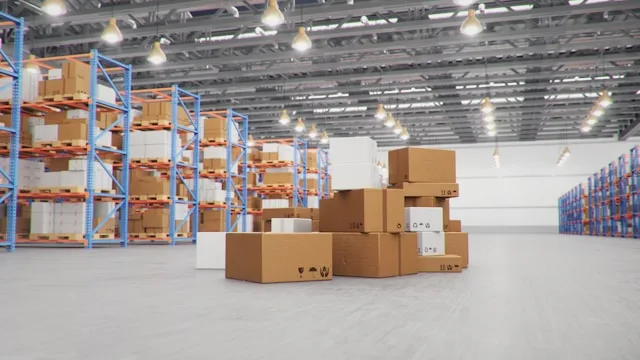
Guangzhou's port handled 25.4 million TEU in 2024 and is on track to reach 27 million by the end of this year. Baiyun Airport processed over two million tonnes of air cargo. Cainiao's 150,000 square metre automated warehousing hub in Nansha is nearing completion. By every physical metric, this is a logistics cluster operating at global scale and still accelerating.
The talent market tells a different story. Senior logistics roles in Guangzhou took an average of 94 days to fill through 2024. Candidate pools for positions requiring both cross-border e-commerce operations and Nansha Free Trade Zone expertise shrank to fewer than eight qualified applicants per opening. At the VP and director level, 85% of supply chain strategists are passively employed and unreachable through conventional job advertising. The city built a world-class export machine. It did not build the workforce to run it at the level the next phase demands.
What follows is a ground-level analysis of the forces pulling Guangzhou's logistics hiring market in opposite directions: infrastructure investment that has outpaced the supply of specialised talent, a geographic split that keeps senior professionals and their workplaces 40 kilometres apart, and a compensation structure that is quietly driving the most capable operators toward Shenzhen and Shanghai. For any organisation hiring into this market, the gap between what the data appears to show and what the reality demands is where the risk sits.
The Triad That Defines Guangzhou's Export Engine
Guangzhou's position in global trade rests on three interconnected nodes. The Canton Fair Complex in Pazhou hosts over 300 exhibitions annually and draws 250,000 international buyers to its flagship event alone. The 136th Canton Fair in late 2024 generated direct exhibition logistics demand valued at RMB 4.2 billion, according to the China Foreign Trade Centre's post-exhibition report. Guangzhou's logistics and trade sector now operates at a scale where the exhibition calendar alone creates quarterly warehousing surges requiring 40% additional temporary capacity.
Nansha Terminal, handling over 70% of the city's container throughput, operates Phase IV automated berths capable of processing ultra-large 24,000 TEU vessels. The Nansha International Logistics Center offers 450,000 square metres of bonded warehousing. At Baiyun International Airport, the FedEx Asia-Pacific Hub and SF Express South China Hub process 60% of the city's air cargo, with a Phase III cargo terminal expansion in 2024 adding 300,000 tonnes of annual capacity.
The Geographic Bifurcation Problem
The hypothesis that these three nodes form a dense, integrated cluster is accurate in infrastructure terms but misleading in operational reality. Senior logistics talent is concentrated in Tianhe and Haizhu districts, near the Pazhou exhibition complex and the city's commercial centre. Nansha, where the port infrastructure and bonded warehousing sit, is 40 kilometres south. The city has invested RMB 180 billion in Nansha's port and logistics infrastructure, creating surplus physical capacity. But inadequate international schooling and healthcare facilities in Nansha mean that senior professionals, particularly those with families, refuse to relocate.
This is not a commuting inconvenience. It is a systemic constraint on hiring. The physical cluster exists. The human capital cluster lags behind it by a 40-kilometre gap that no metro extension has yet closed. For organisations building operations in Nansha, this means every senior hire involves either persuading a candidate to accept a commute that consumes two hours daily or competing for the thin pool of professionals already based in the southern corridor. Neither option scales.
The result is a market where identifying passive senior candidates is not merely important but structurally necessary. The active candidate market in Nansha's specialist functions is, for practical purposes, empty.
Cross-Border E-Commerce: Volume Growth Masking a Compensation Crisis
Guangzhou processed over RMB 120 billion in cross-border e-commerce import and export value in 2024. The Guangzhou-Shenzhen-Hong Kong CBEC corridor accounts for 35% of China's total cross-border B2C export volume, according to the China E-Commerce Research Centre. Shein maintains its supply chain headquarters in Panyu District with over 3,000 employees in logistics and procurement. Temu operates its Guangzhou centre in Pazhou. TikTok Shop runs its Southern China operations from the city. The volume story is unambiguous.
The compensation story contradicts it. Despite CBEC export volume growing 23% year-on-year in 2024, compensation for mid-level logistics managers with five to eight years of experience grew only 3.5%. That figure sits below Guangzhou's 4.8% general inflation rate, according to 51job's Salary Growth Report. In real terms, mid-management logistics professionals in one of China's fastest-growing export corridors received a pay cut.
This is the analytical tension that defines the market in 2026. Rapid automation and global trade friction are compressing margins even as volumes surge. Revenue gains are absorbed by infrastructure investment and technology deployment rather than flowing into compensation. The market appears hot by posting volume: 78,000 new logistics positions were advertised in 2024, up 14% year-on-year. But the remuneration data tells a cooler story.
The implication for hiring leaders is direct. Guangzhou's mid-management logistics talent is not scarce because demand is high. It is becoming scarce because the economics of staying are deteriorating relative to alternatives. When Shenzhen offers 15-20% higher base salaries for equivalent VP roles, and the cost-of-living differential only partially offsets that premium, the rational calculation for an ambitious professional points toward departure. Guangzhou is not losing a talent war. It is losing a compensation war that it has not yet acknowledged.
The Customs and FTZ Expertise Bottleneck
Nansha FTZ operates under the Guangdong Pilot Free Trade Zone framework. It offers 24-hour automated customs clearance for CBEC parcels, bonded warehousing with deferred duty payment, and simplified inspection protocols using AI-identified low-risk cargo assessment. These are material advantages. Huangpu Terminal, by contrast, remains subject to legacy inspection protocols that create a 12-to-24-hour processing differential, according to Deloitte's South China Logistics Survey.
Why the Customs Talent Pool Cannot Expand Fast Enough
The gulf between these two systems is not just operational. It is a talent problem. Professionals who understand Nansha's automated clearance architecture, China Customs' Golden Customs II system, and the specific 9610/9710/9810 customs supervision codes for B2C exports represent a niche so narrow that unemployment in this specialism sits below 2%, according to the China Customs Brokers Association's Guangzhou Chapter.
According to Caixin Global, Shein's Guangzhou logistics division restructured its customs brokerage team in Q3 2024 after being unable to hire senior customs managers familiar with both Nansha's automated clearance systems and apparel HS code classifications. Those roles remained open for seven to nine months. The company ultimately disbanded its centralised Huangpu-based clearance unit and relocated 12 senior customs specialists to individual micro-fulfillment nodes within Nansha FTZ. The restructuring was a direct adaptation to a hiring failure that conventional search methods could not resolve.
For hiring executives, the lesson is structural. You cannot recruit experience in Nansha's pilot programmes when that experience barely exists outside the current workforce. The FTZ is less than a decade old. Its automated systems are newer still. The professionals who understand them are, almost without exception, already employed by the firms that trained them. Seventy per cent of pharmaceutical cold chain position fills in this market result from direct headhunting of competitors' staff, according to Michael Page China. The customs technology niche follows the same pattern.
The Regulatory Pressure Multiplier
The scarcity is about to intensify. The Guangzhou Municipal Government's Digital Trade 2.0 initiative mandates blockchain-based customs documentation for all export exhibition goods by Q3 2026. Every logistics provider serving the Canton Fair and the city's 300-plus annual exhibitions must upgrade its IT infrastructure to comply. The EU's Carbon Border Adjustment Mechanism, effective this year, adds emissions documentation requirements for heavy machinery and chemical exporters. The US elimination of the de minimis exemption for Chinese e-commerce parcels threatens the direct-to-consumer small parcel model that underpins much of Guangzhou's CBEC volume.
Each of these regulatory shifts requires professionals who do not yet exist in sufficient numbers. It is not a hiring problem. It is a knowledge problem. The skills needed to comply with blockchain customs documentation while managing CBAM reporting and navigating potential US tariff restructuring sit at an intersection that no university programme currently teaches and no single employer has yet assembled at scale.
Automation Investment Versus the Engineers Who Make It Work
The physical infrastructure story is one of relentless expansion. Cainiao Network's Nansha Smart Logistics Hub will add 150,000 square metres of automated warehousing by mid-2026. JD Logistics is building a RMB 800 million pharmaceutical cold chain centre in Nansha targeting ASEAN export markets. Nansha Phase V port development is underway. Baiyun Airport's T3 terminal and fourth runway, backed by RMB 30 billion in capital, are scheduled for partial commissioning later this year.
Every one of these projects requires automation engineers, AGV fleet specialists, and smart warehousing architects. The supply of those professionals is not keeping pace.
According to the 21st Century Business Herald, Cainiao's Nansha hub poached three senior automation engineers from SF Express's Baiyun Airport facility in Q2 2024, offering compensation premiums of 35-40% above market rates. This is not an isolated incident. It is the market mechanism that operates when traditional recruitment methods fail to surface candidates who are not looking. The automation talent pool is small enough that every hire by one employer is a direct subtraction from another's capability.
Guangzhou's "Blue Sky" initiative compounds the pressure. The mandate for port equipment electrification by 2026 requires RMB 2-4 million investment per warehouse in electric forklift and charging infrastructure conversion. The engineers who can design, implement, and manage these systems are the same professionals being recruited for AGV deployment and automated warehousing. Three distinct capital projects are drawing from one talent pool.
This is the original synthesis this article offers: Guangzhou's capital investment in automation has not reduced its dependence on scarce human capital. It has replaced one category of worker with another that does not yet exist in adequate numbers. The RMB 180 billion invested in Nansha's physical infrastructure, the billions flowing into airport expansion, the warehouse automation programmes: all of these moved faster than the human capital required to operate them. The infrastructure is ready. The workforce to run it at full capability is still being assembled, one poaching incident at a time.
Compensation Benchmarks: Where the Money Is and Where It Is Not
Understanding where compensation concentrates in Guangzhou's logistics market reveals why the talent gaps matter more at some levels than others. The data draws from multiple salary surveys covering 2024 and early 2025.
At the senior specialist and manager level, a Customs Clearance Manager with Nansha FTZ expertise commands RMB 450,000 to 650,000 annually. An E-Commerce Logistics Operations Manager earns RMB 550,000 to 800,000. These figures reflect base salary plus bonus and represent the floor at which candidates with genuine FTZ expertise will engage.
At the executive level, a VP of Supply Chain in cross-border e-commerce earns RMB 1.2 million to 2.0 million. At Shein and Temu, top-decile packages reach RMB 2.5 million with equity equivalents. A Director of Logistics covering port and airport integration earns RMB 900,000 to 1.5 million. General Managers of exhibition logistics earn RMB 600,000 to 1.1 million.
The premium that matters most is the 20-25% uplift commanded by executives with dual expertise in China customs regulations and ASEAN market logistics. Guangzhou's positioning as the China-ASEAN trade corridor hub makes this combination acutely valuable, yet the Deloitte South China Supply Chain Executive Survey from 2024 confirms that this premium reflects genuine scarcity rather than generous employers.
The Shenzhen and Shanghai Differential
These figures become concerning when placed alongside competitor markets. Shenzhen offers 15-20% higher base salaries for equivalent logistics VP roles: RMB 1.4 million to 2.2 million versus Guangzhou's RMB 1.2 million to 2.0 million. Shenzhen's residential costs are 25% higher, partially offsetting the premium. But Yantian Port's fully automated terminals and Shenzhen's technology sector status attract logistics technologists who prefer smart logistics environments over Guangzhou's traditional trade focus.
Shanghai offers a 30-35% premium over Guangzhou for customs and trade compliance directors, along with superior access to multinational headquarters and regional HQ roles. Hong Kong draws Guangzhou's top international trade lawyers and maritime arbitration specialists with 40-50% salary premiums, though high housing costs and different tax structures limit net migration.
The compensation gap between Guangzhou and its nearest competitor is not closing. It is widening fastest at the VP and director level, exactly the seniority where the most consequential roles sit. Guangzhou's talent retention now depends less on what it pays and more on whether the career proposition, the complexity of the work, the growth trajectory, compensates for a salary that trails Shenzhen by a meaningful margin. That is a harder argument to make every year.
What Hiring Leaders in This Market Must Do Differently
Guangzhou's logistics and trade talent market in 2026 is defined by a set of conditions that conventional hiring methods cannot address. Warehouse vacancy rates below 8% in core Pazhou and Nansha logistics zones mean physical capacity is tight. Industrial land availability in Nansha dropped 18% year-on-year, driving warehousing rents up 9.3% annually. HGV restrictions during Canton Fair sessions force 30% cost increases in temporary last-mile warehousing. The operating environment is constrained on every axis.
The talent environment mirrors the physical one. At the senior level, 85% of supply chain strategists are passively employed. Customs brokers with Nansha FTZ expertise have an unemployment rate below 2%. Pharmaceutical cold chain specialists move almost exclusively through direct headhunting. A search strategy built around job postings and inbound applications reaches, at best, the 15% of the market that is actively looking. In a city where the most critical specialisms have active candidate pools measured in single digits per role, that approach guarantees failure.
The retention dimension complicates matters further. Guangzhou's logistics talent increasingly commutes from Foshan and Dongguan, where housing costs are 40% lower. When Shenzhen firms offer remote-hybrid arrangements alongside higher compensation, the calculation for a Guangzhou-based professional shifts. The counteroffer dynamics in this market are not theoretical. They are the primary mechanism through which employers discover, too late, that their retention proposition was insufficient.
For organisations operating in this market, three principles apply. First, speed matters more than it appears. A 94-day average time-to-fill means the best candidates in any given shortlist are gone within the first three weeks. The remaining 70 days are spent interviewing progressively weaker alternatives. Second, the search must be direct. Passive candidates in this market move through relationship networks and direct headhunting approaches, not job boards. Third, compensation benchmarking must account for the Shenzhen differential. An offer calibrated to Guangzhou market medians will lose to any competing offer from across the Pearl River Delta.
KiTalent's approach to markets like Guangzhou, where AI-enhanced talent identification reaches the passive majority that job advertising cannot, delivers interview-ready candidates within 7 to 10 days. In a market where the average search runs 94 days and the best candidates are off the table within three weeks, that speed differential is the difference between hiring a first-choice candidate and restructuring around the absence of one.
The 2026 Hiring Equation for Guangzhou Logistics
The forces acting on this market are now clear. Physical infrastructure is expanding at pace: Nansha Phase V, Baiyun T3, Cainiao's automated hub, JD Logistics' cold chain centre. Regulatory complexity is deepening: Digital Trade 2.0, CBAM, potential US tariff restructuring. The talent pool required to operate at the intersection of these two forces is not expanding at anything close to the same rate.
Guangzhou's logistics market in 2026 is a place where capital moved faster than human capital could follow. The organisations that recognise this asymmetry and adjust their hiring strategies accordingly, investing in proactive talent pipelines rather than reactive job postings, benchmarking against Shenzhen rather than local medians, and engaging specialists who can reach the 85% of senior candidates invisible to conventional methods, will build the teams capable of operating these systems at their designed capacity.
The rest will discover what Shein discovered in 2024: that restructuring around the absence of talent you cannot find is more expensive, slower, and more disruptive than investing in the search capability to find them in the first place.
For organisations competing for supply chain, customs, and logistics leadership in Guangzhou's export trade corridor, where the candidates who understand Nansha's automated systems and ASEAN trade flows are employed, passive, and unreachable through job boards, speak with our executive search team about how KiTalent approaches this market. With a 96% one-year retention rate across 1,450-plus executive placements and a pay-per-interview model that eliminates upfront retainer risk, the conversation itself carries no cost.
Frequently Asked Questions
What are the hardest logistics roles to fill in Guangzhou in 2026?
Customs clearance managers with Nansha FTZ expertise, senior automation engineers for AGV and smart warehousing systems, and VP-level supply chain strategists with dual China-ASEAN regulatory knowledge are the most constrained roles. Candidate pools for positions combining cross-border e-commerce operations and bonded warehousing expertise average fewer than eight qualified applicants per opening. Pharmaceutical cold chain specialists holding GDP certification represent another critically scarce category, with 70% of hires resulting from direct headhunting rather than job postings.
How does Guangzhou logistics compensation compare to Shenzhen and Shanghai?
Shenzhen offers 15-20% higher base salaries for equivalent logistics VP roles, with packages ranging from RMB 1.4 million to 2.2 million compared to Guangzhou's RMB 1.2 million to 2.0 million. Shanghai commands a 30-35% premium over Guangzhou for customs and trade compliance directors. Shenzhen's 25% higher residential costs partially offset the salary gap, but the differential is widening at senior levels. Executives with China customs and ASEAN logistics dual expertise command 20-25% premiums above standard logistics VPs in Guangzhou.
Why is executive search necessary for logistics hiring in Guangzhou?
At VP and director level, 85% of qualified supply chain candidates in Guangzhou are passively employed and do not respond to job postings. Customs brokers with Nansha FTZ expertise have unemployment below 2%. KiTalent's AI-enhanced direct search methodology reaches these passive professionals through targeted identification rather than advertising, delivering interview-ready candidates within 7 to 10 days compared to the market average of 94 days for senior roles.
What regulatory changes affect Guangzhou logistics hiring in 2026?
Three regulatory shifts are reshaping talent requirements. The Digital Trade 2.0 initiative mandates blockchain-based customs documentation for all export exhibition goods by Q3 2026. The EU Carbon Border Adjustment Mechanism requires new emissions documentation capabilities for machinery and chemical exporters. The potential US elimination of de minimis exemptions for Chinese e-commerce parcels threatens the direct-to-consumer model that underpins much of Guangzhou's cross-border volume. Each shift requires compliance expertise that the current workforce does not yet possess at scale.
What is the Nansha FTZ talent gap and why does it matter?
Nansha Free Trade Zone offers 24-hour automated customs clearance, bonded warehousing, and AI-based cargo risk assessment. However, senior logistics talent remains concentrated in Tianhe and Haizhu districts, 40 kilometres north, due to inadequate schooling and healthcare infrastructure in Nansha. This geographic mismatch means organisations building operations in Nansha face a structural hiring constraint that proactive talent pipeline development can address but reactive job advertising cannot.
How large is Guangzhou's cross-border e-commerce logistics market?
Guangzhou processed over RMB 120 billion in cross-border e-commerce import and export value in 2024, with the Guangzhou-Shenzhen-Hong Kong corridor accounting for 35% of China's total cross-border B2C export volume. Major operators including Shein, Temu, and TikTok Shop maintain substantial Guangzhou operations. The sector posted 78,000 new logistics positions in 2024, a 14% year-on-year increase, though compensation growth for mid-level managers lagged behind inflation at just 3.5%.