Hai Phong's Maritime Boom Has a Problem No Investment Can Fix: The People Are Not There
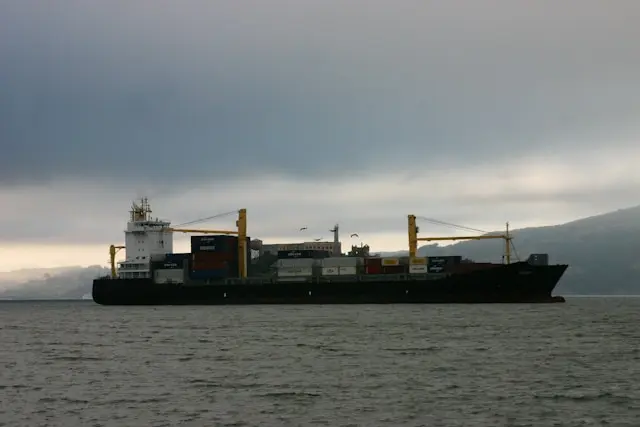
Hai Phong's port system processed 7.9 million TEUs in 2024. That figure represented 11.7% year-on-year container growth, placing the city among the fastest-expanding port complexes in Southeast Asia. Lạch Huyện deep-water terminal alone handled 2.1 million TEUs, a 31% increase over its 2023 volume, and the broader system moved 103.4 million tonnes of cargo across its network of legacy and next-generation terminals. The infrastructure story, by any measure, is working.
The talent story is not. Terminal operators at Lạch Huyện report vacancy periods of nine to fourteen months for senior marine operations managers who hold deep-water pilotage certification. Across the entire country, only 47 Class 1 pilots are qualified for vessels exceeding 200 metres in length at Hai Phong's deep-water berths. Twelve of those pilots are expected to retire by 2026. The port automation engineers needed to operate Kalmar and Navis systems at the new Phase 2 berths sit in a market where 85% of qualified professionals are not actively looking for work. And in the shipbuilding yards pivoting toward offshore wind fabrication, a single project director departure stalled a major substation contract for three months.
What follows is a ground-level analysis of how Hai Phong's maritime economy arrived at this mismatch, where the hiring gaps are most acute, and what organisations operating in this market need to understand before their next critical search. The central argument is specific: Hai Phong has invested billions in port capacity that its workforce cannot yet operate at full potential, and the talent required to close that gap does not exist in sufficient quantity within Vietnam's borders.
The Infrastructure Thesis and Its Human Bottleneck
Hai Phong's port expansion rests on a straightforward logic. Northern Vietnam's manufacturing base, anchored by electronics assembly, textile exports, and an expanding automotive supply chain, needs deep-water access to global shipping routes. Lạch Huyện International Gateway Port, operated under a 50-year BOT concession led by Hateco Group and Geleximco, was built to provide that access. Its berths can accommodate vessels up to 200,000 DWT. Phase 2 berths (3 and 4) came online in May 2023. Japanese consortia led by Sojitz and Sumitomo are studying the feasibility of Phase 3, which would add another 1.5 million TEUs of capacity.
The physical infrastructure, in other words, is scaling on schedule. The human infrastructure is not.
The Cửa Lục navigation channel connecting Lạch Huyện to open water maintains a depth of only 11.5 metres below chart datum. This restricts vessels over 14,000 TEU to high-tide windows and limits loading to 70-75% of nominal capacity. The Ministry of Transport's proposed dredging to 14-16 metres has been delayed pending allocation of VND 9.8 trillion (approximately $400 million) in state funding. Environmental impact assessments for sediment disposal have been ongoing since mid-2024, and the project timeline has slipped to 2026-2027. This means Lạch Huyện continues to operate at 65-70% of its design capacity.
That constraint creates a peculiar hiring dynamic. The terminal needs the same calibre of operators, pilots, and automation engineers that a fully utilised mega-terminal would require. But the revenue base to fund competitive compensation packages is compressed by the very infrastructure limitation that restricts throughput. Terminal operators face the hidden cost of unfilled executive positions at every level where deep-water expertise is required, while the financial case for paying global-market premiums is weakened by underutilisation.
Where the Volume Actually Sits: Legacy Terminals and the Split Market
A common misreading of Hai Phong's port market treats Lạch Huyện as the dominant facility. It is not. Legacy terminals still process approximately 74% of the region's container volume. Tân Cảng Hải Phòng, operated by the state-owned Saigon Newport Corporation, handles 2.4 million TEUs annually at the Nam Hải Đình Vũ complex. Hải An Container Terminal, operated by the publicly listed Hải Phòng Port JSC, moves 1.2 million TEUs with a focus on intra-Asia trade. Green Port, a joint venture between Vinalines and Japan's Sojitz Corporation, specialises in refrigerated cargo with 600,000 TEU capacity.
The Profitability Paradox at Legacy Terminals
The split creates a paradox that any hiring leader in this market must understand. Despite record throughput, major terminal operators disclosed EBITDA margin contractions of three to five percentage points through 2024, according to financial statements from Hải Phòng Port JSC and Green Port. The causes are specific: dredging surcharges, higher pilotage fees, and BOT concession revenue-sharing obligations. Throughput records and financial strain are coexisting in the same port system.
For talent acquisition, this paradox has a direct consequence. Organisations that are growing their volumes are not necessarily growing their ability to pay market rates for scarce specialists. A hiring leader at a legacy terminal competing for a port automation engineer against a foreign-invested terminal with expatriate salary structures faces a compensation gap that volume growth alone does not close.
The Ecosystem Beyond the Quay Wall
The broader logistics ecosystem in Hai Phong includes 247 registered logistics enterprises. Anchor service providers range from Sotrans Hải Phòng in warehousing to Viconship in towing and pilotage, and PTSC Marine in offshore supply base operations at Đình Vũ. The Đình Vũ-Cát Hải Economic Zone hosts 12 operational logistics parks. VSIP Hải Phòng, the Vietnam-Singapore Industrial Park, reports 85% occupancy for bonded warehousing. Deep C Hải Phòng, a Norwegian-invested industrial zone, hosts 45 maritime-related firms including Wärtsilä Vietnam and ABB Marine & Ports.
This density matters for hiring. The 247 registered firms compete for the same finite pool of qualified logistics managers, port engineers, and maritime operations professionals. Concentration creates opportunity for talent mapping across a defined cluster, but it also means that one employer's gain is almost always another's loss. The market does not replenish fast enough for net new supply to meet net new demand.
Three Roles That Define the Shortage
The talent gaps in Hai Phong's maritime economy are not uniform. Three role categories concentrate the most acute pressure, each with distinct dynamics that require different search strategies.
Deep-Water Maritime Pilots: A 100% Passive Market
The Vietnam Maritime Pilot Association reports 47 Class 1 pilots certified for deep-water operations at Hai Phong. Twelve are expected to retire by the end of 2026. This is a 100% passive candidate market. Every qualified pilot is government-licensed, permanently employed, and averaging tenure beyond 15 years. Recruitment occurs exclusively through direct headhunting or international agency placement. There is no job board on which these candidates appear.
The compensation for a Class 1 deep-water pilot ranges from VND 120 to 180 million per month ($4,800 to $7,200) at the specialist level, rising to VND 200 to 300 million ($8,000 to $12,000) for Chief Pilot or Port Captain roles. But money alone does not solve this search. According to the Navigos Group's 2024 Maritime Talent Report, 40% of senior marine operations positions requiring deep-water pilotage certification were filled in 2024 through expatriate recruitment from the Philippines and India. Those hires came at 50-60% salary premiums above local market rates.
The implication is clear. The domestic pipeline cannot replace the pilots who are leaving. And the international pipeline, while functional, is expensive and introduces operational complexity around licensing, language, and regulatory compliance.
Port Automation and TOS Engineers: The 85% Problem
When Lạch Huyện implemented Kalmar terminal operating systems at its Phase 2 berths, it created immediate demand for engineers proficient in Navis N4 or Kalmar KeyMaster platforms. LinkedIn Talent Insights data from Q4 2024 shows that only 15% of Vietnam-based TOS engineers are actively seeking roles. Unemployment in this specialism sits below 1.5%.
According to Logistics Vietnam Magazine, Tân Cảng Hải Phòng recruited a TOS Implementation Lead from Gemalink Terminal at Cái Mép in the second quarter of 2024, offering a reported 35% base salary premium plus housing allowance to secure the transfer. This is the market mechanism at work in a near-zero-unemployment specialism. Every hire requires extracting a passive candidate from a competitor, and the price of extraction is rising.
Compensation for automation engineers ranges from VND 50 to 80 million per month ($2,000 to $3,200) at the specialist level, but the real competition sits at the Head of Digital Transformation tier: VND 140 to 220 million ($5,600 to $8,800). Candidates at that level understand their scarcity. They require propositions that extend well beyond base pay, and the dynamics of negotiating with candidates who hold all the leverage apply in full force here.
Shipbuilding Project Managers for Offshore Wind
Hai Phong's shipbuilding sector is undergoing a forced transition. The commercial newbuild market has largely migrated to southern yards and to China. Nam Triều Shipyard, the largest state-owned facility in the city, has contracted from 2,800 workers to approximately 1,200, focusing on repair and offshore fabrication while SBIC, its parent group, restructures VND 14 trillion ($560 million) in outstanding debts.
The growth vector is offshore wind. PTSC Hải Phòng is fabricating substation jackets for the Vĩnh Phong 4.6 GW wind project, employing 400 specialised welders and coating engineers. But the project management layer above those fabrication teams requires GWO (Global Wind Organisation) certification and offshore structural engineering experience. According to the Hải Phòng Economic Zone Authority's Enterprise Difficulty Survey, Nam Triều Shipyard experienced a three-month project stall on a Vĩnh Phong offshore substation fabrication contract in 2024 after its Project Director departed for a Singapore-based EPC firm.
That departure illustrates the core dynamic. Hai Phong's offshore wind fabrication ambitions are real, with projections of 2,000 new specialised jobs by 2026. But the project leaders who can manage these contracts carry skills that Singapore, Shenzhen, and Hong Kong value far more highly. Non-compete agreements and contractual restrictions bind some of the best candidates, while others simply leave for markets offering three to seven times the salary.
The Original Problem: Capital Moved Faster Than Human Capital Could Follow
Here is the analytical claim that the raw data does not state but that the pattern demands.
Hai Phong's maritime investment thesis assumed that workforce capability would follow infrastructure investment with a manageable lag. It has not. The lag is widening, not closing. Capital deployed into berths, cranes, automation systems, and offshore wind fabrication capacity has moved at the pace of construction timelines. Human capital development has moved at the pace of a training and certification system that was designed for a previous era of port operations.
Vietnam Maritime University graduates 3,200 marine engineers, logistics managers, and nautical science officers each year. Allied institutions contribute to a total annual output exceeding 15,000 maritime and logistics graduates nationwide. Those numbers look adequate until you examine what employers actually need. According to industry assessments, fewer than 20% of graduates meet operational readiness standards for automated terminal operations or deep-water pilotage.
The number 15,000 describes quantity. The number 20% describes quality. The gap between them is the structural mismatch that no amount of infrastructure investment can resolve without a parallel investment in building and maintaining a pipeline of qualified professionals at the specific skill levels the new terminals require.
This is not a temporary lag. The skills required for Lạch Huyện's automated operations, for mega-vessel pilotage, and for offshore wind project management did not exist in Vietnam's maritime curriculum five years ago. Some still do not. The Hải Phòng Logistics Research Institute is working on port automation and digital twin modelling. VMU maintains simulation centres for deep-water pilotage training. But the throughput of certified professionals from these programmes will not match demand through 2026, and likely beyond.
The Competition Hai Phong Cannot Avoid
Hai Phong does not compete for maritime talent in isolation. It competes against three tiers of geographic rivals, each offering a specific set of advantages that pull senior professionals away.
Ho Chi Minh City and the Cái Mép-Thị Vải deep-water terminals represent the primary domestic competition. According to CBRE Vietnam's 2024 Logistics Talent Flow Report, equivalent port operations roles in the south offer 15-20% base salary premiums over Hai Phong. Cái Mép-Thị Vải terminals provide more stable year-round deep-draft access without the tidal restrictions that constrain Lạch Huyện, making them preferable for career progression in mega-terminal operations. The schooling and lifestyle infrastructure in Ho Chi Minh City further advantages the south for professionals with families.
Singapore and Bangkok form the second tier. Singapore offers five to seven times the salary multiples for senior maritime executives at the Terminal Director or Port Director level. It serves as the regional headquarters for Maersk, PSA International, and DP World. According to Drewry's Maritime HR Review, these firms actively recruit Vietnamese talent for regional roles. Bangkok competes at the mid-level through multinational 3PLs like DHL and Kuehne+Nagel, offering regional mobility programmes that Hai Phong employers cannot match.
China completes the picture. Shenzhen and Hong Kong shipyards and port operators recruit Vietnamese naval architects and marine engineers with salary offers of three to four times the domestic rate, coupled with exposure to LNG vessel construction and other advanced technologies that Vietnamese yards do not yet offer. According to the Vietnam Shipbuilding Industry Association's Talent Retention White Paper, this outflow is accelerating as Chinese yards scale production.
The compound effect is that Hai Phong's most experienced maritime professionals face a standing offer to earn multiples of their current compensation by moving south, abroad, or both. The candidates who stay are either deeply rooted in the city for personal reasons or locked into positions through contractual mechanisms. Neither group is easy to recruit through conventional means. Understanding why the best candidates are invisible to traditional methods is the first prerequisite for any employer entering this market.
Compensation Realities and the Expatriate Premium
The salary data for Hai Phong's maritime sector tells two stories simultaneously.
For Vietnamese nationals, executive compensation at the Terminal Director level ranges from VND 180 to 350 million per month ($7,200 to $14,000), with performance bonuses of 20-30%. Senior specialists in port operations earn VND 70 to 100 million ($2,800 to $4,000). These figures have been growing at 12-15% annually for critical categories like automation engineers and deep-water pilots, against a general market inflation rate of 6-8%.
For expatriates at foreign-invested terminals such as Green Port or Maersk-service terminals, the figures enter a different range entirely. Terminal Directors on expatriate packages earn $15,000 to $25,000 per month including housing and education allowances. That is approximately 2.5 times the compensation of equivalent Vietnamese national executives, according to ECA International's 2024 remuneration data.
What the Gap Means for Hiring Strategy
This 2.5x differential is not simply an equity problem. It is a market signal. It tells you that the skills commanding expatriate premiums are skills the domestic market does not produce in adequate quantity. When a terminal operator pays $25,000 per month for a foreign Terminal Director, it is not choosing to overpay. It is choosing to operate rather than to leave a berth underutilised while waiting for a Vietnamese candidate who may not emerge from the pipeline for years.
For organisations seeking to fill senior roles with Vietnamese nationals, the implication is that compensation benchmarking against domestic averages will consistently produce offers that lose. The true competitor set for a senior maritime executive in Hai Phong is not other Hai Phong employers. It is Singapore, Ho Chi Minh City, and the expatriate packages that foreign-invested terminals offer in the same port complex. Any search strategy that benchmarks only against local rates will fail before the first candidate conversation.
The wage inflation projections through 2026, at 12-15% annually for critical maritime specialisms, suggest this gap will continue widening. Organisations that delay critical hires in the hope that the market will cool are making an expensive bet against the data.
Regulatory and Structural Risks That Compound the Talent Challenge
Three regulatory and structural forces are converging to make Hai Phong's maritime hiring environment more complex than throughput growth alone would suggest.
First, draft amendments to Vietnam's Maritime Code, tabled at the National Assembly in late 2024, would require 30% local crew for international vessels calling at Vietnamese ports. If enacted, this regulation would increase labour costs for feeder operators and simultaneously intensify demand for qualified Vietnamese seafarers at every level.
Second, IMO 2023 energy efficiency standards require terminal operators to invest in shore power infrastructure (cold ironing) at an estimated $5 to $8 million per berth at Lạch Huyện, with compliance deadlines in 2026. Implementing these systems requires electrical engineers and sustainability compliance officers who are not part of the traditional maritime and industrial hiring pipeline.
Third, the U.S. Customs and Border Protection has initiated enhanced scrutiny of country-of-origin documentation for goods transshipped through Hai Phong. This threatens the port's transshipment growth strategy, which reached 1.2 million TEUs in 2024 and accounts for 15% of container volume. If U.S. tariffs on Chinese goods are reimposed on transshipped cargo, the revenue implications for terminal operators, and consequently for their ability to fund competitive talent packages, could be material.
None of these risks makes Hai Phong a less important port. Collectively, they make it a port where the executive team capable of managing compound regulatory, operational, and financial pressure is more valuable, and harder to assemble, than at any previous point in its development.
What This Market Requires From a Hiring Strategy
The conventional approach to filling maritime executive roles in Vietnam follows a pattern: post the role on VietnamWorks or Navigos, wait for applications, screen inbound candidates, and extend an offer. In Hai Phong's critical maritime specialisms, this approach reaches at most 15-30% of the viable candidate pool. The rest are passive, contractually bound, or working outside Vietnam entirely.
A search for a Class 1 deep-water pilot or a Head of Port Automation at Lạch Huyện is not a recruitment exercise. It is a talent identification and extraction exercise that requires mapping the full universe of qualified professionals across Vietnam, the Philippines, India, Singapore, and China, then building a case for each individual that addresses compensation, career trajectory, family relocation, and the specific professional proposition that Hai Phong offers.
KiTalent's approach to executive search across maritime and industrial sectors is built for exactly this type of market. By combining AI-enhanced talent mapping with direct headhunting methodology, KiTalent identifies and engages passive candidates who will never appear on a job board. The result is interview-ready candidates delivered within 7 to 10 days, with a 96% one-year retention rate for placed executives.
For terminal operators, shipyard directors, and logistics enterprises in Hai Phong competing for the maritime professionals who will determine whether billions of dollars in port infrastructure achieve their intended return, the cost of a slow or failed search is not measured in recruitment fees. It is measured in berths that sit underutilised, fabrication contracts that stall, and throughput targets that slip. To discuss how KiTalent approaches critical maritime leadership searches in this market, start with a conversation about the specific roles your organisation needs to fill and the timeline you are working against.
Frequently Asked Questions
What is the current container throughput at Hai Phong's port system?
Hai Phong's port system handled 7.9 million TEUs and 103.4 million tonnes of cargo in 2024, with growth of 11.7% and 8.3% respectively. Lạch Huyện deep-water terminal processed 2.1 million TEUs, representing 26.5% of total container volume. Projections for 2026 place the system at 8.8 to 9.0 million TEUs, contingent on progress with the Cửa Lục channel dredging project. Legacy terminals including Tân Cảng Hải Phòng and Hải An Container Terminal continue to handle the majority of volume.
Why is it so difficult to hire maritime pilots in Hai Phong?
Only 47 Class 1 pilots are certified for deep-water operations at Hai Phong nationwide, with 12 retirements expected by 2026. This is a 100% passive candidate market. Every qualified pilot is government-licensed with average tenure exceeding 15 years. In 2024, 40% of senior positions requiring this certification were filled through expatriate recruitment from the Philippines and India at 50-60% salary premiums. Domestic training pipelines produce graduates, but fewer than 20% meet operational readiness standards for deep-water pilotage. KiTalent's direct headhunting methodology is designed for precisely this type of closed, passive market.
What do senior maritime roles pay in Hai Phong?
Port operations executives earn VND 180 to 350 million per month ($7,200 to $14,000) plus 20-30% performance bonuses. Class 1 deep-water pilots command VND 120 to 300 million ($4,800 to $12,000) depending on seniority. Expatriate Terminal Directors at foreign-invested terminals earn $15,000 to $25,000 monthly including allowances, approximately 2.5 times equivalent Vietnamese national compensation. Wage inflation for critical specialisms runs at 12-15% annually, well above the 6-8% general market rate.
How does Hai Phong compete with Singapore and Ho Chi Minh City for maritime talent?
Ho Chi Minh City's Cái Mép-Thị Vải terminals offer 15-20% salary premiums with better deep-draft access and lifestyle infrastructure. Singapore offers five to seven times the salary for senior maritime executives and hosts regional headquarters for Maersk, PSA International, and DP World. Hai Phong's competitive proposition rests on career opportunity in a rapidly expanding port system, proximity to Northern Vietnam's manufacturing base, and lower cost of living. However, organisations must benchmark compensation against regional competitors, not local averages, to retain senior talent.
What is the outlook for offshore wind jobs in Hai Phong?
The Ministry of Industry and Trade projects 2,000 new specialised jobs in offshore wind fabrication by 2026, driven by contracts like the Vĩnh Phong 4.6 GW wind project. PTSC Hải Phòng already employs 400 specialised welders and coating engineers for substation jacket fabrication. The critical shortage is at the project management level, where GWO certification and offshore structural engineering experience are required. These candidates face competing offers from Singapore and Chinese firms offering three to seven times domestic salaries.
How can executive search help fill critical maritime roles in Hai Phong?
When 85-100% of qualified candidates in critical maritime specialisms are passive, conventional job advertising reaches a fraction of the viable talent pool. Executive search firms with AI-powered talent mapping capabilities identify and engage professionals across Vietnam, the Philippines, India, Singapore, and China. KiTalent delivers interview-ready candidates within 7 to 10 days, with full pipeline transparency and a pay-per-interview model that eliminates upfront retainer risk. This approach is especially valuable in markets like Hai Phong where traditional recruitment consistently fails to surface the right candidates.