Henderson's $340 Million Manufacturing Bet Has a Workforce Problem No Job Board Can Solve
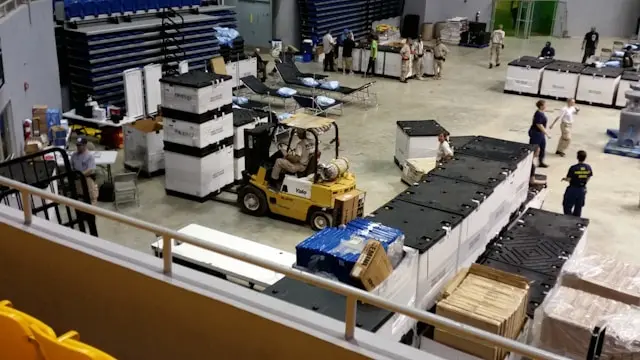
Henderson, Nevada, entered 2026 with one of the most aggressive advanced manufacturing expansion pipelines in the American Southwest. Approximately $340 million in new facility investment is moving through development approvals, adding more than 300,000 square feet of production capacity across electric vehicle components and aerospace composites. Haas Automation's 500,000-square-foot CNC facility is operating at 85% capacity. The capital is flowing. The machines are arriving.
The workers are not. Henderson manufacturers posted 1,240 unique job openings in the final quarter of 2024, a 23% year-over-year increase. Yet the city's manufacturing labour force grew just 2.1% over the same period. CNC machinist vacancies average 94 days to fill. Automation engineering roles sit open for 112 days. The workforce pipeline from the College of Southern Nevada produces roughly 180 manufacturing-relevant graduates each year against annual employer demand for 340 or more new hires. That 160-person annual deficit is not closing. It is compounding.
What follows is an analysis of the forces pulling Henderson's manufacturing sector in two directions at once: capital investment accelerating faster than the workforce can scale, a tax climate that attracts employers while inflating the cost of living that repels the talent those employers need, and a passive candidate market where 90% of the people qualified for the most critical roles are already employed and not looking. For hiring leaders responsible for filling senior manufacturing, automation, and operations positions in this market, understanding these dynamics is no longer optional. It is the difference between an expansion that delivers and one that stalls with an empty production floor.
The Market in 2026: Growth Numbers That Mask a Deeper Constraint
Henderson's advanced manufacturing sector employs approximately 8,400 workers and contributed $1.2 billion to regional GDP in 2024, an 8.3% year-over-year increase. Employment growth projections for 2026 sit between 4.5% and 5.8%, outpacing the national manufacturing forecast of 0.8% by a factor of six. By any capital metric, Henderson's manufacturing corridor is performing.
But capital metrics tell only half the story. The sector's workforce is ageing faster than its national equivalent. Thirty-four per cent of precision production workers in the region are aged 50 or older, compared to 28% nationally. This is not a distant retirement risk. It is a present-tense knowledge drain. Every senior CNC programmer or master machinist who retires takes proprietary process knowledge, accumulated over decades on specific machine architectures, that cannot be replaced by hiring a recent graduate and waiting twelve months for on-the-job training to take effect.
The trajectory established through 2025 has continued into 2026: more investment, more facilities, more machines, and a shrinking pool of people qualified to run them. The 23% increase in job postings against a 2.1% increase in workforce is not a temporary mismatch. It is a structural divergence between what the capital markets are funding and what the labour market can deliver.
The constraint is becoming the binding limitation on growth. Manufacturers that secured capital for expansion are now discovering that the harder problem was never the financing. It was the hiring.
The Anchor Employers Shaping Henderson's Talent Market
Haas Automation and the Gravity Effect
Haas Automation's Henderson facility represents a $100 million capital investment and employs more than 600 people across manufacturing, engineering, and corporate functions. The facility produces vertical machining centres and turning centres, sourcing 60% of its componentry from domestic suppliers in Nevada and Arizona. It is the largest single manufacturing employer in the city and functions as the talent market's centre of gravity.
That gravity creates a dual effect. Haas attracts skilled workers to the region, which benefits the broader ecosystem. But it also absorbs them. A senior CNC applications engineer role at Haas, requiring 10 or more years of multi-axis programming experience and Mastercam proficiency, had been open for 147 days as of January 2025, according to LinkedIn Economic Graph and Indeed Hiring Lab data. The search expanded to include relocation packages from competing markets. When the anchor employer itself struggles to fill a role that requires proprietary knowledge of its own control architecture, the signal to smaller manufacturers in the same industrial park is clear: the talent pool for specialist roles is effectively exhausted locally.
The Broader Employer Base
Beyond Haas, Henderson's advanced manufacturing cluster includes Astronics Advanced Electronic Systems with 380 employees in avionics manufacturing, Daifuku Webb (the Jervis B. Webb subsidiary of Osaka-based Daifuku Co., Ltd.) with 145 employees producing automated guided vehicles, Barrett Firearms Manufacturing with 95 employees, and PPI Time Zero with 85 in printed circuit board assembly. A secondary cluster is forming in the Henderson Airport Business Park around aerospace MRO operations.
The emerging geography matters for talent dynamics. Three new Tier-2 suppliers have located in the Henderson Global Industrial Park since 2023, including a precision sheet metal fabrication firm serving both aerospace and machine tool customers. Each new entrant competes for the same finite pool of CNC machinists, maintenance technicians, and controls engineers. The industrial park is simultaneously growing its employer base and intensifying its talent competition.
The Skills That Capital Cannot Buy Fast Enough
The investment flowing into Henderson is buying machines, buildings, and production capacity. What it cannot buy at speed is the human capital required to operate what it has built. This is the core analytical tension in the data: capital has moved faster than human capital can follow, and the result is a market where automation investments designed to reduce labour dependency are themselves creating demand for a workforce that does not yet exist in sufficient numbers.
The Automation Paradox
An estimated 35% of Henderson manufacturers will have implemented AI-driven predictive maintenance systems by the end of 2026, up from 12% in 2024, according to the Nevada Manufacturing Extension Partnership's Technology Adoption Survey. That tripling of adoption is impressive as a technology story. As a talent story, it is alarming.
Every predictive maintenance system requires someone who can integrate industrial IoT sensors, programme PLCs, interpret the data output, and troubleshoot failures that the AI flags but cannot resolve. These are not entry-level competencies. The 278 open industrial maintenance technician positions in Henderson carry an 18% vacancy rate. The people who can operate the new systems are the same people every other manufacturer in the park is trying to hire. Automation was supposed to ease the labour constraint. Instead, it replaced one kind of shortage with another that is harder to fill.
The Specific Skill Gaps
The demand is concentrated in capabilities that require years of accumulated experience rather than certification alone. Multi-axis CNC programming across platforms like Mastercam, Esprit, and GibbsCAM. PLC programming on Allen-Bradley and Siemens TIA Portal systems. Geometric Dimensioning and Tolerancing for precision machining at aerospace tolerances. Metal additive manufacturing operations and design for additive processes. Industrial IoT sensor integration. Each of these skill categories has a training pipeline measured in years, not months.
The College of Southern Nevada's Centres of Excellence for Manufacturing and Automation produce approximately 120 certificate-holders annually in CNC machining and industrial automation. Combined with Nevada State College graduates, the regional pipeline delivers roughly 180 manufacturing-relevant completions per year. Employer demand exceeds 340 annual new hires. That 160-person annual deficit has been accumulating for years and will deepen as the $340 million in expansion projects come online through 2026.
This is not a problem that traditional recruitment methods can solve by increasing job advertising spend. The candidates do not exist in sufficient volume within the local pipeline. They must be found, identified, and recruited from other markets or from competitors within the same industrial park.
Compensation: The Numbers Behind the Talent War
Henderson's compensation structure for advanced manufacturing roles reveals a market caught between two forces. Wages are rising fast enough to fuel local inflation but not fast enough to compete with every external threat.
Specialist and Management Tiers
A Manufacturing Engineering Manager overseeing CNC operations commands $98,000 to $125,000 in base salary with 15% to 20% bonus potential. A Director of Automation Engineering supervising eight to twelve engineers earns $135,000 to $165,000 base, with signing bonuses averaging $20,000 in competitive situations. At the senior specialist level, these are defensible packages in a market with no state income tax.
The competitive picture shifts at the executive tier. A Vice President of Manufacturing Operations with multi-site responsibility earns $195,000 to $265,000 base with 30% to 40% bonus and equity participation in private firms. This represents a 12% to 15% discount to equivalent roles in Phoenix. A CTO or VP of Advanced Manufacturing with a digital transformation mandate earns $220,000 to $310,000 in total cash compensation. A COO at a major employer like Haas can reach total compensation above $400,000.
Where the Money Fails
The compensation data exposes a specific vulnerability at the mid-career skilled trades level. According to a pattern documented in the Nevada Manufacturers Association Wage Survey and employer roundtable discussions, one precision aerospace components manufacturer in the Henderson Global Industrial Park recruited a Master Machinist from a competitor in the same park by offering a 22% compensation premium, moving the base from $94,000 to $115,000 and adding a $15,000 signing bonus. This triggered counter-offer escalation that raised regional wage benchmarks by 8% for Level 3 machinists within six months.
The problem is not that employers cannot pay. It is that paying more to poach from within the same small geography does not increase the total supply. It redistributes it. One firm's hire becomes another firm's vacancy. The net effect on the market is wage inflation without talent growth. For leaders weighing whether to match these premiums or invest in longer-term talent pipeline development, the calculus depends entirely on how urgently the role must be filled versus how sustainably the hire must last.
When Bay Area and Seattle firms offer Henderson's automation engineers 25% to 35% premiums for remote controls programming work, the local compensation structure faces a competitor it cannot match dollar for dollar. IndustryWeek reported that Daifuku Webb restructured its Henderson engineering team to implement a four-day workweek at full pay for controls engineers after losing senior automation programmers to exactly this kind of remote competition. The restructuring cut voluntary turnover from 24% to 9%.
The lesson is direct. Compensation alone does not win in this market. The package must include structural flexibility that remote-first competitors already provide by default.
The Tax Paradox: What Attracts Employers Repels Their Workers
Nevada's tax structure is among the most manufacturer-friendly in the United States. No corporate income tax. No personal income tax. No inventory tax. The Modified Business Tax on wages above $50,000 quarterly runs 1.378% for general businesses. The Tax Foundation's State Business Tax Climate Index places Nevada's effective burden at 40% to 60% below neighbouring California for equivalent manufacturing operations. This is a genuine, material advantage that has driven capital investment into Henderson for years.
The paradox is what that success has produced. Clark County's population grew 4.2% from 2020 through 2024. Housing costs rose 34% over the same period. The median home price in Henderson reached $485,000 by the end of 2024. The median rent for a two-bedroom apartment hit $1,850, requiring an hourly wage of $35.58 to meet the 30% of income affordability standard.
Entry-level CNC operators earn $22 to $26 per hour. The gap is not subtle. A worker earning $25 per hour would need to spend 42% of gross income on a median two-bedroom apartment. For a market competing against Phoenix, where housing costs are 15% lower and nominal CNC machinist wages are 8% to 12% higher, the real-wage picture is unfavourable at the entry and mid-career levels where Henderson needs the most bodies.
This dynamic creates a specific problem for executive search. When a VP of Operations candidate in Dallas or Denver evaluates a Henderson opportunity, the tax savings on personal income are real. But the housing cost differential may neutralise them, particularly for candidates with families. The 30% or greater compensation premium that Henderson manufacturers report needing to attract C-suite talent from larger metro areas is partly a function of this cost-of-living recalculation. The tax advantage that attracted the factory does not automatically attract the people to run it.
The Passive Candidate Problem: Why 90% of the Talent You Need Is Invisible
The unemployment rate for experienced CNC programmers in the Henderson metro area is estimated at 1.2%. For industrial automation and controls engineers, it is 1.8%. These are not markets where posting a job and waiting for applications produces a viable shortlist.
According to LinkedIn Economic Graph data, the ratio of active to passive candidates for CNC programming roles in Henderson is approximately 1:9. Ninety per cent of qualified candidates are employed, not looking, and not responding to job advertisements. Automation engineers with PLC and robotic integration experience receive three to five recruiter contacts monthly and do not apply to posted vacancies.
The active candidate pool that does exist skews junior. Recent CSN graduates and career switchers can be hired, but they require six to twelve months of on-the-job training before reaching productivity. For maintenance mechanics, the picture is mixed: roughly 40% of senior technicians with relevant certifications are passive, while 60% of the active pool consists of apprentices and junior mechanics who lack the electrical troubleshooting skills demanded by automated facilities.
This is the market reality that makes direct headhunting and passive candidate identification the only viable method for filling senior and specialist manufacturing roles in Henderson. A job posting on Indeed or LinkedIn reaches, at best, the 10% who are actively looking. The other 90% must be found through targeted search, mapped across competitor employers, and approached with a proposition specific enough to make them consider moving.
The search methodology matters more in a 1.2% unemployment speciality than in almost any other hiring context. A firm relying on inbound applications will build a shortlist of junior candidates and career changers. A firm using AI-powered talent mapping and direct search will build a shortlist of the people actually doing the work at Haas, Astronics, and Daifuku Webb today. The difference between those two shortlists is the difference between a hire that fills a seat and a hire that moves the production line forward.
What This Means for Hiring Leaders in Henderson's Manufacturing Sector
The data points toward a single conclusion that the research does not state explicitly but that the numbers make unavoidable. Henderson's advanced manufacturing sector has crossed a threshold where capital investment is no longer the constraint on growth. Human capital is. And the human capital constraint will not resolve through wage increases, job postings, or patience, because the pipeline producing new workers is structurally undersized relative to the demand those investments are creating.
The organisations that will fill their most critical roles in this market share three characteristics.
They move fast. In a market where CNC machinist vacancies average 94 days to fill and automation engineering roles average 112 days, the firms that compress their search timelines to weeks rather than months gain access to candidates before competitors do. The cost of a slow search in Henderson is not merely the recruiter fees. It is the production capacity sitting idle in a facility that was built to operate at full output.
They search beyond the local market. Henderson's workforce pipeline produces 180 manufacturing-relevant graduates per year against demand for 340 or more. The arithmetic is simple. At least half of every year's hiring must come from outside the region, whether through relocation from Phoenix, Salt Lake City, or further afield. Firms that limit their search to candidates already living in Clark County are competing for a pool that is already spoken for.
They offer more than money. Daifuku Webb's four-day workweek experiment reduced turnover from 24% to 9%. That single structural change accomplished what a succession of counter-offers could not. When the competition includes Bay Area firms offering remote work at 30% premiums, the response cannot be purely financial. It must address how the work is structured, not just what it pays. Understanding what it takes to move a passive candidate in this environment requires market intelligence that generic recruitment processes do not generate.
For organisations hiring manufacturing executives, operations leaders, and senior technical specialists in Henderson, KiTalent's approach to executive search across industrial and manufacturing sectors is built for exactly this kind of market. Interview-ready candidates delivered within 7 to 10 days. Access to the passive talent pool through AI-enhanced direct headhunting methodology that maps the 90% of qualified professionals who are not responding to advertisements. A 96% one-year retention rate that reflects the quality of the match, not just the speed of the placement.
Henderson's manufacturing expansion is real. The capital is committed. The facilities are under construction. The question is whether the leadership and specialist talent will be in place when the production lines are ready to run. For organisations that cannot afford to wait 112 days for an automation engineer or 147 days for a CNC applications specialist, start a conversation with our executive search team about how we approach this market differently.
Frequently Asked Questions
What is the average salary for a manufacturing executive in Henderson, Nevada?
Senior manufacturing executive compensation in Henderson varies by role and employer size. A Vice President of Manufacturing Operations earns $195,000 to $265,000 in base salary with 30% to 40% bonus potential. A Chief Technology Officer or VP of Advanced Manufacturing earns $220,000 to $310,000 in total cash compensation. A Chief Operating Officer at a major employer can reach total compensation exceeding $400,000. These figures reflect a 12% to 15% discount to equivalent Phoenix roles but carry a meaningful offset through Nevada's zero personal income tax. Accurate market benchmarking is essential before structuring an offer in this competitive environment.
Why is it so hard to hire CNC machinists in Henderson?
The unemployment rate for experienced CNC programmers in the Henderson metro area is approximately 1.2%, meaning 98.8% of qualified candidates are already employed. The ratio of active to passive candidates is roughly 1:9. The local training pipeline at the College of Southern Nevada produces about 120 certificate-holders annually, against employer demand for 340 or more new hires. This creates a persistent annual deficit that compounds over time. Job postings reach only the small fraction of candidates who are actively looking, making direct search and headhunting the only reliable method for filling these roles.
How does Henderson compare to Phoenix for manufacturing talent?
Phoenix offers 8% to 12% higher nominal wages for CNC machinists and 15% lower housing costs than Henderson. However, Henderson's zero state income tax provides a partial offset. The more consequential difference is competition intensity: Phoenix's semiconductor expansion through TSMC and Intel is drawing precision machinists with $10,000 to $15,000 signing bonuses, creating a talent vacuum that pulls from Henderson. Salt Lake City offers a deeper automation engineering pipeline and stronger aerospace cluster. Henderson's advantage lies in its tax structure and proximity to Las Vegas amenities, but these do not compensate for the narrower local talent pool.
What manufacturing sectors are growing fastest in Henderson?
The fastest-growing segments are electric vehicle component manufacturing, aerospace composites, and automated systems. Approximately $340 million in facility expansions are in Henderson's development pipeline for 2026, including a 200,000-square-foot EV component facility linked to the broader Nevada supply chain and a 120,000-square-foot aerospace composites operation. Industry 4.0 adoption is accelerating, with 35% of Henderson manufacturers expected to implement AI-driven predictive maintenance by the end of 2026, up from 12% in 2024.
How can companies attract manufacturing talent to Henderson, Nevada?
Successful talent attraction in Henderson requires three elements beyond competitive base compensation. First, structural flexibility: employers that have introduced compressed workweeks or hybrid schedules for engineering roles report materially lower turnover. Second, relocation support: with at least half of annual hiring demand exceeding local pipeline capacity, firms must recruit nationally and fund the move. Third, speed: in a market where specialist roles average 94 to 112 days to fill, organisations using direct headhunting to reach passive candidates compress timelines and reach qualified professionals before competitors do.
What role does executive search play in Henderson's manufacturing hiring?
In a market where 90% of qualified CNC programmers and 85% to 90% of automation engineers are passive candidates, executive search is not a premium service reserved for C-suite roles. It is the baseline methodology required for any senior or specialist manufacturing hire. Traditional job advertising reaches at most 10% of the viable candidate pool. Executive search firms with manufacturing expertise use targeted identification, direct approach, and market intelligence to reach the professionals who are employed, not looking, and not visible on any job board.