Herzliya Marina's Coastal Economy Has Hit a Physical Ceiling. The Talent Market Hit It First.
Herzliya Marina operates at 94% berth occupancy year-round. There is an 18-month waiting list for super-yacht berths over 30 metres. The Ritz-Carlton and Daniel Hotel are running at pre-pandemic occupancy with average daily rates 22% above 2022 baselines. Luxury residential units within the marina district command premiums of 35 to 40% above the Herzliya municipal average. By almost every metric, this is a coastal economy operating at or near full capacity.
The problem is not demand. Demand is documented and growing. The problem is that the physical infrastructure, the regulatory framework, and the talent pool have all reached their limits at the same time. No new berth capacity is planned. Coastal zoning law amendments have extended project approval timelines by 8 to 14 months. And the marine engineers, luxury hospitality executives, and coastal construction specialists this market needs are either working somewhere they have no intention of leaving, or they have already emigrated to Cyprus and Greece for higher salaries and lower tax burdens.
What follows is a structured analysis of the forces converging on Herzliya's coastal economy: the physical constraints shaping every asset class, the regulatory tightening that is adding months to every development timeline, and the talent dynamics that determine whether the market's next phase delivers on its investment thesis or stalls at the execution stage. For any senior leader hiring into real estate, hospitality, or maritime services in this district, the market intelligence here should reframe how you approach your next search.
A Coastal Enclave Running at Maximum Output
The Herzliya Pituach coastal zone accounts for roughly 18 to 22% of the city's total commercial real estate transactions by value, according to the Herzliya Municipality Economic Development Unit's 2024 annual review. That figure is striking for a geographically compact district. But it also understates the concentration of activity in the luxury segment, where transaction prices for sea-facing four-bedroom units reached ILS 8.5 to 12 million in Q3 2024.
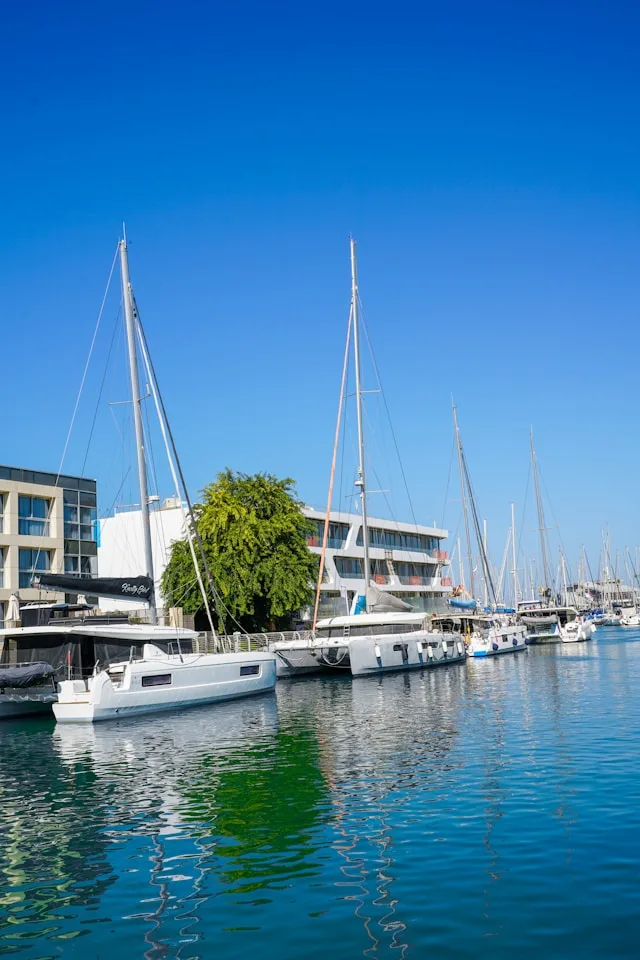
The marina itself manages 680 berths, generated estimated revenues of NIS 42 to 48 million in 2024, and has no room to grow. Seasonal waiting lists for vessels over 20 metres persist throughout the year. The super-yacht segment, vessels over 30 metres, carries an 18-month queue. Revenue growth from this point forward depends entirely on yield optimisation and premiumisation of existing capacity, not on expansion.
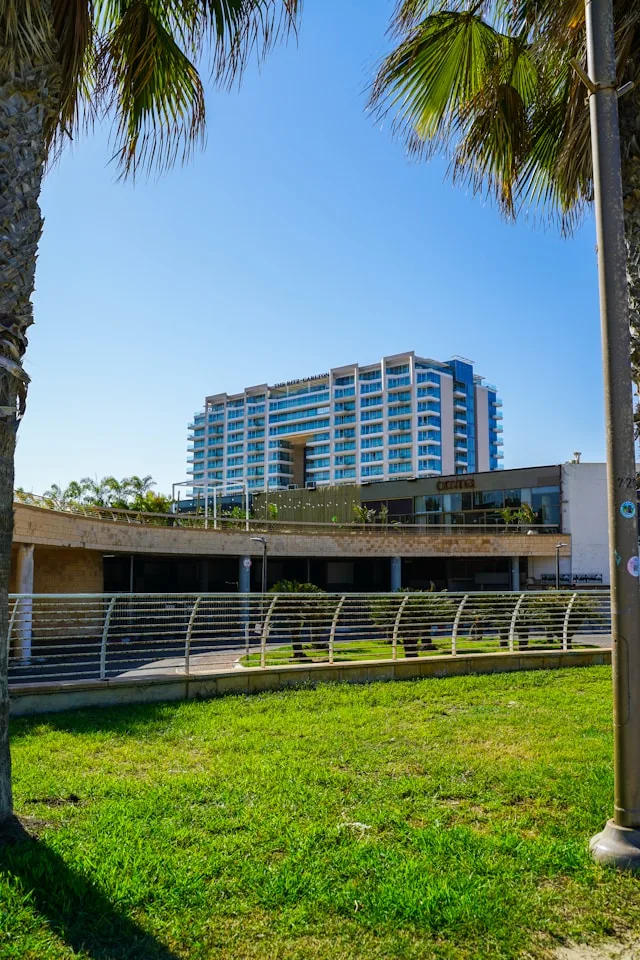
The Herzliya 2030 Master Plan designates the marina district as a "Special Tourism and Recreation Zone." That designation prohibits residential development on remaining commercial parcels and caps hotel height at 8 stories. The Israel Land Authority released only two small parcels totalling approximately 3.2 dunams for hospitality development in 2024, with bidding restricted to five-star hotel inventory. The supply pipeline is not just constrained. It is structurally capped.
This is the context in which every hiring decision in this market takes place. When there is no room to build new capacity, every asset and every team member must perform at a higher level. The tolerance for vacancy in a critical role drops to near zero.
The Regulatory Squeeze Tightening Every Timeline
The 2024 amendments to the Israeli Coastal Law imposed stricter setback requirements, mandating a 100-metre buffer from the high water mark and enhanced environmental impact assessments. According to the Ministry of Environmental Protection's Coastal Division Policy Update, these changes extend project approval timelines by 8 to 14 months.
Coastal Erosion Review and the 2026 Pipeline
Approximately 180 to 220 additional luxury units are scheduled for delivery in 2026 within the marina-adjacent district. Pre-sales for the "Residence at the Marina" development by Azorim indicate 70% absorption at prices 15% above comparable 2024 completions. But the Ministry of Environmental Protection's pending review of coastal erosion mitigation requirements may add 4 to 6 months to delivery timelines. For developers already contending with a national shortage of 15,000 to 18,000 skilled construction workers, the regulatory delay compounds a labour constraint that was already acute.
Foreign Investment Dampening
Non-resident purchasers face an additional 8% purchase tax on luxury properties valued above ILS 5.3 million. This surcharge, layered on top of the standard acquisition tax, has measurably dampened international investment demand. For a segment that historically drew heavily from diaspora buyers, this fiscal friction narrows the buyer pool at a moment when developers need pre-sale momentum to justify construction starts.
The combined effect of zoning restrictions, environmental review extensions, and tax disincentives is a development environment where the path from land acquisition to occupancy has lengthened by a year or more. Every month of delay increases the cost of the specialised project management talent required to keep a coastal construction programme on track.
Where the Talent Shortages Are Most Acute
The sector exhibits acute shortages in three categories: specialised marine technicians, luxury hospitality operations management, and high-end residential project managers with coastal construction experience. What unites these categories is not just scarcity. It is that the scarcity is concentrated in precisely the niche sub-segments where aggregate labour statistics mask the problem entirely.
Marine Technical Roles
Yacht Service Herzliya, the largest on-site marine service operator, expanded its dry-stack facility by 30% in 2024. Despite this investment, it maintains a backlog for specialised fibreglass repair and electrical systems work extending 6 to 8 weeks. According to the Israel Marine Association's 2024 labour survey, a senior marine electrical engineer vacancy at a Herzliya marina operator remained open for 11 months before being filled through recruitment from an Eilat-based competitor, requiring a 35% salary premium and a full relocation package.
The candidate pool for marina directors and senior marine engineers is 85 to 90% passive. These professionals hold stable positions with international marina management companies such as Camper & Nicholsons or IGY Marinas. They do not search job boards. They are not visible to conventional recruitment methods. Reaching this segment of the talent market requires direct identification and a proposition compelling enough to justify relocation to a market that, by international marina standards, pays less than Limassol or Athens.
Luxury Hospitality Leadership
The Israel Hotel Association reported a 28% vacancy rate for supervisory positions in Tel Aviv District luxury properties, which includes Herzliya. That compares with 18% nationally. The Sharon Hotel completed a NIS 45 million renovation in early 2024 but, according to the company's own press release, delayed full reopening of its 111-room inventory by four months citing workforce availability challenges.
Job postings for marina operations manager roles in Herzliya increased 45% year-over-year in 2024. Average time-to-fill reached 94 days, compared to 52 days for equivalent positions in Tel Aviv. A pattern consistent with hospitality executive search data from Manpower Israel's Hospitality Division shows that a luxury hotel in the Herzliya district conducted a seven-month external search for a Director of Food and Beverage in 2024, ultimately promoting internally and backfilling the intermediate position after external candidates demanded compensation premiums of 25 to 30% above budget.
The passive candidate ratio for luxury hotel general managers runs 70 to 75%. High-performing GMs in the luxury segment are typically retained through exclusive search mandates with recruitment cycles of 6 to 9 months. Traditional recruiting methods fail consistently in this environment, not because the talent does not exist, but because it is not visible through any channel a job advertisement can reach.
Coastal Construction Project Management
The subset of construction project managers with coastal and marine-adjacent experience represents approximately 40% active candidates, down from 60% for the broader construction PM population. Industry reports indicate that developers including Azorim and Minrav have extended project timelines by an average of 3 to 4 months due to shortages of project managers experienced in marine-adjacent foundation work and salt-resistant materials.
This is the narrowest of the three shortage categories. The skills required are not transferable from standard residential construction. Coastal engineering specialisation, specifically experience with marine pile driving and salt-resistant materials, is a prerequisite that eliminates the majority of otherwise qualified candidates.
The Compensation Bifurcation No One Is Pricing Correctly
Here is the analytical point that the aggregate data obscures. While employers in Herzliya's coastal economy report critical shortages with 11-month vacancies and 35% poaching premiums in marine and coastal construction roles, aggregate wage data for the broader Israeli construction and hospitality sectors shows only 3.5 to 4.2% year-over-year growth. That is barely above national inflation.
The implication is that compensation pressure is intensely concentrated in specific specialised sub-segments while the wider sector experiences stagnant wages. Aggregate statistics do not reveal this. They conceal it.
A marina director or general manager in Herzliya commands ILS 45,000 to 65,000 per month, with annual performance bonuses of 20 to 40%. A five-star hotel general manager at an international brand property earns ILS 55,000 to 85,000 monthly, with total compensation including bonuses and equity incentives reaching ILS 1.2 to 1.8 million annually. These figures sit materially above the general hospitality and construction salary bands that most compensation benchmarking exercises use as reference points.
Organisations using sector-wide salary surveys to calibrate their offers for these niche roles are systematically underbidding. The 25 to 30% premium that external hospitality candidates demanded above budget in the Director of Food and Beverage search described above is not an anomaly. It is the market clearing price for a specialist the aggregate data does not account for.
For VP-level development roles overseeing multiple luxury residential towers, compensation reaches ILS 65,000 to 95,000 per month with equity participation in specific projects common among listed developers. The gap between what a general construction salary survey suggests these roles pay and what the market actually demands is where searches stall. Salary negotiation in this environment is not a matter of splitting the difference. It is a matter of pricing against a competitor set that most hiring organisations have not correctly identified.
The Geopolitical Variable That Defies the Usual Correlation
The October 2023 conflict and subsequent regional tensions reduced international hotel bookings in Herzliya by 35% during Q4 2023 and Q1 2024 compared to 2022 baselines, according to the Central Bureau of Statistics monthly hotel statistics series. Recovery to 90% of prior international demand occurred only by Q3 2024.
A 35% booking decline would, in most Mediterranean coastal markets, produce a corresponding decline in real estate values. It did not. Luxury residential prices in the marina district appreciated 8 to 12% year-over-year in 2024. Pre-sales for 2026 deliveries indicate continued demand elasticity.
This decoupling suggests that the investment buyer demographic for Herzliya marina-district residential, primarily domestic and diaspora Jewish investors, operates independently from tourism volatility. The typical correlation between hospitality performance and coastal real estate valuations that holds in Paphos, Marbella, or the Côte d'Azur does not hold here. The residential buyer is not purchasing a holiday asset correlated to visitor numbers. They are purchasing a prestige asset correlated to scarcity and national identity.
For hiring leaders, the practical consequence is that a geopolitical shock severe enough to empty hotels for two quarters does not relieve pressure on the construction or real estate talent market. The residential pipeline continued through the booking decline. The project managers, engineers, and development directors needed to deliver that pipeline remained just as scarce during the hospitality downturn as before it. Security events create a temporary hospitality staffing correction but have no equivalent effect on the talent categories that take longest to fill.
The International Talent Drain Working Against Every Search
Herzliya's most direct competitor for marine technical talent is not Tel Aviv. It is Limassol, Cyprus and Athens, Greece. Both jurisdictions offer tax-advantaged regimes for foreign workers and gross salaries 30 to 40% higher for certified yacht engineers. According to the Israel Marine Association's 2023 member exit survey, Israeli marine technicians frequently emigrate to these jurisdictions after gaining 3 to 5 years of experience in Herzliya.
This creates a structural training-and-departure cycle. The domestic market invests in developing marine technical talent. The international market harvests it. Every marine engineer who leaves for a Cypriot marina with better pay and a lower tax burden represents a training cost absorbed by the Israeli employer and a capability gap that takes another 3 to 5 years to rebuild.
The hospitality market faces a different but related dynamic. Tel Aviv offers 15 to 20% higher base salaries for equivalent GM roles, though with housing costs 25% above Herzliya. Eilat offers lower housing costs but limited career progression beyond resort management. The net effect is a geographic squeeze: Tel Aviv pulls executive talent upward on compensation, Eilat pulls entry-level talent sideways on cost of living, and Herzliya sits in between with premium asset quality but mid-market compensation positioning.
For organisations trying to retain leadership talent against international competition, the proposition cannot be salary alone. The counteroffer from a Limassol marina or a Tel Aviv five-star property will almost always beat Herzliya on gross pay. The Herzliya proposition must rest on role scope, asset quality, and career trajectory. Articulating that proposition requires understanding who the candidate's actual alternatives are, which in turn requires the kind of competitor talent intelligence that most hiring organisations in this market do not currently possess.
What This Market Requires from a Search Partner
The convergence of physical capacity limits, regulatory extension, compensation bifurcation, and international talent drain creates a hiring environment where conventional methods consistently underperform. A job posting on Drushim.co.il reaches the 10 to 15% of marine engineers and hospitality executives who happen to be actively looking. The other 85 to 90% must be found differently.
A marina director search in this market is not a recruitment exercise. It is an intelligence operation. The viable candidate pool is small, known within the industry, and overwhelmingly passive. A luxury hotel general manager search with a six-to-nine-month cycle and a 70 to 75% passive candidate ratio cannot be run through advertising and inbound applications. It requires direct identification of candidates who are performing well in their current roles and would not consider moving unless approached with a specific, well-constructed proposition.
KiTalent's approach to markets like Herzliya's coastal economy begins with the recognition that the candidate you need is almost certainly employed, performing well, and not looking. Our AI-enhanced talent mapping methodology identifies the specific individuals who match the technical and cultural requirements of the role, then engages them directly with the market intelligence and role proposition required to open a genuine conversation. Interview-ready candidates delivered within 7 to 10 days. No retainer required. Clients pay only when they meet qualified candidates.
With a 96% one-year retention rate across 1,450 completed executive placements and an average client relationship exceeding 8 years, KiTalent's track record reflects what happens when search is built around precision rather than volume. In a market where every critical role sits at the intersection of regulatory complexity, physical scarcity, and international talent competition, precision is not a preference. It is the only method that produces results.
For organisations competing for marine, hospitality, or coastal development leadership in Herzliya's capacity-constrained waterfront economy, where the talent pool is small, predominantly passive, and actively targeted by international competitors, speak with our executive search team about how we approach this market differently.
Frequently Asked Questions
What are the main talent shortages in Herzliya's marina and coastal economy?
The most acute shortages are in three categories. Specialised marine engineers with yacht electrical systems certification face 85 to 90% passive candidate ratios, with vacancies lasting up to 11 months. Luxury hospitality general managers and directors carry a 28% supervisory vacancy rate in the Tel Aviv District, which includes Herzliya. Coastal construction project managers with marine-adjacent foundation experience represent the narrowest pool, with only 40% actively seeking new roles. These shortages are concentrated in niche sub-segments that aggregate labour statistics do not capture, making them invisible to standard workforce planning tools.
How much does a hotel general manager earn in Herzliya?
A five-star hotel general manager in Herzliya earns ILS 55,000 to 85,000 per month in base salary. International brand properties such as those operated by Marriott pay a 20 to 25% premium over independent operators. Total annual compensation including performance bonuses and equity incentives can reach ILS 1.2 to 1.8 million, equivalent to approximately $325,000 to $490,000. These figures apply to properties with 200 or more rooms and full P&L responsibility. Director-level roles such as Director of Sales and Marketing sit at ILS 22,000 to 30,000 monthly.
Why is Herzliya losing marine engineers to Cyprus and Greece?
Limassol, Cyprus and Athens, Greece offer tax-advantaged regimes for foreign workers alongside gross salaries 30 to 40% higher than equivalent roles in Herzliya for certified yacht engineers. Israeli marine technicians commonly emigrate after gaining 3 to 5 years of domestic experience, creating a training-and-departure cycle that continually depletes the local talent pool. Countering this drain requires a proposition built on role scope and career trajectory, not compensation alone, since the salary gap is systemic rather than negotiable on a case-by-case basis.
What regulatory changes affect Herzliya coastal development timelines?
The 2024 amendments to the Israeli Coastal Law imposed a 100-metre setback requirement from the high water mark and mandatory enhanced environmental impact assessments. These changes extend project approval timelines by 8 to 14 months. Additionally, the Ministry of Environmental Protection's pending review of coastal erosion mitigation may add a further 4 to 6 months to delivery schedules for projects in the 2026 pipeline. The Herzliya 2030 Master Plan caps hotel height at 8 stories and prohibits new residential development on remaining commercial parcels in the marina zone.
How can executive search firms help hire in Herzliya's coastal market?
In a market where 85 to 90% of marine leadership candidates and 70 to 75% of luxury hospitality executives are passive, conventional job advertising reaches only a fraction of viable talent. Specialist executive search in the real estate and hospitality sector uses direct candidate identification, competitor talent mapping, and structured proposition development to engage professionals who are not actively looking. KiTalent delivers interview-ready leadership candidates within 7 to 10 days using AI-enhanced sourcing, with no upfront retainer and a pay-per-interview model that aligns cost with outcome.
Is Herzliya's luxury real estate market affected by geopolitical risk?
The evidence shows a notable decoupling. International hotel bookings dropped 35% in Q4 2023 and Q1 2024 following regional security tensions, yet luxury residential prices in the marina district appreciated 8 to 12% over the same period. This suggests the investment buyer base, primarily domestic and diaspora purchasers, evaluates coastal residential assets independently of tourism performance. For talent planning, this means that geopolitical shocks may temporarily ease hospitality staffing pressure but do not reduce demand for the construction, development, and marine professionals tied to the residential pipeline.