Huntsville's Automotive Cluster Invested $400 Million in Automation. The Technicians to Run It Do Not Exist in Sufficient Numbers.
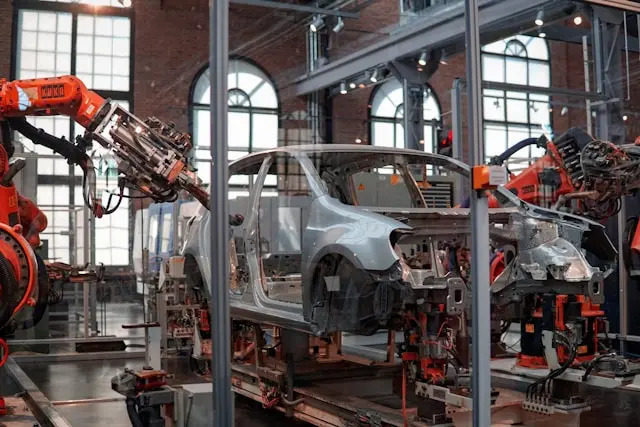
Huntsville's automotive cluster produced roughly 300,000 vehicles and 750,000 engines in 2024 across two anchor plants running at or near capacity. Capital expenditure in the metro's automotive sector reached $340 million that year, concentrated not on new facilities but on automation upgrades and supplier expansions. The cluster supports approximately 72,000 direct, indirect, and induced jobs, representing 18 per cent of the region's total workforce. By any capital investment or output metric, this is a manufacturing success story.
The problem is that the workforce required to maintain this success is not the workforce that built it. Since 2022, Mazda Toyota Manufacturing USA and Toyota Motor Manufacturing Alabama have invested over $400 million collectively in collaborative robotics and AI-driven quality systems. That investment has not reduced headcount. It has replaced one category of worker with another that the regional training system cannot produce fast enough. Automotive manufacturing vacancy rates in the Huntsville MSA sit at 8.4 per cent, double the national manufacturing average of 4.2 per cent. The roles going unfilled are not on the assembly line. They are in the maintenance bays, the robotics integration cells, and the tool rooms.
What follows is an analysis of the structural shift underway in Huntsville's automotive sector, who it is affecting, and what it means for the leaders and specialists who must keep this cluster running through 2026 and beyond. The gap between what these plants have installed and who is available to service it is the defining talent challenge in North Alabama's manufacturing economy. Understanding where that gap sits, how wide it has become, and why conventional hiring methods cannot close it is the prerequisite for any serious workforce strategy in this market.
The Automation Paradox: More Robots, Fewer Qualified Hands
The intuitive assumption about factory automation is that it reduces dependence on human labour. In Huntsville, the opposite has occurred. MTMUS and TMMAL's combined $400 million automation investment since 2022 has created acute demand for a category of technician that barely existed in the region a decade ago: the multi-craft maintenance professional who can troubleshoot a FANUC CRX collaborative robot at 6am and repair a 480-volt three-phase electrical system by noon.
The University of Alabama's Center for Business and Economic Research projects that the Huntsville automotive sector will require 2,400 net new production and technical positions by the end of 2026. Sixty per cent of those positions are concentrated in maintenance, robotics technician, and quality engineering roles. Not assembly. Not material handling. The roles that keep automated systems running.
Traditional Skills Deprecated, New Skills Not Yet Available
This is the skills chasm. Traditional mechanical maintenance expertise, the backbone of automotive manufacturing for decades, is being deprecated. The hydraulics-and-wrenches technician is giving way to the mechatronics specialist who reads PLC code and calibrates vision systems. But the regional training infrastructure has not completed the transition. Calhoun Community College's Alabama Robotics Technology Park, a $70 million state-funded facility, trains 1,200 incumbent workers annually in FANUC-certified robotics. That number sounds large until you measure it against the 2,400 net new positions needed by late 2026, sixty per cent of which require exactly this training.
The training pipeline is not broken. It is undersized. And it is producing graduates on an academic calendar while employers need them on a production calendar.
The Poaching Cycle
When supply cannot meet demand, the market redistributes existing talent rather than creating new talent. That is precisely what is happening. Tier-1 automotive suppliers in the Huntsville MSA report maintenance technician roles remaining open for an average of 58 days. The national manufacturing average is 28 days. The typical pattern involves circulation between MTMUS, TMMAL, and DENSO, with incumbent technicians receiving counter-offers averaging 15 to 20 per cent above initial offers.
This is not recruitment. It is recirculation. The total pool of qualified maintenance technicians in the metro is not growing. The same individuals are moving between employers at escalating cost, with each move raising the compensation floor for the entire market. For organisations trying to understand why executive and specialist recruiting fails in markets like this, the mechanism is instructive. The candidates exist. There are simply not enough of them, and every hire by one employer is a loss for another.
Three Roles Defining the Shortage
The scarcity is not uniform. It concentrates in three specific categories, each with distinct characteristics and distinct implications for hiring strategy.
PLC-Certified Maintenance Technicians
Approximately 75 to 80 per cent of qualified maintenance technicians in the Huntsville MSA are employed and not actively seeking new roles. Average tenure in current positions exceeds 4.2 years, indicating low voluntary mobility despite intense demand. This is a market where the hidden 80 per cent of passive talent is not a metaphor. It is a measured reality.
The qualification bar is specific. Employers require combined electrical capability (480V three-phase, PLC troubleshooting) and mechanical proficiency (hydraulics, pneumatics, precision alignment). Candidates with only one side of this skill set are plentiful. Candidates with both are scarce. The bifurcation is sharp.
Tool and Die Makers
This is the most severe shortage, and also the most structurally intractable. The average age of tool and die makers in North Alabama exceeds 54 years. The replacement rate is 0.4 new entrants per retirement. For every ten experienced tool and die makers who leave the workforce, four replacements arrive. The arithmetic is not sustainable.
A typical search for a Master Tool and Die Maker with CNC and stamping die experience fails outright in 35 per cent of cases after 90 or more days. Employers forced into this position split the role between two junior technicians or outsource to Detroit-area die shops. Neither option is cost-effective. Neither delivers the precision or institutional knowledge that a single experienced craftsman provides.
The passive candidate ratio here approaches totality. Master-level tool and die makers do not use online job boards. They rely on union networks, apprenticeship alumni associations, and direct outreach from competitors. The ratio of active to passive candidates for roles requiring ten or more years of stamping die experience is approximately one to nine. Conventional talent acquisition methods do not reach this population.
Robotics Integration Specialists
For every ten applicants for Robotics Technician roles in the Huntsville cluster, fewer than one possesses the specific FANUC or KUKA certification combined with automotive cycle-time optimisation experience required by MTMUS supplier specifications. Local staffing analytics characterise this as a 95 per cent passive market. Qualified engineers typically receive two to three unsolicited recruitment contacts monthly.
The active candidates who do appear often lack the specific certifications required, creating a bifurcated market. The top 20 per cent of talent commands premiums. Entry-level engineers face underemployment. The gap between what employers need and what the available workforce offers is not a smooth gradient. It is a cliff.
What the Compensation Data Reveals
Compensation in Huntsville's automotive manufacturing sector reflects both the scarcity and the competitive dynamics of the region. But the numbers tell a more nuanced story than simple wage inflation.
At the senior specialist and manager level, a Senior Maintenance Manager commands $95,000 to $125,000 in base salary, with total compensation reaching $140,000 including shift differentials and overtime. An Advanced Manufacturing Engineering Manager earns $110,000 to $135,000 base, with equity or performance bonuses typical at Tier-1 suppliers. These figures are competitive for the Southeast but sit below what the same roles would command in Detroit by 15 to 25 per cent.
At the executive level, the picture shifts. A Vice President of Manufacturing at plant level earns $180,000 to $250,000 base, with total compensation packages including relocation, performance bonuses, and long-term incentives reaching $320,000 to $400,000. A VP of Quality Assurance with IATF 16949 implementation experience and OEM-facing audit management capability commands a 20 to 30 per cent premium above base.
The critical insight is not the absolute numbers. It is the gap between what Huntsville pays and what competing corridors offer for the same roles. Understanding where compensation benchmarks actually sit in a market like this matters because the competition is not abstract. It is Chattanooga, Georgetown, and Detroit, and each offers something Huntsville does not.
The Three Corridors Competing for the Same Talent
Huntsville does not recruit in isolation. Every maintenance technician, manufacturing engineer, and tool and die maker it needs is simultaneously being pursued by at least three competing automotive corridors. The competitive dynamics are specific and asymmetric.
Chattanooga: The EV Experience Advantage
Volkswagen's North American operations in Chattanooga offer comparable or slightly higher base salaries, a 5 to 8 per cent premium, alongside a cost of living 12 per cent below Huntsville's. More critically, Chattanooga's established EV production lines offer something Huntsville cannot yet match: cutting-edge battery technology experience. For younger engineers building a career around electrification, Chattanooga represents a trajectory that Huntsville's hybrid-focused cluster does not yet provide.
Georgetown: The Toyota Internal Mobility Path
Toyota Motor Manufacturing Kentucky, the company's largest North American plant, pays 3 to 5 per cent salary premiums for equivalent maintenance and engineering roles. Its deeper advantage is internal mobility. Georgetown has operated since 1986, and its established institutional pathways to corporate roles in Plano, Texas give it a retention tool that Huntsville's newer facilities cannot replicate. Candidates weighing a move to Huntsville against staying in Georgetown are not just comparing paycheques. They are comparing career ceilings.
Detroit: Still the Deepest Pool
For tool and die makers and advanced manufacturing engineers, Detroit retains 15 to 25 per cent salary premiums and far deeper talent pools, though cost of living is 18 per cent higher. Detroit's advantage is narrowing as Huntsville employers offer remote-work flexibility for engineering roles and signing bonuses up to $15,000 for specialised trades. But the narrowing is slow. Detroit remains where the most experienced automotive craftsmen are, and dislodging them requires more than a salary negotiation. It requires a compelling case about quality of life, career autonomy, and long-term stability.
The competitive geography matters because it determines which hiring methods work. A job advertisement posted on a national board reaches active candidates in all four corridors. But 75 to 95 per cent of the talent Huntsville needs is passive. Reaching them requires direct identification and outreach, not broadcasting.
The Structural Risks That Make Speed Essential
The talent shortage exists within a market facing three compounding risks that make delayed hiring more dangerous than it might appear from the production numbers alone.
Trade Policy Exposure
The Huntsville cluster relies on cross-border supply chains for 30 to 40 per cent of component value. The 2025 implementation of revised USMCA automotive rules of origin and potential tariff adjustments on Mexican-assembled components create inventory risk across the supplier network. According to the Center for Automotive Research's 2024 Trade Policy Brief, a 10 per cent increase in tariff-related costs would pressure MTMUS margins considerably, given the plant's role as a high-volume, cost-competitive production facility. The leaders who will manage through this disruption, the operations VPs, supply chain directors, and compliance specialists, need to be in place before the disruption arrives, not recruited in response to it.
The Electrification Gap
TMMAL is pivoting to hybrid powertrains. Hybrid output now represents approximately 40 per cent of total engine volume, up from 25 per cent in 2022. Two to three additional Tier-1 battery component and electric drive unit suppliers are expected to locate in North Alabama by 2026 to support Toyota's broader electrification strategy. This diversification reduces pure internal combustion engine dependency but introduces competition for electromechanical engineering talent that was previously less critical in the market.
The deeper risk is strategic. North Alabama's automotive cluster lacks a dedicated battery cell gigafactory. Georgia and Tennessee both have one. If Toyota's battery electric vehicle strategy bypasses Huntsville for coastal assembly plants, the cluster faces a long-term relevance question that no amount of hybrid engine production can answer. The leaders needed to steer industrial manufacturing organisations through this kind of transition are not the same leaders who optimised the last generation of production. They are a different profile entirely.
Housing Affordability as a Labour Market Constraint
Huntsville's median home price reached $320,000 as of the third quarter of 2024, a 34 per cent increase since 2020. Automotive production wages rose 18 per cent in the same period. The gap limits the effective labour pool radius to 45 to 50 miles, compared to 70 or more miles in more affordable manufacturing regions. This is not a quality-of-life observation. It is a hard constraint on how many workers can physically reach these plants at wages the employers can afford to pay. Every senior hire considering relocation to Huntsville is making a calculation that includes this number, and for candidates weighing an offer against a counteroffer from their current employer, housing cost is an increasingly decisive variable.
Why Capital Moved Faster Than Human Capital Could Follow
This is the original analytical claim that the data points to but no single source states directly. The investment in automation across Huntsville's automotive cluster has not reduced the workforce. It has replaced one kind of worker with another that does not yet exist in sufficient numbers. Capital moved faster than human capital could follow.
MTMUS and TMMAL invested $400 million in collaborative robotics and AI-driven quality systems. UAH produces 400 engineering graduates annually. Calhoun Community College trains 1,200 incumbent workers per year. The education pipeline has remained flat or declined in critical programmes like welding and precision machining while employer demand has increased 23 per cent year over year. The "build it and they will come" workforce development model, the assumption that capital investment signals will naturally attract the training investment and population movement needed to staff new facilities, has failed to align curriculum velocity with manufacturing ramp speeds.
The plants were built on schedule. The robots were installed on schedule. The workers who can keep those robots running were not produced on schedule. And unlike a robot, a multi-craft maintenance technician with PLC programming capability and four years of automotive production experience cannot be ordered from a catalogue and delivered in twelve weeks. They must be found where they already work, approached with a proposition that justifies the disruption of moving, and guided through a process that respects the competitive dynamics of a market where every employer is pursuing the same small pool.
This is why conventional hiring fails in Huntsville's automotive sector. It is not a volume problem. It is a specificity problem. The candidates are real, identifiable, and employed. The question is whether the organisation looking for them has a method capable of reaching them before a competitor does.
What This Means for Hiring Leaders in This Market
For any organisation hiring maintenance leadership, manufacturing engineering management, or plant-level executives in North Alabama's automotive cluster, the implications are direct.
First, speed is not a luxury. It is a competitive requirement. A maintenance technician search that takes 58 days in this market is not slow by historical standards. It is slow by the standard of how quickly a competitor will reach the same candidate. A tool and die maker search that fails after 90 days is not unusual. It is typical. And typical is not acceptable when production schedules have no vacancy buffer.
Second, the candidates who matter most are the least visible. Ninety-five per cent of qualified robotics integration specialists are passive. One hundred per cent of master-level tool and die makers are passive. No job board, no careers page, no LinkedIn post reaches these individuals. They must be identified through systematic talent mapping of the competitor base and approached individually with a specific, credible proposition.
Third, compensation alone does not close the gap. The counter-offer cycle in this market runs at 15 to 20 per cent premiums. Matching or exceeding that number gets attention. But the candidates who stay, the ones who deliver the long-term retention that justifies the search investment, are the ones moved by role scope, career trajectory, and operational autonomy as much as salary.
KiTalent works with organisations hiring senior and specialist talent in the AI and advanced technology space across manufacturing, delivering interview-ready candidates within 7 to 10 days through AI-powered identification of the passive talent that conventional methods miss. In a market where 96 per cent of placed candidates remain in role after one year, and where the pay-per-interview model means organisations only invest when they meet qualified candidates, the model is built for precisely the conditions Huntsville's automotive sector now faces.
For organisations competing for maintenance leadership, robotics engineering, or plant-level executive talent in North Alabama's automotive manufacturing cluster, where the cost of a vacant role is measured in production line downtime and the candidates you need are not visible on any job board, start a conversation with our advanced manufacturing search team about how we approach this market differently.
Frequently Asked Questions
What are the hardest automotive manufacturing roles to fill in Huntsville, Alabama?
The three most acute shortages are multi-craft maintenance technicians with PLC programming capabilities, advanced manufacturing engineers with robotic integration experience, and tool and die makers with CNC precision machining skills. Maintenance technician roles remain open an average of 58 days in the Huntsville MSA, more than double the 28-day national manufacturing average. Tool and die maker searches fail outright in 35 per cent of cases after 90 days. The common factor is that qualified candidates are overwhelmingly passive, with 75 to 100 per cent not actively seeking new positions depending on the role category.
What do automotive manufacturing executives earn in Huntsville?
A Vice President of Manufacturing at plant level earns $180,000 to $250,000 in base salary, with total compensation packages reaching $320,000 to $400,000 when including relocation, performance bonuses, and long-term incentives. A VP of Quality Assurance with IATF 16949 implementation experience commands a 20 to 30 per cent premium above base. Senior Maintenance Managers earn $95,000 to $125,000 base with total compensation reaching $140,000. Advanced Manufacturing Engineering Managers earn $110,000 to $135,000 base. For current compensation benchmarking across manufacturing leadership roles, KiTalent provides real-time market data.
How does Huntsville compete with Detroit and Chattanooga for automotive talent?
Detroit retains 15 to 25 per cent salary premiums for tool and die makers and advanced manufacturing engineers, with deeper talent pools but 18 per cent higher cost of living. Chattanooga offers 5 to 8 per cent salary premiums with 12 per cent lower cost of living and EV production experience that attracts younger engineers. Huntsville counters with signing bonuses up to $15,000 for specialised trades, remote-work flexibility for engineering roles, and a growing automotive cluster anchored by $2.3 billion in primary manufacturer investment. The competition is intensifying as electrification reshapes which locations offer the most career-relevant experience.
Why do conventional recruitment methods fail for automotive manufacturing roles in Huntsville?
Conventional methods fail because the qualified talent pool is overwhelmingly passive. Seventy-five to 80 per cent of PLC-certified maintenance technicians are not actively job-seeking. Robotics integration specialists represent a 95 per cent passive market. Master-level tool and die makers do not use online job boards at all, relying on union networks and direct approaches. Direct headhunting methods that identify and engage passive candidates systematically are the only reliable approach. KiTalent's AI-powered talent mapping identifies these candidates and delivers interview-ready shortlists within 7 to 10 days.
What is the outlook for Huntsville's automotive manufacturing sector in 2026?
MTMUS is expected to maintain production of 300,000 to 330,000 units with potential for a third shift. TMMAL's $282 million expansion to add next-generation hybrid powertrain flexibility should complete in late 2026, adding approximately 350 direct positions. Two to three additional Tier-1 battery component suppliers are expected to locate in North Alabama. The sector will require 2,400 net new production and technical positions by the end of 2026, with 60 per cent concentrated in maintenance, robotics, and quality engineering roles rather than traditional assembly.
How does the electrification transition affect Huntsville's automotive talent market?
The transition introduces competition for electromechanical engineering talent that was previously less critical in the region. TMMAL's hybrid powertrain output has risen to approximately 40 per cent of total volume from 25 per cent in 2022. New battery component and electric drive unit suppliers locating in North Alabama will intensify demand for specialists in battery systems, power electronics, and electric motor manufacturing. The risk for Huntsville is that without a dedicated battery cell gigafactory, unlike Georgia or Tennessee, the cluster's long-term relevance depends on whether Toyota's broader electrification strategy continues to include North Alabama as a core production location.