Ipoh's Limestone Sector Is Tightening on Both Sides: Why the Talent Squeeze Matters More Than the Supply Squeeze
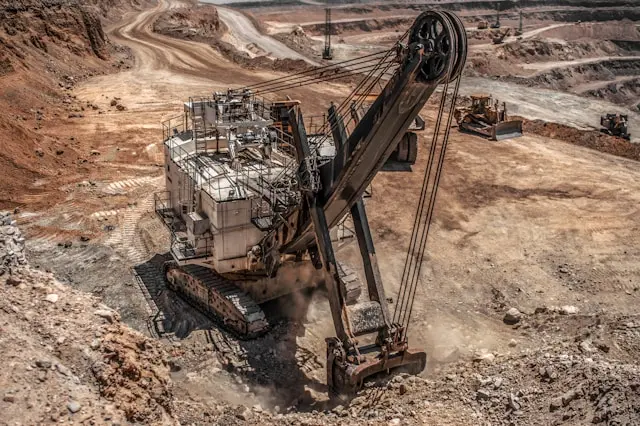
The Kinta Valley holds approximately 70% of Malaysia's high-grade limestone reserves. That geological dominance has made Ipoh the centre of gravity for the country's cement, lime, and calcium carbonate industries for decades. Seven active cement plants in Perak alone depend on this resource base, with annual limestone extraction running at roughly 28 million tonnes through 2024.
Yet the market entering 2026 is caught in a structural contradiction that few outside the sector have fully grasped. Demand is recovering. Federal infrastructure projects are pulling cement consumption upward. At the same time, the Perak State Government is tightening quarry permits, expanding environmental enforcement, and preparing the ground for carbon pricing that will fundamentally alter production economics. These supply-side constraints are well understood. What is less visible, and ultimately more consequential, is the parallel constraint on human capital. The people who run quarries, manage environmental compliance, and maintain cement plant technology are in severe shortage. The Ipoh limestone sector hiring challenge is no longer a background concern. It is now the binding constraint on whether this market can meet the demand that is arriving.
What follows is an analysis of the forces reshaping this sector in 2026, the specific talent gaps that are stalling operations, and what organisations competing for scarce quarry, environmental, and engineering leadership need to understand before their next search.
The Consolidation Illusion: Why Layoff Headlines Mask a Deepening Shortage
The most important analytical tension in Ipoh's limestone sector is the gap between perception and reality. YTL Cement's acquisition of Malayan Cement, completed with announced synergies targeting RM 150 million in cost savings, generated widespread expectations of workforce rationalisation. Investor briefings pointed to headcount reductions. Media coverage reinforced the narrative of an industry shedding jobs.
The data tells a different story entirely.
According to Malayan Cement Berhad's 2024 analyst briefing, the synergy programme targeted administrative, overlapping corporate, and general operational roles. These are the positions that consolidation always eliminates. But JobStreet Malaysia vacancy data from the same period shows a 47% increase in job postings for quarry managers and mining engineers in Perak between Q1 2023 and Q3 2024. Applications per vacancy dropped from 12:1 to 3:1 over the same window.
The consolidation created a false impression that qualified talent was available. The layoffs targeted commodity and administrative roles. The simultaneous shortage in specialised functions deepened, not because demand fell, but because the pool of licensed quarry managers, certified EIA coordinators, and vertical roller mill maintenance engineers is structurally too small to absorb even modest increases in demand.
The Licensing Bottleneck
The core of the problem is certification. A Senior Quarry Manager in Perak must hold a Class A Blasting License from the Department of Minerals and Geoscience Malaysia and OSH Competent Person (Mines) certification. These credentials take years to acquire. They cannot be fast-tracked through compensation or training investment alone. The pipeline produces a fixed number of certified professionals each year. When one retires or relocates, the replacement cycle begins from a position of deficit.
This is not a hiring problem in the conventional sense. It is a knowledge scarcity problem. You cannot recruit experience that does not yet exist in sufficient quantity. The certification infrastructure itself limits the speed at which the market can respond to rising demand, regardless of how much employers are willing to pay.
Regulatory Pressure Is Accelerating Faster Than Compliance Capacity
The Perak State Government's Mineral Development Policy 2023 introduced rehabilitation bonds ranging from RM 500,000 to RM 3 million depending on quarry face area. Twenty-three quarries in the Kinta District alone received stop-work orders between January and October 2024 for failing to meet dust suppression standards. Community opposition in the Simpang Pulai corridor successfully blocked renewal permits for three limestone quarries on blast vibration grounds.
These enforcement actions are not isolated incidents. They represent a systemic shift in how the state manages its mineral resources. The "Perak Lestari" initiative has prohibited new quarrying in 18 identified limestone hills of high biodiversity value, effectively capping future limestone supply from the Kinta Valley. Rehabilitation obligations are transitioning from financial bonds to progressive rehabilitation mandates, requiring concurrent restoration of mined-out areas. This is projected to reduce usable quarry faces by 15 to 20% in operational efficiency terms.
The Carbon Pricing Layer
Layered on top of local regulation is the impending inclusion of cement manufacturing in Malaysia's Emissions Trading Scheme (MYETS), expected by Q4 2026. Preliminary estimates suggest compliance costs of RM 15 to 25 per tonne of clinker produced. For Ipoh's integrated cement plants, this translates to 3 to 5% of EBITDA in new costs, according to the World Bank's Malaysia Carbon Pricing Readiness Report. The abatement options for process emissions from limestone calcination are limited. The chemistry of turning limestone into clinker releases CO2 as a fundamental byproduct. You cannot engineer that away with better filters.
What these converging regulatory pressures produce is a compounding demand for a single category of professional: the environmental compliance specialist who understands both the DOE's EIA framework and the emerging carbon reporting requirements. This professional needs cement or quarry sector experience. They need EIA Coordinator certification. They need familiarity with Air Pollutant Emission Inventory reporting for cement kilns. And they need to be willing to work in Ipoh.
That last requirement is where the search typically stalls.
The Ipoh Location Problem: When Geography Becomes a Competitive Disadvantage
Ipoh's talent challenge is inseparable from its geography. Kuala Lumpur, two hours south, serves as the regional headquarters for multinational cement and mining firms. It offers 25 to 35% salary premiums for equivalent roles, plus superior infrastructure and international schooling for expatriate professionals. Singapore-based mining technical roles offer three to four times the compensation of Ipoh site positions.
The competition is not limited to traditional mining markets. Penang's semiconductor sector now actively recruits cement plant maintenance engineers who hold PLC and automation skills, offering cleaner working environments and 20 to 30% salary premiums. Johor Bahru's petrochemical and data centre construction sectors are drawing EIA specialists away from Perak with more diverse project portfolios and cross-border Singapore commute options at 15 to 20% compensation premiums.
GCCP Resources illustrates the severity of this dynamic. According to the company's 2024 Annual Report, GCCP relocated its geological survey team from Ipoh to Johor Bahru, not because operations required it, but because the firm could not secure a Senior Mining Geologist with limestone deposit modelling expertise willing to base in Ipoh. The company established a satellite office in Iskandar Puteri to access talent pools from Singapore cross-border commuters. This is a structural adaptation forced entirely by talent availability, not by operational logic.
The cost of failing to secure the right executive hire is visible in decisions like this. When a firm restructures its operating geography around the location preferences of a single specialist, the problem has moved beyond recruitment into strategic constraint.
Three Roles That Define the Talent Crisis
Licensed Quarry Managers
The average time-to-fill for certified quarry manager positions in Perak reached 142 days in 2024, compared to 89 days for equivalent roles in Selangor. According to The Edge Malaysia, Malayan Cement Berhad's Simpang Pulai operations carried a Senior Quarry Manager vacancy for 11 months between March 2024 and February 2025. The position required a Class A Blasting License and OSH Competent Person (Mines) certification. Two external search cycles failed to produce qualified candidates willing to relocate to Ipoh. The role was eventually filled through internal promotion.
LinkedIn Talent Insights data for Q3 2024 indicates that 78% of "Mining Manager" profiles in Perak were not marked as open to work and showed low messaging response rates. These professionals hold average tenure of seven to ten years with single employers. They are not browsing job boards. They are not responding to InMail. The conventional tools of talent acquisition do not reach them.
Environmental Compliance Specialists
According to a report in New Straits Times Business, Hanson Malaysia recruited an Environmental Manager for its Perak quarries from competitor Lafarge Malaysia (now Malayan Cement) in July 2024, offering a reported 35% compensation premium above standard market rates. The package included housing allowance and guaranteed bonus to secure expertise in the new Environmental Quality (Industrial Effluent) Regulations 2024. The poaching incident triggered retention bonuses across competitor firms in the Kinta Valley.
The data from the Malaysian-German Chamber of Commerce confirms the pattern. Senior EIA Coordinators with cement or quarry sector experience are 90% passive candidates, according to Michael Page Malaysia's 2024 analysis of ESG talent shortages. Mid-level candidates with three to five years of experience are active seekers. The senior professionals who hold the certifications and sector knowledge that these roles require are embedded in existing organisations and show no visible signs of availability.
Cement Plant Maintenance Engineers
The specific shortage here centres on vertical roller mill technology. The Loesche and FLSmidth VRM systems installed at Ipoh's cement plants require maintenance engineers with a narrow combination of heavy industrial mechanical experience and modern automation competency. Industry consolidation has made some general maintenance engineers active candidates due to redundancy anxiety. But those with VRM-specific expertise remain passive and command retention premiums that reflect their scarcity.
Malayan Cement's "Digital Quarry" initiative at Simpang Pulai, which deploys autonomous haul trucks and drone-based surveying, is compounding this challenge. The transition to automation is not reducing the workforce. It is replacing one kind of worker with another that does not yet exist in sufficient numbers in the Ipoh labour market. The demand for AI and technology specialists extends even into heavy industry, where mechatronics technicians are now needed in quarries that five years ago ran on diesel engines and visual inspection.
Compensation Realities Across the Sector
Compensation in Ipoh's limestone sector reflects both the scarcity dynamics and the location discount that employers must overcome.
At the senior specialist and manager level, a Quarry Manager with 10 to 15 years of experience and site P&L responsibility earns RM 144,000 to RM 216,000 in base salary, with site allowances of RM 2,000 to RM 3,000 monthly and production bonuses layered on top. At the executive level, a Head of Quarrying or Operations Director overseeing three to five sites and 200-plus headcount commands RM 360,000 to RM 540,000 annually, plus long-term incentive plans and car or housing allowances typical for multinational cement groups.
Environmental and Sustainability Managers with EIA Coordinator certification earn RM 120,000 to RM 180,000, with a 20 to 25% premium for candidates carrying cement industry-specific experience. At the executive tier, a Head of Sustainability or ESG Director reaches RM 300,000 to RM 480,000, rising to RM 600,000 for candidates with regional ASEAN responsibilities.
Senior Mining Engineers sit at RM 96,000 to RM 156,000. A Chief Geologist or Technical Services Manager earns RM 240,000 to RM 360,000.
These figures require context. The compensation gap between Ipoh and Kuala Lumpur for the same roles runs 25 to 35% in KL's favour. Against Singapore, the multiple is three to four times. Even Johor Bahru and Penang offer 15 to 30% premiums depending on the function. The result is that Ipoh employers must compete not only on salary but on total proposition: career trajectory, site leadership autonomy, housing support, and the intangible value of running a major quarry or cement operation as a principal rather than a regional subordinate.
Negotiating executive compensation in this market requires an understanding of these geographic differentials. An offer benchmarked to Ipoh norms will fail to move a passive candidate who has alternative options in KL or Penang. An offer benchmarked to KL norms may succeed but will compress margins at operations already pressured by overcapacity and import competition.
The Demand Recovery That Nobody Is Staffed to Meet
Peninsular Malaysia's cement capacity utilisation stands at 62%. Vietnamese imports undercut local prices by 15 to 20%. These are the figures that dominate industry commentary. They suggest a market in surplus, one where the talent question should be secondary to the demand question.
But the 12th Malaysia Plan's infrastructure allocations tell a different story. The East Coast Rail Link Phase 2 and the Penang LRT project are projected to increase cement demand by 6 to 8% within Perak's primary supply radius through 2026. At the same time, the ban on new quarry leases in Kinta Valley white zones limits supply expansion to existing footprint extensions only. Progressive rehabilitation mandates further reduce operational quarry face availability.
The market is about to experience a demand increase that it cannot meet through productivity alone. The quarry managers who would oversee expanded extraction are in 11-month vacancy cycles. The environmental specialists who would manage compliance for increased production are being poached at 35% premiums. The maintenance engineers who would keep VRM systems running through higher utilisation rates are being recruited away by Penang's semiconductor sector.
This is the central paradox of Ipoh's limestone market in 2026. The supply constraint everyone talks about is geological and regulatory. The supply constraint that will actually determine outcomes is human.
Municipal blasting restrictions compound the problem. No-blast hours have expanded from evening-only curfews to include full weekend moratoriums, reducing quarry productivity by 15 to 20%. Operators respond by running double shifts. Double shifts require more supervisory staff, more maintenance engineers, more safety officers. The same talent pool that is already insufficient for single-shift operations must now cover extended hours across a constrained operating window.
What This Means for Organisations Hiring in This Market
The conventional approach to filling these roles is not working. The evidence is unambiguous. Two external search cycles for a single quarry manager position at Malaysia's largest cement operation produced no viable external candidate. A firm restructured its operating geography around a single geologist's location preferences. A 35% premium was required to move a single environmental compliance professional between two competing employers in the same district.
These are not signs of a temporarily tight market. They are signs of a market where the traditional search playbook, posting a role, screening applications, running interviews, fails before it begins. Seventy-eight percent of mining managers in Perak are not open to work. Senior EIA Coordinators with cement experience are 90% passive. The candidates this sector needs are invisible to every tool that relies on candidates identifying themselves.
KiTalent's approach to this market begins with talent mapping: identifying where the certified, experienced professionals actually sit, which organisations hold them, and what combination of compensation, career trajectory, and location proposition would be required to move them. In a sector where the total addressable talent pool for a given role might number in the dozens nationally, the margin for error in approach, timing, and proposition design is zero.
For organisations operating in Ipoh's limestone, quarrying, and cement sector, where licensed specialists cannot be trained on demand, where regulatory requirements are narrowing the qualified pool further every quarter, and where geographic competition from KL, Penang, and Johor is intensifying, start a conversation with our executive search team about how KiTalent's direct headhunting methodology reaches the candidates that job boards and conventional searches consistently miss. With interview-ready candidates delivered within 7 to 10 days and a 96% one-year retention rate, the approach is built for markets exactly this constrained.
Frequently Asked Questions
Why is it so difficult to hire quarry managers in Ipoh?
The difficulty stems from a licensing bottleneck. Quarry managers in Perak must hold a Class A Blasting License and OSH Competent Person (Mines) certification, credentials that take years to acquire. The pool of certified professionals is small and concentrated. LinkedIn data shows 78% of mining managers in Perak are passive candidates not open to new opportunities. Average time-to-fill for certified quarry manager roles in Perak reached 142 days in 2024. KiTalent's talent pipeline approach identifies these passive specialists through direct mapping rather than waiting for them to appear on job boards.
What are the salary benchmarks for senior roles in Ipoh's limestone and cement sector?
A Senior Quarry Manager with 10 to 15 years of experience earns RM 144,000 to RM 216,000 in base salary, plus site allowances and production bonuses. At the executive level, Operations Directors earn RM 360,000 to RM 540,000 annually. Environmental Managers with EIA Coordinator certification earn RM 120,000 to RM 180,000, with a 20 to 25% premium for cement-specific experience. Chief Geologists command RM 240,000 to RM 360,000. These figures carry a 25 to 35% discount compared to equivalent roles in Kuala Lumpur.
How is environmental regulation changing the talent requirements in Perak's quarrying sector?
The Perak State Government has intensified enforcement under the Mineral Development Policy 2023, issuing stop-work orders to 23 Kinta District quarries in 2024. Progressive rehabilitation mandates, escalating bonds, and the impending inclusion of cement manufacturing in Malaysia's Emissions Trading Scheme by Q4 2026 all increase demand for environmental compliance specialists with sector-specific EIA and carbon reporting expertise. The supply of these specialists is severely constrained, with senior EIA Coordinators in the cement sector estimated at 90% passive.
What impact does automation have on quarry and cement plant hiring in Ipoh?
Automation is replacing one category of worker with another that barely exists locally. Malayan Cement's "Digital Quarry" initiative at Simpang Pulai deploys autonomous haul trucks and drone-based surveying, reducing demand for semi-skilled operators while creating acute need for mechatronics technicians. An estimated 20 to 30% of semi-skilled operational roles may be eliminated by 2027, but the replacement roles require skills the local labour market has not yet developed.
Why do candidates choose Kuala Lumpur or Penang over Ipoh for quarrying and cement roles?
Kuala Lumpur offers 25 to 35% salary premiums for equivalent roles, superior infrastructure, and headquarters career trajectories. Penang's semiconductor sector recruits maintenance engineers with automation skills at 20 to 30% premiums in cleaner working environments. Johor Bahru attracts EIA specialists through petrochemical and data centre projects with Singapore cross-border commute options. Ipoh employers must compete on total proposition, including career ownership, site leadership autonomy, and housing support, not salary alone.
How can executive search help fill specialist roles in Ipoh's building materials sector?
In a market where the qualified talent pool for a given role may number in the low dozens nationally, conventional job advertising reaches almost none of the viable candidates. KiTalent uses AI-enhanced executive search methodology to map where certified specialists currently sit, assess their career trajectories and mobility signals, and engage them with precisely calibrated propositions. This approach delivers interview-ready candidates within 7 to 10 days, a critical advantage in a market where the average search runs nearly five months.