Jakarta's Logistics Sector Spent Billions on Automation. Now It Cannot Find the Engineers to Run It.
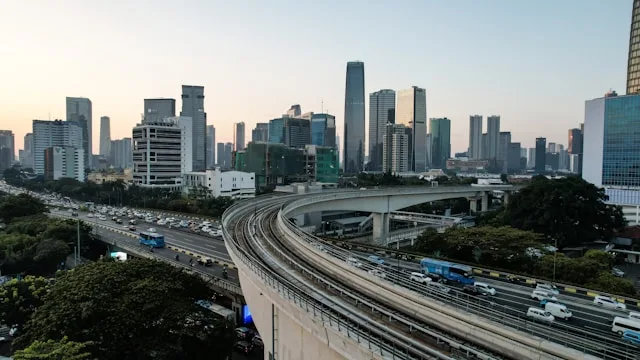
Greater Jakarta processes roughly 4.5 million parcels daily. Its port handled over 7.5 million TEUs in 2023. Its warehousing hinterland absorbed a record 450,000 square metres of new space in the first half of 2024 alone. By every physical measure, Jakarta's logistics cluster is one of the largest and most active in Southeast Asia. Yet the system's performance is increasingly constrained not by concrete, steel, or capital, but by the absence of roughly 200 professionals who know how to operate what has already been built.
That number is not a rhetorical device. The market for warehouse automation engineers, cold chain operations managers, omnichannel supply chain directors, and customs compliance specialists in Greater Jakarta now shows vacancy-to-applicant ratios of 8:1 or higher for the roles that matter most. These are not entry-level shortfalls. They are gaps at the exact seniority levels where a single unfilled position cascades into delayed facility commissioning, regulatory non-compliance, and millions of dollars in stranded capital expenditure. The firms building automated fulfilment centres in Cibitung and Bekasi are, in effect, constructing machines for which no operators yet exist in sufficient number.
What follows is an analysis of the structural forces that created this mismatch, the specific roles and compensation dynamics at the centre of the pressure, and what senior hiring leaders in Jakarta's logistics market must understand before committing to their next search. The gap between capital investment and human capital availability is the defining tension in this market. The organisations that close it will set the terms for the next decade of Indonesian e-commerce.
The Shape of Jakarta's Logistics Cluster in 2026
Jakarta's logistics system is not a single cluster. It is a spatially dispersed, functionally integrated network spanning three distinct zones. Tanjung Priok Port in North Jakarta serves as the maritime gateway, handling approximately 70% of Indonesia's international trade volume. The Cibitung, Bekasi, and Bogor corridor in West Java functions as the warehousing and fulfilment hinterland. Central and South Jakarta house the headquarters operations of courier firms, e-commerce platforms, and third-party logistics providers.
This dispersal is not accidental. It is the direct consequence of a moratorium on new industrial development within DKI Jakarta's municipal boundaries. That policy has pushed logistics firms east into West Java, where industrial land absorption reached 185 hectares in Greater Jakarta during the first half of 2024. Logistics accounted for 62% of that total. The result is a market where the physical infrastructure sits in one province and the executive talent pool lives in another, connected by some of the most congested roads in the world.
Tanjung Priok: Capacity That Arrives Late
The New Priok (Kalibaru Terminal) Phase 1A added 1.5 million TEU of annual capacity when it became operational in 2023. Phase 1B, scheduled for partial commissioning in the second quarter of 2026, will add another 3 million TEU and reduce utilisation rates to a sustainable 75 to 80%. But Phase 1B construction delays have already limited total available capacity to 9 million TEU against demand projections that reached 9.5 to 10 million TEU through 2025. Container yard utilisation ran at 85 to 90%, and vessel berthing delays of 12 to 24 hours became routine during peak seasons.
The capacity relief arriving in 2026 addresses the maritime bottleneck. It does not address what happens once a container leaves the yard. Tanjung Priok's container dwell time averaged 3.2 days for imports through 2024, more than double Singapore's 1.2 days, according to the World Bank Logistics Performance Index. The gap is not a function of crane speed or berth depth. It is a function of customs clearance coordination, truck scheduling inefficiency, and a multi-layered bureaucracy that capital expenditure alone does not resolve.
The Hinterland Boom
Greater Jakarta now hosts an estimated 2.8 million square metres of modern logistics warehouse space. E-commerce platforms accounted for 45% of new leases signed in 2024. Shopee operates 12 fulfilment centres in Greater Jakarta. Tokopedia runs 8 logistics hubs in West Java, now integrated with TikTok Shop's fulfilment requirements following the early 2024 acquisition. Lazada maintains 3 automated fulfilment centres in Cibitung and Bekasi.
Prime logistics warehouse rents in Cibitung and Bekasi reached IDR 55,000 to 82,000 per square metre per month in the third quarter of 2024. That represents 8 to 12% year-on-year growth. Vacancy rates in legacy Jakarta industrial zones like Pulogadung have dropped below 5%. The physical space is being absorbed. The question is whether the people required to run what fills that space can be found.
Where the Money Went and Where the People Did Not Follow
This is the original analytical claim at the centre of this article, and it is not stated anywhere in the market data. It must be derived from combining two trends that the industry has treated as separate.
Warehouse automation investment in Greater Jakarta was projected to increase by 25% in 2026. Automated Storage and Retrieval System penetration in Class A warehouses was expected to reach 15%, up from 8% in 2024. Simultaneously, local universities produce only 500 graduates annually in the disciplines relevant to operating these systems, a figure that has not materially changed since 2020. Capital moved faster than human capital could follow. The investment in automation has not reduced the workforce requirement. It has replaced one category of worker with another that does not yet exist in sufficient numbers.
A conventional warehouse operations manager oversees people, process, and physical flow. An automation engineer in this market must combine mechanical engineering, software programming in Python and SQL, and operational logistics knowledge. That hybrid profile is rare globally. In Jakarta, where the automation wave arrived compressed into three years rather than the decade it took in mature markets, it is acutely rare.
The result is a bifurcation visible in the passive candidate data. Traditional operations managers in non-automated warehousing are 70% active on the job market. Quality varies considerably, and turnover is high. Warehouse automation engineers and IT-logistics hybrid professionals are only 40% active. The top-tier candidates with WMS implementation experience are passive and receive three to five recruiter approaches monthly. The candidates firms actually need are not looking. The candidates who are looking often lack the skills that now matter most.
The Four Roles Jakarta Cannot Fill
The Jakarta logistics sector faces acute talent scarcity in four specific categories. Understanding why each is scarce requires understanding what changed in the market to create the demand.
Supply Chain Director, E-commerce Omnichannel
The integration of online and offline inventory systems, TikTok Shop's live commerce logistics model, and cross-border regulatory complexity have created a role that did not exist five years ago. It requires 10 or more years of experience in high-velocity B2C fulfilment, Indonesian customs expertise, and halal logistics certification. According to Michael Page Indonesia's 2024 logistics talent report, an estimated 200 to 250 qualified professionals exist against more than 400 active requirements. The arithmetic is brutal. Even if every qualified person in the market accepted a new role tomorrow, half the positions would remain empty.
Warehouse Automation Engineer
This is the role most directly created by the capital-to-talent mismatch. Deploying WMS integration, Automated Guided Vehicles, and AS/RS systems in the new Cibitung facilities requires a skill set that Indonesian universities are not yet producing at scale. The Indonesian Industrial Engineering Association reported that 500 graduates annually enter relevant disciplines. Many of those graduates are absorbed by manufacturing, not logistics. The effective supply for warehouse automation in Greater Jakarta is smaller than the headline number suggests.
Cold Chain Operations Manager
Growing vaccine distribution requirements and the premium fresh grocery e-commerce sector, led by firms like Sayurbox and Segari, have driven demand for professionals with Good Distribution Practice certification and temperature-controlled logistics expertise. Fewer than 150 certified professionals exist in Greater Jakarta, according to the Indonesian Pharmacists Association's logistics certification registry. This is a bottleneck with direct healthcare and life sciences implications, and it is one that no amount of compensation premium alone can resolve. The certification pipeline is the constraint.
Customs and Trade Compliance Manager
Ministry of Finance Regulation PMK 96/2023 and Ministry of Trade Regulation 31/2023 imposed strict limits on cross-border e-commerce imports. Maximum shipment values of USD 1,500, restricted product categories, and aggressive enforcement have made customs compliance a strategic function rather than an administrative one. The role requires a certified customs broker (PPJK) licence plus international trade law knowledge. High regulatory risk exposure limits the candidate pool further. Professionals who hold the licence and understand the regulatory framework at a strategic level are, in practical terms, among the most sought-after executives in Indonesia's logistics sector.
What These Roles Pay and Why It Matters
Compensation in Jakarta's logistics sector tells a story of rapid acceleration followed by a cooling that still leaves salaries well above historical norms. Logistics executive salaries increased 8 to 12% year-on-year in 2024, outpacing national inflation of 2.6% but moderating from the 15 to 20% increases seen in 2021 and 2022. The moderation does not mean the pressure has eased. It means the market has repriced permanently.
At the senior specialist and manager level, with 8 to 12 years of experience, total monthly cash packages in Greater Jakarta reflect the "Jakarta premium" of 20 to 30% above national provincial averages. A Supply Chain Manager earns IDR 35 to 60 million per month. A Warehouse Operations Manager earns IDR 28 to 48 million. A Customs and Trade Compliance Manager earns IDR 32 to 55 million. These figures, drawn from Robert Walters, Hays, and Michael Page salary guides for 2024, establish the baseline.
The executive tier is where the divergence becomes pronounced. A Head of Supply Chain or VP Supply Chain earns IDR 80 to 150 million per month, with e-commerce pure-play platforms such as Shopee and TikTok Shop paying premiums at the upper bound. A Director of Fulfilment Operations commands IDR 100 to 180 million per month, plus equity participation in tech-enabled logistics startups. A Country Logistics Director at a multinational 3PL earns IDR 120 to 200 million per month, with housing and international school allowances for expatriate or repatriate talent.
The compensation gap between Jakarta and its regional competitors adds a layer of complexity. Singapore offers 2.5 to 3.5 times the salary multiple for regional supply chain director roles, with superior infrastructure and lower personal tax rates. Kuala Lumpur offers 20 to 30% premiums over Jakarta for regional logistics coordinator roles, with better quality of life indicators. These differentials draw Indonesian talent with international education backgrounds out of the domestic market, compounding the local shortage. For hiring leaders, this means that negotiating an offer in this market requires not just matching local competitors but addressing the gravitational pull of Singapore and KL.
Industry sources confirm a pattern of e-commerce fulfilment operators systematically recruiting senior last-mile operations managers from incumbent courier firms with packages 35 to 45% above market median, including relocation allowances from Surabaya and Bandung to Jakarta. When the premium required to move a candidate exceeds a third of their current package, the search is no longer a recruitment exercise. It is a compensation strategy exercise.
The Congestion Tax on Talent
Jakarta ranked third globally in the TomTom Traffic Index for 2024, with average congestion levels of 43%. This is not just an infrastructure statistic. It is a talent market constraint.
The congestion adds an estimated IDR 65 trillion, approximately USD 4.1 billion, annually to logistics costs through fuel waste and time delays. For individual professionals, it translates into commutes of two to three hours each way between central Jakarta residences and Cibitung or Bekasi fulfilment centres. This commute shapes every hiring decision at the mid-to-senior level.
The Jakarta-Cikampek II elevated toll road expansion will not reach Cibitung logistics zones until late 2026. Until then, the geographic separation between where logistics executives live and where logistics operations run continues to shrink the effective candidate pool. A senior professional in South Jakarta is not automatically available to a fulfilment centre in Cibitung, even if their skills match perfectly. The commute is a deal-breaker for candidates who have alternatives.
This dynamic also explains why Surabaya, Indonesia's second-largest port city, has emerged as a domestic competitor for logistics talent. It offers 15 to 20% lower cost of living and growing logistics automation around the Tanjung Perak Port expansion. Salaries are 20 to 25% lower than Jakarta equivalents, creating a trade-off calculation for senior managers. Those who value quality of life over maximum compensation increasingly choose Surabaya. Those who stay in Jakarta expect to be compensated for the friction.
Ho Chi Minh City adds another dimension. As manufacturing relocates from China, Vietnam is competing for supply chain talent with USD-denominated contracts and expatriate packages that exceed Jakarta-based regional roles. This competition particularly affects professionals with Mandarin language skills, a niche but critical segment of the logistics talent pool.
The Regulatory Squeeze No One Planned For
Two regulatory forces are compressing margins and talent simultaneously. Neither was fully anticipated by the logistics operators now facing their consequences.
The EV Fleet Mandate
The Indonesian government's mandatory electric vehicle adoption roadmap requires 30% of logistics fleets in urban areas to be electric by 2026. For courier firms already facing margin compression from fuel subsidy rationalisation, which increased logistics operating costs by 12 to 15% year-on-year, this mandate imposes capital expenditure at the worst possible moment. JNE, with its workforce exceeding 60,000 nationally, and J&T Express, with over 50,000 employees and 6,000 drop points in the metropolitan area, must simultaneously electrify fleets and find the technicians to maintain them.
The EV mandate creates demand for a new category of logistics professional: fleet electrification managers who understand both vehicle technology and urban logistics operations. This role barely existed in Jakarta two years ago. It now competes for the same engineering graduates that warehouse automation demands.
The Halal Logistics Requirement
Mandatory halal certification for logistics services handling food, beverages, and cosmetics is transitioning into full enforcement through 2026. This requires both infrastructure investment and certified personnel. The Indonesian Ulema Council's halal logistics standards create a compliance layer that sits on top of existing Good Distribution Practice requirements, meaning firms need professionals who hold dual certifications. The pipeline for these professionals is constrained by the certification process itself.
For senior leaders managing regulatory complexity across Indonesian logistics operations, the convergence of EV mandates, halal certification, and tightened e-commerce import restrictions represents a compliance burden that requires dedicated executive attention. The firms that treated compliance as a part-time responsibility of their operations team are discovering that this market now demands full-time, senior compliance leadership.
What This Market Demands From a Search Strategy
The passive candidate dynamics in Jakarta's logistics sector make conventional hiring methods structurally inadequate for the roles that matter most.
At the VP and Director level for supply chain roles, 85 to 90% of candidates are passive. Average tenure in current roles is 3.5 to 4 years. These professionals do not apply to job boards. They are recruited through retained executive search or direct headhunting, or they are not recruited at all. Industry data confirms that multinational 3PLs including DHL Supply Chain Indonesia and DB Schenker Indonesia have, according to executive search consultants and Hays Indonesia's logistics practice, maintained open requisitions for Senior Operations Manager roles in the e-commerce vertical for 180 to 240 days throughout 2024. Search firms report that fewer than five qualified candidates exist per assignment in the Jakarta market.
A 180-day vacancy for a senior operations manager in a fulfilment centre that processes thousands of parcels daily is not merely an HR metric. It is a direct hit to throughput, customer satisfaction, and the return on the capital that built the facility. The cost of a prolonged executive vacancy in this market is measured in stranded infrastructure, not just lost productivity.
The challenge is compounded by what might be called the certification bottleneck. For cold chain operations managers, the constraint is not willingness to move but the number of GDP-certified professionals in the market. For customs compliance managers, the constraint is the PPJK licence. For warehouse automation engineers, it is the hybrid skill set that neither pure engineering programmes nor pure logistics programmes produce. In each case, the traditional search playbook of posting a role, collecting applications, and shortlisting fails before it begins because the candidates who meet the requirements are not in the places where that playbook looks.
Reaching these candidates requires systematic talent mapping across Jakarta, Surabaya, Bandung, and the regional competitor markets of Singapore and Kuala Lumpur. It requires understanding which professionals hold the specific certifications, which are approaching the end of their typical tenure cycle, and which might be persuaded by a proposition that addresses not just compensation but commute, career trajectory, and the EV or automation mandate their current employer may not be equipped to meet.
KiTalent's approach to executive search in logistics and industrial sectors is designed for precisely this kind of market: one where the candidate pool is small, highly passive, and dispersed across multiple geographies. With interview-ready candidates delivered within 7 to 10 days and a pay-per-interview model that eliminates upfront retainer risk, the method is calibrated for searches where speed and precision both matter. The firm's 96% one-year retention rate reflects the depth of candidate assessment that a market this specialised demands.
For organisations competing for supply chain directors, automation engineers, cold chain managers, or customs compliance leaders in Jakarta's logistics market, where fewer than five qualified candidates may exist for any given search and the best of those five is not looking, speak with our executive search team about how we identify and engage the passive talent that conventional methods cannot reach.
Frequently Asked Questions
What is the average salary for a logistics director in Jakarta in 2026?
A Head of Supply Chain or VP Supply Chain in Greater Jakarta earns IDR 80 to 150 million per month in total cash compensation. A Director of Fulfilment Operations earns IDR 100 to 180 million, with equity participation common at tech-enabled logistics firms. Country Logistics Directors at multinational 3PLs earn IDR 120 to 200 million, often supplemented with housing and international school allowances. E-commerce pure-play platforms like Shopee and TikTok Shop consistently pay at or above the upper bound. These figures reflect the Jakarta premium of 20 to 30% above national provincial averages.
Why is it so hard to hire warehouse automation engineers in Jakarta?
Indonesian universities produce approximately 500 graduates annually in disciplines relevant to warehouse automation. The role requires a hybrid of mechanical engineering, software programming in Python and SQL, and logistics operations knowledge. This combination is rare globally and acutely scarce in Jakarta, where the automation investment cycle compressed into three years. Most qualified candidates are passive and receive multiple recruiter approaches monthly. Reaching them requires direct headhunting methodology rather than job advertising.
How does Jakarta's logistics talent market compare to Singapore?
Singapore offers 2.5 to 3.5 times the salary multiple for regional supply chain director roles, with superior infrastructure, lower personal tax rates, and shorter commutes. This differential draws Indonesian professionals with international education backgrounds out of the Jakarta market. Kuala Lumpur offers a 20 to 30% premium with better quality of life indicators. Ho Chi Minh City competes for professionals with Mandarin language skills through USD-denominated expatriate packages. These regional pulls compound Jakarta's domestic shortage.
What certifications are required for cold chain logistics roles in Jakarta?
Cold chain operations managers in Jakarta require Good Distribution Practice certification, mandated by Indonesia's FDA equivalent (BPOM). Fewer than 150 GDP-certified logistics professionals exist in Greater Jakarta. Roles handling food, beverages, or cosmetics increasingly also require halal supply chain certification from LPPOM MUI. The dual certification requirement further narrows the candidate pool and extends search timelines for healthcare and pharmaceutical logistics positions.
How long do senior logistics searches take in Jakarta?
Industry data from 2024 shows that multinational 3PLs maintained open Senior Operations Manager requisitions for 180 to 240 days, with search firms reporting fewer than five qualified candidates per assignment. For executive-level roles with passive candidate ratios of 85 to 90%, the timeline depends entirely on the search methodology used. Firms using KiTalent's AI-powered talent mapping approach receive interview-ready candidates within 7 to 10 days, compressing what typically becomes a six-month process.
What is driving warehouse rent increases in Greater Jakarta?
Prime logistics warehouse rents in Cibitung and Bekasi grew 8 to 12% year-on-year through 2024, reaching IDR 55,000 to 82,000 per square metre per month. The primary drivers are e-commerce platform expansion, with platforms occupying 45% of new leases, and a moratorium on new industrial development within DKI Jakarta's municipal boundaries. Legacy industrial zones like Pulogadung have vacancy rates below 5%. Land scarcity is accelerating the shift toward vertical development and multi-story warehouses, which in turn increases demand for automation-capable operational leadership.