Jubail's $5.6 Billion Port Expansion Is Outpacing the Workforce Needed to Run It
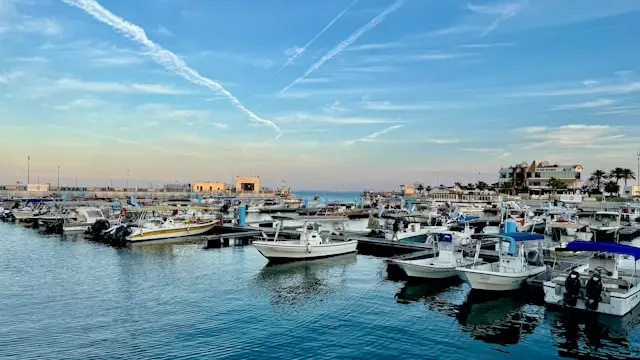
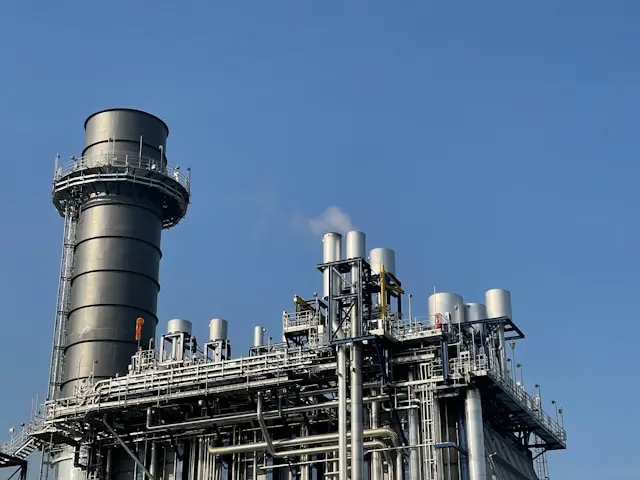
King Fahd Industrial Port processed over 70 million metric tons of cargo in 2023, making it the world's largest industrial port by volume. Petrochemical exports accounted for roughly 78% of that throughput. Three new berths are now commissioning. PlasChem Park has drawn $1.25 billion in committed investment. International Maritime Industries is scaling toward 4,000 direct hires. By every capital measure, Jubail's industrial port complex is entering the most expansive phase in its history.
The workforce required to operate this expansion is not keeping pace. The National Industrial Development Center projected a deficit of 8,000 qualified supply chain professionals across Saudi Arabia's industrial cities by the end of 2025, with 60% of that gap concentrated in Jubail and Yanbu. Chemical engineering graduates entering the logistics and operations sector declined 15% between 2020 and 2024. Marine pilot vacancies run 8 to 11 months unfilled. Process safety engineers with a decade of LNG or aromatics handling experience are being moved between employers at 35 to 45% salary premiums. The capital is arriving. The people to deploy it are not.
What follows is an analysis of the forces pulling Jubail's talent market apart: the infrastructure investment that is accelerating demand, the structural constraints that are limiting supply, and the specific implications for organisations trying to hire and retain the operational leaders on whom this entire expansion depends.
The Industrial Cluster That Created a Singular Talent Market
Jubail Industrial City hosts over 120 operational plants with combined capital investment exceeding $80 billion, according to the Royal Commission for Jubail and Yanbu's Q4 2023 industrial statistics. This concentration is not incidental. It is the result of five decades of deliberate policy that co-located petrochemical production, refining, phosphate processing, and maritime export infrastructure within a single managed zone. The result is a talent market unlike any other in the Gulf region: hyper-specialised, geographically confined, and dominated by a small number of anchor employers whose hiring decisions ripple across the entire ecosystem.
SABIC operates 17 manufacturing affiliates in Jubail, employing over 12,000 people directly. SATORP, the Saudi Aramco and TotalEnergies refining joint venture, maintains 1,800 permanent staff alongside more than 3,000 contractor logistics personnel. Ma'aden's phosphate companies employ over 4,500 in logistics and bulk handling roles. Bahri, the national shipping company, runs its chemical carriers fleet and vessel agency operations from a Jubail hub with significant headcount drawn from its 3,400 Saudi workforce.
These are not employers competing in a broad labour pool. They are competing for the same narrow categories of specialist within a 30-kilometre radius. When SABIC offers a retention premium to a process safety engineer, Aramco affiliates and international EPC contractors such as Bechtel and Fluor feel the impact within weeks. When IMI ramps hiring for marine engineering and heavy fabrication logistics, the candidate pool it draws from overlaps almost entirely with the pool already serving KFIP terminal operations. For organisations assessing leadership hiring in industrial and manufacturing markets, Jubail presents a market where every hire is, in effect, a competitive extraction from a neighbouring employer.
The competitive dynamic is intensifying rather than easing. PlasChem Park, a 12-square-kilometre specialised chemicals zone, has committed $1.25 billion in investment as of early 2025. It requires specialised chemical logistics capability, hazardous materials handling infrastructure, and the people trained to operate both. These people do not exist in surplus anywhere in the Gulf.
Where the Expansion Is Happening and What It Demands
Three New Berths and the VLGC Challenge
Mawani's infrastructure roadmap includes the commissioning of Berths 117 to 119 at King Fahd Industrial Port, adding 12 million tons of annual capacity designed specifically for Very Large Gas Carriers and chemical tankers. This is not a marginal addition. It represents a roughly 17% increase in dedicated petrochemical throughput capacity at a port already operating at the edge of its skilled operator base.
Licensed marine pilots capable of handling VLGCs and chemical tankers in the restricted waters of Jubail's port complex represent one of the tightest labour markets in global maritime operations. The unemployment rate for this category across the GCC sits below 2%. Average tenure runs nine years. The ratio of passive to active candidates is approximately 8:1, according to Maritime Strategies International's 2024 labour market analysis. Employers report average vacancy durations of 8 to 11 months for Harbour Master positions requiring dual certification under IMO STCW standards and Saudi Maritime Authority licensing. Retention rates fall below 75% annually, with Dubai Maritime City and Qatar's Ras Laffan Port consistently drawing talent away.
The new berths will require additional licensed pilots, terminal supervisors, and liquid cargo surveyors before they can operate at design capacity. The market that must supply them is already short.
IMI and PlasChem Park: Parallel Demand Shocks
International Maritime Industries, the $5 billion maritime yard joint venture between Aramco, Bahri, Hyundai, and Lamprell, targets 4,000 direct hires by the end of 2026. The Jubail Commercial Port expansion includes a new roll-on/roll-off terminal to support IMI, projected to generate 80,000 tons of additional heavy-lift cargo annually by mid-2026. This creates demand for heavy fabrication logistics specialists, project cargo coordinators, and marine superintendents.
PlasChem Park creates a parallel demand shock. Its tenants need IMDG Code-certified chemical handlers, ISO tank container operations managers, and HSE leaders with specific knowledge of RCJY environmental compliance frameworks. These are not roles that can be filled from a generic logistics talent pool. They require years of hazmat-specific experience in an industrial port environment.
The combined effect is a market where three separate expansion programmes are drawing from a single talent pool simultaneously. The analytical claim that emerges from this convergence is not simply that demand exceeds supply. It is more specific than that: Jubail's capital investment has created a workforce requirement that the GCC's training pipeline was never designed to produce at this speed, and the resulting gap cannot be closed by compensation alone because the professionals who possess these certifications and experience profiles are already employed, already retained, and already being courted by competing facilities across the Gulf.
The Infrastructure Bottleneck That Compounds the Talent Problem
Hinterland connectivity is the constraint most likely to determine whether Jubail's expansion timeline holds or slips. The Saudi Railway Company freight line connecting Jubail to Riyadh and the Dammam dry port operates at 85% capacity utilisation. Petrochemical producers report 48 to 72-hour delays in railcar availability during peak export periods, according to the Gulf Petrochemicals and Chemicals Association's 2024 logistics report.
Road transport via Highway 613 compounds the problem. Average truck processing times at the Jubail Industrial City entry gates reach 3.5 hours during peak shifts. The Jubail-SPARK Expressway, intended to connect King Salman Energy Park to the port complex, is running 18 months behind schedule.
The National Transport and Logistics Strategy mandates that 35% of petrochemical exports shift to rail by 2030. Meeting this target requires $400 million in private sector investment in tank container fleets and intermodal terminals by 2026. This transition will structurally favour logistics operators with rail asset capabilities over traditional road-centric stevedores. It also creates immediate demand for a role category that barely exists in Saudi Arabia's current workforce: rail intermodal operations specialists with hazmat certification under Saudi Railway Regulatory Commission standards.
Despite $2.1 billion allocated to the Jubail-Dammam rail expansion under the NTLS, completion dates have slipped to 2028. The practical consequence for hiring leaders is that logistics operations will remain road-dependent for longer than strategy documents suggest. Organisations need people who can optimise an imperfect system now, not people trained for the system that will exist in four years. This distinction shapes every search brief for senior logistics roles in the region and explains why experienced supply chain leaders command sustained premiums in this market.
Compensation: The Gap Between Headline Benchmarks and What It Actually Costs
General Saudi logistics salary surveys indicate 3 to 4% year-over-year compensation growth, moderating from the peaks of 2022 and consistent with broader GCC economic normalisation. A hiring leader relying on these headline figures to budget a Jubail search would be materially under-prepared.
The aggregate data obscures a bifurcation. For mid-level logistics coordinators and warehouse supervisors, compensation growth has indeed moderated. Active candidate ratios for these roles sit at roughly 3:1. The market functions.
For the specialisms that determine whether a petrochemical terminal operates safely and at capacity, the picture is entirely different. Process safety engineers with 10 or more years of LNG or aromatics handling experience command 35 to 45% salary premiums when moving between employers, according to the 2024 Hays Salary Guide for Saudi Arabia and reporting in MEED. Compensation inflation for marine pilots and cryogenic logistics engineers runs at 12 to 18% annualised. Signing bonuses have proliferated.
What Executives Earn in Jubail
At the senior specialist and manager level, base salaries range from SAR 25,000 to 35,000 per month. Total compensation, including housing allowances at 25% of base, transportation at 10%, and annual bonuses of one to two months, ranges from SAR 420,000 to 600,000 annually, or roughly $112,000 to $160,000.
At VP and director level, base salaries range from SAR 55,000 to 85,000 monthly. Total packages reach SAR 1.1 million to 1.8 million annually, or $293,000 to $480,000, inclusive of performance bonuses and, for Tadawul-listed entities such as SABIC and Ma'aden, equity participation. Executives with bilingual Arabic-English capabilities and 15 or more years of GCC petrochemical logistics experience command 20 to 25% premiums above these bands, according to Korn Ferry's 2024 Middle East executive compensation review and Mercer's Saudi Arabia total remuneration survey.
The tension here is the most analytically important finding in Jubail's current talent data. HR functions benchmarking against aggregate logistics compensation surveys are systematically underestimating the cost of the roles that matter most. This leads to search briefs that are priced for a market that does not exist, offer letters that arrive below the threshold required to move a passive candidate, and prolonged vacancies in roles where every month of delay carries operational and safety consequences.
The Competitive Geography Pulling Jubail's Talent Away
Jubail does not lose talent to a single competitor. It loses talent in three directions simultaneously, each targeting a different segment of the workforce.
Dubai competes most aggressively for maritime operations talent. Harbour masters, marine superintendents, and senior logistics executives are the primary targets. Base salaries in Dubai run 10 to 15% lower than Jubail equivalents. But the calculation for a candidate is not limited to base pay. Dubai offers zero income tax compared with Saudi expatriate fees, superior international schooling, and more flexible visa and residency structures. DP World and Gulftainer regularly approach Jubail-based marine talent with relocation packages covering school fees and housing.
Riyadh competes for strategy and procurement leadership. The corporate headquarters of SABIC, Ma'aden, and Bahri are in the capital, creating a gravitational pull for supply chain directors and senior procurement roles. Riyadh offers 15 to 20% higher executive packages and a lifestyle proposition that Jubail's industrial camp environment cannot match. The Vision 2030 headquarters relocation mandate has accelerated this dynamic, drawing mid-career professionals aged 35 to 45 toward corporate functions and away from operational sites.
Qatar competes for the most technically specialised roles. QatarEnergy's expansion in LNG and blue ammonia exports creates direct competition for petrochemical marine pilots, cryogenic logistics experts, and process safety engineers. Tax-free salaries and housing subsidies in Qatar typically exceed Saudi packages by 18 to 22% for equivalent technical positions, according to the Energy Intelligence Global Compensation Survey.
The combined effect is that Jubail's talent pool is under extraction pressure from multiple directions at every seniority level. A VP of Logistics is pulled toward Riyadh. A Harbour Master is pulled toward Dubai. A process safety engineer is pulled toward Ras Laffan. This is not a single competitive threat that can be countered with a single retention strategy. It requires differentiated responses calibrated to the specific competitor and role category, which in turn requires market intelligence that most Jubail-based employers do not systematically collect.
Saudization and the Regulatory Constraint That Shapes Every Search
The Nitaqat programme mandates 25% Saudization for logistics companies and 19% for industrial operations. Technical roles tell a different story: crane operators, hazmat-certified warehouse supervisors, and marine terminal specialists show Saudi national participation rates of only 12 to 15%. The Ministry of Human Resources and Social Development has indicated sector-specific targets may rise to 30% by 2026.
This creates a structural tension for every employer in Jubail's port ecosystem. The roles that are hardest to fill are the same roles where the Saudization gap is widest. Employers face a dual constraint: they cannot find enough qualified candidates at any nationality, and they face regulatory penalties if the candidates they do find are disproportionately expatriate.
The practical consequence is that employers must run parallel talent strategies. One strategy targets experienced expatriate specialists who can be deployed immediately to maintain operational continuity. The other develops Saudi nationals through structured programmes that take three to five years to produce a fully certified professional. Neither strategy alone is sufficient. Both require proactive talent pipeline development rather than reactive search when a vacancy appears.
Meanwhile, RCJY enforces strict environmental compliance standards aligned with World Bank Group IFC benchmarks. The mandated phase-out of pre-2015 truck engines by 2026 requires an estimated SAR 800 million in capital expenditure across Jubail logistics providers. This regulatory burden falls disproportionately on smaller operators, consolidating the market toward larger, better-capitalised firms. HSE managers who understand both RCJY permitting processes and the intersection of environmental regulation with logistics operations become even scarcer, and even more valuable, as compliance complexity increases. These are professionals who rarely appear on any job board because their institutional knowledge makes them effectively irreplaceable within their current organisations.
What This Means for Organisations Hiring in Jubail
The market conditions described in this analysis converge on a single operational reality: conventional hiring methods do not work for the roles that matter most in Jubail's industrial port ecosystem. Job postings reach, at best, the 20% of candidates who are actively looking. In marine pilotage, that active fraction is closer to 11%. In process safety engineering, 85% of placements occur through direct headhunting rather than job board applications, according to Hays' 2024 Oil and Gas Global Workforce Report.
The organisations that fill these roles successfully share three characteristics. They begin searches before vacancies formally open, using talent mapping to identify candidates by name before a resignation forces urgency. They benchmark compensation against the actual market for the specific specialism rather than against aggregate logistics salary surveys. And they engage candidates through confidential, direct approaches that acknowledge the candidate's current value rather than asking them to apply through a portal.
The cost of getting this wrong is not abstract. Global petrochemical oversupply has already compressed margins for Jubail producers. According to S&P Global Commodity Insights, capital expenditure freezes hit three major petrochemical complexes in Q4 2024, directly affecting logistics contract volumes. Strait of Hormuz proximity adds geopolitical risk: insurance premiums for vessels calling Jubail rose 12% during Q1 2024 regional tensions. In a market where margins are tightening and risk is rising, the operational leaders who keep terminals safe and efficient are not a discretionary cost. They are the difference between a facility that runs and one that does not.
For organisations competing for petrochemical logistics leadership, marine operations talent, and process safety expertise across the Eastern Province, where the strongest candidates are already employed and already being courted by competitors in Dubai, Doha, and Riyadh, speak with our executive search team about how KiTalent approaches this market. KiTalent delivers interview-ready executive candidates within 7 to 10 days through AI-enhanced direct headhunting that reaches the passive specialists no job board can access, with a 96% one-year retention rate across 1,450 completed executive placements.
Frequently Asked Questions
What are the hardest roles to fill in Jubail's industrial port sector?
Licensed marine pilots qualified for VLGCs and chemical tankers in restricted waters, process safety engineers with 10 or more years of LNG or aromatics handling experience, and terminal operations directors with RCJY relationship capital and institutional compliance knowledge. These roles show vacancy durations of 8 to 11 months, passive-to-active candidate ratios as high as 8:1, and retention rates below 75% annually. Mid-level logistics coordinators are considerably easier to source, with active candidate ratios around 3:1, but the roles that determine operational safety and throughput reliability remain acutely scarce.
What do senior logistics executives earn in Jubail?
At VP and director level, total compensation packages range from SAR 1.1 million to SAR 1.8 million annually, equivalent to $293,000 to $480,000, inclusive of base salary, housing and transportation allowances, performance bonuses, and equity participation for Tadawul-listed employers. Executives with bilingual Arabic-English capabilities and 15 or more years of GCC petrochemical logistics experience command 20 to 25% premiums above standard bands. Process safety engineers and marine pilots at specialist level see 12 to 18% annualised compensation inflation in the current market.
How does Saudization affect hiring in Jubail's port and logistics sector?
The Nitaqat programme mandates 25% Saudi national participation for logistics firms, with possible increases to 30% by 2026. However, technical roles such as crane operators and hazmat-certified supervisors show Saudi participation rates of only 12 to 15%. Employers must run parallel strategies: sourcing experienced expatriate specialists for immediate operational needs while developing Saudi nationals through multi-year certification programmes. Non-compliance risks include operational licence restrictions and penalties that can materially disrupt business continuity.
Why do conventional recruitment methods fail for Jubail port roles?
The most critical roles in Jubail's industrial port ecosystem are filled by professionals who are already employed, highly retained, and not visible on job boards. In process safety engineering, 85% of placements occur through direct headhunting approaches rather than job board applications. Marine pilot unemployment in the GCC sits below 2%. Posting a vacancy and waiting for applications reaches, at best, 11 to 20% of the viable candidate pool. Filling these roles requires proactive identification, confidential direct approach, and market-calibrated compensation intelligence.
What infrastructure developments are driving talent demand in Jubail through 2026?
Three concurrent programmes are creating simultaneous demand: commissioning of Berths 117 to 119 at KFIP, adding 12 million tons of annual petrochemical throughput capacity; the ramp-up of International Maritime Industries toward 4,000 direct hires by end-2026; and PlasChem Park's $1.25 billion in committed chemical industry investments requiring specialised hazmat logistics capability. The convergence means these programmes compete for the same narrow categories of specialist at the same time.
Which cities compete with Jubail for industrial port talent?
Dubai targets maritime operations talent with lifestyle advantages and flexible residency despite lower base salaries. Riyadh draws supply chain strategy and procurement leaders with 15 to 20% higher executive packages and corporate headquarters proximity. Qatar's Ras Laffan competes for petrochemical marine pilots and cryogenic logistics specialists with tax-free packages 18 to 22% above Saudi equivalents. KiTalent's international executive search capability maps candidates across all competing GCC markets, identifying professionals whose circumstances and motivations align with a Jubail opportunity.