Jubail's Petrochemical Workforce Hit 68% Saudisation. The Roles That Keep Plants Running Are Still Empty.
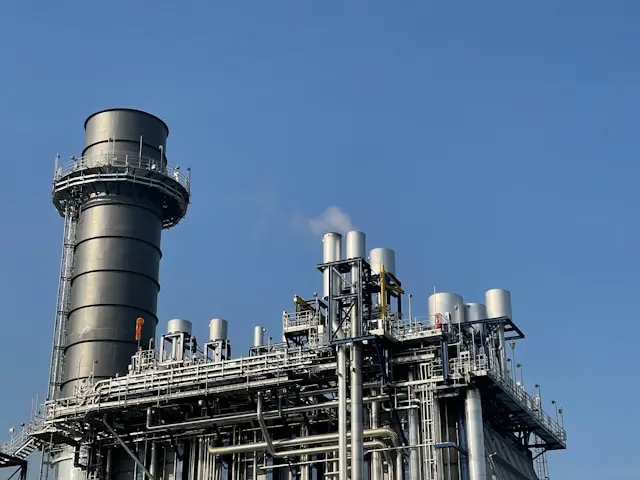
Jubail Industrial City produces 7% of the world's ethylene and 12% of its methanol exports. It is the largest single-site petrochemical complex on earth. By almost every aggregate workforce metric, Jubail's localisation programme is working: 68% of technical roles are now filled by Saudi nationals, closing on the 75% target the Ministry of Human Resources set for end-2025. Headlines celebrate progress. Investor presentations cite the numbers.
Those numbers conceal a fracture. Beneath the aggregate, for roles requiring more than a decade of chemical engineering experience, Saudisation drops to 22%. The vacancy rate for engineering positions across the Jubail cluster reached 14.3% in the final quarter of 2024, nearly double the 8.1% rate in the broader Saudi industrial sector. A senior process engineer search in Jubail now averages 112 days to fill. Two years earlier, the same search took 78 days. The positions that have become hardest to staff are not peripheral. They are process safety managers, commissioning leads, and digital operations directors: the roles responsible for keeping multi-billion-dollar plants running safely.
What follows is an analysis of how this seniority gap formed, why the forces widening it are accelerating into 2026, and what organisations operating in this market must understand before they attempt their next critical hire.
The Seniority Gap: Jubail's Real Workforce Problem
The phrase "talent shortage" does not capture what is happening in Jubail's industrial cluster. A shortage implies an absence of people. Jubail has no shortage of people. Roughly 2,800 Saudi chemical engineering graduates enter the job market each year, and 95% of them are actively seeking roles inside Jubail's facilities. The supply of entry-level talent is, by any measure, abundant.
The problem is upstream. Only 35% of those graduates meet the baseline English proficiency and technical standards that SABIC affiliates require for hiring. The SABIC Technical Academy produces approximately 400 qualified technicians annually through its immersive two-year programme. These are meaningful numbers, but they feed the bottom of the workforce pyramid. The critical constraint sits at the top.
For roles requiring 15 or more years of continuous process experience, there is no domestic supply at scale. The first generation of Saudi petrochemical engineers trained in the 1990s and early 2000s is mid-career, not senior. The professionals who carry deep operational knowledge of olefins crackers, aromatic distillation, and loss prevention systems are overwhelmingly expatriate. And they are leaving.
This is the original analytical claim this article advances, and it is not stated anywhere in the aggregate data: Jubail's Saudisation programme has succeeded at the level where success was always going to be easiest, and it has deepened the dependency at the level where dependency is most dangerous. The localisation metrics create a false confidence that the workforce transition is on track. It is on track for volume. It is moving in reverse for the operational expertise that prevents catastrophic failure during the most complex phase of a plant's lifecycle: commissioning and startup.
The Amiral mega-project, currently in advanced construction, is about to test this gap at scale.
The Amiral Test: 800 Direct Roles Into a Market That Cannot Fill Existing Ones
The $11 billion Aramco-TotalEnergies Amiral joint venture in Jubail 2 reached mechanical completion targets in late 2025. Its 1.65 million tonnes per year of ethylene and derivative capacity will begin phased commissioning in the first half of 2026, with polyethylene and butadiene units expected to start production by mid-year. According to the Royal Commission for Jubail and Yanbu, the complex will generate approximately 800 direct jobs and 2,500 indirect positions.
These numbers enter a market where the existing vacancy rate for engineers already sits at 14.3%.
The Commissioning Talent Crunch
The Amiral project has already revealed how thin the senior talent pool is. According to reporting by Energy Intelligence, the joint venture restructured its 2025 commissioning team in late 2024. The original plan called for a centralised, Jubail-based commissioning unit. That plan failed. The project could not secure enough local Saudi or expatriate talent willing to relocate to Jubail for the commissioning phase.
The solution was a fly-in-fly-out arrangement from Dubai and Paris for 12 senior commissioning engineers. The annual cost: SAR 18 million in additional travel budgets. The arrangement secured the LNG commissioning expertise the project needed, but it is a structural concession. It signals that for the most specialised roles, Jubail is competing not just on compensation but on geography. And geography is a fight Jubail is currently losing.
Why Relocation Resistance Compounds the Problem
Jubail sits 90 minutes from Dammam by road. Its entertainment and international schooling infrastructure lags Abu Dhabi, Dubai, and Riyadh. According to ECA International's Location Ratings Report, employers in Jubail typically pay an 8 to 12% "geographic discount" in the form of hardship allowances to retain talent who would otherwise choose a more connected city. For Western expatriates, tax-free status and housing allowances partially offset the isolation. For the growing pool of senior Asian engineers from India, South Korea, and Malaysia, Jubail offers a 10 to 15% compensation premium over Singapore. But Singapore has international schools that Jubail does not.
The implication for any organisation running a senior executive search in this market is direct: the candidate pool is not defined solely by technical qualification. It is defined by the subset of qualified professionals whose personal circumstances permit a Jubail posting. That subset shrinks further every time a competitor in Abu Dhabi or NEOM extends an offer that does not require the same lifestyle compromise.
Three Markets Pulling Talent Out of Jubail
Jubail does not lose talent to job boards. It loses talent to targeted approaches from three specific competitors, each offering a distinct value proposition that Jubail struggles to match.
Abu Dhabi's Ruwais Complex
ADNOC and Borouge at Ruwais offer 10 to 15% higher base salaries for equivalent petrochemical roles, according to analysis in The National. More critically, Ruwais provides superior international schooling options for expatriate families. The most effective poaching pattern, reported throughout 2024, targets Saudi nationals with five to ten years of Jubail experience. Ruwais offers these candidates faster promotion tracks. Because Abu Dhabi does not face Saudi Arabia's Saudisation quotas, it can place a mid-career Saudi engineer into a senior role two to three years earlier than SABIC or Sadara's grading structures permit.
NEOM's Oxagon Industrial City
NEOM remains under construction. Its talent pull is aspirational rather than operational. But aspiration is proving sufficient. According to Arab News, NEOM projects drew approximately 12% of SABIC's mid-level digital and project management talent in 2024. The pitch is straightforward: tax-free housing in NEOM Bay, exposure to green hydrogen technologies perceived as more future-proof than commodity petrochemicals, and the cachet of working on what Saudi Arabia presents as its defining transformation project.
The NEOM pull is particularly damaging because it targets exactly the mid-career digital leaders Jubail needs most. SABIC's loss of its Vice President of Digital Operations to a competing mega-project in 2024, as reported in the Middle East Chemicals Executive Search Review, is typical of the pattern. That executive accepted a 35% total compensation increase and guaranteed Riyadh housing rather than continuing in Jubail.
Qatar's Ras Laffan
QatarEnergy at Ras Laffan competes on rotation structure rather than salary. Its 28-days-on, 28-days-off cycle is materially more attractive than Jubail's standard 60/30 rotation for maintenance and inspection engineers. According to GulfTalent's Mobility Report, the shorter rotation is the single most cited reason passive candidates in petrochemical maintenance roles consider a move to Qatar. The implication is that Jubail employers face a structural disadvantage in this specific role category that no amount of additional compensation alone can resolve.
For organisations trying to retain senior talent against these three competitors, the challenge is not a single variable. It is the interaction of compensation, lifestyle, career trajectory, and rotation structure simultaneously.
Compensation in Jubail: What the Roles Actually Pay
Compensation in Jubail's petrochemical sector follows a clear hierarchy, but the ranges within each tier are wider than most hiring leaders expect. The gap between a standard-grade offer and the premium required to move a passive candidate can exceed 30%.
At the senior specialist and manager level, process and chemical engineers earn a base of SAR 32,000 to 45,000 per month, typically with a 15% annual bonus, according to the Michael Page Saudi Arabia Salary Guide 2025. Operations managers on a plant manager track earn SAR 28,000 to 42,000 base. HSSE specialists sit at SAR 25,000 to 38,000.
The breakpoint comes at executive and VP level. A VP of Process Engineering commands SAR 75,000 to 110,000 base, with performance bonuses of 30 to 50%. At VP Operations, total packages reach SAR 65,000 to 95,000 base, plus an expatriate package worth SAR 25,000 to 40,000 monthly in housing, education allowances, and vehicle provision. According to Hays Saudi Arabia's 2025 Salary Guide, the most compressed category in absolute terms, HSSE leadership, still reaches SAR 60,000 to 85,000 at the executive tier.
The outlier category is digital and Industry 4.0 leadership. Senior specialists in OT/IT convergence roles earn SAR 35,000 to 50,000 at the manager level, rising to SAR 80,000 to 120,000 at executive level, as captured in the Hays Technology Saudi Arabia 2025 survey. Candidates who combine chemical engineering backgrounds with data science capabilities command top-decile packages. These individuals barely exist in sufficient numbers, which is why 90% of qualified digital transformation directors are estimated to be passive, with LinkedIn InMail response rates averaging just 12% compared to 34% for general engineering roles.
Against global competitors, Jubail's packages sit 15 to 20% below Abu Dhabi's Ruwais and 25% below Houston. The tax-free status partially closes the gap for Western hires. For senior Asian talent, Jubail's premium over Singapore is real but offset by weaker social infrastructure.
What the compensation data reveals is that salary negotiation in this market is not a simple benchmarking exercise. The total value proposition includes housing, schooling, rotation, and geographic tolerance. Firms that present a base salary figure without packaging the full relocation proposition lose candidates before the first conversation ends.
SABIC's Specialty Pivot: A $6.4 Billion Bet That Changes the Talent Equation
SABIC announced in November 2024 a $6.4 billion investment plan running from 2025 to 2028. The objective: convert existing commodity production lines at Jubail to specialty polycarbonates and engineering plastics. Approximately 20% of existing cracker derivatives capacity will be retooled.
This is not an incremental expansion. It is a deliberate strategic pivot away from the commodity polyethylene and polypropylene lines that face permanent margin pressure from Chinese overcapacity. The Gulf Petrochemicals and Chemicals Association forecasts GCC petrochemical demand growth of just 3.2% in 2026, down from 5.1% in 2024, driven primarily by Chinese self-sufficiency. ICIS data projects Chinese ethylene capacity additions of 15 million tonnes per year in 2025 alone, enough to suppress global polyethylene prices by $80 to $120 per tonne.
SABIC's pivot acknowledges this reality. But it creates a secondary talent problem that sits on top of the existing one.
New Roles for a New Chemistry
Specialty chemical production requires process engineering knowledge that commodity operations do not. Polycarbonate synthesis, reactive extrusion, and engineering polymer compounding demand familiarity with different catalytic systems, tighter process tolerances, and quality management regimes oriented toward automotive and electronics customers rather than bulk packaging.
Jubail's existing workforce was trained and developed for commodity olefins. The specialty pivot means SABIC needs engineers who can operate in both paradigms during the transition, and then shift permanently into the specialty domain. These hybrid profiles are scarce globally. In Jubail, where the existing senior vacancy rate already sits at 14.3%, they are almost nonexistent.
The cost of making the wrong hire in this context is not merely financial. A misaligned plant manager running a specialty conversion line risks product quality failures that damage customer relationships built over decades. The margin for error is tighter in specialty chemicals because the customer base is smaller and more demanding.
The Saudisation Paradox: Compliance as a Hiring Constraint
Saudisation is the organising force of Jubail's labour market, and it is tightening. The Ministry of Human Resources achieved 68% localisation in technical roles across the petrochemical sector in 2024. The target for end-2025 was 75%. The ministry has signalled a potential increase to 80% for "senior technical" classifications by the fourth quarter of 2026.
The Visa Bottleneck
The "High-Skill" visa category introduced in 2024 requires employers to prove that no qualified Saudi candidate exists before issuing a work permit for any role paying below SAR 25,000 per month. In practice, this proof requirement adds 40 to 60 days to the hiring timeline for specialised technician roles, according to MHRSD's Q3 2024 regulatory update.
For a commissioning manager role during a mega-project startup, 40 to 60 additional days is not administrative friction. It is the difference between having the right expertise on-site when the plant's first feed enters the cracker and not having it. The Amiral project's resort to fly-in-fly-out commissioning engineers from Dubai and Paris is a direct consequence of this bottleneck.
Quantity Versus Quality
The deeper paradox is structural. Saudisation incentivises employers to hire Saudi nationals across all levels. At the entry and mid-career tiers, this works. The supply of Saudi graduates is large. SABIC and its affiliates have invested heavily in technical academies and on-the-job development programmes.
But senior technical expertise requires 15 to 20 years of cumulative operating experience. Saudi Arabia's petrochemical sector is not old enough to have produced this generation at scale domestically. The first wave of Saudi petrochemical engineers entered the workforce in the late 1990s. Those professionals are now 25 to 28 years into their careers: they exist, but there are too few of them to fill every senior role across a cluster that has tripled in capacity since they graduated.
The result is a market where aggregate talent pipeline data shows a healthy trajectory toward localisation while role-specific data shows a widening gap at exactly the seniority level where operational risk concentrates.
Organisations that rely on aggregate metrics to assess their hiring risk in Jubail will underestimate the difficulty of their next senior search by a factor of three.
Carbon Pricing and Regulatory Headwinds Add a New Layer
As of January 2026, the EU Carbon Border Adjustment Mechanism entered its second phase, imposing carbon costs on imported plastics and fertilisers. For Jubail exporters, CBAM Phase 2 means compliance costs estimated at $40 to $60 per tonne of polyethylene unless carbon capture utilisation installations are completed. Most are not.
Simultaneously, the Saudi Greenhouse Gas Credit Scheme, piloted in 2025, moves to full implementation in 2026 with internal carbon pricing estimated at $35 to $50 per tonne of CO2. According to the Saudi Energy Ministry's Industrial Decarbonisation Report, both mechanisms compress margins for high-emissions olefins producers at a moment when Chinese overcapacity is already doing the same from the demand side.
The talent implication is specific. Carbon compliance, emissions measurement, and CCU project management are skills that barely existed in Jubail's workforce two years ago. They are now critical for every producer exporting to European markets. The professionals who understand both petrochemical process engineering and carbon accounting sit at the intersection of two disciplines, and the pool is vanishingly small.
This creates what might be called a "regulatory talent premium" on top of the existing technical premium. A plant manager who can run an olefins unit at 95% utilisation is valuable. A plant manager who can do that while also managing the plant's carbon reporting obligations under both CBAM and the Saudi GHG scheme is worth materially more. Yet the market benchmarking data available to most employers has not yet priced this dual capability into standard compensation bands.
Why Conventional Search Methods Fail in This Market
The structural characteristics of Jubail's talent market make it resistant to standard recruitment approaches in ways that compound with each added constraint.
Senior process safety engineers with 15 or more years of experience are 85% passive. Their average tenure in their current role is 6.2 years, according to LinkedIn Talent Insights. They are not browsing job boards. They are not responding to recruiter InMail at meaningful rates.
Digital transformation directors at the OT/IT convergence layer are 90% passive. The 12% InMail response rate for these candidates means that for every 100 approaches, 88 go unanswered. The conventional funnel mathematics simply do not work. A search that begins with job advertising or database mining will reach, at best, the 10 to 15% of the qualified population that happens to be active. In a market where the total qualified population for a given role may number in the dozens rather than the hundreds, missing 85% of it is not an inconvenience. It is a disqualification.
Commissioning managers with mega-project experience represent a third failure mode for conventional search. These professionals are 80% passive and concentrated among retirees from Bechtel, Fluor, and McDermott projects who consult on limited contracts rather than seeking permanent employment. They are not on LinkedIn. They are not in any recruiter database. They are known to their peers and to the project networks they built over decades.
Reaching these candidates requires direct headhunting methodology that maps the market before it approaches it: identifying who holds the specific experience, understanding their contract status, and constructing a proposition that accounts for the geographic, financial, and career factors that would need to align for a move. This is how executive search firms that specialise in industrial sectors differentiate from those that simply post and wait.
What Jubail's Hiring Leaders Must Do Differently
The convergence of forces acting on Jubail's talent market in 2026, including Amiral commissioning, SABIC's specialty pivot, carbon compliance obligations, Saudisation escalation, and competition from Abu Dhabi, NEOM, and Qatar, produces a hiring environment where the margin for error on a senior appointment is close to zero.
A mis-hire at the plant manager level during a commissioning phase does not merely cost compensation and severance. It costs months of delayed production, potential safety incidents during the most hazardous phase of a plant's lifecycle, and reputational damage with the Royal Commission that governs operating permits.
For organisations facing these searches, three principles apply.
First, the proposition must be designed before the search begins. In a market where 85 to 90% of qualified candidates are passive, the initial approach is the only approach. There is no second chance to present a package that accounts for housing, schooling, rotation, career trajectory, and geographic tolerance simultaneously. Organisations that have not prepared a complete offer architecture before engaging candidates lose them to competitors who have.
Second, the search must map the entire market, not sample it. For a role where the global qualified population may be 50 to 100 individuals, identifying and approaching all of them is not a luxury. It is the minimum viable methodology. Talent mapping at this level of specificity requires technology-assisted candidate identification combined with direct, relationship-driven outreach. Neither alone is sufficient.
Third, speed matters more in Jubail than in almost any other petrochemical market. The 112-day average time-to-fill for a senior process engineer is not a benchmark to aim for. It is a warning. The Saudisation visa process alone consumes 40 to 60 days for expatriate hires. Every additional day of internal deliberation compounds into a timeline that risks losing the candidate to a competitor with a faster process.
KiTalent delivers interview-ready executive candidates within 7 to 10 days through AI-powered talent mapping that reaches the 80% of leaders not visible on any job board. With a 96% one-year retention rate across 1,450 executive placements and a pay-per-interview model that eliminates upfront retainer risk, the approach is designed for precisely the market conditions Jubail presents: high stakes, small pools, and candidates who must be found rather than attracted.
For organisations competing for process safety leadership, commissioning expertise, or digital operations talent across Saudi Arabia's petrochemical corridor, where the cost of a slow search is measured in commissioning delays and safety exposure, speak with our industrial sector executive search team about how we approach this market.
Frequently Asked Questions
What is the average time to fill a senior petrochemical engineering role in Jubail?
As of 2024, the average time to fill a senior process engineer position in Jubail Industrial City was 112 days, up from 78 days in 2022. This increase reflects tightening supply at the experienced level, Saudisation visa requirements that add 40 to 60 days for expatriate candidates, and competition from Abu Dhabi, NEOM, and Qatar. For niche roles such as process safety managers with loss prevention specialisation, timelines routinely exceed nine months. Organisations that begin searches reactively rather than through proactive talent pipeline development face the longest delays.
What do senior petrochemical executives earn in Jubail, Saudi Arabia?
At the VP level, process and chemical engineering leaders earn SAR 75,000 to 110,000 monthly base salary plus performance bonuses of 30 to 50%. Expatriate packages add SAR 25,000 to 40,000 per month in housing, education, and vehicle allowances. Digital and Industry 4.0 leaders command the highest packages at SAR 80,000 to 120,000 base. Total compensation sits 15 to 20% below Abu Dhabi's Ruwais complex and 25% below Houston, though Saudi Arabia's zero income tax partially offsets the gap.
Why is Saudisation creating hiring challenges in Jubail's petrochemical sector?
Jubail's petrochemical sector achieved 68% Saudisation in technical roles in 2024. However, for roles requiring more than ten years of chemical engineering experience, Saudisation drops to just 22%. The policy has successfully localised entry and mid-level positions but has not yet produced sufficient senior Saudi talent to replace experienced expatriates. The High-Skill visa category introduced in 2024 further constrains hiring by requiring proof that no qualified Saudi candidate exists before issuing expatriate work permits.
Which cities compete with Jubail for petrochemical talent?
Three markets draw talent directly from Jubail's labour pool. Abu Dhabi's Ruwais complex offers 10 to 15% higher base salaries and better international schooling. NEOM's Oxagon Industrial City attracts mid-career digital and project management professionals with green hydrogen exposure and Riyadh housing guarantees. Qatar's Ras Laffan competes on rotation structure, offering 28-days-on, 28-days-off cycles versus Jubail's standard 60/30 pattern. Each competitor targets different segments of the Jubail workforce.
How does KiTalent approach executive search in the petrochemical sector?
KiTalent uses AI-enhanced direct headhunting to identify and approach the senior leaders who are not visible on job boards or responding to conventional recruitment. In petrochemical markets like Jubail, where 85 to 90% of qualified candidates are passive and the total pool for a given role may number in the dozens, this direct search methodology maps the complete market before making targeted approaches. Candidates are delivered interview-ready within 7 to 10 days, with a pay-per-interview model that removes upfront retainer risk.
What impact will the EU Carbon Border Adjustment Mechanism have on Jubail hiring?
CBAM Phase 2, effective January 2026, imposes carbon costs of $40 to $60 per tonne on imported polyethylene and fertilisers unless carbon capture installations are operational. Combined with the Saudi GHG Credit Scheme launching at $35 to $50 per tonne of CO2, this creates urgent demand for professionals who combine petrochemical process knowledge with carbon compliance and emissions accounting expertise. This dual-skilled profile is extremely scarce in Jubail, adding a regulatory talent premium on top of existing technical hiring challenges.