Kansas City's $500 Million EV Bet and the Workforce That Does Not Yet Exist
General Motors is spending half a billion dollars to retool its Fairfax Assembly Plant in Kansas City, Kansas for electric vehicle production. The capital is committed. The construction timelines are set. The product allocation decision, expected to designate Fairfax for a midsize electric SUV platform, could return the facility to two-shift operations by late 2026 or early 2027. What has not been solved is where 1,800 to 2,200 production and engineering workers with EV-specific skills will come from in a metro area that already cannot fill its existing maintenance and controls engineering vacancies.
This is not a story about automotive decline. The Malibu discontinuation in November 2024 removed volume and eliminated roughly 1,800 positions, but the retooling investment tells a different story. GM is not winding down Fairfax. It is converting the facility from high-volume, moderate-complexity sedan production to lower-volume, high-complexity electric vehicle manufacturing. The workforce that ran the Malibu line is not the workforce that will run the EV line. The skills required for high-voltage battery assembly, advanced robotic maintenance, and lightweight aluminium machining overlap only partially with the skills that built sedans.
What follows is an analysis of the forces reshaping Kansas City's automotive manufacturing sector and what they mean for the senior leaders responsible for staffing the transition. The gap between committed capital and available talent is the central challenge. Every hiring decision made in this market over the next 18 months will determine whether Fairfax becomes GM's next showcase EV facility or another example of investment outpacing workforce readiness.
The Fairfax Paradox: Fewer Workers, Harder Searches
The numbers appear contradictory at first glance. GM Fairfax employs approximately 2,200 workers as of early 2025, down from 4,100 during the dual-shift Malibu and XT4 configuration. Transportation equipment manufacturing jobs in Kansas City, Kansas fell 8.3% year-over-year in Q4 2024. Metal fabrication shops across the Fairfax Industrial District report capacity utilisation at 74%, well below the national automotive supplier average of 81%.
These figures describe a market in contraction. Yet job postings for industrial maintenance technicians in the Kansas City MSA rose 34% year-over-year in Q4 2024, according to Lightcast Labor Market Analytics. CNC machinist postings climbed 28% over the same period. Average time-to-fill for maintenance roles requiring PLC expertise exceeds 94 days in Wyandotte County.
Both sets of data are true. They describe different segments of the same workforce. The positions eliminated when the Malibu line shut down were predominantly production operator roles: repetitive assembly tasks that required training but not deep technical certification. The roles that remain unfilled are specialist positions requiring years of accumulated expertise in programmable logic controllers, robotic arm programming, and precision machining. The layoffs created the appearance of surplus labour. The hiring data reveals the opposite reality for the roles that actually matter to the transition.
This bifurcation is the defining feature of Kansas City's automotive talent market in 2026. The workers who left are not the workers who are needed. The investment moved faster than the human capital could follow.
What the EV Retooling Actually Requires
The $500 million retooling programme is not a renovation. It is a fundamental conversion of a facility built for internal combustion engine vehicle assembly into one capable of producing electric vehicles with entirely different propulsion, battery, and structural systems. The skills gap this creates is specific and measurable.
High-Voltage Battery Assembly and Testing
EV production at Fairfax will require workers certified in high-voltage safety protocols beyond standard OSHA 10-hour training. Battery pack assembly involves handling components carrying 400 to 800 volts. The testing and quality assurance processes for these systems demand expertise that did not exist in the Malibu production workforce. Kansas City Kansas Community College's Technical Education Center is the primary local training pipeline for CNC machining and industrial maintenance, but EV-specific certification programmes remain in early development across the region.
Robotic and Automation Systems
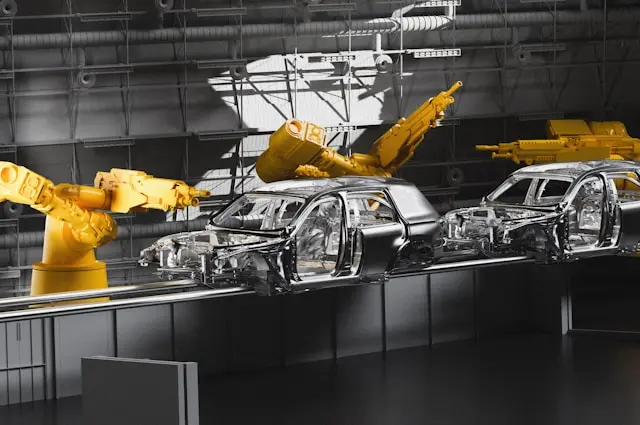
The retooled facility will rely heavily on Fanuc and KUKA robotic systems for body assembly and battery installation. Maintaining these systems requires programming fluency, not just mechanical aptitude. According to Robert Half's 2025 Kansas City Regional Supplement, 68% of Kansas City manufacturing employers have abandoned at least one search for a master-level maintenance technician after 120 or more days, reallocating work to overtime shifts. The EV facility will need more of these technicians, not fewer, and the existing pool is already insufficient.
Lightweight Materials Machining
Electric vehicles use aluminium and composite materials extensively to offset battery weight. Five-axis CNC machining for these components requires precision tolerances that differ materially from the steel stamping that characterised Malibu production. The machinists who operated three-axis equipment on the sedan line will need substantial retraining, and the experienced five-axis operators the market needs are among the hardest manufacturing specialists to recruit anywhere in the Midwest.
The retooling timeline envisions production launch in late 2026 or 2027. Training a maintenance technician from foundational skills to PLC mastery takes 18 to 24 months in an accelerated programme. The arithmetic does not leave room for delay.
The Geographic Talent War Kansas City Is Losing
Kansas City's automotive employers do not compete in isolation. They compete within a geographic triangle that includes direct crosstown rivals, aggressive southern facilities, and equity-rich EV startups. Each competitor pulls from the same limited pool using different advantages.
The most immediate competitor sits 15 miles northeast. Ford's Kansas City Assembly Plant in Claycomo, Missouri produces the F-150, America's best-selling vehicle, on two full shifts. Ford offers identical UAW base wages to GM Fairfax but consistently higher overtime availability. For a skilled trades worker earning $34 to $42 per hour at journeyman rates, the overtime differential at a two-shift Ford operation represents $15,000 to $25,000 in additional annual compensation. According to Bureau of Labor Statistics wage data, this premium requires no relocation, no retraining, and no risk. It requires only a 15-mile commute across the state line.
Further south, GM's own Spring Hill facility in Tennessee and Toyota's Georgetown, Kentucky plant recruit actively from the Kansas City metropolitan area. These facilities offer 12 to 15% base salary premiums over Kansas City rates combined with meaningfully lower cost-of-living indices. A controls engineer earning $115,000 in KCK can command $128,000 to $132,000 in Tennessee while reducing housing costs by 20% or more.
Then there are the EV-native employers. According to Bloomberg's 2024 Automotive Talent Migration Report, Tesla's Gigafactory in Austin and Rivian's facility in Normal, Illinois target the same EV-focused engineering talent pool. They offer equity participation packages that legacy automakers in Kansas rarely match. For a senior controls engineer weighing a move to an EV programme, the difference between a GM salary-plus-bonus structure and a Tesla salary-plus-equity structure can represent hundreds of thousands of dollars over a five-year horizon.
Wyandotte County's aggressive tax abatement programmes, including STAR Bonds and property tax exemptions, reduce manufacturing operational costs by an estimated 12 to 15% compared to the Missouri side of the metro. But these savings accrue to the employer, not to the individual worker making a career decision. The assumption that municipal financial incentives can anchor automotive talent in a tight labour market is being tested in Kansas City. The early evidence suggests they cannot.
The Passive Candidate Problem in Skilled Manufacturing
The standard recruitment playbook for manufacturing roles assumes a reasonable flow of active applicants. Post the role, screen applications, interview the best candidates. In Kansas City's automotive market, that playbook reaches a shrinking fraction of the available talent.
Approximately 78% of employed controls engineers in the Kansas City MSA report they are not actively seeking new employment but would consider the right offer, according to LinkedIn Talent Insights data from Q4 2024. For comparison, general production roles show a 45% passive rate. The more specialised the skill, the more passive the candidate.
Tool and die makers present an even more extreme pattern. Average tenure in this role exceeds 12 years. These professionals do not update their CVs, do not browse job boards, and do not attend career fairs. They are embedded in facilities where they have spent a decade building institutional knowledge. Moving them requires a proposition that addresses not just compensation but role complexity, facility investment trajectory, and long-term career architecture.
This passive concentration means that the visible job market represents a fraction of the actual talent pool. An employer relying on job postings and inbound applications for controls engineers, automation technicians, or tool and die makers is fishing in a pond that contains roughly 22% of the fish. The other 78% must be identified, approached, and persuaded through methods that bear no resemblance to traditional recruitment advertising.
The Kansas City Manufacturing Institute documented an unusual response to this dynamic in 2024. Three Tier 1 suppliers in the Fairfax corridor restructured their work arrangements to offer remote hybrid options for controls engineers. For shop-floor adjacent roles, this is a remarkable accommodation. These are positions that historically required daily physical presence near production equipment. The fact that suppliers chose to redefine the role itself rather than lose engineers to battery manufacturing facilities in Tennessee illustrates the severity of the retention challenge.
Compensation Realities: What the Transition Workforce Costs
Understanding compensation in this market requires looking beyond base salary. The total cost of securing talent for the EV transition reflects a market where every employer is bidding for the same constrained pool.
At the senior specialist and manager level, manufacturing engineers with automotive experience command $98,000 to $128,000 in base salary across the Kansas City MSA. Top performers at GM Fairfax or NSK Steering Systems earn premiums of 8 to 12% above the median. Maintenance managers range from $95,000 to $125,000, with heavy-industry fabrication operations paying at the upper boundary.
The executive tier reflects both the complexity of the transition and the scarcity of leaders who have managed one before. Plant directors overseeing assembly operations earn $215,000 to $285,000 in base salary, plus 30 to 50% annual bonus targets and long-term incentive equity. Vice presidents of operations at Tier 1 suppliers command $195,000 to $260,000 in base, with smaller regional suppliers increasingly offering equity stakes to compete with national firms that can offer broader career progression.
These figures represent 2024 benchmarks. The EV transition is layering additional premium requirements on top of them. A plant director who has led an ICE-to-EV facility conversion carries experience that perhaps two dozen professionals in the United States possess. Benchmarking compensation for these roles against historical ranges produces misleading results because the role itself has fundamentally changed.
Skilled trades journeymen at GM Fairfax earn $34 to $42 per hour under UAW contract terms, translating to $70,720 to $87,360 annually before overtime. With overtime, total compensation can exceed $110,000. But the 2027 UAW Local 31 contract expiration introduces a variable. Interim discussions are already underway regarding wage tiers for battery assembly work. Any new classification for EV-specific skilled trades could reset the compensation baseline, and employers planning their workforce budgets for the 2026 to 2027 ramp-up must account for this uncertainty.
The broader implication for hiring leaders negotiating senior offers in this market is that historical compensation data from the sedan-production era is a poor guide to what EV transition talent will cost. The roles are different. The scarcity premiums are different. The competitive set has expanded from three regional OEM plants to include EV-native competitors offering entirely different compensation structures.
Structural Constraints That Compound the Talent Challenge
Even if every compensation and recruitment challenge were resolved overnight, Kansas City's automotive sector would still face physical and regulatory constraints that limit how quickly the transition can proceed.
Land and Facility Limitations
The Fairfax Industrial District is 94% built out. The remaining parcels require brownfield remediation that adds 18 to 24 months to facility expansion timelines. For suppliers contemplating the $120 to $150 million in facility upgrades anticipated if GM confirms EV allocation, this means construction cannot begin immediately upon announcement. The Fairfax Industrial District Development Corporation's strategic plan identifies battery pack assembly and lightweight metal stamping as priority capabilities, but the physical space to house them requires remediation work that has not yet started.
Supply Chain Vulnerability
Kansas City's automotive supply chain depends heavily on cross-border flows through the I-35 corridor with Mexico. Proposed 2025 tariff modifications on Mexican steel and aluminium inputs would disproportionately affect KCK metal fabricators operating on margins of 3 to 5%, according to the Kansas City Federal Reserve's Economic Bulletin. For suppliers already running at 74% capacity utilisation, a tariff-driven cost increase could eliminate the margin entirely and force consolidation before the EV ramp-up begins.
Regulatory Crosscurrents
Kansas legislation passed in 2024 prohibits state agencies from restricting internal combustion engine vehicle sales. This creates an unusual tension for an OEM investing half a billion dollars in EV production within the state. The regulatory signal to consumers discourages EV adoption while the capital signal to the facility encourages EV production. For talent considering relocation to Kansas City for an EV career, this mixed signal matters. It raises legitimate questions about the long-term political commitment to the technology they are being asked to build.
Truck driver shortages compound logistics challenges, forcing suppliers to maintain higher inventory carrying costs that erode the operational savings Wyandotte County's tax incentives are designed to create. The net effect is a market where every structural advantage comes with an embedded constraint. Leaders planning the transition must account for both simultaneously.
What This Means for Hiring Leaders in 2026
The central analytical insight of this market is counterintuitive. The $500 million capital investment has not made hiring easier. It has made hiring harder, because it has replaced one category of worker with another that does not yet exist in sufficient numbers. Capital moved faster than human capital could follow.
A plant director search in this market is not a standard C-level executive recruitment exercise. It requires identifying the small number of manufacturing leaders in the United States who have personally overseen an ICE-to-EV facility conversion. A controls engineer search cannot rely on active candidates because 78% of the viable pool is passive and employed. A maintenance technician search in Wyandotte County takes 94 days on average, and the EV facility will need these technicians in volume, not one at a time.
Traditional search methods are structurally mismatched to this market. Job advertising reaches active candidates. The candidates this transition requires are not active. Generalist recruiters can fill production operator roles. The EV-specific technical roles demand deep sector knowledge and direct headhunting methodology that identifies, maps, and engages professionals who are not looking.
KiTalent's approach to automotive and industrial executive search is built for precisely this kind of market asymmetry. Using AI-enhanced talent mapping to identify passive candidates across competing facilities, KiTalent delivers interview-ready leadership candidates within 7 to 10 days. The pay-per-interview model means clients invest only when they meet qualified candidates, eliminating the retainer risk that makes speculative searches in uncertain markets untenable.
In a market where 68% of employers have abandoned at least one skilled trades search after 120 days, speed is not a convenience. It is the difference between staffing the EV ramp-up on time and watching the transition stall. KiTalent's 96% one-year retention rate ensures that the leaders placed into these critical roles stay through the most demanding phase of the conversion.
For organisations preparing for the Fairfax EV transition, or competing with it for the same talent, the window to build a senior team is narrowing. The capital is committed. The product allocation decision is imminent. The talent pipeline is not. Start a conversation with our automotive executive search team about how to reach the candidates this market cannot surface through conventional methods.
Frequently Asked Questions
What automotive manufacturing roles are hardest to fill in Kansas City in 2026?
Controls engineers, master-level maintenance technicians with PLC expertise, and tool and die makers represent the most acute shortages. Maintenance technician searches in Wyandotte County average 94 days to fill, and 68% of Kansas City manufacturers have abandoned at least one skilled trades search after exceeding 120 days. The EV transition at GM Fairfax is adding demand for high-voltage battery assembly technicians and five-axis CNC operators, roles that barely existed in the Kansas City market before the retooling was announced. These searches require direct headhunting methods that reach passive specialists.
How much do automotive executives earn in the Kansas City metro area?
Plant directors overseeing assembly operations earn $215,000 to $285,000 in base salary, plus 30 to 50% annual bonus targets and long-term incentive equity. Vice presidents of operations at Tier 1 suppliers command $195,000 to $260,000 in base compensation. Senior manufacturing engineers earn $98,000 to $128,000, with top performers at anchor facilities earning 8 to 12% above the median. Skilled trades journeymen earn $34 to $42 per hour under UAW contract terms, with overtime pushing total compensation above $110,000 annually.
Why is the GM Fairfax retooling creating a talent shortage rather than solving one?
The $500 million investment is converting Fairfax from high-volume sedan production to high-complexity EV manufacturing. The 1,800 positions eliminated when Malibu production ended were predominantly production operator roles. The 1,800 to 2,200 positions required for the EV ramp-up demand fundamentally different skills: high-voltage battery expertise, advanced robotics programming, and lightweight materials machining. The outgoing workforce and the incoming workforce overlap only partially. The capital commitment created demand for skills that the local labour market has not yet produced in volume.
How does Kansas City automotive hiring compare to competing markets?
Kansas City automotive employers compete with Ford's Claycomo plant (offering higher overtime), GM Spring Hill in Tennessee and Toyota Georgetown in Kentucky (offering 12 to 15% salary premiums with lower living costs), and EV-native employers like Tesla and Rivian (offering equity participation). Wyandotte County's tax abatements reduce employer costs by 12 to 15%, but these savings do not flow to individual workers weighing offers from competing facilities. The cost of a failed or slow executive search compounds when competitors in multiple states are targeting the same candidates simultaneously.
What is the timeline for EV production at GM Fairfax?
Industry analysts project GM will designate Fairfax for a midsize electric SUV platform with production launch targeted for late 2026 or 2027. The retooling investment of $500 million is underway, but GM has not publicly confirmed specific product allocation beyond the current Cadillac XT4. A return to two-shift operations would require recruiting 1,800 to 2,200 production and engineering personnel. Supplier facility upgrades of $120 to $150 million are paused pending GM's formal announcement.
How does KiTalent approach automotive executive search in markets like Kansas City?
KiTalent uses AI-powered talent mapping to identify passive candidates across competing OEM and supplier facilities, reaching the 78% of controls engineers and senior specialists who are not actively seeking new roles. Interview-ready candidates are delivered within 7 to 10 days under a pay-per-interview model that eliminates upfront retainer risk. With over 1,450 executive placements completed and a 96% one-year retention rate, the approach is built for markets where the candidates that matter most are invisible to conventional recruitment methods.