Katowice Has €3.5 Billion for Its Energy Transition. It Cannot Find the Engineers to Spend It.
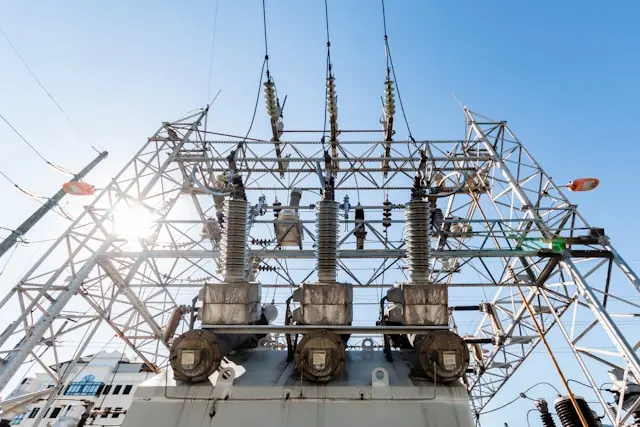
Silesia's capital sits on one of the largest public investment commitments in Central European energy history. The European Union's Just Transition Fund allocated €3.51 billion to the Silesian Voivodeship for 2021 to 2027. Tauron Polska Energia, headquartered in Katowice, has initiated PLN 4.2 billion in grid modernisation projects. FAMUR, the region's anchor mining equipment manufacturer, is attempting to pivot its remaining workforce toward tunnel-boring machines and offshore wind foundations. Capital, for once, is not the constraint.
The constraint is people. As of late 2024, only 47% of allocated JTF funds had been contracted by local municipalities, with procurement bottlenecks delaying project starts. Tauron's plan to commission 600 MW of new solar and onshore wind capacity by the end of 2026 requires an estimated 1,200 additional specialised technical staff the local market cannot currently supply. One in three high-voltage grid engineer positions posted in the Katowice region remains unfilled after 180 days. The money is committed. The projects are designed. The workforce does not exist at scale.
What follows is an analysis of the forces pulling Katowice's industrial talent market in opposite directions: a coal economy shedding thousands of workers while the energy economy it is supposed to replace cannot fill its most critical roles. This article examines where the gaps are sharpest, what is driving them, what they pay, and what organisations operating in this market need to understand before they commit to their next senior hire.
The Parallel Reality: Mass Layoffs and Unfilled Vacancies in the Same City
The dominant public narrative about Katowice's economy is one of transition and loss. Between 2020 and 2024, the hard coal mining sector shed approximately 3,800 direct jobs within the Katowice metropolitan area. The scheduled closure of the Wujek mine, which sits on the Katowice municipality border, will remove another tranche of mining roles. Political discussion centres on retraining, social support, and absorption of displaced workers.
This narrative is accurate but incomplete. It describes one half of the labour market while ignoring the other.
Tauron Dystrybucja, the distribution system operator serving 5.4 million customers, is running a 15,000-kilometre grid retrofit programme that demands protection and automation engineers certified for 110kV and above. PSE, the transmission system operator, maintains a regional dispatch centre in Katowice staffed by approximately 400 high-voltage specialists and needs more. FAMUR's remaining 1,800 employees in the Zabrze and Katowice facilities are concentrated in R&D and advanced manufacturing functions that bear almost no skills overlap with the shaft technicians and mechanical operators being released from closing mines.
The original synthesis that emerges from this data is specific and counter-intuitive: the coal phase-out has not created a transferable labour surplus. It has created a parallel economy where structural unemployment and acute technical shortages exist in the same postcode. Displaced miners are predominantly mechanical operators. The energy transition demands digital-electrical competencies requiring 18 to 24 months of reskilling. Poland's "Green Job Transition" programme, operated by the Polish Development Fund, has placed only 340 workers annually against a regional need for over 2,000. The two labour markets are adjacent geographically but separated by a skills gap that neither the market nor government programmes are closing at the speed the investment timeline requires.
This is the dynamic that defines every senior hiring decision in Katowice's energy sector in 2026. The assumption that coal-region labour surplus makes hiring easier is not just wrong. It is dangerously misleading for any organisation planning headcount around transition-funded projects.
Where the Shortages Are Sharpest: Three Roles That Stall Everything
High-Voltage Grid Engineers
The most acute shortage sits in the role category that underpins the entire grid modernisation programme. High-voltage grid engineers certified for 110kV and above have a 34% vacancy rate after 180 days of posting, according to the Hays Poland Salary Guide for the energy sector. Tauron Dystrybucja's renewable connection backlog stands at 12 gigawatts. Every unfilled HV engineer position directly delays the connection queue, which already runs 24 to 36 months, according to Energy Regulatory Office monitoring data.
The candidate pool is overwhelmingly passive. According to Antal Poland's energy market analysis, 88% of qualified HV protection engineers are passive candidates with average tenures of seven to eight years. Recruitment firms report submitting three to five shortlisted candidates per search, of whom typically only one is actively looking. The remaining four are direct approaches to professionals who were not considering a move.
Public procurement records illustrate the downstream effect. The Kraków-to-Katowice HV corridor project, contracted to the Consunet/Elektrotim joint venture, advertised 14 Senior Protection and Automation Engineer positions in Q2 and Q3 2024. After six months, eight remained vacant, forcing project phase delays documented in National Appeals Chamber case files. This is not an isolated search failure. It is a systemic pattern. HV substation design engineers with five or more years of experience are typically approached by headhunters within 48 hours of updating their LinkedIn profiles.
Industrial Automation and Mining 4.0 Engineers
The second critical shortage category sits at the intersection of FAMUR's survival strategy and the broader Industry 4.0 push. Demand for PLC and SCADA programmers with mining equipment experience exceeds supply by a ratio of four to one, according to Randstad Poland's industry report. These are the engineers who must oversee FAMUR's shift from mechanical to mechatronic product lines, including automated longwall systems and predictive maintenance platforms.
According to reporting in Parkiet Business Daily, FAMUR recruited three Senior PLC Engineers from the automotive sector in early 2024, specifically from Fiat Auto Poland in Bielsko-Biała and Aptiv in Kraków. The compensation premiums required were 30 to 35% above their previous salaries, estimated at PLN 28,000 to 32,000 monthly versus PLN 21,000 to 24,000 in their automotive roles. FAMUR is effectively importing talent from adjacent sectors at a premium because the native mining-automation talent pool is too small to sustain even modest hiring targets.
FAMUR's return to profitability in 2026, projected by its management board, is contingent on securing welding automation engineers currently unavailable in the region. The company's pivot toward tunnel-boring machines for infrastructure and offshore wind foundations represented less than 15% of order backlog as of mid-2024. Every delay in filling these roles extends the timeline for the only growth strategy keeping the company viable.
EU Funding Project Managers
The third shortage is less technical but equally paralysing. Katowice-area municipalities report that 28% of green infrastructure projects have been delayed due to procurement officer capacity constraints, according to the Silesian Voivodeship Audit Office. The specific gap is professionals who combine engineering literacy with JTF and KPO (National Reconstruction Plan) grant management experience. This hybrid profile barely existed as a job category five years ago. The pipeline has not caught up.
The consequence is direct: the €400 million in JTF tranche payments at risk of reverting to EU coffers if 2026 implementation milestones are missed. A failed executive hire in grant management does not just cost the salary. It costs the project timeline, and when the project is publicly funded with hard deadlines, the cost multiplies across the entire programme.
Compensation: The Bifurcation Nobody Sees in Aggregate Data
Aggregate wage data for the Silesian industrial sector shows moderate growth of 4.2% year on year, below the national rate of 7.1%. Read in isolation, this suggests a slackening market where hiring should be straightforward. The aggregate number is a statistical illusion.
Compensation for HV grid engineers and automation specialists in Katowice accelerated at 12 to 15% annually through 2024, with signing bonuses reappearing in Q4. The general industrial average is being pulled down by stagnating wages in legacy manufacturing and mining operations while transition-critical roles experience what can only be described as hyperinflation at the specialist and leadership levels.
At the senior specialist and manager level for HV grid engineering with a decade or more of experience in 110kV-plus design, compensation in Katowice sits at PLN 22,000 to 32,000 monthly. VP Grid Operations and Technical Director roles at distribution or transmission system operators command PLN 55,000 to 85,000 plus annual bonuses of 20 to 40%. Senior automation engineers with a mining equipment focus earn PLN 20,000 to 28,000, while Director of R&D and CTO roles in equipment manufacturing reach PLN 45,000 to 70,000. At financially distressed employers, packages increasingly include equity or stock options to offset cash constraints.
Katowice typically benchmarks at 85 to 90% of Warsaw levels. But the growth rate tells a different story. At 8 to 12% annual growth in Katowice versus 5 to 7% in Warsaw, the gap is narrowing fastest in exactly the roles where shortages are most acute. For a senior project manager overseeing JTF and renewable energy infrastructure, Katowice now offers PLN 18,000 to 26,000, with VP Project Portfolio roles reaching PLN 48,000 to 75,000.
The implication for hiring leaders is precise. Any compensation benchmarking exercise that relies on Silesian averages will produce an offer that is 15 to 20% below what the market actually demands for the specific profiles the energy transition requires. Organisations that price their offers against the aggregate will consistently lose candidates to competitors who price against the segment.
The Talent Drain: Warsaw, Western Europe, and the Remote Economy
Katowice does not compete for energy transition talent in isolation. It competes against three distinct drains, each operating through a different mechanism.
Warsaw: The Corporate Strategy Pull
Warsaw draws senior executives and grid strategy specialists with premiums of 15 to 25% above Katowice levels. According to reporting in Rzeczpospolita, Tauron's own Warsaw office has drawn several Katowice-based senior managers into corporate strategy roles. The irony is sharp: the company headquartered in Katowice is itself contributing to the city's talent drain by offering more attractive paths in its capital office. For candidates weighing career trajectory against location, Warsaw's concentration of multinational headquarters and advisory firms creates advancement options that Katowice cannot match.
Western Europe: The Salary Multiple
The more destructive drain runs westward. Engineers with HV or offshore wind experience who migrate to Germany, the Netherlands, or Scandinavia access salary multiples of 2.5 to 3 times their Katowice post-tax equivalent. The German Ruhr region, specifically Essen and Dortmund, actively targets Polish mining engineers for brownfield rehabilitation projects, according to German Federal Employment Agency recruitment statistics. Offers of €80,000 to €120,000 annually compare against PLN 200,000 to 300,000 (€47,000 to €71,000) for equivalent roles in Katowice.
The competitive disadvantage compounds beyond compensation. Katowice's PM2.5 air pollution levels remain 40% above EU limits, according to the European Environment Agency. International schooling options lag behind Warsaw and Wrocław. For an engineer considering a return from western Europe, the package must compensate not just for the salary gap but for the quality-of-life gap. Few Katowice employers are building offers that account for both.
Remote and Hybrid International Roles
The third drain is newer and harder to counter. UK and Nordic energy consultancies, including firms like Rambøll and AFRY, hire Polish grid engineers for remote work at Warsaw-level salaries without location requirements. This pressures Katowice employers to offer flexible arrangements or accept that a portion of their target candidate pool is earning Warsaw money while living anywhere they choose. For organisations still operating on the assumption that Katowice-based talent stays in Katowice because the cost of living is lower, this drain is invisible until a finalist candidate declines with an explanation that involves neither a competitor firm nor a relocation.
The Regulatory Barriers That Slow Everything Down
Capital availability and compensation are not the only constraints. Two regulatory mechanisms actively impede the talent pipeline in ways that hiring leaders must understand before committing to search timelines.
Mining Law and Re-Licensing Requirements
Poland's Geological and Mining Law (Prawo Geologiczne i Górnicze) restricts the redeployment of mining-certified engineers to renewable energy projects without extensive re-licensing. A mechanical engineer who has spent 15 years maintaining underground ventilation systems cannot transfer to a solar installation team without completing certification processes that create bureaucratic delays measured in months. The Ministry of Climate and Environment's own regulatory impact assessment acknowledges this friction. The practical effect is that the 3,800 displaced mining workers are not a ready-made talent pool for the energy transition. They are a potential talent pool separated from deployment by a re-licensing wall that neither employers nor policymakers have dismantled at the pace the investment timeline requires.
Grid Connection Queues and Investor Confidence
The 24 to 36-month queue for RES connections to Tauron's distribution network creates a secondary hiring constraint that operates through investor psychology. Project developers who cannot secure grid connections defer investment decisions. Deferred investment decisions defer hiring. The queue does not just slow project completion. It suppresses the formation of the project teams that would otherwise be absorbing the region's engineering talent. For any organisation planning a talent pipeline around Katowice's renewable energy build-out, the grid connection bottleneck is a material planning variable, not background context.
The convergence of these regulatory barriers with the CBAM Phase 2 enforcement timeline and the Wujek mine closure creates the "skills chokepoint" that market participants anticipate for 2026. The regulatory environment is not neutral. It is actively shaping the size of the available candidate pool.
The Executive Roles That Did Not Exist Three Years Ago
The energy transition has created an entirely new stratum of leadership roles in Katowice that have no established talent pipeline because the roles themselves are too new.
Chief Transition Officer and VP Decarbonisation positions are emerging at Tauron and at energy startups forming within the Silesian Green Energy Cluster's 87 member companies. These roles require a combination of JTF fund absorption expertise, coal asset repurposing strategy, and regulatory fluency with both the Energy Regulatory Office (URE) and ENTSO-E standards. The number of executives in Poland who have actually managed a coal-to-renewables transition at scale can likely be counted on two hands.
Director of Automation roles at mining equipment manufacturers like FAMUR require oversight of a product line shift from purely mechanical systems to mechatronic platforms, including hybrid drive systems for mining vehicles and ATEX-directive compliance for explosive atmospheres. Grid Investment Director roles at distribution and transmission system operators require not just capital programme management but regulatory negotiation skills specific to the Polish energy market.
The Central Mining Institute (GIG), Katowice's research anchor with 1,200 researchers, is itself pivoting toward hydrogen storage and carbon capture research. This pivot creates demand for research leadership profiles that combine mining geology knowledge with hydrogen chemistry expertise. A profile that, again, barely exists as a career path in Poland.
When the roles are new, the talent market cannot produce qualified candidates through organic supply. The candidates who can fill these positions are currently employed in adjacent roles at adjacent organisations, solving adjacent problems. They will not appear on job boards. They will not respond to advertisements. They must be found through direct identification and approach, and the search must account for the fact that the candidate may not yet self-identify with the job title being recruited.
What Katowice's Energy Transition Demands from Hiring Leaders
The pattern across every data point in this market is consistent. Capital is available. Projects are designed. Regulatory timelines are fixed. The binding constraint is the speed at which organisations can identify, attract, and secure the specific technical and leadership profiles the transition requires. And the traditional recruitment approach, posting a role and waiting for applications, reaches fewer than 20% of qualified candidates in the most critical categories.
For HV protection engineers, the passive candidate ratio is 88%. For mining automation specialists, it is 75%. Aggregate data from recruitment firms confirms that 82% of HV substation design engineer roles in Katowice are filled through direct search rather than applications. The market has already spoken about which method works. Organisations that have not adjusted are the ones reporting six-month vacancies and project delays.
The JTF absorption deadline adds a dimension of urgency that most talent markets do not face. This is not a market where a slow search simply costs time. A slow search costs EU funding. The €400 million at risk of clawback if 2026 milestones are missed makes every quarter of delay in filling a Grid Investment Director or a Senior Protection Engineer role a direct threat to the financial architecture of the transition itself.
KiTalent works with organisations across energy, industrial, and manufacturing sectors to deliver interview-ready executive candidates within 7 to 10 days through AI-enhanced talent mapping that reaches the passive professionals conventional methods miss. With a 96% one-year retention rate across 1,450-plus executive placements, the approach is built for markets where the candidates you need are not looking and the cost of a failed search is measured in regulatory deadlines, not just time.
For organisations hiring senior technical and leadership talent in Katowice's energy transition market, where 88% of your target candidates are passive, project timelines are fixed by EU funding milestones, and the cost of vacancy is measured in hundreds of millions of euros, start a conversation with our executive search team about how we identify and deliver the profiles this market demands.
Frequently Asked Questions
What are the hardest energy transition roles to fill in Katowice in 2026?
High-voltage grid engineers certified for 110kV and above are the most difficult to fill, with 34% of posted positions remaining vacant after 180 days. Industrial automation engineers with PLC and SCADA expertise in mining equipment contexts face a four-to-one demand-to-supply imbalance. EU funding project managers who combine engineering literacy with JTF grant management experience represent a third acute shortage. All three categories are dominated by passive candidates who must be identified and approached through direct executive search methods rather than job advertising.
How do Katowice energy sector salaries compare to Warsaw?
Katowice energy sector compensation typically benchmarks at 85 to 90% of Warsaw levels. However, growth rates in Katowice are outpacing Warsaw at 8 to 12% annually versus 5 to 7%. Senior HV grid engineers earn PLN 22,000 to 32,000 monthly, while VP Grid Operations roles command PLN 55,000 to 85,000 plus bonuses of 20 to 40%. Compensation for transition-critical roles is accelerating at 12 to 15% annually, masking the stagnation visible in aggregate Silesian industrial wage data.
What is the Just Transition Fund and how does it affect hiring in Katowice?
The EU Just Transition Fund allocated €3.51 billion to the Silesian Voivodeship for 2021 to 2027, financing grid modernisation, renewable energy capacity, and brownfield redevelopment. As of late 2024, only 47% of allocated funds had been contracted by local municipalities, largely due to procurement bottlenecks and staff shortages. If 2026 implementation milestones are missed, €400 million in tranche payments could revert to EU coffers, making the hiring of qualified project managers and engineers a direct determinant of regional funding outcomes.
Why can't displaced coal miners fill energy transition roles in Katowice?
Displaced miners are predominantly mechanical operators and shaft technicians. Energy transition roles demand digital-electrical competencies including IEC 61850 protocols, digital twin modelling, and HV cable jointing certification. Reskilling requires 18 to 24 months. Poland's Green Job Transition programme places only 340 workers annually against a need exceeding 2,000. Mining law re-licensing requirements further delay redeployment. The result is structural unemployment and unfilled vacancies coexisting in the same metropolitan area.
How can organisations compete for passive energy engineering talent in Katowice?
With 88% of qualified HV protection engineers classified as passive candidates, organisations must use direct identification and approach methods. KiTalent's AI-enhanced talent mapping identifies professionals across competitor organisations and adjacent sectors, delivering interview-ready shortlists within 7 to 10 days. Competitive offers must account for the 12 to 15% annual compensation growth in transition-critical roles and address the quality-of-life factors, including remote work flexibility, that drive talent toward Warsaw and western European employers.
What executive roles are emerging in Katowice's energy transition?
Chief Transition Officer and VP Decarbonisation roles are newly created at Tauron and within startups in the Silesian Green Energy Cluster. Director of Automation roles at equipment manufacturers like FAMUR oversee the shift from mechanical to mechatronic product lines. Grid Investment Directors lead multi-billion-złoty CAPEX programmes requiring regulatory fluency with URE and ENTSO-E standards. These roles have no established talent pipeline because they did not exist three years ago, making proactive succession planning essential.