Khobar Logistics in 2026: SAR 12.4 Billion in Infrastructure, and Not Enough People to Run It
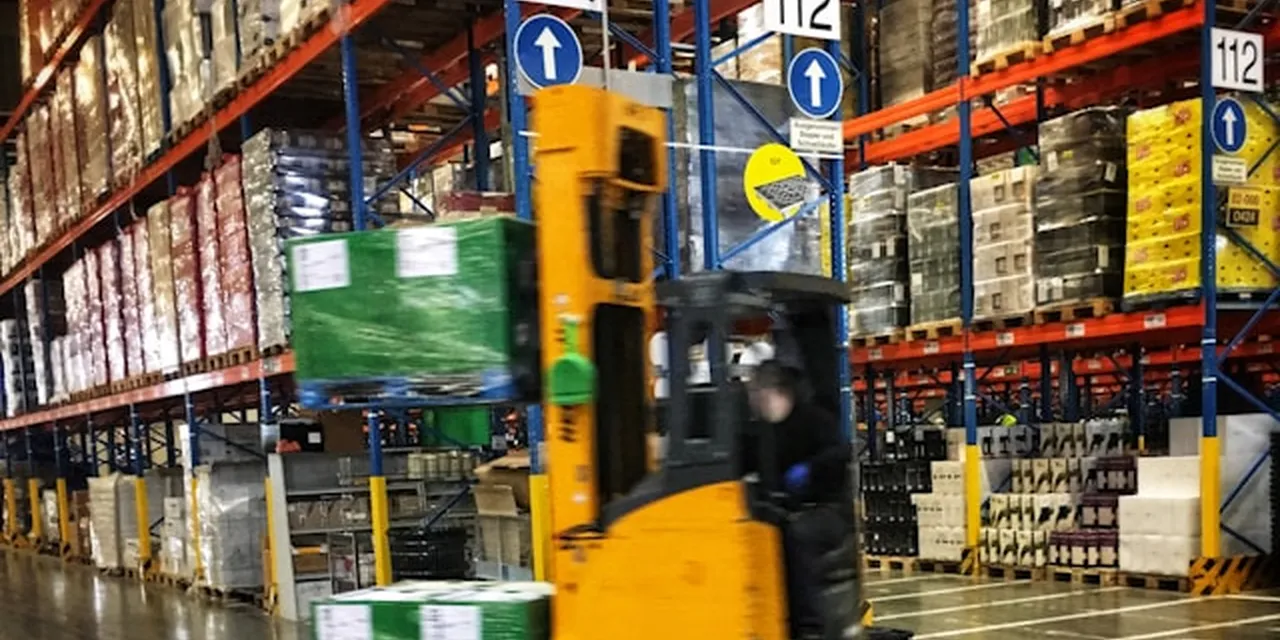
The Eastern Province of Saudi Arabia is building logistics capacity faster than any corridor in the Gulf. King Abdulaziz Port's Phase 3 expansion is pushing containerised throughput toward 20 million TEU. Warehousing across the Dammam-Khobar-Jubail corridor now exceeds 4.8 million square metres of Grade A space. Rail freight between the port and Riyadh's dry port has reached 380,000 TEU annually. The infrastructure story is real, funded, and accelerating.
The talent story is not keeping pace. Director-level supply chain roles in Khobar's logistics cluster sit vacant for 120 to 150 days. Customs clearance managers with GCC Customs Union expertise take more than 100 days to place. Warehouse operations managers with live WMS implementation experience in Saudi Arabia require six to eight months. These are not entry-level gaps. They are the roles that determine whether a SAR 12.4 billion infrastructure programme operates at capacity or sits underutilised.
What follows is an analysis of the forces reshaping this sector, the employers driving that change, and what senior leaders need to understand before they make their next hiring or retention decision in the Eastern Province. The core argument is specific: Khobar's logistics market has a human capital deficit that physical investment alone cannot close, and the organisations that recognise this earliest will secure the operational leaders everyone else is still searching for six months later.
The Eastern Province Logistics Cluster: Scale, Structure, and the Talent It Demands
Khobar is not a standalone logistics market. It is the commercial and documentation nerve centre of a tri-city corridor that includes Dammam's port-side operations and Jubail's heavy industrial logistics. Understanding this geography matters because it shapes where talent sits, what skills are required, and why hiring in Khobar is structurally different from hiring in Riyadh or Jeddah.
The numbers frame the scale. King Abdulaziz Port handled 15.2 million TEU in 2023, accounting for 63% of Saudi Arabia's containerised cargo. King Fahd Industrial Port in Jubail moves 76 million tons of liquid and dry bulk annually. Khobar-based freight forwarders manage 40% of the customs documentation and clearance associated with Jubail's bulk volumes. The Eastern Province Chamber of Commerce lists 47 licensed customs brokers and approximately 220 freight forwarding offices in the Khobar metropolitan area, making it the densest logistics services cluster in the Kingdom outside Jeddah.
Where the Functions Sit
The cluster exhibits a vertical split. Khobar's Al Faisaliah and Al Olaya districts host the commercial, documentation, and customs clearance functions. Dammam's 3rd Industrial City houses the physical warehousing and port-side operations. This means the executive and specialist talent that hiring leaders in this market compete for is concentrated in a relatively small geographic footprint within Khobar proper. The talent pool is not diffuse. It is small and highly visible to every competitor in the corridor.
The Infrastructure Surge
The Ministry of Transport and Logistic Services allocated SAR 12.4 billion to Eastern Province logistics infrastructure for the 2024 to 2026 period. The port expansion alone will increase King Abdulaziz Port's capacity to 20 million TEU by mid-2026. The Saudi Railway Company's Eastern Network now runs 14 weekly freight services between the port and Riyadh. And the Ministry of Commerce issued 847 new commercial registrations for logistics activities in the Eastern Province in 2024, a 47% year-on-year increase. Sixty percent of those new registrations landed in the Dammam-Khobar metropolitan area.
Every new registration, every expanded terminal, and every new warehouse requires people who know how to run it. The investment pipeline is not the bottleneck. The question is whether enough qualified professionals exist to match the pace, and the data suggests they do not.
The Capacity-Talent Mismatch: Where the Numbers Diverge
This is the central tension of Khobar's logistics market in 2026, and the one that should concern every hiring leader operating in the corridor.
The Saudi Logistics Hub initiative projected a need for 15,000 additional specialised logistics professionals in the Eastern Province by 2026 to service expanded port capacity and the Ras Al-Khair Minerals Industrial City development. Against that demand figure, the specialised logistics workforce has been growing at roughly 8% annually. The demand requirement is 18% annually through 2026. The gap is not closing. It is widening.
Physical capacity is outpacing human operational capacity. There is a genuine risk of what might be called ghost infrastructure: terminals and warehouses that cannot achieve utilisation targets because the certified operations managers, customs specialists, and supply chain directors needed to run them do not exist in sufficient numbers. Saudi university graduation rates in logistics-related fields increased 12% year-on-year through 2024, according to Ministry of Education data, but graduates cannot fill roles that require 12 years of oilfield logistics experience and IMDG certification. The educational pipeline feeds the base of the pyramid. The vacancy sits at the top.
This is the original analytical claim this article is built around: the SAR 12.4 billion investment programme has not reduced the demand for experienced logistics leaders. It has replaced one kind of constraint with another. The bottleneck moved from port berths and warehouse capacity to people. Capital moved faster than human capital could follow. And because the most critical roles require a decade or more of accumulated expertise, no training programme or graduate pipeline can close the gap within the timeframe the infrastructure requires.
The implications for hiring leaders are concrete. Every delay in filling a senior operations or compliance role is a delay in activating the infrastructure the money has already paid for.
Three Roles That Define the Shortage
The Eastern Province logistics sector posted 3,800 open positions in Q4 2024, 22% more than the same quarter the previous year. But the aggregate number obscures where the real pain sits. Three role categories account for a disproportionate share of the difficulty.
Supply Chain Directors with Hydrocarbon Sector Expertise
These positions remain vacant for 120 to 150 days. The requirements compound in ways that shrink the eligible pool to a fraction of the broader supply chain talent market. Candidates must be bilingual in Arabic and English. They need 12 or more years of oilfield logistics experience. They require Dangerous Goods certification under IMDG. Aggregate data from the Hays Saudi Arabia Salary Guide 2024 indicates a 78% vacancy rate for director-level supply chain roles in the Eastern Province industrial sector after 90 days of posting.
Unemployment in this segment runs below 2%. Average tenure is 4.5 years. The professionals who meet these requirements are not looking for work. They are passive candidates embedded in roles where they manage problems that do not yet exist at competitor firms.
Customs Clearance Managers with GCC Customs Union Specialisation
The GCC Common Customs Law and ZATCA's hydrocarbon sector classifications are specialist knowledge areas. According to the Michael Page Saudi Arabia Talent Trends Report 2024, candidates lacking this specific expertise fail technical assessments at a rate of 65%. That failure rate extends average time-to-fill past 100 days. Only 1,200 individuals hold advanced ZATCA customs broker licences in the entire Eastern Province. These professionals are typically locked in through non-compete clauses and profit-sharing arrangements.
Warehouse Operations Managers with WMS Implementation Experience
Demand for professionals with SAP EWM or Manhattan Associates WMS implementation experience exceeds supply by a ratio of 4:1 in the Eastern Province. The critical qualifier is not just WMS knowledge. It is live go-live experience in Saudi Arabia. Roles specifying this requirement take six to eight months to fill, according to the Saudi Supply Chain and Logistics Association's Skills Gap Analysis 2024. With 65% of Eastern Province warehousing operations planning WMS upgrades by Q4 2026, this shortage will deepen before it eases.
These are not interchangeable gaps. Each requires a different candidate profile, a different sourcing strategy, and a different compensation approach. Treating them as a single "logistics shortage" leads to search strategies that miss all three.
Compensation Dynamics: What Senior Logistics Roles Pay in the Eastern Province
Compensation in Khobar's logistics sector follows a pattern that hiring leaders from other markets may not expect. The Eastern Province pays less than Riyadh for equivalent seniority. It pays less than Dubai. And within the corridor, specialist certifications create steeper premiums than seniority alone.
At the senior specialist and manager level, supply chain management roles command SAR 18,000 to 28,000 per month in total cash compensation. A Lean Six Sigma Black Belt adds 12 to 15% to the top of that range. Oilfield logistics certification and hazardous materials management push further. Freight forwarding specialists earn SAR 15,000 to 22,000, but candidates with active Authorised Economic Operator consultant status and ZATCA audit defence experience command SAR 25,000 to 30,000. That is a 35% premium for a specific regulatory credential.
The Executive Tier
At the VP and executive level, the ranges widen considerably. Supply chain and logistics VPs with P&L responsibility earn SAR 45,000 to 75,000 per month. Freight forwarding country managers and regional directors earn SAR 35,000 to 55,000. Warehousing and distribution heads earn SAR 30,000 to 48,000. The highest packages go to executives with established government relations networks and direct liaison experience with Mawani and GACO.
The automation premium is striking at the operations management level. Warehouse managers with standard WMS administration skills earn SAR 12,000 to 18,000. Those with autonomous mobile robot or automated storage and retrieval system implementation experience command SAR 20,000 to 24,000. That is a 33% premium for experience that barely existed as a job requirement five years ago.
The Riyadh and Dubai Differential
Riyadh commands a 30 to 40% compensation premium over Khobar for equivalent senior logistics roles, according to market benchmarking data from the Hays Saudi Arabia Salary Guide 2024. Dubai's tax-free status adds further differential pressure for non-Saudi professionals. Global forwarders operating in Khobar, including Kuehne+Nagel, DHL, and DB Schenker, typically pay a 10 to 15% cost-of-living adjustment over Riyadh packages, framed historically as a hardship posting differential. That gap is narrowing, but it has not disappeared.
The compensation picture creates a specific retention challenge that shapes every search in this market.
The Retention Drain: Riyadh, Dubai, and the 60% Problem
Khobar's logistics talent market does not only have a hiring problem. It has a retention problem that compounds the hiring challenge.
Eastern Province employers report that 60% of turnover at the manager-to-director level is attributable to relocation. The destinations are Riyadh for headquarters roles and Dubai for regional positions. Compensation is the primary driver in 45% of these departures, according to the Mercer Saudi Arabia Talent Mobility Report 2024.
Riyadh's pull is structural. The headquarters functions for Bahri, SAL, and emerging logistics technology companies such as TruKKer and LogiPoint are concentrated in the capital. For an ambitious supply chain director in Khobar, the career trajectory toward a C-suite role runs through Riyadh. The capital also offers proximity to the highest-visibility projects in the Kingdom. NEOM, Qiddiya, and Red Sea Global logistics contracts are managed from Riyadh, providing the kind of marquee project experience that Khobar's hydrocarbon-centric portfolio cannot match.
Dubai's pull is different but equally powerful. For the non-Saudi professionals who fill 85% of senior customs clearance and dangerous goods handling roles, the UAE offers tax-free compensation, Golden Visa stability, and a logistics ecosystem around Jebel Ali Port that provides more diverse sector exposure. E-commerce, luxury goods, pharmaceuticals: Dubai's freight market offers breadth that Khobar's oil and gas concentration does not. The UAE's family sponsorship policies add further pull for professionals from the Indian, Pakistani, and Egyptian talent pools that have traditionally supplied the Eastern Province.
The result is a market where a counteroffer from the current employer is often less relevant than a geography offer from a competitor in a different city or country entirely. A hiring leader in Khobar is not just competing on compensation. They are competing on career trajectory, lifestyle infrastructure, and long-term residency certainty. Understanding this multi-dimensional competition is essential before structuring any senior offer in this market.
Saudisation, Regulation, and the Double Bind
The logistics sector's Nitaqat classification requires 16% Saudi nationalisation at the firm level, rising to 20% by 2026. On paper, progress is measurable. In practice, the data reveals a structural tension that every hiring leader in the corridor must understand.
Saudi nationals represent only 8% of the specialised logistics workforce in the Eastern Province. The customs brokers, certified freight forwarders, and dangerous goods specialists who run the most compliance-critical functions are overwhelmingly non-Saudi professionals with ten or more years of GCC experience. These professionals saw their salary premiums rise 18% in 2024, even as broader market wages stagnated.
The regulatory compliance is being achieved through headcount aggregation. Firms are hiring Saudi nationals into administrative and support roles to reach the overall ratio. The technical, compliance-critical functions remain almost entirely dependent on expatriate expertise. This is not a criticism of the programme's intent. It is a structural observation about where compliance headcount sits versus where operational risk concentrates.
The Customs Modernisation Layer
The transition to ZATCA's Single Window (Fasah) 4.0 platform adds a second regulatory pressure. Full implementation, originally scheduled for Q2 2025, requires complete retraining of documentation staff. Firms have reported 30% productivity drops during transition periods. Smaller Khobar-based customs brokers lack the IT infrastructure for integration. The Unified Logistics Licence framework, which consolidates 16 separate permits into a single regulatory window by mid-2026, favours established players with compliance infrastructure already in place.
For hiring leaders, this regulatory environment means that the cost of a bad executive hire in a compliance-critical logistics role is not just operational. It carries regulatory exposure. An under-qualified customs clearance manager does not simply slow throughput. They risk the firm's eligibility for government contracts and port operating privileges.
The organisations that manage both Saudisation targets and specialist capability simultaneously are the ones investing in structured career development for Saudi nationals in technical roles while retaining the expatriate specialists needed to maintain continuity. Those that treat the two objectives as separate problems will find themselves short on both counts.
Why Conventional Search Methods Fail in This Market
The passive candidate ratios in Khobar's logistics sector explain why conventional recruitment approaches consistently underperform.
For supply chain directors in the oil and gas vertical, unemployment runs below 2%. The ratio of active to passive candidates for freight forwarding commercial managers with established carrier relationships and oilfield services client portfolios is approximately 1:7, according to Hays Saudi Arabia's Hiring Manager Survey 2024. For ZATCA-certified customs brokers, the total licensed population in the Eastern Province is just 1,200 individuals, most retained through non-compete clauses and profit-sharing arrangements.
The Eastern Province logistics sector shows 63% reliance on recruitment agencies for director-level hires, compared to 41% in Riyadh. That gap is not a quirk of local preference. It reflects market opacity. The candidates who can fill the most critical roles in this corridor are not visible on any job board. They are not attending industry events hoping to be noticed. They are solving operational problems inside Aramco's supplier ecosystem, inside Bahri's project logistics operation, inside Almajdouie's heavy cargo division. Reaching them requires direct headhunting methodology that maps the specific organisations where these professionals sit and approaches them individually.
A job posting for a supply chain director in Khobar that requires bilingual capability, IMDG certification, and 12 years of oilfield experience will reach, at best, the small fraction of qualified professionals who happen to be actively looking. In a segment where unemployment is below 2%, that fraction is vanishingly small. The search method must match the market structure, and in this market, the structure demands proactive identification of passive candidates rather than reactive processing of applicants.
For organisations facing executive recruitment challenges in markets this opaque, speed and method both matter. A search that begins with a job advertisement and waits for inbound interest will still be waiting when a competitor's headhunter has already placed a shortlist in front of the best candidates.
What Hiring Leaders in Khobar's Logistics Market Need to Do Differently
The infrastructure is coming. The regulations are tightening. The talent pool is not growing at the rate either trend demands. For senior hiring leaders responsible for filling leadership roles across logistics, industrial, and manufacturing businesses in the Eastern Province, three priorities are clear.
First, compensation benchmarking must account for the multi-market competition this corridor faces. A package designed around Khobar's local cost of living ignores the fact that the candidate you want is weighing a Riyadh headquarters role at a 30 to 40% premium and a Dubai regional position with zero income tax. The offer must address career trajectory and lifestyle infrastructure alongside base salary. Housing allowances, education benefits, and explicit progression commitments are not perks in this market. They are baseline requirements for any candidate weighing Khobar against its competitors.
Second, talent mapping and pipeline development must begin before the role opens. The 120 to 150 day vacancy duration for director-level supply chain roles is not caused by slow decision-making. It is caused by the search starting from zero when the role opens. Organisations that maintain an ongoing picture of where the 1,200 ZATCA-certified customs brokers sit, who the qualified WMS implementation managers are, and which supply chain directors might be approaching the end of their current tenure are the ones that fill roles in weeks rather than quarters.
Third, the Saudisation strategy and the talent acquisition strategy must be the same conversation. Firms that treat Nitaqat compliance as an HR administrative function and executive hiring as a separate executive search function are solving two halves of the same equation independently. The organisations winning in this market are building structured development pathways that bring Saudi nationals into technical logistics roles over a three to five year horizon while using retained executive search to secure the expatriate specialists who maintain operational continuity in the interim.
KiTalent works with logistics and industrial businesses across the Gulf that face precisely these dynamics. With a pay-per-interview model that eliminates upfront retainer risk, interview-ready candidates delivered within 7 to 10 days, and a 96% one-year retention rate for placed candidates, the approach is designed for markets where the candidates you need are passive, the competition is regional, and the cost of a vacant role is measured in infrastructure sitting idle.
For organisations competing for supply chain directors, customs clearance specialists, and warehouse automation leaders in Khobar's logistics corridor, where 78% of director-level roles remain unfilled after 90 days and the strongest candidates are not visible on any job board, speak with our executive search team about how we source leadership talent in the Eastern Province.
Frequently Asked Questions
What salary does a supply chain director earn in Khobar's Eastern Province logistics sector?
Supply chain and logistics executives with P&L responsibility in the Eastern Province earn SAR 45,000 to 75,000 per month in total cash compensation. Professionals with established government relations networks and direct Mawani liaison experience command the upper range, often supplemented with housing allowances and education benefits. At the senior specialist and manager level, total compensation runs SAR 18,000 to 28,000, with premiums of 12 to 15% for Lean Six Sigma Black Belt certification and oilfield logistics credentials. Riyadh equivalents typically run 30 to 40% higher, which hiring leaders must factor into offer negotiation strategy.
Why is it so difficult to hire logistics executives in Khobar?
Three factors converge. First, unemployment among qualified supply chain directors with hydrocarbon sector expertise is below 2%, making the vast majority passive candidates who must be identified and approached directly. Second, the Eastern Province competes for talent against Riyadh, which offers headquarters career trajectories and 30 to 40% compensation premiums, and Dubai, which offers tax-free status and more diverse sector exposure. Third, specialist certifications such as ZATCA advanced customs broker licences and WMS go-live experience in Saudi Arabia are held by a very small population, creating bottlenecks that no volume of general logistics graduates can resolve.
How does Saudisation affect logistics hiring in the Eastern Province?
The logistics sector's Nitaqat requirement will rise to 20% Saudi nationalisation by 2026, yet Saudi nationals currently represent only 8% of the specialised logistics workforce in the Eastern Province. Compliance is typically achieved through administrative and support role hiring, while 85% of senior customs clearance and dangerous goods handling positions remain filled by expatriate specialists. This creates dual hiring pressure: organisations must recruit Saudi nationals into technical development pathways while simultaneously retaining or hiring the expatriate expertise that maintains operational continuity.
What is the average time to fill a senior logistics role in Khobar?
Time-to-fill varies sharply by specialisation. Supply chain directors with oilfield logistics experience average 120 to 150 days. Customs clearance managers with GCC Customs Union specialisation exceed 100 days. Warehouse operations managers with live WMS implementation experience in Saudi Arabia require six to eight months. These durations reflect the extreme passivity of the candidate pool and the compound nature of requirements that combine technical certification, bilingual capability, and sector-specific experience.
How can an executive search firm help with logistics recruitment in the Eastern Province?
The Eastern Province logistics sector relies on recruitment agencies for 63% of director-level hires, compared to 41% in Riyadh, reflecting the opacity of the local talent market. KiTalent uses AI-powered talent mapping to identify the passive candidates who make up more than 80% of the viable pool for senior logistics roles. The direct search approach reaches professionals embedded in Aramco's supplier ecosystem, major 3PL operations, and port services firms who are not visible through job advertising. Interview-ready candidates are delivered within 7 to 10 days.
What are the biggest risks to the Khobar logistics sector in 2026?
Three risks are most material. Hydrocarbon price volatility remains the dominant concern: a sustained Brent crude price below $70 per barrel would trigger 20 to 30% reductions in project logistics demand and six to nine month hiring freezes. Red Sea shipping disruptions have raised cargo insurance premiums by 40% in 2024, according to Lloyd's List Intelligence, potentially diverting volumes to UAE ports. And the capacity-talent mismatch, where infrastructure expansion outpaces the supply of certified logistics professionals, risks creating underutilised facilities that cannot reach operational targets despite the capital invested.