Kocaeli's Petrochemical Corridor Is Cutting Headcount and Running Out of the People It Needs Most
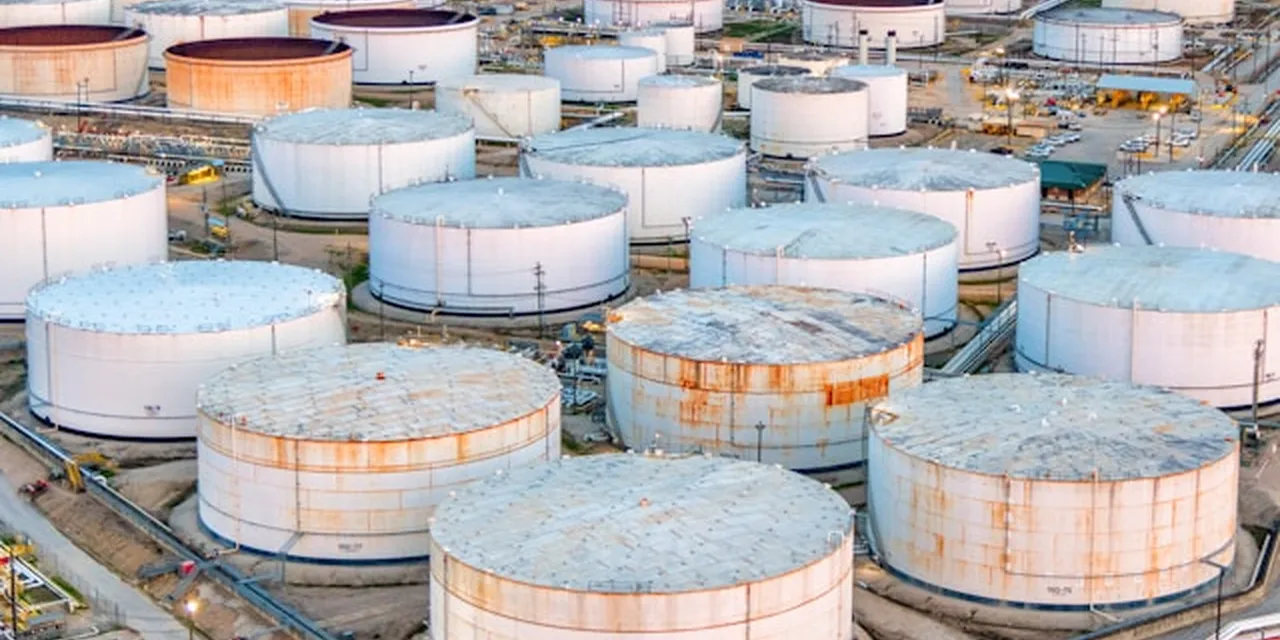
Turkey's largest refining complex sits on the Gulf of İzmit, flanked by 278 chemical processing facilities, liquid bulk terminals operating at 94% throughput, and a workforce that is simultaneously too large and critically too small. The paradox is not theoretical. It is playing out in real time across the Körfez, Derince, and Dilovası corridor, where automation programmes designed to reduce operational headcount by up to 20% are stalling because the specialists required to implement them do not exist in sufficient numbers.
Kocaeli's petrochemical cluster entered 2026 under a set of pressures that no single employer can resolve alone. Seismic safety mandates have frozen 14 major expansion permits. The province has reached 99.7% of its allocated industrial emissions capacity, turning every new project into a zero-sum negotiation. The EU's Carbon Border Adjustment Mechanism is now in full implementation, and the corridor's carbon intensity sits 15 to 20% above EU benchmarks. Every one of these pressures creates demand for specialist talent that the local market cannot supply, at the exact moment when traditional operator roles are being eliminated.
What follows is an analysis of the forces reshaping Kocaeli's industrial and manufacturing sector, who they are affecting, and what organisations leading in this corridor need to do to keep their senior teams ahead of a structural shift that is accelerating faster than the talent pipeline can follow.
The Gulf of İzmit Corridor: Physical Density, Systemic Fragility
The concentration of petrochemical infrastructure along the Gulf of İzmit is extreme by any global standard. Tüpraş's İzmit Refinery processes 11.3 million tonnes per year across a 220,000-plus barrel-per-day complex, making it one of Europe's ten largest refining facilities. Petkim's integrated petrochemical operations employ roughly 3,200 people. The Dilovası Organized Industrial Zone spans 422 hectares and hosts over 250 chemical and advanced manufacturing firms supporting 28,000 industrial workers. Derince Port handles 6.5 million tonnes per year of liquid cargo, serving as the critical import node for methanol, xylenes, and base oils.
This physical density creates enormous operational efficiency when everything works. It also creates systemic vulnerability when anything does not. The delayed Köseköy-Derince Pipeline rehabilitation, originally scheduled for 2024 completion and now projecting Q3 2026 commissioning, forces continued reliance on tanker trucking for intermediate product transfers between Körfez and Dilovası. That is not merely an efficiency problem. It is a safety liability running through residential areas adjacent to active fault lines.
Seismic Reassessment and the Permit Freeze
The February 2023 Kahramanmaraş earthquake sequence triggered consequences that are still cascading through Kocaeli's industrial planning. The Ministry of Environment imposed enhanced seismic safety and environmental impact reassessments on all facilities within 50 kilometres of active fault lines. Dilovası OIZ sits directly on the North Anatolian Fault zone. Since Q2 2023, 14 major expansion permits have been delayed, including Petkim's planned polypropylene capacity expansion and several specialty chemical investments.
The Ministry of Industry has separately mandated structural retrofits for 42 facilities in Dilovası, with a December 2025 compliance deadline and estimated costs of $2 to $5 million per facility. For major operators like Tüpraş and Petkim, these costs are manageable. For smaller specialty chemical firms operating on thin margins in a depreciating currency environment, they threaten viability. The compliance burden does not just affect capital allocation. It creates immediate demand for process safety and structural engineering professionals who are already among the scarcest profiles in the corridor.
Emissions at the Ceiling
The environmental constraint is not hypothetical. According to Turkey's National Pollutant Release and Transfer Register, Kocaeli Province has reached 99.7% of its allocated industrial emissions capacity. New capacity additions require offsetting reductions from existing facilities. This is a zero-sum market for emission credits in a country that does not yet operate a functional emissions trading system.
This reality sits in direct tension with announced investment plans. Petkim and Tüpraş continue to project 2026 and 2027 expansion investments totalling $1.2 billion. Either these projects depend on offset mechanisms not yet publicly documented, regulatory exceptions not yet granted, or corporate commitments that have outrun the regulatory framework. For hiring leaders, the implication is material: employment forecasts attached to these expansion projects carry regulatory risk that is not fully priced in. Building a team around a project that may not receive its permits is a different proposition from building a team around an operational facility.
The Talent Market That Automation Built: Fewer Workers, Harder Searches
The original synthesis at the centre of this analysis is this: Kocaeli's petrochemical automation investment has not reduced the difficulty of hiring. It has replaced one hiring challenge with a harder one. The corridor is moving from a market where it needed many people with standard qualifications to a market where it needs fewer people with qualifications that barely exist.
Tüpraş's automation of its alkylation units, scheduled for Q2 2026, will eliminate approximately 120 operational positions. It will simultaneously create demand for 45 advanced process control specialists. The net headcount reduction looks efficient on a balance sheet. The talent acquisition reality is the opposite. Those 120 operators could be recruited from Kocaeli University's annual graduating class of 400 chemical engineers. The 45 APC specialists cannot. The national graduating class for this speciality is approximately 40 per year, and every major refinery and petrochemical complex in Turkey is competing for the same pool.
The sector publicly commits to Industry 4.0 targets of 15 to 20% operational workforce reduction by 2030. Yet its own hiring data tells a different story. Job postings for chemical engineers in Kocaeli rose 34% year over year in 2024. Average time to fill for senior roles extended from 45 days to 78 days. The roles being posted are not the roles being eliminated. They are the roles that do not yet have an adequate supply of qualified candidates anywhere in Turkey.
This is the core tension: unemployment for traditional profiles will coexist with extreme scarcity for hybrid technical-digital profiles. The corridor is not becoming easier to hire for. It is becoming easier to hire for roles that matter less and harder to hire for roles that matter most.
Three Shortage Categories Defining the 2026 Hiring Market
Process Safety and HSE Leadership
The demand for experienced process safety and HSE managers has intensified beyond what the local market can absorb. Post-2023 regulatory mandates, insurance liability pressures, and the Kocaeli Governorate's requirement for third-party safety audits across all Class 1 hazardous facilities have created a vacancy-to-qualified-candidate ratio of 4:1 for HSE managers with ten or more years of experience.
The competition dynamics are revealing. According to industry recruitment surveys, senior HSE managers who indicate any availability typically receive three to four competing offers simultaneously, with premium packages exceeding standard compensation by 40 to 60%. This is not a market where posting a vacancy and waiting for applications produces results. These professionals are overwhelmingly passive. Their average tenure is 8.2 years, they hold pension vesting schedules that penalise early departure, and 70% are not actively looking.
The additional pressure comes from the Middle East. Abu Dhabi, Jubail, and Ras Laffan actively recruit Turkish chemical engineers and safety professionals, offering tax-free salaries that represent a 40 to 60% net income increase. This pipeline of outbound talent primarily affects VP-level operations leaders and senior process safety engineers with 15 or more years of experience. Kocaeli's lower cost of living relative to Istanbul or Gulf hubs is a retention argument, but it is eroded by lower absolute salary ceilings and limited international school infrastructure for executives considering repatriation.
Advanced Process Control Engineers
The APC engineer shortage is the most acute bottleneck in the corridor's automation plans. An estimated 150 open positions exist across Kocaeli, against a national graduating class of roughly 40 specialists per year. The maths is unforgiving. Even if every qualified graduate in Turkey chose Kocaeli over İzmir, Istanbul, or international opportunities, the supply would cover barely a quarter of current demand.
The competency profile has also shifted. Employers no longer need engineers who can operate Aspen HYSYS in isolation. They need professionals who combine process simulation expertise with data science capability: Python, MATLAB, and machine learning for yield optimisation. Professionals with this combined chemical engineering and data science profile command salary premiums of 35 to 50% above standard process engineering rates, according to 2024 LinkedIn economic data for Turkey. The premium exists because the supply is structurally limited. Turkish university curricula have not yet integrated these hybrid programmes at scale.
Circular Economy and Chemical Recycling Specialists
The newest shortage is also the most difficult to address domestically. New EU waste shipment regulations require chemical recycling expertise that is largely absent from traditional petrochemical operations. According to PwC Turkey's chemicals industry outlook, Kocaeli firms currently recruit 70% of these profiles from international markets. This dependency creates a compounding cost problem: international specialists require relocation packages, frequently demand compensation benchmarked to Western European or Gulf rates, and introduce cross-border hiring complexity that extends search timelines by weeks.
The CBAM full implementation in 2026 has made this shortage urgent rather than emerging. The corridor's carbon intensity sits 15 to 20% above EU benchmarks. Tüpraş has committed $300 million to hydrogen production units and carbon capture feasibility studies at İzmit, targeting 2030 operational dates but requiring 2026 construction starts to meet compliance timelines. According to a Deloitte Turkey CBAM readiness survey, the estimated abatement investment required across the corridor exceeds $200 million. Every dollar of that investment requires people to plan it, implement it, and certify it. Those people are not waiting on a job board.
Compensation in a Depreciating Currency: What Roles Actually Pay
Compensation data for Kocaeli's petrochemical sector must be read through the lens of Turkish Lira volatility. The 2024 lira depreciation increased feedstock costs by 38% year over year for local chemical processors. It also distorted the real value of salary packages for any professional comparing a Kocaeli offer against an international alternative.
At the senior specialist and manager level, a process engineer with ten or more years of experience earns $3,800 to $5,200 per month in base salary, with a 15 to 20% annual bonus. An HSE manager commands $4,500 to $6,500 per month. These figures are competitive within the Turkish domestic market. They are not competitive against a tax-free offer from Ruwais or Jubail that represents a 40 to 60% net income uplift.
At the executive and VP level, the picture shifts. An operations director overseeing a refinery or petrochemical complex earns $12,000 to $18,000 per month in base salary, with executive benefits including international schooling allowances. A plant manager at a major chemical facility earns $10,000 to $15,000 per month, with meaningful variance between Turkish-owned firms like Tüpraş and Petkim and multinational joint ventures that benchmark to broader regional standards.
The compensation gap between Kocaeli and its nearest domestic competitor is also widening. İzmir's Aliağa corridor, anchored by the STAR Refinery and Socar Turkey operations, offers 10 to 15% salary premiums for equivalent roles. The premium reflects higher productivity metrics at STAR's greenfield technology, but it also reflects a quality-of-life differential: coastal lifestyle versus industrial density. The 400-kilometre distance between Kocaeli and İzmir prevents commuting, making every move between the two a permanent relocation decision. For a senior engineer with a family, the salary premium and lifestyle improvement are a compelling combination that Kocaeli struggles to counter with a retention package alone.
The "Musical Chairs" Problem: A Passive Market Eating Itself
The passive candidate dynamics in Kocaeli's petrochemical corridor create a hiring environment that is fundamentally different from markets where active candidates are plentiful. At the senior level, the numbers are stark. An estimated 85 to 90% of qualified senior process engineers are employed and not actively applying. For refinery operations managers, the figure is effectively 100%. These roles are never filled via job postings. They are filled through retained search and direct headhunting.
At the junior level, the picture inverts. Roughly 60% of chemical engineers with zero to five years of experience are active job seekers. This creates a distortion that misleads employers who measure talent availability by application volume. The inbox is full. The inbox is full of people who cannot do the work that matters most.
The more revealing dynamic is geographic. Senior professionals in Kocaeli's corridor exhibit low geographic mobility willingness. Only 12% are willing to relocate internationally, compared with 34% in Istanbul's technology sector. But they exhibit high intra-industry mobility, moving between Tüpraş, Petkim, and specialty chemical firms without leaving the corridor. This creates what the data describes as a "musical chairs" talent market. One employer's gain is directly another's loss. The total pool of senior talent in the corridor does not grow through this movement. It merely redistributes.
For hiring leaders, this means that traditional search methods that rely on visible, active candidates reach at most 10 to 15% of the viable candidate pool for senior roles. A job posting in Kocaeli for an operations director will attract junior applicants, lateral applicants from adjacent sectors without the required process knowledge, and almost none of the senior professionals who could actually do the job. The candidates who can do the job are at their desks. They are not reading job boards. They must be found, assessed, and approached individually.
The Tripartite Talent Drain: İzmir, Istanbul, and the Gulf
Kocaeli's retention challenge is not a single competitive threat. It is three simultaneous forces pulling talent in different directions, each targeting a different segment of the workforce.
İzmir's Aliağa corridor competes for operational talent. STAR Refinery's greenfield technology, higher productivity metrics, and a materially better quality of life create a recruitment proposition that Kocaeli's industrial density cannot match. The 10 to 15% salary premium is the visible component. The invisible component is that professionals moving to İzmir are not leaving the industry. They are leaving the environment.
Istanbul competes differently. It does not have operational facilities, but it houses the corporate headquarters of Tüpraş, Petkim, and international majors like BASF Turkey and Dow Turkey. The recruitment pattern here targets senior engineers who want to exit 24/7 shift operations for strategic planning and supply chain roles. The offer includes better work-life balance, stock option packages unavailable at plant level, and a city that provides cultural and educational infrastructure for families. This represents a brain drain specific to professionals who have reached a career stage where operational intensity is no longer appealing. According to Kocaeli University alumni tracking data, this migration accelerates sharply after 15 years of operational tenure.
The Gulf states compete at the apex. Abu Dhabi, Jubail, and Ras Laffan target Turkey's most experienced operations leaders and safety engineers. The tax-free salary structure, English-language work environments, and expatriate benefits packages create a financial proposition that Kocaeli cannot match on compensation alone. The loss of even a small number of VP-level professionals to the Gulf has outsized effects in a market where the total pool of qualified leaders is measured in dozens, not hundreds.
The retention tools available to Kocaeli employers are limited. Lower cost of living is real but insufficient as a sole argument. Pension vesting schedules create some friction, particularly for HSE directors with average tenures exceeding eight years. But the most effective retention mechanism appears to be the one that is most difficult to engineer deliberately: deep professional identity tied to a specific facility. A senior engineer who has spent a career optimising a particular alkylation unit has expertise that is difficult to transfer. The employer's task is recognising this attachment and building a proposition around it before a competitor offers something that breaks the inertia.
What This Means for Hiring Leaders in Kocaeli's Corridor
The convergence of automation, regulatory pressure, and talent drain creates a hiring environment where conventional approaches fail predictably. The firms that will secure the senior talent they need in 2026 are the firms that recognise three realities.
First, the passive candidate ratio at senior level means that any search conducted primarily through job advertising will miss 85% or more of the qualified market. For operations directors and HSE leadership, the figure approaches 100%. Identifying and engaging passive candidates requires direct search capability, market intelligence about who sits where, and a credible approach that gives a settled professional a reason to listen.
Second, the compensation conversation has become a currency conversation. A Kocaeli offer benchmarked in lira against a Gulf offer benchmarked in dirhams is not a like-for-like comparison, and candidates know it. Employers who cannot compete on gross salary must compete on career trajectory, project significance, and the quality of the technical challenge. Tüpraş's $300 million hydrogen investment and Petkim's ethane cracker project are genuine differentiators if they are presented as career propositions rather than corporate announcements.
Third, the cost of a failed or delayed senior hire in this corridor is measurably higher than in less regulated markets. A process safety leadership vacancy during a mandatory third-party audit cycle is not an inconvenience. It is a compliance risk that can delay operational permits. A missing APC engineer does not merely slow an automation project. It stalls a programme that the entire operational headcount reduction depends on.
KiTalent's approach to this market reflects these realities. Working through AI-enhanced talent mapping, we identify and assess candidates who are not visible on any job board or recruitment platform. Our model delivers interview-ready candidates within 7 to 10 days, with a pay-per-interview structure that means clients invest only when they are meeting qualified professionals. In a market where the senior talent pool recirculates within a tight corridor and the qualified candidate for an operations director role is working at the plant next door, the difference between a 78-day search and a 10-day shortlist is the difference between filling a role and watching the best candidate accept a competing offer.
For organisations hiring process safety leadership, APC engineering talent, or sustainability executives across Kocaeli's petrochemical corridor, where every senior candidate is passive and the cost of an empty seat compounds weekly, start a conversation with our industrial sector search team about how we approach this specific market.
Frequently Asked Questions
What makes Kocaeli's petrochemical talent market different from other Turkish industrial hubs?
Kocaeli's Gulf of İzmit corridor concentrates Turkey's largest refining complex, over 250 chemical processing facilities, and critical port infrastructure within a contiguous coastal strip. This density means talent circulates within the corridor rather than entering from outside, creating a closed market where one employer's hire is another's loss. Senior roles are 85 to 90% passive, and the corridor faces simultaneous regulatory, seismic, and emissions constraints that amplify demand for specialists the domestic pipeline cannot supply in adequate numbers.
Why are process safety and HSE managers so difficult to hire in Kocaeli?
Post-2023 seismic regulations and mandatory third-party safety audits have driven a 4:1 vacancy-to-qualified-candidate ratio for HSE managers with ten or more years of experience. These professionals have average tenures exceeding eight years and are overwhelmingly passive. Gulf states also recruit aggressively from this pool, offering tax-free compensation representing a 40 to 60% net income uplift. Filling these roles requires direct headhunting of passive candidates rather than reliance on job postings.
What do senior petrochemical roles pay in Kocaeli in 2026?
Operations directors overseeing refinery or petrochemical complexes earn $12,000 to $18,000 per month in base salary, with executive benefits including international schooling allowances. Plant managers earn $10,000 to $15,000 per month with variance between Turkish-owned and multinational employers. HSE managers command $4,500 to $6,500 per month but face persistent poaching from Middle Eastern operators at 30 to 40% premiums above these figures.
How does the EU Carbon Border Adjustment Mechanism affect Kocaeli's workforce needs?
CBAM full implementation in 2026 means Kocaeli's petrochemical exports to Europe face carbon cost adjustments unless the corridor closes a 15 to 20% carbon intensity gap against EU benchmarks. This requires over $200 million in abatement investment, creating immediate demand for sustainability officers, carbon accounting specialists, and green hydrogen project engineers. Seventy percent of chemical recycling specialists currently come from international markets, adding cost and complexity to every search.
How does KiTalent approach executive search in Turkey's petrochemical sector?
KiTalent uses AI-enhanced talent pipeline development to identify passive senior professionals who do not appear on job boards or recruitment platforms. In Kocaeli's closed-loop talent market, this means mapping the senior leadership across Tüpraş, Petkim, and the Dilovası corridor's specialty chemical firms to identify candidates before they signal availability. Our pay-per-interview model means clients invest only when meeting qualified candidates, and our 96% one-year retention rate reflects the depth of assessment applied before any introduction is made.
Is Kocaeli losing senior talent to İzmir and the Middle East?
Yes, and the losses target different segments. İzmir's Aliağa corridor attracts operational talent with 10 to 15% salary premiums and a superior coastal lifestyle. Istanbul draws senior engineers into corporate headquarters roles offering work-life balance and equity participation. Gulf states recruit the most experienced operations leaders and safety engineers with tax-free packages. Kocaeli employers must build retention propositions that address career trajectory and project significance, not just base compensation, to counter these pulls.