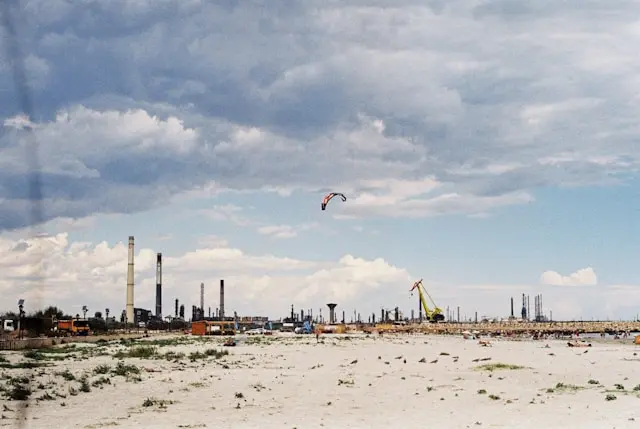
Kostanay's Logistics Sector Is Modernising Its Infrastructure and Losing the People Who Run It

Kostanay handles roughly 3.5 to 4 million tonnes of grain per year through its rail connections to Russia and beyond. It is the primary logistics gateway for northern Kazakhstan's agricultural heartland, a classification yard and border junction that moves iron ore, oilseeds, and consumer goods across one of Central Asia's most active freight corridors. By any measure of throughput, the region matters.
Yet the professionals who manage that throughput are leaving. Senior customs brokers, rail operations managers, and supply chain directors are migrating to Almaty for 40 to 60 per cent pay premiums and access to career paths that Kostanay's commodity-centric market cannot offer. The talent pool is not simply thin. It is actively draining toward markets that offer vertical diversity in pharmaceuticals, electronics, air cargo, and e-commerce fulfilment. Kostanay's freight volumes may justify a deep labour market. Its compensation structure and career limitations ensure it does not have one.
What follows is an analysis of the forces reshaping Kostanay's logistics and freight forwarding sector, the specific roles where hiring has become most difficult, and what organisations operating in this market need to understand before they commit to their next leadership search.
The Infrastructure Is Advancing. The Workforce Is Not.
Kazakhstan's "Nurly Zhol" state infrastructure programme has continued to channel capital into Kostanay's rail electrification and border checkpoint digitisation through 2025 and into 2026. The Tobol border crossing now operates with digitised pre-declaration systems. Planned automation of vehicle inspection is intended to cut truck processing times by 30 per cent. KTZ's rolling stock renewal programmes are addressing the chronic railcar shortages that force exporters onto roads at 40 to 50 per cent higher cost during harvest peaks.
These are material investments. They are also investments whose returns depend entirely on whether the people operating the systems can use them.
This is the core paradox in Kostanay's logistics market in 2026: the hardware is modernising, but the human capital remains anchored to Soviet-era rail engineering curricula and informal apprenticeship models. Local vocational programmes at institutions like Kostanay Social-Technical University produce technicians proficient in legacy systems. They do not produce professionals capable of managing integrated intermodal logistics, digital customs platforms, or automated warehouse management systems. The result is a market where infrastructure efficiency gains are constrained by the very workforce that is supposed to deliver them.
For hiring leaders, this paradox has a direct operational consequence. Every new system, every digitised checkpoint, every electrified rail segment creates demand for a category of professional that does not yet exist in sufficient numbers within the Kostanay labour market. Capital moved faster than human capital could follow. The organisations that recognised this gap early have been recruiting from Pavlodar and Karaganda. The organisations that did not are running searches that stretch to three or four months before producing a single qualified candidate.
A Freight Market Built on Three Verticals and One Direction
Kostanay's logistics activity concentrates on three verticals: agricultural commodity exports (grain and oilseeds) to Russia and Black Sea ports, iron ore logistics from the Sokolovsky-Sarbai mining complex, and consumer goods import distribution for the regional population of approximately 870,000. This is not a diversified logistics hub. It is a commodity corridor with a single dominant direction.
Cross-border trade flows overwhelmingly toward Russia, specifically the Chelyabinsk and Kurgan oblasts. The Tobol and Karabalyk border checkpoints handle the bulk of this traffic. Transit potential into China-Europe northern routes remains contingent on Russian rail capacity allocation and geopolitical stability. Kostanay is not currently designated as a primary dry port in Kazakhstan's national intermodal strategies.
The Warehousing Constraint
The absence of modern warehousing is not a minor gap. It is the structural ceiling on Kostanay's ability to diversify. Storage capacity is dominated by Soviet-era grain elevators with an aggregate regional capacity of approximately 2.8 million tonnes. Modern Class A warehousing, meaning high-bay racking, temperature control, and cross-dock capabilities, amounts to less than 15,000 square metres. For context, Almaty has more than 400,000 square metres.
No major announcements of speculative Class A warehousing development appeared in public filings or regional development reports as of late 2024. Without temperature-controlled, high-bay logistics centres, Kostanay cannot handle pharmaceuticals, electronics, or e-commerce fulfilment. The sector remains confined to bulk commodity handling. This confinement shapes every talent decision in the market: candidates who want to work in modern supply chain management see no path forward here. The talent pipeline for advanced logistics skills flows to cities that have the facilities to use them.
Rail Capacity and Seasonal Pressure
During Q3 grain exports, demand for covered hopper cars exceeds KTZ supply by an estimated 20 to 30 per cent. Exporters face a binary choice: pay 40 to 50 per cent more for road transport or absorb demurrage charges. This seasonal crunch is not new, but its workforce implications are underappreciated. Hiring demand for logistics coordinators, customs brokers, and rail yard operators surges 40 to 60 per cent during the July to September grain procurement window, according to HeadHunter.kz regional data. Firms that cannot staff up before peak season lose revenue directly. The constraint is not just railcars. It is people who know how to load them efficiently.
Where the Talent Gaps Are Most Acute
Three role categories define Kostanay's hiring challenge. Each has a different root cause, and each requires a different search strategy.
EAEU Customs Brokers with Agricultural Certification
The most persistent shortage is in senior customs brokers who hold dual competency in EAEU customs code and Kazakhstani national agricultural certification requirements. These professionals must understand HS code classification for grain and oilseed commodities, veterinary and phytosanitary certification for exports, and the ongoing harmonisation between Kazakhstani procedures and Eurasian Economic Union standards.
Vacancies in this category typically remain unfilled for four to six months during peak seasons. Employers resort to hiring Almaty-based brokers at premium remote rates, a costly workaround that does not solve the underlying access problem. Market estimates suggest 70 to 80 per cent of qualified customs brokers in the Kostanay region are passive candidates. They maintain near-zero unemployment, rarely appear on active job boards, and average more than eight years of tenure in their current roles. This is not a market where a job posting reaches the right people. It is a market where direct headhunting and relationship-based recruitment are the only reliable methods.
Rail Operations Managers
Employers recruiting rail yard operations managers with expertise in KTZ grain loading optimisation, railcar fleet coordination, and private siding management face candidate pools of fewer than five qualified applicants per vacancy. A typical search involves three to four months of active recruitment, followed by relocation offers to candidates from Pavlodar or Karaganda.
The bottleneck is not interest. It is certification. KTZ internal certification is required for these roles, and the training pipeline is narrow. Average tenure exceeds ten years, and candidates are accessed almost exclusively through KTZ alumni networks. The combination of high job security, limited external mobility, and a closed certification system makes this one of the most passive candidate categories in all of Kazakhstan's logistics sector.
Cross-Border Operations and Sanctions Compliance
A newer and increasingly critical shortage is in cross-border operations managers with sanctions-related due diligence expertise. Secondary sanctions exposure regarding transshipment to and from Russia requires freight forwarders to implement enhanced due diligence protocols. The Financial Monitoring Agency of the Republic of Kazakhstan issued compliance advisories through 2024 that raised the bar for all operators handling Russian-bound or Russian-origin freight.
This is not a traditional logistics skill. It sits at the intersection of regulatory compliance, legal risk, and operational execution. The professionals who possess it are not concentrated in Kostanay. They are in Astana, near the regulatory apparatus, or in Almaty, where multinational freight forwarders maintain their Kazakhstani headquarters. Recruiting them to Kostanay requires more than a competitive salary. It requires a role proposition that justifies the geographic move, a challenge that connects to the broader retention problem the market faces.
The Compensation Gap That Drives the Talent Drain
Kostanay's compensation structure for logistics professionals reflects a regional coefficient of 0.8 to 0.9 relative to the Almaty baseline. In practical terms, a logistics operations manager in Kostanay earns 600,000 to 950,000 KZT per month (approximately $1,200 to $1,900 USD). The same role in Almaty commands 40 to 60 per cent more. A regional logistics director at a local agricultural holding earns 1,200,000 to 2,000,000 KZT monthly. A supply chain director at a multinational or major commodity trader in a larger market commands 1,800,000 to 3,000,000 KZT.
These gaps are not closing. They are widening at exactly the seniority level where Kostanay's most critical roles sit.
The gap is worst for senior customs brokers (550,000 to 850,000 KZT in Kostanay versus materially higher in Almaty) and for rail operations managers (700,000 to 1,100,000 KZT), who face the additional pull of energy-sector logistics in Atyrau and Aktau, where oil and gas supply chain roles pay 50 to 80 per cent premiums over agricultural logistics equivalents. A mid-career professional in Kostanay who reaches the ceiling of the local market has four obvious exits: Almaty for career diversification, Astana for regulatory proximity and public-sector stability, western Kazakhstan for energy-sector premiums, or Russia's Chelyabinsk and Yekaterinburg industrial centres for cross-border roles.
Since 2022, geopolitical uncertainty and visa restrictions have slowed outflow to Russia, retaining some talent that would otherwise have migrated. This is a fragile retention mechanism. It depends on conditions outside any employer's control.
For hiring leaders, the implication is that salary benchmarking against Kostanay's regional averages produces an incomplete picture. The real competition is not the firm across town. It is the offer from Almaty that arrives in a passive candidate's inbox and changes the arithmetic entirely. Understanding what it takes to counter that kind of approach is a prerequisite for any retention strategy in this market.
Why Conventional Recruitment Fails in This Market
The average vacancy duration for senior logistics roles in Kostanay Oblast is 78 days. In Almaty, it is 45 days. In Astana, 38 days. The gap is not marginal. It represents nearly six additional weeks of operational exposure for every critical hire.
The root cause is structural. In a market where 70 to 80 per cent of the most qualified customs brokers are passive, and where rail operations managers are accessed almost exclusively through closed certification networks, traditional recruitment methods reach a fraction of the viable candidate pool. Job board postings on Enbek.kz or HeadHunter.kz attract volume for truck driver roles (approximately 60 per cent active candidate ratio in that category) but produce almost nothing for senior specialist and leadership positions.
The international freight forwarders that maintain regional offices in Kostanay, firms like DHL Global Forwarding and Kuehne+Nagel, operate with lean representative teams rather than dedicated warehousing facilities. Their hiring, when it happens, draws on global networks. Local agricultural holdings and customs brokerage firms, typically employing 10 to 30 people, do not have that reach. They rely on word-of-mouth and KTZ alumni connections. When those networks fail, the search stalls.
This is the market condition where executive search methodology designed for passive candidate identification delivers disproportionate value. The candidates are not hidden in some abstract sense. They are in specific roles, at specific employers, in specific cities. But reaching them requires systematic talent mapping and a proposition that addresses their career calculus directly, not just their salary expectations.
The Geopolitical and Regulatory Layer
Two external forces add complexity to every hiring decision in Kostanay's logistics sector, and both are intensifying through 2026.
The first is sanctions compliance. Kostanay's freight flows are overwhelmingly oriented toward Russia. Every operator handling transshipment faces secondary sanctions exposure that requires enhanced due diligence protocols. This is not a paperwork exercise. It creates legal risk, operational delays, and a demand for compliance competency that the local market was never built to supply. The professionals who understand these requirements command premiums and prefer to work in Astana or Almaty, where the regulatory infrastructure and career trajectories support specialisation.
The second is commodity price volatility. Grain and iron ore price fluctuations directly impact logistics volumes. Through 2023 and 2024, grain price declines reduced regional logistics revenues by an estimated 12 to 15 per cent year-on-year. For smaller forwarders, already under seasonal cash flow pressure from Q3 working capital requirements for grain procurement financing, this creates a liquidity risk that limits their ability to invest in talent acquisition. The firms most in need of senior leadership are often the firms least able to afford it.
Geopolitical transit disruption is the longer-term risk. Dependence on Russian rail corridors for westbound traffic exposes the entire Kostanay logistics chain to potential route disruptions or sanctions-related rail embargoes. Diversification into China-Europe northern routes would reduce this exposure, but that path remains contingent on Russian capacity allocation and is not part of Kostanay's current designation in national intermodal strategy.
For organisations hiring across borders and navigating regulatory complexity, these are not background risks. They are the operating conditions that determine which candidates are willing to take a role in this market, and which are not. The total proposition, including stability, career trajectory, and risk exposure, matters as much as the compensation number. Failing to address it is a common reason executive searches in specialised markets produce the wrong outcome.
What Hiring Leaders in This Market Need to Do Differently
Kostanay's logistics talent challenge is not a shortage that higher salaries alone can solve. The market faces a systemic mismatch between the professionals it produces and the professionals its modernising infrastructure requires. Geographic advantage in bulk commodity logistics does not translate to talent retention when the local market lacks vertical diversity. Until Kostanay can offer career paths in pharmaceuticals logistics, e-commerce fulfilment, air cargo, or Caspian port operations, its most ambitious mid-career professionals will continue to leave.
This does not mean the market is impossible to hire in. It means the search approach must be calibrated precisely to the conditions.
First, the candidate pool for senior roles is overwhelmingly passive. Active job boards produce volume at the driver and coordinator level but generate almost nothing at the manager, director, or specialist broker level. Every leadership search must be designed as a direct approach campaign, not an advertising exercise. This is a fundamental methodological question that determines whether a search reaches the right candidates.
Second, the geographic sourcing net must extend beyond Kostanay Oblast. The research consistently shows that the resolution to a stalled search is a relocation offer to a candidate from Pavlodar, Karaganda, or in some cases Almaty. Structuring these offers correctly, including relocation support, role scope, and long-term career mapping, is what converts a passive candidate into a hire.
Third, the seasonal hiring cycle is a strategic variable, not a scheduling inconvenience. Organisations that begin their senior logistics recruitment in Q2, before the July surge in demand, operate with a materially wider candidate pool than those that react to the shortage in Q3 when every firm in the market is competing for the same people simultaneously.
KiTalent works with organisations across Central Asia's industrial and logistics sectors, delivering interview-ready candidates within 7 to 10 days through AI-enhanced talent mapping that reaches the passive professionals who define this market. With a 96 per cent one-year retention rate across more than 1,450 executive placements, the methodology is built for exactly the conditions Kostanay's logistics sector presents: thin pools, passive candidates, and searches that conventional methods cannot close.
For organisations competing for rail operations leaders, EAEU customs specialists, or supply chain directors in one of Central Asia's most constrained talent markets, start a conversation with our executive search team about how we approach Kostanay and the broader Kazakhstani logistics market.
Frequently Asked Questions
What are the hardest logistics roles to fill in Kostanay?
Senior EAEU customs brokers with agricultural certification and rail operations managers with KTZ network certifications are the most difficult to recruit. Customs broker vacancies typically remain open for four to six months during peak season, while rail operations searches produce fewer than five qualified candidates per vacancy. Both categories are dominated by passive professionals with long tenures who do not appear on job boards. Cross-border operations managers with sanctions compliance expertise represent an emerging and equally constrained category. KiTalent's direct headhunting methodology is specifically designed to identify and engage these passive specialists.
How do logistics salaries in Kostanay compare to Almaty?
Kostanay logistics salaries operate at a regional coefficient of 0.8 to 0.9 relative to Almaty. A logistics operations manager earns 600,000 to 950,000 KZT monthly in Kostanay versus 40 to 60 per cent more in Almaty. At director level, the gap widens further. Regional logistics directors at local holdings earn 1,200,000 to 2,000,000 KZT, while equivalent roles at multinationals in Almaty command 1,800,000 to 3,000,000 KZT. Energy-sector logistics in Atyrau and Aktau adds further competitive pressure with premiums of 50 to 80 per cent over agricultural logistics equivalents.
Why is the talent pool for rail operations managers so limited in Kostanay?
Rail operations management in Kazakhstan requires KTZ internal certification, which is produced through a narrow training pipeline. Professionals who hold this certification typically remain in their roles for more than ten years, creating an extremely passive candidate market. They are accessed primarily through KTZ alumni networks rather than job advertising. The combination of high job security, closed certification requirements, and limited external training options makes this one of the most constrained talent categories in Kazakhstani logistics.
What impact do sanctions have on logistics hiring in Kostanay?
Kostanay's freight flows are overwhelmingly oriented toward Russia, meaning every operator faces secondary sanctions exposure on transshipment. The Financial Monitoring Agency of Kazakhstan has issued compliance advisories requiring enhanced due diligence protocols. This creates demand for professionals with combined logistics operations and regulatory compliance expertise, a skill set that is rare in Kostanay and more commonly found in Astana or Almaty. Organisations hiring for cross-border roles must factor sanctions compliance competency into the role specification and the compensation proposition.
How long does a typical senior logistics search take in Kostanay?
Average vacancy duration for senior logistics roles in Kostanay Oblast is 78 days, compared to 45 days in Almaty and 38 days in Astana. Specialist roles, particularly EAEU customs brokers and rail operations managers, frequently exceed this average, with four to six month timelines common during peak season. The extended duration reflects the passive nature of the candidate pool and the limited reach of conventional recruitment methods in a market where the most qualified professionals are not actively looking.
Can an executive search firm improve hiring outcomes in Kostanay's logistics sector?
A specialist executive search firm with Central Asian market coverage can materially reduce search timelines by accessing the 70 to 80 per cent of qualified logistics professionals who are passive candidates. KiTalent's AI-enhanced talent mapping identifies candidates across Kostanay, Pavlodar, Karaganda, and the broader Kazakhstani market, delivering interview-ready shortlists within 7 to 10 days. The pay-per-interview model means organisations only invest when they meet qualified candidates, removing the upfront retainer risk that makes retained search prohibitive for regional employers operating under seasonal cash flow pressure.