Kraljevo's Agro-Processing Sector Is Automating Because It Cannot Hire: The Talent Crisis Inside Serbia's Food Manufacturing Hub
Kraljevo's agro-processing output reached €187 million in the twelve months to September 2024. The sector grew 4.2% year on year. On paper, this is a market moving in the right direction. Beneath the headline figure, a different picture emerges. That 4.2% growth lagged the national food and beverage manufacturing average of 6.1%, and the reason is not a shortage of capital or raw materials. It is a shortage of the people who run the machines, maintain the certifications, and manage the cold chains that turn Serbian dairy, meat, and fruit into exportable product.
The Raška District reports an unemployment rate of 14.8%, more than five percentage points above the national average. Yet food processors in Kraljevo report 18% vacancy rates in technically certified roles. QA managers with BRC or IFS audit credentials take 95 to 130 days to place locally, more than double the equivalent search in Belgrade. The unemployment pool and the vacancy pool exist side by side, separated by a skills gap that neither public reskilling programmes nor conventional recruitment can close at the speed the market requires.
This article examines the forces reshaping Kraljevo's agro-processing sector in 2026: the consolidation that is eliminating small producers, the automation wave driven by hiring failures rather than productivity targets, the compensation dynamics that pull qualified professionals toward Belgrade and beyond, and the specific roles where the gap between employer demand and available talent has become acute. What follows is a ground-level analysis of why this market is harder to hire in than aggregate data suggests, and what organisations operating here need to understand before their next senior search.
The Consolidation That Rewrote the Employer Map
The image of Kraljevo as a market populated by family-run processors and artisan bakeries is several years out of date. As of the third quarter of 2024, only 12% of registered food processing entities in the municipality employed fewer than 10 workers. In 2018, that figure was 28%. Medium enterprises with 50 to 249 employees and large plants with 250 or more now control 78% of processing volume.
The driver behind this shift is not organic growth. It is certification economics. National retail chains including Maxi, Univerexport, and Lidl Serbia require suppliers to maintain HACCP as a minimum, and increasingly demand BRC or IFS certification for any product that reaches their shelves. The cost of maintaining these certifications falls disproportionately on smaller operators. According to a USAID Serbia cold chain and agro-processing assessment, family operations that once served local markets now find themselves excluded from national retail supply chains entirely.
The number of registered small food processors in Kraljevo fell 12% between 2021 and 2023. Medium-to-large plant employment rose 8% over the same period. This is not a market growing across all segments. It is a market where the base is narrowing and the top is expanding.
For hiring leaders, the implication is concrete. The employer map that matters in Kraljevo is now dominated by four or five anchor operations. Imlek, owned by Lactalis Group, employs 340 to 380 workers at its Kraljevo dairy plant. Matijević runs a meat processing and packaging facility with 160 to 180 staff. Frigo-Led operates cold storage and IQF fruit processing with 120 seasonal and 45 permanent employees. Mlekara Kraljevo, a cooperative network, collectively employs around 80 workers across three mini-dairies. These operations compete for the same narrow pool of certified professionals. When one hires, the others feel it.
Two to three family-owned fruit processors are expected to cease operations in 2026, unable to finance the mandatory EU Sanitary and Phytosanitary alignment investments required under Serbia's Chapter 11 accession negotiations. The consolidation trajectory established through 2024 and 2025 has continued, and the talent that disperses from closing facilities does not automatically flow to the surviving plants. It flows toward Belgrade, or toward Germany.
Where the Vacancies Are: Three Roles That Define the Shortage
QA Managers With EU Retailer Standards Credentials
The most acute hiring gap in Kraljevo's food sector sits in quality assurance. Only four facilities in the entire municipality hold BRC or IFS certification: the Imlek dairy plant, the Matijević processing facility, and two fruit freezing operations. Every other processor operates at HACCP level or below. The professionals who understand how to implement, maintain, and pass higher-tier audits are scarce nationally. In Kraljevo, they are nearly absent from the active candidate market.
Aggregate recruitment data from the Serbian Employers Association and the National Employment Service show that QA manager roles with BRC or IFS lead auditor requirements typically remain unfilled for 95 to 130 days in Kraljevo. The same role fills in 45 to 60 days in Belgrade. Employers routinely extend search parameters to Niš or Novi Sad and offer relocation packages to attract candidates. An estimated 85% of QA directors with BRC or IFS audit experience in Serbia are passive candidates: employed, not applying to postings, and reachable only through direct headhunting methods that target professionals who are not on the open market.
Food Technologists in Aseptic and UHT Processing
Senior food technologists with five or more years of UHT or modified-atmosphere packaging experience represent the second critical shortage. The typical pattern involves direct poaching between Kraljevo's anchor employers, with salary premiums of 20 to 25% offered to secure a candidate from a competitor. Smaller processors report being unable to compete at these levels, leaving positions vacant for entire production seasons.
Average tenure for senior food technologists at their current employer is 4.2 years. An estimated 75% are passive. The pool is small to begin with: the University of Kragujevac's Faculty of Agronomy at its Kraljevo branch graduates 45 to 50 BSc and 15 MSc candidates annually. Not all enter food manufacturing. The pipeline produces fewer specialists each year than the market absorbs through attrition alone.
Automation Technicians With Food-Grade Credentials
The third gap is in automation and maintenance engineering for food-grade machinery. This role sits at the intersection of two competing sectors. Kraljevo's food processors need PLC programmers and maintenance engineers who understand hygienic production environments. The automotive sector, with ZF and Bosch operations in nearby Čačak and Kruševac, needs the same foundational skillset and pays more for it.
An estimated 80% of automation engineers with food-grade PLC programming experience are passive candidates. One documented case, anonymised in Regional Development Agency investor support files, describes a medium-sized fruit processor that created a remote maintenance partnership with a Belgrade technical firm after an 18-month unsuccessful local search. The firm did not find the talent. It restructured the role out of existence and outsourced the function. This is a pattern that signals a search challenge traditional recruitment methods cannot resolve.
Automation as a Hiring Failure Response, Not a Productivity Strategy
Here is the analytical point that the raw data does not state but that the evidence supports. The acceleration of automation in Kraljevo's food sector is not primarily a story about efficiency gains or productivity optimisation. It is a story about employers who could not fill roles with humans and turned to machines as a second-best alternative.
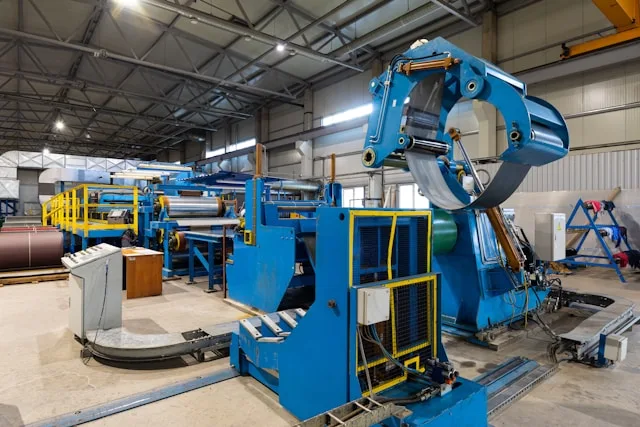
The share of robotic palletising and automated CIP systems across Kraljevo's production lines was 35% as of late 2024. Projections from Serbia's Investment and Business Development Agency forecast this will reach 55% by the end of 2026. That is a near-doubling of automation penetration in roughly two years. The agency's own assessment attributes this acceleration to labour shortages rather than productivity targets.
This matters because automation driven by necessity produces different outcomes than automation driven by strategy. A plant that automates because it chose to will typically invest in upskilling its existing workforce to operate and maintain the new systems. A plant that automates because it ran out of options often discovers, mid-implementation, that the automation itself requires technicians it also cannot hire. The investment in machines has not reduced the workforce requirement. It has replaced one kind of worker, a manual line operator, with another kind, an automation maintenance engineer, that does not yet exist in sufficient numbers in the Raška District.
The result is a self-reinforcing cycle. Shortage drives automation. Automation drives demand for a different, equally scarce skillset. The underlying constraint, which is the absence of technically certified professionals in a municipality losing 1.8% of its working-age population annually, remains unchanged. Capital moved faster than human capital could follow.
For organisations investing in Kraljevo's food manufacturing infrastructure, this creates a specific planning challenge. Every automation investment must be paired with a talent acquisition strategy for the engineers who will maintain and operate those systems. Otherwise the capital sits idle, or it runs at a fraction of capacity, which is worse than not investing at all. Understanding how technology reshapes hiring requirements in manufacturing is no longer optional for leaders in this sector.
The Compensation Equation: Why Belgrade and Vienna Win
Compensation in Kraljevo's agro-processing sector tracks 15 to 20% below Belgrade and 10% below Novi Sad. The gap reflects a lower cost of living, but it creates retention challenges that are widening, not closing.
At the senior specialist and manager level, the picture is clear. A HACCP coordinator with five to eight years of experience earns €1,400 to €1,800 net monthly in Kraljevo. A head of QA or multi-site audit lead earns €3,200 to €4,500 net monthly, plus performance bonuses tied to certification retention. A plant director with P&L responsibility over 100 or more employees earns €3,800 to €5,500 net monthly. Multinational operations, notably Lactalis through its Imlek subsidiary, pay at the upper range or above. Domestic medium enterprises pay at the lower quartile.
These figures tell only part of the story. The competitive set for Kraljevo's professionals extends beyond Serbia's borders.
Belgrade offers 35 to 40% salary premiums for identical roles and provides exposure to multinational headquarters operations including Coca-Cola HBC, Bambi, and Jaffa. For mid-career professionals in the 30 to 45 age cohort seeking a trajectory toward regional management, the pull of Serbia's capital is a gravitational force that Kraljevo's employers cannot easily counter.
Novi Sad offers 20 to 25% premiums and has stronger R&D infrastructure, competing specifically for food technologists and product development scientists.
The most disruptive competitor is not another Serbian city. It is Germany and Austria. Bilateral recruitment agreements allow Serbian food industry technicians to relocate with net wages 2.5 to 3 times higher than Kraljevo equivalents: €3,500 to €4,500 per month for line operators. At the technician level, this creates what Serbia's Statistical Office migration data describes as a vacuum effect. The professionals who would ordinarily form the mid-career pipeline for Kraljevo's plants are leaving the country entirely.
The compensation gap is not closing. It is widening fastest at exactly the seniority level where the most critical roles sit. A cold chain logistics manager in Kraljevo earns €1,200 to €1,600 net monthly. The same function in Belgrade commands materially more. The same function in Vienna or Munich commands three times as much. Every year that the gap persists, the pool of candidates willing to build a career in central Serbia's food manufacturing sector shrinks further.
Structural Risks That Compound the Talent Problem
Energy and Infrastructure Fragility
Cold chain operations are the backbone of Kraljevo's food processing sector. These facilities now report electricity costs at 23% of operational expenditure, up from 16% before the 2022 energy price shock. The cost pressure alone is material. The reliability pressure is worse.
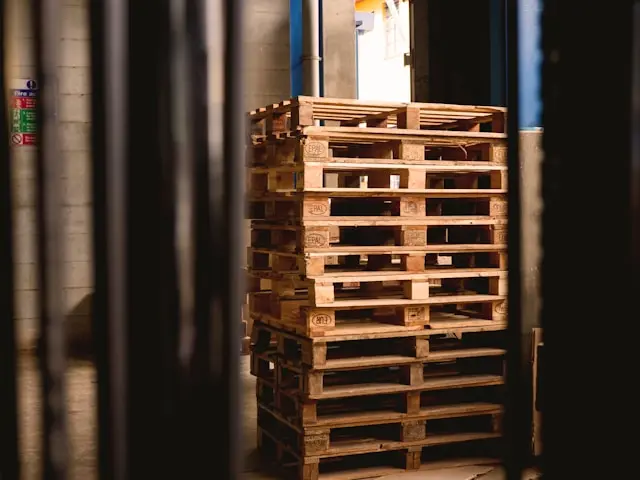
The Raška District experienced 47 hours of planned and unplanned power outages in 2023. Belgrade experienced 12. For a cold storage facility holding temperature-sensitive dairy or frozen fruit inventory, a multi-hour outage is not an inconvenience. It is a product loss event. The cold chain capacity itself is already insufficient. Kraljevo holds approximately 14,000 pallet positions, representing a deficit of 30 to 35% against peak seasonal demand during the raspberry harvest from June to October. Processors are forced to truck raw materials to cold storage in Čačak or Belgrade, adding €0.08 to €0.12 per kilogram in logistics costs.
Raw Material Fragmentation and Seasonal Whiplash
The dominance of smallholder farms in Kraljevo's hinterland, with an average dairy herd of 4.2 cows, creates procurement inefficiencies that larger processors must manage around. Logistics costs for milk collection represent 18 to 22% of raw material cost in Kraljevo, compared to 12 to 14% in consolidated Vojvodina farming regions.
Seasonal volatility adds another layer of complexity. Processing capacity utilisation in the raspberry sector swings from 45% in winter to 115% during the August-September peak, requiring overtime and multi-shift operations that stress both equipment and staff. Dairy faces inverse seasonality: milk supply drops 25 to 30% in January and February, forcing plants to source from southern Serbia or use powdered milk substitutes. Managing these swings requires experienced operations leaders who can plan around constraints that would be unfamiliar to a professional transferring from a more stable production environment.
Export Concentration Risk
Forty-five percent of Kraljevo's processed fruit exports target the Russian market. This concentration exposes the sector to geopolitical sanctions risk and payment system disruptions. The 2024 raspberry yield fell 12% below trend due to summer drought in the Raška river valley, according to Serbia's Hydrometeorological Service climate impact assessment, compressing supply at exactly the moment when export demand was strongest. Firms that had not diversified their customer base absorbed the full margin impact.
For leaders responsible for industrial operations and manufacturing strategy, these risks are not background context. They are the operating reality that any incoming executive must understand on day one.
The Unemployment Paradox: 14.8% Jobless, 18% Vacancies Unfilled
This is the number that should stop every hiring executive in this sector. The Raška District has a 14.8% unemployment rate, well above the Serbian national average of 9.1%. In most markets, that level of unemployment would mean available candidates. In Kraljevo, it does not.
The 18% vacancy rate in technically certified roles exists alongside that unemployment figure because the two populations barely overlap. The unemployed pool consists predominantly of low-skilled or seasonally agricultural workers. The vacancy pool demands HACCP coordinators, BRC auditors, PLC programmers, and cold chain logistics managers. The gap between these two populations is not a recruitment problem. It is a structural mismatch that no amount of job advertising can bridge.
The municipality's working-age population declined 1.8% annually between 2019 and 2023. The Faculty of Agronomy's Kraljevo branch produces 45 to 50 BSc graduates per year. Not all stay in the region. Not all enter food manufacturing. The pipeline is not keeping pace with demand, and it is not growing.
The cluster itself lacks dedicated shared laboratory facilities for microbiological testing. SMEs must send samples to Belgrade, introducing a two-hour turnaround delay that slows production decisions and adds cost. The absence of this shared infrastructure makes the location less attractive to exactly the kind of quality assurance professional that every processor is trying to hire.
Government development strategies from the Regional Development Agency and the Ministry of Agriculture continue to emphasise support for small family processors and rural entrepreneurship. The market is moving in the opposite direction. Retail chains and export markets are consolidating supplier bases toward large, multi-certified plants capable of year-round supply. Public support may be preserving non-viable enterprises temporarily. It is not producing the certified workforce that viable enterprises need.
For organisations facing the hidden cost of leaving critical roles unfilled, the mathematics in Kraljevo are stark. A plant director role that sits open for six months does not simply represent a delayed hire. It represents six months of production decisions made without the right person in the room.
What This Market Requires From Executive Search
Kraljevo's agro-processing sector presents a hiring challenge that conventional methods cannot solve. The candidate pool is small. The most qualified professionals are passive. The geographic pull of Belgrade and Western Europe drains the pipeline faster than local institutions can replenish it. A job posting on the Serbian National Employment Service portal reaches the 14.8% who are unemployed. It does not reach the QA director who is employed, certified, and not looking.
The roles that matter most in this market, plant directors, heads of QA, senior automation engineers, and cold chain logistics managers, require direct identification and targeted approach through methods built for passive candidate markets. The 85% passivity rate among QA directors with BRC or IFS credentials means that an organisation relying on inbound applications is working with, at best, 15% of the available talent. The remaining 85% must be found, assessed, and approached individually.
KiTalent's approach to executive search in food, beverage, and FMCG manufacturing is designed for exactly this kind of market: one where the candidates are employed, where the pool is geographically dispersed, and where speed matters because every week a critical role sits vacant is a week of production decisions made below standard. AI-powered talent mapping identifies the professionals who match the technical and leadership profile before a traditional search would have assembled its first longlist. Interview-ready candidates are delivered within 7 to 10 days. The pay-per-interview model means organisations pay only when they meet qualified candidates, not before.
With a 96% one-year retention rate across 1,450 or more executive placements, KiTalent's track record reflects a methodology that prioritises fit over speed alone. In a market where the risk of a wrong hire compounds every existing constraint, that retention rate is not a marketing number. It is an operational safeguard.
For organisations hiring plant directors, QA leaders, or senior technical specialists in Kraljevo's agro-processing sector, where 85% of the candidates you need are not visible on any job board and the cost of a slow search is measured in lost production seasons, speak with our executive search team about how we approach this market.
Frequently Asked Questions
What are the hardest roles to fill in Kraljevo's food manufacturing sector?
Quality Assurance managers with BRC or IFS lead auditor credentials are the most difficult to place, typically requiring 95 to 130 days to fill locally. Senior food technologists with UHT or aseptic processing experience and automation engineers with food-grade PLC programming credentials are the other two acute shortage categories. In all three cases, an estimated 75 to 85% of qualified professionals are passive candidates who are not applying to job postings, making direct search and passive candidate identification the only reliable method to reach them.
How does compensation in Kraljevo's food sector compare to Belgrade?
Kraljevo compensation runs 15 to 20% below Belgrade for equivalent roles. A HACCP coordinator with five to eight years of experience earns €1,400 to €1,800 net monthly in Kraljevo, while a plant director with P&L responsibility earns €3,800 to €5,500. Belgrade offers 35 to 40% premiums for identical positions, plus exposure to multinational headquarters. The gap is widest at the senior specialist level, where the pull of capital-city opportunities is strongest. Germany and Austria compete at 2.5 to 3 times Kraljevo rates for technician-level roles.
Why does Kraljevo have high unemployment and high vacancy rates simultaneously?
The Raška District's 14.8% unemployment rate coexists with 18% vacancy rates in technically certified roles because the two populations do not overlap. The unemployed pool is predominantly low-skilled or seasonally agricultural. The vacancy pool demands HACCP coordinators, BRC auditors, and automation engineers. Aggregate unemployment figures mask a deep skills mismatch that makes the market far tighter for qualified professionals than headline numbers suggest.
What is driving automation adoption in Kraljevo's food processing plants?
Automation adoption is accelerating primarily because employers cannot fill technical roles with human workers. The share of robotic palletising and automated CIP systems is forecast to reach 55% of production lines by end of 2026, up from 35% in late 2024. Serbia's Investment and Business Development Agency attributes this acceleration to labour shortages rather than productivity optimisation. The challenge is that automation itself requires maintenance engineers who are equally scarce in the local market.
How can organisations improve executive hiring outcomes in Kraljevo's agro-processing sector?
The most effective approach combines AI-powered talent mapping with direct headhunting that reaches passive candidates who are not visible through job postings or employment service databases. KiTalent delivers interview-ready candidates within 7 to 10 days using this methodology, with a 96% one-year retention rate. In a market where 85% of qualified QA directors are passive and the Faculty of Agronomy graduates only 45 to 50 candidates annually, conventional recruitment reaches a fraction of the available pool. Proactive talent pipeline development is the only reliable alternative.
What EU regulatory changes affect Kraljevo's food processors?
Serbia's EU accession process under Chapter 11 requires food processors to align with EU Sanitary and Phytosanitary standards, including Regulations 852/2004 and 853/2004. Estimated capital investment for facility upgrades runs €250,000 to €500,000 per medium plant. New border inspection requirements effective from 2025 add €0.04 to €0.06 per kilogram in certification and transit costs. Two to three family-owned fruit processors are expected to cease operations in 2026 due to inability to finance these mandatory investments.