Krasnodar's Logistics Boom Has a Structural Problem: The Infrastructure Is Ready, the People Are Not
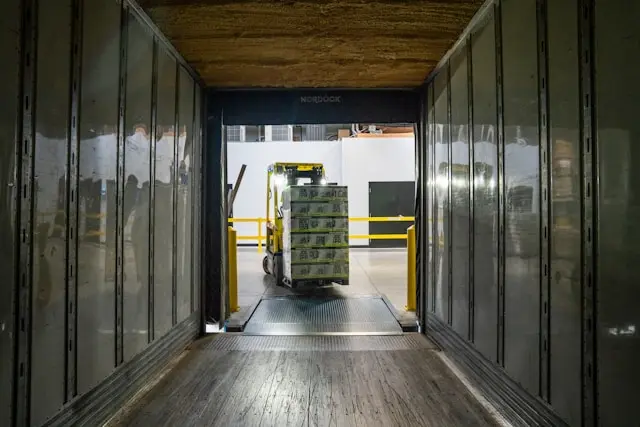
Krasnodar Krai added 450,000 square metres of new warehouse space in 2024 alone. A further 600,000 square metres is under construction for delivery this year. The rail marshalling yard is mid-expansion, designed to lift daily processing capacity from 12,000 to 15,000 freight cars by mid-2026. On paper, southern Russia's primary inland distribution hub is scaling at exactly the pace its role in post-sanctions trade flows demands.
The problem is not concrete or steel. It is people. Logistics job postings across the region rose 34% year-on-year in 2024. Yet the combined logistics programmes at Kuban State University and Krasnodar State University of Technology graduated just 340 bachelor-level specialists the same year, a figure 12% lower than 2022. The roles growing fastest, supply chain analytics and warehouse automation, are precisely the roles the educational pipeline is least equipped to fill. Employers report accepting candidates with 60 to 70% of required qualifications for automation engineer positions and funding the certification gap themselves, because the alternative is leaving the role open for six months.
What follows is an analysis of the forces reshaping Krasnodar's logistics sector, the employers driving that change, and what senior leaders need to understand before they make their next hiring or retention decision in this market. The gap between infrastructure investment and human capital readiness is not closing. It is widening, and the consequences for every organisation operating in southern Russia's freight corridor are already visible.
Southern Russia's Freight Pivot: How Sanctions Rewrote Krasnodar's Logistics Role
Before 2022, Krasnodar's position in Russia's supply chain architecture was important but relatively stable. The city served as an inland consolidation point for goods flowing through the Port of Novorossiysk and as a distribution backstop for the 16-million-population Southern Federal District. The rail junction handled domestic freight. The M4 Don highway carried trucks north to Moscow and south to the Caucasus. The airport contributed almost nothing to freight volumes.
The sanctions architecture that took hold from 2022 onward did not diminish Krasnodar's logistics relevance. It amplified it. According to research from the SKOLKOVO Institute for Emerging Market Studies, the city has become the primary entry node for parallel import flows routed through Georgia, Armenia, Azerbaijan, and Turkey. Goods that once arrived via European corridors now arrive via the Caucasus, and Krasnodar sits at the exact point where those corridor routes converge with Russia's domestic distribution network.
This shift created two distinct logistics ecosystems operating in the same geography. The first handles import consolidation and parallel trade, concentrated in customs-licensed warehouses on the city's periphery. The second serves domestic distribution, anchored by the grocery and FMCG distribution centres of Magnit, X5 Retail Group, Ozon, and Wildberries. Both ecosystems are expanding. Both need people. And both are drawing from the same constrained talent pool.
The Novorossiysk connection amplifies the pressure further. The port handles approximately 40% of Russia's containerised imports, according to the Association of Sea Commercial Ports of Russia. Container throughput via Krasnodar rail terminals increased 23% year-on-year in 2024. Every container that arrives at Novorossiysk and moves inland creates a downstream staffing requirement in Krasnodar. The federal Novorossiysk Transport Hub project, now under development, will enhance rail shuttle connections between the port and Krasnodar's logistics parks, reducing truck dependency but increasing the need for rail logistics coordinators and intermodal planners.
For hiring leaders, the implication is direct: Krasnodar is no longer a secondary regional logistics market. It is a critical node in Russia's reconfigured trade architecture, and the talent requirements reflect that elevation.
The Employers Defining the Market
Magnit: Headquarters Advantage, Scale Pressure
Magnit, Russia's largest food retailer, is headquartered in Krasnodar. The company operates 12 distribution centres in the Krai and employs approximately 8,000 logistics and supply chain staff regionally. This is both an advantage and a constraint. Magnit's scale means it absorbs a disproportionate share of available logistics talent at every level. Its proximity to the talent pool gives it first-mover advantage in local hiring. But the company's own growth requirements, particularly in warehouse automation and supply chain analytics, mean it competes with itself. Every new distribution centre needs supervisors, engineers, and planners drawn from the same regional pool that already staffs the existing twelve.
E-Commerce Expansion: Ozon and Wildberries
The e-commerce operators are scaling fastest. Ozon launched a 120,000 square metre fulfilment centre in Krasnodar in 2023, employing over 1,200 warehouse and last-mile personnel. Wildberries maintains a 95,000 square metre complex with a 40% expansion announced in late 2024, according to RBC Business News. These facilities are not traditional warehouses. They are technology-intensive operations requiring automation technicians, WMS integration specialists, and data-literate operations managers. The talent profile they need overlaps heavily with what Magnit and X5 Retail Group are also hiring.
Russian Railways and Delo Group
RZD's Southern Directorate, headquartered in Krasnodar, employs over 15,000 people across operational, engineering, and administrative functions. Delo Group, the major container terminal operator based primarily in Novorossiysk, runs inland container depot operations and trucking subsidiaries active in the city. Together, these employers anchor the intermodal logistics segment. The RZD rail yard expansion to 15,000-car daily capacity will require additional rail operations staff at exactly the moment when the most experienced rail logistics professionals are already deployed.
The combined effect is a market where five or six major employers are all expanding simultaneously, all hiring from the same regional base, and all competing for the same shrinking pool of qualified specialists. The question is not whether there is demand. The question is whether anyone can fill it.
The Three Roles No One Can Fill
Across Krasnodar's logistics market, three role categories stand out for the severity and persistence of their shortages. Each tells a different story about what has gone wrong with the talent pipeline.
Long-Haul Truck Drivers on Caucasus Routes
Category CE drivers qualified for interstate routes through the Caucasus corridor face typical vacancy durations of 90 to 120 days. Employers routinely offer sign-on bonuses of 150,000 to 200,000 roubles, equivalent to 1.5 to 2 months' salary, to secure drivers with clean records and international experience. This is not a new shortage, but the sanctions-era rerouting of trade through Georgia, Armenia, and Turkey has intensified it. Drivers who previously handled predictable domestic routes are now expected to manage complex cross-border documentation, navigate the Georgian Military Highway, and cope with transit route volatility driven by regional geopolitics and weather closures.
The highest-qualified segment of this driver market is almost entirely passive. According to data from the Russian Union of Auto Insurers, experienced CE-category drivers with clean safety records are recruited through driver community networks rather than job advertising. Active job seekers in this category typically carry incident records or limited route flexibility. This means the conventional approach of posting a vacancy and waiting for applications reaches precisely the candidates employers do not want.
Warehouse Automation Engineers
Roles combining PLC programming with WMS integration remain open for four to six months on average. The growth in vacancy volume for these positions ran at 48% year-on-year in 2024, the second-fastest growth category in the regional logistics sector. Employers are now accepting candidates with 60 to 70% of stated qualifications and investing in post-hire certification.
This shortage is a direct consequence of the sector's automation push colliding with an educational pipeline that was not designed for it. The 340 logistics graduates produced annually by Krasnodar's universities are trained in supply chain management and operations, not in PLC programming or SAP EWM configuration. The people who can configure a WMS platform like 1C:Logistics or Solvo are IT professionals, not logistics graduates. They sit in a different talent market entirely, and they are being courted by employers across every sector that is automating, not just logistics.
Customs Declarants with EAEU Expertise
Firms handling parallel import flows report vacancy periods exceeding 100 days for specialists familiar with Armenian, Georgian, and Turkish customs protocols. According to the Russian Logistics Association's sanctions-era skills gap analysis, this is a knowledge problem more than a supply problem. The Eurasian Economic Union customs framework is complex, and the specific expertise required to route goods through third-country transit, managing documentation, payment mechanisms, and compliance at each border crossing, did not exist as a job category five years ago. You cannot recruit experience that does not yet exist in sufficient quantity.
This last point deserves emphasis. It is the analytical thread connecting all three shortage categories.
The Core Problem: Capital Moved Faster Than Human Capital Could Follow
The investment in Krasnodar's logistics infrastructure has been substantial and well-directed. New warehouse stock, rail expansion, port integration, and road improvements are all addressing genuine capacity constraints. But each investment creates a downstream talent requirement that the market cannot meet on its current trajectory.
Federal and regional infrastructure investment is projected to increase logistics capacity across Krasnodar Krai by approximately 25% through 2026, according to data from RZD's investment programme and JLL Russia's development pipeline analysis. The educational pipeline, however, is contracting. Graduate output fell 12% between 2022 and 2024. Even if that decline reversed immediately, it would take four to five years before the additional graduates accumulated enough experience to fill senior specialist or leadership roles.
This is the paradox at the centre of the market. The automation investment that was supposed to reduce dependence on human labour has not reduced the workforce. It has replaced one kind of worker with another that does not yet exist in sufficient numbers. A traditional warehouse needed forklift operators and inventory clerks. An automated fulfilment centre needs PLC programmers, WMS integration engineers, and data analysts. The old roles had a large active candidate pool. The new roles have a small passive one.
The logistics sector growth rate for the Southern Federal District is projected at 8 to 10% annually through 2026, double the national average of 4 to 5%, according to the Russian Logistics Association. That growth rate assumes the people exist to staff it. Based on current pipeline data, that assumption is increasingly fragile.
For organisations planning capacity expansion in this market, the workforce plan needs to precede the construction timeline. Breaking ground on a new distribution centre without a credible strategy for filling the 15 to 20 specialist technical roles it will require is an expensive way to discover that the candidates are not there.
Compensation: The Bifurcation That Aggregate Data Hides
National logistics compensation surveys from Hays Russia show salary growth moderating to 5 to 7% annually in 2024, down from the 15 to 20% spikes of 2022 and 2023 when post-mobilisation labour scarcity drove wages sharply upward. At the aggregate level, the market appears to be stabilising.
The aggregate data is misleading. It blends together two markets that are behaving very differently. For general logistics roles, warehouse operatives, standard-route drivers, and administrative positions, wages are indeed stabilising. Supply is adequate. Active candidates are plentiful. Hiring timelines are normal.
For sanctions-compliance expertise, senior supply chain leadership, and automation specialists, compensation premiums are accelerating. Market sources indicate 20 to 30% salary increases for rare skill sets even as general logistics wages flatten. A Supply Chain Director in Krasnodar commands 350,000 to 500,000 roubles per month at the executive level. A Customs and Trade Compliance Manager with parallel-import expertise sits at 280,000 to 400,000 roubles monthly. These figures represent a 25 to 35% discount relative to Moscow, according to Korn Ferry's regional compensation differentials data, but they carry 15 to 20% premiums over Rostov-on-Don and Volgograd.
The discount to Moscow creates a persistent retention vulnerability. Moscow-based employers actively recruit Krasnodar's regional managers for national role expansion, offering 40 to 60% compensation premiums. For a Supply Chain Director earning 400,000 roubles in Krasnodar, a Moscow offer at 600,000 to 640,000 represents a life-changing financial step, even accounting for Moscow's higher cost of living.
Krasnodar retains talent through lower housing costs and climate advantages. But it struggles to retain anyone seeking international supply chain experience, which is now available almost exclusively through Moscow-based roles or remote positions with foreign entities. For organisations trying to hold senior talent, the risk of a counteroffer from a Moscow competitor is not hypothetical. It is a recurring feature of every retention conversation at director level and above.
The compensation strategy that works in this market is not simply paying more. It is paying competitively while offering career trajectory, autonomy, and scope that Moscow roles do not. The organisations that retain their best people in Krasnodar are the ones that make the role itself the reason to stay.
The Constraints That Compound Every Hiring Challenge
Three regulatory and infrastructure constraints compound the talent shortage in ways that are not immediately obvious from vacancy data alone.
Labour Migration Restrictions
Amendments to Federal Law No. 357-FZ in 2024 restrict quota-based employment of foreign nationals in logistics roles. This matters enormously in Krasnodar. Central Asian workers, predominantly from Uzbekistan and Tajikistan, constitute an estimated 40% of the regional logistics workforce, according to Federal Migration Service enforcement guidelines. The restriction does not remove existing workers overnight, but it constrains the flow of new entrants at exactly the moment when warehouse expansion is accelerating demand for operatives. Employers who relied on migration to fill entry-level and mid-level roles now face a shrinking pipeline with no domestic replacement in sight.
Equipment and Maintenance Gaps
Sanctions limit access to European truck manufacturers and warehouse automation equipment. Fleet renewal increasingly relies on Chinese manufacturers like Shacman, FAW, and Howo. These vehicles require different maintenance expertise, different spare parts networks, and different diagnostic tooling. A mechanic trained on DAF or Mercedes-Benz systems cannot simply transfer those skills to a Shacman chassis. The result is a secondary skills gap layered on top of the primary one. Every fleet that transitions to Chinese equipment needs technicians retrained or replaced, and the AI and technology expertise required for modern fleet management systems is in short supply across every Russian logistics market.
Power Grid Constraints
Warehouse electrification for automation and cold storage is constrained by regional grid capacity. Connection queues for new industrial facilities extend 12 to 18 months, according to Rosseti South's investment programme. This means that even when an employer builds the facility and sources the automation equipment, the power connection delay can push operational launch dates past the point where hired staff are waiting with nothing to do. The sequencing problem is real: hire too early and you pay people to wait. Hire too late and the candidates have been absorbed by competitors.
Each of these constraints makes the others worse. Migration restrictions reduce the labour supply. Equipment transitions demand new skills. Grid delays disrupt hiring timelines. Together, they create a compounding effect that no single employer can solve unilaterally.
What Hiring Leaders in This Market Need to Do Differently
The conventional search approach in Russian regional logistics markets follows a familiar pattern: post a vacancy on HeadHunter or SuperJob, wait for applications, screen for experience, make an offer. For entry-level warehouse operatives and last-mile couriers, this still works. Active candidate ratios for these roles exceed 60%.
For every role that matters at the specialist or leadership level, it does not work. Supply Chain Directors are functionally at zero unemployment. Active applications represent only 15 to 20% of available talent at this level. The remaining 80 to 85% of placements result from direct approaches, according to Antal Russia's data on executive search in logistics. WMS implementation specialists receive three to five unsolicited recruitment approaches monthly and rarely monitor job boards. Customs declarants with EAEU parallel-import expertise are working inside the 45 firms at the Krasnodar International Logistics Centre; they are not browsing vacancy listings.
The method that reaches these candidates is proactive talent mapping combined with direct headhunting. It requires knowing where the candidates sit, what they earn, what would move them, and what proposition to lead with. In a market where the relevant talent pool numbers in the low hundreds rather than the thousands, the search process itself must be different from the one used in markets with larger candidate populations.
KiTalent delivers interview-ready executive candidates within 7 to 10 days through AI-enhanced talent mapping that identifies the passive professionals conventional methods miss. In a market like Krasnodar's logistics sector, where the people you need are already employed and not looking, that speed and precision is the difference between filling a critical role and watching it sit open for six months. KiTalent's pay-per-interview model means organisations only pay when they meet qualified candidates, removing the upfront retainer risk that makes retained search a difficult proposition for regional operations.
The 96% one-year retention rate across KiTalent's 1,450 completed executive placements reflects a methodology built for exactly this kind of market: constrained, specialist, and passive. For organisations competing for supply chain leadership, automation engineering talent, or sanctions-compliance expertise in southern Russia's fastest-growing logistics corridor, start a conversation with our executive search team about how we approach this market.
Frequently Asked Questions
What is driving the logistics talent shortage in Krasnodar in 2026?
Three forces are converging. Infrastructure investment is expanding regional logistics capacity by approximately 25% through 2026, while the educational pipeline is producing fewer logistics graduates each year: 340 in 2024, down 12% from 2022. Simultaneously, the post-sanctions rerouting of trade through Caucasus corridors has created entirely new role categories, particularly customs declarants with EAEU parallel-import expertise, that did not exist at scale five years ago. The shortage is not cyclical. It is a structural mismatch between the kinds of workers the sector now needs and the kinds the region produces.
What do senior logistics executives earn in Krasnodar?
Supply Chain Directors at executive or VP level earn 350,000 to 500,000 roubles per month. Logistics and Warehouse Directors sit at 300,000 to 450,000 roubles. Customs and Trade Compliance Managers with parallel-import expertise command 280,000 to 400,000 roubles. These figures reflect a 25 to 35% discount relative to Moscow but carry 15 to 20% premiums over Rostov-on-Don and Volgograd. For roles requiring sanctions-compliance expertise, premiums of 20 to 30% above standard logistics compensation are typical. Detailed salary benchmarking for logistics and supply chain roles is available through specialist executive search firms.
Which cities compete with Krasnodar for logistics talent?
Moscow is the primary competitor, drawing senior supply chain professionals with compensation premiums of 40 to 60% above Krasnodar levels and greater exposure to national-scale operations. Rostov-on-Don is emerging as a secondary competitor with lower cost of living and Azov Sea port development attracting distribution centre investment. Novorossiysk diverts maritime-logistics specialists with port-related bonuses and career trajectories tied to Russia's largest container port.
Why is executive search more effective than job advertising for logistics roles in Krasnodar?
At the specialist and leadership level, 80 to 85% of successful placements in Krasnodar's logistics sector result from direct executive search approaches rather than job applications. Senior professionals in this market average five to seven years of tenure per employer, carry functionally zero unemployment, and do not monitor job boards actively. Reaching them requires direct identification and approach of passive candidates through structured talent mapping rather than advertising.
What are the biggest regulatory risks affecting logistics hiring in Krasnodar?
The 2024 amendments to Federal Law No. 357-FZ restrict quota-based employment of foreign nationals in logistics roles, constraining access to Central Asian workers who constitute an estimated 40% of the regional workforce. The Platon toll system increased heavy goods vehicle tolls by 15% in 2024 with further inflation-linked increases planned through 2026, compressing trucking margins and limiting compensation budgets. Power grid connection queues of 12 to 18 months for new industrial facilities also disrupt hiring timelines for warehouse automation roles.
How quickly can executive search deliver candidates in Krasnodar's logistics market?
KiTalent's methodology delivers interview-ready executive candidates within 7 to 10 days, using AI-powered talent mapping to identify qualified passive professionals who are not visible through conventional recruitment channels. In a regional market where traditional executive recruiting methods frequently stall due to the small size of the qualified candidate pool, speed of identification and approach is the primary differentiator between a successful placement and a six-month vacancy.