Kuching Port's RM450 Million Expansion Is Outpacing the Talent Required to Run It
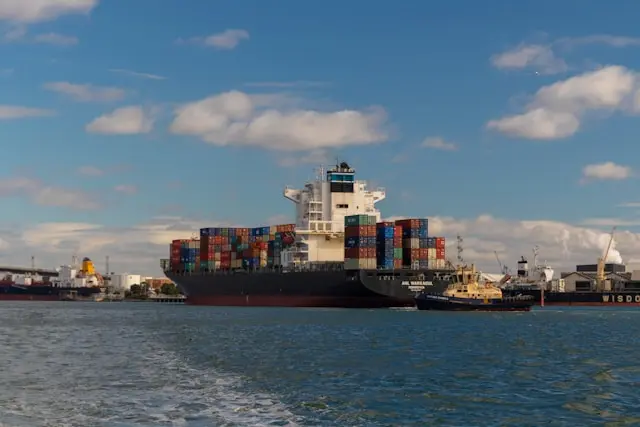
Kuching Port Authority has committed RM450 million to dredge the Senari Terminal channel to 10.5 metres and extend its berths to accommodate 3,000-TEU container vessels. The Samarahan Logistics Hub is scheduled for partial commissioning in the first half of this year. The ASEAN Customs Transit System rollout for the Sarawak-West Kalimantan corridor is targeting mid-2026 implementation. On paper, every infrastructure constraint that held this port back is being addressed in a single investment cycle.
The constraint that is not being addressed is the workforce. As of late 2024, the Sarawak Maritime Board reported a 14% vacancy rate across licensed maritime operations roles, nearly double the national maritime vacancy rate of 8%. Second Engineer positions on timber and palm oil barges were sitting unfilled for six to nine months. Port Captain searches exceeded eight months. The capital has moved. The human capital has not followed.
What follows is an analysis of the forces reshaping Kuching's port, riverine logistics, and marine services sector, the employers driving that change, and what senior leaders need to understand before they make their next hiring or retention decision in this market.
A Port Economy in Transition: What Kuching's Cargo Mix Reveals
The cargo profile at Kuching Port tells the story of an economy caught between two identities. In 2023, edible oils (primarily crude palm oil and processed palm kernel oil) accounted for 45% of total cargo volume. Timber and timber products represented 30%. Containerised consumer goods made up 15%, with the remaining 10% attributed to project cargo supporting the Sarawak Corridor of Renewable Energy.
These proportions have been shifting, and not in the direction the traditional operators would prefer. Sarawak's timber harvest has declined at roughly 8% annually since 2020, driven by sustainable forestry policies that are unlikely to reverse. For the riverine barge operators who built their businesses around moving logs down the Rajang and Baram rivers, this is not a cyclical dip. It is a systemic contraction of their core revenue base.
The port expansion is designed to compensate by pivoting toward higher-value containerised trade. Container throughput at Senari Terminal reached 142,000 TEUs in 2024, growing at 3.2% year-on-year. That growth rate sat well below the national average of 6.8%, constrained by the very infrastructure now being upgraded. If the dredging completes on schedule by Q4 2026, direct calls by 3,000-TEU vessels will become feasible for the first time. The current limit is 1,500-TEU feeder vessels.
But deeper channels do not operate themselves. Every percentage point of throughput growth requires marine controllers who understand restricted-draft environments, customs brokers who can process ASEAN trade documentation at speed, and port operations managers who can run a terminal through a multi-year construction programme. The investment has been approved. The question is whether the people exist to make it productive.
The Three Shortages That Define This Market
Marine Engineers and Deck Officers: A 90% Passive Pool
The most acute shortage sits in the marine engineering and deck officer category. Kuching's barge and coastal fleet requires STCW-certified officers with specific endorsements for Sarawak River and Rajang River navigation. These are not transferable credentials. The complex currents and tidal variations of Sarawak's river systems demand navigation experience that cannot be acquired anywhere else in Malaysia.
Approximately 85 to 90% of qualified Class 2 and Class 3 marine engineers suitable for Kuching's fleet are currently employed and not actively seeking new roles, according to the Malaysian Shipowners' Association's 2024 Recruitment Practices Survey. The active candidate pool consists almost entirely of new entrants with zero to two years of experience or professionals exiting the industry altogether. For employers seeking experienced officers, the only viable recruitment method is direct headhunting from competing fleets, often timed to crew change windows when contracts are expiring.
The numbers are stark. The total pool of qualified Sarawak-based engineers suitable for these roles sits between 120 and 150 individuals. Every barge operator in the market is competing for this same group. Chief Engineer positions on motor vessels under 3,000kW routinely experience 180-day vacancy cycles, with operators frequently engaging Filipino or Indonesian contract officers to fill gaps despite Malaysian Maritime Enforcement Agency preferential hiring guidelines.
Customs Brokers: Where Sarawak-Specific Knowledge Commands a Premium
The customs brokerage shortage is different in character. It is not a shortage of people with customs qualifications. It is a shortage of professionals with AKEB (Authorized Economic Operator) certification who understand the specific documentation requirements of the Sarawak-Brunei Transit Corridor and the West Kalimantan border procedures. This market is 75 to 80% passive. Experienced brokers with established relationships with RMCD Kuching and familiarity with timber and commodity classifications rarely post CVs publicly. Average tenure in current roles sits at 4.5 years.
When these professionals do enter the market, they do not stay available for long. Typical patterns show that experienced customs brokers with five or more years of Sarawak-specific experience receive three to four competing offers within 30 days. One pattern emerging across large freight forwarders in Pending Industrial Estate involves restructuring entire operations to retain a single senior customs manager with AEO certification, including retention premiums of 35% and flexible remote-work arrangements for documentation processing. In a sector that has historically been entirely on-site, that concession signals the depth of the retention pressure.
Port Operations Management: Eight-Month Vacancies at the Top
Senior Marine Controllers and Port Captains with experience in restricted-draft environments represent perhaps the most constrained talent category globally. The number of ports worldwide that operate under the specific combination of shallow-draft river access, tidal variation, and mixed cargo profiles that characterises Kuching is extremely small. The result is a candidate pool where over 90% of suitable professionals are passive, retained with long-service incentives and structured retention packages.
The typical vacancy period for a Port Captain role at Kuching Port Authority or private terminal operators has exceeded eight months. This is not a function of compensation alone. It reflects the fundamental scarcity of professionals who have spent careers in environments similar enough to be relevant. Attracting them requires more than a competitive salary. It requires a proposition that addresses career trajectory, family relocation, and the professional risk of moving to a smaller market.
The combined effect of these three shortages is the insight that makes this market different from a standard talent-scarce environment. Kuching is not facing a generalised hiring challenge. It is facing simultaneous scarcity in the three exact categories required to execute its port expansion. Marine engineers to operate the larger vessels the deeper draft will attract. Customs brokers to process the cross-border trade the ACTS system is designed to facilitate. Port managers to run the expanded terminal. Remove any one of these three, and the infrastructure investment underperforms.
Why Graduate Unemployment and Maritime Shortages Coexist
Malaysia's overall graduate unemployment rate remained elevated at 11.2% in 2024. Kuching's universities produce business and arts graduates in significant numbers. Yet the maritime sector cannot fill positions that would pay RM180,000 to RM600,000 annually. This apparent contradiction is not contradictory at all. It describes two entirely separate labour markets operating in the same geography.
The maritime operations roles that Kuching's port economy requires demand STCW certification, AKEB authorisation, or specific Class endorsements that require two to four years of specialised training beyond a general degree. The pipeline responsiveness is measured in years, not months. A policy decision made today to increase STCW training capacity would not produce its first qualified marine engineer until 2028 at the earliest.
This mismatch between the education system and the port economy is the single most important dynamic for hiring leaders to understand. The shortage cannot be solved by raising salaries alone, because the constraint is not willingness to work. It is the absence of qualified candidates in sufficient numbers. You cannot recruit experience that does not yet exist. The aggregate employment statistics that suggest Malaysia has surplus labour obscure the fact that in Kuching's maritime sector, the talent pipeline is structurally disconnected from the demand signal.
The Four Markets Draining Kuching's Talent Pool
Kuching does not compete for maritime-logistics talent in isolation. It sits at the bottom of a four-tier compensation hierarchy that systematically pulls its best professionals toward better-paying markets. Understanding this hierarchy is essential for any organisation designing a retention or recruitment strategy here.
Singapore: The 40 to 60% Premium
Singapore offers the steepest premium. Marine engineering and port operations roles command 40 to 60% more than equivalent positions in Kuching, according to the Maritime and Port Authority of Singapore's 2024 Manpower Survey. Beyond compensation, Singapore offers career progression pathways and continuing education grants through MPA that Sarawak cannot match. For a Kuching-based professional holding STCW Class 1 or Class 2 certificates, the pull toward Singapore is not merely financial. It is structural. Singapore offers a career. Kuching, at present, offers a job.
[Johor Bahru](/johor-bahru-malaysia-executive-search) and Southern Peninsular Malaysia
The Port of Tanjung Pelepas and Pasir Gudang port cluster offer 25 to 35% higher salaries than Kuching for logistics managers and customs brokers. Johor's concentration of multinational logistics regional headquarters creates a secondary draw: proximity to Kuala Lumpur and career mobility options. The talent drain is most pronounced among professionals with bilingual English-Mandarin capabilities serving Chinese manufacturing clients.
Bintulu: The Intra-State Competitor
The competition from within Sarawak itself may be the most damaging. Malaysia LNG operations and Bintulu Port's deepwater capabilities (14-plus metres of draft, compared to Kuching's current 8.5) generate oil and gas logistics roles that pay 30 to 50% premiums over equivalent general cargo positions in Kuching. A marine superintendent considering whether to stay in Kuching's palm oil barge fleet or move to Bintulu's LNG operations faces a straightforward calculation. Bintulu wins on compensation, vessel sophistication, and career prestige.
West Kalimantan: The Emerging Threat
Indonesia's new capital, Nusantara, and associated port expansions at Malundung and Tanjung Datu have begun attracting Sarawak-based river pilots and barge operators with expatriate packages and rapid promotion opportunities. According to the Sarawak Maritime Board's Cross-Border Employment Survey, this outflow represented 5 to 8% of outbound talent movement as of 2024, projected to reach 15% by 2026. For a market of Kuching's size, even single-digit percentage losses of qualified river pilots represent material capacity reduction.
The net effect of these four competing markets is that Kuching must offer something other than compensation to retain its critical talent. It cannot match Singapore on pay. It cannot match Bintulu on career trajectory. It cannot match Johor on lifestyle optionality. What it can offer is proximity to Sarawak's unique river systems, family roots that many professionals are reluctant to sever, and a role in an expanding port economy where their expertise is irreplaceable. Framing the proposition correctly is as important as funding it.
What the Expansion Actually Requires: Roles, Skills, and Compensation
The compensation architecture in Kuching's maritime sector reveals the stratification between international operators and local firms. Understanding this stratification matters because it determines where each employer sits in the queue for scarce talent.
At the top of the compensation range, VP Operations and Port General Manager roles command RM420,000 to RM600,000 annually at international firms such as Kuehne+Nagel and equivalent organisations, with performance bonuses tied to throughput and safety metrics. Local barge operators offer RM350,000 to RM450,000 for comparable scope. This 25 to 40% gap between international and local compensation creates a clear hierarchy in candidate preference.
Logistics Director roles at multinational freight forwarders pay RM380,000 to RM520,000. The same scope at a local timber or palm oil linked operator sits at RM280,000 to RM380,000. Senior Operations Managers focused on consumer goods earn RM156,000 to RM216,000.
In customs and trade compliance, Senior Customs Managers with AKEB certification command RM144,000 to RM192,000. Head of Trade Compliance or VP Regulatory Affairs roles range from RM300,000 to RM420,000, with the upper end reserved for professionals with oil and gas project exposure rather than general freight experience.
Marine Superintendents with 10 to 15 years of experience earn RM180,000 to RM240,000 base, supplemented by sea-going or housing allowances depending on shore-based or rotational deployment.
Beyond these roles, the skills the expansion demands extend into digital territory. Kuching Port is adopting the Port Community System originally developed for Port Klang, along with blockchain-based trade documentation. Proficiency in these systems is now a hiring criterion, not a differentiator. Add project cargo management expertise for SCORE-related heavy-lift logistics and deep ASEAN Trade in Goods Agreement knowledge for the forthcoming ACTS procedures, and the skill profile of a senior hire in this market becomes extraordinarily specific.
The specificity is the problem. Each additional qualification narrows the eligible candidate pool. A professional who holds STCW certification, has Sarawak river endorsements, understands digital port systems, and is willing to work in Kuching rather than Singapore or Bintulu is not a common profile. They are not a profile that responds to job advertisements.
Infrastructure Progress and Its Workforce Implications
The three infrastructure projects converging in 2026 will reshape the operational demands on Kuching's maritime workforce in ways that the current talent base is not prepared to absorb.
The Phase 3 dredging to 10.5 metres is the most consequential. When complete, it will double the vessel class that can call directly at Senari Terminal. Larger vessels require different handling expertise, different pilotage skills, and different terminal operations management. A Port Captain experienced in managing 1,500-TEU feeder traffic will need to manage 3,000-TEU vessel calls without the transition period that most ports enjoy. The dredging timeline is aggressive. The training timeline for the people who will manage the result has not been published.
The Samarahan Logistics Hub's 200,000 square metres of bonded warehousing and cold storage will alleviate the chronic warehouse shortage in Pending (current occupancy rate: 94%). But it will also require warehouse management professionals, cold chain specialists, and customs processing staff at a new site 35 kilometres from the existing talent cluster. Splitting operations across two geographies adds a commuting and coordination burden that reduces the effective productivity of an already stretched workforce.
The ASEAN Customs Transit System implementation for the Sarawak-West Kalimantan corridor promises to cut border documentation time from six to eight hours to two hours. The productivity gain is substantial. But the system requires customs professionals trained in ACTS procedures, which differ meaningfully from the existing bilateral documentation protocols. The training pipeline for this specific competence is nascent.
Each of these projects assumes a workforce that can be hired, trained, and deployed to match the infrastructure delivery schedule. The research suggests that assumption is not supported by the current state of the labour market.
What Hiring Leaders in This Market Must Do Differently
The conventional approach to filling senior roles in Kuching's maritime sector follows a pattern that this data suggests is fundamentally inadequate. Post on the Sarawak Government Job Portal or JobStreet. Wait for applications. Interview whoever applies. Offer at the prevailing market rate.
This approach reaches the 10 to 15% of the talent market that is actively looking. In marine engineering, 85 to 90% of qualified candidates are passive. In customs brokerage, 75 to 80%. In port operations management, over 90%. Traditional recruitment methods do not reach candidates who are not looking. The arithmetic is straightforward: a hiring method that accesses 15% of the pool will consistently produce inferior outcomes compared to one that accesses the full market.
The alternative is executive search methodology built around talent mapping and direct identification. In a market this small and this specialised, every qualified candidate can be identified, assessed, and approached individually. The pool of 120 to 150 qualified marine engineers in Sarawak is finite and knowable. The 18 licensed customs brokerage firms and their senior staff can be mapped completely. The question is not whether the talent exists. It is whether your search method can find and engage the specific individuals who match your requirements.
KiTalent's approach to markets like Kuching's maritime sector reflects exactly this methodology. AI-enhanced talent mapping identifies the full universe of qualified candidates, not just the fraction who happen to be on a job board. Interview-ready candidates are delivered within 7 to 10 days, a timeline that matters in a market where an eight-month vacancy costs real throughput. The pay-per-interview model means organisations only invest when they meet qualified candidates, removing the financial risk of a retained search that produces no viable shortlist.
The 96% one-year retention rate for placed candidates matters even more in this context. In a market where losing a single Port Captain or Chief Engineer creates an eight-month replacement cycle, retention is not a human resources metric. It is an operational continuity measure.
For organisations competing for marine engineering, customs, and port operations leadership in Sarawak's maritime sector, where the candidates you need have not posted a CV in years and the cost of a vacancy is measured in lost throughput and delayed expansion milestones, speak with our executive search team about how we approach this market.
Frequently Asked Questions
What are the biggest hiring challenges in Kuching's port and logistics sector?
Kuching faces acute shortages in three specific categories: STCW-certified marine engineers with Sarawak river endorsements, AKEB-certified customs brokers with cross-border Sarawak expertise, and port operations managers experienced in restricted-draft environments. The Sarawak Maritime Board reported a 14% vacancy rate across licensed maritime roles in late 2024, nearly double the national average. Chief Engineer positions on riverine vessels typically remain unfilled for 180 days. These shortages are structural, driven by a two-to-four-year certification pipeline that cannot respond quickly to demand increases from infrastructure expansion.
What salaries do senior maritime and logistics roles command in Kuching?
Compensation varies substantially between international and local employers. VP Operations or Port General Manager roles at international firms offer RM420,000 to RM600,000, while local barge operators offer RM350,000 to RM450,000. Logistics Directors at multinational freight forwarders earn RM380,000 to RM520,000. Senior Customs Managers with AKEB certification earn RM144,000 to RM192,000, while Heads of Trade Compliance with oil and gas exposure can reach RM420,000. For detailed salary benchmarking in specialised logistics sectors, market intelligence is essential before structuring an offer.
How does Kuching Port's expansion affect talent demand?
The RM450 million Phase 3 expansion will deepen the channel to 10.5 metres, enabling 3,000-TEU vessel calls by late 2026. This doubles the vessel class the port can handle, requiring marine controllers, pilots, and terminal managers with experience in larger vessel operations. Simultaneously, the Samarahan Logistics Hub adds 200,000 square metres of bonded warehousing requiring new warehouse management and cold chain professionals. The ASEAN Customs Transit System rollout demands customs staff trained in entirely new procedures. Each project creates demand for talent that the current market does not supply in adequate numbers.
Why is it so difficult to recruit marine engineers in Sarawak?
Between 85 and 90% of qualified marine engineers suitable for Kuching's fleet are passive candidates currently employed and not seeking new roles. The total pool of qualified Sarawak-based engineers is estimated at 120 to 150 individuals. Recruitment relies almost entirely on direct headhunting from competing fleets. Singapore offers 40 to 60% compensation premiums for equivalent roles, while Bintulu's LNG operations pay 30 to 50% more than Kuching's general cargo positions. This combination of a tiny qualified pool, high passive rates, and aggressive external competition explains why conventional recruitment methods consistently underperform in this market.
How can executive search firms help with maritime recruitment in Kuching?
In a market where over 85% of qualified candidates are not visible on any job board, executive search built around direct candidate identification is the only method that reaches the full talent pool. KiTalent uses AI-enhanced talent mapping to identify every qualified candidate in a defined market, then approaches them directly with a structured proposition. This is particularly effective in Kuching's maritime sector, where the candidate universe is small, highly specialised, and almost entirely passive. The pay-per-interview model ensures organisations only invest when meeting genuinely qualified candidates.
What is the outlook for Kuching's port sector in 2026 and beyond?
Container throughput is forecast to grow 5 to 7% in 2026, contingent on the dredging schedule and Pan Borneo Highway Phase 2 progress. The Samarahan Logistics Hub and ACTS implementation will improve warehousing capacity and cross-border efficiency respectively. However, traditional timber cargo is declining at 8% annually, meaning the port's growth depends on successfully transitioning to higher-value containerised trade. Competition from Indonesia's Nusantara capital development may divert some transshipment volumes. The organisations that secure the specialised talent to operate expanded infrastructure will capture disproportionate value from this transition.