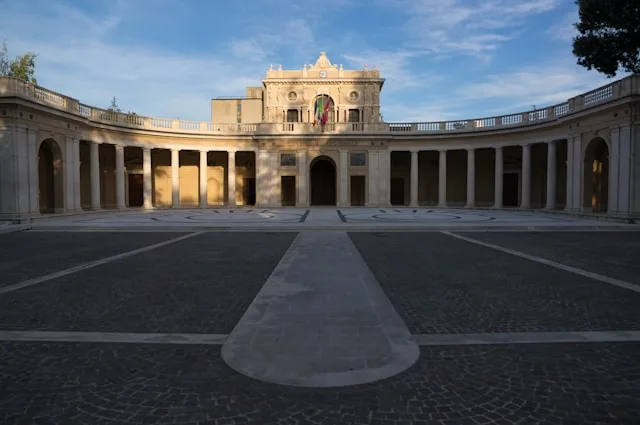
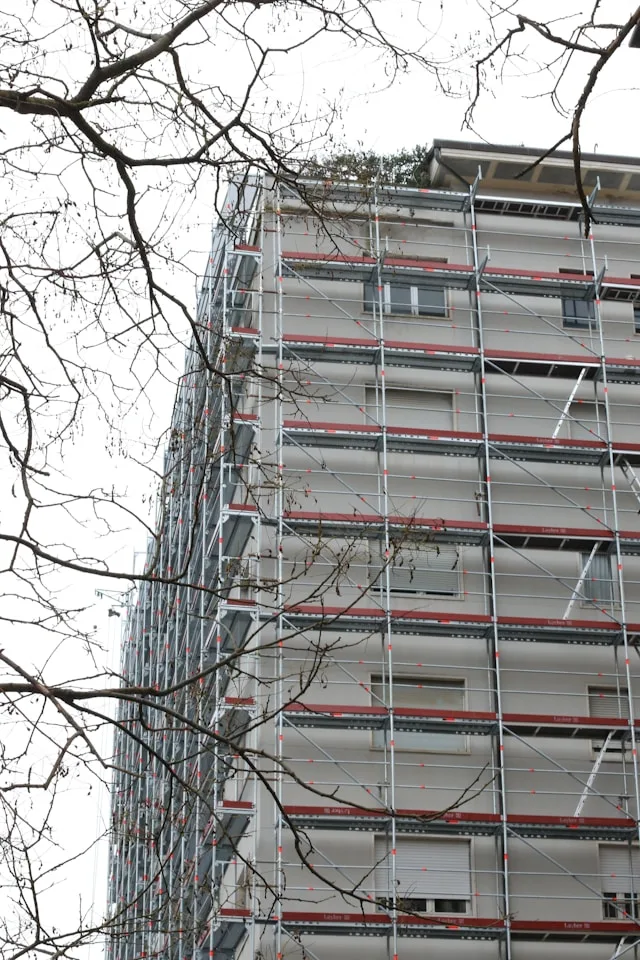
L'Aquila's Mountain Tourism in 2026: Half a Million New Visitors, One Third of Its Hotels Still Under Scaffolding
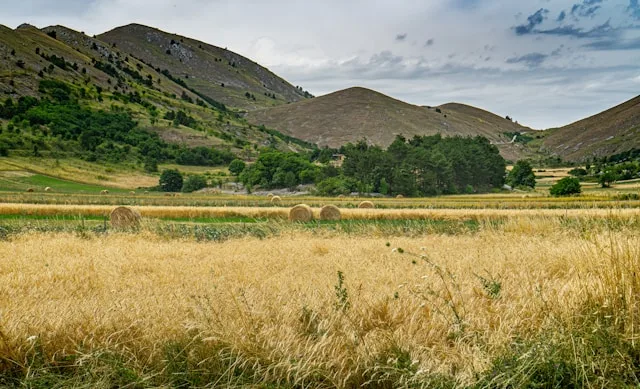
L'Aquila's tourism sector generated €412 million in annual output through 2024, anchored by the Gran Sasso e Monti della Laga National Park and the 183 active agritourism operations that stretch across its mountain terrain. The province recorded 1.2 million tourist arrivals and 3.8 million overnight stays last year. Those figures represent a 12% recovery from 2023 but remain 18% below the levels the city sustained before the 2009 earthquake. The recovery is real, but incomplete.
The designation of L'Aquila as Italian Capital of Culture 2026 has compressed every timeline in the market. The Ministry of Culture's €22 million event programme projects 500,000 additional visitors into a province where 34% of historic hospitality units remain physically under reconstruction. Labour demand is surging ahead of the physical infrastructure that would give it purpose. Agritourism director roles in the Gran Sasso zone now take 94 days to fill, compared to 58 days for equivalent hotel front-desk positions. Certified alpine guides show less than 2% unemployment. Ski lift maintenance technicians operate in a sub-market where the local unemployment rate is 0.8% against a provincial general rate of 11.2%.
What follows is a ground-level analysis of how these forces are colliding: where the hiring gaps sit, why L'Aquila's compensation structures are losing candidates to Rome and the Dolomites, and what operators in this market must understand before they attempt to staff for a year that will test every part of the province's capacity.
The Capital of Culture Shock: Demand Without Beds
The Italian Capital of Culture designation has a predictable economic effect in every city that receives it. Visitor numbers rise, media attention concentrates, and the local hospitality sector stretches to meet a demand curve it was not sized to absorb. L'Aquila's version of this pattern carries a complication no previous host city has faced at this scale: a substantial portion of its accommodation stock does not yet physically exist.
As of early 2025, the Commissario Straordinario per la Ricostruzione confirmed that 34% of historic centre hospitality units, including hotels and alberghi diffusi components, remained under active reconstruction or scaffolding. The CAS mandated completion of 27 historic hospitality structures by the end of 2025 to add an estimated 800 beds for the 2026 programme. Even if that deadline is met in full, the province's 2,100 agritourism beds and its operational hotel stock must absorb a projected 40% visitor increase.
Where Labour Demand Outruns Physical Capacity
Federalberghi Abruzzo forecasts 2,100 additional seasonal hires in 2026, up from 1,600 in 2025, with permanent agritourism management roles increasing by 22%. This is where the tension becomes acute. The sector is hiring for capacity it has not yet finished building.
The risk is not simply that hotels will be understaffed. It is that labour demand, accelerated by the Capital of Culture programming, will cannibalise service quality in existing operational properties rather than generating net new employment. A hotel that cannot hire enough qualified staff does not stay closed. It opens with fewer staff per guest, longer wait times, and lower service standards. In a year when international media attention will be at its highest, the reputational cost of that degradation is material.
Unioncamere Abruzzo's Excelsior system projected 1,420 new hires across L'Aquila's broader commerce and tourism sector in 2025, with 34% classified as hard to fill. That difficulty rate sits eight percentage points above the national tourism average. The 2026 surge will not ease this pressure. It will intensify it.
Gran Sasso's Employer Ecosystem: Small, Fragmented, and Competing for the Same People
L'Aquila's mountain tourism sector is not anchored by a single large employer the way a Cortina d'Ampezzo is anchored by its consortium of luxury hotels or a Chamonix by the Compagnie du Mont-Blanc. The employment base is distributed across hundreds of small operations, a handful of mid-sized employers, and a small number of institutional anchors.
The Lift Operator and the National Park
Funivie del Gran Sasso SpA, the public-private lift company in which the Comune dell'Aquila holds a majority stake, is the closest thing the market has to an anchor employer in outdoor recreation. It employs 120 year-round staff and 220 seasonal workers. Its lift system operated 98 days in the 2024/25 winter season, down from historical averages exceeding 120 days. That shortened season is itself a hiring problem: skilled technicians who could work 140 or more days per season in the Dolomites have a direct financial incentive to relocate north.
The Parco Nazionale del Gran Sasso e Monti della Laga manages 150,000 hectares, employs 85 rangers, and funds approximately 40 artisan retail positions through its "Botteghe del Parco" programme. The park is not a direct hospitality employer, but its permitting and environmental certification requirements shape who can operate within its boundaries and how.
Agritourism: 412 Operations, Mostly Family-Run
Coldiretti Abruzzo registers 412 active agritourism operations in the province, with direct employment of 890 full-time equivalents. The Consorzio Tutela Zafferano dell'Aquila DOP aggregates 40 saffron producers in Navelli, generating €4.2 million in annual turnover and supporting 30 dedicated agritourism educational farms.
The challenge for executive hiring in this fragmented market is that the vast majority of these operations are family enterprises. Coldiretti's own data shows that 61% of provincial agritourism operations rely on unpaid family labour as their primary workforce. This is not a detail. It is the structural reason why the "talent shortage" for professional agritourism directors looks the way it does.
The sector's survival mechanism, family-based informal labour, is simultaneously its growth constraint. An operation that has never paid market wages for a professional director does not simply post a role and fill it. It must first accept a cost structure it has historically avoided. The 94-day average vacancy duration for agritourism director roles reflects this friction as much as it reflects a skills gap.
The Compensation Gap That Pulls Talent Away
L'Aquila's tourism sector operates at an 18% discount to Milan and a 12% discount to Rome for equivalent roles. Those figures, drawn from ISNART's 2024 regional adjustment tables, describe average hospitality management compensation. For the specific roles this market needs most urgently, the gaps are wider and more consequential.
An agritourism director managing a senior specialist or single-property operation in L'Aquila earns €38,000 to €48,000 plus accommodation. The equivalent role in Rome commands €55,000 to €65,000. In Tuscany's Chianti or Maremma zones, the range is €65,000 to €85,000 with materially lower seasonality risk. At executive level, managing a multi-property operation or flagship saffron estate in Navelli, the ceiling in L'Aquila reaches €55,000 to €72,000, with top operators offering profit-sharing on DOP product sales. Tuscany and Rome still outbid this range comfortably.
For mountain operations management, the dynamic is similar but the competitor set is different. A senior technical specialist running lift infrastructure earns €35,000 to €45,000 in L'Aquila. The Dolomites offer 25% to 35% premiums for the same technical profile, combined with winter seasons that are 40 to 50 days longer. A lift maintenance technician weighing two offers does straightforward arithmetic: more working days, higher daily rate, and better long-term career infrastructure in Trentino-Alto Adige.
Executive chefs specialising in mountain and alpine cuisine face a different version of the same problem. The base range in L'Aquila is €45,000 to €60,000 for an executive chef at a hotel or flagship agritourism property, with a 15% premium above standard hotel culinary wages driven by the scarcity of chefs trained in Abruzzese high-altitude gastronomy. But Rome's restaurant sector offers urban lifestyle, career trajectory through international hotel chains, and compensation that starts where L'Aquila's ceiling ends.
The compensation gap is not closing. The Capital of Culture designation is driving demand upward without a corresponding adjustment in what the market's employers, most of them small family operations, can afford to pay. The employers that could afford to match Rome or Dolomite packages are few, and they are already competing with each other for the same small pool of qualified candidates. This creates the conditions for a counteroffer cycle that raises costs for everyone without expanding the talent pool.
The Passive Candidate Problem: A 6:1 Ratio and Nowhere to Advertise
The most important number in L'Aquila's mountain tourism labour market is not the vacancy duration or the compensation gap. It is the ratio of passive to active candidates for the roles that matter most.
Unioncamere data indicates a 6:1 ratio of passive to active candidates for agritourism management roles in Abruzzo. For every director-level professional who is actively looking for a new position, six more are employed, settled, and not monitoring job boards. Certified alpine guides show average tenure of 9.2 years per employer with active unemployment below 2%. The Società Guide Alpine del Gran Sasso e Monti della Laga has 150 registered guides. They are, for practical purposes, all employed.
This means the conventional hiring toolkit, job postings on national platforms, advertisements through Federalberghi channels, word-of-mouth referrals through Coldiretti networks, reaches at most one in seven viable candidates for these critical roles. The other six must be identified, approached, and persuaded individually.
The data from Funivie del Gran Sasso's 2024 hiring activity illustrates the point. According to Unioncamere's analysis of specialised technical profiles, 78% of the company's lift technician hires in 2024 were sourced by recruiting directly from competing operations in Abruzzo, Molise, and Marche ski zones rather than through open market applications. This is direct headhunting by necessity, not by strategic choice. The open market does not contain the candidates these employers need.
For operators planning their 2026 staffing, this ratio defines the entire search strategy. Posting a role and waiting for applications will produce a shortlist drawn from the 14% of the market that is actively looking. The remaining 86% must be reached through systematic talent mapping that identifies who holds the right qualifications, where they currently work, and what proposition might move them. In a market this small, that mapping must extend well beyond the province, into Rome's hospitality management community, the Dolomites' guide cooperatives, and Tuscany's agritourism operations.
Seasonality, Retention, and the 58% Problem
The Province of L'Aquila's tourism sector operates with a seasonality index of 68%, measuring the difference between peak monthly employment in August and trough employment in November. This is not an abstract statistic. It translates directly into a retention crisis that compounds every other hiring difficulty.
INPS data from its observatory on seasonal contracts in Abruzzo shows that 58% of seasonal workers do not return to the same employer in the following season. More than half of every year's seasonal workforce must be recruited, onboarded, and trained from scratch the following year. The cost of this churn is not primarily financial, though it is substantial. The cost is operational: a hotel that loses its best seasonal front-desk manager to a Rome employer offering year-round work does not simply lose a salary line. It loses institutional knowledge, guest relationships, and the training investment from the previous season.
Climate Adaptation as a Hiring Variable
The seasonality problem is worsening. Campo Imperatore's lift system operated 98 days in the 2024/25 season against historical averages above 120 days. The Regione Abruzzo's Piano Neve Sostenibile projects €15 million in investment for artificial snow systems at Campo Felice and Campo Imperatore by 2026 to counter documented average temperature increases of 2.1°C. This investment will extend the operational season, but it will also create demand for a new category of technical specialist: snow-making system operators and maintenance engineers who combine hydraulic engineering knowledge with altitude-specific operational experience.
The investment in climate adaptation hardware is moving faster than the workforce required to operate it. Capital has been allocated. Equipment is being specified. The technicians who will run these systems do not yet exist in sufficient numbers within the province. This is the analytical thread that connects every pressure point in this market: L'Aquila is building capacity, physical and programmatic, that its current labour pool cannot staff.
The hidden cost of failing to fill these roles is not measured in vacant positions alone. It is measured in shortened seasons, degraded service quality, and reputational damage during the single most important year in the city's post-earthquake recovery.
The Structural Barriers Beyond Compensation
Even where an employer is willing and able to match competitor compensation, L'Aquila presents barriers that salary alone cannot resolve.
The A24 autostrada, the sole viable road artery connecting L'Aquila to Rome's Fiumicino airport and Pescara's regional airport, recorded 47 weather-related full closures in 2023 and 2024 combined, according to Autostrade per l'Italia's traffic report. For a hospitality director weighing a role in L'Aquila against one in Tuscany, the difference between reliable year-round access and periodic isolation is a material factor. Rail alternatives require 3.5 hours against 1.5 hours by road, insufficient for the international tourism logistics that the Capital of Culture year will demand.
Seismic risk imposes its own structural cost. Hospitality businesses in the historic centre face insurance premiums 2.3 times higher than equivalent post-2000 construction in the new city districts, according to ANIA's 2024 seismic risk dossier. The CAS reconstruction decree requires anti-seismic certification for all hospitality reopenings, a process averaging 14 months. An operator who secures a licence in mid-2025 faces a plausible scenario where certification is not complete until well into the Capital of Culture year itself.
For agritourism operators working with Zafferano dell'Aquila DOP, the Consorzio's production regulations require certified on-farm processing kitchens at a capital cost of €15,000 to €25,000. This compliance burden falls disproportionately on the smallholders who make up the majority of the province's 412 agritourism operations, creating a barrier to both business growth and the professionalisation that would make them attractive employers for experienced managers.
These barriers do not respond to recruitment tactics. They are embedded in the physical and regulatory infrastructure of the market. A search firm that does not understand them will present candidates who reject the role once they grasp the full picture. An approach that maps these constraints alongside the talent pool reaches candidates who have already weighed the trade-offs and are still open to the proposition.
What L'Aquila's Mountain Tourism Market Requires Now
The original synthesis that runs through this analysis is this: L'Aquila's agritourism talent shortage is not primarily a skills gap. It is a structural unwillingness, across 61% of the sector's operations, to replace family-based informal labour with market-rate professional management. The Capital of Culture year is forcing a reckoning with this model. Operations that intend to capture the 2026 visitor surge must either professionalise their management or accept that the opportunity will flow to the small number of operators who already have.
For the operators who are ready to hire, and for the institutional employers like Funivie del Gran Sasso and the National Park authority that must scale rapidly, the challenge is reaching candidates who are not looking. A 6:1 passive-to-active ratio means that conventional recruitment methods will miss the majority of the qualified market. Vacancy durations of 94 days for director-level roles mean that the organisations that start their search processes earliest will secure the strongest candidates.
KiTalent's approach to this kind of market, combining AI-powered candidate identification across fragmented sectors with direct headhunting methodology that reaches passive professionals, is built for exactly these conditions. In markets where the qualified talent pool is small, passive, and distributed across competing employers and adjacent geographies, the difference between a conventional job advertisement and a structured direct search is the difference between reaching 14% of the market and reaching all of it. KiTalent delivers interview-ready candidates within 7 to 10 days and operates on a pay-per-interview model with no upfront retainer, removing the financial risk from employers who cannot afford a prolonged vacancy in their most critical year.
For operators across L'Aquila's hospitality, agritourism, and mountain recreation sectors who need experienced directors, technical specialists, or executive chefs in place before the 2026 programme begins, speak with our executive search team about how we identify and approach the candidates this market cannot surface through conventional channels.
Frequently Asked Questions
What is the average salary for an agritourism director in L'Aquila?
An agritourism director managing a single property in the L'Aquila province earns between €38,000 and €48,000 per year plus accommodation. At executive level, managing multi-property operations or flagship DOP-producing estates in the Navelli area, compensation reaches €55,000 to €72,000, sometimes supplemented by profit-sharing on DOP saffron or pecorino sales. These figures sit 12% to 18% below equivalent roles in Rome and Tuscany, a gap that contributes directly to the province's difficulty attracting experienced hospitality managers from competitor regions.
Why is it so hard to hire mountain tourism professionals in Abruzzo?
Three factors converge. First, the qualified talent pool is overwhelmingly passive: Unioncamere data shows a 6:1 ratio of passive to active candidates for agritourism management roles. Second, compensation in L'Aquila sits 18% below Milan and 12% below Rome, while the Dolomites offer 25% to 35% premiums for mountain-specific roles with longer operating seasons. Third, 58% of seasonal workers do not return to the same employer the following year, forcing continuous recruitment cycles. These conditions make direct identification of passive candidates essential rather than optional.
How will L'Aquila's Capital of Culture 2026 affect local hiring?
The designation projects 500,000 additional visitors into a province where 34% of historic hospitality units remain under reconstruction. Federalberghi Abruzzo forecasts 2,100 additional seasonal hires for 2026, with permanent agritourism management roles increasing by 22%. This demand surge is arriving ahead of physical capacity, meaning existing operational properties will absorb disproportionate pressure. Employers who delay their 2026 hiring until the programme begins will find the strongest candidates already placed.
What are the biggest risks for tourism businesses in L'Aquila?
Seasonality is the most immediate risk: the province's 68% seasonality index creates employment volatility that drives annual staff turnover above 50%. Transport fragility compounds this, with the A24 autostrada recording 47 weather-related full closures in 2023 and 2024. Seismic insurance costs for historic centre properties run 2.3 times higher than new-build equivalents. Climate change is shortening ski seasons, with Campo Imperatore operating only 98 days in the 2024/25 winter against historical averages above 120.
How does executive search work for niche mountain tourism roles?
In markets where the qualified candidate pool is small and predominantly passive, executive search firms use structured talent mapping and direct headhunting to identify professionals currently employed at competing operations or in adjacent geographies. KiTalent combines AI-powered candidate identification with direct outreach, delivering interview-ready candidates within 7 to 10 days. The pay-per-interview model means employers pay only when they meet qualified candidates, eliminating the upfront retainer risk that is particularly burdensome for smaller agritourism operators.
What qualifications do alpine guides need in Italy?
Certified alpine guides in Italy must hold either the UIAGM international certification or the Accompagnatore di Media Montagna regional qualification. The Società Guide Alpine del Gran Sasso e Monti della Laga registers 150 guides, with average tenure of 9.2 years and active unemployment below 2%. The certification process is lengthy and the qualified population is small, making these roles among the most difficult to fill through conventional advertising. Recruitment in this category typically requires approaching guides already employed by competing cooperatives or seasonal migrants from Dolomites resorts.