Linz's Digital Technology Sector Is Split in Two: Why Hiring Leaders Keep Solving the Wrong Problem
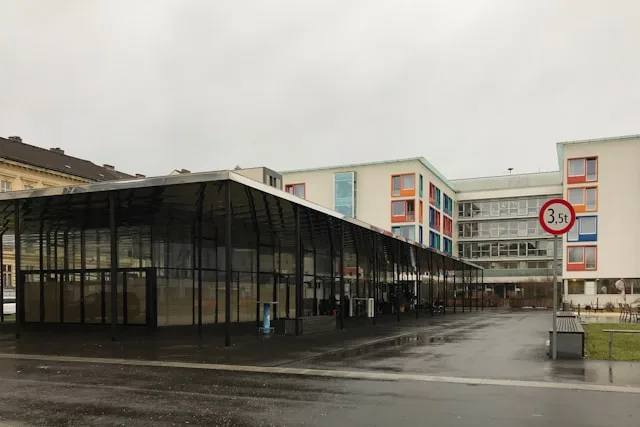
Linz produces one of Europe's most celebrated technology festivals, hosts a globally recognised media arts centre, and sits at the heart of Upper Austria's industrial manufacturing base. In 2026, the city's digital technology sector employs between 12,800 and 14,200 people within city boundaries, with a further 8,000 in the broader metropolitan area including Softwarepark Hagenberg. By headcount alone, this is a meaningful technology market. The trouble is that the market is not one market. It is two, and they operate under different rules.
The first is a creative technology ecosystem anchored by the Ars Electronica complex and the Tabakfabrik Linz co-working hub, populated by micro-enterprises averaging fewer than eight employees and sustained partly by public funding. The second is an industrial digitalization sector driven by the software divisions of major manufacturers like Voestalpine AG, TGW Logistics, and Fronius International, building predictive maintenance platforms, digital twins, and edge AI for factory floors. The two share a postcode and occasionally share vocabulary. They rarely share talent, compensation norms, or hiring methods.
What follows is a structured analysis of the forces shaping both sides of this split, the employers driving each, and what senior leaders need to understand before making their next hiring or retention decision in this city. The distinction between the two ecosystems is not a detail. It is the single most important thing a hiring executive can understand about Linz's technology market.
The Industrial Digitalization Engine That Actually Drives Linz
The popular narrative about Linz's technology sector begins with Ars Electronica. The economic reality begins elsewhere. Upper Austrian industrial firms invested €340 million in AI and automation in 2024. The demand for digital talent in this market originates overwhelmingly from manufacturing, logistics, and steel production. Not from media art.
Voestalpine AG's digitalization division alone employs 850 to 900 technical staff in Linz, focused on Industry 4.0 analytics and process automation. TGW Logistics Group runs a software division of over 600 people in Marchtrenk, developing warehouse management software and robotics control systems. Fronius International fields more than 200 software engineers building welding data analytics and energy management platforms. Kapsch BusinessCom adds another 300 in ICT infrastructure and digitalization projects.
These are not small pockets of innovation inside legacy firms. They are captive software operations with engineering headcounts that would qualify as mid-sized technology companies in their own right. Together with their supply chains, they employ over 2,500 technical staff and generate the majority of demand for senior digital roles in the region.
The "Hybrid Profile" Problem
The 2024 investment cycle accelerated demand for what the market calls "hybrid profiles." These are professionals who combine mechanical engineering knowledge with MLOps capabilities, or who can deploy machine learning models inside resource-constrained manufacturing environments where latency, data sovereignty, and safety certification all apply. This is not a standard software engineering hire. It is a role that requires domain expertise acquired over years inside industrial settings, plus a technical toolkit that barely existed five years ago.
The average time-to-fill for an industrial AI or machine learning engineer in Upper Austria reached 4.5 months by 2024, according to Hays Austria's salary guide. The unemployment rate among embedded systems architects with real-time operating systems and OPC UA protocol expertise sits below 1.2%, per the Austrian Public Employment Service's skills shortage analysis. These are not soft metrics. They describe a market where the supply of qualified candidates cannot keep pace with the demand, and where the candidates who do exist are already employed and deeply embedded in their current roles. Approximately 85 to 90% of industrial AI and ML engineers in the region are passive candidates, with average tenure of 4.2 years at their current employers.
The consequence for hiring leaders is direct. A VP of Engineering search in this space is not a recruitment problem. It is a sourcing problem. The candidates will not come to you.
The Creative Tech Layer: Globally Visible, Locally Stalled
Ars Electronica is the reason most people outside Austria associate Linz with technology. The festival draws international attention annually. The Futurelab conducts research at the intersection of art and science. The Ars Electronica Center functions as both a museum and a demonstration space for human-computer interaction. The brand has genuine global currency.
The employment footprint tells a different story. Ars Electronica Linz GmbH employs approximately 120 to 140 permanent technical, curatorial, and administrative staff, down from pre-pandemic peaks due to public funding constraints. The Tabakfabrik Linz, a 30,000 square metre heritage industrial site repurposed as a creative and startup hub, houses 87 tenant companies and about 1,200 creative and digital workers. But average company size across those tenants remains below eight full-time employees. This is a micro-enterprise ecology, not a scale-up one.
The University of Art and Design Linz's Interface Cultures department produces 30 to 40 graduates annually in interaction design and creative technology. That pipeline is real but narrow. And the pathway from graduation into local commercial employment is narrower still. According to graduate tracking data, approximately 35% of graduates in relevant fields emigrate from Upper Austria within two years, primarily to Vienna and Munich. The creative technology graduates are among the most mobile because their skills are portable and the salary premiums available in competing cities are substantial.
The Prestige Funnel That Leaks
The most important tension in this data is not the size of the creative tech segment. It is the conversion failure. Ars Electronica successfully imports international creative technology talent to Linz through its festival, residencies, and research programmes. Longitudinal data suggests fewer than 15% of these international creatives remain in Linz for commercial employment beyond 12 months.
The city functions as a showcase that talent passes through, not a market that talent settles into.
This would be merely unfortunate for the creative sector alone. It becomes commercially consequential when you consider that industrial employers in the same city simultaneously report shortages in adjacent skills: interactive systems, human-computer interaction design, data visualisation, and UX for industrial environments. The creative layer generates precisely the kind of human-machine interface expertise the industrial layer needs. But the two layers do not connect, and the talent the festival attracts does not stay long enough to bridge them.
Compensation: The Gap That Makes Every Other Problem Worse
The compensation data for Linz's digital technology market is misleading at the aggregate level. General ICT salary growth moderated to 2.5 to 3.5% in 2024, roughly matching Austrian inflation. A CHRO reviewing this figure would conclude the market is stable. That conclusion would be wrong for the roles that matter most.
Compensation for industrial AI specialists with manufacturing domain expertise accelerated to 8 to 10% annual increases over the same period. This bifurcation is invisible in aggregate reporting, which treats the "ICT sector" as a uniform category. It is the single most common source of compensation misjudgement in this market.
A senior AI/ML engineer with seven or more years of experience earns €78,000 to €95,000 gross annual in Linz, on the Austrian 14-month salary structure. The same profile commands €92,000 to €115,000 in Vienna, a 15 to 20% premium. In Munich, the figure is €110,000 to €140,000, a 35 to 40% premium. At VP of Engineering level, the gap widens further. Linz offers €135,000 to €175,000 with limited equity participation. Munich equivalents reach €200,000 to €280,000 including equity, according to Kienbaum's compensation benchmarking.
Creative Director roles in media technology pay €75,000 to €110,000, well below industrial tech positions at the same seniority level. Senior independent creative technologists can command freelance daily rates of €800 to €1,200, which partly explains why 60% of Technical Director searches at Tabakfabrik-based startups ultimately convert to freelance or project-based arrangements rather than permanent hires.
The Munich Remote Work Arbitrage
The geographic proximity to Munich creates a compensation dynamic that few other mid-sized European technology cities face. Munich is 90 minutes by car. Remote work for Munich-based firms while residing in Linz offers the best of both compensation structures: Munich salaries at Linz living costs, with housing roughly 40% cheaper than Munich. This is an attractive arbitrage for senior talent, and it is increasingly common.
The effect on the local labour supply is corrosive. Every senior engineer or AI specialist who takes a remote Munich contract removes themselves from the Linz candidate pool without leaving the city. They appear to be locally available. They are not. This dynamic is particularly difficult for Linz-based SMEs to detect because the talent appears geographically present but is economically committed elsewhere.
The Venture Capital Ceiling and What It Does to Executive Hiring
Upper Austria captured only €42 million in venture capital in 2023, representing 8.3% of Austria's total. The majority was directed to later-stage industrial automation rather than creative technology ventures. No dedicated growth-stage venture capital funds are expected to establish Linz headquarters in 2026. Funding continues to flow through Vienna-based Speedinvest, the German High-Tech Gründerfonds, and corporate venture arms of Voestalpine and Kapsch.
This capital constraint has a direct and measurable impact on executive hiring for software scale-ups. Companies in the 20 to 50 employee range seeking CFOs with SaaS metrics experience and international funding exposure face a candidate market where, per the Austrian Startup Monitor's assessment, fewer than 10 suitable profiles are locally available. Typical search duration exceeds six months. The practical outcome is that these companies hire Vienna-based CFOs on remote or hybrid arrangements, which solves the competency gap but weakens the local executive network.
The capital constraint also shapes the competitive dynamic for engineering talent. Without Series B or C funding, Linz scale-ups cannot offer competitive equity participation. A VP of Engineering in Linz might receive 0.5 to 2% equity. In Munich, comparable roles routinely include equity packages that double or triple total compensation over a four-year vest. For a candidate weighing two offers, the equity gap can be decisive.
This creates a hiring paradox that is specific to this market. Linz has the industrial client base to sustain growing software businesses. It has the technical university output from JKU and Hagenberg. But it lacks the capital infrastructure to compensate senior talent at levels competitive with the cities that are 90 minutes away. The result is a talent market where the strongest candidates at the most senior levels are systematically exported, and the firms that need them most are structurally unable to compete on total compensation.
The Procurement Glass Ceiling for Local SMEs
The hypothesis that Linz's software SMEs form an ecosystem supplying industrial digitalization services turns out to be only partially true. Approximately 60% of Linz-based software SMEs derive over half their revenue from industrial manufacturing clients. The demand is real. But the demand and the revenue are not reaching the same firms at the same scale.
Upper Austrian industrial firms report digitalization as their top strategic priority for 2025 and 2026, with planned investment increasing 12% year-on-year. Yet Linz-based software startups report flat or declining revenues from industrial clients. The gap is explained by procurement risk-aversion. Heavy industry incumbents like Voestalpine and Borealis favour established system integrators such as Siemens, Accenture, and IBM for major digitalization contracts, according to the Upper Austrian Economic Chamber's digitalization procurement survey.
This "vendor consolidation" creates a ceiling for local SMEs. They can win pilot projects and subcontracts, but they are structurally excluded from the highest-value engagements with the very employers who sit across town. The practical consequence is that a software scale-up in Linz may have the technical capability to build a digital twin platform for steel production, but the procurement process at the steel producer next door routes that contract to a global consultancy.
For senior hiring decisions, this dynamic matters because it constrains growth trajectories. A VP of Engineering considering a Linz scale-up must assess not just the current product and team, but whether the company can break through the procurement barrier to reach its natural client base. That assessment often tilts the decision toward a Munich or Vienna role with a clearer path to enterprise-scale contracts.
Regulatory Pressure Arriving on Multiple Fronts
The EU AI Act and Cyber Resilience Act
The implementation of the EU AI Act and the Cyber Resilience Act imposes compliance costs that fall disproportionately on SMEs. Estimated annual compliance costs for Linz-based AI software SMEs range from €150,000 to €300,000, per European Commission impact assessments and the Bitkom SME compliance study. For a company with 50 employees and tight margins from industrial subcontracting work, this is not a rounding error. It is a material threat to profitability.
The compliance burden also creates new hiring demand. Roles combining AI engineering expertise with regulatory knowledge are emerging across the sector, and the candidates who can fill them do not yet exist in sufficient numbers. This is not a hiring problem in the traditional sense. It is a knowledge problem. The regulatory frameworks are new enough that the experience base is shallow everywhere, and in a market the size of Linz, it is nearly non-existent.
Digital Product Passports
EU regulation mandating product lifecycle data transparency is creating a distinct surge in demand for blockchain-integrated supply chain software developers. This is a niche within a niche: developers who understand both distributed ledger technology and industrial supply chain data architecture. The talent pool is small across Europe. In Linz, it is essentially zero as a candidate category for active recruitment, which means every search for this profile is a headhunting exercise from day one.
The Synthesis: Capital Moved Faster Than Talent Could Follow
The analytical claim that ties this data together is not simply that Linz has a talent shortage. Every technology market has a talent shortage in 2026. The specific dynamic here is that Upper Austria's €340 million annual investment in AI and automation has created demand for a category of professional that the local education system, compensation structure, and capital market are not yet equipped to produce or retain.
JKU graduates 400 STEM professionals annually. Hagenberg adds to the pipeline. But the hybrid profiles the market now requires combine disciplines that no single degree programme covers: mechanical engineering domain knowledge, MLOps deployment expertise, edge computing architecture, and safety-critical systems certification. These profiles are assembled through years of industrial experience, not through graduation. The investment in automation has not reduced the workforce. It has replaced one kind of worker with another that does not yet exist in sufficient numbers. The capital moved faster than human capital could follow.
This is why time-to-fill for industrial AI roles runs 4.5 months while junior software developer roles fill through standard job postings. The bottleneck is not at the entry level. It is at the intersection of domain expertise and emerging technical capability, precisely the level where the cost of a prolonged vacancy is highest and where the candidates are least likely to be found through conventional methods.
What This Means for Hiring Leaders in This Market
A hiring executive approaching Linz's digital technology market in 2026 faces three realities that conventional recruitment cannot address.
First, the passive candidate ratio in the roles that matter most is extreme. Between 80% and 90% of industrial AI engineers, embedded systems architects, and senior creative technologists are not on any job board, not reviewing any listings, and not responding to generic recruiter outreach. They are contacted weekly and have learned to ignore approaches that do not demonstrate specific knowledge of their work. Reaching them requires targeted talent mapping that identifies not just who they are, but what would have to change for them to consider a move.
Second, the compensation benchmarking required to make a credible offer is more complex than a single salary figure. The candidate you want may be comparing your offer against a Munich remote contract, a Vienna relocation package, or a Zurich research position at 80 to 100% premium. The counteroffer risk is compounded by the geographic accessibility of higher-paying markets. Understanding what a specific candidate would actually move for requires intelligence that no salary survey can provide.
Third, the creative technology talent that Linz temporarily attracts through Ars Electronica represents a sourcing opportunity that almost no local employer capitalises on. The 85% who leave within twelve months are not leaving because they dislike the city. They are leaving because no commercially viable, adequately compensated role is presented to them before their residency or festival engagement ends. The window is narrow, and the approach must be timed and tailored.
For organisations competing for industrial AI, embedded systems, or creative technology leadership in Upper Austria, where fewer than 10% of the strongest candidates will respond to a job posting and the cost of a six-month vacancy compounds through lost digitalization momentum, speak with our executive search team about how KiTalent approaches this specific market. With interview-ready candidates delivered within 7 to 10 days, a pay-per-interview model that eliminates upfront retainer risk, and a 96% one-year retention rate across 1,450 completed executive placements, KiTalent is built for markets where the talent you need is not looking for you.
Frequently Asked Questions
What is the average salary for an AI engineer in Linz, Austria in 2026?
A senior AI or machine learning engineer with seven or more years of experience earns €78,000 to €95,000 gross annual in Linz on the Austrian 14-month salary structure. This represents a 15 to 20% discount to Vienna and a 35 to 40% discount to Munich. Compensation for industrial AI specialists with manufacturing domain expertise has been growing at 8 to 10% annually, outpacing general ICT salary growth of 2.5 to 3.5%. VP of Engineering roles in industrial SaaS command €135,000 to €175,000 with limited equity. These figures make accurate compensation benchmarking essential before making an offer.
Why is it so hard to hire technology talent in Linz?
Linz faces a combination of pressures not found in larger cities. Munich, only 90 minutes away, offers 35 to 50% salary premiums and draws senior talent into remote arrangements that remove them from the local candidate pool without requiring relocation. Vienna captures 70% of Austrian venture capital, limiting Linz scale-ups' ability to offer competitive equity. The specialised hybrid profiles demanded by industrial digitalization combine disciplines that no single degree programme produces, meaning the talent pool grows only through accumulated experience. An estimated 85 to 90% of qualified industrial AI engineers in the region are passive candidates.
What are the biggest technology employers in Linz?
Voestalpine AG's digitalization division employs 850 to 900 technical staff. TGW Logistics Group runs a software division of over 600 people in the greater Linz area. Dynatrace maintains an R&D centre with 400 or more software engineers. Kapsch BusinessCom employs over 300 in ICT infrastructure. Fronius International fields more than 200 software engineers. On the creative technology side, Ars Electronica employs 120 to 140 permanent staff, while the Tabakfabrik Linz hub houses 87 tenant companies employing approximately 1,200 creative and digital workers collectively.
How does Linz's creative technology scene compare to its industrial tech sector?
The two sectors operate under fundamentally different conditions. Industrial digitalization is growing at 3 to 4% annually in employment terms, driven by €340 million in annual AI and automation investment from Upper Austrian manufacturers. Creative technology employment is flat or contracting slightly, constrained by public funding limitations. The Tabakfabrik's 87 tenant companies average fewer than eight employees each. Only 12% of Tabakfabrik tenants serve industrial clients, indicating minimal crossover between the two layers despite their geographic proximity and overlapping skill requirements in areas like human-computer interaction.
What executive roles are hardest to fill in Linz's technology sector?
The most difficult searches are for VP of Engineering candidates with both enterprise software architecture and industrial domain knowledge, Head of AI/ML roles requiring deployment experience in production manufacturing environments, and CFO positions at software scale-ups requiring SaaS metrics and international funding expertise. CFO searches face a local candidate pool of fewer than 10 suitable profiles and typically exceed six months. Technical Director searches at creative technology firms fail to close 60% of the time, converting to freelance arrangements instead.
How can KiTalent help with executive hiring in Linz's technology sector?
KiTalent uses AI-powered direct headhunting methodology to identify and engage passive candidates who are not visible on job boards or responding to conventional outreach. In a market where 80 to 90% of qualified candidates for critical technology roles are passive, this approach reaches the talent that standard recruitment cannot. KiTalent delivers interview-ready executive candidates within 7 to 10 days, operates on a pay-per-interview model with no upfront retainer, and maintains a 96% one-year retention rate across more than 1,450 completed placements globally.