Little Rock Aerospace Hiring in 2026: Why a $100 Million Expansion Cannot Solve a Talent Problem Built Over Decades
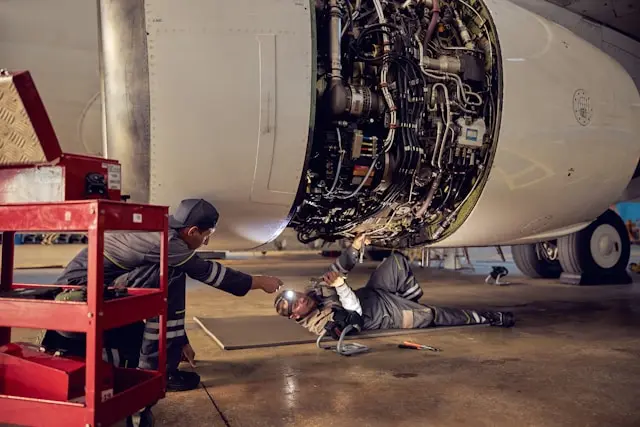
Little Rock's aerospace sector entered 2026 with a contradiction that should concern every hiring leader in the market. Dassault Falcon Jet's $100 million facility expansion at Clinton National Airport is reaching full operational capacity, adding 300,000 square feet of completion centre space designed for the Falcon 6X and 10X programmes. The concrete is poured. The steel is up. The production lines are ready. The workers to staff them are not.
This is not a generic shortage story. Little Rock's aerospace talent crisis is structurally different from what Wichita, Dallas, or Savannah face. Those markets are short on people. Little Rock is short on people, short on pipeline, and short on the career infrastructure that keeps skilled professionals in place once they arrive. The city produces fewer than half the certified airframe and powerplant mechanics its own regional demand requires each year. The gap is not closing. It is compounding, year after year, while the single employer that dominates the market invests as though the talent will materialise on schedule.
What follows is a ground-level analysis of why Little Rock's aerospace hiring challenge is more severe than its investment headlines suggest, where the real bottlenecks sit, and what organisations competing for completion centre talent, senior avionics specialists, and operations leadership need to understand before committing to a search in this market.
The Expansion That Arrived at the Wrong Moment
Dassault Falcon Jet has operated its largest North American completion centre in Little Rock since 1976. The facility completes Falcon 2000, 900, 7X, 8X, and 6X aircraft, employing between 1,200 and 1,400 direct personnel through 2024. In October 2023, the company announced a $100 million expansion designed to accommodate increased production rates for the Falcon 6X and 10X programmes, with a target of 300 new jobs by 2026.
That expansion is now reaching operational readiness. But it arrives into a market where conditions have shifted materially since the announcement was made.
A Softening Order Book Meets a Growing Facility
According to Honeywell's Global Aerospace Outlook, industry analysts projected a 15 to 20 percent softening in new business jet deliveries globally through 2026 as the post-COVID backlog normalised and elevated interest rates suppressed fractional ownership growth. Dassault's own order book for Falcon jets declined 18 percent year-over-year in Q3 2024 compared to 2023 peaks. The trajectory established through 2025 has continued into 2026, and the question is no longer whether the softening will arrive but whether it will be shallow enough to sustain Dassault's hiring commitments.
If production scheduling holds, the Little Rock facility could reach 1,600 to 1,700 direct employees by mid-2026. If it does not, the market faces the opposite problem: an expanded facility operating below capacity, with contract labour reductions and hiring freezes replacing the signing bonuses that characterised 2024. For a market this concentrated around a single employer, the difference between those two scenarios is the difference between growth and contraction.
No Diversification Buffer
Unlike Wichita, which balances business aviation with defence manufacturing at Textron and commercial aerostructures work, or Dallas-Fort Worth, which combines business jet operations with airline MRO at American Airlines and Southwest facilities, Little Rock has no meaningful secondary employer to absorb cyclical demand shifts. The city hosts approximately 15 to 20 FAA Part 145 repair stations, but these primarily serve general aviation and regional aircraft, with aggregate employment of 800 to 1,000 technicians across fragmented smaller operations. No major third-party heavy maintenance provider operates at the scale that would diversify the employment base.
The Arkansas Economic Development Commission's projection of 8 to 10 percent aerospace sector employment growth in Central Arkansas through 2026 is contingent almost entirely on Dassault maintaining its expansion timeline. No additional major greenfield aerospace investments have been announced for the Little Rock Port Authority zone or airport vicinity. The sector's fortunes are, for practical purposes, one company's fortunes.
The Pipeline Deficit That No Signing Bonus Can Fix
The most important number in Little Rock's aerospace talent market is not a salary figure or a vacancy count. It is the annual shortfall between how many A&P mechanics Arkansas produces and how many the region needs.
Arkansas's FAA-certified training programmes graduate approximately 120 airframe and powerplant technicians annually statewide, according to the Aviation Technician Education Council's 2024 Pipeline Report. Regional demand across Central Arkansas, Northwest Arkansas, and Texarkana requires 180 to 200 new entrants per year. That is a structural deficit of 60 to 80 technicians annually that can only be filled by recruiting from other states or persuading retirees to delay departure.
Arkansas State University Mid-South in West Memphis, the primary feeder for Little Rock's A&P workforce, graduates 40 to 50 technicians per year with a 70 percent placement rate in Central Arkansas. UA Little Rock's Donaghey College of Engineering produces approximately 15 to 20 aerospace-focused graduates annually. These numbers have not moved materially in five years. They are not projected to move materially in the next five.
This is the context in which Dassault maintained continuous recruitment for A&P mechanics throughout 2024, with public postings remaining active for 90 or more days on average before filling. That compares to a 45-day average for skilled manufacturing roles in other Arkansas sectors. The company has publicly offered $10,000 to $15,000 signing bonuses for experienced A&P mechanics with business jet completion experience in Little Rock since March 2024. As reported by Aviation Week, these premiums were not offered at Dassault's other North American facilities. The bonuses are a symptom, not a solution. They move individual candidates but do nothing to expand the pool.
The original synthesis this data demands is uncomfortable but unavoidable: Dassault's capital investment has outpaced the region's human capital infrastructure by a factor that no single employer can correct alone. The company can build 300,000 square feet of completion centre space in two years. The training institutions that feed it cannot produce 300 additional qualified technicians in ten. Capital moved faster than the workforce pipeline could follow, and the gap between facility capacity and staffable capacity is now the binding constraint on Little Rock's entire aerospace economy.
The Retention Paradox: Affordable but Not Sticky
Little Rock's cost-of-living advantage over its competitor markets is real and measurable. The Council for Community and Economic Research's Cost of Living Index shows Little Rock running approximately 12 to 15 percent below Dallas and 8 percent below Wichita on an all-in basis. Executive commute times are shorter. Housing costs are materially lower.
If affordability were sufficient to attract and retain aerospace talent, Dassault would not need signing bonuses.
Why Technicians Leave
The compensation gap for A&P mechanics is meaningful in absolute terms. The Little Rock median for certified aircraft mechanics sits at approximately $68,000, compared to $78,000 in Wichita and $82,000 in Dallas. Even after adjusting for cost of living, the gap does not fully close. An experienced technician moving from Little Rock to Dallas accepts a higher nominal salary, a higher real salary after adjustment, and something that compensation data alone does not capture: a career trajectory that Little Rock cannot offer.
Wichita provides vertical advancement into experimental certification roles at companies like Textron. Dallas offers broader airline MRO exposure. Both markets employ large enough workforces across multiple employers that a technician's career does not depend on a single company's production schedule. In Little Rock, an A&P mechanic who advances as far as Dassault's internal structure allows has limited options without relocating. The city's talent pipeline feeds one dominant employer, and the career ceiling that creates is a retention risk that no cost-of-living calculator accounts for.
Why Executives Leave
The dynamic is similar at the leadership level but amplified. Director of Maintenance and VP of Completions roles in Little Rock carry base salaries of $145,000 to $240,000 depending on scope. Dallas and Savannah offer 20 to 30 percent more for equivalent positions, with larger leadership teams and broader operational mandates. The pattern is consistent with what the Arkansas Society of Human Resource Management documented in its 2024 Compensation Survey: senior aerospace operations roles in Central Arkansas required six months or longer to fill, with successful hires frequently relocated from out of state at 25 percent premiums over local market rates plus full relocation packages.
For any organisation running executive search in aerospace and defence sectors, the Little Rock data presents a clear warning. The candidate pool for senior roles in this market is not just thin. It is exclusively passive. Public job postings for Director of Maintenance or VP of Completions roles at Little Rock facilities serve compliance or branding purposes rather than sourcing channels. Over 90 percent of hires at this level result from direct search engagement or internal promotion.
What Completion Centre Talent Actually Costs in This Market
The compensation structure in Little Rock's aerospace sector reflects a market that is simultaneously underpriced relative to competitors and overpriced relative to its own historical norms. Understanding both dynamics is essential for anyone building a compensation package intended to attract from outside the market or retain from within it.
Senior Technical Specialists
A&P mechanics and senior avionics technicians in Little Rock earn $72,000 to $88,000 in base salary, with overtime and bonuses pushing total cash compensation to $85,000 to $105,000. The skills commanding the highest premiums are completion centre specialisations: cabinet fabrication and installation, premium interior leather and veneer work, exterior paint preparation for composite airframes, and avionics integration across platforms including the Garmin G5000/G7000 and Collins Pro Line Fusion systems. Composite repair expertise for carbon fibre structures on next-generation Falcon aircraft is the single hardest skill to recruit locally.
These figures represent a 15 to 20 percent discount to Wichita and Dallas for nominally equivalent roles. But "nominally equivalent" obscures a meaningful difference. A completion centre mechanic at Dassault's Little Rock facility is performing bespoke, one-of-a-kind interior installations on $40 million to $75 million aircraft. The precision required is closer to luxury craftsmanship than to line maintenance. The compensation benchmarks that apply to this work do not map cleanly onto standard A&P mechanic salary surveys, and organisations that price these roles using generic aviation maintenance data will undershoot the market.
Programme Managers and Operations Directors
Senior project managers with seven or more years of experience in aircraft completions earn $95,000 to $125,000 in base salary, rising to $125,000 to $155,000 for programme directors managing multiple concurrent aircraft projects. Director-level roles overseeing 50 or more technicians command $145,000 to $185,000, and VP-level operations leadership with profit-and-loss responsibility reaches $180,000 to $240,000. Equity participation or performance bonuses of 20 to 30 percent are typical at Dassault but rare among smaller local MRO operators.
The gap between Dassault's compensation structure and what smaller employers like Lintech International or PikAero can offer is itself a talent constraint. Dassault can fund relocation packages and signing bonuses. A 180-person component manufacturer operating on aerospace supply chain margins generally cannot. The result is a two-tier market where the anchor employer absorbs the majority of available talent and smaller firms compete for what remains, often at a disadvantage that makes senior hiring a fundamentally different exercise than it would be in a more diversified market.
Regulatory Friction and Infrastructure Constraints
Little Rock's aerospace hiring challenges do not exist in isolation from the operational environment. Two constraints external to the labour market itself are compounding the difficulty of attracting and retaining talent.
FAA Certification Bottlenecks
The FAA's Aircraft Certification Service office in Little Rock faces its own staffing shortages, creating delays that ripple through the completion process. Supplemental type certificate approvals for custom interior modifications now run four to six months beyond historical averages, according to the General Aviation Manufacturers Association's 2024 Regulatory Report. For a completion centre that builds bespoke aircraft interiors to individual customer specifications, STC delays slow revenue recognition, extend project timelines, and create uncertainty in workforce planning. A technician assigned to a project that stalls mid-certification cannot be easily redeployed; the skills required for a specific interior configuration are not interchangeable with those needed for a different aircraft.
Hangar Capacity at 95 Percent
Clinton National Airport's available hangar space is at 95 percent occupancy, primarily serving Dassault overflow and general aviation tenants. This physical constraint has a direct talent market consequence: it prevents the attraction of independent MRO providers that could diversify the employment base. A company like StandardAero or Duncan Aviation evaluating Little Rock as a potential facility location would find insufficient heavy maintenance hangar capacity to justify the investment. The airport master plan update published by the Little Rock Municipal Airport Commission in 2024 acknowledges this constraint but offers no funded expansion timeline.
Without hangar capacity, there is no diversification. Without diversification, the career trajectory problem that drives talent to Dallas and Wichita persists. The infrastructure constraint and the talent retention problem are the same problem, viewed from different angles.
What This Means for Organisations Hiring in This Market
The cumulative picture of Little Rock's aerospace talent market in 2026 is a market where the fundamentals are strong but the execution environment is unforgiving. Dassault's investment validates the location. The pipeline deficit, the retention paradox, and the single-employer concentration define the operating reality.
For any organisation hiring technical specialists in this market, the first principle is that job postings will not work at the levels that matter most. Approximately 70 to 75 percent of qualified candidates for senior A&P roles are passive, according to LinkedIn Talent Insights data for the Little Rock MSA. They are employed, not applying, and reachable only through direct headhunting approaches that identify them individually rather than waiting for them to self-select. At the executive level, the figure is closer to 90 percent. Posting a VP of Completions role on a job board in this market is not a search strategy. It is a compliance exercise.
The second principle is that compensation alone does not close the deal. A candidate relocating from Wichita or Dallas to Little Rock is not just evaluating a salary. They are evaluating a career ecosystem. The offer must address trajectory, not just total compensation. What does the role lead to in three years? What happens if Dassault's order book softens? Is there a second employer in the market that could absorb a senior professional if the primary relationship ends? These are the questions passive candidates ask. The organisations that answer them credibly are the ones that secure and retain placements in this market.
The third principle is speed. A search that runs 90 days in this market, as the current average for A&P mechanics suggests, is a search that loses its strongest candidates before a shortlist is assembled. The cost of a prolonged search in a market this concentrated is not measured only in vacancy duration. It is measured in production delays, in completion schedules that slip, and in revenue recognition that pushes into the next quarter.
How Direct Search Changes the Equation in Little Rock
Little Rock's aerospace talent market is precisely the environment where traditional recruitment methods fail most visibly. The active candidate pool at the senior level is vanishingly small. The passive candidate pool is concentrated among a handful of employers in a handful of cities. The candidates who can do the work are not looking for it.
KiTalent's approach to executive search is designed for exactly this kind of market. By using AI-enhanced talent mapping to identify and engage passive candidates across Wichita, Dallas, Savannah, Tulsa, and other aerospace centres, the firm reaches the 70 to 90 percent of qualified professionals who will never respond to a job posting. Interview-ready candidates are delivered within 7 to 10 days, with a pay-per-interview model that eliminates upfront retainer risk. The 96 percent one-year retention rate for placed candidates reflects a methodology that assesses not just technical qualification but the career trajectory and lifestyle factors that determine whether a relocation to Little Rock will stick.
For organisations competing for completions leadership, senior avionics talent, and programme management in Central Arkansas, where the production schedule cannot wait for the training pipeline to catch up and the cost of a bad executive hire is measured in grounded aircraft and missed delivery windows, speak with our executive search team about how we approach this market.
Frequently Asked Questions
Why is it so hard to hire A&P mechanics in Little Rock, Arkansas?
Arkansas's FAA-certified training programmes graduate approximately 120 airframe and powerplant technicians annually statewide, against regional demand for 180 to 200 new entrants per year. This creates a structural deficit of 60 to 80 technicians annually. Dassault Falcon Jet's dominance as the primary employer means career trajectory options are limited compared to Wichita or Dallas, where multiple large employers offer varied advancement paths. The result is a market where 70 to 75 percent of qualified senior A&P candidates are passive and reachable only through direct search methodology, not job postings.
What do aerospace jobs pay in Little Rock compared to other markets?
Senior A&P mechanics and avionics technicians in Little Rock earn $72,000 to $105,000 in total compensation, representing a 15 to 20 percent discount to equivalent roles in Wichita and Dallas. Director-level maintenance and completions roles pay $145,000 to $185,000, while VP-level operations leadership reaches $180,000 to $240,000. Little Rock's 12 to 15 percent cost-of-living advantage over Dallas partially offsets the gap, but career trajectory limitations make retention challenging even at competitive compensation levels.
How does Dassault Falcon Jet's expansion affect the Little Rock job market?
Dassault's $100 million expansion at Clinton National Airport is reaching full operational capacity in 2026, potentially increasing direct employment to 1,600 to 1,700 personnel. However, this expansion arrives alongside industry projections of 15 to 20 percent softening in global business jet deliveries. The outcome depends on whether the Falcon 6X and 10X order books sustain current production rates. Because Little Rock lacks diversified aerospace employers, the entire regional sector's employment trajectory hinges on Dassault's scheduling decisions.
What executive roles are hardest to fill in Little Rock's aerospace sector?
Completions programme directors, VP of Completions, and Director of Maintenance roles are the most difficult to fill, with search durations of six months or longer documented in the market. Over 90 percent of hires at these levels result from executive search engagement rather than inbound applications. KiTalent's AI-enhanced talent mapping reaches passive candidates in competitor markets including Wichita, Dallas, and Savannah, delivering interview-ready leadership candidates within 7 to 10 days.
Is Little Rock's aerospace sector too dependent on one employer?
The data supports that concern. Dassault Falcon Jet accounts for the majority of direct aerospace employment in the Little Rock MSA, with no major third-party heavy maintenance provider operating at comparable scale. Clinton National Airport's hangar capacity at 95 percent occupancy prevents attraction of independent MRO providers that could diversify the base. The Arkansas Economic Development Commission's growth projections for the sector are explicitly contingent on Dassault maintaining its hiring and production commitments through 2026.
How can companies compete for aerospace talent in a market this small?
Effective hiring in Little Rock requires three elements: direct outreach to passive candidates in competitor markets, compensation packages that address career trajectory concerns rather than salary alone, and search speed that prevents the strongest candidates from accepting other offers. Firms that rely on traditional recruitment methods in this market face 90-plus-day vacancy durations at the technician level and six-month searches at the executive level. A search partner with access to the full passive candidate pool across US aerospace centres materially changes that timeline.