Longueuil's Precision Manufacturing Sector Has Invested in Automation It Cannot Install and Talent That Does Not Exist
Longueuil's advanced manufacturing sector sits at the centre of North America's aerospace supply chain. The city's Saint-Hubert borough and surrounding industrial parks house the continent's only independent landing gear manufacturer, a major turbine component facility, and more than 600 manufacturing establishments feeding components into programmes built by Bombardier, Pratt & Whitney, and global defence contractors. In 2024, Héroux-Devtek alone generated CAD $847.2 million in global revenue, with all landing gear design and prototype work flowing through its Longueuil facilities. By any measure, this is a precision manufacturing cluster of genuine strategic importance.
The problem is not demand. Aerospace production volumes are rising. Héroux-Devtek has committed CAD $45 million to facility modernisation through 2026, including additive manufacturing for titanium landing gear brackets. Aéro Montréal projects 3.5% annual growth for the Greater Montreal aerospace precision manufacturing cluster. The problem is that the sector has prescribed automation as the cure for its labour shortage, only to discover that the buildings where the work happens cannot physically support the equipment. And the workers who could bridge the gap are either retiring, moving to Toronto, or unable to work in French.
What follows is a ground-level analysis of the forces converging on Longueuil's manufacturing sector: the physical constraints blocking modernisation, the demographic wave removing experienced specialists, the linguistic policy compounding an already acute shortage, and what senior leaders responsible for hiring in this market need to understand before their next search.
An Aerospace Cluster Built on Aging Foundations
Longueuil's advanced manufacturing sector employs approximately 24,800 workers, representing 18% of the city's total employment. Within that figure, an estimated 3,200 work in precision metalworking. The concentration is extreme: 45% of Longueuil's manufacturing employment directly serves aerospace OEMs, primarily through precision machining of high-grade aluminium and titanium, according to Aéro Montréal's 2023 economic study.
This is not a diversified manufacturing base. It is an aerospace supply chain with secondary exposure to rail transport and a marginal 8% share in energy fabrication. The sector is characterised by high-mix, low-volume production: landing gear components, turbine housings, structural assemblies. Héroux-Devtek's Longueuil operations produce 100% of the company's global landing gear design and prototype work, using 5-axis CNC machining centres and specialised heat treatment processes. The precision requirements are extreme. The candidate requirements are correspondingly narrow.
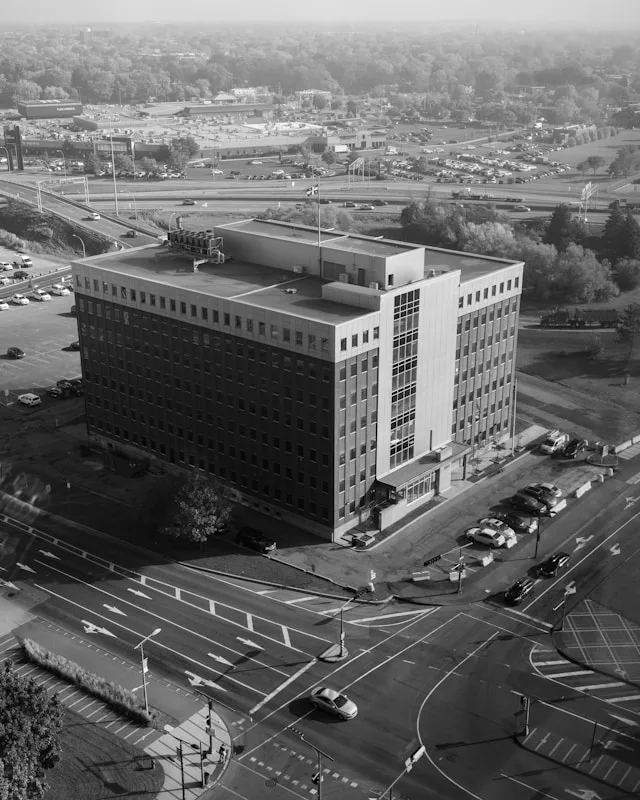
What makes this cluster distinctive is not just its technical specialisation. It is the physical infrastructure constraining its future. The average age of industrial buildings in the Parc industriel Saint-Hubert exceeds 35 years. According to Canada Mortgage and Housing Corporation's 2024 Montreal industrial market analysis, 40% of structures were built before 1990. Deferred maintenance in these legacy facilities creates productivity gaps of 15 to 20% compared to greenfield operations. Serviced industrial land availability in core Longueuil boroughs is effectively zero. Class A industrial vacancy in the South Shore submarket reached just 1.2% in Q3 2024, with asking rents up 42% since 2020 to CAD $14.50 per square foot net.
These are not abstract pressures. They are the physical walls closing in on a sector that needs to grow but has nowhere to expand. And the implications for talent acquisition are direct: every facility limitation that prevents automation places additional demand on human workers who are already in critically short supply.
The Automation Paradox: Capital Has Outpaced the Buildings That House It
Here is the analytical tension at the core of Longueuil's manufacturing challenge, and the observation that this article is built around: the sector's investment in automation has not reduced workforce dependency. It has revealed a deeper constraint that money alone cannot solve.
Approximately 35% of Longueuil precision manufacturers deployed collaborative robots for machine tending in the 18 months through early 2025, up from 12% in 2020. Manufacturers planned to increase automation spending by 40% through 2025 and 2026. The intent is clear. The execution is physically impossible in the majority of existing facilities.
Why the Buildings Cannot Support the Equipment
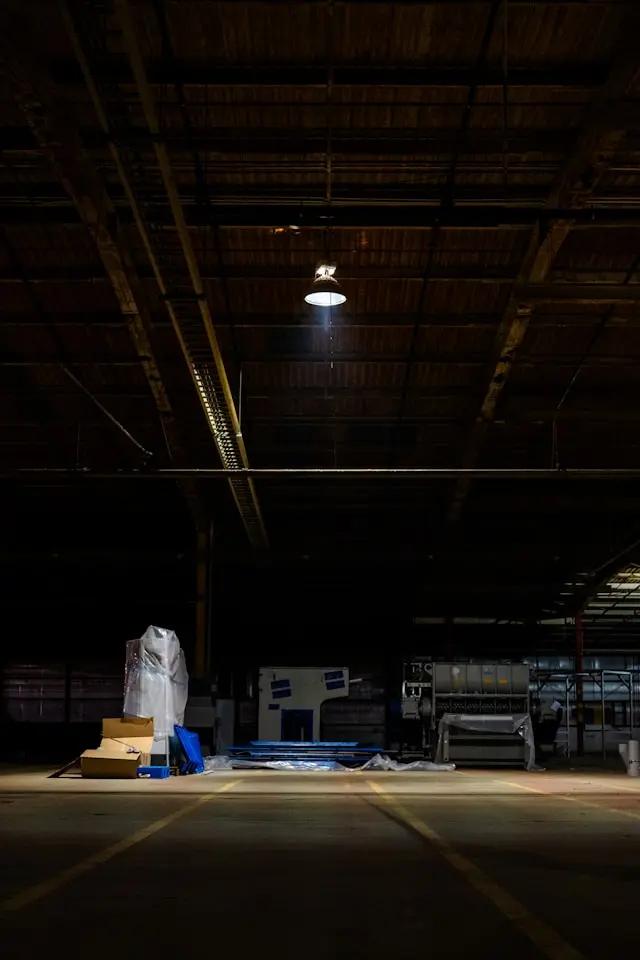
According to the Conseil de l'industrie aérospatiale du Québec, 60% of Saint-Hubert industrial park facilities cannot support full automation retrofits. The reasons are specific: ceiling heights below 24 feet, inadequate floor loading for heavy CNC centres requiring 10,000-plus pounds per square foot, and building configurations designed for a previous generation of manufacturing processes. These are not problems solved by a capital expenditure line item. They are embedded in concrete and steel.
The Workforce Consequence
The result is that capital investment intended to reduce dependence on scarce labour has instead replaced one category of scarce worker with another. The introduction of AI-driven predictive maintenance and automated quality inspection will eliminate an estimated 15% of entry-level quality inspector roles. But it simultaneously creates demand for more than 200 AI-maintenance technicians and data analysts. This profile does not currently exist in the local labour market, according to HEC Montreal's Center for Productivity and Prosperity.
The sector moved its capital faster than the physical infrastructure or the human capital could follow. Firms that cannot automate remain dependent on a shrinking pool of manual specialists. Firms that do automate need a new category of worker that local training institutions have not yet produced in meaningful numbers. Neither path resolves the immediate hiring pressure. Both paths intensify it.
This creates a stark choice for Longueuil manufacturers: relocate to greenfield sites in Saint-Bruno or Brossard where modern facilities can support automation, breaking the cluster effects that make Longueuil valuable in the first place, or accept permanent productivity constraints and compete even harder for human talent. The sector has not yet resolved this tension. Hiring leaders operating within it should understand that it will not resolve itself in the next 12 months.
The Retirement Wave and the Roles No Job Board Can Fill
By the end of 2026, 22% of Longueuil's precision manufacturing workforce will reach retirement eligibility. That translates to approximately 700 workers. When combined with sector growth, total replacement demand will exceed 900 positions annually. The numbers alone tell a concerning story. The composition of those departures makes it materially worse.
The workers retiring are not interchangeable production staff. They are senior CNC programmers with decades of experience machining titanium and Inconel. They are quality directors who built and maintained AS9100D and NADCAP certification systems. They are the institutional memory of processes that cannot be fully documented because they depend on judgment accumulated over years of working with specific materials on specific machines.
Where the Scarcity Is Most Acute
As of Q4 2024, Longueuil precision manufacturers posted 340 vacancies for skilled trades and engineering roles. The vacancy rate of 4.8% is double the Quebec manufacturing average. But the aggregate figure conceals a far more severe problem in specific roles.
CNC machinists qualified for 5-axis aerospace metalwork are in a 3:1 demand-to-supply imbalance in the Montérégie region. Unemployment among senior CNC programmers in Greater Montreal sits below 1.5%. Average tenure runs 7 to 10 years. These candidates do not apply to job postings. They do not browse job boards. They are approached through direct networks or retained executive search mandates.
Quality directors holding AS9100D audit credentials and NADCAP familiarity are, according to Caldwell Partners' aerospace practice report, held in place by deferred compensation and pension vesting schedules. Moving them requires total compensation increases of 25 to 30%. The cost of a failed search at this level is not simply the recruitment fee. It is the regulatory exposure of operating without adequate quality leadership in a sector where a single non-conformance can ground an aircraft programme.
Manufacturing engineering managers with Industry 4.0 implementation experience are 85% passive candidates. They field multiple concurrent offers while employed. The average time to fill a manufacturing engineer role in Longueuil precision metals runs 95 days. For quality managers, it exceeds 120 days. For aerospace CNC machinists, the range is 85 to 110 days.
These are not figures that respond to better job advertisements. They respond to a fundamentally different approach to candidate identification.
Compensation: The Sandwich That Squeezes Longueuil's SMEs
Longueuil's precision manufacturers face compensation pressure from two directions simultaneously. Understanding both is essential for any leader setting a hiring budget in this market.
Pressure from Above: Tier-1 Employers and Cross-Border Competition
Héroux-Devtek and Pratt & Whitney Canada routinely recruit experienced CNC machinists from subcontractor firms in the Parc industriel Saint-Hubert. According to data from the Manufacturiers et Exportateurs du Québec's 2024 SME survey and Aéro Montréal's labour market working group, these moves typically involve wage premiums of 18 to 25% above market rates. A senior Mazak or Makino operator with five-plus years of aerospace experience moving from a 30-employee job shop to Héroux-Devtek's Saint-Hubert facility secures CAD $8 to $12 per hour in additional pay, plus signing bonuses of CAD $5,000 to $10,000.
At the executive level, a VP Operations or General Manager at a precision aerospace subcontractor commands CAD $175,000 to $240,000 in base salary. Total compensation with bonus and equity reaches CAD $220,000 to $350,000. A Director of Manufacturing or Plant Manager sits at CAD $135,000 to $175,000 base, with total packages reaching CAD $210,000. Senior Manufacturing Engineering Managers command CAD $110,000 to $145,000 base. These figures are sourced from Michael Page and Randstad's 2024 engineering salary guides for Quebec.
But the real threat to Longueuil's talent retention is not internal. It is geographic. Toronto offers 12 to 18% higher base salaries for equivalent CNC programming and manufacturing engineering roles. The Boston-Worcester corridor offers 40 to 60% higher wages in USD terms. A senior machinist earning CAD $35 to $45 per hour in Longueuil can command USD $45 to $60 per hour in Massachusetts. TN visa accessibility under USMCA makes this move straightforward for Canadian engineers. No French language requirement applies.
Pressure from Below: Secondary Quebec Markets
Simultaneously, younger machinists and engineers are leaving Longueuil for Sherbrooke and Quebec City. Wages are 8 to 12% lower, but median home prices run CAD $150,000 to $200,000 below Longueuil. New greenfield industrial parks offer modern facilities, shorter commutes, and ownership opportunities in smaller firms. Institut de la statistique du Québec interregional migration data from 2023 confirms this outflow pattern.
The effect is a vice. Longueuil's SMEs cannot match Tier-1 or cross-border compensation for their most experienced workers. They cannot match secondary-market quality of life for their younger ones. The firms caught in the middle are the 30 to 60 employee job shops that form the connective tissue of the aerospace supply chain. When one of these firms loses its senior programmer and cannot replace them, the search timeline alone can exceed the project delivery deadline.
One anonymised but representative example from the CSMO-TI's 2024 recruitment difficulty surveys illustrates the pattern. A 40-employee precision manufacturer in Parc industriel de Longueuil conducted a 7-month search for a Mastercam X+ programmer with titanium experience. Three candidates rejected offers, accepting positions in Toronto and Boston instead. The firm ultimately retained a semi-retired programmer through a contract arrangement paying CAD $65 per hour, a 40% premium over the CAD $45 per hour market rate.
That premium is not an anomaly. It is the market-clearing price when the alternative is losing the capacity to fulfil aerospace contracts entirely.
Bill 96 and the Linguistic Barrier to the Only Available Talent Pool
If Longueuil's demographic crisis has a policy amplifier, it is Quebec's Bill 96 amendments to the Charter of the French Language. The legislation, now in effect, requires new immigrants to achieve intermediate French proficiency (B2 level) within six months of arrival for professional roles.
The global precision manufacturing talent pool does not align with this requirement. CNC programmers, advanced manufacturing engineers, and aerospace machinists are concentrated in non-French-speaking regions: Mexico, Eastern Europe, India, the southern United States. Data from the Ministère de l'Immigration du Québec's 2024 integration statistics shows that 65% of international CNC machinist recruits in 2023 and 2024 required six months of intensive French training before reaching productive employment.
Six months is not a minor delay when your vacancy rate is already double the provincial average and your time-to-fill for aerospace machinists runs past 100 days. It creates what immigration researchers describe as a "talent trough": the period between arrival and productive deployment where the worker is present in the jurisdiction but not available to the employer.
The compliance costs compound the delay. SMEs employing non-French-speaking immigrant machinists face francisation requirements estimated at CAD $15,000 to $50,000 per firm, according to the Manufacturiers et Exportateurs du Québec. For a 40-employee job shop already squeezed by Tier-1 poaching and cross-border compensation differentials, this is a material burden.
Toronto, by contrast, operates in English. Boston operates in English. Neither imposes a linguistic barrier on the same talent pool Longueuil needs. The policy intended to protect French-language working environments has the secondary effect of making Longueuil's two primary geographic competitors for manufacturing talent even more attractive to the candidates who could fill the roles going unfilled today. The passive talent pool that Quebec manufacturers must access is already small. Bill 96 narrows it further at exactly the point where the sector needs it to widen.
What Héroux-Devtek's Response Reveals About the Market
When the dominant employer in a sector stops trying to hire experienced workers and starts training its own from scratch, the market signal is unambiguous.
After traditional recruitment channels failed to fill 45 specialised positions for CNC programmers and CMM quality technicians in 2023 and 2024, Héroux-Devtek established a direct apprenticeship pipeline with Cégep Édouard-Montpetit. The "École de l'aérospatiale" programme creates a landing gear specialisation track that trains raw recruits for 18 months before deploying them into production roles. The programme guarantees employment upon certification. It effectively removes candidates from the open market before they enter it.
This is not a CSR initiative or a PR exercise. It is a structural market response to the absence of an experienced candidate pool. A firm with 1,400 Quebec employees and CAD $847 million in global revenue concluded that competing for existing talent was no longer viable and built its own supply chain for workers.
The implications for every other employer in Longueuil are severe. Héroux-Devtek's apprenticeship pipeline absorbs candidates who might otherwise have entered the broader market. Cégep Édouard-Montpetit graduates 180 technicians annually, with 60% placed in Longueuil-area firms. If the anchor employer captures an increasing share of that output through guaranteed-employment programmes, the remaining 40-plus SMEs compete for a shrinking fraction of an already insufficient graduate pool.
For SME leaders in this market, the talent pipeline challenge is not just about finding experienced workers. It is about recognising that the largest local employer has restructured the supply side of the market in its own favour. The SMEs that survive this dynamic will be those that either build their own training partnerships or adopt a search methodology capable of reaching passive specialists already employed at competitors, in other provinces, or in the United States.
What This Means for Hiring Leaders in Longueuil's Aerospace Supply Chain
The convergence of physical infrastructure limits, a retirement wave removing 22% of the workforce by end of 2026, linguistic policy narrowing the immigration pipeline, and Tier-1 employers monopolising both experienced talent and new graduates creates a hiring environment where conventional methods are structurally insufficient.
Posting a role on a job board in this market reaches, at best, the active candidate segment. For entry-level production labour and junior quality inspectors, that may be adequate. For 5-axis CNC programmers, quality directors, manufacturing engineering managers, and plant leadership, the active candidate pool is functionally empty. The unemployment rate among senior CNC programmers in Greater Montreal is below 1.5%. The passive-to-active ratio for manufacturing engineering managers with automation experience runs at approximately 85:15.
A search for a VP Operations at a 150-to-500-employee aerospace subcontractor in this market requires talent mapping across competing employers, cross-border candidate identification given the TN visa flow to the United States, and an understanding of the deferred compensation structures that keep quality directors locked into their current roles. The counteroffer risk in this market is exceptionally high: when your current employer knows you are irreplaceable and the market confirms it, the retention package that appears on your desk within 48 hours of a resignation will be substantial.
KiTalent operates in precisely this environment. Our AI-enhanced executive search methodology identifies and engages the passive specialists and senior leaders who do not appear on any job board. We deliver interview-ready candidates within 7 to 10 days, with a pay-per-interview model that eliminates the retainer risk inherent in traditional search. Our 96% one-year retention rate reflects the depth of candidate assessment required in markets where a wrong hire costs not just money but production capacity and aerospace certification compliance.
For organisations competing for precision manufacturing leadership in Longueuil's aerospace cluster, where the candidates who matter are already employed, linguistically constrained, and being courted by Tier-1 employers with deeper pockets, speak with our executive search team about how we approach this market.
Frequently Asked Questions
Why is it so difficult to hire CNC machinists in Longueuil?
Longueuil's precision manufacturing sector faces a 3:1 demand-to-supply imbalance for 5-axis aerospace CNC machinists. Unemployment among senior programmers in Greater Montreal sits below 1.5%. Tier-1 employers such as Héroux-Devtek and Pratt & Whitney Canada recruit from smaller subcontractors with 18 to 25% wage premiums, depleting the SME talent pool. Competing geographic markets in Toronto and Boston offer materially higher compensation without French-language requirements. Average time to fill an aerospace CNC machinist role in Longueuil runs 85 to 110 days.
What do senior manufacturing executives earn in Longueuil's aerospace sector?
A VP Operations or General Manager at a precision aerospace manufacturer in Longueuil earns CAD $175,000 to $240,000 in base salary, with total compensation reaching CAD $220,000 to $350,000 including bonus and equity. A Director of Manufacturing or Plant Manager commands CAD $135,000 to $175,000 base, reaching CAD $210,000 total. Senior Manufacturing Engineering Managers earn CAD $110,000 to $145,000 base. These figures reflect 2024 benchmarks from Michael Page and Randstad salary guides for Quebec.
How does Bill 96 affect manufacturing recruitment in Quebec?
Quebec's Bill 96 requires new immigrants to achieve intermediate French proficiency within six months of arrival. Since global precision manufacturing talent pools are concentrated in non-French-speaking regions, 65% of international CNC machinist recruits need six months of intensive French training before productive employment. This creates a delay that worsens existing shortages and adds CAD $15,000 to $50,000 in francisation costs per SME, making English-speaking markets like Toronto and Boston more attractive to the same candidates.
What is the passive candidate ratio for aerospace manufacturing roles in Longueuil?
Senior CNC programmers with aerospace experience are over 80% passive, meaning they are employed and not applying to job postings. Quality directors with AS9100D and NADCAP credentials are similarly passive, held by deferred compensation and pension vesting. Manufacturing engineering managers with Industry 4.0 experience are approximately 85% passive. Effective recruitment for these roles requires direct headhunting and retained search rather than job board advertising.
What industrial challenges constrain Longueuil's manufacturing growth?
Longueuil faces near-zero industrial land vacancy, with less than 2% of its 1,840-hectare industrial base available. Average land values reached CAD $1.2 to $1.8 million per acre in 2024. Sixty percent of facilities in Saint-Hubert industrial parks cannot support modern automation due to low ceiling heights and inadequate floor loading. The last major undeveloped parcel at Parc industriel de la Cité-des-Jeunes is undergoing environmental remediation with availability delayed until late 2026.
How can KiTalent help with manufacturing executive hiring in Longueuil?
KiTalent uses AI-enhanced talent mapping to identify passive aerospace manufacturing specialists and senior leaders across Longueuil, Greater Montreal, and cross-border markets. We deliver interview-ready candidates within 7 to 10 days through a pay-per-interview model with no upfront retainer. With a 96% one-year retention rate across 1,450-plus executive placements, we specialise in markets where conventional recruitment methods reach fewer than 20% of viable candidates.