Manama's Financial Services Licence Boom Has Outrun the Talent Supply to Support It

Bahrain issued 28 new FinTech licences in 2024 alone. The Central Bank of Bahrain's Crypto-Asset Module came into force. Digital-native banks expanded their product lines. By every licensing and regulatory metric, Manama's financial services sector entered 2026 with more momentum than at any point in the previous decade.
Yet aggregate vacancy fill times for senior compliance and risk roles in the same market rose 22% year-over-year, from 68 days to 83 days. The talent pool did not expand to match the licensing pipeline. In multiple documented cases, institutions could not find qualified professionals locally at all. At least two mid-sized retail banks relocated their RegTech and anti-money-laundering analytics functions to Dubai between 2023 and 2024, citing an inability to source machine-learning engineers with financial crime compliance expertise in Bahrain.
This is the core tension shaping Manama financial services hiring in 2026: capital, regulation, and licences have moved faster than human capital could follow. What follows is a ground-level analysis of where the gaps are deepest, what is driving them, and what organisations operating in this market must understand before launching their next senior search.
Bahrain's Three-Node Financial Sector Is Growing in Every Direction
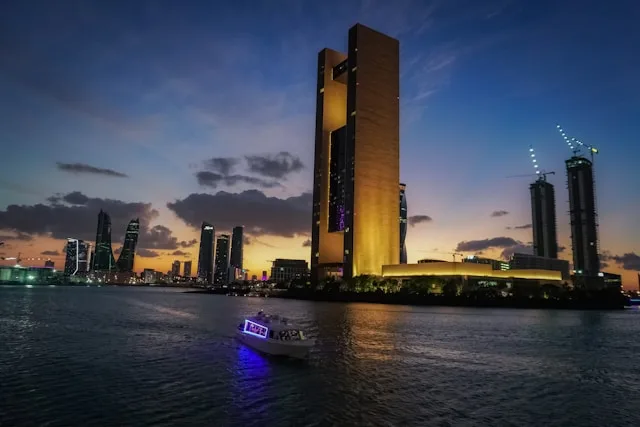
The popular image of Manama's financial sector as a single cluster around Bahrain Financial Harbour is outdated. The sector now operates across three distinct geographic nodes, each generating its own talent demand.
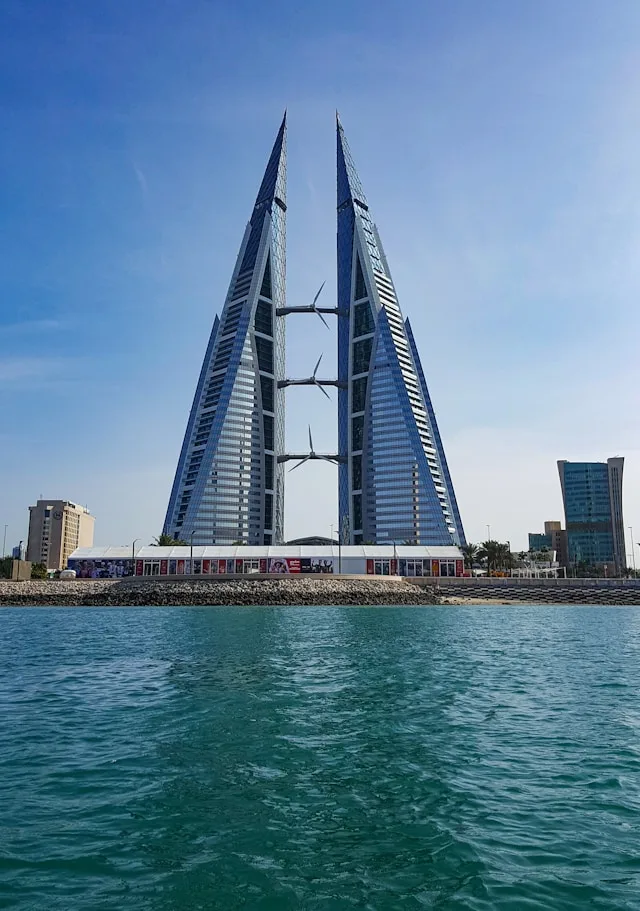
Bahrain Financial Harbour itself maintains 92% occupancy and houses the headquarters of Gulf International Bank, which reported total assets of $42.8 billion as of December 2023. Bahrain Bourse operates from BFH West Tower, listing 50 companies with a combined market capitalisation of approximately $23.1 billion as of January 2025. This is the investment banking and capital markets node.
Three and a half kilometres away, Bahrain FinTech Bay anchors the second node at the Arcapita Building in Bahrain Bay. Since its 2018 inception, it has incubated 156 startups, with 48 active firms as of early 2025. Open banking platform Eazy Financial Services operates from the same zone. This is the innovation node, and it is where crypto-asset licensing demand will concentrate as the CBB's new framework takes effect.
The third node sits in the Diplomatic Area: National Bank of Bahrain, the kingdom's largest retail bank by branch network, employs 1,412 staff from NBB Tower. The Central Bank of Bahrain, with approximately 420 professionals, and the regional offices of HSBC, Citibank, and Standard Chartered all operate from this corridor.
Each node competes for overlapping but distinct talent pools. A cloud security architect at BFH serves investment banking infrastructure. A RegTech engineer in Bahrain Bay builds compliance automation for startups. A senior compliance VP in the Diplomatic Area interprets the CBB Rulebook for a retail bank with hundreds of thousands of customers. The skills overlap, but the contexts diverge, and this means a single vacancy at one node cannot simply be filled by transplanting a professional from another. For organisations hiring senior leadership across financial services and investment management, understanding which node a role belongs to is the first step in defining who can actually fill it.
The Licence Pipeline Has Created Demand the Local Market Cannot Absorb
The most counter-intuitive feature of this market is that growth is making hiring harder, not easier. The assumption that new entrants create talent pool fluidity, that professionals circulate between firms as the ecosystem expands, is not supported by the data. The opposite is happening.
Incumbent Hoarding, New Entrant Starvation
The CBB's licensing of 28 new FinTech entities in 2024, with 15 to 20 additional crypto-asset service providers projected by the end of 2026, has increased total demand for compliance and blockchain development professionals by an estimated 200 to 300 roles. These roles require professionals who do not currently exist in the local market in sufficient numbers.
Meanwhile, incumbent institutions have responded to the same talent scarcity by hoarding. Rather than competing in the open market, established banks are deploying retention bonuses and long-term incentive structures to prevent their compliance and risk teams from moving. The result is that new FinTech licensees arrive with regulatory approval and capital but without the staff to operate compliantly. The 83-day average time-to-fill for senior compliance roles is an aggregate figure. For new entrants without existing networks, the real figure is likely materially longer.
The University Pipeline Gap
The structural root of this imbalance is quantifiable. Bahrain University and Bahrain Polytechnic produce fewer than 150 finance and technology graduates annually who are qualified for immediate placement in FinTech roles. Sector demand exceeds 400 new technical hires per year. This is not a gap that recruitment can close. It is a talent pipeline deficit that requires years of educational investment to address, and the licensing pipeline is moving on a quarterly timeline.
The consequence is that virtually every senior hire in Bahrain's growing FinTech and crypto-compliance space must come from outside the immediate market, whether through expatriate recruitment, regional mobility from the GCC, or international sourcing from Malaysia and South Asia. The organisations that have not built sourcing channels to reach these populations are the ones watching their vacancies age past 83 days.
Three Roles Define the Talent Crisis
Not every role in Manama's financial sector is hard to fill. Branch operations staff and mid-level credit analysts are available through conventional hiring. The crisis is concentrated in three specific categories where the demand-supply mismatch is most severe.
Shariah Compliance Scholars and Officers
Bahrain holds $35.6 billion in Islamic banking assets, representing 19.8% of total banking assets as reported in the Central Bank of Bahrain's Islamic Banking Bulletin from mid-2024. Twenty-four full-fledged Islamic banks and nine Islamic windows operate under CBB supervision. Every one of these institutions requires Shariah board members and senior Shariah compliance officers for product structuring and certification.
The supply side is stark. Bahrain has approximately 80 to 100 qualified Shariah advisors. Fewer than 8% are actively seeking new roles. According to the Islamic Finance News Talent Survey, 92% of placements in this category occur through direct headhunting or personal network referral, not through job postings. Industry recruitment data indicates that 60% of mandates for Head of Shariah Compliance at Tier-1 Islamic banks in Bahrain concluded in 2023 and 2024 without a local hire, requiring expatriate recruitment from Malaysia or Pakistan with substantial relocation packages.
This is the purest passive candidate market in the region. Posting a vacancy for a senior Shariah compliance officer on a job board reaches, at best, the 8% who are actively looking. The other 92% must be found through methods that most internal talent acquisition teams are not resourced to execute.
RegTech and AML Engineering
The CBB's requirement for real-time regulatory reporting, formalised in Circular No. 24/2024, has created demand for 50 to 70 senior RegTech implementation specialists between 2025 and 2026. The local supply stands at fewer than 20 qualified professionals.
This is not a generalist software engineering shortage. The roles require dual expertise: machine-learning capability and financial crime compliance knowledge. Professionals who can build a model are common. Professionals who can build a model that satisfies CBB anti-money-laundering requirements are not. The two mid-sized banks that relocated their AML analytics functions to DIFC shared service centres between 2023 and 2024 did so because this combined skill set was simply unavailable in Manama at any price.
For organisations attempting to fill these roles locally, the search is not a recruitment exercise. It is a talent mapping exercise that must encompass Dubai, Abu Dhabi, Kuala Lumpur, and potentially London or Singapore before a viable shortlist can be assembled.
Chief Information Security Officers with CBB Framework Experience
The CISO role in Bahrain's financial sector carries a specific requirement that generic cybersecurity leadership does not satisfy: direct experience with the CBB's cybersecurity framework implementation. An estimated 80% of qualified CISOs in this market are passive candidates, with average tenure of 4.2 years and movement typically triggered by external approaches rather than advertisements.
Monthly compensation ranges from BHD 6,500 to BHD 11,000 for financial services CISOs, placing these roles among the highest-paid technical leadership positions in the market. Yet the combination of CBB framework expertise and financial services context narrows the effective candidate pool so severely that a standard search process often runs its full cycle without producing a qualified shortlist.
Compensation Has Narrowed Against Dubai Without Closing the Career Gap
Here is the analytical claim that the aggregate data supports but that no single data point states directly: Bahrain's compensation for senior risk and compliance executives has risen to within 12 to 15% of DIFC levels, up from a 25 to 30% discount in 2020. But the perceived career trajectory gap between the two markets has not narrowed at all. The result is that Bahrain is no longer cheap enough to compensate for the career limitations of its smaller market, and it is not prestigious enough to attract talent on career grounds alone. It occupies a middle position that is, for senior hiring purposes, the worst of both worlds.
This is the single most important dynamic for any organisation trying to recruit executive talent into Manama in 2026.
The data is specific. VP and Director-level risk management roles command BHD 5,500 to BHD 9,000 per month base salary in Bahrain, with total compensation reaching BHD 8,000 to BHD 14,000 at major institutions. Heads of Digital Banking earn BHD 7,000 to BHD 12,000 monthly. Senior Shariah Compliance Managers earn BHD 2,800 to BHD 4,500 base plus BHD 500 to 800 in housing allowance. These figures are no longer dramatically below Dubai equivalents.
According to Mercer's Total Remuneration Survey for Middle East Financial Services, CROs and Heads of Regulatory Compliance are being recruited from Bahrain into Dubai and Riyadh with 25 to 35% salary premiums. Specific patterns show Bahraini bank CROs moving into Saudi Arabian Monetary Authority-regulated entities with total packages exceeding BHD 25,000 monthly. The draw is not only financial. Passive candidates surveyed by Heidrick & Struggles cite "career ceiling" as the primary reason for leaving Bahrain's smaller market.
This creates a compounding problem. Every senior risk professional who leaves for Dubai or Riyadh reduces the already thin local pool. Each departure makes the next hire harder and the compensation required to attract a replacement higher. The salary gap narrows further, but the career gap remains, and the cycle continues.
Premium office space at BFH and Bahrain Bay has risen to BHD 12 to 18 per square meter monthly, approaching Dubai JLT levels. The Bahrain Economic Development Board's marketing materials continue to emphasise cost competitiveness, but the numbers no longer support the claim for senior talent acquisition. Organisations hiring into this market need to sell a proposition beyond cost: role scope, autonomy, Islamic finance specialism, or regulatory influence. A salary match alone will not move a passive candidate away from Dubai's larger opportunity set.
Islamic Finance Remains the Differentiated Strength, But Faces Its Own Constraints
Bahrain's Islamic finance sector is not merely large. It is institutionally dense in a way that creates genuine differentiation from Dubai, Riyadh, and even Kuala Lumpur. The 24 full-fledged Islamic banks and nine Islamic windows under CBB supervision, combined with the fact that the Accounting and Auditing Organization for Islamic Financial Institutions (AAOIFI) is headquartered in Bahrain, give the kingdom a concentration of Islamic finance expertise that no other GCC market can replicate at the same scale.
Yet concentration creates its own risk. According to the CBB Financial Stability Report, 68% of Islamic banking assets are held by just three institutions: Al Baraka Banking Group, Kuwait Finance House Bahrain, and Bahrain Islamic Bank. If any of these three institutions experiences a material talent departure at the senior level, the systemic effect on the kingdom's Islamic finance capability is disproportionate.
The digital transformation pressure within Islamic banking compounds this vulnerability. A Deloitte Middle East survey found that 73% of Bahrain's financial institutions reported delays in cloud migration projects due to talent constraints. Islamic banks face an additional layer of complexity: any digital product must satisfy both conventional regulatory requirements and Shariah compliance standards. This means the cloud architect building the infrastructure must work alongside the Shariah scholar certifying the product, and both are in critically short supply.
The institutions that will thrive in this environment are those that can recruit internationally for the technical roles while retaining or attracting locally for the Shariah expertise. This requires a search methodology that operates across multiple geographies simultaneously, something that falls outside the capability of most traditional recruitment approaches focused on a single market.
Regional Competition Is Not a Future Risk. It Is a Current Drain.
The competitive pressure from Dubai and Riyadh is not hypothetical. It is measurable in talent flow data and shows consistent net outward movement of senior professionals from Bahrain.
LinkedIn Economic Graph data for the GCC indicates that 60% of passive candidate searches for senior RegTech roles pull candidates away from Bahrain toward DIFC and ADGM entities. Dubai offers 20 to 35% salary premiums for these roles, proximity to larger vendor ecosystems, and an international brand that Bahrain cannot match for career signalling purposes.
Riyadh presents a different but equally powerful pull. Under the Vision 2030 Financial Sector Development Programme, Saudi banks and FinTechs are offering 30 to 50% gross salary premiums for Bahraini nationals and expatriates willing to relocate. The trade-off is Saudisation compliance under the Nitaqat programme, which limits long-term career flexibility for expatriates compared to Bahrain's more open visa environment. For a senior professional weighing a three-year career move, the short-term compensation advantage of Riyadh is substantial, even if the long-term flexibility favours Bahrain.
Kuala Lumpur competes specifically for Islamic finance talent. Malaysia offers a larger pool of over 1,200 qualified Shariah advisors versus Bahrain's 80 to 100, with compensation 20 to 30% lower. But Malaysia also hosts clearer career progression paths to international Islamic standard-setting bodies. A mid-career Shariah compliance professional weighing Bahrain against Kuala Lumpur is not only comparing salary. They are comparing career architecture.
The implication for hiring executives in Manama is clear: every search for a senior risk, compliance, or Islamic finance professional is a regional search whether the hiring organisation intends it to be or not. The candidates who could fill these roles are receiving approaches from three or four markets simultaneously. A search that begins and ends within Bahrain's borders will miss the majority of viable options. A search that competes regionally but moves slowly will lose candidates to faster-moving institutions in Dubai and Riyadh. The search must be both broad and fast.
What This Market Requires from a Senior Hiring Strategy
The conventional executive search approach struggles in Manama for reasons that are specific to this market and not easily solved by applying more resources to the same methods.
First, the passive candidate ratios are extreme. In Shariah compliance, 92% of qualified professionals are passive. Among CISOs with CBB framework experience, 80% are passive. Among crypto-asset compliance specialists, 75% are passive. Job advertising in this market reaches, at best, the thinnest fraction of the available talent. An organisation that relies on inbound applications will consistently produce shortlists that are either empty or populated by candidates who lack the specific regulatory expertise the role requires.
Second, the search must be multi-geographic by default. The local university pipeline produces fewer than 150 qualified graduates annually against demand for over 400. The salary gap with Dubai has narrowed to a point where cost is no longer a sufficient draw. Any search for a senior specialist in this market must systematically cover Bahrain, the wider GCC, Malaysia, and often South Asia or Europe. This requires talent mapping across international markets at the outset, not as a fallback after domestic sourcing fails.
Third, speed determines outcomes. With a market average of 83 days to fill senior compliance roles, and with regional competitors regularly making offers within 30 to 45 days, the hiring organisations that assemble a qualified shortlist fastest are the ones that secure the strongest candidates. A search that delivers interview-ready candidates within the first ten days changes the competitive dynamic entirely. It allows the hiring organisation to engage passive candidates before those candidates have received competing approaches from Dubai or Riyadh.
KiTalent's approach to markets like Manama is built around exactly these conditions: AI-enhanced talent mapping to identify passive candidates across multiple geographies, interview-ready shortlists delivered within 7 to 10 days, and a pay-per-interview model that aligns cost with outcome rather than charging upfront retainers for searches that may not produce viable candidates. With a 96% one-year retention rate across 1,450 executive placements, the methodology is designed for markets where the margin for error in senior hiring is narrow and the cost of a failed search is measured in months of regulatory exposure and operational delay.
For organisations competing for Shariah compliance scholars, RegTech engineers, or risk leadership in Bahrain's financial sector, where the candidates needed are overwhelmingly passive and the regional competition for them is intensifying quarterly, start a conversation with our executive search team about how we approach this market.
Frequently Asked Questions
What are the hardest financial services roles to fill in Manama in 2026?
The three most difficult categories are senior Shariah compliance officers, RegTech and AML machine-learning engineers, and CISOs with CBB cybersecurity framework experience. Shariah compliance roles at Tier-1 Islamic banks routinely remain unfilled for 8 to 12 months, with 60% of mandates concluding without a local hire. RegTech demand for 50 to 70 specialists far exceeds a local supply of fewer than 20. CISO roles carry an 80% passive candidate ratio, meaning job postings reach a fraction of qualified professionals. These shortages are not cyclical. They reflect a systemic gap between licensing growth and talent production.
How does executive compensation in Bahrain compare to Dubai for financial services roles?
The gap has narrowed materially. VP-level risk management roles in Bahrain command BHD 5,500 to 9,000 monthly base salary, placing them within 12 to 15% of equivalent DIFC roles, down from a 25 to 30% discount in 2020. However, Dubai and Riyadh continue to offer 25 to 50% premiums to recruit senior professionals out of Bahrain, particularly for CRO and Head of Compliance positions. The compensation differential alone no longer explains talent movement. Career trajectory and international exposure are now the primary factors driving outward mobility.
Why is Islamic finance hiring in Bahrain particularly challenging?
Bahrain's Islamic finance sector is institutionally dense, with 24 full-fledged Islamic banks and 9 Islamic windows. But the qualified talent pool is thin: only 80 to 100 AAOIFI-certified Shariah advisors operate in the market, and fewer than 8% are actively seeking new roles. Ninety-two percent of placements occur through direct headhunting or professional referral rather than job advertising. The digital transformation of Islamic banking products adds a further layer, requiring professionals who understand both Shariah compliance and cloud architecture simultaneously.
What is the impact of the CBB's Crypto-Asset Module on hiring demand?
The CBB's Crypto-Asset Module, implemented in 2024, is projected to drive licensing of 15 to 20 additional crypto-asset service providers by end of 2026. This creates demand for an estimated 200 to 300 additional compliance and blockchain development professionals. Approximately 75% of professionals with dual expertise in traditional banking regulation and crypto-asset compliance are passive candidates. New licensees entering the market face the longest vacancy durations because incumbent institutions are retaining their existing compliance staff through retention bonuses.
How can organisations improve their executive search outcomes in Bahrain's financial sector?
The most effective approach combines three elements: multi-geographic sourcing from the outset, since local graduate output covers less than 40% of annual demand; AI-enhanced identification of passive candidates, who represent 75 to 92% of the talent pool for critical roles; and speed, because regional competitors in Dubai and Riyadh are making offers within 30 to 45 days. KiTalent delivers interview-ready candidates within 7 to 10 days through systematic talent mapping across international markets, with a 96% one-year retention rate that reflects accurate matching in a market where the cost of a wrong hire is exceptionally high.
Are Bahrain-based financial institutions losing talent to Saudi Arabia?
Yes. Under Vision 2030, Saudi entities are offering 30 to 50% gross salary premiums to recruit from Bahrain. Specific patterns show CROs and senior compliance leaders moving to SAMA-regulated entities in Riyadh. The trade-off for candidates is that Saudisation requirements under the Nitaqat programme limit long-term career flexibility for expatriates, whereas Bahrain maintains a more open visa environment. Organisations in Bahrain that want to retain senior talent must address career development and role scope, not only compensation, since the counteroffer trap of matching salary without solving the career ceiling concern rarely produces lasting retention.