Manama's ICT Sector Is Building Infrastructure Faster Than It Can Staff It
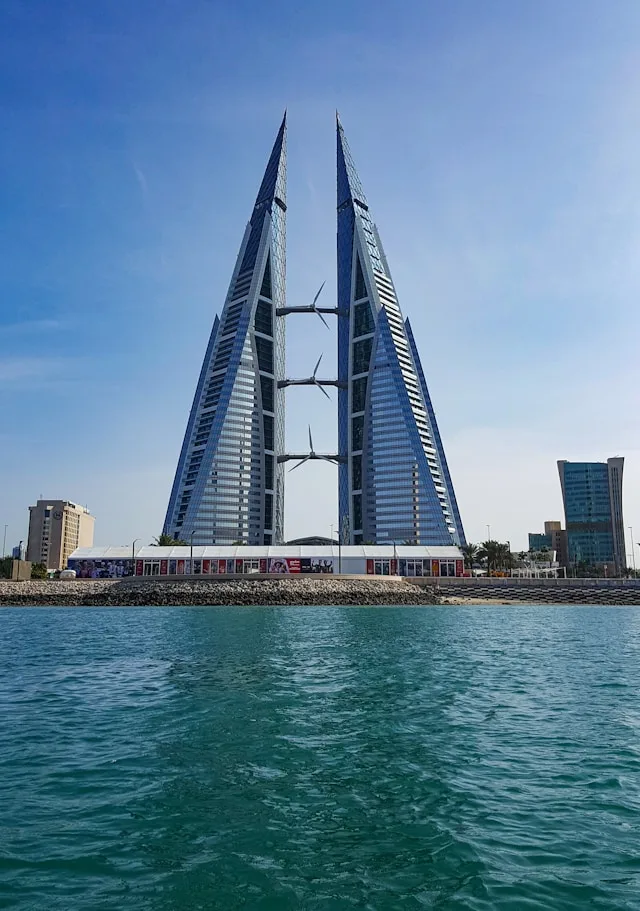
Bahrain added 40% more data centre capacity through 2025 and committed a quarter of a billion dollars to 5G and fibre expansion. AWS has been operating a full cloud region from Bahrain since 2019. CloudHQ's solar-powered hyperscale facility came online in late 2025. The physical infrastructure for a regional technology hub is largely in place.
The workforce to operate it is not. Cybersecurity and cloud professional demand has been growing at 22% annually, while local supply grows at 8%. Universities in Bahrain produce roughly 800 ICT graduates a year. Forty per cent of them leave the country for higher salaries in Dubai or Riyadh before their first anniversary in the workforce. The result is a market where capital has moved decisively ahead of human capital, and no amount of additional infrastructure spending will resolve the imbalance on its own.
What follows is a ground-level analysis of Manama's ICT and digital services sector in 2026: the forces that shaped it, the employers driving demand, the specific roles and skills in shortest supply, and what organisations hiring senior technology leaders in this market must understand before they begin a search.
A Small Market With Outsized Ambitions
Manama's ICT sector contributed 4.1% of Bahrain's nominal GDP in 2023, up from 3.6% two years earlier. That trajectory has continued. The sector now sits at the centre of the kingdom's diversification strategy, with the Economic Development Board targeting 5,000 new ICT jobs by 2026, sixty per cent of them designated for Bahraini nationals under Bahrainization mandates.
The ambition is real. So are the constraints. Bahrain's total population is 1.5 million. Its labour force is approximately 800,000. The total addressable IT services market was estimated at USD 450 million in 2024. For comparison, Saudi Arabia's e-commerce market alone was valued at USD 13.9 billion that same year. Every technology firm in Manama operates within a domestic ceiling that forces it to look outward for revenue, primarily toward Saudi Arabia and the wider Gulf Cooperation Council.
The Oligopoly at the Core
The telecoms market is a three-player field. Beyon Group, the former Batelco, holds more than 60% of fixed-line market share and employs approximately 1,400 people in Bahrain. stc Bahrain, a Saudi Telecom Company subsidiary, has roughly 600 local employees and has been hiring aggressively for roles in AI and next-generation network engineering. Zain Bahrain is the smallest mobile operator with about 450 staff, increasingly focused on enterprise ICT solutions rather than consumer mobile.
Combined mobile subscriptions reached 2.14 million by Q3 2024, representing 140% penetration. That number tells you two things: the consumer mobile market is saturated, and growth for these operators must come from enterprise services, cloud, and regional expansion. Beyon's BD 100 million commitment to 5G standalone deployment and fibre-to-the-home expansion, targeting 95% FTTH coverage, is an infrastructure play designed to support that enterprise pivot.
Beyond Telecoms: The Services Layer
The more dynamic part of Manama's ICT sector sits above the infrastructure layer. CTM360, a Bahrain-headquartered cybersecurity firm founded in 2014, has grown past 200 employees and expanded into Dubai and Riyadh in 2024. Khaleeji Cloud, wholly Bahraini-owned, operates a Tier III data centre in Salmabad and has been scaling its cloud architecture and managed services teams past 120 employees. Nuetel, the neutral wholesale infrastructure provider, employs around 80 specialists in fibre and data centre operations.
The Big Four consulting firms maintain meaningful technology practices in Manama. Deloitte, KPMG, and EY Bahrain together employ approximately 400 technology consultants locally, concentrated in cybersecurity, ERP implementation, and fintech compliance. These practices compete directly with specialist firms for the same limited pool of senior technical talent.
The competitive pressure on that talent pool is the defining feature of this market. It shapes everything that follows.
The Fintech Cluster That Outgrew Its Talent Base
Bahrain's Central Bank regulatory sandbox and crypto-asset framework have attracted more than 400 fintech firms to Manama as of early 2025, employing approximately 3,200 professionals directly. Bahrain FinTech Bay, launched in 2018, houses 85 fintech startups and corporate innovation labs from institutions including Standard Chartered and Citi in a 3,000-square-metre facility. The cluster has created over 1,200 jobs since inception.
Beyon Money, the group's digital wallet and fintech subsidiary launched in 2023, targeted 200-plus hires across 2024 and 2025. Tarabut, the open banking platform now under Astra Tech, maintains its headquarters in Manama with roughly 180 employees. Eazy Financial Services employs about 90 people in payment processing and fintech infrastructure.
Where Fintech Hiring Breaks Down
The bottleneck is not in junior development. It is in fintech compliance and product leadership. Professionals who combine Central Bank of Bahrain regulatory knowledge with international fintech experience represent a candidate pool where, according to Robert Half's Financial Services Report, 90% are passive. They are not on job boards. They are not responding to postings. They are in roles at firms where they built the compliance architecture from scratch, and the proposition required to move them is not simply financial.
AML/CFT technology implementation, open banking API development, and blockchain smart contract auditing are the specific skill areas where fintech firms report the most acute difficulty. The CBB's progressive regulatory environment is simultaneously Bahrain's greatest competitive advantage and its most demanding hiring requirement. You cannot operate in the sandbox without compliance talent. You cannot find that compliance talent through conventional recruitment methods.
The fintech cluster's growth has been a genuine success story. The question is whether its talent supply can keep pace with the regulatory complexity it has chosen to embrace.
The 85% Problem: Why Senior Searches Stall in Manama
For cybersecurity roles at the CISO, Security Architect, and SOC Manager level, approximately 85% of qualified professionals in Bahrain are employed and not actively seeking new positions. For cloud architecture and DevOps, the figure is 80 to 82%. These are not estimates extrapolated from global patterns. They are LinkedIn Talent Insights passive talent pool metrics specific to Bahrain in 2024, corroborated by Michael Page's regional data.
Average tenure for cybersecurity professionals in Manama is 3.8 years. The Gulf average is 2.5. This is not a sign of contentment. It is a sign of a market so small that the number of viable employers for a senior security architect can be counted on two hands. Professionals stay because lateral movement within the country is limited, not because they are unreachable. The moment a credible opportunity arises in Dubai or Riyadh, the calculation changes.
What 110 Days Looks Like
According to the Hays Bahrain Salary Guide and Gulf Daily News reporting from 2024, Beyon Cyber publicly advertised 35 positions for SOC Analysts and Senior Security Architects in January 2024 following a contract win with a GCC financial institution. The Senior Security Architect roles, requiring CISSP certification and GCC experience, reportedly remained unfilled after 110 days. The average time to fill a general IT role in Bahrain is 45 days. The security architect search ran at nearly two and a half times that duration.
This is not an isolated case. The pattern across Manama's ICT market is consistent: cloud architects and DevOps engineers with AWS or Azure certifications receive two to three competing offers within 48 hours of entering the market. Employers who maintain a two-week decision cycle lose candidates to firms that can make an offer in 48 hours. The search process itself has become a competitive variable, not just the compensation package.
For organisations attempting to fill senior technology leadership roles in this environment, speed is not a luxury. It is a prerequisite for reaching the candidates who matter.
Compensation in a Tax-Free, Talent-Scarce Market
Bahrain levies no personal income tax. Every compensation figure in this market represents total cash in the professional's account. This makes direct comparison with taxed markets misleading, but it also means that within the GCC, where most competitors are also tax-free, Bahrain's compensation levels are transparent and directly comparable.
At the executive level, a Group CTO or CISO at a telecom or enterprise firm earns BD 6,500 to BD 9,500 per month, equivalent to USD 17,200 to USD 25,200. A VP of Cloud Services or Head of Data Centre Operations sits in the BD 5,500 to BD 8,000 range. A CISO or VP of Cybersecurity commands BD 5,000 to BD 7,500. In fintech, a VP of Engineering or Head of Product earns BD 4,500 to BD 6,500.
These figures, drawn from the GulfTalent Executive Search Survey and Mercer's Middle East Total Remuneration Survey, position Manama below Dubai for equivalent roles. Dubai pays 25 to 35% more for senior cloud and cybersecurity positions. A Senior Cloud Architect earning BD 3,000 to BD 4,000 in Manama could expect AED 35,000 to AED 50,000 in Dubai, the equivalent of BD 3,600 to BD 5,200.
The Riyadh Premium
Saudi Arabia presents the more aggressive compensation challenge. Saudi firms offer 40 to 60% salary premiums for Bahraini and expatriate Arab talent in fintech and cybersecurity. The draw is not only financial. Vision 2030 projects offer exposure to larger-scale deployments than anything available in Bahrain's domestic market. A cybersecurity professional working on NEOM or Red Sea Project infrastructure gains resume capital that a Manama SOC engagement cannot match.
According to BTECH's member survey, Bahrain loses approximately 15 to 20% of its senior ICT professionals with ten or more years of experience to Dubai annually. The Riyadh drain is harder to quantify but accelerating, particularly among Arabic-speaking professionals who face fewer cultural adjustment costs when relocating to Saudi Arabia.
Industry sources cited by ITP.net reported that in late 2023, Khaleeji Cloud recruited a Lead Cloud Solutions Architect from a competing Manama-based system integrator, offering a 35% base salary increase, from BD 3,200 to BD 4,320 monthly, plus fully remote work arrangements. Fully remote is unusual in Bahrain's hybrid-office culture, which makes it a powerful differentiator for the employers willing to offer it.
The compensation gap between Manama and its nearest competitors is not narrowing. It is widening fastest at the senior specialist and executive level, precisely where the cost of a failed or delayed hire is highest.
The Bahrainization Paradox
Here is the analytical tension that defines Manama's ICT talent market in 2026, and the one that most hiring leaders from outside the region underestimate.
Government policy mandates increasing Bahraini participation in ICT roles. The 2026 target is 70% Bahrainization in technical support functions and 50% in supervisory roles. The 5,000 new ICT jobs the EDB is targeting come with a requirement that 3,000 of them go to Bahraini nationals.
Simultaneously, 78% of Bahraini tech firms reported difficulty sourcing specialised local technical talent in 2024, according to the Bahrain Technology Companies Society annual survey. Local universities produce roughly 800 ICT graduates per year. Forty per cent of those graduates leave the country. That means the annual net addition to the domestic ICT talent pool from education is approximately 480 professionals. Against a target of 3,000 Bahraini nationals in new roles.
The Compliance Cost of Localisation
The LMRA reported a 28% increase in work visa applications for IT Managers and Software Developers in 2024. Firms are simultaneously trying to comply with Bahrainization mandates and importing expatriate talent to fill positions that Bahraini graduates cannot yet fill.
This is not a policy failure. It is a timing mismatch. Bahrain's ICT infrastructure investment moved on a three-to-five-year cycle. The workforce development pipeline operates on a ten-to-fifteen-year cycle. The data centres are built. The 5G network is deployed. The professionals who will operate and optimise these systems at senior level are still in the early stages of their careers, or they have already left for Riyadh.
Firms that hire in Bahrain must plan for both timelines simultaneously. They need senior expatriate talent now, and they need a Bahrainization strategy that will satisfy regulators in 2028. Organisations that treat these as separate problems, solving today's vacancy without building tomorrow's succession pipeline, are the ones most likely to face regulatory and retention challenges together.
The Original Synthesis: Infrastructure as a Talent Export Accelerator
The conventional reading of Manama's ICT investment cycle is optimistic. More data centres, better 5G coverage, and a progressive fintech regulatory environment should attract and retain talent. The data tells a different story.
Every infrastructure investment Bahrain makes also trains the professionals who will eventually leave to operate that same infrastructure at larger scale in Riyadh or Dubai. AWS Bahrain trained a generation of cloud architects who are now the most recruitable candidates in the Gulf. Beyon's 5G deployment is creating 5G NR optimisation specialists who do not yet exist in sufficient numbers in Saudi Arabia. CTM360's expansion to Dubai and Riyadh is simultaneously a business success and a talent pipeline to competing markets.
Bahrain's infrastructure investment is functioning as a talent export accelerator. The better the training ground, the more attractive its graduates become to larger markets with deeper pockets. This is not a problem that compensation adjustments alone can solve. It requires a fundamentally different retention proposition: equity participation, rapid promotion to leadership, meaningful project scale, or a quality-of-life argument that outweighs a 40 to 60% salary premium.
The organisations in Manama that understand this dynamic are the ones successfully retaining senior talent. They are not competing on salary. They are competing on career architecture. The ones that do not understand it are running the same executive searches repeatedly, losing candidates at the offer stage to regional competitors who arrived with a more compelling total proposition.
What Hiring Leaders Need to Understand Before Searching in This Market
Manama's ICT talent market rewards preparation and punishes delay. The characteristics that make it distinctive from other GCC technology markets are worth stating directly.
First, the candidate pool for any senior technology role is small in absolute terms. A search for a CISO with CISSP, GCC financial sector experience, and willingness to be based in Bahrain is not a search across thousands. It is a search across dozens. Talent mapping before a search begins is not optional in a market this concentrated. It is the difference between reaching the right candidates first and discovering they accepted offers two weeks before your shortlist was ready.
Second, Bahrainization compliance is a search parameter, not an afterthought. Any senior hire that requires an expatriate work permit must be justified against localisation targets. Firms that factor this in at the brief stage avoid regulatory complications at the offer stage. Firms that ignore it often find their preferred candidate blocked by quota constraints they did not anticipate.
Third, the counteroffer rate in this market is high. When a senior professional signals intent to move, their current employer knows exactly how difficult a replacement search will be. Counter-offers of 20 to 30% are common, particularly at Beyon and CTM360. Any search process that does not account for this reality will lose candidates at the final stage.
The Case for Speed and Method
A cloud architect search in Manama that follows a conventional process, with a posted vacancy, two weeks of screening, two rounds of interviews over four weeks, and a week to prepare an offer, will typically take 50 to 60 days. In that time, the best candidates will have received and responded to competing approaches. The 110-day security architect vacancy at Beyon Cyber is an extreme case, but the underlying dynamic applies to every senior search in this market.
KiTalent's approach to executive search in telecommunications and digital services markets is designed for exactly this kind of environment. By delivering interview-ready candidates within 7 to 10 days through AI-powered talent mapping and direct headhunting, the process compresses the window in which competitors can intervene. The pay-per-interview model means organisations are not committing retainer fees before seeing qualified candidates. They pay when they meet professionals worth meeting.
In a market where 85% of the candidates you need are not visible on any job board, and where the cost of a delayed hire is measured in project delays, regulatory exposure, and talent lost to Riyadh, the search method is the competitive variable. Not just what you offer. How fast and how precisely you reach the right person.
For organisations hiring technology leaders in Manama's ICT and digital services sector, where the talent pool is concentrated, the competition is regional, and the margin for a slow search is measured in lost candidates, speak with our executive search team about how KiTalent approaches this market. With a 96% one-year retention rate across 1,450-plus executive placements and partnerships with over 200 organisations globally, we bring both the method and the market intelligence this search requires.
Frequently Asked Questions
What are the hardest ICT roles to fill in Manama in 2026?
Senior Security Architects with CISSP certification and GCC experience, Cloud Solutions Architects with AWS or Azure professional-level certification, and fintech compliance leaders with Central Bank of Bahrain regulatory knowledge are the three most difficult categories. Cybersecurity roles saw a 48% increase in job postings between Q1 2023 and Q1 2024, while cloud computing postings grew 41%. Passive candidate ratios for these roles range from 80% to 90%, meaning the vast majority of qualified professionals are not actively looking. Reaching them requires direct headhunting and proactive talent identification rather than posted vacancies.
How does Bahrainization affect technology hiring in Bahrain?
Bahrainization mandates require firms to employ specified percentages of Bahraini nationals, with targets of 70% in ICT technical support and 50% in supervisory roles by 2026. However, local universities produce only about 800 ICT graduates annually, and an estimated 40% emigrate for higher salaries. Work visa applications for IT roles rose 28% in 2024, reflecting continued expatriate dependence. Firms must build Bahrainization strategies into their hiring plans from the outset, not treat localisation as a compliance afterthought.
How does Manama's ICT compensation compare to Dubai and Riyadh?
Dubai pays 25 to 35% more than Manama for equivalent senior cloud and cybersecurity roles. Riyadh offers 40 to 60% premiums for Bahraini and expatriate Arab talent in fintech and cybersecurity. Bahrain has no personal income tax, which makes gross figures equivalent to net, but within the tax-free GCC this advantage is neutralised. A Senior Cloud Architect earning BD 3,000 to BD 4,000 monthly in Manama would earn BD 3,600 to BD 5,200 equivalent in Dubai. For organisations benchmarking packages, market benchmarking data specific to the role and geography is essential.
What is driving data centre growth in Bahrain?
Bahrain positioned itself as a regional data centre hub with the 2019 launch of the AWS Bahrain Region, followed by CloudHQ's hyperscale facility in the Bahrain Investment Wharf. The EDB offers 10-year tax holidays and 100% foreign ownership for data centre operators. Demand is primarily driven by Saudi fintech firms seeking English-language compliant hosting proximate to but outside the Kingdom. However, Saudi Arabia's own aggressive data centre construction programme targeting 1,000MW by 2030 represents a medium-term risk to Bahrain's spillover positioning.
How can organisations speed up senior technology hiring in Bahrain?
The standard 50 to 60 day hiring cycle for senior ICT roles in Bahrain is too slow for a market where top candidates receive competing offers within 48 hours. Compressing the search timeline requires three changes: pre-search talent mapping to identify the full universe of viable candidates before the role opens, direct outreach to passive professionals who will not respond to job advertisements, and accelerated decision cycles that move from first interview to offer within days rather than weeks. KiTalent delivers interview-ready executive candidates within 7 to 10 days through AI-enhanced direct search methodology, specifically designed for markets with high passive candidate ratios.
Is Bahrain's fintech sector still growing in 2026?
Bahrain's fintech cluster grew to more than 400 firms by early 2025, employing approximately 3,200 professionals. The Central Bank of Bahrain's regulatory sandbox and crypto-asset framework remain among the most progressive in the Gulf. Growth is constrained by the domestic market ceiling, with Bahrain's total e-commerce market valued at USD 1.2 billion compared to Saudi Arabia's USD 13.9 billion, but firms increasingly serve regional clients from a Manama base. The challenge is not opportunity. It is hiring the compliance and product leadership talent that the regulatory environment demands.