Manila Port Logistics Hiring in 2026: Why the Philippines' Busiest Gateway Cannot Staff Its Own Growth
The Port of Manila processed approximately 4.68 million TEUs in 2024, accounting for roughly 68% of the Philippines' total containerised cargo. That share has not changed materially since 2019, despite six years of official government policy explicitly designed to divert cargo elsewhere. Manila's port complex is not shrinking. It is growing at 3 to 4% annually while operating well beyond its designed capacity.
Yet the institutions running this gateway face a staffing problem that cargo growth alone cannot explain. The Bureau of Customs carries a 22% vacancy rate for customs officers at the Port of Manila. Licensed customs brokers serve the country's 47,000 active importers and exporters at a ratio of one broker to every four enterprises. Terminal operators poach operations managers from each other in predictable cycles because there are not enough qualified candidates to fill both sides of the equation. The port is full. The talent pipeline is not.
What follows is a ground-level analysis of the forces reshaping Manila's port logistics sector, where the hiring gaps sit, what is driving them, and what organisations competing for leadership talent in this market must do differently to find the people who keep the Philippines' trade infrastructure running.
A Port That Should Not Still Be Growing
Manila's dominance in Philippine container handling is an anomaly. The Philippine Ports Authority's Port Decongestion Program has mandated the diversion of non-essential cargo to Batangas and Subic since 2018. The Batangas International Container Terminal, also operated by ICTSI, expanded capacity by 400,000 TEUs in early 2026. The policy intent is clear: spread the volume, relieve the pressure, modernise the network.
The port has not cooperated with this plan. Manila's share of national containerised throughput has remained between 68% and 70% across every year from 2019 through 2024, according to PPA statistical bulletins. Batangas has grown in absolute volume but not in relative share. The cargo keeps arriving at Manila because the supply chains, customs clearance infrastructure, and freight forwarding networks remain anchored there.
Operating Beyond Design Limits
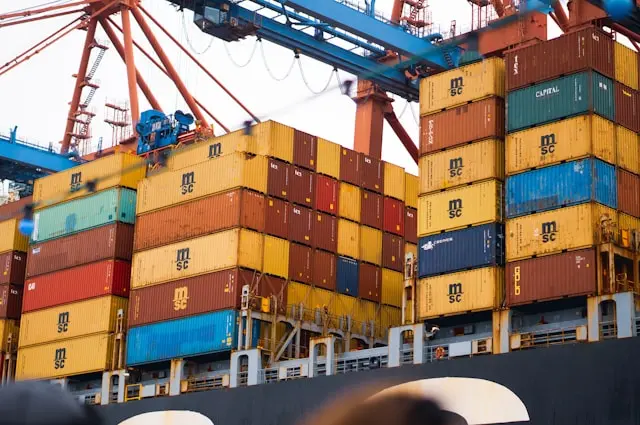
MICT alone processed 2.34 million TEUs in the first nine months of 2024, running at berth occupancy rates consistently above 85%. At the yard level, ICTSI's operational disclosures indicate container stacking at 110% of designed yard density, with containers stacked five high against a safety standard of three. Average truck turnaround time stands at 3.2 hours, compared to a global best-practice benchmark of 45 minutes. Import container dwell time averages 4.8 days, against 3.5 days in Singapore, according to the Asian Development Bank's transport working paper series on Philippine port congestion.
These are not growing pains. They are the steady-state operating conditions of a port that has absorbed seven years of volume growth through operational compression rather than physical expansion. The Port Area is encircled by high-density residential districts in Tondo and bounded by the Pasig River. There is zero expansion land. Every efficiency gain must come from process, technology, or the people running the operation.
That last variable is where the system is breaking down.
The Three Shortages That Define This Market
Manila's port logistics talent market is constrained across three distinct categories, each driven by different forces and requiring different search strategies. Treating them as a single "shortage" obscures the specific dynamics that make each one difficult.
Licensed Customs Brokers With Electronic Systems Proficiency
There are 11,700 active licensed customs brokers serving the entire Philippines, according to the Professional Regulation Commission's 2024 licensure statistics. The licensure exam pass rate sits at approximately 28%, creating a hard regulatory ceiling on new entrants. Most qualified brokers either operate independent consultancies or are embedded in specific industry verticals. They do not browse job boards.
The Customs Modernization and Tariff Act's Title XIII trade facilitation requirements, reaching full implementation by 2026, mandate that all customs brokers hold accredited electronic signatures and operate through the Bureau of Customs' Electronic-to-Mobile system. This effectively retires paper-based practitioners. The demand for brokers who can operate the BOC's electronic platforms exceeds supply by an estimated 35%, according to survey data from the Philippine Institute of Certified Public Accountants Logistics Committee.
Multinational freight forwarders typically see senior customs broker searches stall for 90 to 120 days, compared to 45 days for general logistics manager roles. The dual requirement of licensure and specific BOC or PEZA zone accreditation creates a candidate pool that conventional job advertising cannot reach.
Port Operations Managers With Terminal Operating System Expertise
The market for terminal operations managers with Navis N4 certification or equivalent SAP TM experience is estimated at 80% passive. Qualified candidates with MICT or South Harbor experience are retained through long-term incentive plans and are functionally invisible to standard recruitment channels, according to Michael Page Philippines' 2024 talent trends data.
Recruitment industry data indicates that when ATI hired for its South Harbor expansion in 2023 and 2024, approximately 60% of shortlisted candidates were already employed by ICTSI at MICT. Securing lateral moves required salary premiums of 25 to 30%. Candidates with Navis N4 certification command a 35 to 40% premium above standard port operations managers, according to the Robert Walters Philippines salary survey.
This is not a recruitment problem in the conventional sense. The people exist. They are employed. Moving them requires compensation intelligence, structural creativity, and direct engagement with candidates who are not looking.
Cold Chain Logistics Managers With GDP Compliance
The Philippines' growing pharmaceutical and vaccine export sector requires supply chain leaders who combine temperature-controlled logistics expertise with Good Distribution Practice compliance. This intersection of skills is scarce domestically. AC Logistics, the Ayala Group's logistics arm, is actively expanding its pharmaceutical cold chain capability through the acquisition of Airspeed International, but the talent to staff these operations does not scale with the investment.
The implication is that organisations building cold chain capability in Manila are competing not just with each other but with Singapore's pharmaceutical logistics sector, which offers compensation packages 3.5 to 4.5 times higher for equivalent roles.
The Paradox at the Centre of This Market
The most interesting feature of Manila's port logistics talent market is not the shortage itself. It is the contradiction between two data points that should not coexist.
On one side, the sector reports acute shortages and 15 to 20% year-on-year wage inflation for customs brokers and port operations managers. This is consistent with a seller's market where demand exceeds supply.
On the other side, overseas deployment of Filipino maritime officers and engineers declined by 8% in 2024, according to Philippine Overseas Employment Administration data. Global fleet automation and reduced new-build orders have sent fewer seafarers abroad. If the international pipeline is returning talent to the domestic market, the shortage should be easing. It is not.
The resolution of this paradox is the key to understanding what is actually happening.
The shortage is not of licensed personnel in the aggregate. It is of licensed personnel willing to accept the specific working conditions that Manila's port operations demand. Night shifts driven by the Manila City Truck Ban, which restricts major road access from 10:00 AM to 5:00 PM, are a baseline requirement for logistics workers. The Tondo location carries a cost-of-living and commuting burden. The combination of these conditions with wage levels that, while rising domestically, remain a fraction of what Singapore or Dubai offers creates a structural mismatch between available people and available roles.
Capital invested in terminal capacity is moving faster than the human capital required to operate it. The port can stack containers higher, run longer hours, and process manifests electronically. But every one of those adaptations requires more specialised people, not fewer. And the people are choosing differently.
This is the analytical centre of the article: the investment in operational intensity has not reduced workforce requirements. It has replaced one kind of worker with another that does not yet exist in sufficient numbers domestically.
What Port Logistics Roles Pay in Manila
Compensation data from the 2024 JobStreet, Robert Walters, and Michael Page salary surveys reveals a market with sharp internal stratification.
At the senior specialist and manager level, port operations roles command PHP 1.8 million to 3.2 million annually (approximately USD 32,000 to 57,000). Customs and trade compliance managers earn PHP 1.2 million to 2.0 million (USD 21,000 to 36,000). Supply chain and logistics managers sit between PHP 1.5 million and 2.8 million (USD 27,000 to 50,000).
At the executive and VP level, the ranges widen considerably. Port operations VPs earn PHP 5.5 million to 9.0 million (USD 98,000 to 160,000). Supply chain VPs, particularly those with pharmaceutical cold chain oversight, command the highest range: PHP 6.0 million to 12.0 million (USD 107,000 to 214,000). Customs and trade compliance directors fall between PHP 4.0 million and 7.0 million (USD 71,000 to 125,000).
The Premium Structure That Distorts the Market
Two certification premiums dominate hiring negotiations. Navis N4 Terminal Operating System certification adds 35 to 40% to base compensation for operations roles. PEZA zone accreditation for licensed customs brokers adds 20 to 25% above non-accredited peers.
These premiums exist because the certifications are genuinely scarce and operationally critical. But they also create a secondary distortion. Organisations filling a Customs and Trade Compliance Director role are not just competing on base salary. They are competing on the cumulative value of licensure, accreditation, systems proficiency, and the specific industry vertical knowledge that a candidate has built over a decade. The total proposition required to move a senior candidate in this market extends well beyond the salary line.
In 2024, AC Logistics restructured its organisational hierarchy to create a Chief Operating Officer for Port Operations specifically to attract a former ICTSI vice president who would not accept a lateral move. The creation of a C-suite title and direct reporting line to the Group CEO was the structural adjustment required to close the hire. Title inflation driven by scarcity is now a documented pattern in this sector.
Geographic Competition: Where Manila's Talent Goes
Manila's port logistics professionals face three distinct exit routes, each with different pull factors. Understanding these routes is essential for any organisation designing a retention or acquisition strategy in this market.
Singapore and the Regional Hub Premium
Singapore offers 3.5 to 4.5 times Manila compensation for equivalent port operations and supply chain director roles, according to the Singapore Maritime Foundation's 2024 manpower report. International shipping lines including Maersk and PSA International offer tax-efficient packages and global career trajectories that Manila-based employers cannot replicate. The draw is not only financial. It is the promise of operating in a port system where dwell time is 3.5 days, truck turnaround is measured in minutes, and systems work as designed.
Dubai and Tax-Free Rotational Packages
DP World and Jebel Ali Port recruit Filipino port engineers and operations managers with tax-free salaries at approximately 2.5 times Manila rates, combined with rotational home-leave packages. According to GulfTalent's 2024 salary survey, these employers specifically target ICTSI-trained talent, creating a direct pipeline from Manila's busiest terminal to the Middle East's busiest port.
Cebu and Batangas: The Domestic Lifestyle Arbitrage
The third exit route is domestic, and it is the most underestimated. Cebu City and Batangas are drawing mid-level talent from Manila by offering 90 to 95% of Manila pay with 15 to 20% lower cost of living. Colliers International's 2024 Cebu property market data confirms the housing cost differential. For a port operations manager in their mid-thirties with a young family, the calculation is straightforward: nearly the same salary, materially better quality of life, and growing port operations that provide career continuity.
This "reverse brain drain" does not make headlines because it does not involve international relocation. But it erodes Manila's mid-career talent base in a way that traditional executive search approaches often fail to detect until a shortlist collapses.
The Digitalisation Trigger Arriving in 2026
The Port Community System pilot, connecting the Bureau of Customs, PPA, and terminal operators through blockchain-based manifest processing, moved from pilot to mandatory phase in Q3 2026. This is the single most consequential workforce shift the sector faces in the near term.
The system requires customs IT specialists and electronic data interchange managers who can operate across the BOC's E2M platform, the ASEAN Single Window, and terminal-specific EDI systems. These roles require a combination of customs domain knowledge and technology implementation experience that almost no current job board candidate possesses simultaneously.
The BOC's E2M system itself reported 12% system unavailability in 2024, forcing reversion to manual processing and creating cargo backlogs, according to the BOC's Information and Communications Technology Division annual report. The people hired to run the Port Community System will not only need to operate it. They will need to manage its failures, design workarounds, and maintain cargo flow during the inevitable transition period when electronic and paper-based processes run in parallel.
The organisations that have begun hiring for these roles now, before mandatory implementation, will have a 12-to-18-month head start over those waiting for the mandate to take effect. The gap between early movers and late adopters in technology-driven hiring is always largest during the transition phase, when the qualified talent pool is smallest and the demand curve is steepest.
What This Means for Organisations Hiring in Manila's Port Sector
The structural reality of Manila's port logistics talent market in 2026 can be summarised in a single observation: the port is growing through operational compression, not physical expansion, and every form of compression requires more specialised human capital at the exact moment that human capital is flowing outward to better-compensated markets.
For hiring leaders in terminal operations, freight forwarding, or customs compliance, this creates three immediate imperatives.
First, the 80% passive candidate rate for terminal operations managers and the regulatory barriers around customs broker licensure mean that conventional job advertising reaches at most one in five viable candidates. Any search strategy built primarily around job postings or inbound applications will produce a shortlist drawn from the weakest 20% of the talent pool.
Second, the compensation premiums for Navis N4 certification and PEZA accreditation are now embedded in the market. Organisations benchmarking against last year's salary data are already offering below market. The 15 to 20% annual wage inflation in these categories means that a package designed in January may be uncompetitive by June.
Third, the digitalisation mandate arriving through the Port Community System and E2M full implementation creates a new category of role that did not exist eighteen months ago. The customs IT specialist and EDI manager searches that begin in 2026 have no historical playbook. They require proactive talent mapping across industries, not just within port logistics, because the candidates who combine customs domain expertise with technology implementation experience may currently sit in financial services, government IT, or supply chain technology firms.
KiTalent's work across industrial and manufacturing executive search markets shows a consistent pattern: the sectors facing the steepest talent compression are those where regulatory complexity, technology adoption, and geographic constraints converge simultaneously. Manila's port logistics sector in 2026 sits at exactly that intersection. The difference between a search that takes 30 days and one that takes 120 days often comes down to whether the firm running it can identify and engage the passive candidates who never appear on any job board.
For organisations filling terminal operations, customs compliance, or cold chain leadership roles in Manila's port sector, where the candidates you need are retained by competitors and the cost of a vacant role is measured in cargo delays and regulatory exposure, start a conversation with our executive search team about how we approach this market. KiTalent delivers interview-ready candidates within 7 to 10 days through AI-enhanced direct headhunting, with a pay-per-interview model that eliminates upfront retainer risk and a 96% one-year retention rate that reflects the quality of candidate-role alignment.
Frequently Asked Questions
What are the biggest hiring challenges in Manila port logistics in 2026?
The three most acute shortages are licensed customs brokers with electronic systems proficiency, port operations managers with Navis N4 or equivalent terminal operating system expertise, and cold chain logistics managers with GDP compliance certification. Licensed customs brokers are scarce due to a 28% licensure exam pass rate and the 2026 E2M mandate that retires paper-based practitioners. Port operations managers are 80% passive candidates retained through long-term incentive plans. These constraints mean that conventional recruitment methods reach a small fraction of the qualified talent pool, making direct headhunting approaches essential for senior roles.
What does a Port Operations Manager earn in Manila?
At the senior manager level, port operations roles in Manila command PHP 1.8 million to 3.2 million annually, approximately USD 32,000 to 57,000. At the VP and executive level, the range rises to PHP 5.5 million to 9.0 million, approximately USD 98,000 to 160,000. Candidates with Navis N4 Terminal Operating System certification command a 35 to 40% premium above standard port operations managers. These figures reflect 2024 salary survey data from Robert Walters and JobStreet, with 15 to 20% year-on-year inflation pushing 2026 ranges higher.
Why is it so hard to recruit licensed customs brokers in the Philippines?
Only 11,700 licensed customs brokers are active nationwide, serving over 47,000 import and export enterprises. The licensure exam pass rate of approximately 28% creates a regulatory ceiling on new entrants. The 2026 E2M mandate further narrows the eligible pool by requiring electronic platform proficiency. Most qualified brokers operate consultancies or are embedded in specific industry verticals and do not actively seek new roles. Searches for senior customs brokers with PEZA accreditation typically run 90 to 120 days, more than double the timeline for general logistics manager positions.
How does Manila port logistics compensation compare to Singapore?
Singapore offers approximately 3.5 to 4.5 times Manila compensation for equivalent port operations and supply chain director roles. A port operations VP earning PHP 5.5 million to 9.0 million in Manila would command SGD 120,000 to 200,000 in Singapore. International shipping lines also offer global career trajectories and tax-efficient structures. This differential drives a consistent outflow of senior Filipino maritime professionals to Singapore, Dubai, and other regional hubs, compounding the domestic shortage.
What is the Port Community System and how does it affect hiring?
The Port Community System is a blockchain-based manifest processing platform connecting the Bureau of Customs, Philippine Ports Authority, and terminal operators. It moved from pilot to mandatory phase in Q3 2026. The system requires customs IT specialists and electronic data interchange managers who understand both customs procedures and technology implementation. This creates a new category of hybrid role that did not exist in the market eighteen months ago. Organisations that began hiring for these positions before mandatory implementation gained a material advantage over those reacting to the mandate.
How can KiTalent help with executive search in Manila's port logistics sector?
KiTalent uses AI-enhanced talent mapping and direct headhunting to identify and engage the passive candidates who dominate Manila's port logistics talent market. With 80% of terminal operations managers not actively seeking new roles, and customs brokers embedded in specific industry verticals, conventional recruitment methods miss the majority of qualified candidates. KiTalent delivers interview-ready candidates within 7 to 10 days, operates on a pay-per-interview model with no upfront retainer, and maintains a 96% one-year retention rate across 1,450 completed executive placements.