Munich's Insurance Cluster Is Hiring for Volume and Starving for Capability: The Talent Mismatch Reshaping the World's Reinsurance Capital
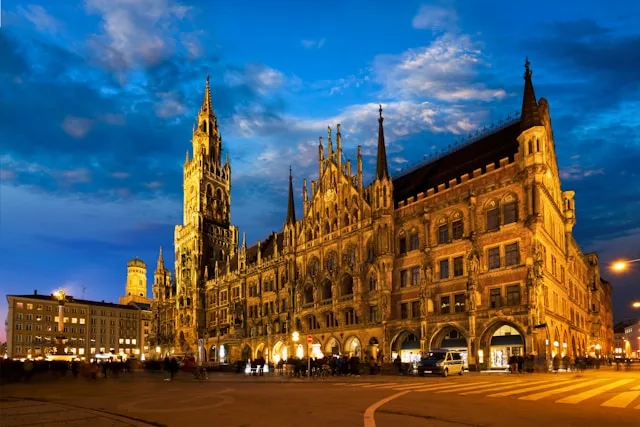
Munich's insurance and reinsurance sector directly employs approximately 52,000 people across the metropolitan region. It houses the global headquarters of two of the world's largest insurers. Combined gross written premiums from Allianz and Munich Re alone exceed €220 billion annually. By almost every aggregate measure, the cluster is thriving. IHK München projects 3-4% net employment growth in insurance for 2026, concentrated in data science, cyber underwriting, and sustainability risk assessment.
Yet beneath that headline figure sits a mismatch that aggregate employment statistics cannot capture. The same employers projecting headcount growth also face a 35% shortfall in qualified AI implementation specialists and cloud architects required to execute their own strategic roadmaps. Allianz has committed €1.2 billion to its digital transformation programme through 2026. Munich Re's Digital Partners unit has invested in or partnered with 34 insurtechs globally. The capital is moving. The people are not following at the same pace.
What follows is a ground-level analysis of the forces reshaping Munich's insurance talent market in 2026: where the real gaps sit, why they resist conventional hiring approaches, what the compensation picture actually looks like for the roles that matter most, and what organisations competing for leadership talent in this market need to understand before they launch their next search.
The Cluster's Economic Weight and Why It Creates a False Sense of Security
Munich's position as Europe's pre-eminent insurance and reinsurance centre is not in dispute. Allianz SE employs approximately 8,200 people across its Munich-based subsidiaries, generating global revenue of €161.2 billion. Munich Re Group maintains around 4,100 employees at its Munich headquarters, with subsidiary ERGO Group adding another 3,800 in the region. Beyond these anchors, HDI Global SE operates with 1,400 Munich employees, Hannover Rück maintains a 340-specialist underwriting office in Munich, and Risk Management Solutions employs 280 catastrophe modelling professionals.
The supporting infrastructure is equally deep. The Munich Insurance Campus houses Allianz's integrated tech teams. Munich Re's Innovation Lab in the Werksviertel district provides a physical hub for startup collaboration. Finanzplatz München, the trade association, coordinates talent initiatives across 120 member firms.
This concentration creates an optical illusion. When a hiring executive sees 52,000 sector employees and double-digit billions in premium revenue, the assumption is that the local talent pool must be proportionally deep. It is not. The pool is deep in traditional underwriting and claims processing. It is shallow, and getting shallower, in precisely the capabilities that every major employer in the cluster has identified as strategically critical.
Where the Shortages Are Sharpest: Three Roles That Define the Gap
Cyber Underwriting: Eleven Months to Fill a Single VP Role
The cyber insurance market is growing faster than any other specialty line in the global reinsurance sector. Munich Re's Global Cyber Practice has been at the centre of this expansion. According to Insurance Insider, Munich Re posted a Senior Cyber Underwriter position at VP level for its Munich headquarters in 2024. The role remained unfilled for 11 months before the firm recruited externally from Zurich Insurance Group in London, reportedly offering a 35% compensation premium over the candidate's previous package.
This is not an isolated incident. The Cyber Insurance Academy's market analysis estimated 150 open cyber risk modelling positions across Munich insurers in 2024, against only 40 qualified regional candidates. The gap is systemic. Cyber underwriting requires a combination of cybersecurity technical knowledge and traditional actuarial modelling that very few professionals possess. The pipeline producing these hybrid practitioners is narrow globally and nearly non-existent within Germany's traditional insurance education pathway.
Actuarial Data Science: The Credential Bottleneck
Allianz SE's Global P&C division initiated a search in Q2 2024 for a Head of Predictive Modeling at Director level. According to Handelsblatt's reporting on talent shortages in Munich's insurance sector, the search stalled after six months. The problem was not a lack of actuaries. It was a lack of actuaries who hold fellowship credentials (SAV, IFoA, or equivalent) and simultaneously possess production-level Python and TensorFlow experience. The role was eventually filled through internal relocation from the Singapore office.
Unemployment among credentialed actuaries with programming skills in Munich is effectively 0.4%, according to the Deutsche Aktuarvereinigung (DAV). This is not a tight market. It is functionally a zero-availability market for external hires. Approximately 80% of qualified candidates are passive, employed, and not monitoring job boards. The average time-to-fill for a Chief Digital Officer role in Munich's insurance sector runs 9.4 months, compared to 6.2 months for the same role in London.
Sustainability and Regulatory Compliance: A Knowledge Problem Disguised as a Hiring Problem
BaFin's intensified supervisory focus on climate-risk scenario testing, combined with the EU's Corporate Sustainability Reporting Directive (CSRD) and the Solvency II Review rolling into 2026, has created a third category of acute shortage. Munich-based insurers collectively allocated an estimated €340 million to compliance infrastructure upgrades in 2024 alone. The top five Munich insurers face a further estimated €180 million in compliance costs from the European Insurance Recovery and Resolution Directive (IRRD) during 2025.
The demand for SFDR and CSRD compliance architects, sustainability officers with insurance investment portfolio expertise, and regulatory strategy leaders is intensifying at a moment when the supply of professionals with deep knowledge of these frameworks is still forming. You cannot recruit experience that does not yet exist in sufficient quantity. The regulatory regime is generating roles faster than the professional development system is producing people qualified to fill them.
The Compensation Pressure: What the Numbers Actually Show
Compensation for the roles Munich's insurers most urgently need has moved materially. A Senior Cyber Underwriter with 10 to 15 years of experience now commands €145,000 to €185,000 in base salary and €180,000 to €240,000 in total compensation. At VP level, leading a global cyber underwriting team, total compensation including long-term incentives reaches €450,000 to €650,000 at Allianz and Munich Re, according to McLagan Partners' Insurance Executive Compensation Survey.
Fellow actuaries with data science specialisation earn €135,000 to €165,000 in base, rising to €165,000 to €210,000 total. At divisional head level, a Chief Actuary or Head of Data Science can expect €320,000 to €480,000 in base and €600,000 to €950,000 total including performance shares disclosed in Allianz and Munich Re corporate governance reports.
Senior Regulatory Affairs Managers sit at €125,000 to €155,000 base. Chief Sustainability Officers and Heads of Regulatory Strategy reach €290,000 to €410,000 base and €500,000 or more in total compensation, according to Russell Reynolds Associates.
These figures are competitive within Germany. They are not competitive against the three markets actively drawing talent out of Munich.
The London Premium
London draws approximately 40% of Munich's senior reinsurance underwriting talent seeking exit opportunities, according to Insurance Europe's Labour Mobility Study. London offers 25-35% base salary premiums and materially higher bonus multiples. At Lloyd's managing agencies, bonus structures run 200-300% of base, compared to 80-120% in Munich. The Lloyd's market also offers superior career trajectory breadth across specialty lines. For a VP-level cyber underwriter, the all-in difference between Munich and London can exceed €150,000 annually.
The Zurich Tax Arbitrage
Zurich competes specifically for German-speaking actuarial and risk management talent. The compensation premium is 20-25%. But the real differential is tax. According to KPMG's Executive Tax Rates analysis, a top-decile earner in Zurich faces an effective personal tax rate of approximately 28%. In Munich, the equivalent rate is 42%. For a senior actuary earning €200,000 base, the net income difference after tax is substantial enough to fund the higher cost of Swiss housing and still leave the candidate ahead.
The Bermuda Proposition
Bermuda targets senior underwriters in property-catastrophe and specialty lines with the most aggressive proposition of all: zero income tax, housing allowances, and a net compensation package that can effectively double what Munich offers at VP level. The constraint is geographic. Bermuda requires physical relocation, and many Munich-based professionals with families decline to move. But for those willing to consider it, the financial case is overwhelming, and Munich has no structural response beyond career breadth and lifestyle preference.
The Original Synthesis: Capital Is Moving Faster Than Human Capital Can Follow
The most important dynamic in Munich's insurance market in 2026 is not the shortage itself. Shortages are cyclical. The dynamic that separates this moment from previous hiring cycles is a timing mismatch between capital deployment and talent availability.
Allianz has committed €1.2 billion to AI-driven claims processing and digital transformation. Munich Re's Digital Partners unit has built a portfolio of 34 insurtech investments. The German Insurance Association projects that 40% of current underwriting and claims processing roles will require reskilling in machine-learning toolsets by 2026. These are not aspirational targets. They are funded mandates with board-level accountability and published timelines.
The investment in automation and digital transformation has not reduced the workforce. It has replaced one kind of worker with another that does not yet exist in sufficient numbers. Capital moved faster than human capital could follow. The result is a market where traditional headcount is growing at 3-4% while the specific capabilities required to execute strategic plans face a 35% shortfall. The hiring executives reading aggregate employment data and concluding the market is healthy are looking at the wrong metric. The relevant metric is not how many people the sector employs. It is whether the sector can employ the specific 2,000 to 3,000 digital specialists it needs to deliver on commitments it has already made to investors and regulators.
This is the gap that conventional job advertising cannot close. The specialists who can fill these roles are not reading job boards. They are not unemployed. They are embedded in roles at competitors or adjacent sectors, solving problems no one else has solved yet. Reaching them requires a fundamentally different approach.
Structural Constraints That Make Munich Harder Than It Looks
Housing Costs and Office Mandates
Munich's cost of living continues to pressure talent attraction. Housing costs increased 8.3% year-over-year in 2024 according to the Immowelt Mietspiegel. Both Allianz and Munich Re mandate 3-4 days per week in-office attendance at their Munich headquarters. The combination creates a specific calculation for any passive candidate currently working in a hybrid arrangement elsewhere.
London, for all its expense, offers greater hybrid flexibility at many employers. Lisbon's emerging insurance hub pairs lower cost of living with remote-friendly policies. A candidate weighing a Munich offer against a London or Zurich alternative must factor in not just gross compensation but housing cost, tax burden, and commuting requirements. The total proposition required to move a passive senior candidate into Munich has grown more complex in every dimension.
The €2.1 Billion Technical Debt Problem
Legacy IT infrastructure at Allianz and Munich Re, with some core systems dating to the 1980s, carries estimated technical debt of €2.1 billion across the Munich cluster, according to McKinsey's Insurance Technology Report cited in Handelsblatt. This constrains agility against cloud-native insurtech competitors. It also shapes the talent challenge directly. The digital specialists Munich needs are not just building new systems. They are integrating new capabilities into architectures that were designed four decades ago. That integration work is less attractive to top engineering talent than greenfield development at a Berlin-based insurtech or a London fintech. The technical debt does not just cost money. It costs recruiting advantage.
Regulatory Cost as a Talent Budget Competitor
Munich's insurers operate under dual supervision from the ECB and BaFin. Solvency II regulatory compliance costs represent 3.8% of operating expenses for large Munich-headquartered insurers, versus 2.1% for Bermuda-based competitors, according to Insurance Europe's industry statistics. The €340 million collective compliance spend in 2024, layered with the €180 million IRRD implementation cost, compresses the budget available for talent acquisition premiums at exactly the moment those premiums are highest.
This is the squeeze that challenges the assumption of Munich's deep capital advantage. Capital depth matters less when systemic costs consume it. A Bermuda-based reinsurer offering a VP-level cyber underwriter a tax-free package with housing allowance is not outspending Munich. It is operating with lower fixed regulatory costs and zero personal income tax, creating room for compensation that Munich's employers, despite their scale, cannot match without accepting margin compression.
What Searches in This Market Require: Method Over Speed
The passive candidate ratios in Munich's most critical insurance roles are among the highest in any European professional services market. Senior reinsurance underwriters at VP level and above show 85-90% passive rates, with average tenure of 8.3 years at current employers and unsolicited application rates below 5%. Chief Risk Officers in insurance operate at 95% passive rates, with moves typically occurring only after 18-24 months of cultivation through retained executive search.
For organisations attempting to fill these roles through job postings or inbound applications, the arithmetic is stark. Posting a VP Cyber Underwriting role on a job board reaches, at best, 10-15% of the viable candidate population. The other 85-90% must be found through direct identification, systematic talent mapping, and individual outreach that presents a proposition tailored to what each candidate would need to move.
The cost of a failed or delayed search at this level is not merely the unfilled seat. It is the strategic programme that stalls. When Munich Re's cyber underwriting search ran for 11 months, the cost was not one empty desk. It was 11 months of delayed capacity in the fastest-growing specialty line in the company's portfolio. When Allianz's predictive modelling search stalled for six months and resolved through internal relocation from Singapore, the cost included the disruption to the Singapore operation that lost the executive.
In markets where conventional executive recruiting methods consistently underperform, the search methodology itself becomes the competitive variable. The firms that fill these roles are not the firms that offer the highest salary. They are the firms that identify and engage the right candidates before a competitor does.
How KiTalent Approaches This Market
Munich's insurance talent challenge is defined by three features that conventional search processes handle poorly: extreme passive candidate concentration, a capability gap that crosses traditional professional boundaries, and compensation competition from markets with systemic cost advantages. KiTalent's approach to executive search in insurance and reinsurance markets is built around exactly these conditions.
Through AI-enhanced talent mapping, KiTalent identifies and engages the senior professionals who are not visible through job advertising. This includes the cyber underwriters embedded at competitors, the actuarial data scientists who have never posted a CV, and the regulatory leaders whose expertise is so current that their market value changes quarterly. Interview-ready candidates are delivered within 7 to 10 days, with full pipeline transparency and weekly reporting.
KiTalent's pay-per-interview model eliminates the upfront retainer that delays decisions. Clients pay only when they meet qualified candidates, aligning cost to outcome rather than process. With a 96% one-year retention rate across 1,450 executive placements and an average client relationship exceeding eight years, the model is built for markets where getting the wrong person is more expensive than waiting.
For organisations competing for senior insurance and reinsurance leadership in Munich, where the candidates you need are passive, the compensation expectations are shaped by London and Zurich benchmarks, and the cost of a delayed search is measured in stalled strategic programmes, speak with our executive search team about how we approach this market.
Frequently Asked Questions
What is the average salary for a senior cyber underwriter in Munich?
A Senior Cyber Underwriter with 10 to 15 years of experience in Munich earns €145,000 to €185,000 in base salary and €180,000 to €240,000 in total compensation including bonus. At VP level, leading a global team at Allianz or Munich Re, total compensation including long-term incentives reaches €450,000 to €650,000. These figures reflect 2024 market data from Mercer and McLagan Partners. Munich's cyber underwriting compensation has risen sharply due to acute scarcity, with 150 open positions in this specialism across Munich insurers against only 40 qualified regional candidates.
Why is it so hard to hire insurance executives in Munich?
Munich's most critical insurance roles operate as predominantly passive candidate markets. Senior reinsurance underwriters show 85-90% passive rates, meaning only 10-15% of qualified candidates are actively monitoring job postings. Chief Risk Officers in insurance are 95% passive. The combination of extreme passive concentration, competition from London (25-35% salary premiums), Zurich (lower tax rates), and Bermuda (zero income tax), plus Munich's housing cost increases and office attendance mandates, creates a recruitment environment where traditional hiring approaches consistently fall short.
How large is Munich's insurance and reinsurance sector?
Munich's insurance cluster directly employs approximately 52,000 people across the metropolitan region. This includes 28,000 in pure insurance activities, 8,500 in auxiliary financial services, and 15,000 in related IT, consulting, and legal services. Allianz SE and Munich Re Group are the primary anchors, collectively employing over 12,000 in the Munich metro area. The cluster also includes HDI Global SE, Hannover Rück's Munich office, RMS, approximately 87 insurtech startups, and the supporting infrastructure of Finanzplatz München's 120 member firms.
What skills are most in demand in Munich's insurance market in 2026?
The three scarcest capability categories are cyber risk modelling (combining cybersecurity knowledge with actuarial methods), actuarial data science (requiring both fellowship credentials and production-level programming in Python and TensorFlow), and CSRD/SFDR sustainability compliance architecture for insurance investment portfolios. Beyond these, parametric insurance structuring, large language model implementation for claims triage, and Insurance-Linked Securities structuring represent acute shortages. The German Insurance Association projects 40% of current underwriting roles will require reskilling in machine-learning toolsets by 2026.
How does KiTalent help with insurance executive recruitment in Munich?
KiTalent uses AI-enhanced direct headhunting to identify and engage the passive senior professionals who dominate Munich's insurance talent market. Rather than relying on job postings that reach only 10-15% of viable candidates, KiTalent's talent mapping methodology systematically identifies qualified leaders across competitors and adjacent sectors. Interview-ready candidates are delivered within 7 to 10 days under a pay-per-interview model with no upfront retainer. With a 96% one-year retention rate and over 1,450 executive placements completed, the approach is designed for markets where the strongest candidates are not looking.
What regulatory changes are affecting Munich's insurance hiring in 2026?
The Solvency II Review and the European Insurance Recovery and Resolution Directive (IRRD) are the primary regulatory drivers, estimated to cost Munich's top five insurers €180 million in compliance costs during 2025. Simultaneously, BaFin's intensified focus on climate-risk scenario testing and the EU's CSRD implementation required an estimated €340 million in collective compliance infrastructure upgrades in 2024. These overlapping mandates are creating urgent demand for regulatory specialists while compressing the budgets available for competitive compensation packages in other critical functions.