New Orleans Offshore Energy: Why Record Production Is Hiding the Worst Hiring Market in a Decade
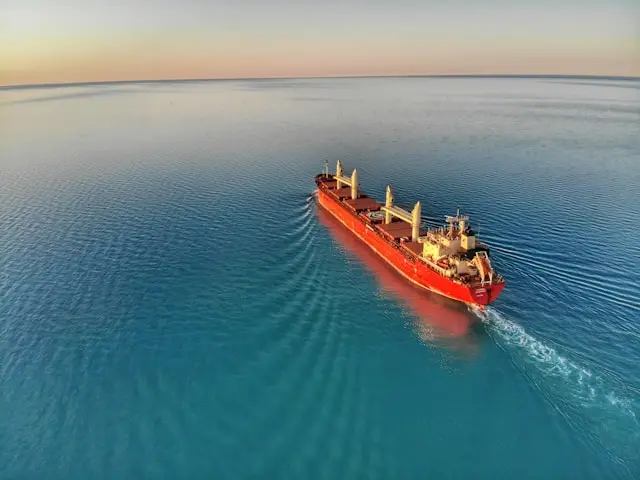
The Gulf of Mexico produced more crude oil in 2024 than at any point in its history. Average output reached 1.74 million barrels per day, exceeding pre-pandemic levels and cementing the GOM's position as the source of roughly 15% of total U.S. crude production. From a distance, this looks like a thriving industry with a healthy workforce behind it. The reality on the ground in New Orleans tells a different story entirely.
Employment in the region's offshore support sector remains 18% below its 2014 peak. The gap between production volume and headcount has become structural, not cyclical. Capital discipline strategies, digitalisation, and operational efficiency gains have permanently removed a layer of general roles from the market. But this aggregate picture conceals something far more consequential for hiring executives: within that smaller workforce, specific technical functions face shortages so acute that vacancies persist for four to six months, retention bonuses have climbed 15 to 20%, and vessel operators have restructured crew rotations in ways that further constrict the available talent pool.
What follows is a structured analysis of the forces reshaping New Orleans' offshore energy and industrial sector, the employers driving those forces, and what senior leaders need to understand before they make their next hiring decision in this market. The data covers the full spectrum: deepwater oil and gas services, petrochemical manufacturing along the Mississippi River corridor, and the early-stage offshore wind activity that has attracted attention but not yet produced jobs.
A Market That Looks Oversupplied Until You Look at the Roles That Matter
The New Orleans-Metairie MSA hosts approximately 5,200 workers in the Mining and Logging supersector, representing 0.9% of total nonfarm employment, according to the U.S. Bureau of Labor Statistics. That figure, however, substantially undercounts the sector's true footprint. It excludes the marine support, fabrication, and engineering services workers classified under Professional and Business Services and Manufacturing. The actual economic dependency on offshore energy runs considerably deeper than the headline number suggests.
The strategic asset anchoring this dependency is Port Fourchon, located 70 miles southwest of the city. Operated by the Greater Lafourche Port Commission, it serves as the primary staging base for approximately 90% of GOM deepwater drilling rigs and production platforms. Every vessel, every supply run, every crew rotation for the deepwater Gulf passes through or depends on infrastructure radiating from this single point.
The Production-Employment Decoupling
This is where the market's central paradox sits. GOM production is at record levels. Commodity prices stabilised in the $70 to $80 per barrel range through 2024 and into 2025. Capital expenditure across the basin held steady at $12 to $14 billion annually. By any macro measure, the industry is healthy. Yet the workforce contracted and has not recovered.
The explanation is capital discipline. Since the 2014 to 2016 downturn, major operators have prioritised shareholder returns over production growth. They achieved more output with fewer people through automation, remote monitoring, and consolidation of operational roles. The result is a talent market that misleads anyone relying on aggregate statistics. Overall unemployment in the sector hovers near 3.2%, below the national average for mining and logging. This creates the impression of a balanced market. It is not balanced. It is bifurcated.
On one side: general field operations, logistics coordination, and administrative functions carry modest surplus capacity. On the other: subsea controls engineers, offshore installation managers, unlimited tonnage masters, and process safety specialists face vacancy durations of 120 to 180 days. The equivalent onshore engineering role fills in 45 to 60 days. The gap is not incremental. It is threefold.
The aggregate data tells a hiring executive that candidates should be available. The role-specific data tells them the search will take four to six months and may still fail. That disconnect is the single most important thing to understand about New Orleans offshore energy hiring in 2026.
The Subsea Talent Crisis Is Not a Shortage. It Is a Pipeline Collapse
Demand for subsea controls engineers in the New Orleans market exceeds local supply by an estimated 40 to 1 ratio, according to the Louisiana Economic Development Industry Workforce Assessment. That figure is striking enough on its own. What makes it worse is the demographic trajectory behind it.
Approximately 35% of the region's offshore energy technical workforce is over 55 years old. This is the tail end of the "Great Crew Change," a term the industry has used for two decades to describe the retirement wave that was coming. It has now arrived. The Society of Petroleum Engineers' Gulf Coast Section Demographics Report confirms the scale. And the pipeline that should be replacing these professionals is contracting, not expanding. Petroleum engineering programme enrolment at the University of Louisiana at Lafayette and LSU has declined 45% since 2015.
Why the Replacement Pipeline Broke
The timing is worth understanding. The 2014 to 2016 oil price collapse coincided with a cultural shift among university-age students toward technology and renewable energy careers. Petroleum engineering lost its appeal at the exact moment the industry needed the next generation to start training. The programmes shrank. The students went elsewhere. And the industry's subsequent recovery happened through efficiency gains rather than hiring, which meant there was no visible demand signal to attract new entrants back.
The consequence is playing out now. A subsea controls engineer with Christmas tree installation experience, umbilical termination assembly competency, and deepwater ROV operations familiarity cannot be produced in a two-year training programme. These specialists develop over seven to ten years of field exposure. The professionals who hold these skills have average tenure exceeding seven years in their current roles and are overwhelmingly passive. LinkedIn Talent Insights data from Q4 2024 estimates that 85 to 90% of qualified subsea controls engineers in the New Orleans market are employed and not actively seeking new roles.
This is not a hiring problem that salary alone can solve. The candidates do not exist in sufficient numbers for the demand, and the training pipeline needed to produce them was damaged a decade ago. That damage is now permanent for this hiring cycle. Firms attempting to fill these roles through conventional job advertising are reaching, at best, the 10 to 15% of the market that happens to be in transition. The other 85% require direct identification and approach.
Marine Operations: Retention Strategies Are Making the Problem Worse
The marine segment of New Orleans' offshore energy market presents a particularly instructive example of how well-intentioned retention tactics can deepen the very shortage they are trying to address.
Edison Chouest Offshore, headquartered in Cut Off, Louisiana and operating a fleet of more than 200 offshore support vessels, employs approximately 1,200 workers in the New Orleans-Houma-Thibodaux corridor. Harvey Gulf International Marine, privately held and headquartered in New Orleans, specialises in Jones Act-compliant LNG-powered offshore support vessels and employs roughly 800 locally. These two operators, along with several smaller competitors, are engaged in an escalating retention battle for licensed mariners.
According to the Offshore Support Journal, Edison Chouest and competing vessel operators have restructured crew rotation schedules from the traditional 14 days on, 14 days off pattern to 28 days on, 14 days off. The stated purpose is retention. The effect is a 30% reduction in available labour pool throughput. Each mariner now covers a longer shift, meaning fewer mariners are needed per vessel at any given time. But it also means each mariner is unavailable for alternative employment for longer periods, effectively removing capacity from the broader market.
The East Coast Drain
Simultaneously, industry compensation surveys indicate that vessel operators have implemented 15 to 20% retention bonuses for Unlimited Tonnage Masters employed on Jones Act offshore supply vessels. The pressure driving these bonuses comes not from within the GOM. It comes from the East Coast.
Offshore wind projects in Boston, New York, and Norfolk are actively recruiting GOM offshore veterans. According to the Business Network for Offshore Wind's U.S. Offshore Wind Workforce Gap Analysis, these markets offer salaries 40 to 50% above New Orleans rates for offshore wind project managers and construction managers. For a licensed mariner or an installation specialist sitting in Houma, the financial calculus is straightforward. The GOM offers a retention bonus. The East Coast offers a career change at dramatically higher compensation with established training infrastructure, including programmes at Massachusetts Maritime Academy designed specifically for offshore wind transition.
This creates a feedback loop. GOM operators raise retention bonuses. The candidates they are trying to retain see the bonus as confirmation of their market value. They use that confirmation to negotiate with East Coast employers. The retention spend accelerates the very departure it was designed to prevent. For hiring leaders evaluating how to compete for maritime talent, this dynamic is critical to understand before setting a compensation strategy.
The Petrochemical Corridor: Margin Pressure Meets Regulatory Constraint
The 50-mile stretch from New Orleans to Baton Rouge contains 12 major petrochemical manufacturing complexes. Shell's Norco Manufacturing Complex integrates refining (250,000+ barrels per day capacity) and chemicals production. Dow Chemical's St. Charles Operations in Taft employs approximately 800 in polyethylene and specialty chemical production. Valero's Meraux Refinery runs at 125,000 barrels per day with roughly 400 full-time staff and 200 contractors. PBF Energy operates additional refining capacity in the region.
These facilities face pressure from two directions simultaneously.
Margin Compression and Global Overcapacity
Global overcapacity in ethylene derivatives has compressed margins, with ethylene cracker returns forecast to remain below $300 per ton through mid-2026 according to IHS Markit. Higher European demand for LNG exports has diverted feedstock gas, raising input costs. The combination means that petrochemical employers in the corridor are not expanding headcount. They are managing costs. Several have deferred maintenance turnaround schedules, which temporarily reduces contractor demand but creates future operational risk.
The Cancer Alley Constraint
The more consequential pressure is regulatory. EPA and Louisiana Department of Environmental Quality scrutiny of petrochemical expansion along the Mississippi River corridor has delayed or cancelled approximately $3.2 billion in announced investments since 2022, according to the Environmental Integrity Project. The corridor, often referred to as "Cancer Alley" in regulatory proceedings and media coverage, faces environmental justice challenges that have fundamentally altered the permitting environment.
For hiring executives, this means two things. First, the senior process safety engineers and PSM compliance specialists who manage these facilities are in high demand precisely because regulatory intensity is increasing, even as production margins decline. These professionals operate in a passive candidate market with 6 to 9 month average search durations, according to Louisiana Chemical Association member surveys. Second, the investment deferrals mean that new-build project management roles have largely evaporated from this corridor. The talent demand is concentrated in operations, maintenance, and compliance rather than growth.
A VP Manufacturing or Plant Manager role at a complex facility in this corridor commands $260,000 to $380,000 in base salary and $380,000 to $550,000 in total compensation, according to the American Chemistry Council Executive Compensation Report. Senior Process Engineers in specialty chemicals earn $115,000 to $145,000 base. The compensation is competitive. The challenge is not the package but the search method. Candidates for these roles enter the market primarily through direct executive search outreach or following facility closures. They do not respond to job postings.
Offshore Wind: The Promise That Has Not Yet Produced a Single Job
Public discussion of New Orleans' energy future frequently centres on offshore wind. BOEM Lease Sale 261, held in August 2024, awarded over 4,000 acres for Gulf of Mexico wind development. RWE AG secured acreage in the Lake Charles Wind Energy Area. TotalEnergies acquired leases in the Galveston Wind Energy Area. Ørsted and RWE maintained pre-development offices in New Orleans for lease assessment and community engagement.
The headlines suggested imminent transformation. The project timelines tell a different story.
No Final Investment Decisions have been reached on any Gulf of Mexico offshore wind project. First power is not expected until the late 2020s at the earliest. Onshore construction for port infrastructure may commence in late 2026, but offshore installation employment is not projected until 2028 to 2029 according to BOEM's Gulf of Mexico Renewable Energy Programmatic Environmental Impact Statement. Gulf projects face unique regulatory hurdles that their East Coast counterparts do not: Department of Defense radar interference concerns and Coast Guard navigation safety reviews extend permitting timelines by 18 to 24 months.
The Workforce Development Timing Problem
Here is the analytical tension that matters most for this market. State and federal workforce development investments are being deployed now. Training programmes for offshore wind turbine foundation design, HVDC transmission system maintenance, and jacket structure engineering adapted for Gulf hurricane loading are being designed and funded. The intent is to prepare the region's workforce for the transition.
But project demand will not materialise until 2028 at the earliest. The professionals produced by these programmes in 2026 and 2027 will graduate into a market with no Gulf wind jobs to fill. The East Coast markets already have jobs. The most capable graduates will migrate to Boston, New York, or Norfolk, where salaries run 40 to 50% higher and projects are under construction. The training investment intended to prepare New Orleans for the energy transition may instead accelerate the departure of its most adaptable workers.
Fewer than 50 professionals with offshore wind FEED and power offtake negotiation experience currently reside in the entire Gulf South, according to the American Clean Power Association. The supply base for wind energy talent in this region is not thin. It is functionally non-existent. Ørsted's announcement of 600+ global workforce reductions in November 2023 following U.S. offshore wind project impairments further reduced the already minimal local presence.
For organisations building technology and energy transition leadership teams, the implication is clear. Wind energy hiring in New Orleans is a 2028 to 2030 challenge, not a 2026 one. Treating it as imminent leads to wasted search spend and misallocated recruitment resources.
What Houston Takes and What Lafayette Offers: The Competitive Geography
New Orleans does not compete in isolation. It sits between two gravitational forces that continuously reshape its talent pool.
Houston draws senior technical and executive talent upward through compensation premiums of 20 to 35% for equivalent subsea and offshore engineering roles. But compensation is only part of the pull. Houston hosts the corporate headquarters of the supermajors and major independents. A VP Offshore Operations in New Orleans manages assets. The same title in Houston puts a professional closer to the CEO, the board, and the strategic decisions that define a career trajectory. For ambitious senior leaders, the advancement ceiling in New Orleans is lower simply because the corporate decision-making centre is 350 miles west.
A VP Offshore Operations or GOM Asset Director in the New Orleans market earns $285,000 to $425,000 base, with total compensation including long-term incentives reaching $450,000 to $750,000. Houston offers the same role at a 20 to 35% premium. The cost of living differential is approximately 12% in Houston's favour, but the compensation gap more than offsets it at senior levels.
Lafayette and Houma-Thibodaux exert a different kind of pull. These markets compete for mid-level offshore field operations talent by offering equivalent salaries with a 15 to 20% lower cost of living and dramatically reduced commute times to Port Fourchon heliports and supply bases. For a Marine Operations Superintendent who spends half the year offshore, the difference between a 45-minute drive to the heliport and a two-hour drive matters more than a downtown office address.
The net effect is a market that loses its most senior talent upward to Houston and its most operationally embedded talent laterally to smaller Cajun Country markets. New Orleans retains the middle: the regional operations offices, the service company hubs, and the petrochemical corridor. This retention pattern is stable but narrow. It means that any executive search in this market must account for a candidate pool that is not only passive but also geographically fragmented across a 200-mile coastal corridor.
What This Market Demands from Hiring Leaders in 2026
The original analytical claim of this article is this: the production-employment decoupling in the Gulf of Mexico has not just reduced headcount. It has split the talent market into two entirely separate economies that happen to share the same geography. In one economy, the general offshore workforce is adequately supplied and moderately compensated. In the other, specialists in subsea controls, dynamic positioning, and process safety operate in conditions closer to a bespoke professional services market, where each candidate is individually known, individually courted, and individually lost.
The mistake most hiring organisations make is running a single search strategy across both economies. They use the same job boards, the same recruiter briefings, the same timeline expectations. The general economy responds to those methods. The specialist economy does not. A subsea controls engineer is not going to see a job posting. An Unlimited Tonnage Master with OIM certification has near-zero unemployment and an active-to-passive ratio of 1 to 4. A senior petrochemical process safety engineer will not enter the market unless directly approached or displaced by a facility closure.
For organisations filling critical leadership and specialist roles in this market, the search methodology matters as much as the compensation package. KiTalent's approach to identifying and engaging passive candidates through AI-powered talent mapping is designed precisely for markets with this profile: high-value professionals who are not visible on any job board and who will not respond to conventional outreach. With a 96% one-year retention rate across 1,450+ executive placements globally, and a pay-per-interview model that eliminates upfront retainer risk, the approach aligns with the economic reality of a market where the cost of a failed senior hire is measured in months of lost operational capacity.
The infrastructure risks compound the urgency. Port Fourchon requires $250 million in upgrades to its bulkheads and road infrastructure to support offshore wind component staging. Insurance costs for offshore and petrochemical facilities have risen 35 to 60% since Hurricane Ida in 2021, with some underwriters withdrawing entirely. The federal 5-Year Offshore Oil and Gas Leasing Program for 2024 to 2029 includes only three lease sales, the legal minimum, constraining the exploration pipeline that would drive new service sector employment.
None of these risks reduce the need for the specialists who keep current operations running. They increase it. A shrinking exploration pipeline means existing production assets must be maintained longer and more intensively. Rising insurance costs mean that process safety and compliance leadership becomes more valuable, not less. The demographic cliff ensures that every retirement in the next five years removes experience that took a decade to accumulate and cannot be replaced at speed.
For organisations competing for offshore energy, subsea engineering, or petrochemical leadership talent in the New Orleans corridor, where the candidates you need are not applying to any job and the cost of a six-month vacancy compounds with every crew rotation, speak with our executive search team about how we identify and deliver the professionals this market cannot surface through conventional methods.
Frequently Asked Questions
What are the hardest offshore energy roles to fill in New Orleans in 2026?
Subsea controls engineers, offshore installation managers, and unlimited tonnage masters with OIM certifications are the most difficult roles to fill. Subsea controls engineer demand exceeds local supply by an estimated 40 to 1 ratio. Vacancy durations for these roles average 120 to 180 days, compared to 45 to 60 days for equivalent onshore engineering positions. The passive candidate ratio exceeds 85%, meaning the vast majority of qualified professionals are employed and not actively seeking new roles. Senior petrochemical process safety engineers also face 6 to 9 month average search durations due to similarly constrained supply.
How does New Orleans offshore energy compensation compare to Houston?
Houston offers compensation premiums of 20 to 35% above New Orleans rates for equivalent subsea and offshore engineering roles. A VP Offshore Operations in New Orleans earns $285,000 to $425,000 base with total compensation reaching $450,000 to $750,000. Houston commands a premium atop these figures despite only a 12% cost of living differential. The gap widens at senior levels because Houston's corporate headquarters proximity provides advancement trajectories that New Orleans regional offices cannot match. Understanding these benchmarks before structuring an offer is essential to avoid losing candidates late in the process.
When will offshore wind create jobs in New Orleans?
Not before 2028 at the earliest. While BOEM Lease Sale 261 awarded over 4,000 acres for Gulf of Mexico wind development in August 2024, no Final Investment Decisions have been reached on any project. Onshore port infrastructure construction may begin in late 2026, but offshore installation employment is projected for 2028 to 2029. Gulf projects face 18 to 24 months of additional permitting time compared to East Coast projects due to Department of Defense radar concerns and Coast Guard navigation reviews. Fewer than 50 offshore wind FEED and power offtake professionals currently reside in the entire Gulf South.
Why is the New Orleans offshore talent market so difficult for recruiters?
The market is bifurcated. Aggregate unemployment in the mining and logging sector sits near 3.2%, suggesting adequate supply. But this average masks acute shortages in specialist functions. The production-employment decoupling means fewer total workers produce more output, creating surplus in general roles and severe scarcity in technical ones. Additionally, the candidate pool is geographically fragmented across a 200-mile corridor from New Orleans to Houma-Thibodaux, and the most qualified professionals are overwhelmingly passive. KiTalent's talent mapping and direct headhunting methodology is built to reach professionals who are invisible to conventional sourcing.
What risks should hiring executives consider when building teams in New Orleans energy?
Four risks dominate. First, workforce demographics: 35% of the technical workforce is over 55, and petroleum engineering enrolment has declined 45% since 2015. Second, geographic competition: Houston pulls senior talent with 20 to 35% premiums, while East Coast wind markets attract mariners with 40 to 50% salary increases. Third, infrastructure uncertainty: Port Fourchon requires $250 million in upgrades, and insurance costs have risen 35 to 60% post-Hurricane Ida. Fourth, regulatory constraint: only three federal lease sales are scheduled through 2029, limiting the exploration pipeline. Each risk affects different roles differently, which is why a structured market assessment before launching a search prevents wasted time and budget.
How can companies attract passive subsea engineers in the Gulf of Mexico?
Conventional job advertising reaches at most 10 to 15% of this market. The remaining 85 to 90% of qualified subsea engineers are employed, have average tenure exceeding seven years, and will not respond to postings. Successful approaches require direct identification through specialised executive search methods, a compelling role proposition that goes beyond compensation, and speed. Retention bonuses and extended rotations by current employers have raised the threshold for what moves these candidates. Firms that approach this market with a traditional post-and-wait strategy will consistently find that the strongest candidates are already committed before a shortlist is assembled.