New Taipei Maritime Logistics: NT$4.2 Billion in Automation, Not Enough People to Run It
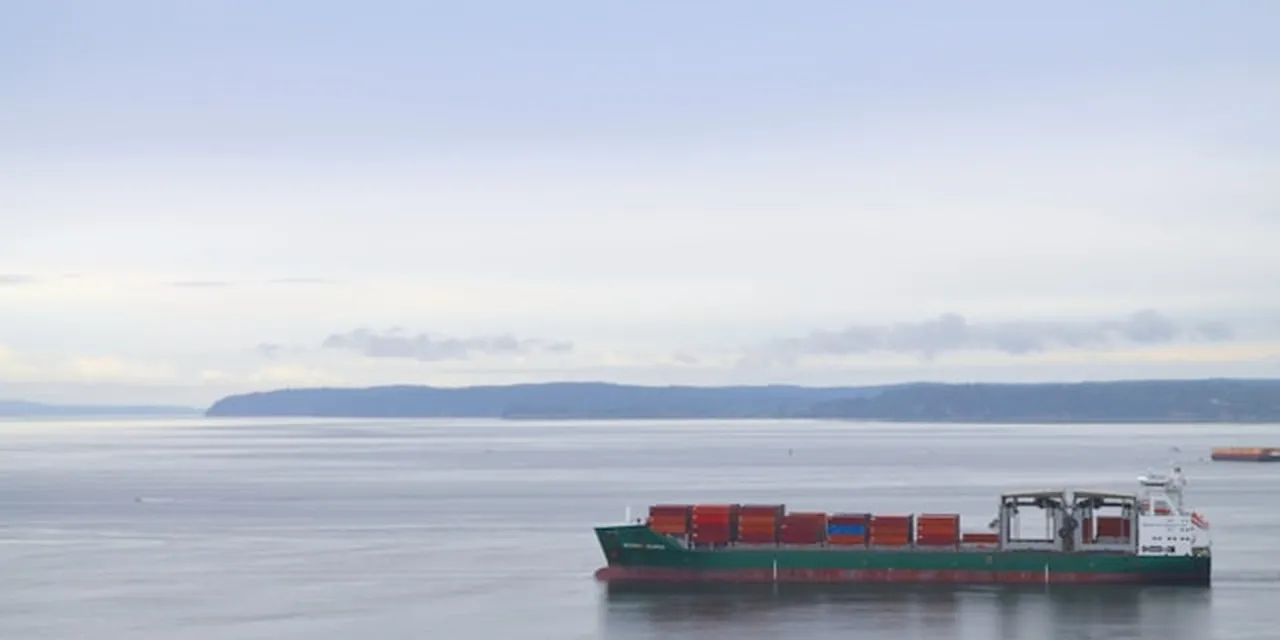
Northern Taiwan's only container port is in the middle of its largest technology upgrade in a decade. Taiwan International Ports Corporation has committed NT$4.2 billion to Phase II smart port infrastructure at Port of Taipei, covering automated gate systems, 5G-enabled yard cranes, and AI-based container inspection. The first systems came online in early 2026. The problem is not the technology. The problem is that the professionals required to operate, maintain, and manage these systems do not exist in sufficient numbers anywhere in Taiwan, let alone in New Taipei City.
This is a market where bonded warehouse supervisor roles sit open for 95 to 120 days. Where cold chain logistics engineer positions fail their first recruitment attempt 70% of the time. Where senior port operations managers must be recruited from Kaohsiung or overseas at premiums of 25 to 35%. The automation programme has not reduced headcount requirements. It has replaced one category of worker with another that the local market cannot supply.
What follows is an analysis of the forces reshaping New Taipei's maritime logistics sector, the specific hiring challenges these forces have created, and what organisations operating in this market need to understand before they make their next leadership appointment.
Port of Taipei in 2026: A Feeder Hub Investing Like a Gateway
Port of Taipei occupies an unusual position in the Asia-Pacific maritime hierarchy. It is northern Taiwan's only container port, handling approximately 1.89 million TEUs in 2023 and projected to reach 2.05 to 2.10 million TEUs by 2026. That volume is meaningful in regional terms but modest against Kaohsiung's 9.8 million TEUs or Busan's throughput further north. The port's 8-metre channel depth restricts vessel calls to feeders of 3,000 to 4,000 TEU. Ultra-large container vessels cannot enter. Every intercontinental shipment passing through New Taipei's maritime logistics cluster requires transhipment via Kaohsiung or Busan before reaching its final destination.
This physical limitation defines the port's function. Port of Taipei is not competing with Kaohsiung for mainline calls. It is a distribution hub for northern Taiwan's domestic consumption and intra-Asia trade, with 60% of its throughput dependent on cross-strait and regional routes. The Linkou Logistics Park adjacent to the port hosts over 40 logistics facilities across 420,000 square metres of warehouse space, specialising in high-value electronics, pharmaceutical cold chain, and e-commerce fulfilment.
The Automation Paradox
The NT$4.2 billion smart port investment changes the port's technical profile without changing its physical constraints. Automated gate systems and AI container inspection will reduce truck dwell time by an estimated 20%. The 5G-enabled yard cranes require operators and maintenance engineers with skills that did not exist in this market two years ago. Terminal Operating Systems demand integration specialists who understand both maritime operations and enterprise software architecture.
Here is the tension: throughput growth at Port of Taipei has remained at 1 to 2% annually since 2020, according to TIPC operational statistics. Competing automated terminals at Busan and Shanghai have grown at 6 to 8% over the same period. The port is increasing its capital intensity and technical complexity without the volume growth that would justify the salary premiums needed to attract digitally skilled talent. An automated terminal at a high-growth port can offer a career trajectory. An automated terminal at a low-growth port offers the same technical challenge with less upward mobility.
This is the core analytical insight of this market: capital has moved faster than human capital can follow, and the growth trajectory does not yet provide the pull factor needed to close the gap. The automation investment has not reduced the workforce. It has replaced one kind of worker with another that does not yet exist in sufficient numbers.
Where the Talent Gaps Are Most Acute
Taiwan's logistics sector faces a national shortage of approximately 18,000 to 22,000 workers, according to the 104 Job Bank Logistics Industry Talent Report and the Taiwan Logistics Association's 2024 labour market survey. New Taipei accounts for roughly 25% of this gap due to its concentration of port and logistics park operations. That translates to 4,500 to 5,500 unfilled positions in a single metropolitan area.
The aggregate number, however, obscures where the pain is worst. Entry-level logistics coordinators and truck drivers exhibit high active candidate ratios of 60 to 70%. These roles can be filled through conventional recruitment channels, albeit with persistent skill mismatches. The crisis sits higher up the value chain, in three specific role categories that conventional methods consistently fail to fill.
Bonded Warehouse Operations Supervisors
Supervisor-level roles in bonded warehouse operations in the Linkou area remain unfilled for an average of 95 to 120 days. General logistics coordinator roles fill in 45 to 60 days. The difference is regulatory expertise. Bonded warehouse supervisors require mastery of Taiwan Customs Administration regulations, fluency in Warehouse Management Systems, and bilingual documentation capability in Mandarin and English. Fewer than 300 qualified candidates exist nationally for an estimated 450 open positions. This is not a recruitment problem. It is a supply problem. The candidates do not exist in the numbers required.
Cold Chain Logistics Engineers
The convergence of Taiwan's biotech sector growth in nearby Neihu and Nankang with Port of Taipei's expanding refrigerated cargo capacity has created demand for a profile that barely existed five years ago. Cold chain logistics engineers must combine pharmaceutical GDP compliance knowledge, IoT temperature monitoring system expertise, and traditional maritime logistics understanding. Positions in this category fail their first recruitment attempt 70% of the time, according to the Taiwan Cold Chain Association's industry survey, and commonly remain open for four to six months. Temperature-controlled warehousing demand in Linkou is growing at 12 to 15% annually, compounding the shortage with each passing quarter.
Port Operations Managers with Digital Skills
Senior port operations managers capable of implementing smart port technologies are the scarcest category of all. Approximately 85 to 90% of qualified candidates for director-level port operations roles are passive, currently employed with average tenures of 8 to 12 years at single employers. Unemployment in this segment sits below 2%. These professionals are not browsing job boards. They are not attending career fairs. They are running terminals in Kaohsiung, Singapore, or Busan, and moving them to New Taipei requires salary premiums of 25 to 35% above standard logistics manager compensation, plus a compelling argument about why a lower-throughput port represents a better career than the alternatives.
The 75% passive candidate ratio among bonded warehouse and customs specialists and the near-total passivity of senior port operations talent means that the hidden majority of qualified candidates in this market cannot be reached through any posted vacancy or job advertisement.
Compensation: What Roles Pay and Why the Gaps Persist
Compensation in New Taipei's maritime logistics sector follows a pattern common to specialised industrial markets: adequate at mid-level, stretched at senior level, and outmatched by geographic competitors at executive level.
A logistics operations manager with 8 to 12 years of experience earns NT$1.2 to 1.8 million annually (USD 37,000 to 56,000). A digitally focused supply chain analyst earns NT$1.0 to 1.5 million. Bonded warehouse supervisors fall at NT$900,000 to 1.4 million. These figures are competitive within New Taipei but unremarkable by broader Taiwanese standards.
The gap opens at the functional leadership level. A VP of Supply Chain or Logistics Director with regional responsibility and P&L oversight earns NT$3.5 to 6.0 million annually (USD 110,000 to 190,000), with performance bonuses of 20 to 40%. Port Operations Directors at TIPC or major terminal operators earn NT$4.0 to 7.0 million, though public sector compensation caps constrain the state-owned enterprise end of this range. Executives with trilingual capability in Mandarin, English, and Japanese, combined with ASEAN market expertise, command premiums of 15 to 25% above these baselines.
These numbers look reasonable in isolation. They do not look reasonable when set against the competition.
The Three-Way Salary Squeeze
Taoyuan, 30 kilometres to the southwest, offers 15 to 25% salary premiums for equivalent logistics roles. The Taoyuan Aerotropolis and surrounding districts attract talent with proximity to Taiwan's international airport and the Science Park's high-tech electronics logistics demand. Taoyuan employers also offer hybrid work arrangements for administrative logistics roles, a flexibility that physical port operations positions cannot match.
Taipei City proper, specifically Neihu Technology Park and Nankang Software Park, competes for the same digital logistics talent at salaries 20 to 30% higher than New Taipei logistics park locations. The premium reflects both commercial real estate costs and the higher-margin technology businesses that occupy those parks.
For the most senior roles, the competition is international. Singapore and Hong Kong offer 2.5 to 3.5 times the compensation for Regional Supply Chain VP or Asia-Pacific Logistics Director positions. At the C-suite level, this differential creates measurable brain drain. A talented executive assessing their market value at New Taipei's senior logistics level can see clearly that the ceiling is lower here than in any of the three competing geographies.
The result is a market where the salary required to attract a qualified smart port operations director from Kaohsiung exceeds the salary the role can sustainably support at Port of Taipei's current throughput level. The automation investment demands talent the compensation structure was not built to fund.
The Regulatory Layer: Smart Customs and Labour Cost Escalation
Two regulatory shifts are compounding the hiring challenge. Neither is dramatic in isolation. Together they raise the cost and complexity of every logistics operation in the Linkou cluster.
Smart Customs Compliance
The Taiwan Customs Administration's ongoing "Smart Customs" platform implementation requires logistics providers to upgrade their IT systems by 2026. For a medium-sized freight forwarder, compliance costs run NT$2 to 5 million. The technology investment is manageable. The staffing implication is not. Every bonded warehouse operator and customs broker in the Linkou area now needs personnel who understand both the legacy regulatory framework and the new digital platform. This is the same talent pool already depleted by the bonded warehouse supervisor shortage. The Smart Customs mandate does not create new talent. It increases the demand for the talent that already does not exist in sufficient quantity.
Labour Standards Act Amendments
Amendments to the Labour Standards Act regarding overtime for transportation workers have increased operational costs by 8 to 12% for port trucking companies, according to the Council of Labor Affairs' regulatory impact analysis. For hiring managers, this manifests as tighter scheduling constraints that increase the number of drivers needed per shift, worsening the entry-level staffing shortage. The cost increase also squeezes margins for smaller freight forwarders, reducing their ability to compete on compensation for the specialist roles where shortages are most acute.
Logistics providers that have not budgeted for both the IT compliance costs and the ongoing labour cost escalation will find themselves unable to offer the packages needed to attract mid-career specialists. The regulatory environment is quietly eliminating the employers who cannot afford to compete, concentrating talent further among the largest operators.
Why Talent Flows Away from the Port
The most counterintuitive finding in this market is that New Taipei possesses northern Taiwan's strongest maritime logistics infrastructure and is still losing experienced professionals to a city with no container port at all.
Employment data shows a net outflow of logistics professionals with 5 to 10 years of experience from New Taipei to Taoyuan's air cargo and high-tech logistics sectors. Taoyuan lacks maritime infrastructure. It lacks bonded logistics parks of comparable scale. What it offers instead is something more powerful in career terms: alignment with Taiwan's highest-growth industrial sector.
The electronics manufacturers in Taoyuan's Science Park and the air cargo throughput at Taiwan Taoyuan International Airport create a logistics ecosystem where volumes are rising, technology investment is producing visible returns, and career trajectories point upward. Port of Taipei's 1 to 2% annual throughput growth cannot match this narrative. For a logistics professional at the five-year mark, choosing between a maritime operations role at a low-growth port and an air cargo technology role at a high-growth aerotropolis, the decision is straightforward.
This dynamic challenges the assumption that port infrastructure alone anchors a logistics talent cluster. It does not. Growth trajectory and sector alignment anchor talent. Infrastructure without growth is a retention problem disguised as an asset.
The implication for hiring leaders is clear: recruiting for Port of Taipei's most critical roles requires more than a competitive salary. It requires a value proposition that addresses the career trajectory concern directly. A candidate who could earn more in Taoyuan and advance faster in Singapore needs a reason beyond compensation to accept a role in New Taipei. Understanding why executive recruitment fails often begins with understanding what the role offers beyond the package.
What Hiring Leaders in This Market Need to Do Differently
The conventional approach to logistics recruitment in Taiwan runs through the 104 Job Bank and 1111 Job Bank platforms, supplemented by industry association referrals. This method works adequately for entry-level and mid-level operational roles where active candidate ratios are high. It fails systematically for the three critical role categories identified in this analysis.
When 85 to 90% of qualified port operations directors are passive and employed with long tenures, a posted vacancy reaches, at most, the least experienced 10 to 15% of the viable candidate pool. When cold chain logistics engineers fail first-round recruitment 70% of the time, the issue is not the quality of the job posting. It is the method of reaching candidates.
Three principles apply specifically to this market:
First, any search for a senior port operations role must look outside New Taipei. The domestic talent pool is too small. Kaohsiung, Singapore, and Busan are not aspirational search geographies. They are necessary ones. This requires international executive search capability and the ability to present a relocation proposition that addresses the throughput gap honestly while positioning the automation programme as a genuine career differentiator.
Second, bonded warehouse and customs specialist recruitment operates through industry networks, not job platforms. The 75% passive candidate ratio in this category means that direct headhunting approaches and systematic talent mapping across the regulatory compliance community are prerequisites, not luxuries. The 95 to 120 day time-to-fill for these roles under conventional methods represents a cost that most logistics operators have not quantified but are paying every quarter.
Third, the cold chain logistics engineer shortage will not resolve through domestic recruitment alone. Taiwan's biotech sector growth is creating demand faster than local training programmes can supply. Organisations that build a sustained talent pipeline for this profile, rather than recruiting reactively when a position opens, will hold a material advantage over competitors still waiting for applicants who are not coming.
For organisations operating in New Taipei's maritime logistics sector, where the most critical roles require candidates who are not visible on any job board and the cost of a prolonged vacancy compounds weekly, KiTalent delivers interview-ready executive candidates within 7 to 10 days through AI-powered identification of passive, high-performing professionals. With a 96% one-year retention rate across 1,450 executive placements and a pay-per-interview model that eliminates upfront retainer risk, KiTalent is built for exactly the kind of search that conventional methods in this market consistently fail to complete. Speak with our team about your next leadership hire in this sector.
Frequently Asked Questions
What is the average time to fill senior logistics roles in New Taipei City?
Senior logistics roles in New Taipei vary considerably by specialisation. General logistics coordinator positions fill in 45 to 60 days. Bonded warehouse supervisor roles average 95 to 120 days. Cold chain logistics engineer positions commonly remain open for four to six months, with a 70% first-round recruitment failure rate. Senior port operations directors requiring smart port technology skills are typically sourced from Kaohsiung or international markets, extending search timelines further. These figures reflect a market where the most critical roles face both supply constraints and passive candidate dynamics that conventional job advertising cannot overcome.
Why is it so hard to hire cold chain logistics engineers in Taiwan?
Cold chain logistics engineers require a rare combination of pharmaceutical GDP compliance expertise, IoT temperature monitoring system knowledge, and maritime logistics experience. Taiwan's biotech sector growth in Neihu and Nankang is driving 12 to 15% annual increases in temperature-controlled warehousing demand, but training programmes have not kept pace. The result is a candidate pool too small for the volume of open positions. KiTalent's approach to identifying passive specialists in niche technical markets reaches the qualified professionals who are not responding to posted vacancies.
How does Port of Taipei compare to Kaohsiung for maritime logistics careers?
Kaohsiung handles approximately 9.8 million TEUs annually compared to Port of Taipei's 1.89 million. Kaohsiung hosts headquarters for Evergreen Marine, Yang Ming, and Wan Hai Lines, offering deeper career trajectories and 10 to 20% higher compensation for VP-level maritime operations roles. Port of Taipei's advantage lies in its proximity to northern Taiwan's consumer market and its specialisation in high-value electronics and pharmaceutical logistics. For senior professionals, the choice often comes down to volume and advancement in Kaohsiung versus specialisation and lifestyle in northern Taiwan.
What salary does a VP of Supply Chain earn in New Taipei's logistics sector?
A VP of Supply Chain or Logistics Director with regional responsibility and P&L oversight earns NT$3.5 to 6.0 million annually (USD 110,000 to 190,000) in New Taipei, with performance bonuses of 20 to 40%. Trilingual executives with ASEAN market expertise command an additional 15 to 25% premium. These figures trail Singapore and Hong Kong equivalents by 2.5 to 3.5 times, creating retention pressure at the most senior levels. Accurate market benchmarking for logistics leadership roles is essential before structuring an offer in this market.
How does automation at Port of Taipei affect logistics hiring?
TIPC's NT$4.2 billion Phase II smart port investment, including automated gate systems, 5G yard cranes, and AI container inspection, has created demand for digital operations skills that did not previously exist at this port. Rather than reducing headcount, automation has shifted the required skill profile upward. Port operations managers now need Terminal Operating System expertise and automated crane coordination experience. These candidates are predominantly sourced from larger automated ports in Kaohsiung, Busan, or Singapore, requiring executive search firms with cross-border recruitment capability and access to passive maritime professionals.
What role does Linkou Logistics Park play in New Taipei's maritime sector?
Linkou Logistics Park is the operational heart of New Taipei's logistics cluster, hosting over 40 facilities across 420,000 square metres. Major operators include Kerry TJ Logistics, E-Cargo International, and regional third-party logistics providers serving electronics manufacturers from Taoyuan's high-tech corridor. The park specialises in bonded warehousing, pharmaceutical cold chain, and e-commerce fulfilment. Its proximity to Port of Taipei enables integrated sea-to-warehouse logistics chains, though hinterland congestion along Provincial Highway 61 adds NT$1,200 to 1,500 per container in drayage costs compared to alternative port operations.