Nha Trang's Maritime Talent Paradox: Chronic Shortages, Stagnant Wages, and What Hiring Leaders Are Getting Wrong
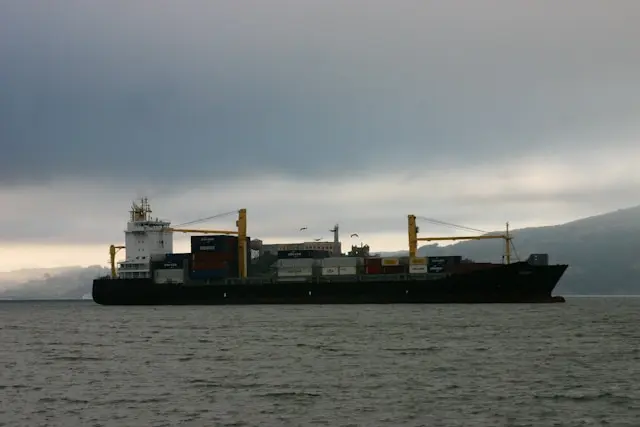
Nha Trang Port handled 87 international cruise calls in 2024, a 34% recovery from pre-pandemic traffic. Ana Marina is adding 80 superyacht berths by mid-2026. Recruitment demand across the marine leisure and port logistics cluster rose 22% year on year. By every conventional measure, this is a market where compensation should be surging upward to attract the people it needs.
It is not. Specialised maritime roles in the Central Region recorded salary growth of just 3 to 5% through 2024, while vacancy periods for marine engineers and cruise operations managers stretched to seven months or longer. The gap between how badly employers need these professionals and what they are willing to pay for them is the defining feature of Nha Trang's marine sector in 2026. It is not simply a shortage. It is a market where the price signal has broken.
What follows is a ground-level analysis of why that disconnect exists, what it means for organisations hiring into this market, and why the conventional assumption that raising salaries will resolve maritime talent shortages does not hold in Nha Trang. The article covers port infrastructure constraints, the marine leisure expansion pipeline, executive compensation benchmarks, passive candidate dynamics, and the structural forces that make this one of the most counterintuitive hiring markets in Southeast Asia.
A Port Approaching Its Ceiling
Nha Trang Port, operated by the listed entity Nha Trang Port Joint Stock Company (CXN), maintains 586 metres of berth across three wharves. Its designed annual throughput is 1.2 million tonnes. In 2024, it processed roughly 980,000 tonnes of general cargo alongside those 87 cruise calls. The port has no container terminal. Its cargo operations centre on breakbulk, construction materials, and fuel supply for the provincial fishing fleet.
The numbers sound comfortable. They are not. According to CXN's port masterplan submission to the Vietnam Maritime Administration (VINAMARINE), the cruise berth accommodates only one major vessel at a time, and scheduling conflicts with cargo vessels and Vietnamese Navy zone restrictions impose a hard operational ceiling of 100 to 110 annual cruise calls. With Khanh Hoa Province projecting 110 to 120 cruise calls for 2026, driven by Royal Caribbean International and Costa Cruises' resumed South China Sea deployments, the port will exceed its functional capacity before it exceeds its physical capacity.
This is not a future risk. It is a present constraint. Berth saturation at 100 to 110 calls means that every additional cruise booking creates a scheduling conflict rather than a revenue opportunity. The implications for talent are direct. Port operations managers, pilotage coordinators, and stevedoring supervisors must now manage a system where demand routinely exceeds supply on any given day. The complexity of the role has increased. The compensation has not followed.
Compounding the physical constraint is a maintenance deficit. Nha Trang Bay accumulates 3 to 5 centimetres of sediment annually in navigational channels, requiring dredging every 18 to 24 months. In 2024, only 60% of the required dredging volume was completed, tightening navigation draft restrictions and narrowing the operational window for larger vessels. A port that cannot reliably maintain its own channels is a port that needs better people to manage tighter margins. That need is growing faster than the talent pipeline can fill it.
The Marine Leisure Expansion and Its Staffing Gap
Ana Marina's Phase 2 and the Superyacht Bet
Ana Marina Nha Trang, operated by Son Kim Group's Ana Hospitality subsidiary, currently maintains 220 yacht berths with draft depths of 3.5 to 6 metres. Its Phase 2 expansion, announced in September 2024, adds 80 berths targeting the superyacht transit market by mid-2026. The ambition is clear: position Nha Trang as a superyacht stopover on the route between Singapore and Hong Kong, capturing a segment of the market currently underserved along Vietnam's central coast.
The staffing requirement for this expansion is not simply additive. Superyacht operations demand a different calibre of marina management than standard yacht berthing. Customs liaison for vessels carrying high-net-worth international passengers, security protocols aligned with international standards, and concierge-grade service delivery all require professionals who combine maritime technical knowledge with hospitality-grade client management. Son Kim Group's disclosed recruitment range for executive roles in marina management implies General Director compensation of $50,000 to $80,000 annually. That range is competitive for Vietnam but sits 60 to 75% below equivalent positions in Singapore, the regional benchmark.
The question is whether that package attracts the profile the expansion requires.
Vinpearl Marina and the Internal Labour Market
VinGroup's Vinpearl Marina at Hon Tre Island operates 150 berths, serving primarily the resort's private fleet and its luxury charter market. With an estimated 1,200 marine leisure employees across Khanh Hoa Province, Vinpearl is the largest single employer in the sector. Its scale gives it a structural advantage in recruitment: it can offer career progression within a diversified hospitality conglomerate, cross-training opportunities, and employer brand recognition that smaller operators cannot match.
This creates a lopsided dynamic. Vinpearl can absorb talent at scale. Ana Marina needs specialists it cannot develop internally. The tour-boat fleet of approximately 450 registered vessels, employing an estimated 3,200 crew and hospitality staff, operates at the other end of the spectrum, where wages are lowest, training is minimal, and turnover is highest. The marine leisure cluster is not a single talent market. It is three distinct markets operating at different wage levels, with different candidate profiles, competing for professionals who often hold the same certifications.
Why Compensation Has Not Cleared the Market
The central analytical tension in this data is the divergence between vacancy duration and wage growth. Specialised maritime technical roles in Khanh Hoa exhibit average vacancy periods of 4.5 to 7 months, according to the provincial Labour Market Bulletin for Q2 2024. General hospitality roles fill in 1.8 months. The shortage in technical maritime roles is real, documented, and persistent.
Yet aggregate compensation data from Navigos Group's Vietnam Salary Guide 2024 shows only 3 to 5% annual salary growth for these roles in the Central Region. Digital technology roles, by contrast, recorded 12 to 15% growth over the same period. The market is not responding to its own shortage signal.
Two explanations account for this. Neither is reassuring for hiring leaders.
The first is that employers are absorbing vacancy risk rather than paying to eliminate it. A marina that cannot find a certified marine engineer for six months does not shut down. It redistributes workload, defers non-critical maintenance, and operates with reduced redundancy. The cost of the vacancy is real but diffuse. It shows up in delayed inspections, slower turnaround times, and increased operational risk rather than in a single line item that triggers an executive decision to raise the salary band. The cost is hidden. So the wage adjustment never comes.
The second explanation is a substitution effect. Informal and unregistered labour fills gaps that official statistics do not capture. A vessel that cannot hire a certified hybrid propulsion engineer may employ a general mechanic who learns on the job. This keeps the vessel operational but degrades service quality and safety margins in ways that are invisible until they are not. The substitution suppresses the wage signal because the role appears filled even when it is not filled by the right person.
This is the original synthesis this article offers: Nha Trang's maritime talent market is not experiencing a conventional shortage that compensation can resolve. It is experiencing a market failure where the cost of vacancy is absorbed rather than priced, and where informal substitution masks the depth of the gap. The conventional executive search playbook, which assumes that the right offer will move the right candidate, breaks down in a market where employers have learned to tolerate the absence of the right candidate rather than pay market-clearing rates. For organisations hiring into this sector, the implication is that identifying the hidden pool of passive talent matters more than adjusting the offer. The candidates exist. The mechanism for reaching them does not.
The Roles That Define the Shortage
Marine Engineers with Yacht Diesel-Electric Certification
Yacht charter operators and marina technical services firms face 6 to 9 month vacancy periods for engineers certified in Volvo Penta or CAT marine hybrid systems. According to the Vietnam Maritime University Career Centre's employer survey, 80 to 85% of qualified candidates in central Vietnam are passively employed. Active applicants typically lack ISM certification or require retraining that takes 12 to 18 months.
When candidates are found, signing premiums of 25 to 35% above standard marine engineer salaries are required. A Technical Superintendent in marine engineering commands $24,000 to $32,000 annually. A Technical Director reaches $48,000 to $72,000. These figures are drawn from Navigos Group benchmarks and lack Nha Trang-specific precision, but the direction is clear: the premium for hybrid propulsion expertise is growing while the supply pipeline is static.
Vietnam Maritime University's Nha Trang branch graduates 120 to 150 certificate holders annually. That pipeline feeds the entire central Vietnam maritime sector, not just Nha Trang's marine leisure cluster. The arithmetic does not work. Demand is expanding. Supply is fixed. The graduates who do emerge face immediate competition from Ho Chi Minh City's industrial shipping sector, which offers salaries 20 to 30% higher and clearer career paths to regional headquarters.
International Cruise Operations Managers
This role sits at the intersection of Vietnamese regulatory knowledge, English fluency, and International Safety Management (ISM) certification. According to the Vietnam Tourism Advisory Board's Human Capital Working Paper, the talent pool for this profile is almost entirely passive. Recruitment requires executive search approaches targeting incumbent ground handlers in Singapore, Hong Kong, or serving cruise lines directly.
Vacancy cycles of 8 to 12 months are typical. These roles are frequently filled through international recruitment at 40 to 60% salary premiums over domestic cruise operations compensation. An Operations Manager in port and cruise handling earns $18,000 to $28,000 annually. A Port Director or General Manager reaches $42,000 to $60,000. The gap between these figures and what Singapore pays for the same profile, at 3 to 4 times the salary, explains why international recruitment is both necessary and difficult. The candidate who accepts a Nha Trang posting is accepting a lifestyle trade rather than a career advancement.
Inshore Maritime Pilots
The most constrained category is also the smallest. Only 12 licensed pilots cover the Nha Trang to Cam Ranh corridor. All are either state-employed or under long-term exclusive contracts. There is no active market for this role. There is no passive market in any conventional sense. The supply is fixed by licensing, and the licensing pipeline is controlled by the Vietnam Maritime Administration.
For organisations dependent on pilotage services, this is not a recruitment problem. It is a regulatory bottleneck. The talent does not exist in sufficient quantity, and no compensation benchmark adjustment can create licensed pilots faster than the licensing system produces them.
The Competitive Geography Pulling Talent Away
Nha Trang's maritime talent market does not exist in isolation. It competes against three distinct geographies, each offering a different value proposition that this market struggles to match.
Ho Chi Minh City, with its Cat Lai and Cai Mep port complexes, draws senior port operations managers and marine engineers with salaries 20 to 30% higher and access to regional shipping line headquarters. For a mid-career professional considering their next decade, the career trajectory available in HCMC's industrial maritime sector is materially more visible than anything Nha Trang can offer. The marine leisure cluster is appealing as a lifestyle choice. It is less convincing as a career platform.
Da Nang competes directly for cruise operations talent. Compensation is comparable, but Da Nang's infrastructure investment has been more aggressive, and the availability of international schools gives it a decisive edge in attracting expatriate maritime executives with families. This matters because the cruise operations manager profile, as described above, often requires international recruitment. A candidate choosing between Da Nang and Nha Trang for a family relocation will often choose the city with better schooling options regardless of the salary differential.
Singapore operates in a different category entirely. It siphons senior international cruise operations executives and marina general managers with salary multiples of 3 to 4 times Nha Trang's range. Cost-of-living adjustments partially offset the premium, but the English-language working environment, the regulatory sophistication, and the density of the maritime services ecosystem make Singapore the default destination for the most experienced professionals. Any candidate who could work in Singapore and chooses Nha Trang is making a deliberate lifestyle decision. That narrows the addressable pool to a fraction of the already-small qualified population.
The implication for hiring leaders is that Nha Trang must sell something beyond compensation. The professionals who choose this market are choosing it for reasons that traditional recruitment processes rarely surface: quality of life, proximity to family, alignment with a specific phase of career, or interest in building something from an early stage. Identifying these motivations requires a search approach that goes far beyond posting a job description and waiting.
Regulatory Drag and Environmental Risk
The Permit Maze
Cruise operations in Nha Trang require simultaneous permits from four separate bodies: VINAMARINE for berthing, the Khanh Hoa Department of Tourism for shore excursion licensing, the Border Guard Command for immigration processing, and the Nha Trang Bay Management Board for environmental compliance. Processing times average 14 to 21 days.
In Singapore or Hong Kong, the equivalent process takes 3 to 5 days.
This is not a minor inconvenience. It is a systemic drag on the market's ability to attract international cruise line investment and the executive talent that follows it. A cruise operations director evaluating a posting in Nha Trang factors this regulatory complexity into their assessment of the role. The job is harder here than it needs to be, and the additional difficulty is not compensated. It is simply absorbed.
Environmental Carrying Capacity vs. Growth Targets
The Khanh Hoa Provincial Economic Strategy projects continued cruise tourism expansion through 2030. The Ministry of Natural Resources and Environment's data tells a different story. Coral bleaching has destroyed 30% of Nha Trang Bay's reef coverage since 2020, according to the Institute of Oceanography at the Vietnam Academy of Science and Technology. Diving tourism, the primary revenue driver for the 450-vessel tour-boat fleet, depends on reef health. The official growth strategy depends on diving tourism. The ecosystem that diving tourism depends on is in decline.
Simultaneously, draft zoning amendments for the Nha Trang Bay Marine Protected Area may restrict new tour-boat registrations and mandate engine retrofitting for 30% of the existing fleet. If enforced, this could remove 120 to 150 vessels from operation. The market is being asked to grow and contract at the same time.
For hiring leaders, the environmental question is not abstract. It determines whether the tour-boat fleet expands or shrinks, whether green propulsion expertise becomes a premium skill or a regulatory requirement, and whether the GIZ Vietnam-supported pilot programme for solar-hybrid tour boats creates a new category of technical demand or remains a demonstration project. The professionals best equipped to lead through this uncertainty, those with both maritime technical depth and environmental compliance experience, are precisely the profiles this market cannot currently attract.
Climate vulnerability adds a final layer. Typhoon risk between September and December causes 12 to 15 cruise call cancellations annually. Sea-level rise projections indicate that 30% of Ana Marina's low-tide infrastructure will face monthly tidal flooding by 2030 without breakwater investment. An executive evaluating a career move to Nha Trang's maritime services sector factors physical risk alongside career risk. The combination narrows the candidate pool further.
What This Market Requires from a Hiring Strategy
The conventional approach to filling maritime roles in Vietnam follows a predictable sequence: post on VietnamWorks or Navigos, screen inbound applications, interview, and offer. In Nha Trang's marine leisure and port logistics cluster, this approach reaches at most 15 to 20% of viable candidates. The remaining 80 to 85% are passively employed, not monitoring job boards, and reachable only through direct identification and outreach.
The three most critical role categories, marine engineers with yacht certification, international cruise operations managers, and experienced maritime pilots, are all predominantly passive markets. The pilot category is entirely locked. The cruise operations manager category requires international sourcing. The marine engineer category requires competing against HCMC's salary premium with a proposition built on something other than money.
This means the search methodology must change. Direct headhunting that maps the complete candidate universe before beginning outreach is not a luxury in this market. It is the minimum viable approach. A firm that relies on applications will see only the candidates who lack the certifications, the experience, or the language skills that make the role hard to fill in the first place. The candidates who have all three are not applying. They are working.
The compensation conversation must also shift. In a market where employers absorb vacancy cost rather than raise wages, the hiring organisation that moves first on compensation gains a disproportionate advantage. A 25 to 35% signing premium for a yacht diesel-electric engineer sounds expensive in isolation. Measured against six months of deferred maintenance, reduced safety margins, and operational risk, it is the cheaper option. Organisations that understand this arithmetic hire faster. Those that do not repeat the same failed search on a 12-month cycle.
For organisations hiring senior maritime leadership in Nha Trang, where the addressable candidate pool is measured in dozens rather than hundreds and the professionals you need are employed and not looking, KiTalent delivers interview-ready executive candidates within 7 to 10 days through AI-enhanced talent mapping of passive professionals. With a 96% one-year retention rate and a pay-per-interview model that eliminates upfront retainer risk, the approach is built for markets exactly like this one, where speed and method both determine the outcome. To discuss how we source maritime and port logistics leadership in Vietnam's Central Region, start a conversation with our executive search team.
Frequently Asked Questions
What are the hardest maritime roles to fill in Nha Trang?
Marine engineers with yacht diesel-electric certification (Volvo Penta or CAT hybrid systems), international cruise operations managers with ISM certification and Vietnamese regulatory knowledge, and bilingual port logistics coordinators are the three most acute shortage categories. Vacancy periods for these roles range from 4.5 to 9 months, compared to 1.8 months for general hospitality positions. The candidate pool is 80 to 85% passive, meaning qualified professionals are employed and not monitoring job boards. Effective recruitment requires direct candidate identification and outreach rather than job advertising.
How does Nha Trang's maritime compensation compare to Ho Chi Minh City?
Executive compensation in Nha Trang operates at a 15 to 25% discount to equivalent roles in Ho Chi Minh City, reflecting lower cost of living and smaller market scale. A Technical Director in marine engineering earns $48,000 to $72,000 in Nha Trang versus an estimated $60,000 to $90,000 in HCMC. Specialised cruise operations roles approach parity due to scarcity, and signing premiums of 25 to 35% above standard marine engineer salaries are common when candidates are secured from competing geographies.
What is driving the increase in maritime hiring demand in Nha Trang?
Three forces are converging. Cruise tourism recovery reached 87 international calls in 2024 with projections of 110 to 120 for 2026. Ana Marina's Phase 2 expansion adds 80 superyacht berths. And environmental regulations requiring engine retrofitting for 30% of the tour-boat fleet are creating new demand for green propulsion technicians. Combined, these factors drove a 22% year-on-year increase in recruitment demand in 2024, a trend that has continued into 2026.
Why are maritime salaries in Nha Trang not rising despite chronic shortages?
Two factors suppress wage growth despite documented shortages. First, employers absorb vacancy risk rather than raising wages; they redistribute workload and defer maintenance rather than increasing salary bands. Second, informal and unregistered labour fills gaps unmeasured in official statistics, suppressing the market signal that would normally trigger compensation adjustment. This creates a market failure where standard salary benchmarking underestimates the true cost of attracting qualified candidates.
How does KiTalent approach executive search in Nha Trang's maritime sector?
KiTalent uses AI-enhanced talent mapping to identify the 80 to 85% of qualified maritime professionals who are passively employed and not visible on job boards. The process delivers interview-ready candidates within 7 to 10 days, with full pipeline transparency and weekly reporting. The pay-per-interview model means clients pay only when they meet qualified candidates, eliminating upfront retainer risk. With over 1,450 executive placements completed globally and a 96% one-year retention rate, the methodology is built for markets where the talent pool is small, passive, and geographically dispersed.
What infrastructure constraints affect Nha Trang's port and marina sector?
Nha Trang Port can accommodate only one major cruise vessel at a time, creating a hard ceiling of 100 to 110 annual calls that conflicts with provincial targets of 110 to 120. Annual sedimentation of 3 to 5 centimetres in navigational channels requires regular dredging, of which only 60% was completed in 2024. Regulatory processing for cruise operations requires coordination across four separate government bodies and takes 14 to 21 days, compared to 3 to 5 days in Singapore. These constraints increase operational complexity and directly affect the seniority and skill level required for leadership roles.