Nizhny Novgorod's Automotive Sector Is Investing Billions in Automation It Cannot Staff
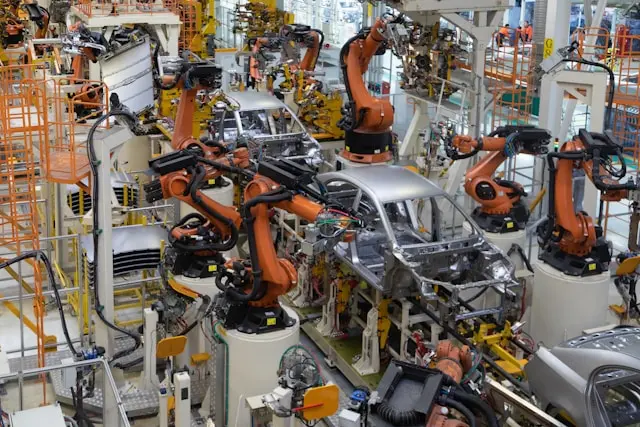
Nizhny Novgorod's commercial vehicle cluster produced between 85,000 and 90,000 vehicles through 2025, anchored by GAZ Group's GAZelle Next platform and Ural truck lines. The Avtozavodsky District is expanding. The Bor Industrial Zone has welcomed three new Chinese component manufacturers. Regional government has committed 8.5 billion rubles to infrastructure upgrades. By every capital expenditure measure, this is a sector that is growing.
Yet the workforce data tells a different story. Regional authorities project a deficit of 3,200 qualified industrial technicians by mid-2026. Tool and die maker vacancies sit at effectively zero percent unemployment. Automation engineers take an average of 78 days to place. Senior plant directors operate in a 100% passive market where no job advertisement yields a single qualified applicant. The sector is building capacity it does not have the people to run.
This is not a conventional hiring shortage where more competitive compensation solves the problem. It is a systemic mismatch between capital deployment and human capital availability, compounded by demographic erosion, military conscription, and the departure of internationally experienced engineers. What follows is an analysis of the forces driving this mismatch, the roles where it is most acute, and what organisations operating in this market need to understand before committing to their next leadership search.
The Cluster That Sanctions Rebuilt
Before 2022, Nizhny Novgorod's industrial identity rested on a straightforward model. GAZ Group provided the anchor. International tier-1 suppliers from Bosch, Magna, and Continental filled out the cluster. Engineering graduates from Nizhny Novgorod State Technical University fed both. The system was legible and stable.
That structure no longer exists. Foreign component suppliers have suspended local operations, reducing supplier density by an estimated 30 to 35 percent compared to pre-sanctions levels, according to the Ministry of Industry and Trade's Automotive Industry Development Strategy Report from November 2024. What replaced them is a bifurcated network: retained Russian suppliers on one side, new Chinese entrants on the other, with GAZ Group itself absorbing what neither could provide through aggressive vertical integration.
GAZ has invested approximately 15 billion rubles (roughly $165 million) in component localisation between 2022 and 2024. That capital has gone into transmission manufacturing, engine component machining, and a joint venture with FAW for axle production. Yanfeng Automotive Interiors and HASCO have established operations in the Bor Industrial Zone. The cluster is not shrinking. It is being rewritten.
The consequence for talent is profound. Every role that previously required fluency with German, Japanese, or South Korean supplier systems now requires fluency with Chinese component architectures, parallel import logistics, and domestic material substitution. The job titles have not changed. The jobs themselves have.
Where Automation Capital Outpaces Automation Talent
Here is the analytical tension at the centre of this market: GAZ Group and regional authorities are investing record sums in robotic welding and CNC automation to compensate for labour shortages and sanctions constraints. Simultaneously, the talent data reveals acute scarcity of automation engineers capable of programming and maintaining these systems.
This is not a paradox. It is a sequencing failure. Capital moved faster than human capital could follow.
The numbers behind the mismatch
The region's industrial automation engineer vacancy count stood at 180 open positions through late 2024, with an average time-to-fill of 78 days, according to Superjob.ru regional analytics. Senior automation engineers operating in robotics integration show zero unemployment and a phenomenon the data describes as "hidden" job changes, where candidates move between employers without ever surfacing a public resume. The average employer search duration at this level is 94 days.
Meanwhile, CNC programmer and operator vacancies across the cluster reached 340, with only 4.2 candidates per vacancy against a national average of 12.5. These are not abstract statistics. They describe a market where the machinery is arriving and the people to run it are not.
The stranded asset risk
If training pipelines do not accelerate materially, the automation investments made in 2024 and 2025 risk becoming stranded assets by 2027. A robotic welding cell that cannot be reprogrammed for a new vehicle variant because no qualified engineer is available is not an asset. It is an expensive piece of furniture. The hidden cost of failing to secure the right leadership for these technical functions compounds with every quarter of underutilisation.
The Demographic Erosion Beneath the Shortage
The automation talent gap would be serious on its own. It becomes critical when layered on top of the workforce demographics facing Nizhny Novgorod's skilled trades.
Approximately 35 percent of current toolmakers and master mechanics across the cluster are over 55 years old, according to Rosstat's Regional Labour Market Analysis for 2024. Replacement from younger cohorts is insufficient. Gen Z workers in the region show a documented preference for IT and service sector employment over manufacturing trades. Nizhny Novgorod State Technical University graduates 450 automotive-specialised engineers annually. The Industrial College produces 600 toolmakers and CNC operators. Together, they do not come close to replacing the retirement wave already underway.
Mandatory military conscription since 2022 has removed an estimated 8 to 12 percent of male production workers aged 18 to 30 from the workforce, according to regional military commissariat data cited in reporting by Novaya Gazeta Europe. This is not a temporary absence. It is a structural subtraction from the pipeline that feeds every mid-career role in the sector within the next decade.
The compounding effect is what matters. A sector losing its most experienced practitioners to retirement, its youngest workers to conscription and career preference, and its internationally trained engineers to emigration is not facing a cyclical hiring difficulty. It is facing a generational knowledge transfer crisis. The expertise required to maintain imported stamping equipment without OEM support, a skill category the research identifies as critically scarce, lives in the heads of workers who will leave the workforce within five to eight years regardless of compensation.
This is the original synthesis that the aggregate data obscures: the localisation investments are creating roles that require a type of expertise that is being lost faster than it is being created. Billions of rubles in capital expenditure cannot replace a master toolmaker who has spent thirty years learning to maintain a DMG Mori machining centre by feel. The money is flowing in. The knowledge is flowing out. And the two flows are not meeting.
Three Role Categories Where the Market Has Broken
Not all hiring in Nizhny Novgorod's automotive sector is equally difficult. Production line workers remain recruitable, if expensive. But three specific role categories have moved beyond conventional hiring methods entirely.
Tool and die makers: a zero-unemployment market
The unemployment rate for stamping and injection moulding toolmakers in Nizhny Novgorod is estimated below one percent. Average tenure at current employers exceeds eight years. According to Superjob.ru's Passive Candidate Index for the machine building sector, 85 percent of successful placements in this category occur through direct headhunting or referral networks. The market ratio is approximately one active candidate for every seven passive candidates who must be approached directly.
One tier-1 supplier in the Bor Industrial Zone reportedly maintained a toolmaker position vacant for 11 months in 2024 before securing a candidate from the aerospace sector at Sokol, at a 65 percent salary premium, according to a Regional Engineering Union interview cited in Delovoy Kvartal Nizhny Novgorod. Time-to-fill for senior toolmaker roles has stretched to 45 to 60 days on average, compared to 12 to 15 days in 2021.
This is not a market where posting a vacancy and waiting for applications produces results. The candidates do not look. They must be found.
Supply chain directors: the poach-only market
The localisation mandate has created an entirely new executive role category: supply chain directors with expertise in parallel import logistics, customs engineering, and simultaneous Russian and Chinese supplier management. This combination of skills barely existed before 2022. The candidates who have developed it since are receiving three to five direct offers monthly via Telegram and LinkedIn, according to Cornerstone Russia's Supply Chain Talent Market Report.
Moving these candidates requires compensation premiums of 40 to 60 percent above their current packages. Roles requiring simultaneous Russian and Chinese supplier management command an additional 25 to 30 percent premium over domestic-only scope, according to Ward Howell International's Russia Industrial Practice assessment. The effective cost of hiring a senior supply chain director in this market is now double what it was three years ago, not because the role has changed in seniority, but because the skills it requires have become extraordinarily rare.
Plant directors and operations VPs: retained search only
At the most senior level, the market is entirely passive. Ward Howell Russia's Industrial Practice Report describes plant director and operations VP recruitment as a 100 percent passive market with typical search timelines of four to six months. No active job posting yields qualified applicants at this level. Compensation at GAZ Group for senior production managers ranges from 350,000 to 800,000 rubles per month depending on scope and performance, with the top end reserved for leaders carrying full P&L responsibility for facilities of 800 to 2,000 employees.
These are roles where traditional executive recruiting methods consistently fail because the entire viable candidate pool must be identified, mapped, and approached individually. The approach itself is the search.
The Competitor Markets Pulling Talent Away
Nizhny Novgorod does not lose talent to a single destination. It loses different categories of talent to different cities, each offering a specific advantage the region cannot match.
Moscow draws senior engineering and executive talent with compensation premiums of 60 to 80 percent for equivalent roles. The cost of living differential, with Moscow approximately 2.3 times higher, does not fully offset the wage premium at senior levels. Moscow also offers what Nizhny Novgorod's manufacturing plants structurally cannot: remote and hybrid working arrangements. Automotive R&D centres in Moscow, including Yandex Self-Driving and KAMAZ's research offices, provide flexibility that a production floor never will. For a senior engineer weighing two offers, the Moscow proposition combines higher pay with a working model that accommodates a modern lifestyle.
Togliatti competes specifically for powertrain specialists. AvtoVAZ offers comparable compensation with what has historically been superior career progression through international exposure, though this advantage is diminishing. Togliatti's lower cost of living makes it particularly attractive to mid-career engineers with families, a demographic Nizhny Novgorod needs most.
For skilled trades, the competition is more aggressive still. Ulyanovsk's UAZ plant and Chelyabinsk's Uralvagonzavod military production facility offer wages 15 to 25 percent above commercial automotive rates, according to the Russian Union of Industrialists and Entrepreneurs. Military-industrial complex employers are pulling CNC operators and toolmakers out of commercial manufacturing with packages that automotive firms cannot match without destroying their own margin structures.
And then there is the emigration factor. The sanctions-driven localisation programme requires precisely the engineers who gained their expertise through international OEM partnerships with Volkswagen, Toyota, and Ford. According to the analytical assessment in the research data, a sustained flow of these internationally experienced engineers has left for Tashkent, Yerevan, and Dubai. The quantity of localisation jobs is increasing. The quality of technical mentorship available to fill them may be degrading.
What the Compensation Data Reveals
Compensation in Nizhny Novgorod's automotive sector follows a pattern that should concern every hiring leader in the cluster. The premiums required to secure scarce talent are rising fastest at exactly the levels where the most critical gaps exist.
At the senior production manager and plant director level, GAZ Group's disclosed compensation ranges from 350,000 to 600,000 rubles per month, with top performers earning up to 800,000 rubles including performance bonuses. According to Kommersant, GAZ successfully recruited a Senior Production Manager for its Ural truck division from KAMAZ in Naberezhnye Chelny in Q3 2024, offering a package reportedly 40 percent above market rate plus relocation support. The move triggered a retaliatory recruitment cycle, with KAMAZ subsequently recruiting three mid-level GAZ engineers for its engine division.
This is not competition. It is a zero-sum talent war where every hire creates a vacancy elsewhere.
At the supply chain director level, executive compensation ranges from 300,000 to 450,000 rubles per month, but the effective cost of a hire runs far higher once the 40 to 60 percent premiums required to move passive candidates are factored in. The counteroffer dynamic in this market is particularly intense. Employers who identify that a supply chain director is considering a move will frequently match or exceed the competing offer, knowing that replacement would take months and cost more.
For automation engineering managers, department heads command 280,000 to 400,000 rubles per month. Chief tooling engineers and die shop managers sit at 200,000 to 350,000 rubles at tier-1 suppliers, with GAZ Group internal roles paying 15 to 20 percent above that. The premium is not discretionary. It reflects the market's recognition that these skills cannot be sourced through normal channels.
The critical insight from this compensation data and market benchmarking is structural. Every category of scarce talent in this market commands a premium that is growing faster than the overall wage inflation in the region. The gap between what firms budget for these roles and what they actually cost to fill is widening. Organisations that benchmark against last year's compensation data when structuring offers in 2026 will find themselves consistently outbid.
What This Means for Organisations Hiring in This Market
The Nizhny Novgorod automotive cluster in 2026 presents a hiring environment where conventional methods have already failed. The data is unambiguous. In the three most critical role categories, the active candidate market is functionally empty. Tool and die makers are at zero unemployment. Automation engineers operate in a hidden market. Plant directors and operations VPs move exclusively through retained executive search.
An organisation entering this market with a job posting and an expectation of inbound applications will wait months and find nothing. The 85 percent of toolmaker placements that occur through direct headhunting or referrals represent not a preference but a necessity. There is no other channel that works.
The specific challenge is compounded by the sector's transformation. A search for a supply chain director in this market is not the same search it was in 2021. The role now requires expertise in parallel import logistics, Chinese component integration, and customs engineering that barely existed as a professional discipline three years ago. Identifying candidates with this profile requires detailed talent mapping across adjacent sectors and geographies, not a keyword search on a job board.
For organisations competing for senior leadership in industrial and manufacturing sectors where 80 percent or more of viable candidates are not actively looking, the search methodology matters more than the compensation package. A firm offering the right salary through the wrong channel will lose to a firm offering a competitive salary through the right one.
KiTalent's approach to markets like this, delivering interview-ready executive candidates within 7 to 10 days through AI-powered identification of passive talent, addresses the specific failure mode this data describes. In a market where the average search for an automation engineer runs 78 to 94 days and where plant director searches stretch to six months, compressing the timeline is not a convenience. It is a competitive requirement. With a 96 percent one-year retention rate across 1,450 executive placements, the methodology is built for markets where the margin for error on a senior hire is zero.
For organisations hiring production leaders, supply chain directors, or senior technical managers in Russia's commercial vehicle manufacturing sector, where the candidates you need have not posted a resume in years and receive multiple direct approaches every month, speak with our executive search team about how we identify and deliver candidates in passive-dominant industrial markets.
Frequently Asked Questions
What are the most in-demand automotive manufacturing roles in Nizhny Novgorod in 2026?
The three most acute shortage categories are tool and die makers for stamping and injection moulding, industrial automation engineers for robotic welding and CNC machining lines, and supply chain directors with expertise in localisation and parallel import logistics. Tool and die maker unemployment in the region is effectively zero percent. Automation engineer vacancies average 78 days to fill. Supply chain directors with the required combination of Russian and Chinese supplier management skills operate in what industry analysts describe as a "poach-only" market, where direct approaches with substantial compensation premiums are the only viable recruitment method.
Why is it so difficult to hire senior manufacturing leaders in Nizhny Novgorod?
Three forces converge. First, 35 percent of experienced toolmakers and master mechanics are over 55, creating an accelerating retirement wave. Second, military conscription has removed 8 to 12 percent of male production workers aged 18 to 30. Third, internationally experienced engineers who previously worked with Volkswagen, Toyota, and Ford partners have emigrated. The result is a generational knowledge gap that compensation alone cannot close, because the expertise required for roles like legacy equipment maintenance without OEM support takes decades to develop.
How does Nizhny Novgorod automotive compensation compare to competing Russian markets?
Moscow offers 60 to 80 percent premiums for equivalent senior engineering and executive roles, though its cost of living is 2.3 times higher. Military-industrial employers in Ulyanovsk and Chelyabinsk pay 15 to 25 percent above commercial automotive rates for skilled trades. Within Nizhny Novgorod, GAZ Group senior production managers earn 350,000 to 800,000 rubles monthly. Supply chain directors command 300,000 to 450,000 rubles, with passive candidate premiums adding 40 to 60 percent to effective hiring costs. Roles requiring Russian and Chinese supplier management expertise carry an additional 25 to 30 percent premium.
What is the best approach to executive search in Nizhny Novgorod's automotive sector?
Active job advertising is ineffective for senior and specialist roles in this market. Data from regional job platforms shows that 85 percent of successful toolmaker placements occur through direct headhunting and professional referral networks. Plant director and operations VP recruitment is described as a 100 percent passive market. KiTalent's AI-enhanced direct search methodology is designed for precisely these conditions, identifying and engaging candidates who are not visible on any job platform and delivering interview-ready shortlists within 7 to 10 days.
How are sanctions affecting the automotive talent market in Nizhny Novgorod?
Sanctions have fundamentally restructured the talent requirements. The departure of Bosch, Magna, and Continental reduced supplier density by 30 to 35 percent. GAZ Group has invested 15 billion rubles in localisation, but these programmes demand skills in Chinese component integration, domestic material substitution, and parallel import logistics that did not exist as professional disciplines before 2022. The export control regime on German, Japanese, and South Korean machine tools has created a specific demand for engineers who can maintain legacy precision equipment without manufacturer support.
What role does executive search play in building automotive talent pipelines in Russia?
In markets where passive candidates outnumber active candidates by ratios of seven to one and where senior roles take four to six months to fill through conventional methods, proactive talent pipeline development is essential. Effective executive search in Nizhny Novgorod's automotive sector requires market mapping across adjacent industries including aerospace and military-industrial production, where transferable skills exist. It also requires compensation intelligence that reflects the true cost of moving passive candidates, not the published salary bands that lag behind actual offer packages by 30 to 40 percent.