Oakland's Food Manufacturers Are Caught Between Automation and Artisan Identity: What It Means for Every Hire
Oakland's specialty food and beverage manufacturing sector employs roughly 5,000 workers across the Oakland-Hayward-Berkeley metro area. That figure has stabilised after a 3% decline from 2019 peaks and a modest 2% recovery from pandemic lows. On the surface, it looks like a sector finding its footing. Underneath, a set of compounding pressures is rewriting the rules of who gets hired, at what cost, and whether the business model can sustain either.
The core problem is not a single shortage. It is a collision of forces. Industrial rents have climbed 40% since 2019. California's minimum wage escalation has compressed the gap between line operators and quick-service restaurant workers to near zero. Automation investment is accelerating to compensate for lost square footage and rising labour costs. But the workers who can run, maintain, and optimise those automated systems are in desperately short supply. And all of this is happening inside a sector whose brand promise to consumers rests on the word "handcrafted."
What follows is an analysis of the structural shift rewriting talent requirements across Oakland's food and beverage manufacturing cluster, the specific roles where searches are stalling, and what hiring leaders in this market must do differently to reach the candidates who can keep these operations viable.
The Industrial Real Estate Squeeze Is a Talent Problem in Disguise
Oakland's industrial vacancy rate sat at approximately 4.2% as of Q3 2024, according to CBRE's East Bay Industrial Market Report. Class B industrial space, the kind food manufacturers typically occupy, commands $12 to $16 per square foot triple net. That represents a 40% increase over 2019 levels. And the trajectory has continued into 2026, with rents projected to rise another 12 to 15% through the year.
The squeeze comes from an unlikely competitor. Logistics operators and last-mile e-commerce distribution centres run by Amazon, UPS, and FedEx are outbidding food manufacturers for the same parcels, particularly in the Coliseum Industrial Complex and Fruitvale Transit Village areas. The city has lost approximately 12% of its industrial-zoned land to residential or mixed-use conversion since 2015. Only 3.2% of total city land remains zoned for heavy industrial or food processing uses. The Port of Oakland's strategic plan prioritises maritime logistics and cold storage over food manufacturing, further limiting expansion.
This is not merely a real estate story. When a manufacturer cannot expand its footprint, and cannot afford to relocate within city limits, the only option is to produce more per square foot. That means automation. And automation means a fundamentally different workforce.
What Happens When Every Square Foot Must Earn More
Mid-size manufacturers with 50 to 200 employees are investing in automated packaging and batching systems to offset both labour scarcity and space constraints. These investments reduce per-unit labour costs by an estimated 15 to 20%. But they simultaneously increase demand for mechatronics-skilled maintenance technicians, PLC programmers, and SCADA systems managers. The production line worker earning $22 per hour is being replaced not by a robot, but by a technician earning $85,000 to $110,000 who keeps the robot running.
The sector is projected to hold employment roughly flat through 2026. Plus or minus 1%. But the composition of that employment is shifting materially toward higher-skill, higher-wage technical roles and away from manual production labour. For hiring leaders, the implication is stark: the roles that were easy to fill are disappearing, and the roles replacing them are among the hardest to recruit in the Bay Area.
The Artisan Paradox: Selling Craft While Buying Robots
This is the tension at the heart of Oakland's food and beverage sector in 2026, and it constitutes the original analytical insight this article is built around.
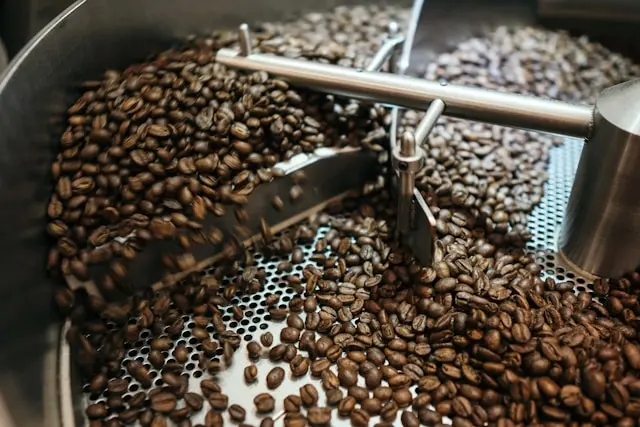
Oakland's specialty food manufacturers have built their consumer brands on narratives of handcraft, small-batch production, and human touch. Hodo Soy's organic tofu. Red Bay Coffee's roastery in the former Ford Point building. Numi Organic Tea's blending operations. The premium these brands command in the market depends on the perception that a person, not a machine, made the product. This is not incidental. It is the entire value proposition that allows an Oakland manufacturer to charge more than a Central Valley competitor with lease rates 60% lower.
Yet the economics of staying in Oakland now require exactly the opposite of what the brand promises. Automated packaging lines. Robotic batching systems. Sensor-driven quality monitoring. The manufacturers who cannot automate will not survive the rent escalation. The manufacturers who do automate need a workforce that looks nothing like the artisan narrative they sell.
This paradox has a direct hiring consequence. It means companies need leaders who can hold two contradictory imperatives simultaneously: invest in robotics to afford the facility, and tell a story about humans to justify the price. The VP of Operations who can run an automated line and the Brand Marketing executive who can sell artisan provenance are not just different people. They are people with fundamentally different worldviews, and the organisation must make both of them feel like they belong.
Workforce planning in this environment becomes an exercise in managed contradiction, and the companies that treat it as a straightforward automation rollout will find their brand equity eroding at the same rate their efficiency improves.
Where Searches Are Stalling: Three Roles That Define the Crisis
Job postings for food manufacturing occupations across the Oakland MSA rose 18% between Q3 2023 and Q3 2024, according to LinkedIn Economic Graph data. Average days to fill stand at 58 days for professional roles and 42 days for skilled production roles. Both figures sit well above the national averages of 36 and 28 days respectively. But the aggregate numbers mask the severity at the senior end.
Food Safety and Quality Assurance Directors
Senior Director of Food Safety roles at Oakland-based organic and plant-based manufacturers typically remain open for 110 to 135 days. Robert Half's 2024 Salary Guide noted that 68% of Oakland-area food manufacturers report "extreme difficulty" filling QA Director roles. The pool of certified Preventive Controls Qualified Individuals with management experience in the Bay Area is small enough that 85% of placements at this level occur through direct recruitment rather than application responses.
One mid-size beverage manufacturer in the 50 to 100 employee range reportedly restructured its reporting lines in Q4 2024, elevating a Senior Manager to Director level internally with a 35% compensation premium rather than continuing an external search that had been open for six months. The promotion solved an immediate problem but deferred the deeper one: internal elevation without external benchmarking compresses the leadership pipeline and raises retention risk for the newly promoted executive, who now knows their market value.
Plant Operations Managers with CPG Automation Experience
The scarcity of operations leaders who combine consumer packaged goods experience with hands-on automation knowledge produced a well-documented pattern in 2023 and 2024. According to reporting in the North Bay Business Journal, an Oakland-based plant-based dairy alternative manufacturer recruited a Plant Manager from a competing Sonoma County organic dairy processor. The candidate received a $35,000 signing bonus and a 20% base salary premium to relocate. The specific expertise at stake: HTST pasteurization and aseptic packaging lines.
This kind of poaching is not an isolated incident. It is the predictable outcome of a candidate pool where the number of qualified professionals is smaller than the number of open roles. When the candidate-to-position ratio for senior R&D food scientists with fermentation expertise sits at 0.4 to 1, every search becomes a competitive extraction, not a selection exercise.
R&D Food Scientists in Fermentation and Alternative Proteins
Oakland's cluster of plant-based protein companies and legacy tofu manufacturers are competing for the same small group of food scientists with fermentation biology expertise. The Institute of Food Technologists describes this niche as experiencing functionally zero unemployment. Candidates with five to seven years of experience in mycelium or legume protein extraction receive three to five unsolicited recruitment contacts per month. They enter the active market only following termination or company closure.
For hiring leaders, this means the traditional search playbook is structurally incapable of reaching these candidates. Job postings attract the small minority who happen to be displaced. The majority must be identified, engaged, and persuaded through methods that conventional recruitment does not support.
Compensation Is Rising Faster Than Margins Can Support
Compensation across Oakland's food and beverage manufacturing sector has grown 8 to 12% annually for technical and executive roles. That pace is more than double the national average of 3.5%. But the story underneath these numbers is not one of prosperity.
At the executive level, VP of Operations roles now command $195,000 to $265,000 in base salary, with bonus targets of 25 to 40% and equity participation between 0.1% and 0.5% at private companies. VP of R&D or Chief Innovation Officer positions sit at $185,000 to $240,000 base, with 20 to 30% bonus and equity stakes up to 1.0%. Food Safety and Quality VP roles range from $165,000 to $210,000, with 15 to 25% bonus potential. At the manager level, Operations Managers earn $115,000 to $145,000, Senior Food Scientists $98,000 to $128,000, and QA/QC Managers $92,000 to $118,000. These figures come from the Bureau of Labor Statistics OEWS data for the San Francisco-Oakland-Hayward MSA, adjusted for 2024 inflation, supplemented by IFT and Radford compensation surveys.
The problem is that these wages are rising into a headwind. Commodity input costs have risen faster. ICE Arabica coffee futures climbed 40% year-over-year as of late 2024, squeezing margins for mid-size roasters without hedging capabilities. Cocoa and soybean prices have followed similar trajectories. PG&E commercial industrial electricity rates in Oakland average $0.24 per kWh, among the highest in the continental United States, penalising energy-intensive operations like brewing and dehydration.
The sector is entering a profit squeeze where talent acquisition costs have become decoupled from business model sustainability. Companies report extreme difficulty hiring below escalated wage thresholds. But the margins to sustain those wages are compressing. This is not a problem that resolves through better sourcing. It is a problem that will force consolidation, and it will reward the companies that hire the right leaders first.
The Regulatory Layer That Multiplies Every Other Pressure
Oakland's food manufacturers operate under a regulatory burden that compounds the cost and complexity of every hiring decision. Three specific pressures deserve attention.
California's Minimum Wage Spillover
California's AB 1228, which established a $20 per hour minimum wage floor for fast-food franchises in 2024, was not aimed at food manufacturers. But its effects have reached them. Entry-level production roles in Oakland that previously paid $18 to $19 per hour now demand $22 to $24 per hour to maintain any differentiation from quick-service restaurant jobs that require no manufacturing skills. This wage compression affects not just the production floor but the entire pay structure above it, as supervisors and technicians expect proportional increases.
Proposition 65 Litigation Exposure
Oakland manufacturers face elevated "bounty hunter" lawsuits for acrylamide in coffee roasting and heavy metals in chocolate and sauce production. Average settlement costs run $85,000 to $120,000 per case, with required reformulation expenses on top. This litigation risk makes food safety and quality leadership not merely a compliance function but a financial risk management role. The QA Director vacancy that sits open for 135 days is not just an operational inconvenience. It is an unhedged legal exposure.
Seismic Retrofit Mandates
Alameda County's Unreinforced Masonry building ordinance requires retrofitting of pre-1975 industrial buildings by 2027. An estimated 35% of Oakland food manufacturing facilities are affected. Compliance costs range from $50 to $150 per square foot. For a manufacturer occupying 30,000 square feet, the bill runs $1.5 million to $4.5 million. Smaller artisan producers, many of whom occupy exactly these older buildings because of their lower rents, face an existential decision that no amount of talent strategy can resolve.
The cumulative effect of these regulatory pressures is that senior hires in this market need a skillset that goes well beyond technical food science. They need regulatory fluency across multiple domains simultaneously: FDA HACCP and FSMA compliance, California Department of Public Health permitting, Prop 65 documentation, SB 253 Scope 3 supply chain tracking, and seismic compliance planning. Finding this combination in a single candidate is the reason searches run past 100 days.
The Geographic Competition for Talent Oakland Cannot Ignore
Oakland does not lose candidates to abstract market forces. It loses them to three specific geographies, each pulling a different segment of the talent pool.
Sacramento offers manufacturing professionals a cost of living 25 to 30% lower than Oakland, primarily through housing. Sacramento's food and beverage manufacturing employment has grown 8% annually since 2022, anchored by Blue Diamond Growers and a growing craft brewery cluster. Oakland employers report losing mid-level operations talent to Sacramento firms offering comparable wages but dramatically lower living costs. A Plant Manager can earn $105,000 to $125,000 in Sacramento and afford a three-bedroom home. The same role in Oakland pays $115,000 to $145,000 but requires a significantly higher proportion of take-home income for housing.
Los Angeles competes for a different segment: creative and R&D talent. LA's food innovation ecosystem offers 15 to 20% higher base salaries for VP-level R&D roles, reaching $220,000 to $280,000 compared to Oakland's $185,000 to $240,000. Stronger venture capital availability for startup food brands means better equity upside. Oakland loses top-tier innovation talent to LA when the equity proposition is limited.
The Central Valley competes on a different axis entirely. Industrial lease rates of $4 to $6 per square foot are 60% below Oakland's. For high-volume, lower-margin production, the economics are unanswerable. Oakland retains specialty and artisan production but has already lost most scale manufacturing to Modesto, Fresno, and Stockton.
Each of these competitors removes candidates from Oakland's effective pool in a different way. Sacramento takes the pragmatists. LA takes the ambitious. The Central Valley takes the volume operators. What remains in Oakland is a narrowing band of professionals who value the artisan brand identity enough to absorb the cost premium, and who possess the technical skills the sector increasingly demands.
What This Market Requires from Executive Search
The passive candidate dynamics in Oakland's food manufacturing sector make conventional hiring methods structurally inadequate for the roles that matter most. Approximately 75 to 80% of qualified VP and Director of Operations candidates in the Oakland MSA are not actively applying but remain open to strategic conversations. Their average tenure at current employers is 4.2 years. The effective candidate pool through active channels is roughly one-fifth the size of the total qualified population.
For Food Safety Directors, the ratio is even more extreme. For Senior R&D Food Scientists in fermentation and alternative proteins, the concept of an active candidate market does not meaningfully exist.
This is the environment where KiTalent's approach delivers measurable advantage. AI-enhanced talent mapping across the food, beverage, and consumer goods sector identifies the passive candidates who will never appear on a job board. Interview-ready shortlists delivered within 7 to 10 days compress the timeline from the 110 to 135 day vacancy periods this market typically produces. A pay-per-interview model means clients invest only when they are meeting qualified candidates, not when a search firm begins research.
For organisations competing for plant operations leaders, food safety directors, and R&D scientists in a market where every qualified candidate already has a role, start a conversation with our executive search team about how we approach Oakland's food manufacturing talent market. KiTalent has completed over 1,450 executive placements globally with a 96% one-year retention rate, because reaching a candidate is only valuable if the placement holds.
Frequently Asked Questions
How long does it take to fill a senior food manufacturing role in Oakland?
Professional roles in Oakland's food and beverage manufacturing sector average 58 days to fill, well above the national average of 36 days. Senior Director of Food Safety positions typically remain open for 110 to 135 days. Plant Operations Manager roles with automation experience and R&D Food Scientist positions with fermentation expertise take even longer when approached through conventional job advertising. Direct search methods that engage passive candidates reduce these timelines materially, which is why KiTalent's model delivers interview-ready candidates within 7 to 10 days of engagement.
What does a VP of Operations earn in Oakland food manufacturing?
Vice President of Operations or General Manager roles in Oakland's specialty food manufacturing sector command $195,000 to $265,000 in base salary as of 2026. Annual bonus targets range from 25% to 40% of base. Equity participation at private companies typically falls between 0.1% and 0.5%. At the Operations Manager level, base salaries run $115,000 to $145,000 with 10 to 15% bonus potential. These figures reflect the San Francisco-Oakland-Hayward MSA and include inflation adjustments through 2024.
Why is Oakland losing food manufacturing talent to Sacramento?
Sacramento offers manufacturing professionals a cost of living 25 to 30% lower than Oakland, with the difference concentrated in housing costs. Sacramento's food and beverage manufacturing employment has grown 8% annually since 2022, creating a competitive destination for mid-level operations and supply chain talent. Plant Managers earning $105,000 to $125,000 in Sacramento can afford housing that would require $145,000 or more in Oakland. The gap is widest at exactly the seniority level where Oakland's shortages are most acute.
What skills do Oakland food manufacturers need most in 2026?
The highest-demand skills combine technical food science with automation and regulatory expertise. Specific requirements include PLC programming for packaging lines, SCADA systems management, FDA HACCP and FSMA compliance, California Prop 65 documentation, SB 253 Scope 3 carbon tracking, and lean manufacturing Six Sigma certification. Artisan craft credentials such as Coffee Q-Grader certification or fermentation microbiology expertise remain essential for niche producers. The scarcest candidates are those who combine process automation experience with regulatory science knowledge.
How does industrial land scarcity affect food manufacturing hiring in Oakland?
Industrial vacancy in Oakland stood at approximately 4.2% as of Q3 2024, with rents 40% above 2019 levels. Logistics operators outbid food manufacturers for available space. This forces manufacturers to automate production to maximise output per square foot, which in turn shifts workforce requirements from manual production labour toward higher-skill technical roles in mechatronics, PLC programming, and systems maintenance. The land constraint is directly reshaping every hire these companies make, replacing entry-level production roles with technical positions that take twice as long to fill.
Can executive search firms help with food manufacturing leadership roles in Oakland?
In a market where 75 to 80% of qualified operations directors and 85% of food safety directors are passive candidates, executive search through direct headhunting is the only reliable method for reaching the full candidate pool. Job postings access at most one-fifth of viable candidates. KiTalent's AI-powered talent mapping identifies qualified professionals who are not actively looking, delivering interview-ready shortlists within 7 to 10 days rather than the 110 to 135 day timelines that characterise open searches in this sector.